

Create Charming & Changeable Art for Your Playroom: DIY Vintage Wood Poster Frame
Designing a vibrant and functional playroom for children requires a delicate balance between durability, fun, and affordability. When it comes to art, the best pieces for a kids’ space are those that aren’t too precious – items that can withstand the energetic chaos of young explorers while remaining easy to update as their interests evolve. This philosophy guided the decor choices for our basement playroom, a space designed to endure the spirited adventures of four boys. Our goal was to find decor that was both engaging and resilient, particularly art that could be easily swapped out without breaking the bank.
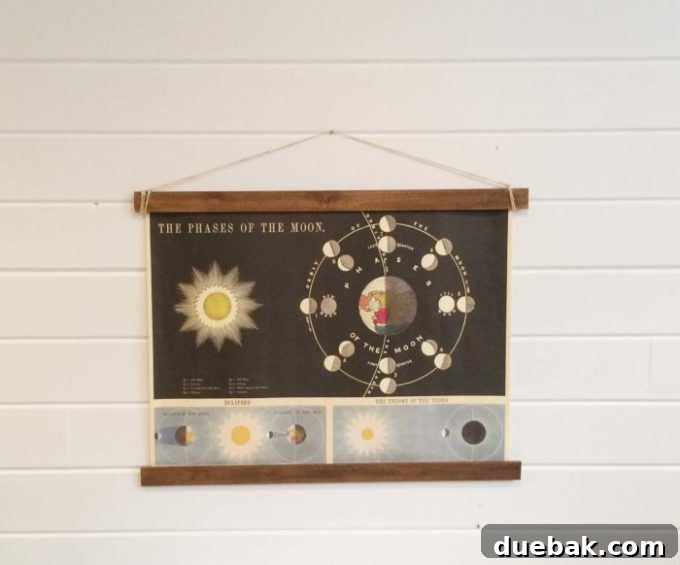
The quest for the perfect playroom art led to an unexpected find: a captivating $6 phases of the moon poster, discovered during a relaxing weekend getaway. While the poster itself was a treasure, the idea of framing it in a traditional black or white picture frame felt uninspired and too formal for a dynamic play space. Instantly, my mind conjured images of classic, pull-down classroom maps from days gone by – a design aesthetic that offered both nostalgia and practicality. This inspiration sparked the idea for a simple, vintage-style wood frame, a project that would not only highlight the poster but also perfectly complement the playroom’s casual, yet stylish, vibe. The best part? This DIY poster hanger cost just $5 to create.
Why Choose DIY Art for Your Kids’ Playroom?
Opting for DIY art in a playroom offers numerous benefits beyond just cost savings. It allows for unparalleled customization, ensuring the art truly reflects your child’s personality and the overall aesthetic of your home. Moreover, DIY projects like this poster frame are inherently adaptable. Children’s interests change rapidly, and having a system that allows for easy art swaps means your playroom can evolve with them. This approach encourages creativity not just in the decor itself, but also in how your children interact with their environment. Plus, the satisfaction of creating something beautiful and functional with your own hands is truly rewarding.
Essential Materials for Your Vintage Poster Frame
Gathering the right materials is the first step towards bringing your vintage poster frame to life. The beauty of this project lies in its simplicity and the accessibility of its components. You’ll find everything you need at your local hardware or craft store. Here’s a detailed look at the supplies:
- Wooden Slats: You’ll need four pieces of wood to create the top and bottom rails of your frame. I used thin wooden slats, approximately 1/4″ thick and 3′ long, often found in the trim or dowel section of a hardware store. These are ideal for their lightweight nature and ease of cutting. Another excellent and equally inexpensive option is a 1″ x 2″ wood slat, which offers a slightly bolder look and is also very budget-friendly, typically costing just a couple of dollars. Choose straight pieces with minimal knots for the best results.
- Wood Stain: To achieve that authentic vintage map aesthetic, a good wood stain is key. I chose Minwax stain in “Dark Walnut” for its rich, deep tone that perfectly mimics aged wood. You can explore various stain colors to match your existing decor, from lighter oaks to deeper mahoganies. Alternatively, wood paint can be used for a more vibrant, modern look, or you can simply seal the natural wood for a rustic, unfinished charm.
- String or Twine: This will serve as the hanger for your poster frame. Natural jute twine or cotton string works wonderfully for the vintage appeal. Consider the thickness and texture; a slightly thicker twine will create a more pronounced rustic look, while thinner string can offer a more delicate touch.
- Clear Tape (or Alternatives): For attaching the poster to the wooden slats, clear tape is a quick and easy solution. However, for a more permanent or robust attachment, consider using small staples (applied to the back where they won’t be visible), wood glue, or even small, strong magnets embedded into the wood and poster for easy interchangeability.
- Saw: Any saw capable of making clean cuts through thin wood will suffice. A hand saw is perfectly adequate for these thin slats, offering precision and control. For those with access to power tools, a compound miter saw will provide exceptionally clean and angled cuts, though it’s not strictly necessary. If you’re buying your wood from a lumber yard, often they can cut the pieces to your specified measurements right there in the store – just have your dimensions ready!

Step-by-Step Guide: Make Your Own Vintage Poster Frame
Creating this custom poster frame is a straightforward and enjoyable process. Follow these steps to transform your poster into a stylish piece of art:
Step 1: Precisely Cut Your Wood Pieces
The first crucial step is to cut your wooden slats to the desired length. For a balanced look, aim for the wood to overhang your print by about 1 to 2 inches on each side. For instance, if your poster is 24 inches wide, cut your slats to 26-28 inches. Measure carefully twice and cut once! I used a compound miter saw for clean, precise cuts, but a simple hand saw will work perfectly for these thin slats. If you’re less comfortable with cutting wood, don’t hesitate to ask the staff at your lumber or hardware store to cut the pieces for you when you purchase them. Remember to ask for four identical pieces for the top and bottom of your frame.
Step 2: Apply Wood Stain for a Vintage Finish
Now it’s time to give your wood that beautiful, aged look. I opted for Minwax stain in the color “Dark Walnut,” which delivers a rich, deep brown hue reminiscent of antique furniture. Before you begin, ensure your workspace is well-ventilated and lay down some protective sheeting. Apply the stain evenly to all sides of your wooden slats using a paper towel or a foam brush. Work in the direction of the wood grain. After applying, immediately wipe off any excess stain with a clean paper towel. This prevents the stain from becoming too dark or blotchy. Allow the boards to dry for a few minutes, or longer if specified by your stain product, ensuring they are completely dry to the touch before moving to the next step. For a deeper color, you can apply a second coat after the first has dried.
Step 3: Securely Attach Your Poster to the Frame
With your stained wood ready, it’s time to integrate your poster. Lay your poster face down on a clean, flat surface. Align one of your stained wooden slats along the top edge of the poster, ensuring the overhang is even on both sides and the poster is perfectly straight. Use clear tape to securely fasten the top edge of the poster to the back of the wooden slat. For added durability or a cleaner look, you could use double-sided tape, a thin bead of wood glue, or even small staples applied discreetly to the back. Repeat this process for the bottom edge of your poster, using the other two wooden slats. Ensure the poster is pulled taut but not stretched, to avoid wrinkles and create a smooth display.
Step 4: Add the Hanging Twine
Once your poster is attached to the top and bottom wooden slats, it’s time to add the hanging mechanism. Cut a length of twine or string – approximately 1.5 to 2 times the width of your frame, depending on how low you want it to hang. Take one end of the twine and wrap it around one end of the top wooden slat, just above where the poster is attached. Tie a secure, decorative knot (a simple square knot works well) to hold it firmly in place. Repeat this on the other end of the top slat with the remaining end of the twine. Ensure the twine is evenly tensioned between the two knots so your frame will hang straight. You can adjust the length of the twine by re-tying the knots until you achieve your desired hanging height and balance.
Step 5: Hang Your Beautiful Vintage-Inspired Art
The final step is to hang your newly framed art! Choose a prominent spot in your playroom, perhaps above a reading nook or a creative station. Use a reliable wall hook or nail. Step back and admire your handiwork – a custom, vintage-inspired piece of art that adds character and charm to your kids’ space. This simple yet effective framing method allows for quick and easy swaps of posters whenever a new theme or interest sparks inspiration.
Pricing Breakdown and the Unbeatable Value of DIY
The cost-effectiveness of this DIY project is truly remarkable. The beautiful phases of the moon print was a steal at $6. For the frame itself, the only item I needed to purchase were the wooden pieces, which cost a mere $3. I already had the wood stain, twine, and tape on hand from previous projects. This brought my total project cost to an incredible $9!
Even if you needed to purchase all new supplies, the entire project would likely cost around $20. However, the fantastic news is that buying these materials, especially the stain and string, means you’ll have more than enough leftover to create many, many more frames. This drastically reduces the cost per frame for future projects, making it an incredibly economical way to decorate. Compare this to store-bought poster frames, which can easily cost $30-$50 or more for a similar size, and the value of this DIY approach becomes undeniable.
Beyond the monetary savings, there’s immense satisfaction in creating something unique and personalized. The warm look of the dark wood stain beautifully complements the painted white wood and light grey tones prevalent in our playroom, adding a touch of rustic elegance without feeling overly formal. It’s a testament to how simple, thoughtful DIY projects can elevate your home decor on a budget.
Customization Ideas & Expanding Your DIY Skills
This vintage poster frame design is incredibly versatile. Don’t limit yourself to just one type of poster or finish! Here are a few ideas to inspire further creativity:
- Different Poster Themes: Swap out the moon phases for vintage botanical prints, educational charts, whimsical animal illustrations, or even your child’s own artwork. The ease of changing posters makes it ideal for evolving interests.
- Varying Wood Finishes: Experiment with different stain colors (light oak, mahogany, grey wash) or even paint the slats a bright, playful color to match your playroom’s scheme. A distressed paint finish could also add to the vintage charm.
- Alternative Hanging Materials: Instead of twine, consider leather cord for a more sophisticated look, or colorful yarn for a playful touch.
- Multi-Poster Hangers: For wider posters or a gallery wall effect, you can make longer slats and hang multiple smaller prints from a single top bar using individual pieces of string.
- Embellishments: Add small metal tacks or decorative buttons to the ends of the slats for extra detail, or stencil a small design onto the wood before staining.
Final Thoughts: Happy Creating!
This simple DIY vintage wood poster frame is more than just a craft project; it’s a smart solution for stylish, affordable, and adaptable playroom decor. It embodies the spirit of practical design – creating beautiful things that serve a purpose and can stand up to the demands of family life. We hope this guide inspires you to pick up some wood slats and create your own custom art display. Happy creating, and enjoy the process of making your space truly your own!