
The journey to perfecting a kitchen often involves countless decisions, and few are as impactful as the choice of countertops. As our kitchen renovation progresses, we’re thrilled to share a pivotal update: we’ve finally selected the perfect countertops to anchor our new culinary space. This wasn’t a quick decision; after weeks of deliberation, weighing numerous options, and considering various factors unique to our home and lifestyle, we’ve landed on a choice that balances aesthetics, functionality, and budget.
The Dream of DIY Concrete: Acknowledging Structural Limitations
Our initial vision for the kitchen renovation enthusiastically embraced the idea of DIY concrete countertops. Inspired by countless tutorials and the raw, industrial aesthetic, we had high hopes for crafting custom concrete slabs. However, what seemed like an exciting DIY project soon encountered significant practical hurdles. After consulting with several concrete fabrication experts – individuals who craft these surfaces professionally – we uncovered critical structural limitations specific to our kitchen design.
Our plans included a substantial 3 x 5-foot peninsula with a double 12-inch overhang on two of its four sides. To support such an extensive overhang, experts advised that concrete slabs would need to be poured extra thick. This necessity introduced two major problems:
- Excessive Weight for Existing Cabinetry: The sheer weight of an extra-thick concrete slab would far exceed the load-bearing capacity of our current kitchen cabinets. Reinforcing them would require substantial structural modifications, significantly increasing both complexity and cost.
- Floor Load Capacity: Beyond the cabinets, our existing floor joists were simply not designed to support the immense additional weight of heavy concrete countertops. Addressing this would necessitate extensive and costly floor reinforcement, as detailed in our previous discussions about structural considerations.
This revelation was a significant setback. We briefly explored alternative “concrete slipcover” methods, which involve applying a thin layer of concrete over another countertop material. While an intriguing concept, these options presented more drawbacks than solid concrete, primarily concerning durability and long-term performance. Reluctantly, our dream of concrete countertops for this kitchen project was shelved, though our determination to experiment with concrete remains. Perhaps a future outdoor dining table or an accessory for an as-yet-unbuilt deck will provide the perfect canvas for our concrete ambitions.
Exploring Diverse Countertop Materials and Navigating the Budget
With concrete out of the picture, our focus shifted to exploring the wide array of other countertop materials available. Our search began with visits to local kitchen and bath showrooms, followed by comprehensive trips to major home improvement retailers like Lowe’s and Home Depot. The goal was twofold: to understand the aesthetic and functional characteristics of various materials and, critically, to gauge their impact on our renovation budget.
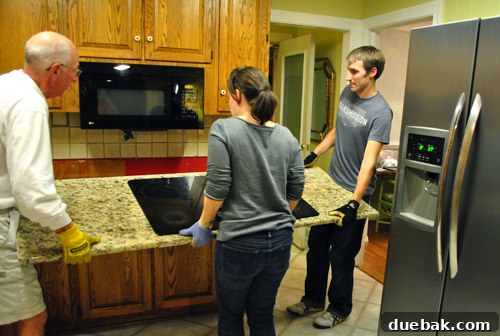
Our experience with countertops in our previous home set a high bar, both in quality and cost. We had splurged on beautiful granite, investing approximately $3,700 after discounts. While it was a significant expense, that granite became a defining feature of that kitchen, and having saved up for it, we had no regrets. However, for this current kitchen makeover, we entered the project with a firm commitment to staying substantially under that previous expenditure, especially given the increased scale. This new kitchen features roughly double the countertop square footage, including a large peninsula, making a direct material cost comparison challenging.
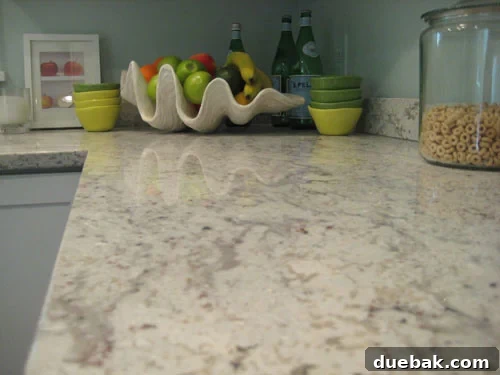
For instance, simply replicating the “pashmina” granite from Home Depot that we loved in our first kitchen would now cost upwards of $7,000 for this larger space. This figure was well beyond our established budget, necessitating a more creative and cost-conscious approach to material selection.
Initial Considerations: Butcher Block and Beyond
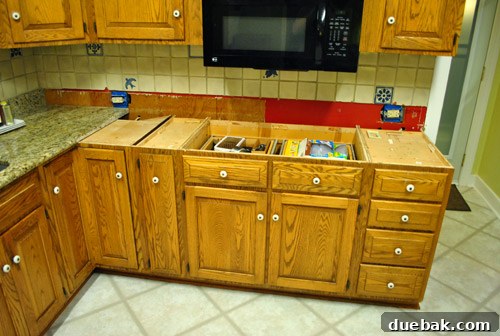
Butcher block countertops were an early contender due to their affordability and versatility, particularly the options available at IKEA that could be stained to achieve a rich, warm tone. However, our adjoining office space, just steps from the kitchen, already features dark wood counters. Integrating more wood directly into the kitchen would have created an overwhelming, monotonous aesthetic. Furthermore, we had grown accustomed to the sleek, effortlessly clean surface that granite provided in our previous kitchen, making a smooth, easy-to-wipe material a high priority.
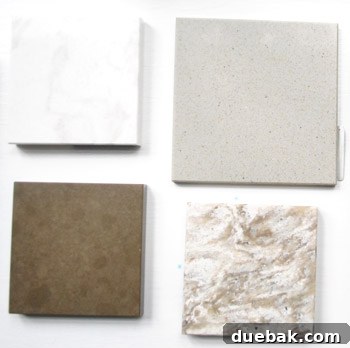
This time, we were keen to explore something different from granite. We had heard positive feedback about engineered quartz, various solid surface options like Corian, and even innovative eco-friendly materials such as recycled glass. Our extensive scouting missions yielded a collection of samples that we carefully brought home to evaluate in our own light and space.
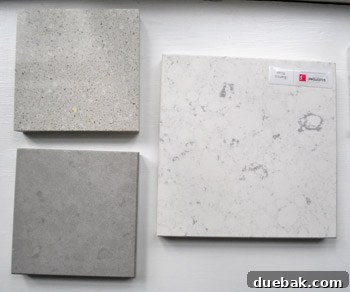
A Closer Look at the Contenders: Quartz and Solid Surfaces
- LG Viatera Quartz in “Geneva”: Located at Lowe’s, this sample presented a subtle, refined pattern, offering a balance of durability and aesthetic appeal.
- Caesarstone Quartz in “Pebble”: Sourced from a local specialty store, Kitchen & Bath Solutions, “Pebble” featured a finely textured appearance, reminiscent of natural stone without its maintenance demands.
- Silestone Quartz in “River Blanco”: Also discovered at Kitchen & Bath Solutions, “River Blanco” immediately captivated us with its bright, flowing white base accented with delicate veining, creating a sophisticated and airy feel.
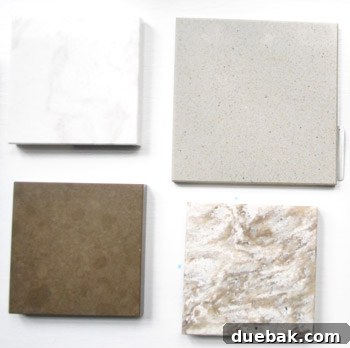
- Cambria Quartz in “Torquay”: Another find from Kitchen & Bath Solutions, “Torquay” offered a classic marble-like appearance with its distinctive veining, providing an elegant, timeless option.
- Cambria Quartz in “Sussex”: This sample, also from Kitchen & Bath Solutions, presented a more subdued and consistent pattern, suitable for a minimalist aesthetic.
- Allen & Roth Quartz in “Alloy”: Available at Lowe’s, “Alloy” featured a contemporary, almost metallic fleck within a solid base, offering a unique modern touch.
- Cambria Quartz in “New Quay”: From Kitchen & Bath Solutions, “New Quay” was characterized by its warm, earthy tones with subtle variations, providing a softer, inviting feel.
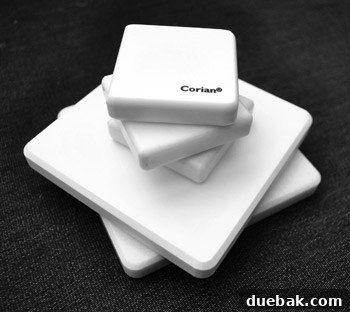
In addition to these quartz options, we collected a selection of white solid surface samples from Lowe’s, Home Depot, and Kitchen & Bath Solutions. Among them, Glacier White by Corian stood out, alongside promising options from LG Hi-Macs and Allen & Roth. While we also admired several stunning recycled glass eco-options, their premium price points unfortunately placed them outside our budget, reinforcing our commitment to eco-friendly choices elsewhere, such as our cork floors and the reuse of existing cabinetry.
The Near Miss: Silestone “River Blanco” and the Budget Reality Check
Among all the samples, the Silestone “River Blanco” truly captured our hearts. Its luminous white background, infused with delicate, organic patterns, felt like the perfect blend of elegance and modern simplicity. We could easily envision it transforming our kitchen into a bright, inviting space.
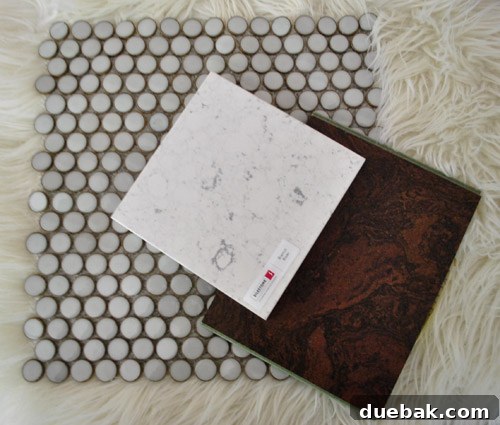
However, the dream was short-lived. Upon receiving the quote, we learned that the cost for Silestone “River Blanco” countertops alone would exceed $5,000. While beautiful, this price point was simply not aligned with our established budget goals for this renovation. It was a moment of disappointment, but also a pragmatic reminder of our financial parameters. We knew we had to find an equally suitable, yet more budget-friendly, solution.
The Winning Choice: Glacier White Corian – A Perfect Blend of Value and Performance
Ultimately, our search led us to the winning material: Glacier White Corian. This selection not only met our aesthetic desires but also satisfied our functional and budgetary requirements. We couldn’t be happier with our decision, and the initial disappointment over the Silestone has faded, replaced by excitement for our new counters.
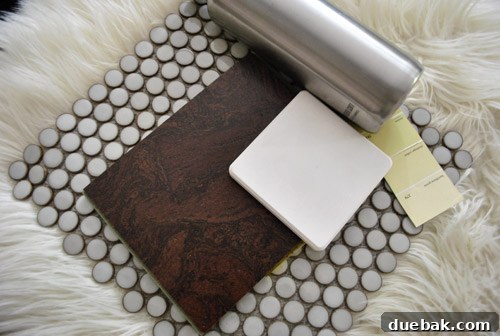
The image above showcases a larger white tile that closely represents the Glacier White Corian, providing a much better visual context than a tiny sample square. Accompanying it are a stainless steel bottle, symbolizing our new stainless steel appliances, and a paint swatch reflecting our current wall color. These elements, alongside our chosen backsplash tile and mocha cork flooring, allow us to visualize the complete design synergy.
Why Glacier White Corian Emerged as the Top Contender:
Our decision to choose Glacier White Corian was multifaceted, driven by a combination of practical benefits and strong recommendations:
- Exceptional Value: Corian offered a significant cost advantage, priced at approximately $38 per square foot at Lowe’s. This was substantially more affordable compared to many other quartz options we considered, which ranged from $80 to $100 per square foot. Furthermore, we capitalized on a 10% off project coupon from Lowe’s and will receive an additional 5% off by using our Lowe’s credit card, maximizing our savings.
- Proven Durability and Reliability: A key factor in our decision was the glowing endorsement from John’s sister, who has had Glacier White Corian countertops in her kitchen for over five years. She attests to its outstanding performance, reporting zero issues, no scratches, and no stains despite having a bustling household with a teenager, a pre-teen, a toddler, and a large dog. Her long-term satisfaction provided invaluable real-world proof of Corian’s resilience.
- Seamless Integration with Existing Sink: We opted to retain our existing deep stainless steel sink rather than choosing an integrated Corian sink. This decision was informed by feedback suggesting integrated Corian sinks can be more challenging to maintain. John’s sister also uses a stainless steel sink with her Corian countertops and has found this combination to be highly practical and aesthetically pleasing.
- Effortless Maintenance: Corian is a non-porous material, which is a major advantage. This characteristic prevents liquids and stains from penetrating the surface, making cleanup incredibly easy. According to the manufacturer, Corian also resists the growth of mold, mildew, and bacteria, contributing to a hygienic kitchen environment. Our existing habits of using trivets and wooden cutting boards for hot items mean that following Corian’s care guidelines will be second nature, a practice reinforced by John’s sister’s five years of scratch and stain-free use.
- Lightweight and Structural Compatibility: Unlike heavy materials such as granite, quartz, or concrete, Corian is significantly lighter. This was a crucial benefit, as it means our existing cabinets and floor joists can comfortably support the new countertops without requiring any costly structural reinforcements.
- Flawless Seam Integration: When installed correctly, Corian offers virtually seamless joints. This aesthetic advantage was particularly appealing, as the visible seams in our current granite countertops have always been a minor source of frustration. A smooth, continuous surface will elevate the kitchen’s overall sleekness.
- Enhanced Light Reflection: The bright, uniform surface of Glacier White Corian is excellent at reflecting light. This property is especially beneficial for our kitchen, which, being somewhat internal, can feel dark. The new counters will help to brighten the space, creating a more open and inviting atmosphere.
Embracing the White-on-White Aesthetic
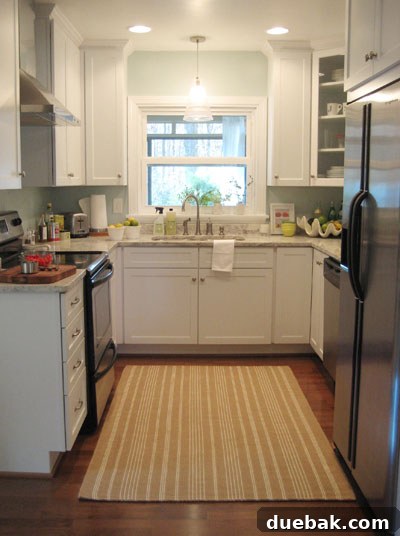
We understand that pairing white cabinets with white countertops might sound somewhat minimalistic or even bland to some. However, many of the inspiring kitchens in our design files feature this clean, sophisticated white-on-white palette. We envision this neutral foundation serving as a perfect backdrop. Our recently chosen gray-green penny tile backsplash will provide a subtle pop of color and texture, while vibrant accessories on our open shelves will introduce personality and warmth. This approach allows the countertops and cabinets to remain classic and clean, offering enduring appeal.
Looking ahead, we’re even contemplating a subtle splash of color for the cabinets – perhaps a soft taupe-gray, inspired by a kitchen we admired in a recent house tour. The final color decision is still pending, but we promise to keep you updated on every step of our kitchen transformation. We’d love to hear about your experiences! Have you chosen Corian, or perhaps concrete, quartz, granite, or butcher block for your kitchen? Share your countertop selection and what factors influenced your decision – there are so many fantastic options out there!
Psst- Don’t forget to check our latest giveaway winner. Click here to see if you’re the lucky recipient!