
Mastering Paint Color Selection: Unlocking the Secret of Undertones for Perfect Walls
Choosing the perfect paint color can feel like navigating a minefield. What looks stunning on a tiny swatch can transform into a glaring mistake once it covers an entire wall. This common dilemma resonates deeply with many homeowners, as echoed by the questions we frequently receive from our readers. For instance, Aubrey struggled with identifying subtle grey or brown undertones in swatches, making it hard to predict a color’s true appearance. Heyruthie, on the other hand, was surprised by the effectiveness of choosing “muddier” colors, recognizing how a vibrant hue can become overwhelming on a large surface.
These challenges highlight a universal truth in interior design: paint colors behave differently in practice than they do in theory. Our goal today is to demystify this process, guiding you through the art of selecting colors that will bring your vision to life without any unpleasant surprises. We believe that comparative swatches and real-world examples can convey more wisdom than words alone, so let’s allow these visual comparisons to illuminate the path to flawless paint choices.
The Amplification Effect: Why Colors Intensify on Walls
One of the most crucial concepts in paint selection is the “amplification effect.” This phenomenon explains why a seemingly subtle color on a swatch can appear dramatically bolder and more intense once applied to a large surface like a wall. When you paint an entire room, the color interacts with light from multiple angles, reflecting off all surfaces and essentially “amplifying” its saturation and perceived vibrancy. This is especially true for darker or more saturated hues.
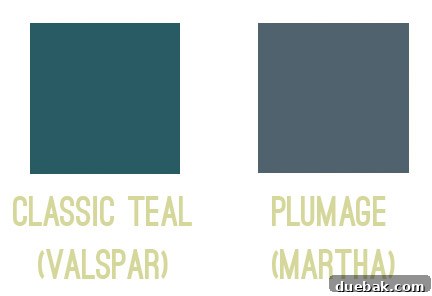
Consider the image above. On the left, we have “Classic Teal,” a bold and vibrant swatch that might perfectly match your initial vision for a deep teal tone. It’s rich, pure, and undeniably appealing. However, applying such an unadulterated color directly to your walls can often lead to an overwhelming or even garish result. On the right, we present “Plumage,” the actual color we used in our guest room. Notice how, in swatch form, “Plumage” appears significantly more grayed out, almost muted, compared to “Classic Teal.”
Yet, the transformation on the wall is remarkable:
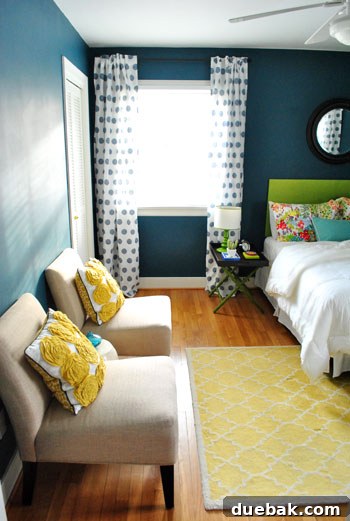
As you can see, once applied to the expansive walls, “Plumage” reveals itself as every bit as bold and deep as we had initially hoped. The subtle gray undertones in the swatch prevent it from becoming overpowering, allowing the rich teal to emerge with sophistication rather than intensity. Our general rule of thumb, especially for dark colors, is to select shades that look slightly faded or grayed out on the swatch. This ensures that once they’re on the walls, they will achieve the desired clarity and boldness without overwhelming the space. You can explore more details about our guest room transformation here.
The Power of Muted Undertones: Achieving Sophistication with Subtlety
The principle of choosing “muddier” or more muted tones extends across the entire color spectrum. It’s about understanding how undertones—the subtle hints of other colors like grey, brown, or even opposing hues—can dramatically influence a paint color’s perceived intensity and overall impact in a room. A truly pure, saturated color often lacks these undertones, making it brilliant in small doses but potentially jarring on a large scale.
Pink: From Playful to Overpowering
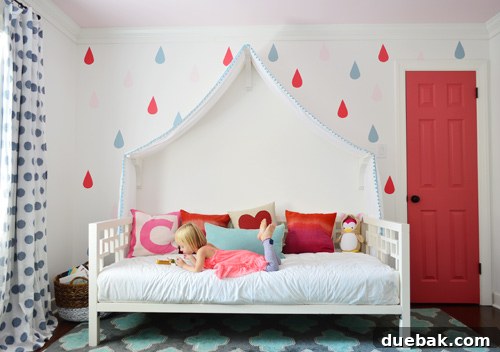
Let’s consider a cheerful pink. You might be aiming for a bright and happy accent, perhaps for a child’s room door, similar to how we approached Clara’s closet. The swatch on the left below represents a vibrant, unadulterated pink – the kind many are initially drawn to. However, the swatch on the right is the color we actually selected. On its own, this muted pink square looks considerably more faded or subdued.
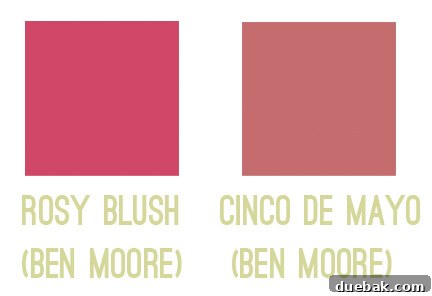
Yet, once applied to a significant area like a door, the muted pink transforms into a wonderfully bright and clear hue that brings joy without being overwhelming. The un-faded swatch on the left, while appealing in miniature, could appear almost neon in a larger application, creating an overly stimulating environment. This is the magic of choosing a subtly muted tone: it allows the color to express its vibrancy gracefully. Discover more about Clara’s closet and its charming raindrops here.
Aqua: The Peril of the Tiffany Box Blue
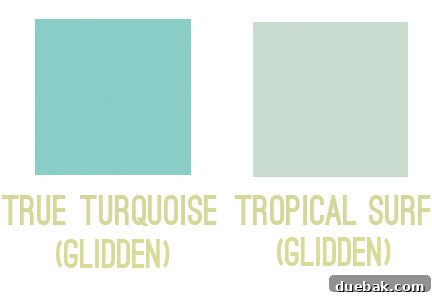
A cheerful aqua tone is another highly coveted color that, in our experience, can be notoriously difficult to get right. The color on the left in the next image is a peppy “Tiffany Box blue” – a hue that captivated us when we moved into our first home. We loved its promise of freshness and vibrancy. However, once it adorned the walls of our dining room, the reality set in: it was simply too overwhelming. While a room bathed in abundant natural light might be able to pull off such a bold statement, for most spaces, this color isn’t “muddy” enough and can become blindingly bright on the walls.
Instead, we’d gravitate towards something like the swatch on the right. This softer aqua, with its inherent muted quality, will still read clearly as a beautiful aqua tone when applied to a large area, providing that sought-after freshness without the intensity. You can see a great example of a subtle aqua in a laundry room makeover here.
Our general rule is simple: for painting smaller items like trays, side tables, accent chairs, or lamp bases, those clearer, unfaded, and unmuted colors can be fantastic. They provide a pop of energetic color in controlled doses. But for larger expanses – walls, doors, ceilings – we invariably lean towards muddier tones of the same color. Think of a softer aqua with a hint of gray-green undertone, ensuring it transitions from chic and inviting to comfortably beautiful, rather than an intense hue that “punches you in the face” upon entering the room.
Green: From Kermit to Classic Sage
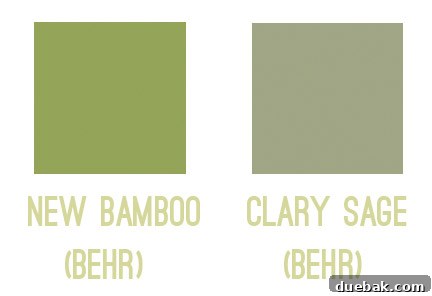
Greens often present a similar challenge. A bold, clear green can be incredibly effective on a piece of furniture or a bathroom vanity (though not always all of them, mind you!). However, when applied to entire walls, the vibrant green on the left swatch below would likely transform most rooms into a scene straight out of a Muppet show, reminiscent of “Kermit Theee Frog.” The green on the right, in contrast, might appear dull and uninspiring on a small swatch. Yet, on the walls, it has the potential to be truly stunning. This softer, more muted green, akin to a classic sage, pairs beautifully with natural wood trim or cabinetry, making it an excellent choice for a kitchen with wooden cabinets or a cozy den.
The Subtle Transformation: Beige to Beautiful Color
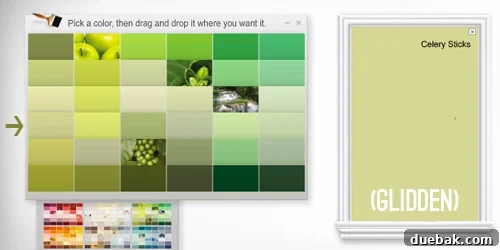
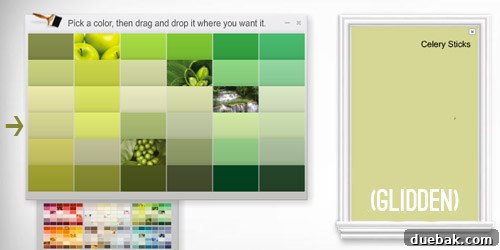
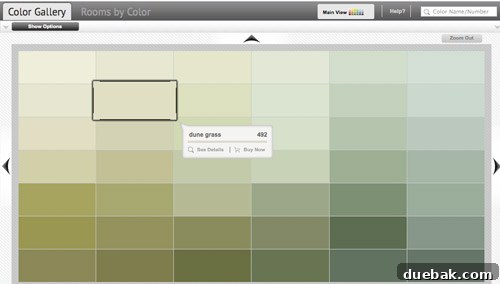
To further illustrate the enigmatic nature of undertones, consider how a swatch with muddy or muted qualities can almost resemble beige in your hand. Yet, when that same color covers a larger area, its true hue becomes undeniably clear. Observe the swatch on the left in the image below, marked with an arrow. It appears incredibly muted, almost wheat-toned. However, the larger rectangle on the right, which represents the exact same color, clearly reads as green, no longer tan or beige. This visual trick demonstrates how much our perception of color is influenced by its surrounding context and the sheer quantity of the pigment.
Update: A common question arises regarding whether the “muddy” version of a color can be found on the same swatch fan as its brighter counterpart. In our experience, these muted variations are almost always on a different swatch. You might find a range of clear tones, from bright aqua to light baby blue, on one swatch. To find the muddier equivalents, you’ll typically need to move a few swatches over to a fan that features a much grayer or muddier top color (e.g., a deep blue-gray) and then slide down to discover those beautifully subtle, grayed-out versions.
Dune Grass: A Whisper of Green
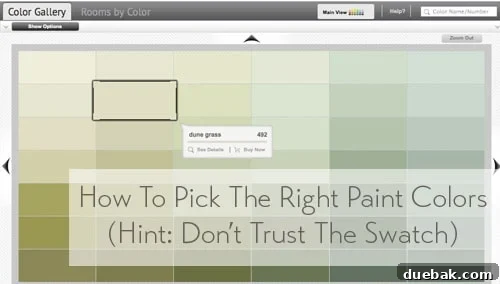
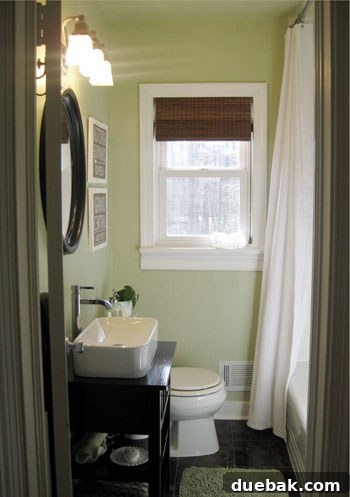
Our final example, “Dune Grass,” used in the bathroom of our first house, perfectly encapsulates this principle. In a small swatch, especially when placed alongside less muted greens, it appears almost entirely cream, beige, or tan, with only the faintest hint of green.
However, once applied to the bathroom walls, “Dune Grass” distinctly reads as a soft, serene green. The increased surface area magnifies that tiny drop of color, transforming the neutral-looking swatch into a clear, subtle hue. If you’re aiming for a light or subtly colored wall – be it green, blue, pink, yellow, orange, or purple – consider those lighter, wheat or gray-toned swatches that initially appear to have barely any color. The result is often a room that is clearly that desired color, but in its most gentle and sophisticated iteration. You can read more about that significant bathroom renovation here.
Beyond the Swatch: Testing Your Choices
As Heyruthie wisely noted, colors displayed on monitors can be highly inaccurate. While these comparisons hopefully provide valuable insight, the ultimate method for making a final choice is to bring physical swatches home. Observe them in your room’s unique lighting conditions throughout the day. Natural light, artificial light, and even the direction your windows face can drastically alter a color’s appearance.
If you’re still uncertain or nervous, don’t hesitate to invest in a test pot (or three!). These small sample pots are typically inexpensive – just a few dollars – and can save you a significant amount of money, time, and frustration associated with re-painting. Apply a generous sample area, ideally on a few different walls, and live with it for a day or two before committing. This step is invaluable for seeing the color’s true potential and how it interacts with your home’s unique environment.
Room-Specific Considerations: When Bright Colors Work
It’s truly astonishing how different the same paint color can appear in various rooms and lighting situations. We acknowledge that there are undoubtedly individuals who have successfully used bolder colors, similar to those in our “left column” examples, with fantastic results. The key truly lies in understanding your specific room: how much natural light it receives, the size of the space, and how you layer in other decor elements.
Take, for instance, a potentially blindingly bright blue paint color, which looks absolutely awesome in a lofted and light-filled studio. In this setting, the ample natural light and high ceilings can temper the intensity, and the color is further balanced by the clever use of tan textures in the pinboards and an oversized mirror. This demonstrates that while our “muddier” rule is generally reliable, context is everything. Always consider your specific space and personal style.

Smart Ways to Save on Paint: Your Guide to Discounts
Since we’re on the subject of paint, here are some invaluable tips we’ve gathered over the years for scoring discounts and saving money on your next painting project:
- “Oops Paint” is Your Friend: Many stores offer “oops paint” – mis-tinted or returned paint that’s heavily discounted, often as low as $1 per gallon. While you might not find your exact desired shade, you can often find a close match or even buy a few cans to mix, creating a custom color at a fraction of the cost. Check your local paint or hardware stores regularly for their “oops” section.
- Engage with Local Shops: If you have a favorite local paint store (like our local Virginia Paint), be sure to follow their social media pages (e.g., Facebook) or sign up for their mailing list. Stores frequently announce sales, specials, or provide exclusive coupons (e.g., $10 off or 40% off) to their online followers and subscribers.
- Check Big Box Store Promotions: For larger retailers like Home Depot or Lowe’s, always visit their websites before buying. Home Depot, for example, has a dedicated Paint Promotions page that lists current deals and rebates.
- Utilize Store Credit Cards: Consider using the store’s credit card if you plan on making larger purchases. Lowe’s automatically applies a 5% discount on all purchases made with their credit card. For Home Depot, simply ask them to match Lowe’s 5% discount at checkout, and they will typically honor it.
- Sherwin Williams Sales: Sherwin Williams is well-known for running excellent promotions, including their frequent 40% off sales. A clever tip we’ve heard (though always confirm with your specific store) is that you can buy untinted gallons during these sales at the discounted rate and then bring them back later to have them tinted to your desired colors at no additional charge. This strategy allows you to lock in significant savings even if you haven’t finalized your color choices yet, especially useful if you have multiple rooms to paint. Keep an eye on their special offers page.
- Explore Manufacturer Websites for Deals: It never hurts to click around any paint manufacturer’s website for promotional information. Brands like Behr and Benjamin Moore frequently offer coupons, rebates, or buy-one-get-one-free deals on sample quarts or gallons. For example, Behr might have a $5 off promotion, while Benjamin Moore might offer a buy-one-get-one-free deal on a quart of paint.
- Look for Holiday Sales: Major holidays (e.g., Memorial Day, Labor Day, Black Friday) are often prime times for paint sales. Plan your painting projects around these periods to maximize your savings.
We hope these insights empower you to choose paint colors with confidence and save money in the process. Do you have any other brilliant paint undertone tips to share? Or perhaps a cautionary tale about choosing the wrong swatch that taught you a valuable lesson? We’d also love to hear any other clever strategies you’ve discovered for getting paint at a discount!