
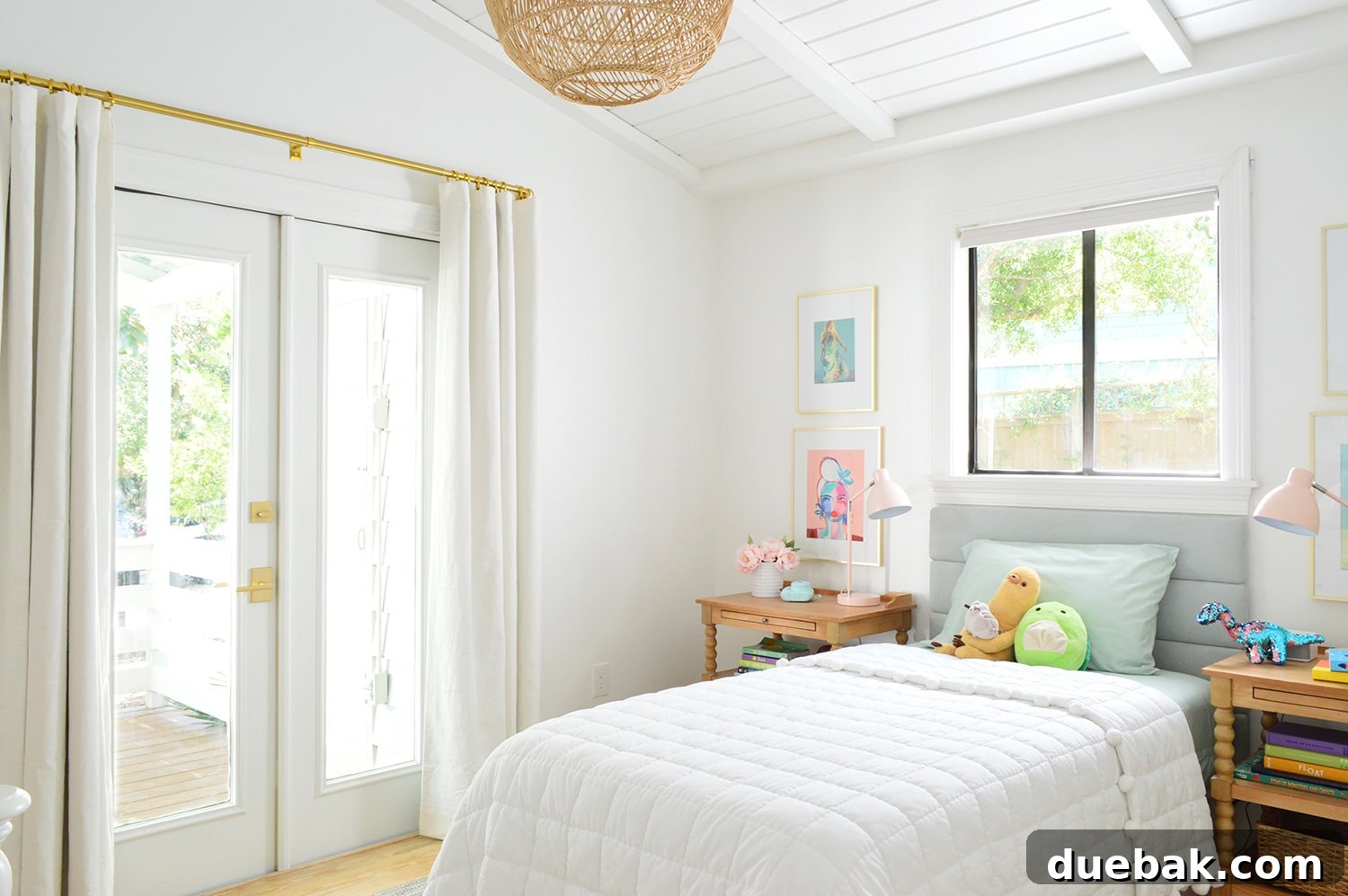
Building on the success of our recent DIY project to craft a straightforward headboard for our son’s bedroom, we found ourselves with a surprising bounty of leftover materials. This unexpected surplus presented a fantastic opportunity to experiment with a fresh design concept in our daughter’s room, culminating in a completely free headboard for her! There’s nothing quite like the satisfaction of a zero-cost project, especially one that combines practicality with a personal touch. Our daughter played a significant role in both the design selection and the hands-on creation, making the finished headboard not just a comfortable backrest (you know how much I value functional design!), but also a cherished piece she deeply appreciates because she literally had a hand in bringing it to life.

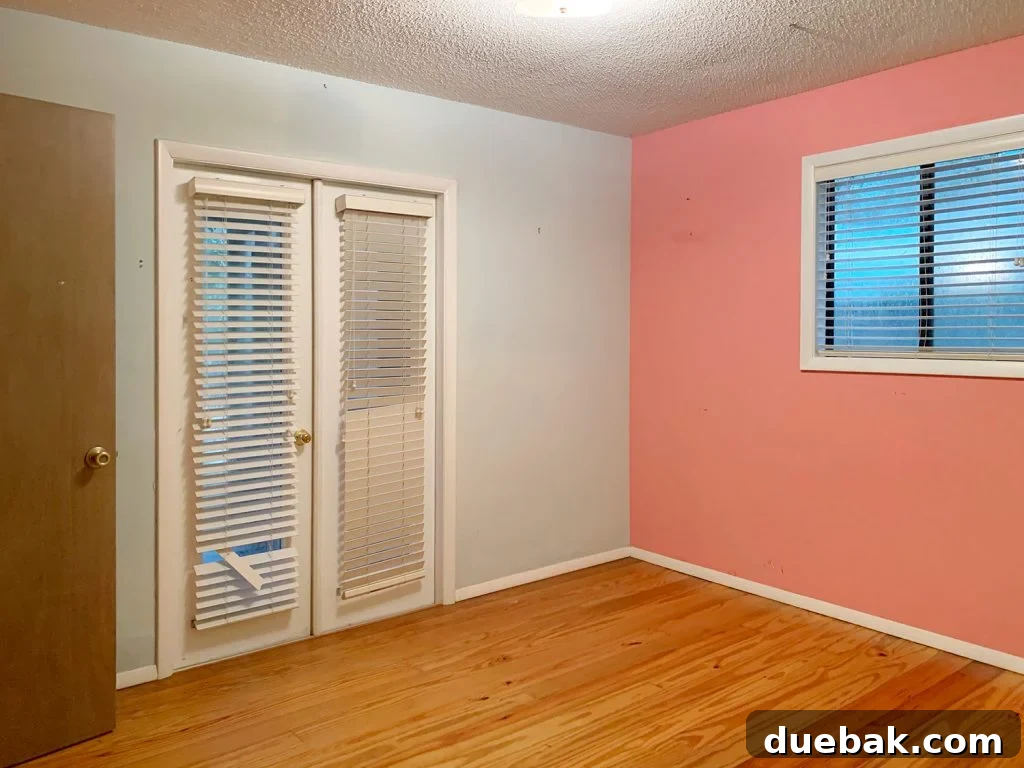
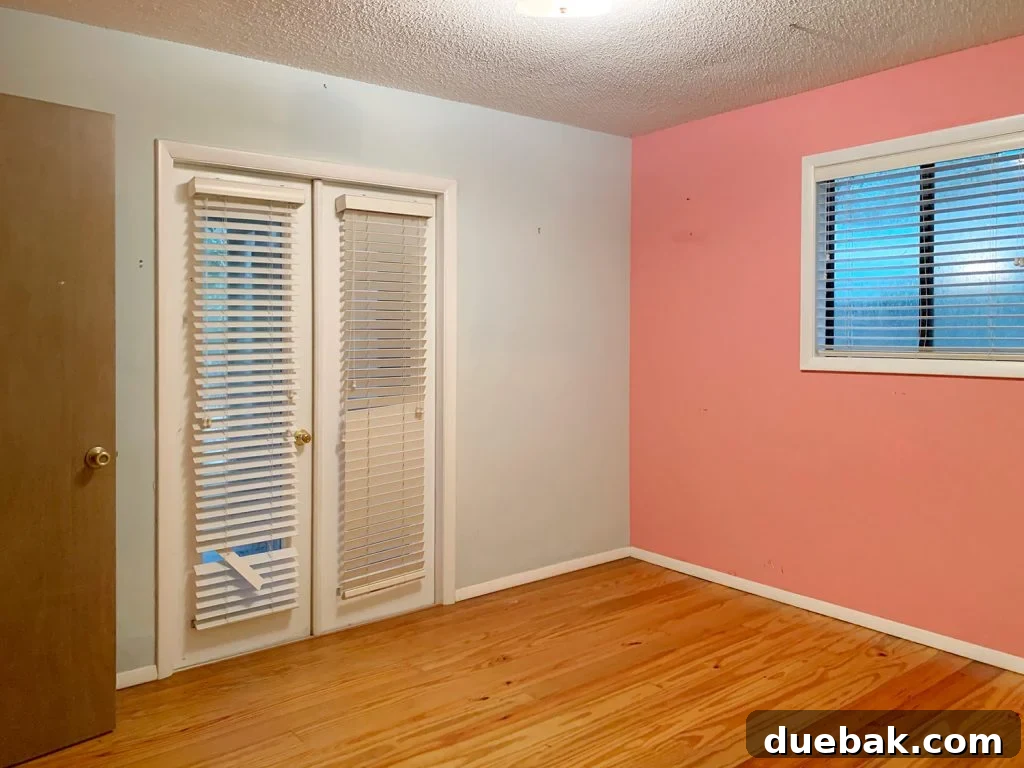
Before we delve into the step-by-step process of creating this unique headboard, it feels appropriate to share an update on how our daughter’s room has evolved since we first moved into this home. Many of you might recall its original state, which was quite different from its current welcoming ambiance. For those who need a refresher, this is what the room looked like when we first toured the house.
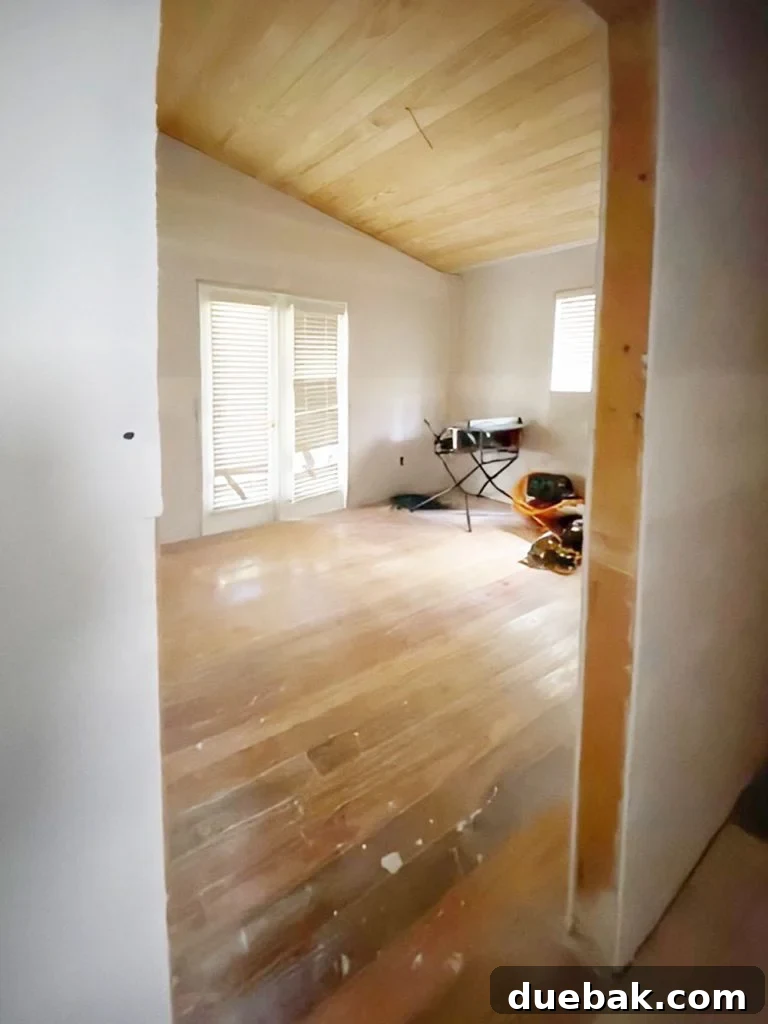
Just as we did with our son’s room, we quickly realized the incredible potential of vaulting the ceilings in this space. Since there was nothing but an empty attic above and the roof line already sloped this way, no major structural modifications were required, making it an efficient way to dramatically enhance the room’s sense of openness and grandeur. This renovation choice instantly transformed the room, making it feel significantly more spacious and airy. Furthermore, we seized the opportunity to replace the outdated popcorn ceilings with a charming plank and beam aesthetic, adding character and warmth. These significant structural and cosmetic improvements were orchestrated by our contractor while we were still residing in Virginia, during which time we received exciting progress photos like the one shown below. For a deeper dive into how we managed this extensive renovation remotely, you can find an entire post dedicated to our renovation journey from afar.
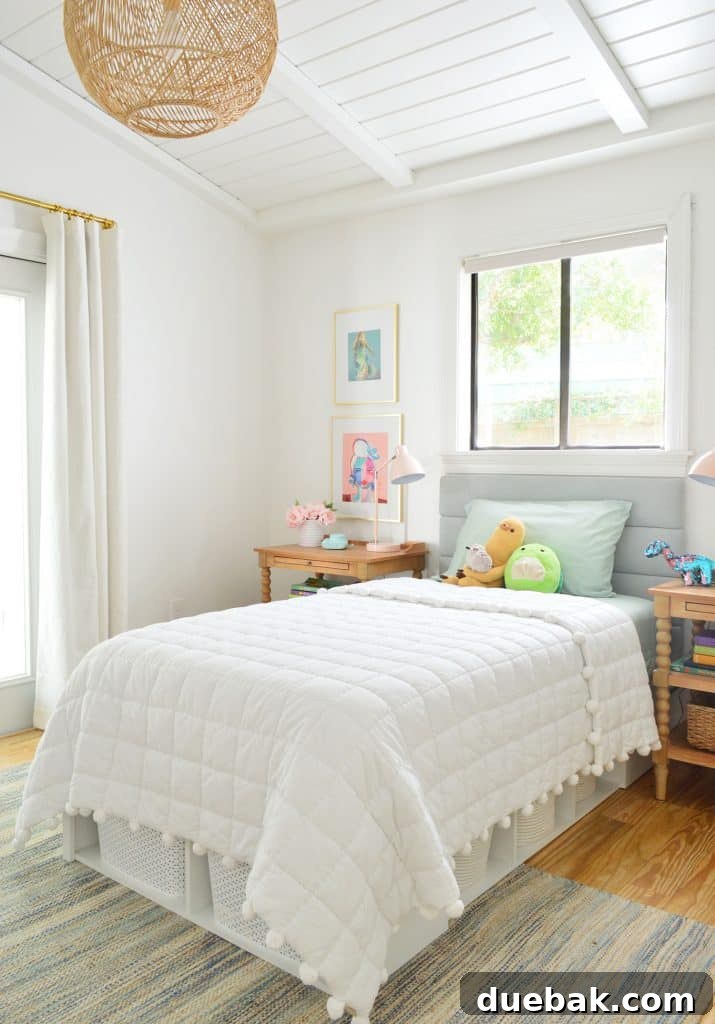
Fast forward to today, a little over two months after moving in, and you can see the results of our efforts. What’s truly remarkable is that this refreshed space is almost entirely furnished with items we already owned, showcasing the power of thoughtful repurposing. You might recognize the cozy rug from our kids’ art room in our previous home. The charming nightstands made their way from the pink house, bringing a touch of familiar comfort. Although not visible in this particular shot, the dresser, positioned on the opposite wall, and the elegant bedside lamps were carefully transferred from her old bedroom, maintaining a sense of continuity and cherished memories. This approach not only saved us money but also allowed us to infuse the new space with beloved pieces that tell a story.
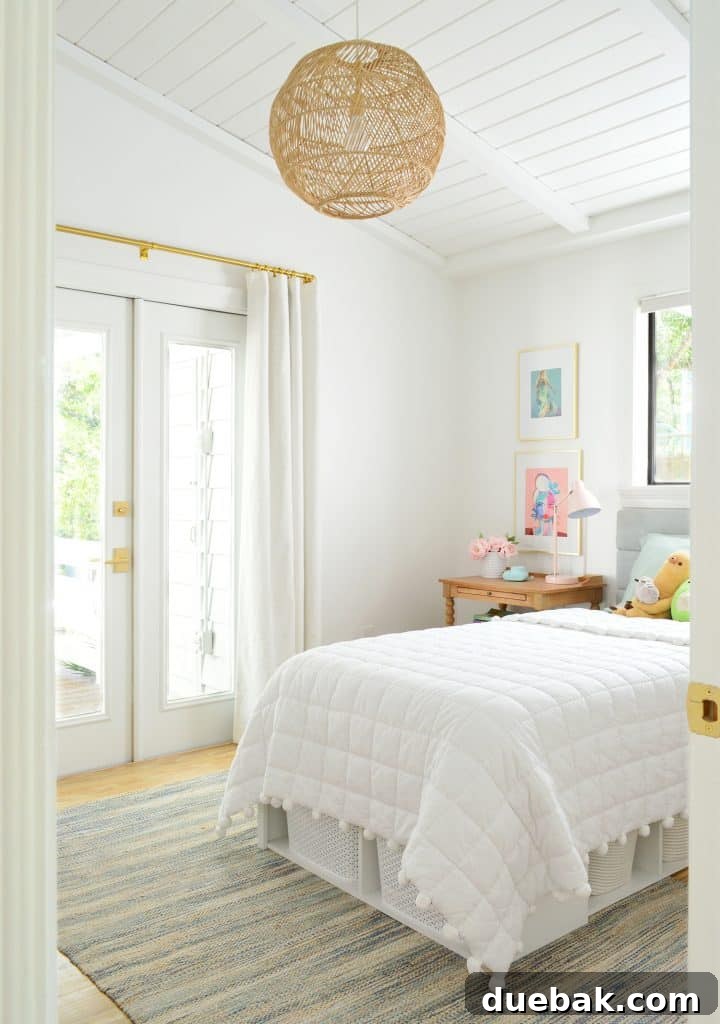
The only truly new additions to the room are a stylish pendant light and some essential window coverings, including the elegant curtains, their coordinating curtain rings, and a sturdy curtain rod. The most significant new furniture piece is the bed frame itself. As we discussed in a recent podcast episode, our primary reason for choosing this particular bed was its ingenious design, offering three sides of ample under-bed storage. This feature is a game-changer for a child’s room, providing dedicated cubbies that neatly accommodate bins filled with everything from board games and LEGO creations to an ever-growing collection of toys and, of course, countless books. It’s truly astonishing how much “stuff” can be organized and tucked away beneath the bed, making the room feel tidy and spacious.
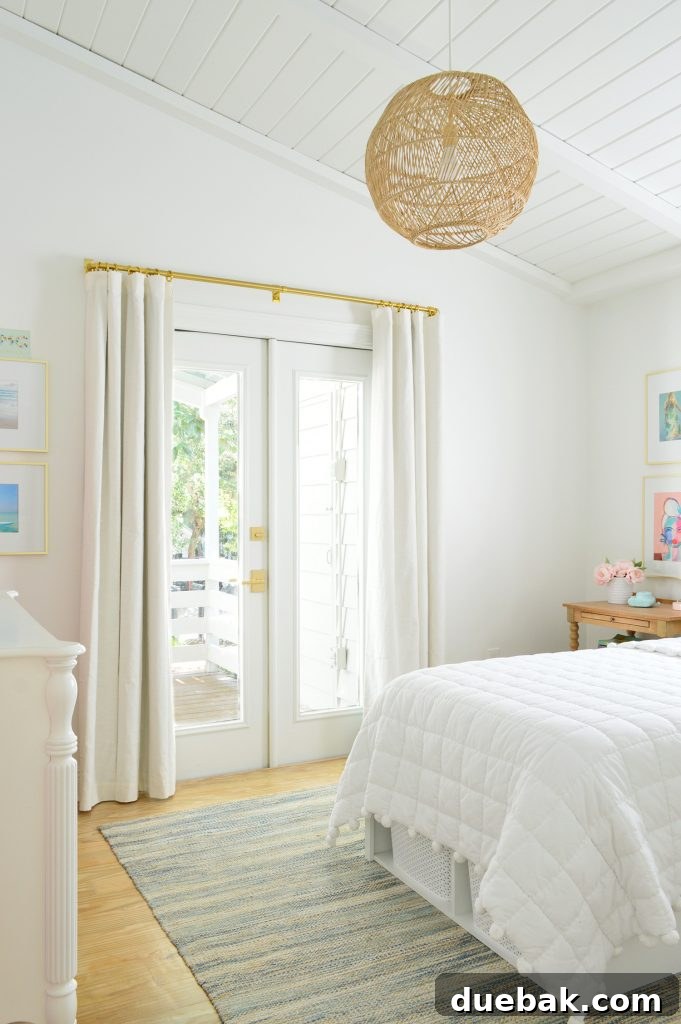
Upon purchasing the house, the presence of an exterior door in a child’s bedroom initially raised some eyebrows. Visions of future teenage sneak-outs certainly crossed our minds, and our initial plan was to replace it with a large, beautiful window for more light and better furniture arrangement options. However, we proactively addressed these concerns by installing a robust deadbolt and integrating the door into a comprehensive whole-house alarm system. This system is incredibly sensitive, designed to alert us immediately if the door is opened even slightly or, heaven forbid, if it’s ever tampered with. This heightened security brought an unexpected and profound peace of mind: in the event of a fire, our daughter and her brother, who both sleep on this side of the house, would have a direct and safe exit. While converting it to a window remains a possibility for the future (primarily for increased flexibility in furniture placement), we currently feel secure and comfortable with its existing setup.
But I promised this post would delve into the details of a fabulous new headboard, didn’t I? Let’s get right to the heart of this exciting DIY project!

Strategically placing our daughter’s bed beneath the window was the most logical and space-efficient layout for her room. However, this arrangement left little to no clearance for a bulky, store-bought headboard. While we’re certainly no strangers to the creative solution of positioning a headboard in front of a window, as we successfully demonstrated in the duplex renovation, this particular situation didn’t feel quite right for that approach. We needed a more custom, integrated solution that wouldn’t obstruct the natural light or the aesthetic flow of the room.
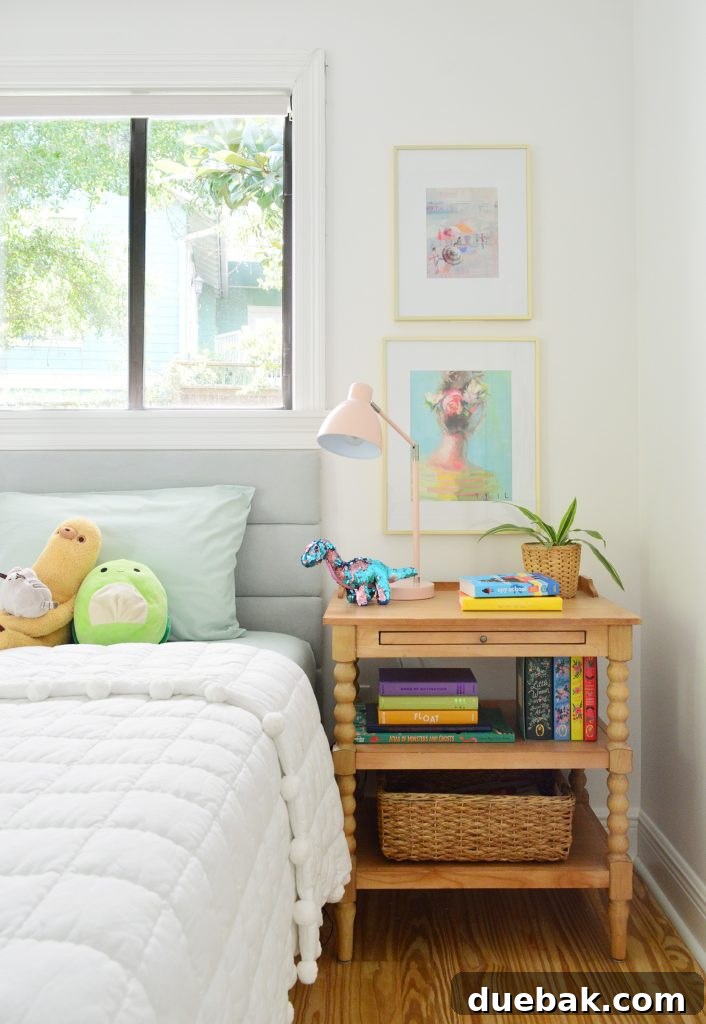
After completing our son’s headboard, we were left with a decent amount of scrap fabric. The catch? None of the pieces were large enough to serve as a single, continuous “headboard-sized” panel. Rather than seeing this as a limitation, we viewed it as an opportunity for creative problem-solving. We realized we could ingeniously piece these fabric remnants together to achieve a specific look – one that I later discovered was formally known as “channel tufting.” This style, characterized by its elegant, parallel upholstered channels, evokes the sophisticated charm of pieces like this stunning headboard or this equally appealing design. It was the perfect solution for utilizing our scraps and creating a custom, stylish headboard without additional material cost.
With our design direction settled, it was time to bring in our esteemed “designer”—our ten-year-old daughter—for a crucial consultation. We presented her with various examples of both vertical and horizontal channel headboards, discussing the aesthetic impact of each orientation. After careful consideration, she confidently chose a horizontal design and specified that she wanted three panels visible above the mattress. This crucial input guided our planning; knowing that the headboard needed to extend all the way down to the bed frame to prevent anything from falling behind it, we calculated that we would actually need to create four panels in total to achieve her desired visual effect while ensuring complete functionality and a polished finish.
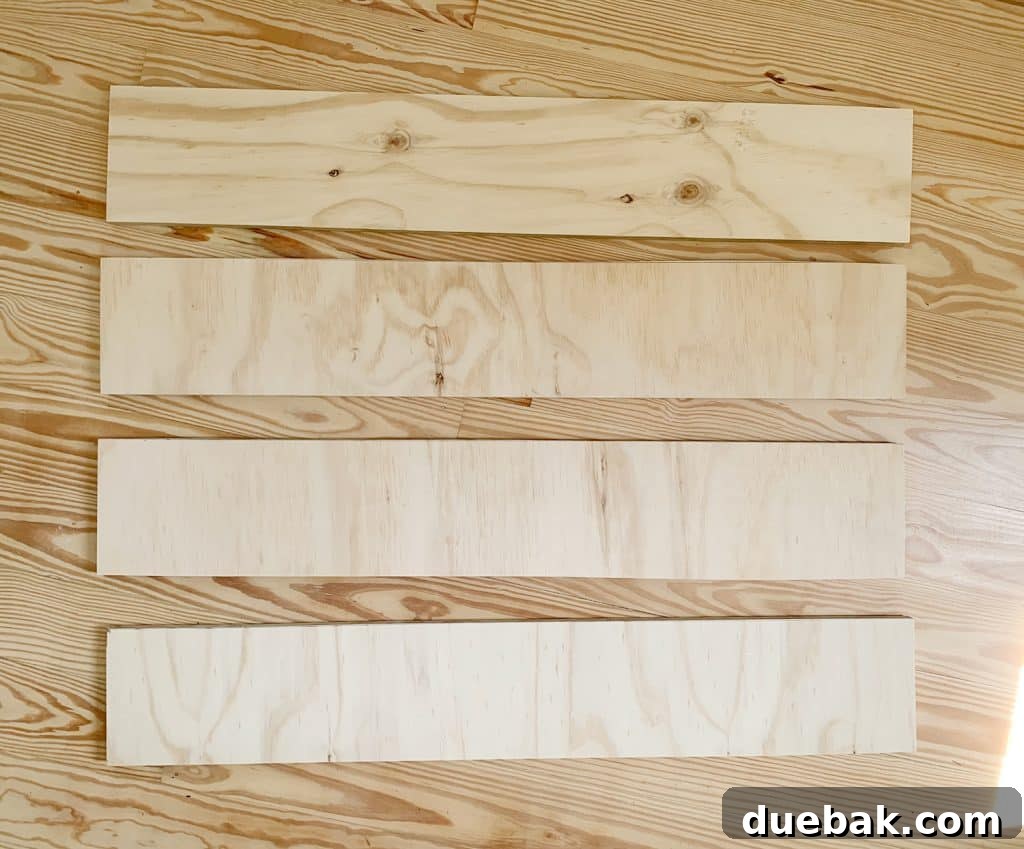
To begin, we meticulously cut four identical strips of plywood, which were conveniently leftover from another recent DIY project. Utilizing a circular saw for precise cuts, each panel measured 39 inches wide by 7 inches tall. We carefully factored in the additional half-inch thickness that the batting and fabric layers would add, ensuring our final dimensions would be perfect for the overall headboard design. This careful measurement and use of salvaged materials underscored our commitment to both sustainability and a budget-friendly approach.
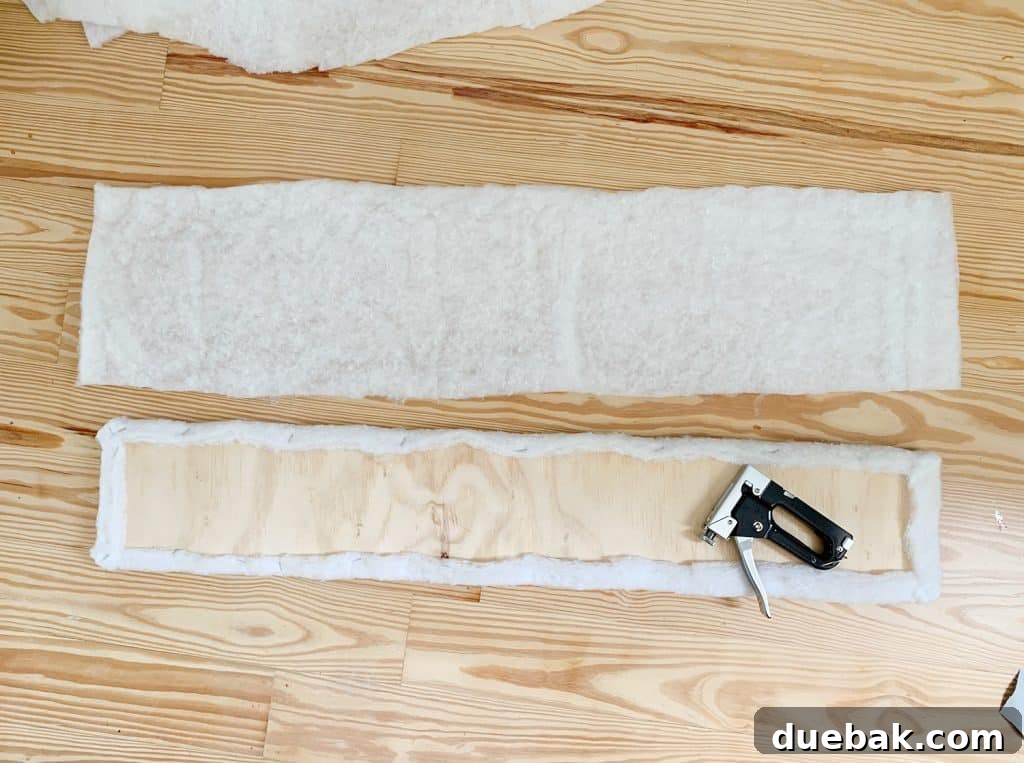
The subsequent steps mirrored the process we employ for any other DIY upholstered headboard we create, with one key distinction: each channel piece is upholstered individually *before* the entire unit is assembled. To start, take each precisely cut plywood panel. Wrap two generous layers of batting around it, ensuring an even distribution and plush feel. Begin stapling the batting securely to the back of the panel. For older children, this is an excellent opportunity to involve them in the hands-on creation; cutting the batting and even using the stapler (under close supervision, of course, and if they possess the necessary hand strength) can be a rewarding and educational experience, fostering a sense of ownership over the project.
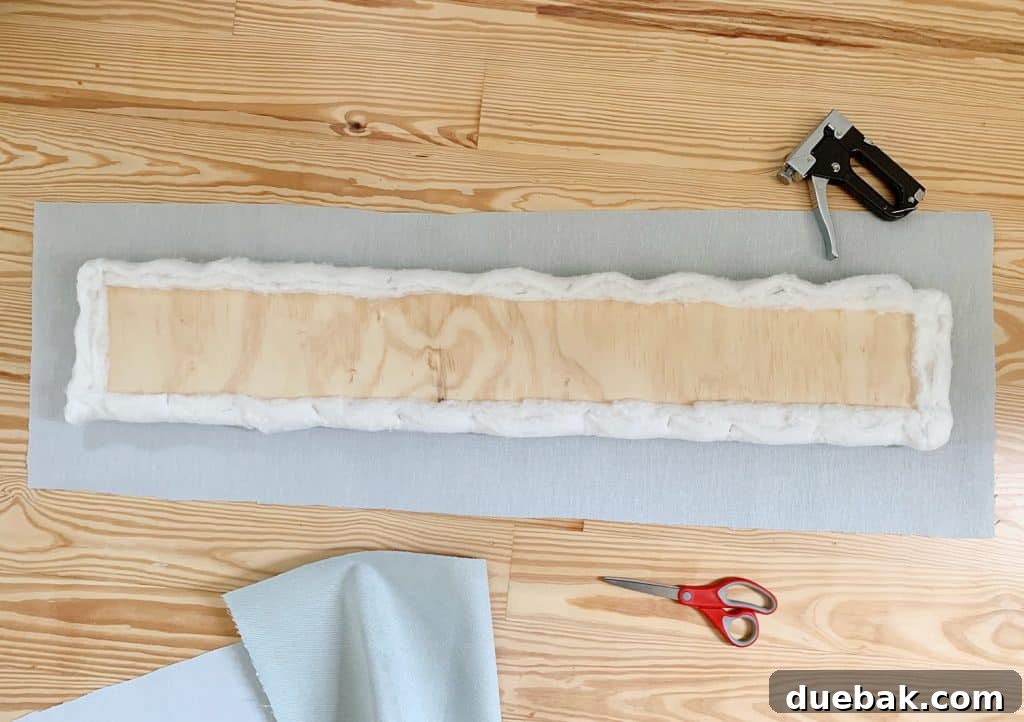
Once the batting is securely in place, the next phase involves repeating this wrapping and stapling process with your chosen fabric. We’ve shared more in-depth tips and tricks for achieving a professional finish in last week’s detailed post, including expert advice on neatly treating corners and a crucial reminder to pay close attention to your fabric’s pattern, if applicable. This consideration is particularly vital for a channel-tufted design, as you’ll want to ensure any patterns align seamlessly across your individual pieces for a cohesive and polished look. Fortunately, with our chosen fabric, pattern alignment wasn’t a concern, simplifying the process while still yielding a sophisticated result.
After successfully upholstering each individual plywood piece with both batting and fabric, you’ll be left with a collection of beautifully finished channel panels, ready for the assembly stage. This moment is truly satisfying, as you begin to see the distinct elements of your headboard come together, transforming simple materials into something elegant and custom-made.
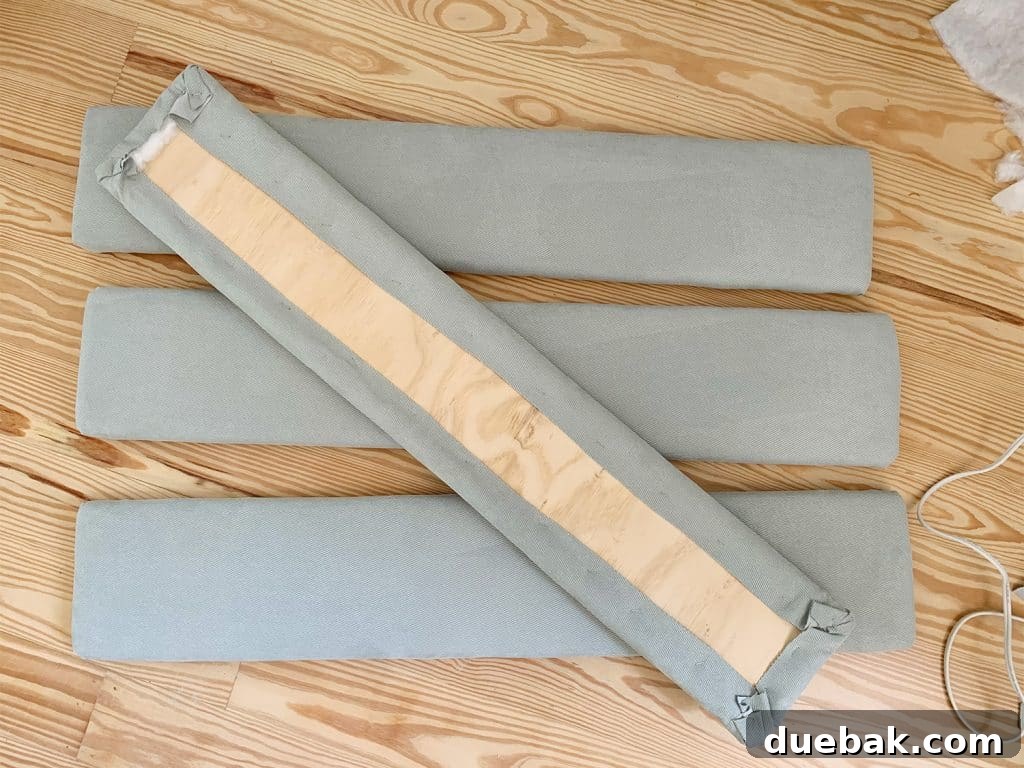
While various methods exist for joining these upholstered panels, we opted for a straightforward and robust approach using two additional pieces of scrap plywood. These were strategically nailed and then screwed across the back of the upholstered panels, functioning as sturdy connectors that spanned all four channels. It’s imperative to exercise caution during this step: ensure your nails and screws are not excessively long, preventing them from penetrating through the upholstered plywood strips. You certainly don’t want them to poke out the front or be felt through the batting and fabric, compromising both the aesthetics and comfort of your finished headboard. Precision in fastener length is key to a professional and comfortable result.
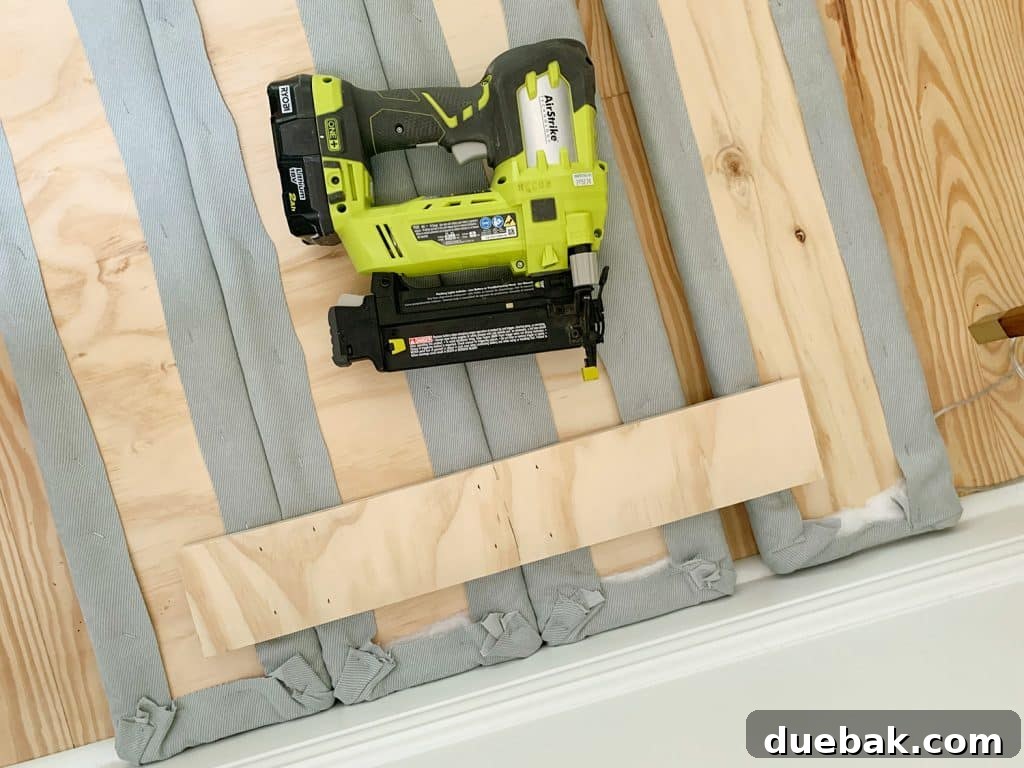
As illustrated in the photograph above, we ensured perfect alignment of our panels by gently pushing the entire assembly against a wall during the attachment process. This simple technique helped maintain a perfectly even edge across all the channels. Additionally, I highly recommend firmly pushing the individual upholstered pieces together as you secure them. This critical step guarantees there are no unsightly gaps between the panels, resulting in a seamlessly integrated and polished headboard. Once assembled, you can then hang your headboard using your preferred wall-mounting method. Options include attaching sturdy D-rings directly to the back. However, our go-to technique involves creating a custom “cleat” using a circular or table saw with the blade set at an angle. For those who prefer a ready-made solution, pre-manufactured cleats are also available. You can delve into more detail on how we craft our own cleats in this informative post, which outlines the benefits of a French cleat system for secure, flush mounting.
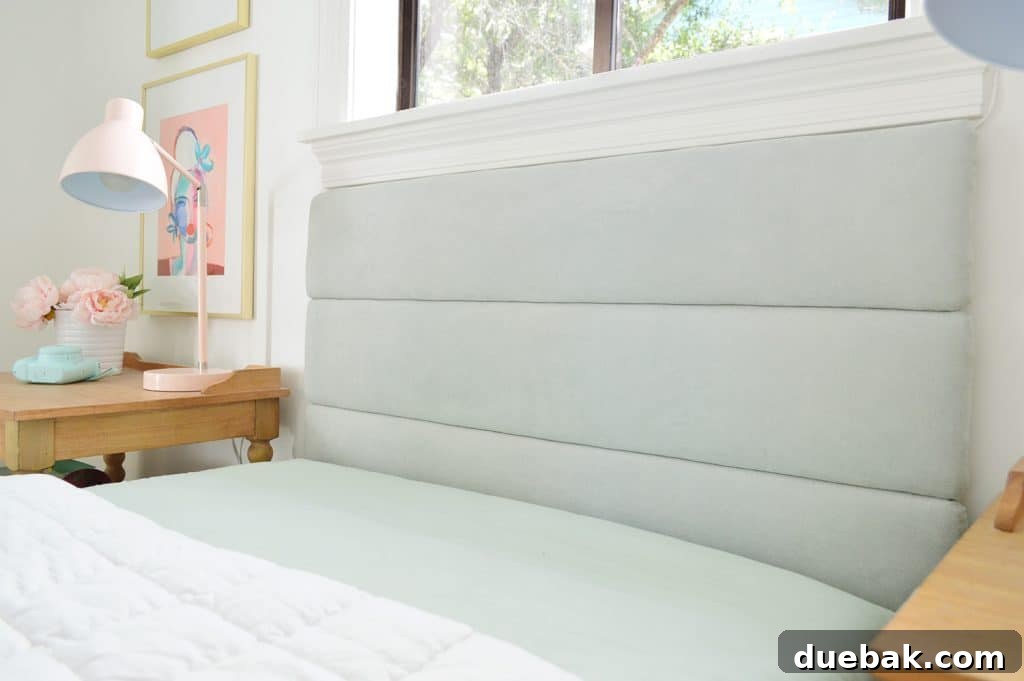
As I touched upon earlier, while only three of the beautifully upholstered channels are prominently visible above the mattress, we deliberately crafted a fourth panel. This intentional design choice ensures that the headboard extends seamlessly all the way below the mattress, reaching the top of the bed frame. You can clearly observe this thoughtful extension in the photograph below, where I’ve temporarily shifted the mattress slightly to reveal the full design. When planning your own channel-tufted headboard, it’s crucial to consider this relationship between the headboard’s bottom edge and the bed frame. Neglecting this detail can sometimes lead to an undesirable gap between the mattress and the wall or frame, creating an unfinished look and potentially allowing items to fall through. By accounting for this space, we achieve a more polished, integrated, and functional headboard.
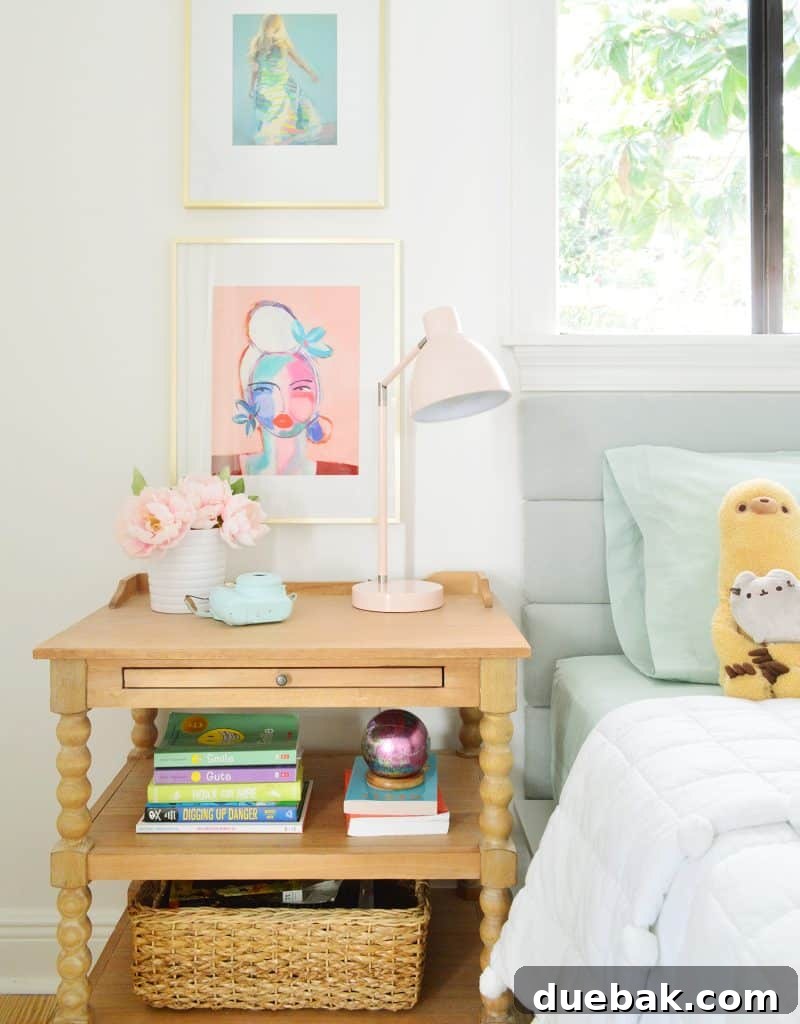
With the mattress comfortably pushed back into its proper position, the inclusion of that fourth, seemingly hidden panel makes a significant difference. While its absence might not have been immediately obvious to the casual observer, avoiding that awkward gap between the bottom of the headboard and the top of the bed frame creates a far more intentional and well-designed aesthetic. We are incredibly pleased that we invested the extra time and effort to craft all four panels, resulting in a perfectly integrated and polished headboard that enhances both the comfort and visual appeal of the room.
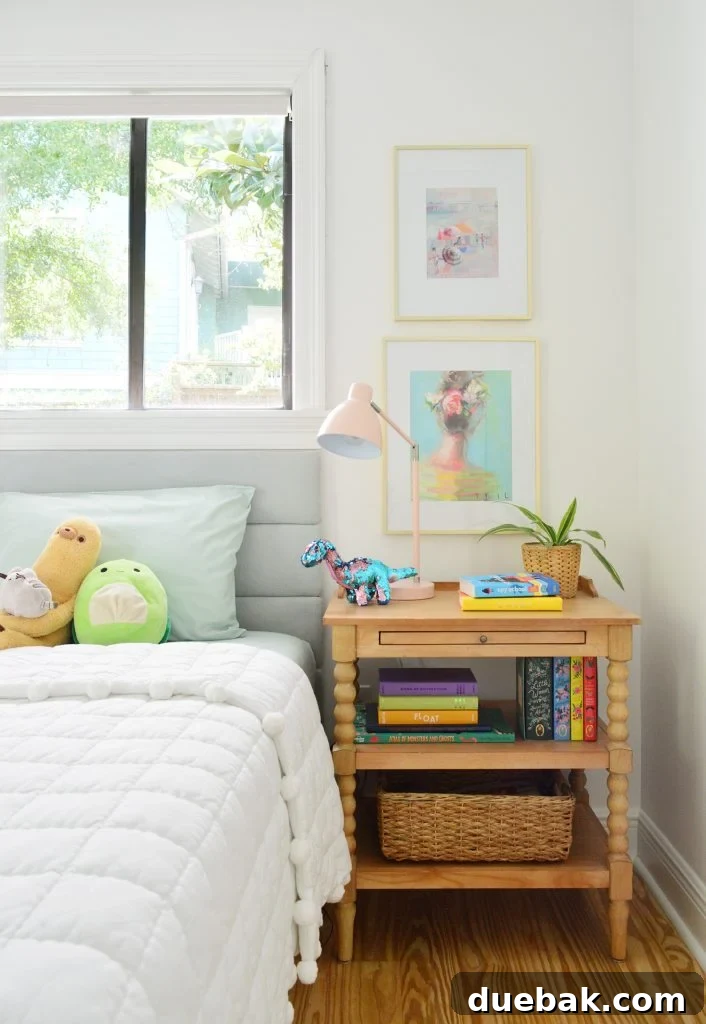
There’s still so much more to unveil within this room! We’re particularly excited to showcase some large canvas artwork for which we ingeniously DIYed a custom frame. The process was surprisingly easy, and the finished result was so impressive that we immediately set about creating another one for a different large piece of art we own. Furthermore, a massive, vibrant painted wall treatment behind the dresser awaits its big reveal, promising a burst of color and personality. Rest assured, these are tutorials for another day. We’ve strategically cropped certain elements, including two entire walls, from this post to preserve the element of surprise and build anticipation for future reveals.
In addition to these room tours, we’re also preparing to share some exciting photos of our bathroom renovation, so there’s a wealth of fresh content in the pipeline! But for now, I’ll leave you with one final look at this room’s incredible transformation. Vaulting the ceiling stands out as one of the most impactful decisions we made for this space. In person, it genuinely feels twice its original size, a testament to the power of thoughtful design. Witness the dramatic change: Before…
…and now!
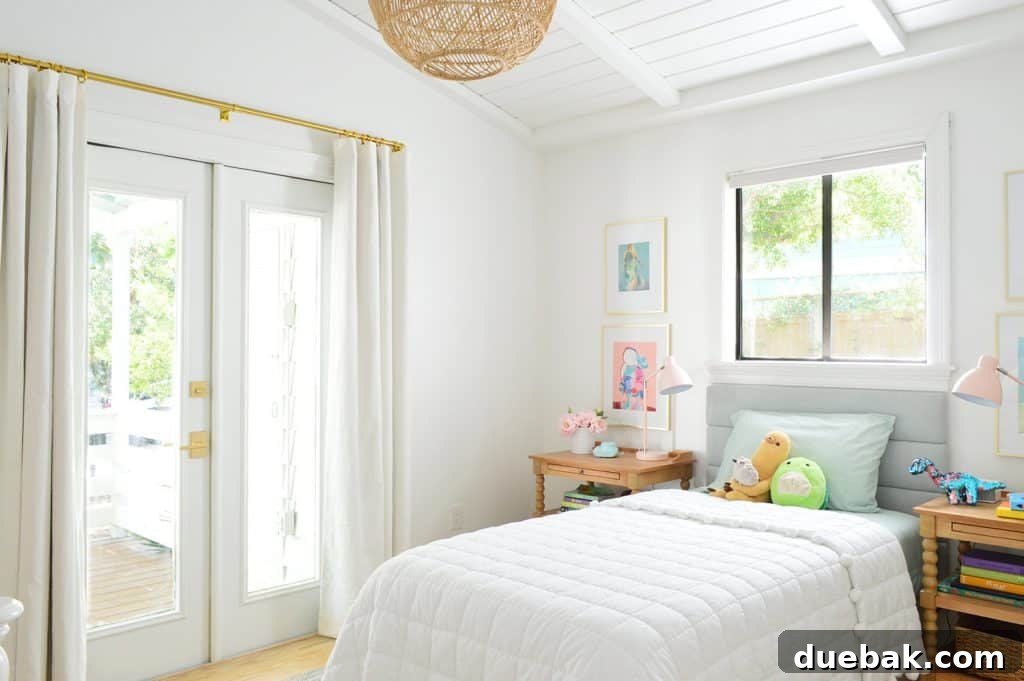
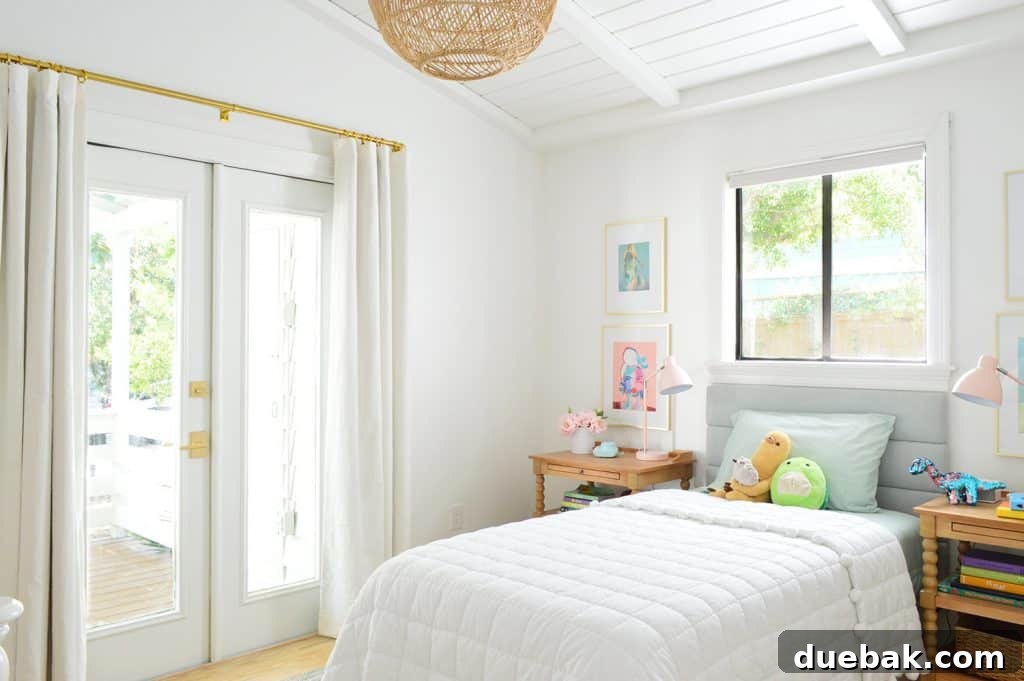
It’s quite amusing how a single horizontal photograph, which once effortlessly captured the entirety of the room, now only shows half of its expanded glory. This truly highlights the incredible visual impact of our renovation efforts!
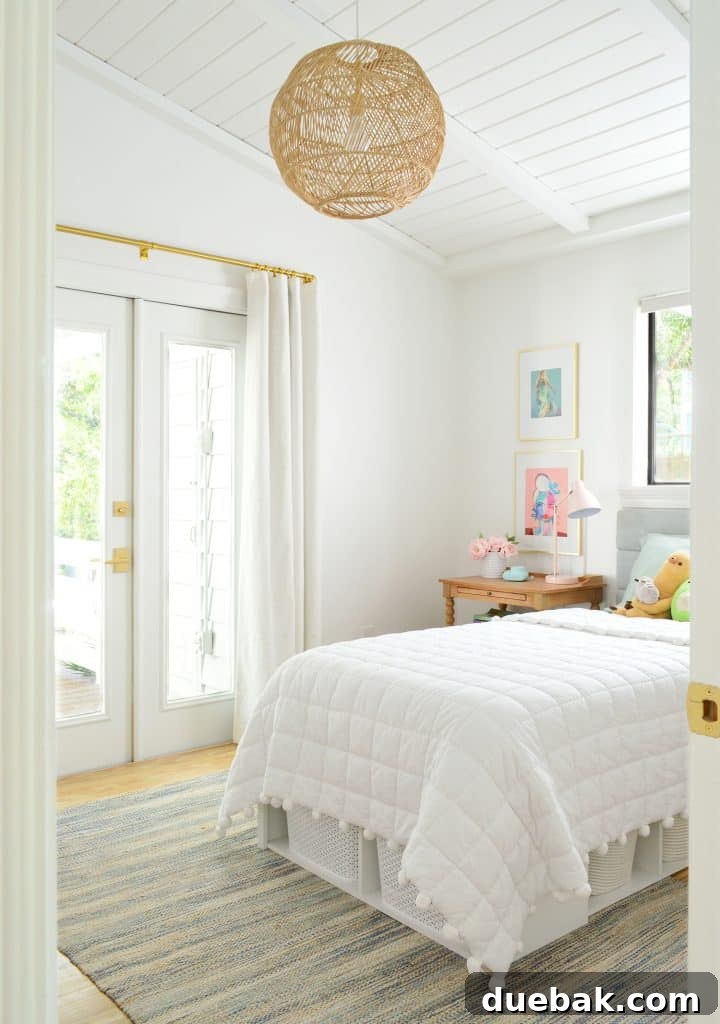
Ah, that’s better. This vertical perspective truly captures the heightened ceilings and the overall spaciousness we achieved in this delightful room. It’s a testament to how architectural changes, combined with thoughtful design, can utterly transform a space.
Explore More DIY Headboard Tutorials
Feeling inspired to tackle your own headboard project? If you’re eager for more creative DIY headboard ideas, be sure to explore these other fantastic projects we’ve completed, all utilizing similar foundational techniques. Each offers a unique approach to adding personality and comfort to your bedroom:
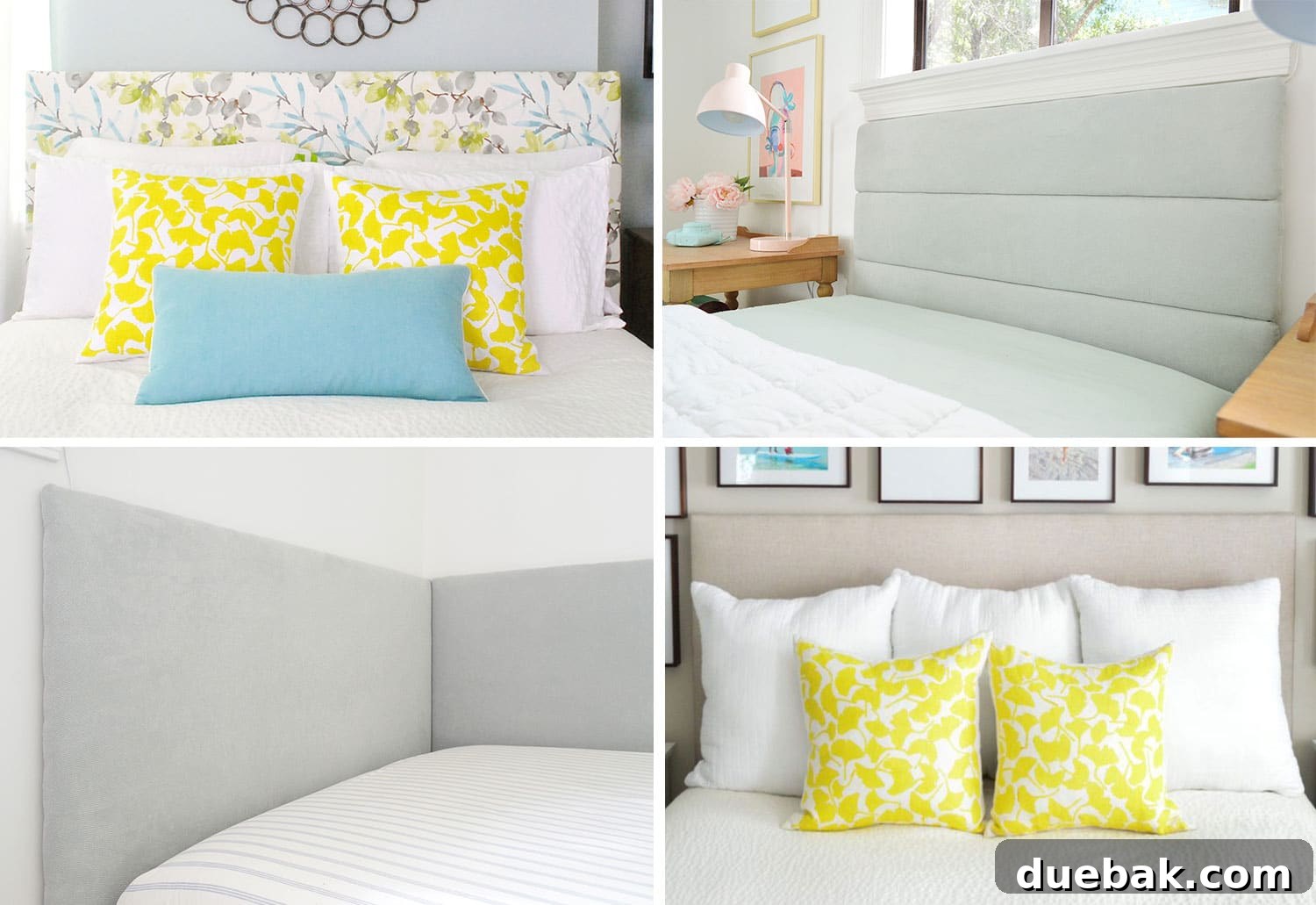
- Elevate Your Existing Bed: Adding an Upholstered Headboard
- Innovative Design: Creating a Multi-Sided Upholstered Headboard for a Daybed
- Simple & Stylish: How to Make a Lightweight Fabric Headboard
P.S. To diligently follow every step of our home renovation journey for this house, you can access every single update and transformation we’ve documented right here in our comprehensive FL House archive.
*This post contains affiliate links, meaning we may earn a small commission when you make a purchase through links on our site, at no additional cost to you. Your support helps us continue to create valuable content and share our DIY adventures.