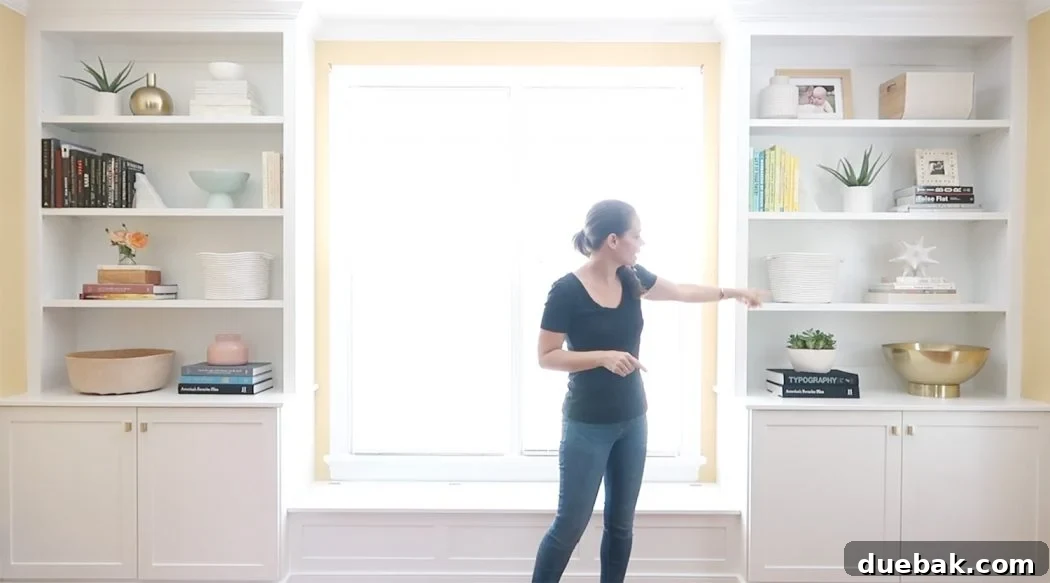
Transforming your living space can be incredibly rewarding, and few elements offer as much potential for both function and style as a well-styled bookshelf. This comprehensive guide, born from a spontaneous Instagram query, dives deep into the art of bookshelf styling, offering practical, easy-to-implement tips that promise to elevate your home decor. What started as a simple question – “Have you ever shared a video of yourself styling a bookshelf?” – quickly snowballed into an overwhelming request for a visual demonstration. The community’s enthusiasm was infectious, and the answer was a resounding “YES, DO THAT!” So, I did. And now, you’re invited to embark on this journey of design and organization, discovering how to create a visually appealing and harmonious display that truly reflects your personal aesthetic.
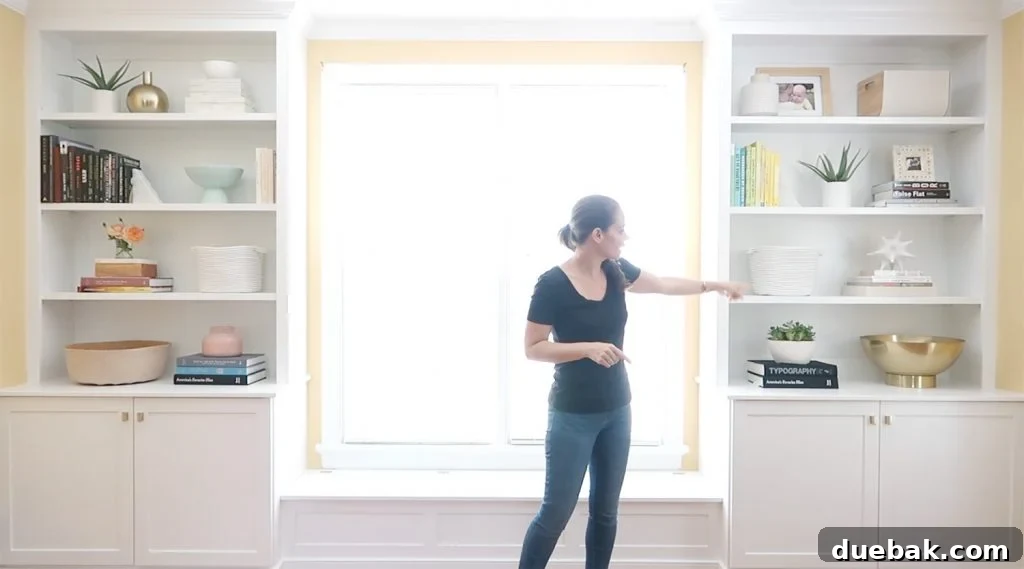
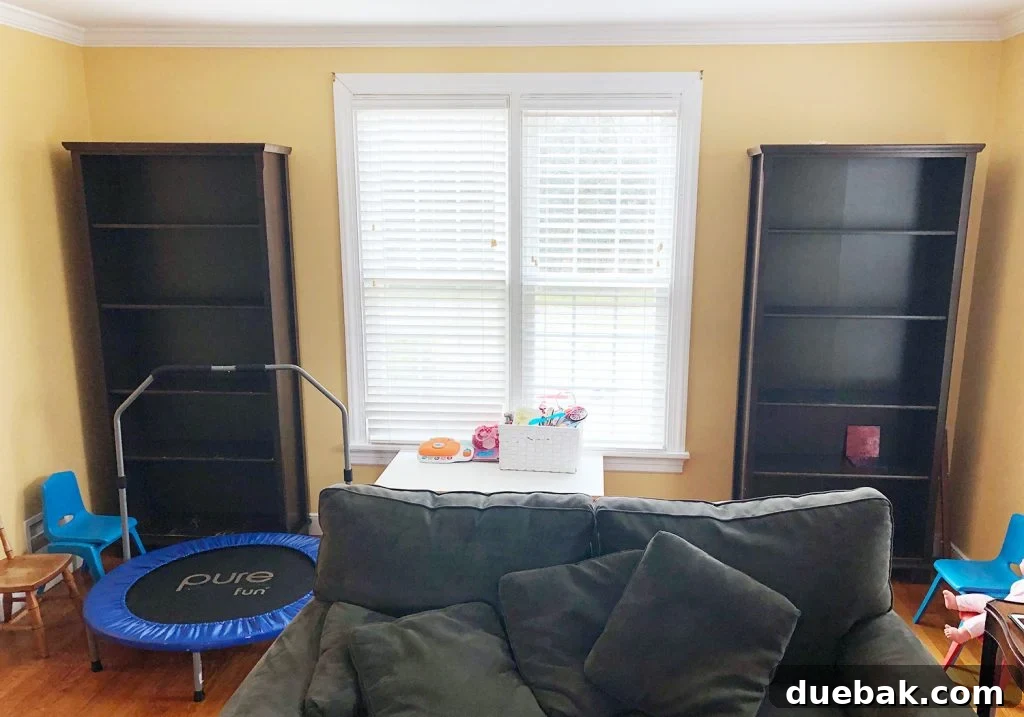
The perfect opportunity to bring this idea to life presented itself when my dear friend, Teresa, recently enhanced her living room with stunning new built-in bookshelves. Knowing my passion for interior styling – a love language I share with fine cheese and fresh shrimp – she graciously invited me over to style them. Thanks to that initial Instagram request, we arrived equipped with a camera and tripod, ready to capture every shift, every adjustment, and every “aha!” moment. Before we delve into the styling process, let’s take a moment to appreciate the incredible transformation her living room underwent. Previously, the space featured functional but less integrated Ikea bookcases, a testament to their previous home’s layout.
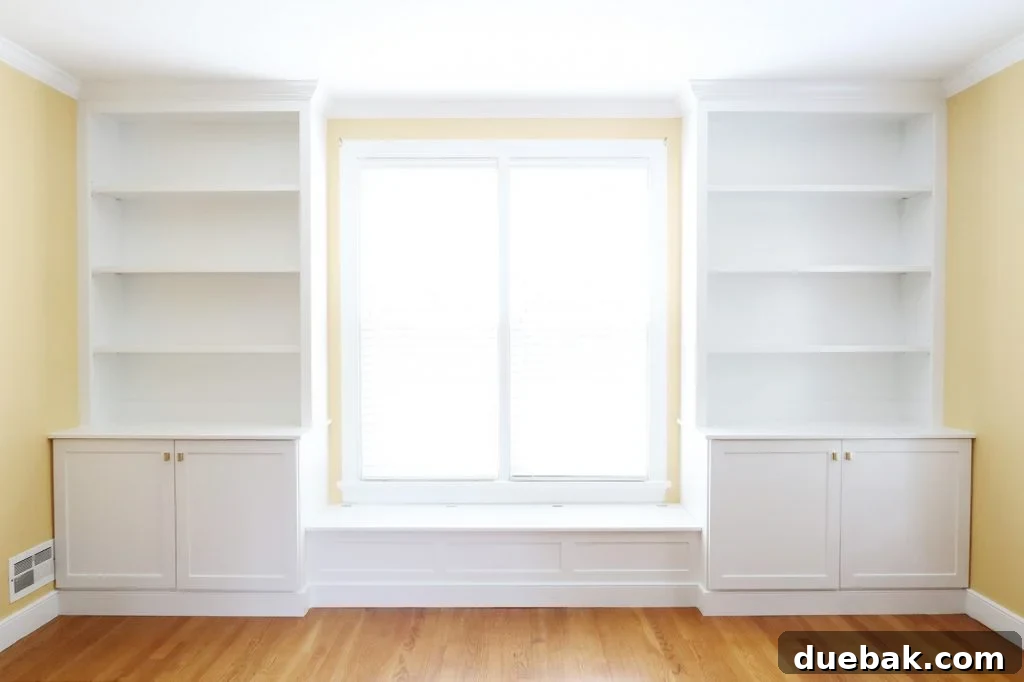
The vision for integrated storage and display was brought to life with the invaluable help of her incredibly handy dad. The result is nothing short of amazing! These custom built-ins not only anchor the room beautifully but also offer clever, concealed storage solutions. A charming bench seat nestled under the window ingeniously folds up, revealing an extra compartment perfect for stashing blankets or seasonal decor. Flanking the bench are two generous base cabinets on each side, providing ample hidden space to keep clutter at bay and maintain a serene aesthetic.
It’s important to clarify that there’s absolutely nothing inherently wrong with Ikea bookcases; they can look truly fantastic and serve a wonderful purpose in many homes. In fact, we’ve happily used inexpensive freestanding Ikea bookshelves in our own office for the past five years and adore them for their versatility and clean lines. For Teresa and her husband, Andrew, their previous Ikea units perfectly suited their old house. However, ever since they moved six years ago, they harbored a dream of someday adding custom built-ins along that specific wall. Finally, with the expertise of her extremely skilled dad (whose craftsmanship even earned a celebratory wolf-whistle from John at the finished product!), that dream became a reality. And that’s where I was fortunate enough to step in, ready to bring those beautiful shelves to life with thoughtful styling.
Sidenote: If you’re eager for more diverse shelving solutions, this post features 16 easy DIY shelving projects perfect for various spaces and needs.
Much like mastering any new skill, tackling the styling of a bookshelf involves a definite learning curve. It’s an art form that blends aesthetics with functionality, and while it might seem daunting at first, I’ve distilled my years of experience into a few specific, incredibly easy, and best of all, free techniques that will help you tremendously. My aim is to help you bypass many of the common styling mistakes I made for years, guiding you directly toward achieving a finished result you’ll genuinely adore. These foundational principles are designed to demystify the process, making it accessible and enjoyable for everyone, regardless of their prior decorating experience.
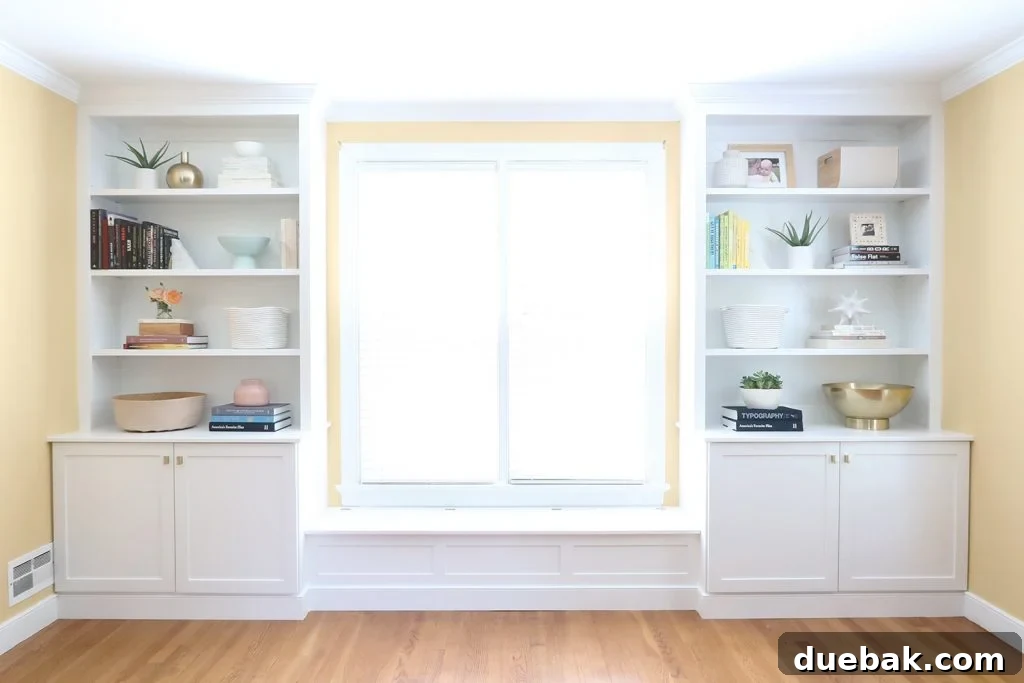
Whenever the topic of bookshelves arises, the inevitable question about the ideal ratio of books to other decorative objects always follows. The truth is, there’s no single magic formula; the perfect balance largely depends on your personal collection of books and how many you wish to prominently display in that particular area. This principle guided our approach when styling Teresa’s built-ins. Given that they have other dedicated spots for books throughout their home, and the expansive lower bench seat provides ample additional storage for volumes they preferred to keep out of sight, I simply curated the shelves with the books they wanted showcased. It truly was that straightforward. Ultimately, your home is your canvas, so feel empowered to choose whatever arrangement brings you joy and best reflects your style.
While words and photos can convey a great deal, I firmly believe that the most comprehensive understanding of the styling process comes from seeing it in action. This video captures the dynamic, iterative nature of decorating, demonstrating far more effectively than any written description:
Note: If you are viewing this post in a feed reader, you may need to click through to see the video player. You can also watch it here on YouTube.
Reviewing our timestamps, the actual filming of the styling process took approximately 22 minutes. However, it’s crucial to note that I had already spent about 10 minutes beforehand meticulously arranging items into various stacks and groupings, a preparatory step I’ll elaborate on shortly. Therefore, the entire process, from initial sorting to final touches, spanned roughly 32 minutes. For someone tackling their first or second bookcase, it’s perfectly normal for it to take a bit longer, so don’t feel rushed. The single most important takeaway from watching the video is the relentless process of trial and error. Did you notice the sheer number of items I placed, repositioned, and then moved again? Practically everything! Styling is rarely a one-shot deal; it demands flexibility, patience, and a willingness to continuously switch things around until you step back, assess, and genuinely fall in love with the result you see.
I highly recommend watching the video to see me physically demonstrating each valuable tip as it appears on the screen – it’s an invaluable visual aid, so do make sure to come back and watch it if you can’t right now. Beyond the on-screen advice, I’ve also gathered three additional, insightful tips that came to mind after the filming was complete, offering even more ways to refine your bookshelf styling technique.
Initial Prep Makes Things A Lot Easier
Before you place even a single item on your bookcase(s), embark on a crucial preparatory step: gather everything you intend to use and arrange it all together on the floor. This could include books, large vases, various storage boxes or baskets, potted plants, an assortment of picture frames, and any other decorative objects. The goal is to see your entire collection en masse, allowing you to intuitively combine individual pieces into larger, more impactful groupings. For instance, sort your books into both horizontal and vertical stacks. You might group them by color for a cohesive aesthetic, by subject for easy browsing, or simply by size to create visual harmony – choose the method that best suits your organizational style. Personally, I often recall a book’s color more readily than its exact title or author, so grouping by color helps me find them more easily, but prioritize what works for you.
Extend this grouping philosophy to other items as well. Decorative boxes, for example, can be strategically stacked to form a single, substantial unit. Smaller objects can find their purpose by being placed on top of existing book stacks, adding height, texture, and a finished look. Consider displaying similar objects together to create one larger, more unified grouping that reads as less visually “busy.” For instance, a collection of three elegant blue glass vases, when grouped atop a prominent horizontal stack of books, transforms into a singular, commanding display element rather than three disconnected small pieces. This initial grouping phase, with everything laid out on the floor, dramatically simplifies the entire styling process. In the room adjoining the built-ins featured in the video, I followed this exact method. This explains why I confidently walked into the frame with perfectly pre-stacked boxes or a whole grouping of horizontally arranged books, ready to be placed. While very large items like prominent vases and baskets, or the tiny accent pieces you’ll pepper in later, might not have an immediate “grouping,” taking the time to pair up books, boxes, and a select few smaller items you plan to display together en masse will provide an enormous head start. This brings us seamlessly to our next essential tip…
Fewer Larger Items & Groupings Beat Lots Of Smaller Ones
This invaluable tip is derived directly from a pervasive styling mistake I made consistently for years until a profound realization finally dawned on me: larger items and well-composed groupings invariably look superior. Consider the visual impact: a single small vase sitting alone, or tiny picture frames not thoughtfully integrated into a stack of horizontal books or layered in front of a larger piece, often appear busy, insignificant, or even lonely amidst expansive shelf space. When shelves are adorned with a multitude of tiny, disconnected items, they tend to lack grounding, balance, and a sense of completeness.
Take a moment to observe almost any exquisitely styled built-in bookcase you’ve ever admired. You’ll consistently find one of two design principles at play: 1) The shelves are primarily filled with substantial, larger items, with little to no presence of isolated small vases, minute picture frames, or tiny, unintegrated stacks of books. Or, 2) Smaller items are meticulously grouped with other elements to collectively appear larger and more unified, preventing them from registering as an overwhelming collection of busy, disparate pieces. Examples include artfully stacked boxes that form a cohesive grouping, or small vases and frames strategically placed atop a horizontal stack of books, which then read as a single, deliberate unit. If you ever find yourself questioning why your bookcase feels “off,” cluttered, or simply lacks the sophisticated presence you desire, my foremost suggestion would be to critically evaluate your smaller items. Either remove them to simplify the display or, more effectively, group them together to forge a unified, larger “unit” in the eye of the beholder when you step back. Additionally, consider incorporating a few genuinely large-scale items, such as an imposing statement vase, a substantial woven basket for both style and storage, or several towering stacks of books, to provide essential visual anchors. Sidenote: This fundamental design principle extends far beyond bookshelves, proving equally effective for styling mantels, tabletops, open shelving, and various other display surfaces.
Also, This Can Be Gloriously Free!
One of the most exciting aspects of bookshelf styling is its potential to be absolutely free! Don’t underestimate the treasures hidden within your own home. Before you even think about buying new decor, embark on a scavenger hunt through your existing storage spaces. Check your attic, rummage through the garage, or even explore the back of your kitchen cabinets for forgotten gems like large vases, unique plant pots, an array of picture frames, or sturdy decorative boxes. My experience styling homes for sale (a process I detail here and here) has taught me the immense value of repurposing. I’m constantly scouring every nook and cranny of a house for anything that can be artfully utilized! I’ve even stacked plain white shoeboxes, strategically camouflaged, and brought in beautiful decorative bowls from the kitchen to serve as stylish display elements. As Jay-Z famously put it, “I’m a hustler, baby. I just want you to know.” This resourceful mindset can unlock incredible potential right under your nose.
It’s truly remarkable how just 30 minutes dedicated to “shopping your home” – meticulously sifting through your existing belongings and experimenting with a fresh arrangement or a new grouping – can bring such immense satisfaction. I recently applied this very principle to our own living room built-ins, and the difference was palpable. Every time I walk into the room, it still feels like a breath of fresh air, offering a renewed sense of order and beauty. Talk about a gloriously free pick-me-up that costs nothing but a little time and creativity!
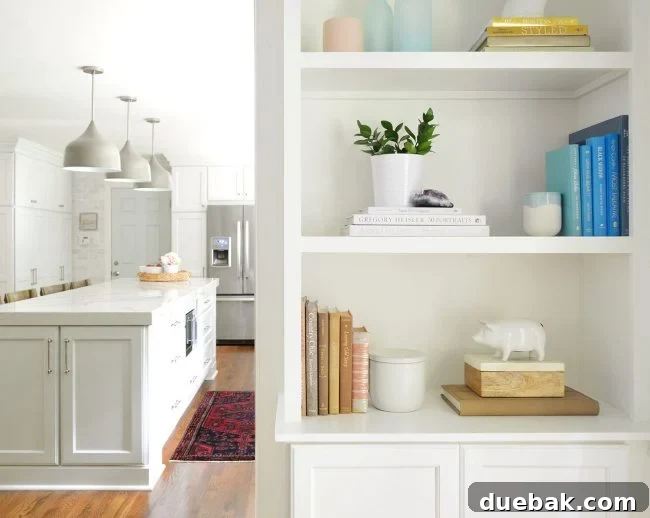
Can you tell that the topic of bookshelves genuinely excites me? My hope is that the video and these detailed tips have provided valuable insight and inspiration. I encourage you to have fun experimenting and tweaking any shelves or bookcases you have at home. Embrace the process of trial and error, and allow your personality to shine through in your displays. If you’re looking for further inspiration, perhaps seeking more visual examples of built-ins or additional styling advice, here are some excellent resources: explore a post detailing how we built and filled our own living room built-ins, discover my strategic approach to bookshelves when staging a house, and tune into a podcast episode brimming with tips for those who envision a bookshelf primarily filled with books, with minimal or no accessories.
P.S. Have you joined our free newsletter yet? It’s like receiving an exclusive bonus post directly in your inbox once a week, filled with unique tips and photos you won’t find anywhere else. We promise never to spam you, only to deliver fresh inspiration!