
Transforming Our Half Bathroom: A DIY Faucet Replacement Journey from Leak to Luster
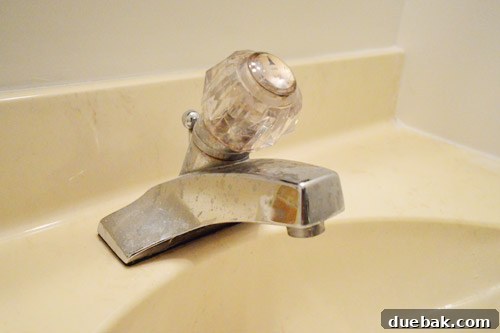
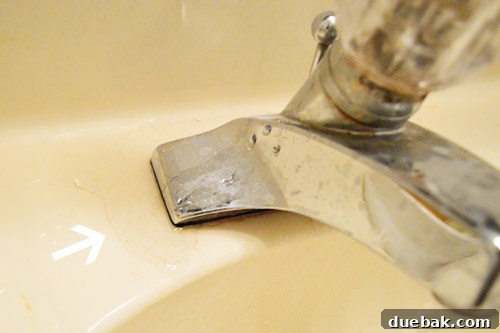
Every homeowner knows the subtle dread of a persistent drip. In our half bathroom, a seemingly innocuous single-knob faucet had graduated from a minor annoyance to a legitimate concern. It wasn’t just its aesthetically uninspired presence; this “ladykiller,” as we affectionately (and sarcastically) called it, was leaking. Beyond the wasted water and the potential for water damage, a more pressing issue loomed: the single-knob design meant the water temperature could swing from icy cold to scalding hot with a mere flick, a constant worry especially with our daughter, Clara, washing her hands. This seemingly small fixture was, in essence, a ticking time bomb of both inconvenience and safety risks, prompting us to finally tackle a much-needed upgrade.
The Imperative for an Upgrade: Addressing Leaks and Safety Concerns
The original faucet, while functional in its most basic sense, presented several challenges that underscored the necessity of a replacement. The leak, a constant reminder of inefficiency and potential damage, was a primary motivator. A dripping faucet can waste gallons of water over time, leading to higher utility bills and, more critically, the risk of mold growth or structural damage beneath the sink if left unchecked. However, for us, the paramount concern was the single-knob operation. Its design offered no precise control over water temperature, making it incredibly easy to accidentally turn the knob to dangerously hot levels. With Clara frequently using this bathroom, the thought of her inadvertently scalding her hands during a routine wash was enough to push this project to the top of our home improvement list. This wasn’t merely an aesthetic choice; it was a decision driven by practicality, safety, and a desire for peace of mind in our daily routine.
Hunting for the Perfect Replacement: From Habitat ReStore Hopes to Home Depot Reality
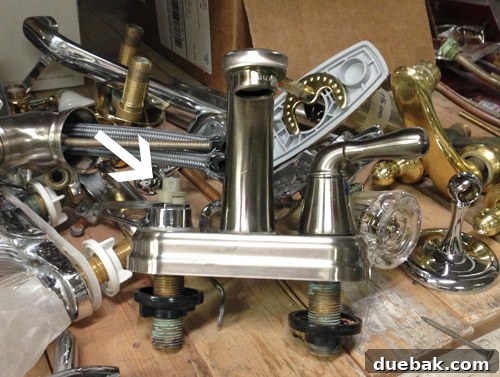
Our journey to find a new faucet began with an optimistic trip to our local Habitat ReStore. We love the idea of finding unique, recycled treasures and supporting a great cause. The thrill of the hunt is always part of the appeal. And for a moment, it seemed our efforts would be gloriously rewarded. Sherry, with an almost theatrical lunge that truly had to be seen to be believed, zeroed in on what appeared to be a fantastic $12 find amidst a pile of fixtures. Our excitement was palpable, imagining the bargain we’d scored. Unfortunately, our joy was short-lived. Upon closer inspection, we discovered the faucet was inexplicably missing one of its handles. We diligently scoured the surrounding bins and shelves for nearly twenty minutes, convinced it must be lurking somewhere. But despite our persistence, the missing piece remained elusive. It was a classic “so close, yet so far” moment, a clear sign that this particular bargain wasn’t meant to be.
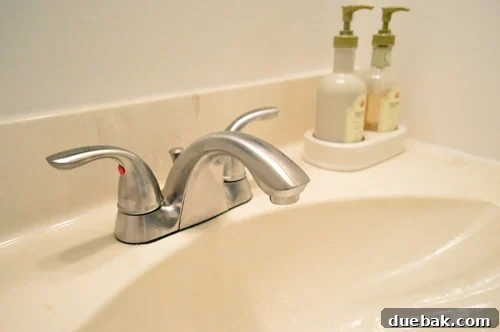
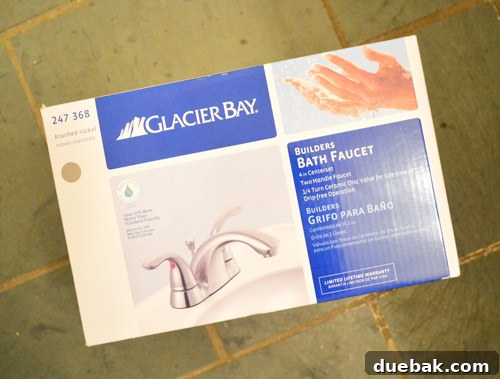
Undeterred but now with a clear deadline for a functional bathroom, we shifted our focus to Home Depot. While not the thrilling scavenger hunt of the ReStore, Home Depot offered a reliable selection of new, complete fixtures. Our goal remained firmly fixed on affordability and functionality. After browsing the myriad options, we settled on a brushed nickel model priced at a reasonable $34. This particular faucet stood out as one of the most budget-friendly choices available, and crucially, it featured two separate handles for hot and cold water. This design immediately alleviated our safety concerns for Clara, providing precise temperature control and eliminating the risk of accidental scalding. The decision was simple: the peace of mind knowing the leak would be gone and Clara could safely use the sink was well worth the modest investment. This was a clear example of prioritizing practical benefits over extravagant design, focusing on a solid, reliable solution for our busy household.
The Unforeseen Hurdle: A Stubborn Hot Water Shut-Off Valve
With our new faucet in hand, we anticipated a straightforward installation. The plan seemed simple enough: turn off the water supply, disconnect the old hoses, remove the ancient faucet, and then reverse the process for the new one. “Bada bing, bada boom, hello new faucet!” I thought. However, as is often the case with DIY home projects, reality had other plans. The very first step—turning off the water—revealed an immediate and significant snag. The cold water valve cooperated perfectly, but the hot water shut-off valve proved entirely uncooperative. I twisted and turned it, feeling the mechanism spin freely, but the water flow remained completely unaffected. It was like turning a pinwheel; plenty of motion, zero impact. A non-functioning shut-off valve is a plumber’s nightmare and a DIYer’s worst fear, as it means you can’t isolate the water supply to that specific fixture without drastic measures.
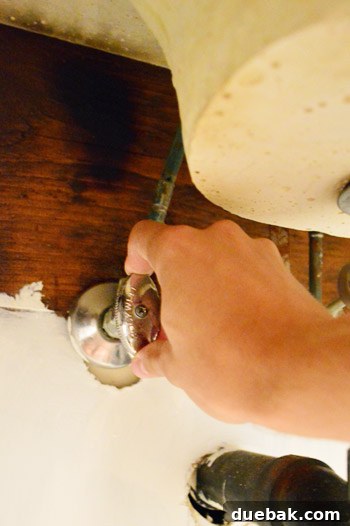
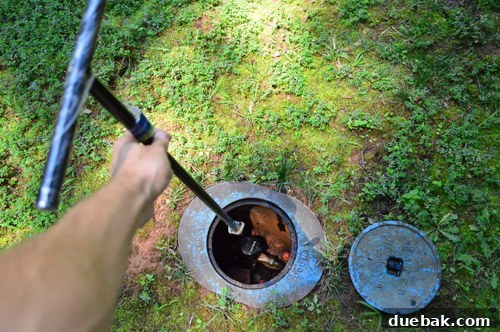
This unexpected complication instantly escalated the project from a simple faucet swap to a much more involved plumbing repair: replacing the hot water shut-off valve itself. A task I had never attempted before. This meant one thing: turning off the main water supply to our entire house at the street. For many homeowners, this is a daunting prospect, but we’ve learned through various home projects that having a water meter key is an invaluable tool. These robust T-handle wrenches are specifically designed to operate the main shut-off valve located near your water meter, typically at the street or property line. They are inexpensive, usually around $7, and we’ve found ourselves reaching for ours far more often than one might expect for various household repairs and emergencies. With the key in hand, and a healthy dose of determination (and a bit of elbow grease, as these valves are notoriously stubborn), we prepared to temporarily cut off our home’s water supply.
Into the Fray: The Gritty Reality of Plumbing Installation
Regrettably, the most intense and, frankly, least photogenic part of the entire project occurred during the actual installation of the new hot water valve and then the faucet. Imagine me, half my body contorted and stuffed into the cramped confines of the vanity cabinet, my arms extended into the dark recesses, wrestling with various pipes, valves, and hoses. This was the reality. There were no glamour shots here. It involved a messy, sweaty, and often frustrating sequence of tasks: loosening stubbornly seized connections, carefully applying plumber’s tape to ensure watertight seals, and then meticulously tightening everything back together in the correct order. The air was thick with a mixture of muttered curses, moments of near-panic where I considered calling a professional, and occasional shouts to Sherry to “have a plumber on standby!” Amidst this plumbing battle, the camera was completely forgotten. Even if I had remembered, it likely would have gotten wet, or the lighting conditions would have rendered the photos too dark to be useful anyway – a true #bloggerfail, but a testament to the hands-on nature of the work.
For those brave souls contemplating a similar DIY endeavor, and to provide a clearer visual understanding of the process without my frantic commentary, I highly recommend consulting reputable online resources. A video like this well-lit and profanity-free tutorial from Home Depot can be incredibly helpful. It demonstrates the steps for faucet and valve replacement in a much more calm and organized fashion than my real-life experience! Despite the chaotic moments and my internal monologue of impending plumbing disaster – convinced I was moments away from breaking a pipe and causing a cartoonish explosion of water that would lift our house from its foundation – I persevered. To my absolute astonishment and immense relief, none of my catastrophic predictions came true. I successfully managed to install the new hot water shut-off valve without a single hitch, setting the stage for the new faucet’s arrival.
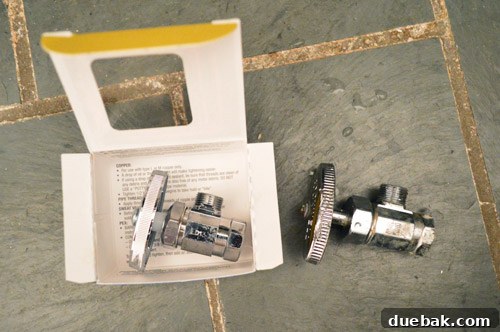
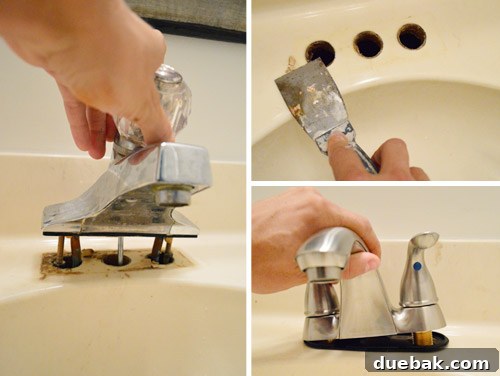
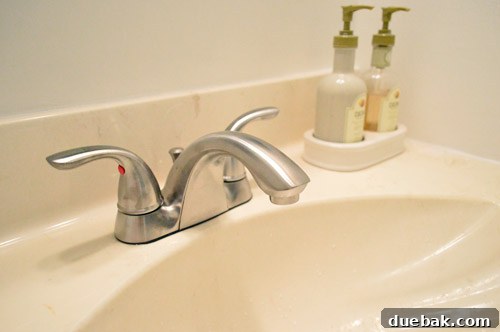
With the critical hot water valve now securely in place and fully functional, the remaining steps of the faucet installation felt significantly less intimidating. I carefully removed the old, leaky faucet, a relic of its time. Before positioning the new fixture, I took a moment to clean the sink surface thoroughly. Years of use had left behind a layer of grime and sealant residue, which I meticulously scraped away with a putty knife, ensuring a clean and flat surface for the new faucet. Next, I connected the new supply hoses under the sink, making sure each connection was snug but not overtightened. Finally, the shining new brushed nickel faucet was carefully lowered into its designated holes and secured into place, instantly upgrading the visual appeal and functionality of our half bathroom sink.
The Moment of Truth: Averting a Flood and Celebrating Victory
The installation was complete, but the most nerve-wracking part for any DIY plumber still lay ahead: turning the water back on and checking for leaks. My natural pessimism, honed by years of minor home repair mishaps, kicked into overdrive. I was convinced that at least one, if not two, of the five new connections I had just painstakingly made would inevitably spring a leak. To combat this anxiety and ensure I’d spot any potential drips immediately, I employed a simple but effective trick: I laid several pieces of brightly colored construction paper under all the connections beneath the sink. The vibrant colors would instantly reveal any stray drops of water, making it impossible for a subtle leak to go unnoticed. This small preparation felt crucial for my peace of mind as I slowly, cautiously, reopened the main water supply and then the individual hot and cold valves under the sink.
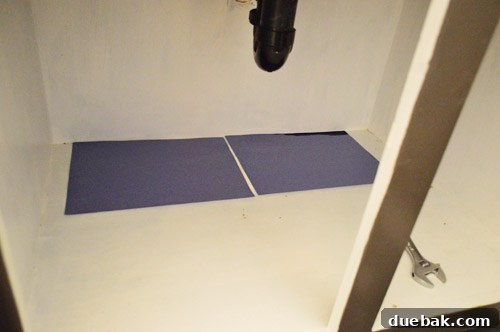
With the water now flowing, I entered into a silent staring contest with the underside of our sink. For a good ten minutes, I watched intently, my eyes scanning every connection, every potential drip point, convinced that any second a rogue drop would appear. I half-expected the leaks to be cunning, waiting for the precise moment I looked away to begin their insidious work. Sherry eventually found me in this intense vigil, gently (or perhaps not so gently) dragging me away from my obsessive inspection. She encouraged me to accept the victory, to finally acknowledge that the project was indeed a success. And to my utter shock and profound relief, there were no drips, no leaks, no cartoonish geysers. Our new faucet, complete with its diligently replaced hot water shut-off valve, was officially installed and perfectly functional!
Aesthetic Choices and Budget-Friendly Solutions
While the primary drivers for this project were functionality and safety, the aesthetic outcome was also a pleasant bonus. The new faucet isn’t a dramatic design statement, but it delivers a clean, modern look that significantly elevates the half bathroom. We did, however, make a deliberate decision regarding the finish. Initially, we considered several oil-rubbed bronze options to match existing fixtures like the doorknob and the light fixture in the room. This would have provided a cohesive, traditional look. However, every oil-rubbed bronze faucet we found that met our quality standards was priced at $80 or more, which felt disproportionately expensive for what we considered a “Phase 1 fix” – an immediate, necessary upgrade rather than a full stylistic overhaul. Our priority was getting rid of the leak and ensuring Clara’s safety, not overspending on premium finishes.
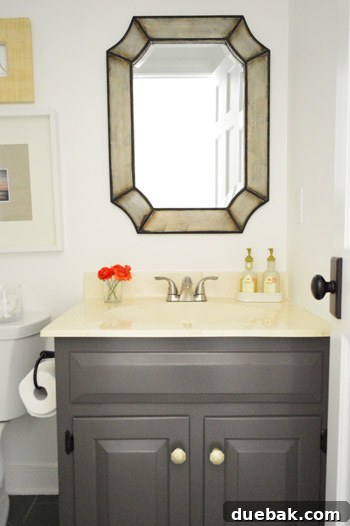
Ultimately, we opted for the brushed nickel finish of our $34 Home Depot find. And we’re genuinely glad we did. Not only was it significantly more affordable, but it also integrated surprisingly well with the existing elements. The key to this successful blend, in our opinion, is the mirror above the sink. Its reflective surface and frame act as a “transition piece,” visually mixing both the warmer oil-rubbed bronze tones (from the light fixture and doorknob) and the cooler brushed nickel tones of the new faucet in a single focal point. This clever visual trick allows the different metal finishes to coexist harmoniously without feeling disjointed, demonstrating that thoughtful design doesn’t always require a hefty price tag. It’s a testament to how small details can make a big difference in creating a cohesive space, even on a tight budget.
Clara’s Unexpected Seal of Approval: The Toughest Critic Impressed
Perhaps the most delightful and unexpected outcome of this entire endeavor was the reaction of our toughest critic: Clara. After her afternoon nap, she wandered into the half bathroom, and her usual playful energy momentarily paused. She simply stood there for a second, silently staring at the newly installed faucet. Sherry, noticing her unusual stillness, asked, “Is everything OK?” Clara’s response was an enthusiastic, drawn-out “Wowwww! It looks beautiful in here! Did we get a new washing thing?” Her genuine surprise and effusive compliment filled us with immense satisfaction. While she often notices changes around the house, this was undoubtedly the first time she had led with such a strong, heartfelt commendation. It was a wonderful validation that our efforts, though focused on practical improvements, also resonated on an aesthetic level, even with a young child. We’ll absolutely take that compliment!
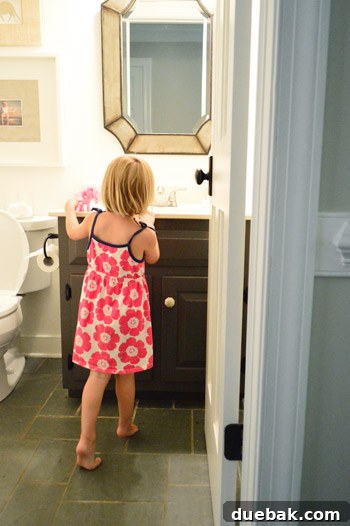
It’s always rewarding when a home improvement project not only fixes a problem but also brings a renewed sense of charm and appreciation to a space. Clara’s unprompted enthusiasm highlighted how even small, functional updates can dramatically improve the user experience and overall perception of a room. Her simple joy reminded us that sometimes, the most significant impact comes from the subtle details.
Before and After: A Visual Transformation
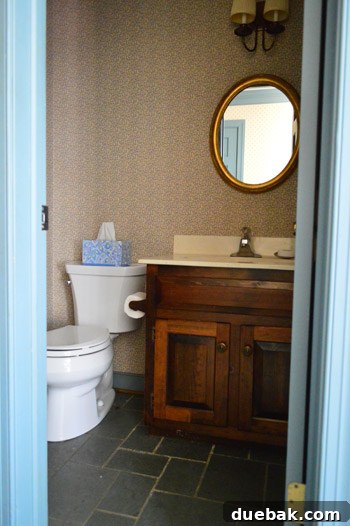
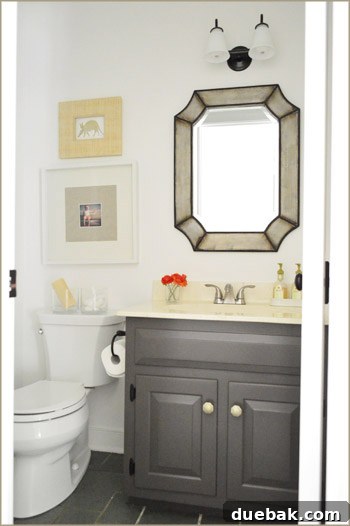
As many of you requested on our last bathroom update post, here are the anticipated before and after photos. These images visually articulate the journey from the outdated, problematic fixture to the clean, functional new one, showcasing the subtle yet impactful transformation within our half bathroom.
Budget Breakdown and The Value of Interim Upgrades
When it comes to home improvements, budgeting is always key, even amidst the “still-settling-in chaos” that often accompanies our projects. While we don’t have every single receipt immediately on hand, our best estimate suggests we’ve invested approximately $110 into this half bathroom in total for what we consider its initial “Phase 1” upgrade. This figure encompasses the costs for the new mirror, a fresh coat of paint, the updated light fixture, the vanity knobs, and, of course, the new faucet and the necessary replacement valve. This modest investment has delivered a significant return in terms of functionality, safety, and overall aesthetic appeal. For rooms like kitchens and bathrooms, which are used daily but can be incredibly pricey to fully renovate, these “in-the-meantime” upgrades are invaluable. They allow you to address immediate needs and enjoy a refreshed space without having to save up a massive sum for a full-scale Phase Two renovation down the line. It’s about making smart, impactful changes that improve your daily life and comfort, proving that you don’t always need a huge budget to make a noticeable difference in your home.
Conclusion: On to the Next Adventure!
This faucet replacement project, initially appearing straightforward, evolved into a more complex endeavor with the unexpected valve replacement. However, overcoming these challenges ourselves brought immense satisfaction. Our half bathroom now boasts a leak-free, child-safe, and visually refreshed faucet, proving that even a budget-friendly DIY can yield significant improvements. We’re thrilled with the outcome and ready to tackle the next room on our home improvement list!