
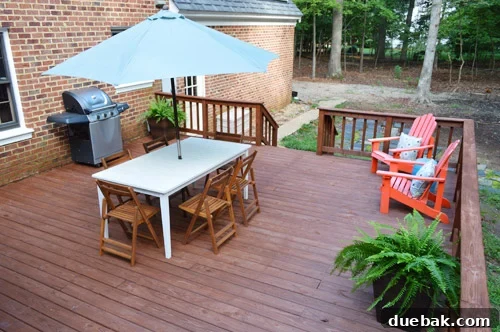
Every homeowner knows that satisfying moment of transformation, like a scene from a movie where a hidden gem reveals its true splendor. Our deck, much like that unassuming character, has undergone its initial metamorphosis. We’ve already shed the old, worn-out finish, meticulously stripping away years of wear and tear. Now, with the raw canvas prepared, it’s time for the vibrant splash of color – the protective, enhancing stain that will bring it back to life. While we might not be aiming for a dramatic “bombshell” reveal, we’re certainly envisioning a sophisticated upgrade, perhaps a “sexy librarian” vibe that speaks to both charm and durability. The essence is clear: a revitalized outdoor living space that’s ready for enjoyment.
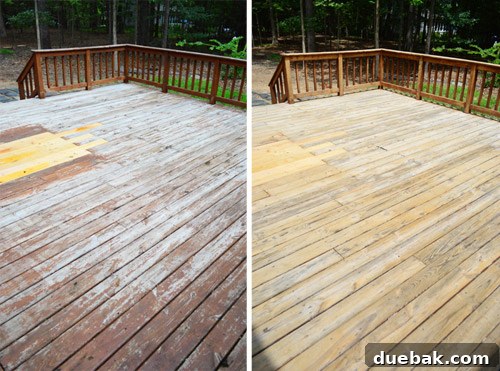
With the deck boards meticulously cleaned and prepped, the exciting phase of applying a new protective finish could finally begin. Our choice landed on a semi-transparent stain, a decision rooted in both aesthetics and practicality. We both appreciate how a semi-transparent finish enhances the natural beauty of the wood grain, allowing its inherent character to shine through, unlike a solid stain that completely covers it. Yet, we desired a deeper, richer hue than the lighter toner used on our previous deck project. A deep brown tone, we concluded, would beautifully complement the existing brick facade of our home, creating a cohesive and inviting exterior. Furthermore, maintaining a loose match with the deck’s previous finish was important for areas we hadn’t stripped, such as the smaller vertical rails and the lattice skirting, ensuring a seamless look across the entire structure.
For this significant undertaking, we once again opted for Olympic Maximum Stain + Sealant. This decision wasn’t arbitrary; our positive experience with it on our last deck, coupled with numerous recommendations from fellow DIY enthusiasts, solidified our confidence in its performance and longevity. The convenience of a stain and sealant in one product also appealed to us, streamlining the process while offering comprehensive protection. After carefully reviewing the color options, “Russet” emerged as the perfect candidate, appearing to be an almost identical match to our deck’s existing color when we held their color booklet against the railing. This careful selection process is crucial for achieving the desired outcome and avoiding costly re-dos.
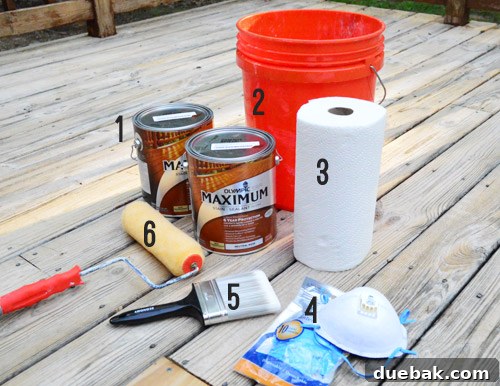
Gathering the right tools and materials is paramount for any successful DIY project, especially one as extensive as deck staining. Here’s what we assembled for our 676-square-foot deck transformation:
- Olympic Maximum Semi-Transparent Stain (Russet): For a deck of our size, we estimated, and indeed needed, 4 gallons. This quantity allowed for thorough coverage and an even application, totaling an investment of $148.
- Large Buckets: Essential for pouring and intermixing the stain. This practice, often referred to as “boxing,” is critical for ensuring color consistency across all gallons, preventing noticeable variations in hue as you progress through the project.
- Paper Towels & Rags: Staining can be a messy process. Having an abundance of paper towels and rags on hand for immediate clean-up of spills or drips is incredibly helpful, saving valuable time and preventing dried-on messes.
- Gloves & Mask: Safety first! Stain can be both messy and emit strong fumes. Protective gloves are a must to keep your hands clean and prevent skin irritation, while a mask protects your respiratory system from airborne particles and chemical odors.
- Wide Brush (3-4 inches): This tool is indispensable for several aspects of the job. It’s perfect for “back-brushing” (more on this crucial technique later), ensuring proper stain penetration, and reaching smaller, intricate areas like railings, balusters, and the spaces between deck boards where a roller cannot effectively reach.
- High-Nap Roller on a Pole (3/4-inch nap): For efficient coverage of the broad deck floorboards, a roller with a good nap is essential. We chose a 3/4-inch nap, which is ideal for textured or older wood, as it holds ample stain and helps push it into the wood’grain for better absorption. The extension pole saves your back and speeds up the application significantly.
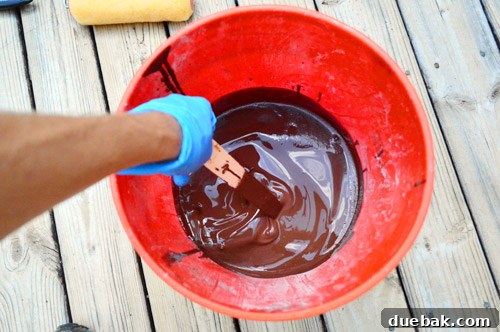
The practice of mixing all your stain gallons in a large bucket, or “boxing,” is a professional technique that cannot be stressed enough, especially when dealing with multiple containers of tinted material. Just as with paint, subtle variations can occur between individual gallons of stain during the manufacturing or tinting process. By combining all gallons at the outset, or at least two or three to start and then adding more as needed, you effectively create a homogeneous batch. This eliminates the risk of encountering noticeable color shifts halfway through your project, ensuring a uniform finish across your entire deck. We initially mixed two gallons and replenished our bucket as the level decreased, ensuring a consistent hue. I half-jokingly anticipated a scene reminiscent of Augustus Gloop surfacing from a chocolate river as I stirred the rich, deep brown, but alas, no such luck!
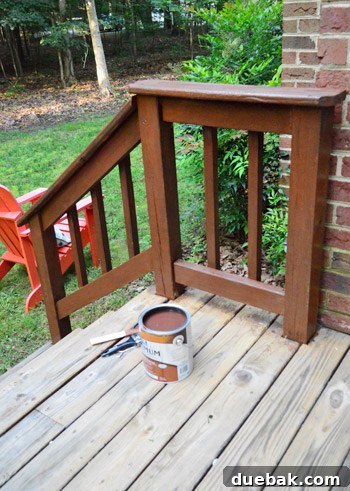
I must admit, despite our meticulous selection, a slight nervousness lingered about relying solely on the stain swatch to match the existing finish. The prudent approach would have been to acquire a small test pot to confirm the color before committing to multiple gallons. However, Sherry exuded confidence, and sometimes, a leap of faith pays off. To mitigate any potential risks, we strategically decided to begin in a low-visibility area: the railing tucked away on the far side of the sunroom. This small test section would allow us to verify the match without it being immediately apparent if things went awry. To my delight, Sherry’s intuition (or perhaps just good fortune) prevailed, and the stain perfectly matched the un-stripped, already mocha-toned railings. In this shot, you can clearly see the re-stained top and wider railing slats beside the thinner ones, which still boast the old color. The difference is truly imperceptible, highlighting the success of our color selection.
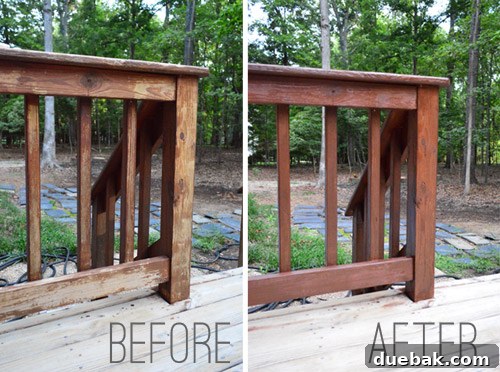
Encouraged by our successful test, we moved on to another railing section. This time, I made sure to capture a “before” photo, providing a clear visual of the transformation. I had previously attempted to strip this particular railing, but the results were less than ideal, leaving a somewhat patchy appearance. However, the application of the new stain worked wonders. It did an excellent job of evening out the imperfections from my stripping attempt, providing beautiful, consistent coverage. Once fully dry (it’s still wet in the photo), the wood absorbed the stain, resulting in an even more refined and uniform look – almost like a brand new railing. This experience reinforced the idea that sometimes, a good stain can mask minor preparatory flaws, though thorough prep is always recommended.
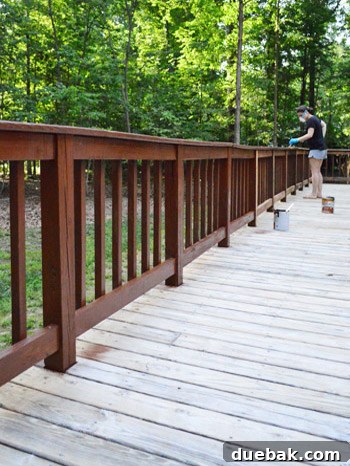
Having initiated our test run on the railings, it made logical sense to complete all the vertical surfaces first. This strategy is generally recommended for any staining or painting project, as it allows gravity to work in your favor, minimizing drips onto already-stained horizontal surfaces. Working from a standing position on the deck, we tackled all the railings – the outside, inside, and tops – with a methodical approach. It was undeniably tedious work, requiring precision and attention to detail, especially around the balusters and intricate corners. With both of us diligently working (Clara was enjoying time with my parents), we managed to complete all the railings in approximately two hours. This division of labor significantly sped up a task that would have been far more time-consuming for one person, highlighting the efficiency of teamwork.
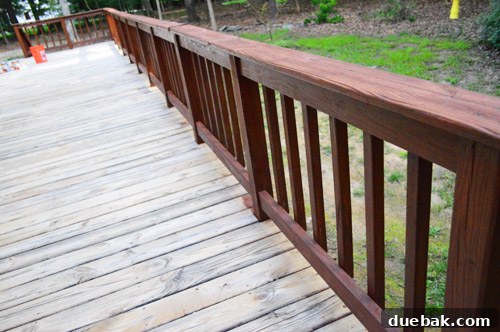
While we were keen to maintain our momentum, two factors prompted a necessary pause. Firstly, it was already 10 AM, and Sherry had to attend to publishing her morning post. Secondly, and critically for a successful stain application, the sun was beginning to creep over the trees, casting direct sunlight onto the deck. Stains, particularly semi-transparent ones, often advise against application in direct sunlight. The reason is simple: direct sun accelerates drying time dramatically, which can lead to unsightly lap marks or visible lines where a freshly stained area meets a section that has already begun to dry. Knowing that the sun would only intensify over the next few hours, we wisely decided to postpone working on the expansive floorboards. This strategic decision, though it meant a temporary halt, was crucial for achieving a flawless, streak-free finish. Even with the floorboards awaiting their turn, the railings were already looking significantly better, beginning to exude that “sexy librarian” charm we were aiming for.
Patience is a virtue in outdoor projects, and by around 4:30 PM, our patience was rewarded. The sun had finally dropped low enough on the other side of the house, pulling the direct light off the deck floor. With Clara happily napping after her day out, we had a precious window of 30 to 90 minutes – a critical timeframe before she woke up and inevitably attempted to navigate our wet work zone. This presented an ideal opportunity for us to tackle as much of the deck floor as possible as a two-person team. Given the time constraint and the need to work quickly and efficiently, we didn’t pause frequently for photographs. The basic process involved me generously applying the stain to a small section of the deck using the roller. It was crucial not to cover too large an area at once, as the next step required immediate attention to the wet stain.
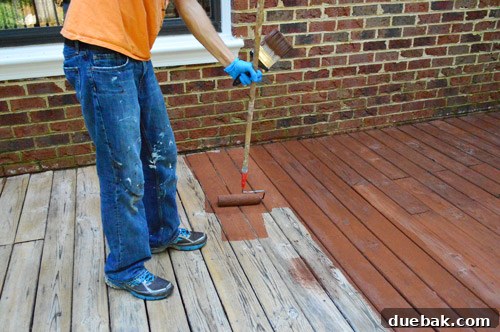
…and that crucial next step was “back-brushing.” For those unfamiliar, or if you recall from our previous staining job, back-brushing is an indispensable technique that involves going back over the wet, rolled stain with a brush. This serves multiple vital purposes. Firstly, it helps to even out any puddles or thick spots of stain that the roller might leave behind, preventing darker, uneven patches. Secondly, and perhaps most importantly, back-brushing actively works the stain deeper into the wood grain. This ensures better penetration, enhancing the wood’s protection and durability. With our older, more weathered deck boards, this step was even more critical to ensure thorough coverage, especially within any small cracks or imperfections that had developed over time. Moreover, while the roller efficiently covers broad surfaces, it struggles to reach the narrow creases between the deck boards. Sherry expertly handled these areas by hand with a brush, alongside meticulously back-brushing the top of each board that I had rolled. This dual-action approach ensured every inch of the deck received optimal coverage and a consistent finish.
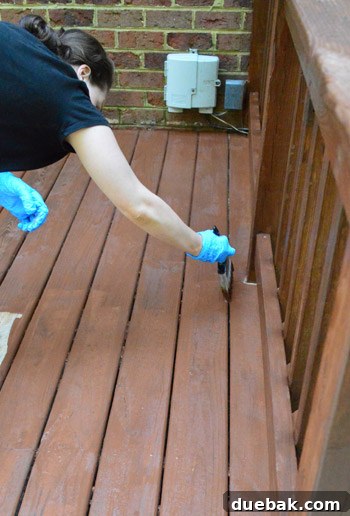
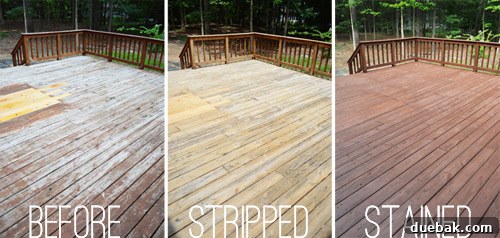
With over 650 square feet of deck floor to stain, this was by no means a speedy endeavor. The combination of rolling and meticulous back-brushing, while essential for a quality finish, inherently extended the timeline. We managed to complete almost half of the deck floor before Clara woke up from her nap, signaling the end of our two-person team effort. Rather than leaving the deck half-stained and risking a noticeable overlap line where we left off, I decided to press on alone, determined to finish the entire surface. This solo stretch continued until it became too dark to accurately see what I was doing anymore. In total, the deck floor staining was approximately a four-hour job, with the majority completed by two people working in tandem and the final push by myself. The effort was undoubtedly worth it. The transformation is striking, and looking at the side-by-side comparison, it’s clear we achieved our goal of a truly “sexy librarian” deck – sophisticated, inviting, and beautifully protected.
The moment we brought our outdoor furniture back onto the freshly stained deck was truly rewarding. We were particularly pleased to discover that our patio table fit perfectly over the area where the newly patched boards met the older ones, rendering the repair completely unnoticeable. This small detail contributed immensely to the seamless, finished look of the entire space. However, this beautiful, expansive deck presented a delightful new “problem”: it looked like a larger, more inviting deck called for an expansion of our outdoor furniture collection. The newly enhanced space practically begged for more seating, more lounging areas, and more opportunities for outdoor entertaining. It’s a wonderful dilemma to have – a testament to the success of the renovation and the increased potential of our outdoor living area.
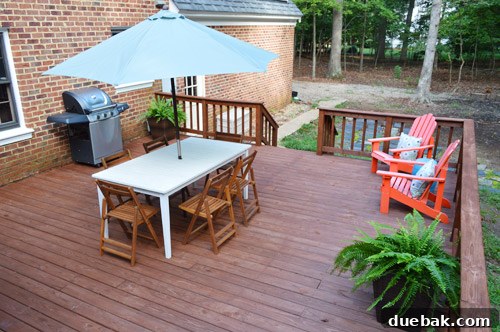
To combat the initial sparseness of the expanded space, we’ve started with a few strategic additions. A handful of vibrant planters from Target, bursting with greenery, immediately added life and color to the perimeter. Complementing these, a clearanced umbrella from Home Depot provided much-needed shade and a touch of resort-like comfort. These interim pieces have already made the deck feel considerably less empty and more inviting, hinting at its full potential as a stylish and functional outdoor retreat. It’s amazing what a few thoughtful accents can do to transform a space, even before the major furniture pieces arrive.
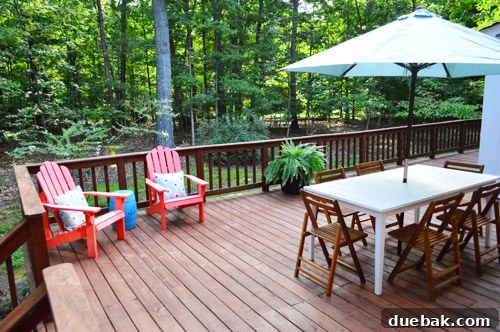
Despite these initial touches, the vision for our deck is far from complete. We anticipate many weekends spent exploring Craigslist and scouring end-of-season sales, hunting for the perfect outdoor furniture pieces to complete our oasis. There’s still an entire, completely bare end of the deck that offers immense potential for a dedicated lounging area, an outdoor dining space, or perhaps even a cozy fire pit zone. The possibilities are endless, and the anticipation of curating this space is just as exciting as the staining process itself. Building an ideal outdoor living area is a journey, not a sprint, and we’re looking forward to every step of transforming this deck into the ultimate extension of our home.
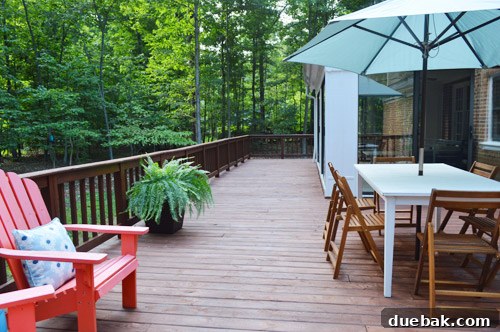
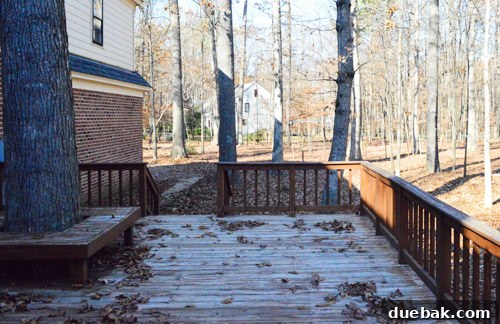
But expanding our outdoor furniture collection, my friends, is a mission for another day. For now, the overwhelming feeling is one of immense satisfaction and relief. We’re simply overjoyed to be done with the intensive cycle of spraying, scrubbing, rinsing, rolling, and brushing this massive structure. The completion of the staining project means we now have significantly more time for what the deck was truly intended for: playing with Clara, relaxing with a good book, enjoying al fresco meals, and simply basking in the fresh air. And while painting the interior walls of a room can bring a wonderful sense of accomplishment, the revitalization of a sprawling 676-square-foot deck feels even more profoundly impactful. Especially when you recall what this outdoor space used to look like – a truly dramatic before-and-after transformation. We’re beyond thrilled with the results and can’t wait to create lasting memories here.
You should see us out there, practically wolf whistling at its renewed grandeur. The transformation from a tired, weathered space to a vibrant, inviting outdoor haven has exceeded our expectations. For those interested in continuous home improvement, you can also read about how we later added custom gates to our deck, a practical yet stylish solution to keep our beloved dog safely contained while still enjoying the freedom of the outdoors. These projects, big and small, collectively contribute to making our home truly our own, reflecting our style and meeting our family’s needs for both beauty and functionality.