
We’ve all seen furniture makeovers, but every now and then, a project comes along that truly redefines creativity and ingenuity. Today, we’re thrilled to share one such transformation that captured our imagination and proved that even the most overlooked pieces can be reborn into stunning works of art. This isn’t just about painting a dresser or sanding a table; it’s about pushing the boundaries of traditional techniques and finding beauty in the unexpected. Imagine rescuing a forgotten piece from the brink of destruction and, with a splash of inspiration and a lot of elbow grease, turning it into a unique focal point for any home. That’s precisely the story we’re diving into, as we explore a reader redesign that took a battered buffet and gave it a second life through an innovative staining method.
From Burn Pile to Artistic Masterpiece: A Buffet’s Incredible Transformation
In the world of DIY, the most inspiring projects often begin with a challenging foundation. Our featured designers, Beth and Nick, embarked on such a journey when they rescued an old buffet that was destined for a burn pile. Most would see a lost cause, a piece too far gone to salvage. But Beth and Nick saw potential – a blank canvas waiting for a creative touch. What makes their story particularly remarkable isn’t just the rescue, but the artistic twist they applied using wood stain in an entirely novel way. Forget conventional solid stains; this project involves using stain as if it were charcoal, creating intricate designs and shading effects that bring the wood to life. It’s a testament to vision, skill, and the power of unconventional thinking in furniture restoration.
The Inspiration: Charcoal on Paper, Stain on Wood
Beth, the creative force behind the artistic staining, shared her unique inspiration: “Hi guys! I love drawing with charcoal, and I decided that I was going to try the same techniques, only using stain on wood, instead of charcoal on paper. It came out so well, we just had to share it with you!” This simple yet profound idea is the cornerstone of the entire project. The ability to translate an artistic technique from one medium to another is a hallmark of true craftsmanship. Charcoal drawing relies on varying pressure and blending to create depth and shadow; applying this principle to wood stain opens up a world of possibilities beyond what most DIYers consider. It allows for a more organic, shaded look, moving away from flat, uniform finishes and embracing the natural grain and texture of the wood as part of the artwork.
Resurrection and Renovation: Preparing the Canvas
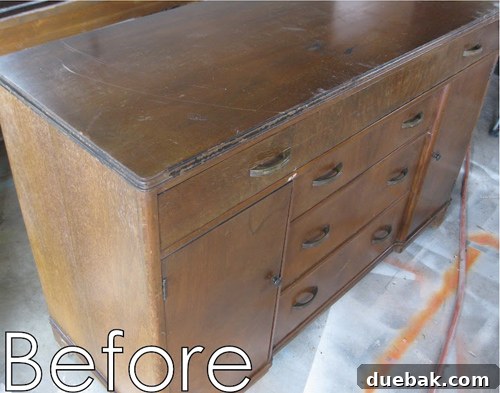
The journey of this buffet began not with stain, but with significant restoration. Beth detailed the initial, arduous steps: “We pulled this buffet out of a burn pile, repaired the burn damage and fixed a structural problem, prepped, primed, and painted the body.” This crucial preparatory phase is often underestimated in DIY projects but is absolutely essential for a successful outcome. Rescuing furniture from a burn pile implies severe damage – likely charring, structural instability, and general wear and tear. Repairing these issues requires patience, specific tools, and a good understanding of woodworking. Filling holes, sanding rough patches, reinforcing joints, and addressing any water or heat damage are all part of bringing the piece back to a stable, usable condition. Once the structural integrity was restored, the body of the buffet was prepped, primed, and painted. This base coat serves multiple purposes: it covers imperfections, provides a uniform background, and creates a clean contrast against the intricate stain work that would adorn the top surface. It’s a testament to their dedication that they invested so much effort into the foundational work before moving on to the decorative aspects.
The Art of Shading with Stain: A Step-by-Step Guide
With the buffet’s body sound and painted, Beth turned her attention to the top surface – her canvas. The technique she developed for shading with stain is truly innovative and worth exploring for anyone looking to add a unique touch to their furniture. She chose a floral motif, lightly sketching the petal outlines with a pencil. This preliminary drawing acts as a guide, ensuring symmetry and proper placement before applying any permanent stain.
Beth began the staining process using Minwax Ebony, a deep, rich color that lends itself perfectly to creating strong contrasts and shading. Her method was deliberate and artistic: “I started with the center petals and stained each petal, starting at the center and working my way out toward the tip of the petal.” This radial approach is key to achieving a natural, organic look, mimicking how light might fall on a flower or how charcoal might be applied for depth.
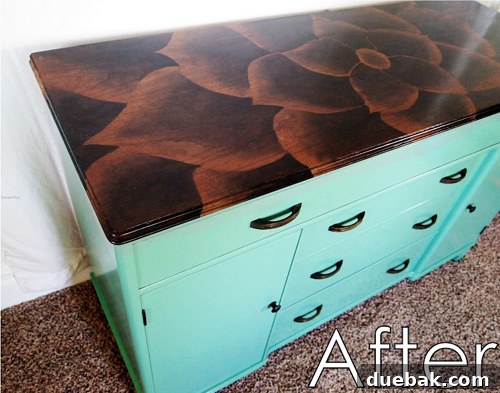
The magic of the “charcoal” effect comes from her expert blending: “As you can see I didn’t stain all the way out to the edge of the petals, because I wanted that to be the lightest portion of my ‘shading.’ Using a dry cloth and my finger, I wiped away from the stain to allow a smooth transition from the stained portion to the outer unstained portion of my petal. Rubbing it to create that shaded look.” This technique is reminiscent of smudging charcoal with a finger or blending stump. By applying stain heavily in the center and then carefully wiping and rubbing it outwards, Beth was able to create a gradual gradient from dark to light. The dry cloth absorbs excess stain, while the finger helps to smoothly spread and thin out the pigment, creating soft, natural transitions. This level of control allows for depth and dimension, turning a flat wooden surface into a visually dynamic piece of art. The process was repeated meticulously for each petal, slowly building the intricate floral design, petal by petal, working outwards from the center of the flower.
The Stunning Result and Endless Possibilities
The final result is nothing short of breathtaking. Beth proudly shared, “I’m soooo super proud of myself. Hope you love it! – Beth & Nick.” And indeed, it’s a project to be proud of. The floral design, rendered in varying shades of Ebony stain, creates a captivating focal point on the buffet’s top. The contrasting painted body further highlights the intricate stain work, elevating the piece from a simple furniture item to a bespoke work of art. This project serves as a powerful reminder that DIY doesn’t have to be limited to conventional methods; sometimes, the most stunning transformations come from thinking outside the box and experimenting with familiar materials in new ways.
Unleashing Your Inner Artist: Beyond Floral Designs
Beth and Nick’s project immediately sparks ideas and challenges traditional notions of wood staining. For those who might prefer a fully stained piece over a painted body, this technique could easily be applied to the front and sides of a furniture item, creating a cohesive, artistic look. Imagine the possibilities! If such an intricate floral design is achievable, what about other patterns? Someone could attempt geometric shapes like stripes or tiled triangles, perhaps with the aid of painter’s tape to create crisp lines before applying and shading the stain. The beauty of this method lies in its versatility. You could create abstract designs, natural textures, or even more complex illustrations, all by manipulating the application and blending of wood stain. This project truly elevates wood staining from a protective finish to an artistic medium, inviting DIY enthusiasts to view their furniture as potential canvases.
Tips for Your Own Creative Staining Project:
- Start Small: If you’re new to this technique, practice on scrap wood first to get a feel for how the stain interacts with the wood and how blending works.
- Choose Your Stain Wisely: Darker stains like Ebony or Walnut work well for contrast and shading, but lighter stains can also create subtle, elegant effects. Experiment!
- Tools of the Trade: A dry, lint-free cloth is essential for blending. Your fingers can also be incredibly useful for precise smudging.
- Patience is Key: Don’t rush the process. Building layers and achieving smooth transitions takes time and a delicate touch.
- Protect Your Work: Once your design is complete and thoroughly dry, apply a high-quality topcoat (like polyurethane) to protect your artistic creation from wear and tear.
Embrace the DIY Spirit
This “burn pile buffet” transformation is more than just a furniture makeover; it’s a narrative of rescue, artistic vision, and triumphant execution. It highlights the potential hidden within discarded items and encourages us all to look beyond their current state to imagine what they could become. Beth and Nick have not only created a beautiful piece for their home but have also inspired countless others to pick up a brush (or a stain-soaked cloth!) and explore new dimensions of DIY creativity. If you’re looking for more details and behind-the-scenes insights into their process, be sure to visit Beth and Nick’s blog. And if you’ve tried something similar, or have your own unique stain art projects, we’d absolutely love to hear how it all went down and see your incredible results!