
DIY Peel and Stick Wallpaper: An Affordable Guide to Easy Home Transformation
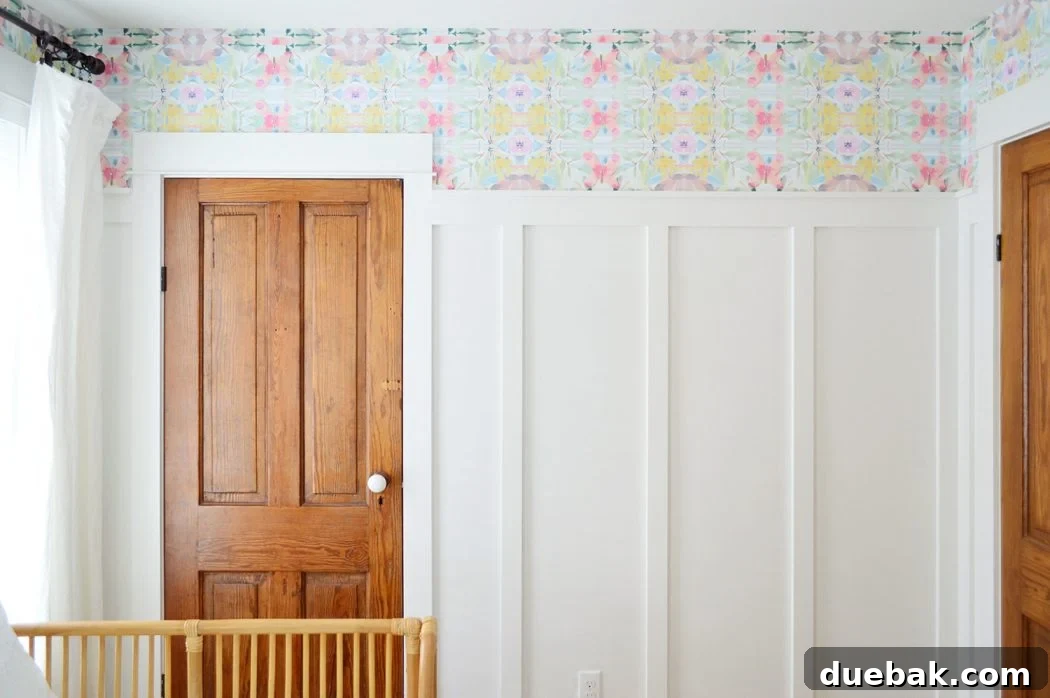
Transforming a room doesn’t have to be a daunting or expensive endeavor. In our experience, adding the perfect peel and stick wallpaper to our middle bedroom at the beach house was a quick, budget-friendly project, costing less than $100 and taking just a few hours. This innovative approach to wall decor offers incredible impact for minimal investment and effort. What’s more, it’s 100% removable, making future changes or design updates completely hassle-free. Unlike the traditional methods that involve removing stubborn wallpaper, peel and stick simplifies the process significantly. In this detailed guide, we’ll walk you through every step of how we hung our wallpaper, complete with invaluable tips and tricks to ensure your project is a success. We even captured a real-time video of the installation process to give you a clear visual aid.
Selecting Your Perfect Peel and Stick Wallpaper
The success and simplicity of any DIY project often hinge on strategic planning and material selection. For our wallpaper installation, two key decisions streamlined the entire process, making it particularly swift and budget-friendly:
- Opting for Peel and Stick Wallpaper: This choice is a game-changer for DIY enthusiasts. Traditional wallpapers often demand the application of a separate adhesive, while even “pre-pasted” options require wetting the paper to activate their built-in glue. Peel and stick wallpaper, however, is essentially a giant, repositionable sticker. Its self-adhesive backing means you can easily apply it, then peel it off and re-stick it multiple times until you achieve perfect placement. This dramatically simplifies the installation process, eliminating mess, reducing installation time, and offering immense forgiveness for beginners. It’s the ideal solution for those seeking a stylish update without the commitment or complexity of permanent options.
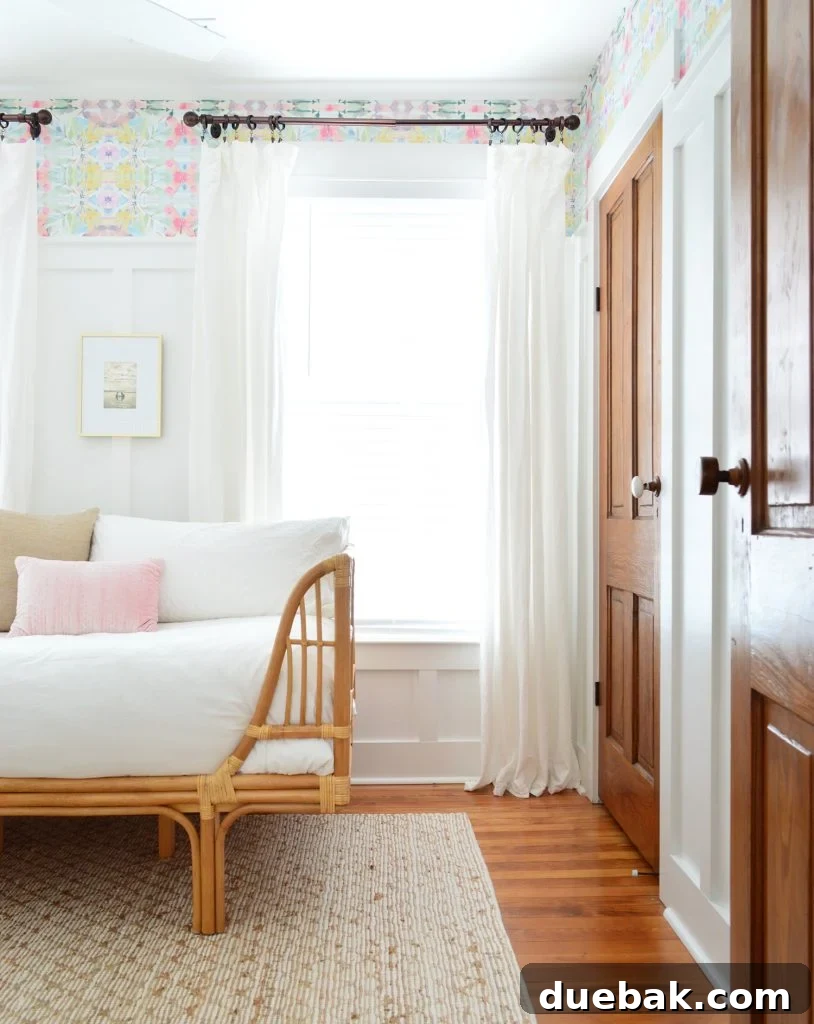
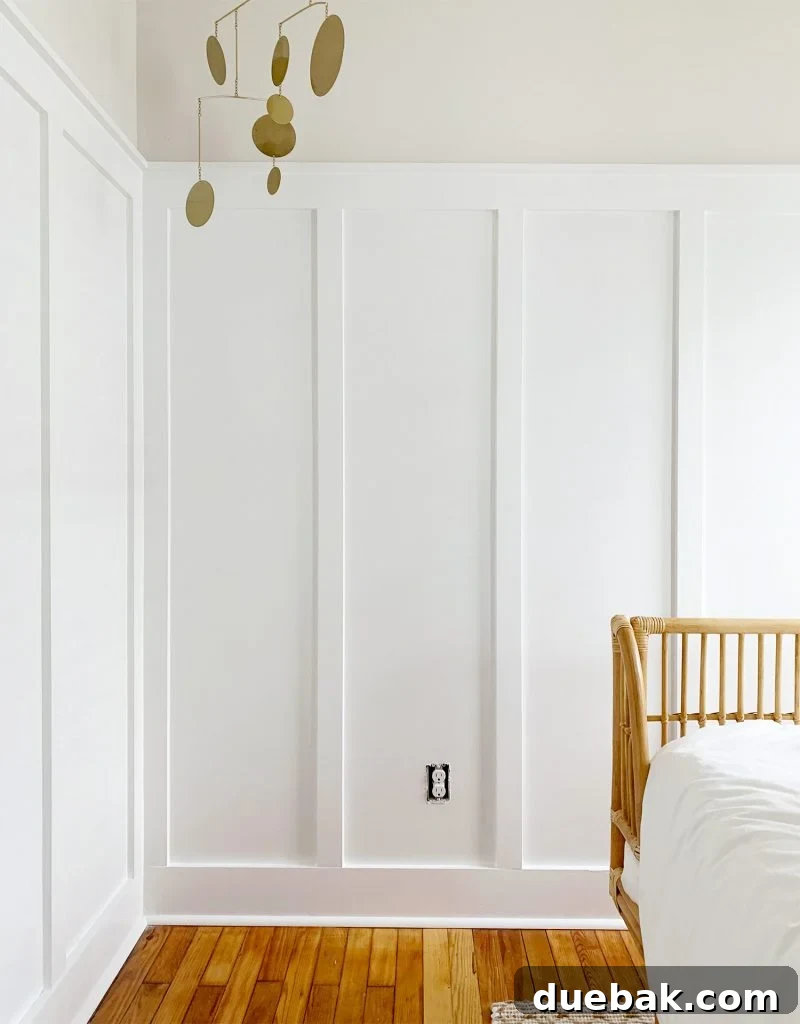
- Wallpapering Only Above Wainscoting: We recently enhanced this bedroom with a stylish board and batten molding treatment, primarily to infuse a brighter, more coastal ambiance. Beyond aesthetics, this decision also significantly reduced the time and cost associated with the wallpaper project. By only applying wallpaper to the upper section of the wall, we avoided the complexities and material demands of a floor-to-ceiling installation across an entire room. While our method is adaptable for larger wall sections, focusing on the area above wainscoting undeniably makes the project faster and more economical, perfect for a weekend transformation.
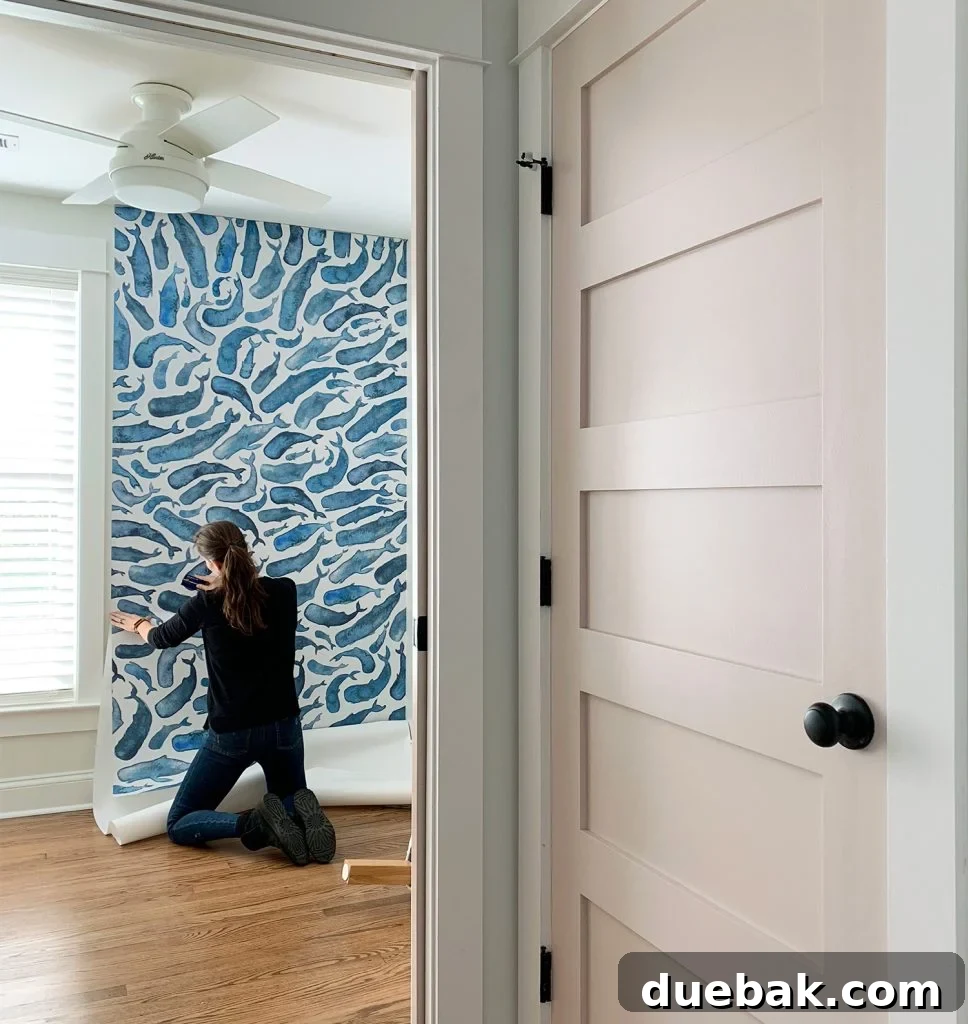
For those curious about full-wall coverage, we previously detailed the process of installing removable wall murals from floor to ceiling, including intricate cuts around windows. However, those more extensive projects typically cost around $400 per room, whereas our current wainscoting-top approach kept the budget under $100. This stark contrast highlights the significant savings achievable with strategic planning.
A major factor in keeping this bedroom project so affordable was our smart shopping for the wallpaper itself. We chose a beautiful pattern called “Synchronized.” Initially, we found a version at Anthropologie for $150 (with a coupon). However, some savvy readers pointed out that this pattern is available at various other online retailers for less, including Target, JoAnn Fabrics, and even Home Depot. By combining a sale price with an additional coupon at JoAnn, we secured four rolls for an incredible $85, including shipping and tax! This anecdote strongly emphasizes the importance of shopping around and comparing prices before making your final purchase.
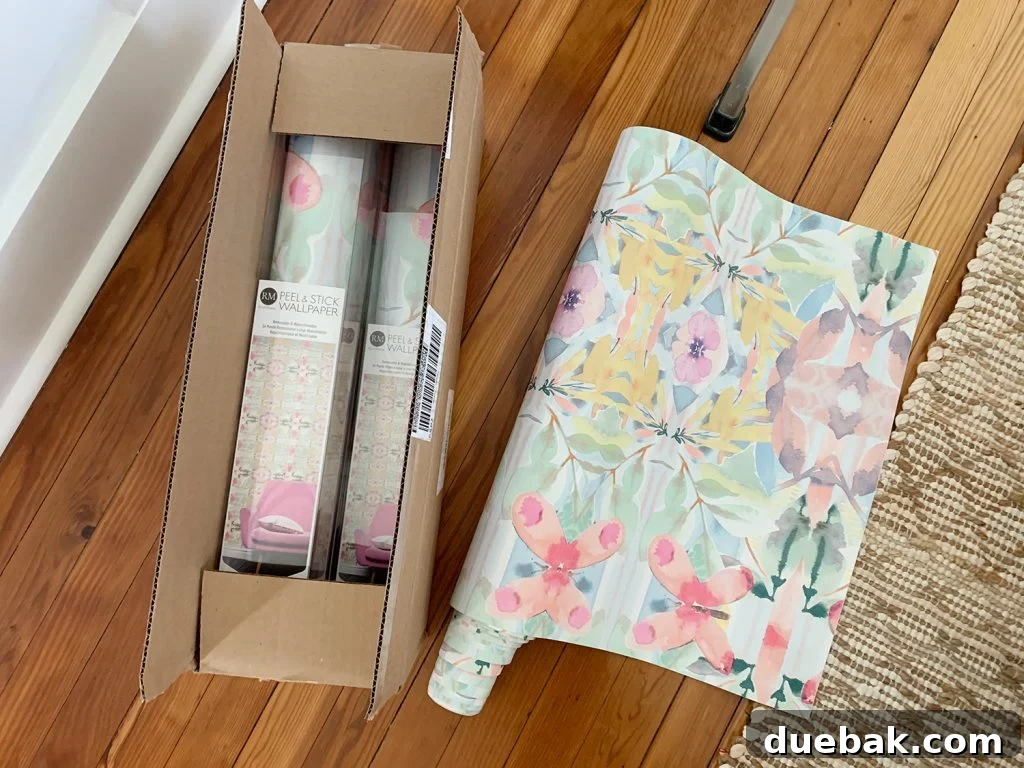
Essential Tools & Materials for Peel and Stick Wallpaper Installation
One of the many advantages of peel and stick wallpaper is the minimal toolkit required. You’ll bypass all the complicated glues and messy pastes. Here’s a concise list of what you’ll want to have on hand to ensure a smooth and efficient installation:
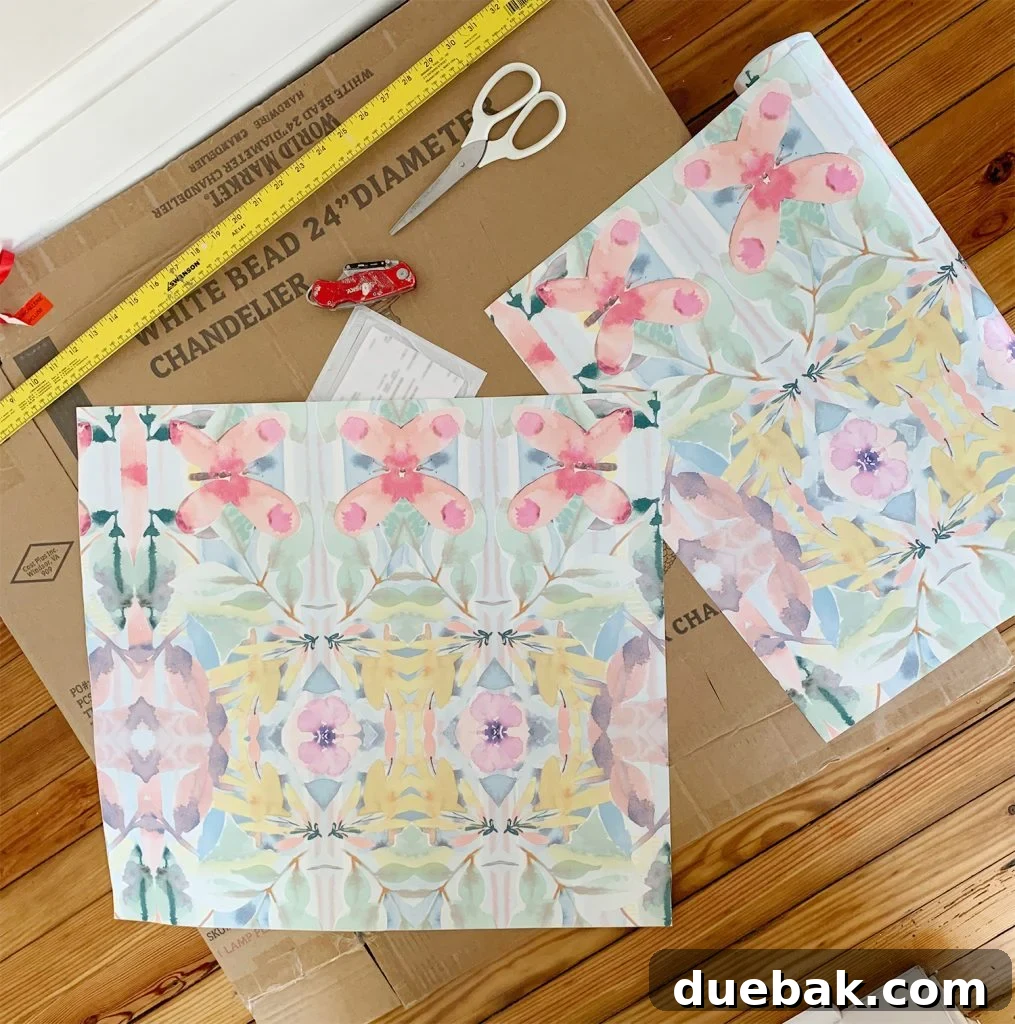
- Sharp Utility or Craft Knife: Absolutely crucial for clean, precise cuts. A sharp blade prevents tearing and ensures crisp edges, especially when trimming along ceilings, baseboards, and corners. Have extra blades on hand, as dull blades can ruin your paper.
- Scissors: Useful for initial rough cuts, especially when working around obstacles like windows or doors, and for snipping relief cuts.
- Measuring Tape: For accurate measurements of your wall sections and wallpaper panels. Measure twice, cut once!
- Yardstick (preferably metal): A sturdy, straight edge is vital for guiding your utility knife to achieve perfectly straight cuts. Metal is preferred over plastic as it won’t be easily nicked by your blade.
- Wallpaper Smoother (or a credit card): This tool helps press out air bubbles and wrinkles, ensuring a smooth, seamless finish. A firm, flat edge is key.
- Level (a 9-inch one worked best for us): This is arguably the most important tool for ensuring your wallpaper panels are perfectly vertical. We used a shorter level because larger ones wouldn’t fit above our wainscoting, but any level will do, as long as it’s accurate.
- Step Ladder: Essential for safely reaching the upper sections of your wall, especially when working near the ceiling.
- Pen or Pencil: For marking your level lines and cutting guides directly on the wall or the back of the wallpaper.
Additionally, having a protective cutting surface, such as a piece of scrap wood or sturdy cardboard, is highly recommended to protect your floors or work surfaces when cutting the wallpaper panels.
Strategic Planning for Optimal Pattern Placement
To minimize waste and maximize the aesthetic appeal of your chosen wallpaper, understanding its “repeat” is paramount. A pattern repeat refers to the distance before the design starts over again. For our “Synchronized” wallpaper, the pattern repeated every 20.5 inches. Knowing this, we made a conscious decision to set the height of the space above our board and batten wainscoting slightly less than 20.5 inches. This clever trick allowed each section of wallpaper to beautifully frame a single, complete pattern repeat with a small, manageable excess for trimming, ensuring continuity and reducing scraps.
Consider the alternative: if our wall space above the wainscoting had been, for instance, 24.5 inches, we would have been forced to cut 4 inches into a second pattern repeat. This would have rendered the remaining 16.5 inches of that partial repeat on the roll virtually unusable, leading to unnecessary waste. While this might be less critical for patterns with very small repeats or those that are non-directional, for our specific design, thoughtful planning around the repeat was invaluable.
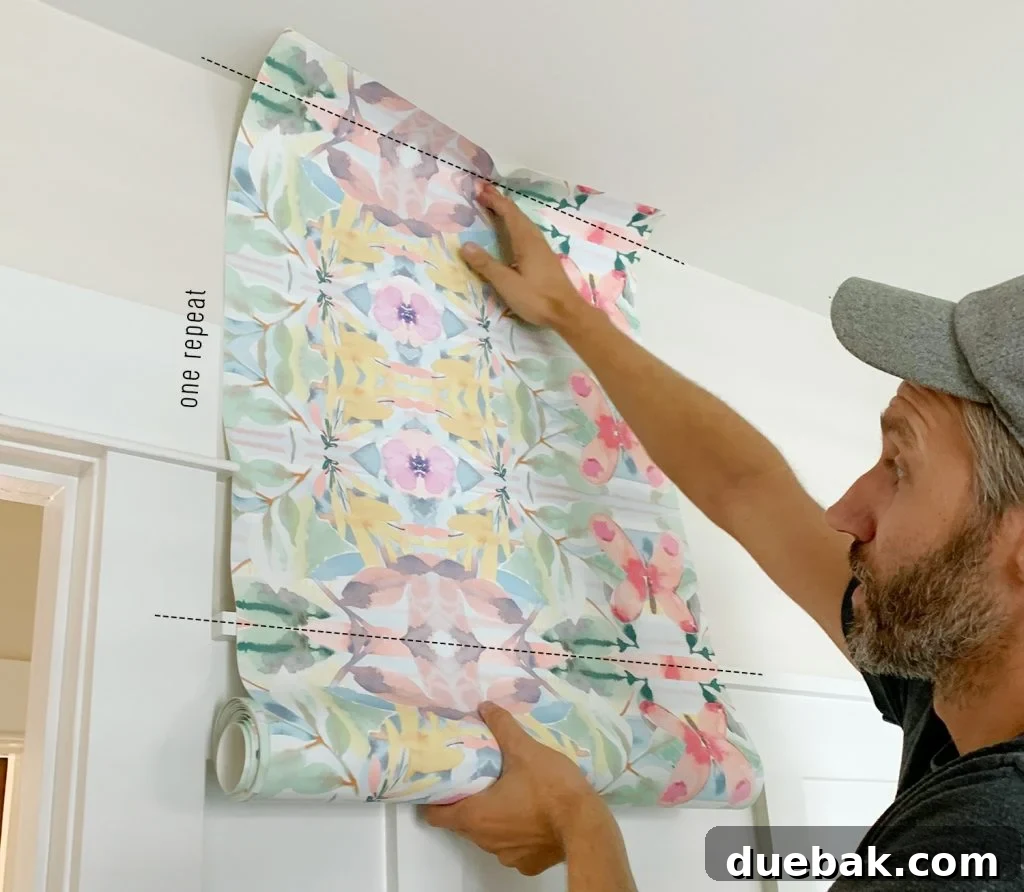
In a curious coincidence, the width of each of our wallpaper rolls was also 20.5 inches. This presented an intriguing option: running the wallpaper horizontally around the room. This could potentially have made the installation even quicker by reducing the number of vertical seams. However, after careful consideration, we decided that the pattern’s aesthetic was best showcased with a vertical orientation. This highlights an important point: always consider both vertical and horizontal applications for your wallpaper, as one might offer unexpected advantages in terms of ease of installation or visual impact, depending on your specific pattern and wall dimensions.
Hanging Your First Piece: The Foundation of a Flawless Finish
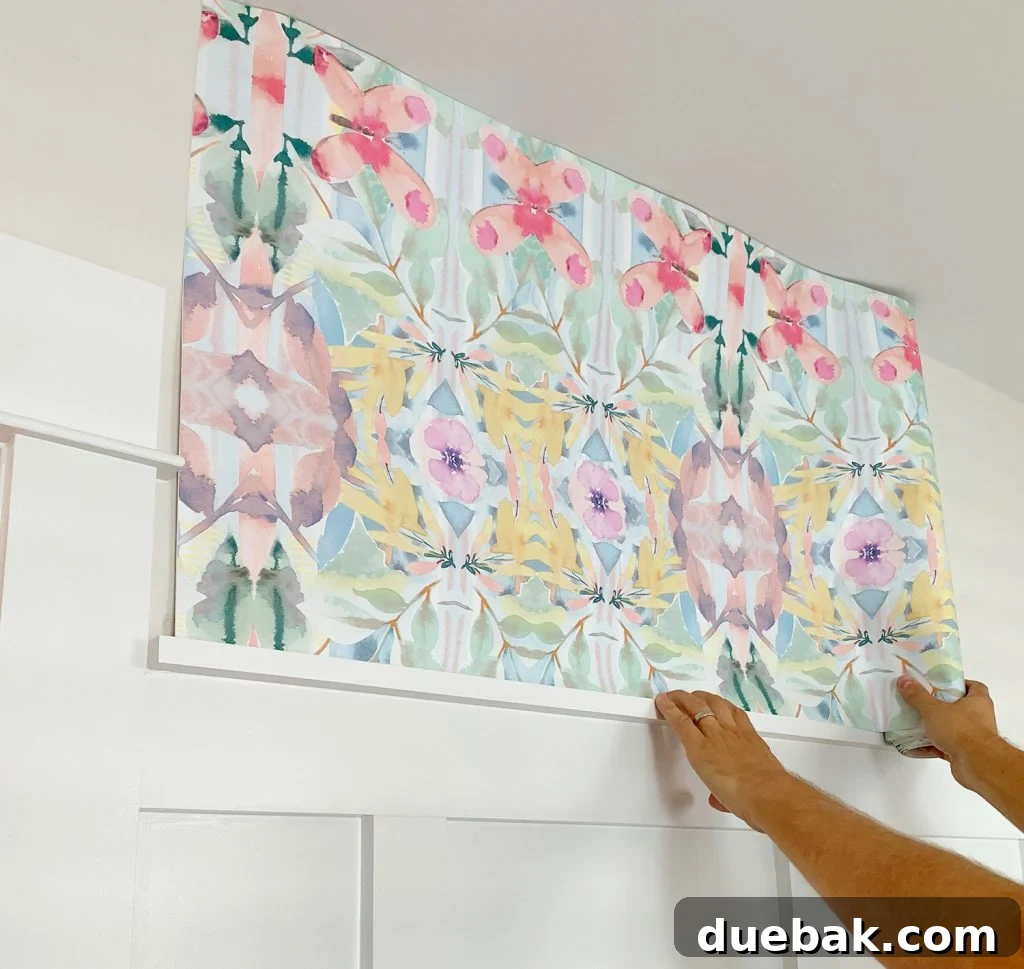
Before beginning the hanging process, we carefully prepared our first wallpaper panel. Using a sharp utility knife and a metal yardstick as a precise straight edge, we measured and cut one full pattern repeat from the roll. While it might seem efficient to cut all your sections at once, we discovered that our ceiling wasn’t perfectly level in all areas, causing the wall space to be slightly taller than our 20.5-inch repeat in certain spots. This meant we occasionally had to cut panels slightly larger than a single repeat to ensure full coverage, preventing unsightly gaps (and causing a little bit of unavoidable waste). Ultimately, we found it safest to cut one or two pieces at a time, frequently re-measuring the wall to adapt to any inconsistencies and ensure accurate cuts.
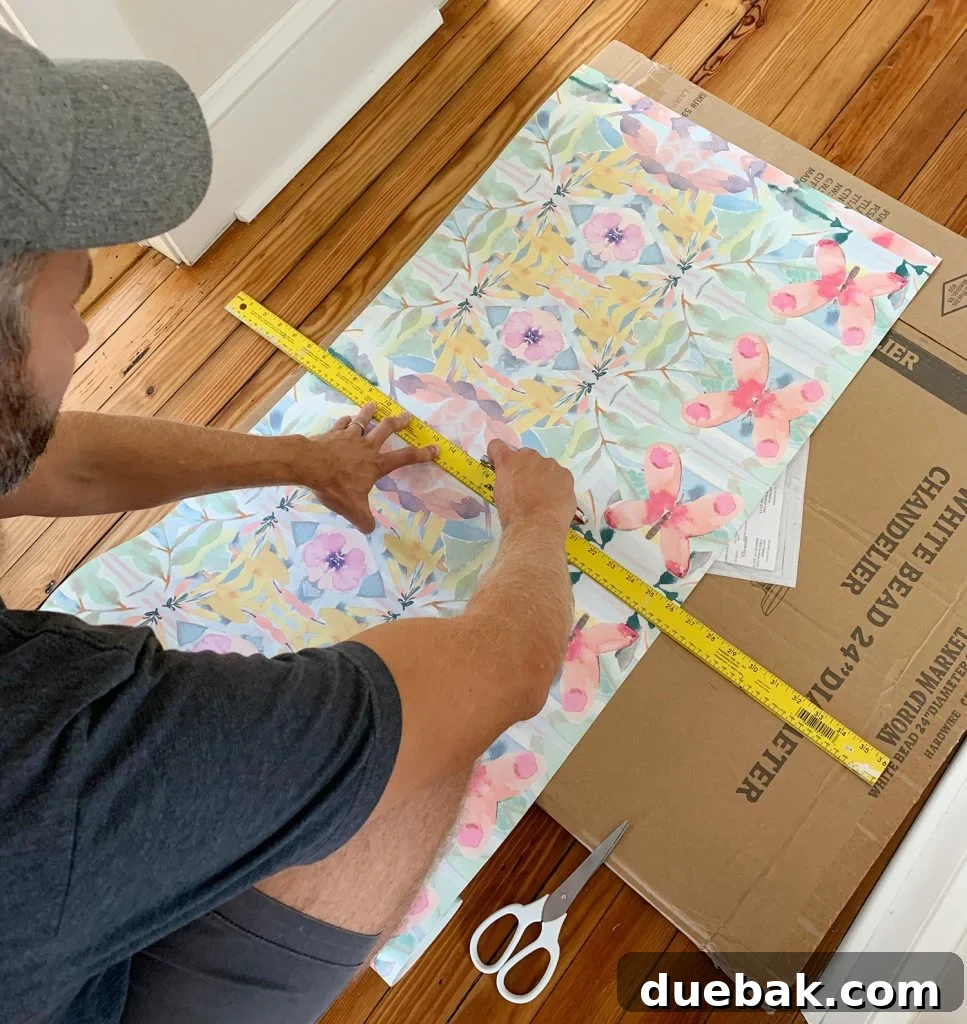
Depending on your pattern and design preference, you might choose to start your first piece in the center of your wall for perfect symmetry, ensuring the design radiates evenly towards both corners. However, for our project, starting in a corner was acceptable. Regardless of your starting point, we cannot stress this enough: DO NOT use the corner as your guide for leveling the wallpaper! Corners are notoriously imperfect, rarely perfectly plumb or square. Relying on them will inevitably lead to a crooked installation.
The absolute most critical step is to ensure your first piece is perfectly straight on its vertical edge. If this initial panel is even slightly off-kilter, the pattern will gradually “travel” or become askew as you progress around the room. By the time you reach your last piece, it may not align with your first panel at all, leading to noticeable and frustrating discrepancies. Instead of a corner, always use a reliable level. Here’s how:
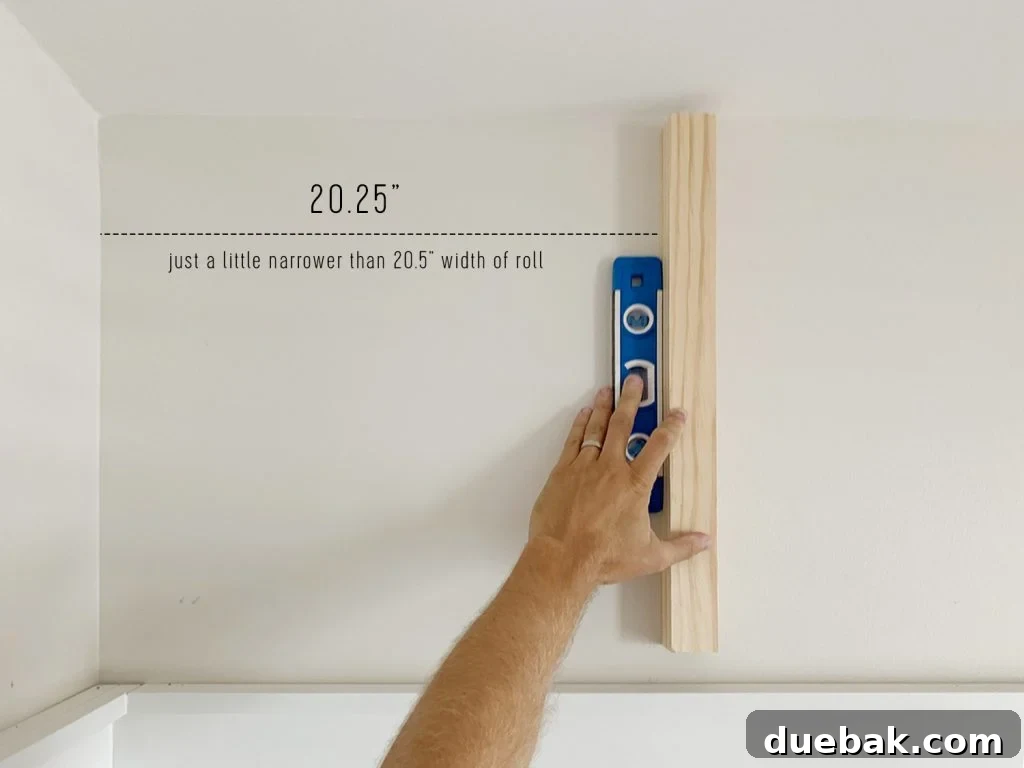
As illustrated in the image above, we measured out from our corner a distance slightly less than the width of our wallpaper roll. Using a pencil and our level, we drew a perfectly vertical line directly on the wall. The “slightly less” part is crucial! If your corner bows inward at any point (as ours did near the ceiling), measuring the exact width could leave you with unsightly gaps where the wallpaper falls short. It’s always better to have a little excess that can be trimmed later than to come up short. With this level line drawn, we peeled off most of the backing from our first wallpaper section and carefully adhered it to the wall, ensuring the outer edge aligned perfectly with our drawn line.
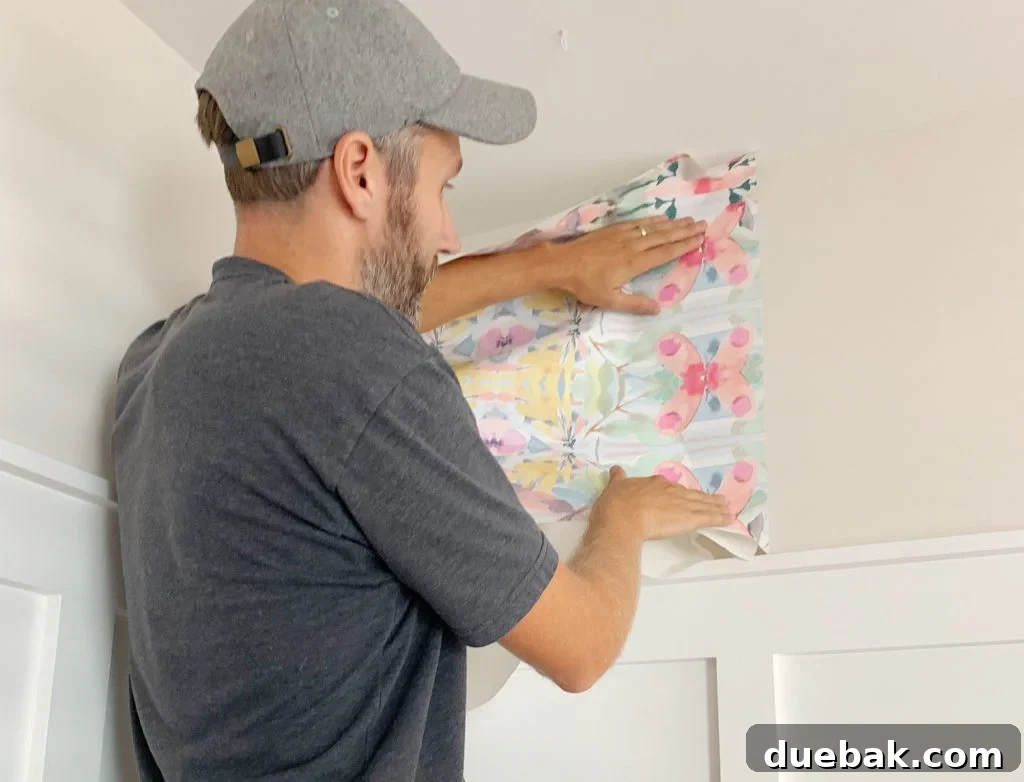
If the detailed measurements and pattern calculations have made you a bit anxious, rest assured: peel and stick wallpapers are incredibly forgiving. Think of them as large, high-quality, repositionable stickers. This means you can easily peel them up and re-stick them repeatedly if your initial placement isn’t perfect. This flexibility is a huge advantage, especially for beginners.
To provide a clear visual, we created a short video demonstrating how we hung one of the panels. You’ll see us making minor adjustments multiple times until the pattern perfectly aligns with the previous panel. This iterative process is completely normal and encouraged! The ability to reposition the wallpaper until you’re satisfied is immensely comforting and takes much of the pressure out of installation. The video also showcases how we effectively smoothed out the wallpaper once it was correctly placed and then trimmed off any excess.
NOTE: You can watch the full installation video here on YouTube.
As shown in the video, once we were content with the edge alignment, we simply peeled off the remaining backing paper. Then, using our smoother tool, we systematically worked from the center outwards, pressing any trapped air bubbles or wrinkles towards the edges. This process is surprisingly simple and incredibly satisfying, yielding a professional, smooth finish. With your first piece perfectly aligned, you’ll repeat this process around the room, always taking care to match your pattern along each edge as you go. The only areas that require a bit more attention are corners and obstacles like windows, which we’ll cover in the following sections. But first, let’s discuss trimming excess at the ceiling and floor.
Precision Trimming: Cutting Off Excess at the Ceiling and Floor
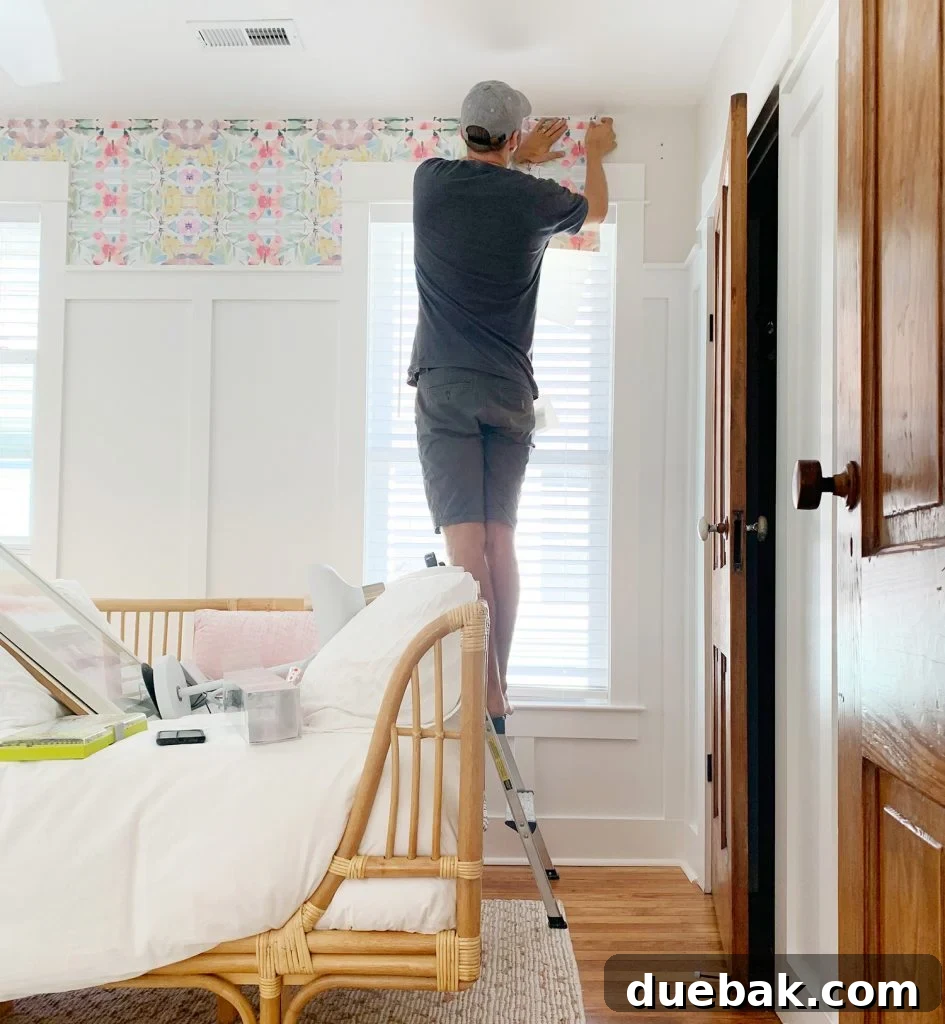
As demonstrated in our video, trimming the excess wallpaper along the ceilings is an easy, fast, and remarkably satisfying part of the installation. The most effective method we’ve found involves a combination of your smoother tool and a sharp utility knife. Begin by firmly holding your smoother against the wall, pressing it upwards into the corner where the wall meets the ceiling. This creates a crisp, consistent crease and provides a guide for your blade. Then, place the sharp blade of your utility knife directly against the top edge of your smoother.
With steady hands, move both the smoother and the knife simultaneously across the wall. It’s crucial to maintain constant upward pressure on your smoother, keeping it tightly nestled in the corner. This ensures a perfectly straight and clean cut. While the first few attempts might feel a bit nerve-wracking, you’ll quickly gain confidence. The trick is to take your time and let the tools do the work. Remember, a sharp blade is paramount; a dull blade will tear the paper, creating jagged edges.
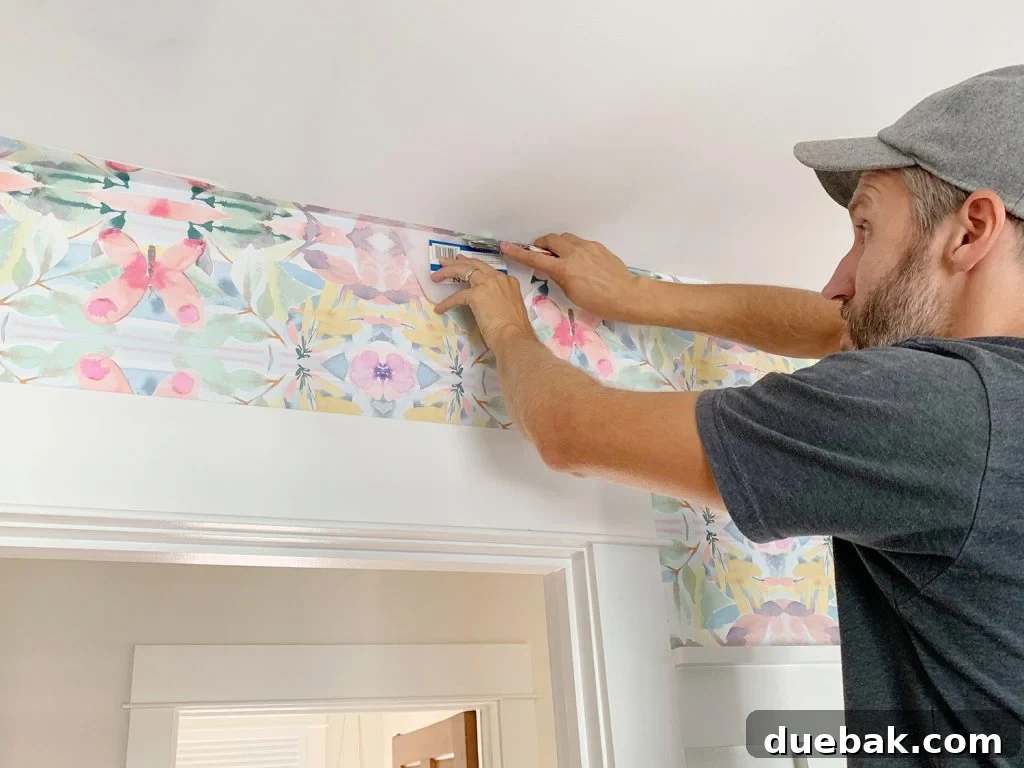
Once you’ve made a complete cut across an entire wallpaper panel, the strip of excess material along the ceiling can be easily peeled away. We typically performed this step every two or three sections, or as much as we could reach comfortably without repositioning our stepladder. However, you can also trim one section at a time, or even wait until all panels are installed to complete this as a final step for the entire room. Don’t forget to repeat this precise trimming process along the bottom of your walls, where the wallpaper meets the molding or baseboard, to achieve a polished look throughout the room.
Navigating the Challenges of Corners in Wallpaper Installation
Corners are often the trickiest part of wallpaper installation, a fact we learned firsthand during previous projects like our wall mural installations. In those instances, we only covered single feature walls, so wrapping patterns around corners wasn’t a concern. However, when wallpapering an entire room, corners demand a specific approach because, as we’ve already discussed, they are rarely perfectly straight or plumb. Attempting to simply wrap a single panel around an interior or exterior corner will almost always lead to an imperfect, sloping pattern on the adjacent wall. The photo below illustrates this challenge, showing how our pattern immediately began to slope downwards on the second wall because the corner itself bowed out slightly at the top.
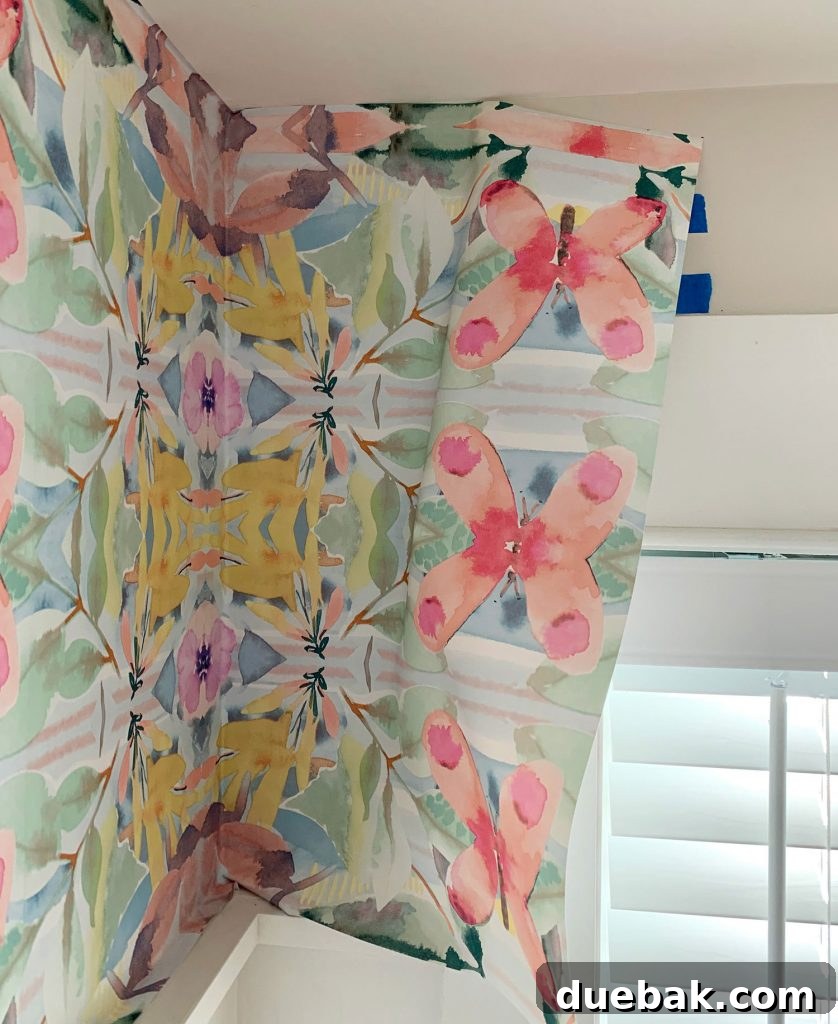
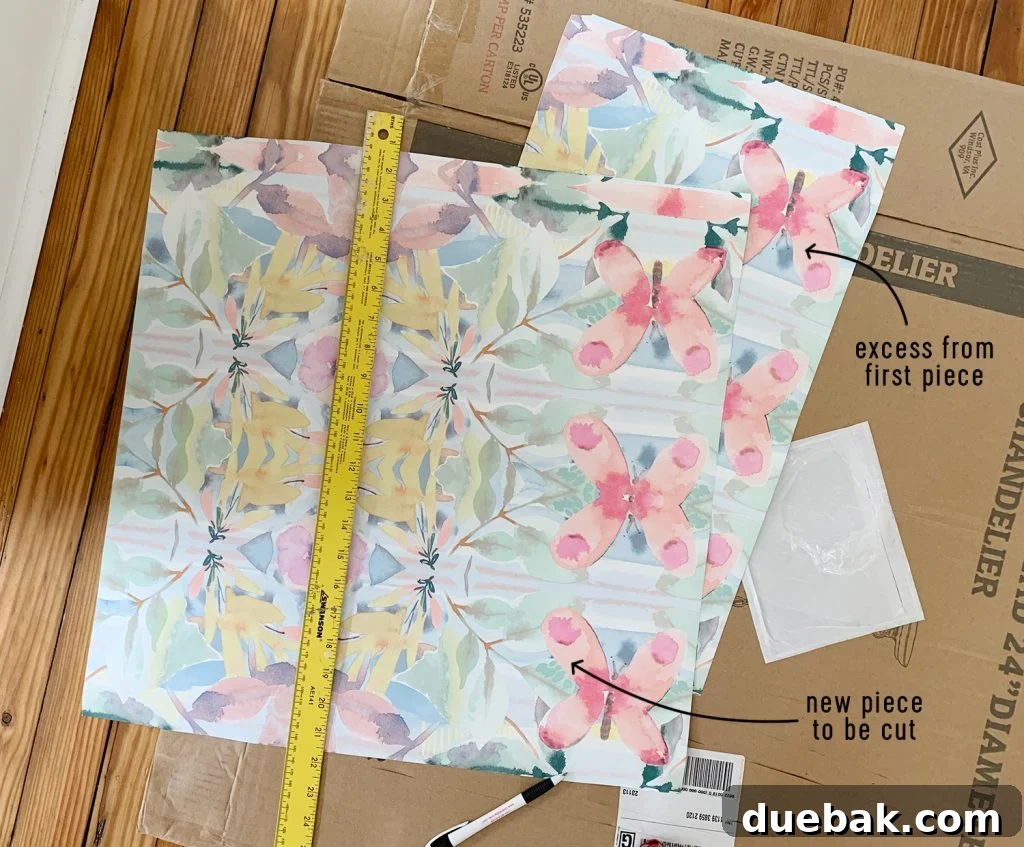
To achieve a professional and visually consistent finish, our solution for corners involved a two-step process. First, for the panel approaching the corner on the left side, we carefully cut the wallpaper precisely along the corner line, using the same smoothing and trimming method we applied at the ceiling. This ensures a clean, straight edge right up to the corner. We initially tried to reuse the excess strip for the next wall, but because the corner itself was imperfectly straight, the cut wasn’t perfectly vertical, leading to pattern misalignment. This taught us a valuable lesson.
Instead, we opted to cut a new, perfectly square (or rectangular) section of wallpaper for the adjacent wall, using the leftover strip as a size guide to determine the required width. This approach proved to be exceptionally effective. For the new second piece on the right side of the corner, we repeated the critical step of drawing a fresh, perfectly level vertical line on the wall, just as we did for our very first panel. Then, we applied this new section of wallpaper, aligning its outer edge with that newly drawn level line. This method ensures that each new wall section begins with a plumb vertical edge, preventing the pattern from “traveling” up or down around the room, which could ultimately lead to significant misalignment between your first and last panels.
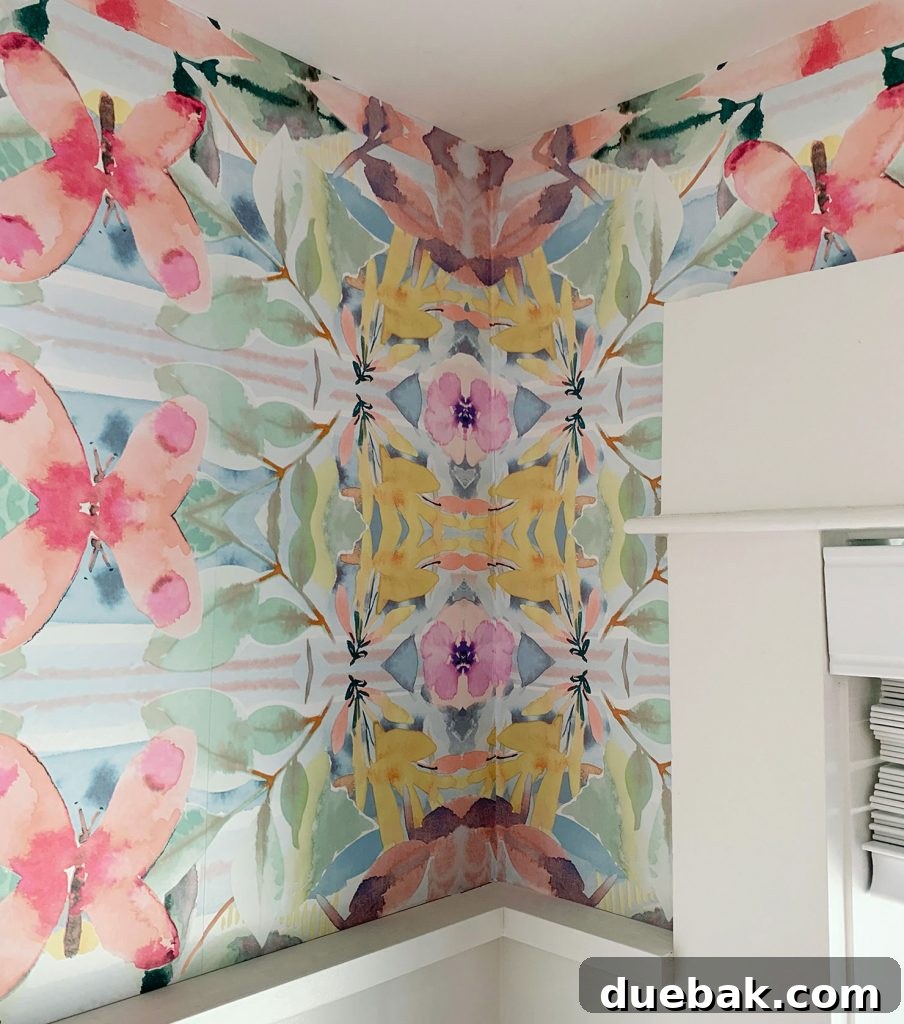
While this technique may result in a small amount of pattern overlap or duplication directly in the corner itself (as seen in the photo above, where our pattern is perfect at the top but shows a slight “echo” towards the bottom), these minor imperfections are typically imperceptible once the room is furnished and viewed as a whole. In our case, the lower portion of the pattern in that corner is conveniently concealed by a curtain, further minimizing any visual impact. The overall integrity of a straight, level pattern throughout the room far outweighs these small, hidden anomalies.
Precision Cutting Around Windows and Door Frames
Beyond corners, you’ll inevitably encounter obstacles like window and door frames that require careful cutting. While we didn’t capture specific photos of this process for this particular project, we detailed the exact steps for cutting wallpaper around such features in our previous wall mural installation post. The principles remain the same for peel and stick wallpaper.
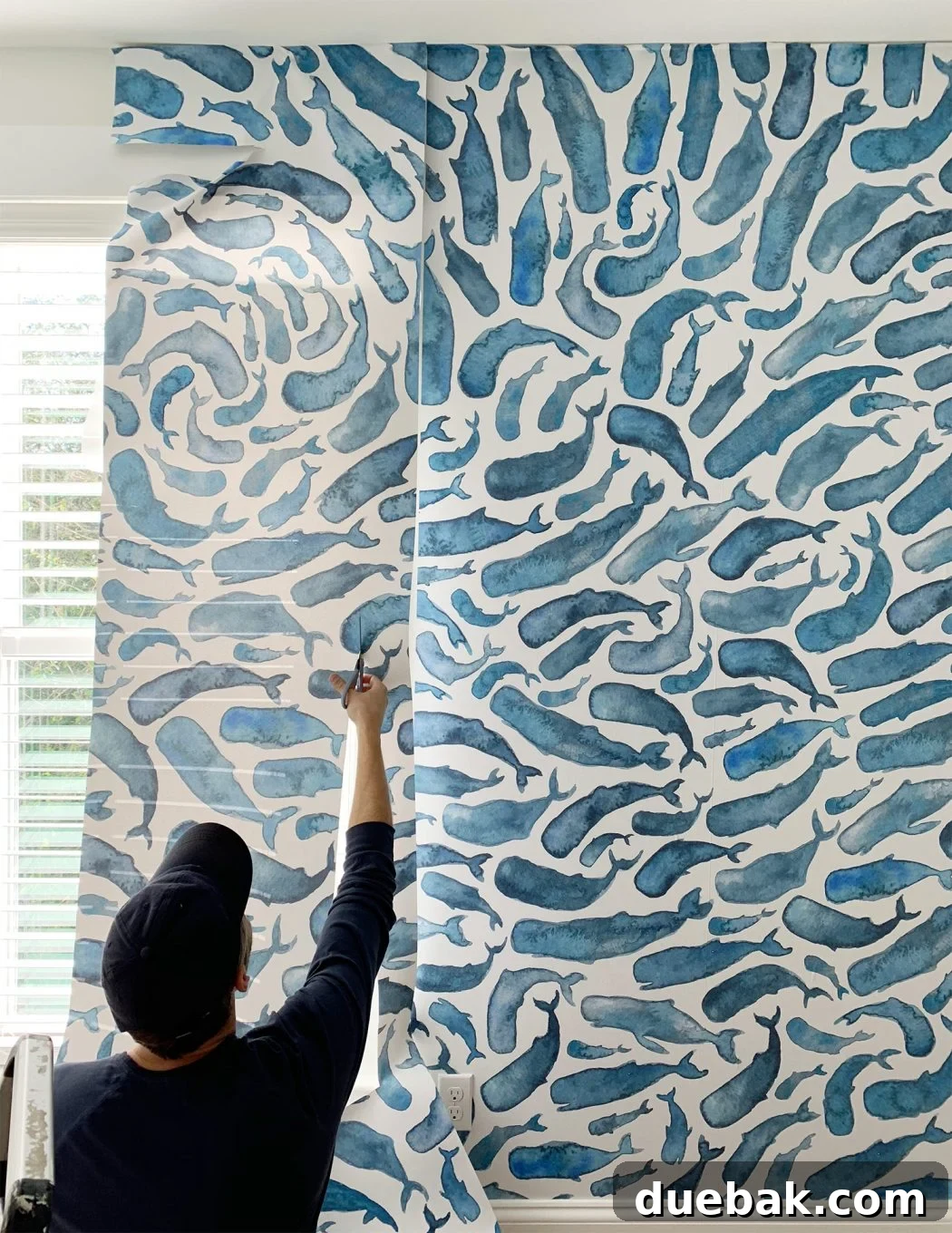
This is where your scissors become an invaluable tool. First, use them to make larger, rough cuts to remove significant excess wallpaper around the general area of the window or door frame. This makes the panel more manageable. Next, make small, gradual relief cuts (snips) into the wallpaper where it meets the frame. These small cuts allow the wallpaper to flex and fold easily around the edges of your molding without bubbling or creasing. Once the wallpaper is pressed firmly against the frame, use your utility knife and smoother tool, much like you did at the ceiling, to trim the excess precisely along the frame’s edge.
It’s a straightforward process that simply demands patience and precision. Always err on the side of cutting less initially, as you can always trim more. Trying to cut too much at once can lead to irreparable mistakes and wasted material. Take your time, make small adjustments, and soon you’ll have a perfectly trimmed finish around all your windows and doors.
Strategically Ending Your Wallpaper Pattern
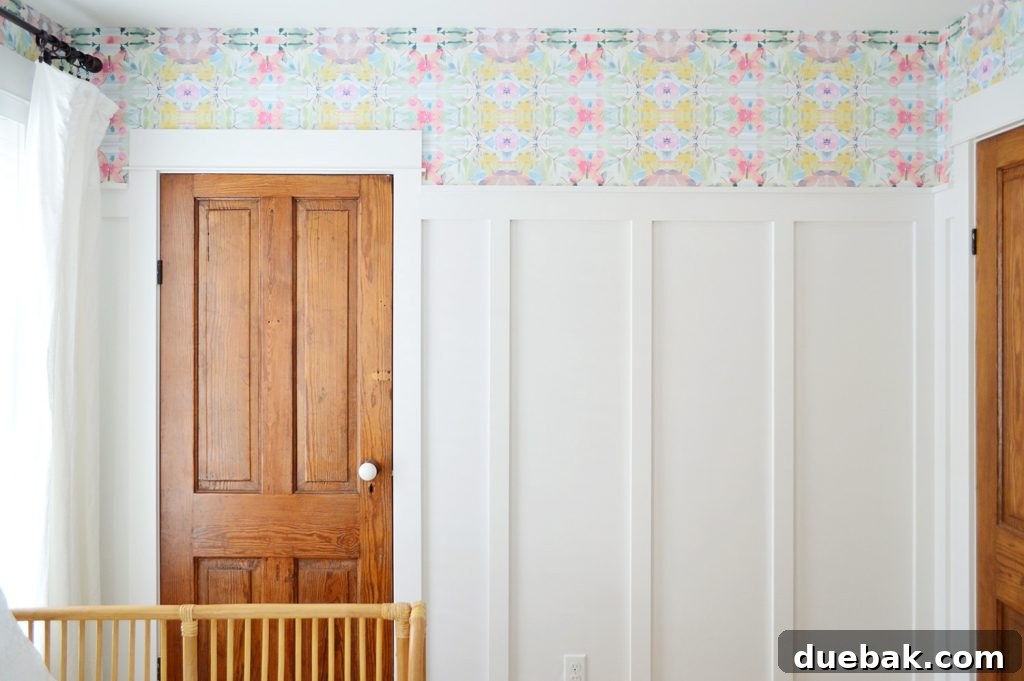
Unless you’re incredibly fortunate, it’s highly unlikely that your wallpaper pattern repeat will perfectly align when you meet your final corner. While the vertical alignment (top-to-bottom) should remain consistent thanks to careful leveling, achieving perfect horizontal side-to-side alignment in the final corner is rare. This would require your wall widths to be perfectly divisible by the pattern’s repeat (in our case, 20.5 inches). Therefore, our best advice is not to obsess over an imperfect pattern match at the end. Instead, focus on strategically choosing where this inevitable break occurs.
We deliberately started and ended our wallpaper installation in the corner located behind the room’s main door. This particular corner is less prominent, hidden from the hallway, and generally doesn’t draw much attention. We’re confident that few, if any, will ever scrutinize this spot long enough to notice the slight misalignment in the pattern. By placing the pattern break in a low-visibility area, any minor imperfections become virtually unnoticeable in the overall scheme of the room.
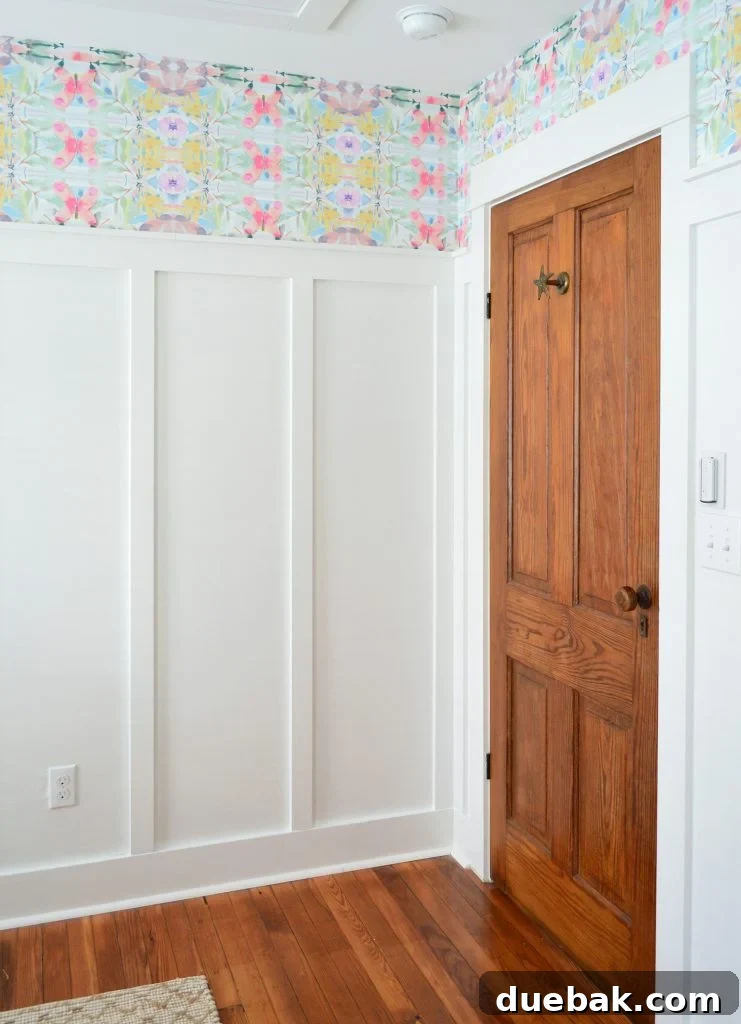
We also considered ending in one of the corners where the curtains are hung, as curtains can effectively conceal a significant portion of the wallpaper. However, these corners are among the first you see upon entering the room and are also visible from the hallway. Placing the pattern break in such a prominent location felt like a slightly riskier choice for us. Ultimately, the decision depends on your room’s layout and your personal preference for hiding minor imperfections.
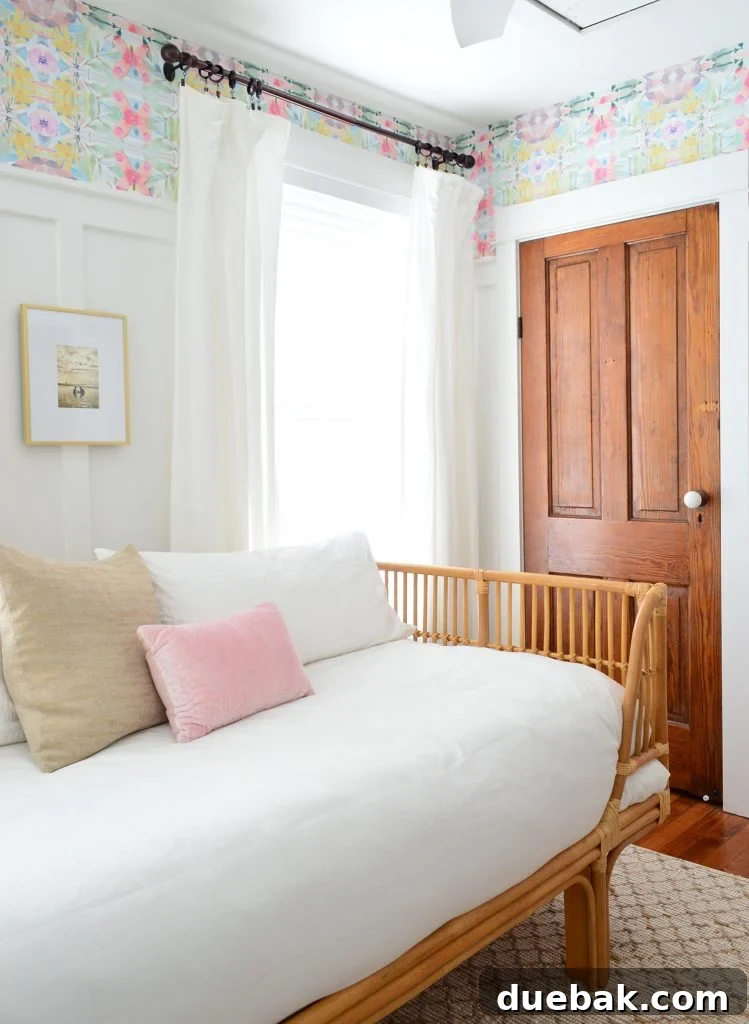
Ultimately, a perfect match in the final corner is less important than the overall impact of the room. Once your furniture is in place, and you view the space as a cohesive whole, those minor installation imperfections that seemed significant during the process will largely disappear. Trust us on this; the same principle applies to slightly imperfect paint jobs!
Explore Other Beautiful Peel & Stick Wallpaper Options
Having successfully transformed our bedroom with peel and stick wallpaper, we’ve received numerous requests for recommendations on other beautiful designs. We’re constantly on the lookout for fresh patterns and styles. Here are nine other fantastic peel and stick options that we’re currently loving (we’re particularly obsessed with #2 and are actively seeking a perfect spot for it in our home!):
We genuinely hope this comprehensive guide has equipped you with the confidence and knowledge to embark on your own wallpapering journey. Embrace the convenience and flexibility of peel and stick wallpaper; it’s a truly transformative, affordable, and forgiving option for any DIY home decorator. Don’t be afraid to stick, reposition, and re-stick until you achieve perfection – there’s absolutely no shame in getting it just right!
Pssst – If you’re inspired by the board and batten in our bedroom, you can find a full tutorial right here. For tips on visualizing your room’s potential before starting any project, check out our room planning guide.
*This post contains affiliate links, meaning we may earn a small commission when you make a purchase through links on our site, at no additional cost to you.