

Transforming Our Carport: Building a Beautiful DIY Pergola
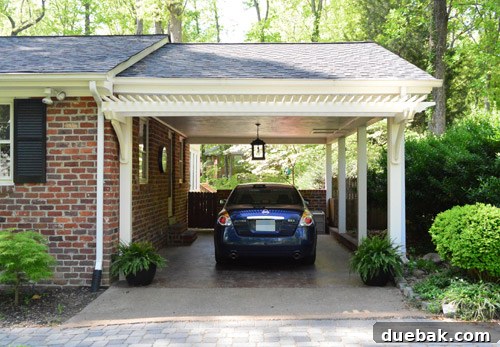
Parking our car just got a significant upgrade in both style and functionality this weekend, thanks to the completion of our brand-new carport pergola. Some might even call it a “cargola” or “pergolaport” – a perfect blend of practical shelter and elegant outdoor architecture. This project wasn’t just about adding a structure; it was about injecting character and charm into an often-overlooked space.

Just last week, we shared our initial thoughts on how we planned to revitalize our carport, drawing inspiration from comprehensive pergola plans from Workbench Magazine. These detailed blueprints were invaluable, eliminating much of the guesswork typically involved in a complex DIY endeavor. However, while the plans provided the roadmap, there was still a substantial amount of hands-on work ahead. The entire construction spanned approximately 4.5 days, with half a day dedicated solely to sourcing and acquiring all the necessary materials. For the sake of clarity and inspiration, we’ve condensed this extensive process into one comprehensive post, detailing every crucial step. Let’s dive into how we built our stunning carport pergola.
The DIY Journey Begins: Understanding the Core Components
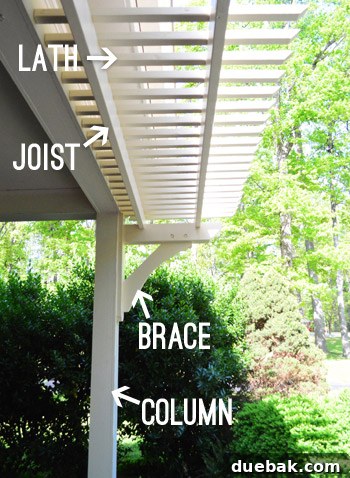
To embark on your own carport pergola project, it’s essential to understand its fundamental structural components. Our build was systematically divided into four primary stages, each critical to the overall stability and aesthetic appeal of the final structure. These main parts included: 1) the supporting column, 2) the robust braces, 3) the horizontal joists, and 4) the decorative lath.
Step 1: Establishing Structural Integrity with a New Column
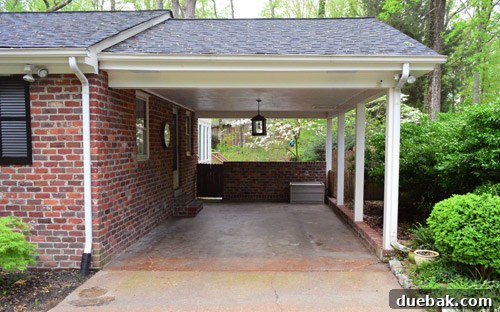
Many attached pergolas typically forgo an additional column, designed instead to affix directly to the existing walls adjacent to a garage door or a set of French doors. Our carport, however, presented a unique challenge: it only featured support posts on one side, specifically the left. To achieve crucial symmetry and create a secure attachment point for our new pergola structure, our very first task was to install a new column on the right side.
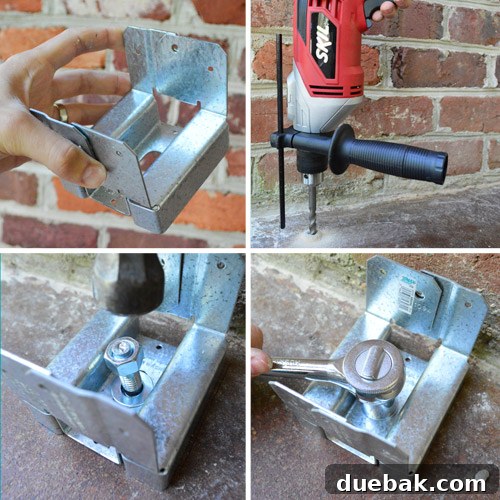
Securing a new post to a concrete floor requires specialized hardware to ensure long-term stability. For this, we utilized a durable post base specifically designed for concrete applications. This was my exciting opportunity to finally break out the hammer drill I had purchased when starting our deck project but hadn’t yet had the chance to use. The hammer drill proved indispensable, as its powerful drill-plus-hammer motion was perfect for creating a pilot hole for the concrete anchor. Once the hole was ready, I drove in a wedge anchor and securely tightened the nut, firmly anchoring the post base in place.
Following the floor anchor, a corresponding metal post base was attached to the ceiling directly above, this time using heavy-duty screws for a secure overhead fastening. This two-point anchoring system allowed us to precisely slide a robust 4×4 inch post into position and then nail it firmly into place, creating a solid vertical support for the pergola.
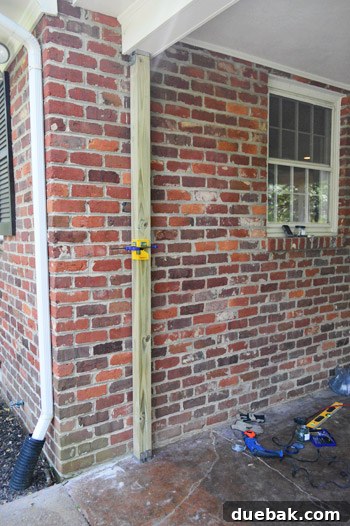
While structurally sound, a bare 4×4 post isn’t particularly attractive or substantial enough for the aesthetic we desired. To enhance its visual presence, we employed the same technique we used when beefing up our porch columns. Since pre-primed pine boards of the required length weren’t readily available, we took the extra step of priming and painting two 1×6 inch and one 1×4 inch boards beforehand. These boards were then carefully attached around the 4×4 post using our nail gun, giving the column a much more substantial and finished appearance.

With the boards securely in place, we meticulously caulked all seams for a seamless finish and applied touch-up paint, officially completing the first of our four major steps. This initial phase consumed the better part of the first day, with invaluable assistance from Sherry, who lent a hand with holding, photography, and painting during Clara’s nap times. It’s a testament to how crucial teamwork can be in a DIY project of this scale.
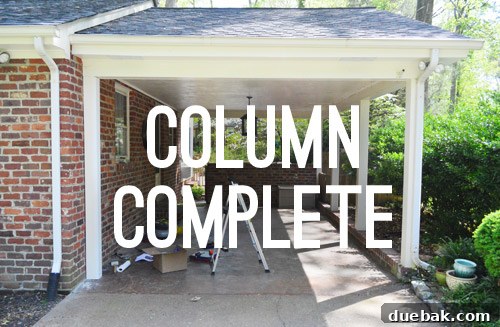
Step 2: Crafting Custom Decorative Braces (Knee Braces)
The remaining portion of day one was dedicated to beginning the construction of our braces, often formally referred to as “knee braces.” This phase proved to be the most intricate of all four steps, encompassing four distinct sub-steps for each brace. Our initial hope was to purchase these pre-made for convenience, but we quickly discovered that finding them in the precise dimensions required for our carport pergola proved challenging. Ultimately, fabricating them ourselves was not only more cost-effective but also allowed for complete customization.
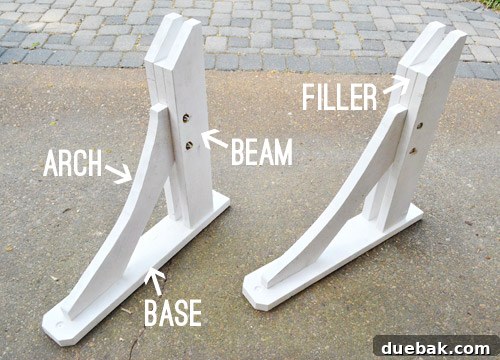
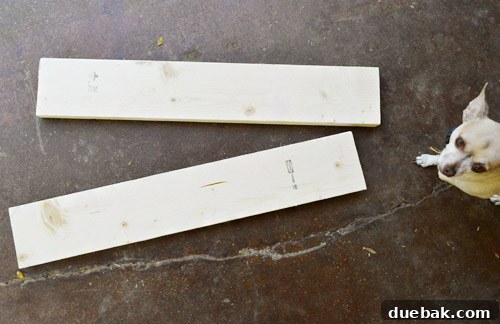
While pre-made braces can range from $50 to $100 each depending on size and design, our DIY approach drastically reduced expenses. Each of our custom braces was crafted from a single 12-foot piece of 2×6 inch lumber, combined with a few bolts, bringing the cost down to approximately $22 per brace. The first sub-step involved accurately cutting the 2×6 inch boards to the specific lengths detailed in our trusted plans. Even Burger, our furry supervisor, was on hand to double-check my measurements!
Next, I focused on what we termed the “base” – the section of the brace designed to rest flush against the column. These pieces were relatively straightforward to prepare. I used my miter saw to create decorative notches along the bottom edge, adding a touch of aesthetic flair. Subsequently, I used hole-boring bits to create precise indentations on each side for countersinking our bolts, ensuring a clean, flush attachment. While the plans guided me, the process still required careful attention to detail and was somewhat tedious.
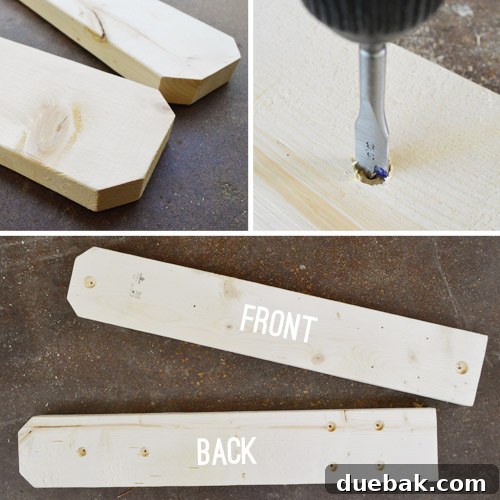
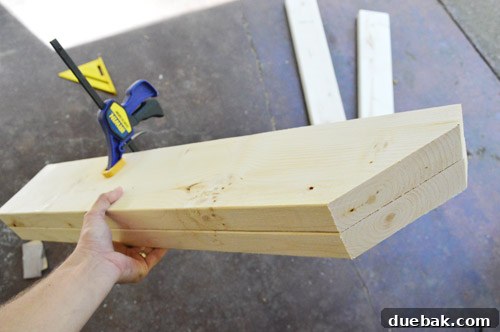
The subsequent components were the “beams” – the sections that would extend outward from the base at a perfect 90-degree angle. These were considerably easier to fabricate, which was a welcome relief since four of them were needed. To guarantee absolute uniformity, I clamped two beams together before making the cuts, ensuring that each pair destined for the same brace was perfectly identical.
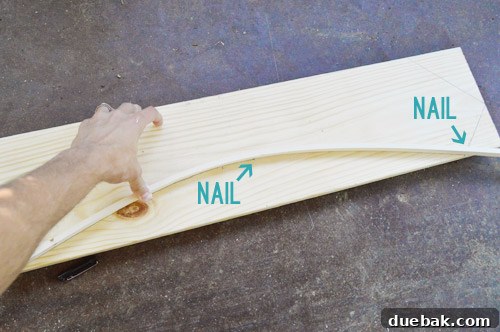
With the simpler elements addressed, I turned my attention to the “arch,” which involved the dreaded curved cut. To mark the precise curve, I temporarily tapped small nails into the wood at both ends and at the middle-top point of the desired arch. A thin, flexible piece of scrap wood (or even a small PVC pipe) was then bent over these nails, creating a natural arched shape. This makeshift jig held the curve long enough for me to accurately trace the line between the two end points.
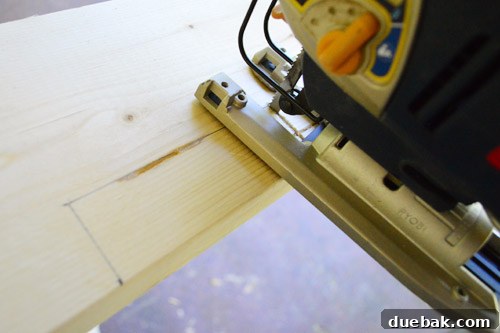
The next challenge was executing the curved cut itself. Lacking a specialized scroll saw, I relied on my trusty jigsaw. While it performed adequately, maintaining a perfectly vertical blade throughout the curve proved tricky, resulting in a couple of minor “wonky” spots. These imperfections, though subtle, were noticeable to me. Consequently, we invested significant time in sanding to smooth out these areas and achieve a more refined curve.
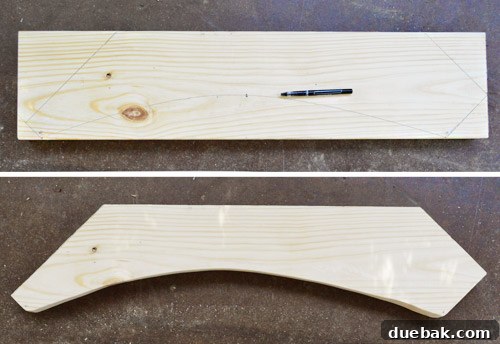
After a thorough sanding session, the arches looked significantly better. Applying primer to all the brace pieces once they were cut further cleaned up their appearance, providing a smooth, uniform surface for painting. This priming step is crucial for paint adhesion and durability, especially for outdoor structures like our carport pergola.
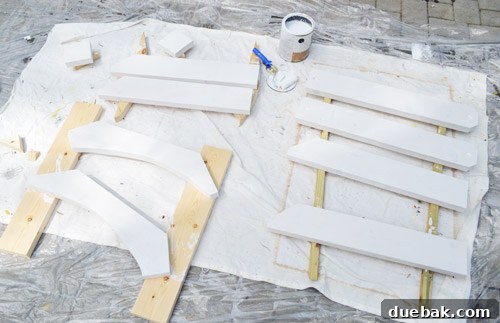
The assembly of these components was the next intricate phase. It involved a precise, multi-step process of clamping, temporary nail gun fastenings, and careful balancing on scrap wood to align everything perfectly. This image, which is actually upside down, gives a glimpse into the complexity of ensuring all pieces came together accurately.
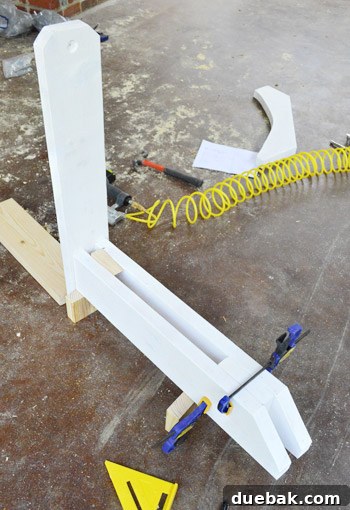
Essentially, our goal was to precisely align and center both beams with the single arch piece, ensuring everything was perfectly level before securing them to the base using robust 3-inch lag bolts. This required considerable finesse to prevent any misalignment or crookedness, but with patience and careful adjustments, we successfully completed the assembly.
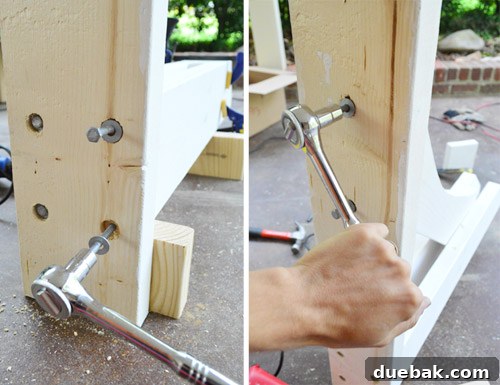
Finally, we drove additional bolts through the two beams and the central portion of the arch, reinforcing the entire assembly. While this sounds straightforward, the intricate nature of the task consumed a significant amount of time. The remainder of day two was spent on practical adjustments around the carport, rerouting a gutter and relocating an outdoor light fixture to accommodate the new structure. By the end of day two, we had successfully constructed two braces, though they still awaited painting (completed the next morning) and installation (also achieved the following day).
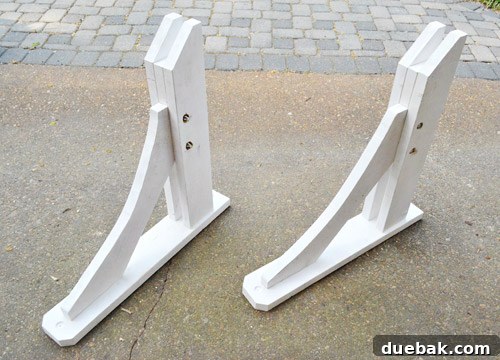
Hanging the braces demanded another level of coordination and finesse. One person had to bear the considerable weight of the brace while the other meticulously checked for level alignment and temporarily secured it with a nail gun. While brad nails alone wouldn’t provide sufficient long-term support, they held each brace in position just long enough for us to drive a substantial lag bolt into both the top and bottom of each, ensuring a permanent and secure attachment for the entire structure. This critical step guarantees the long-term stability of the carport pergola.
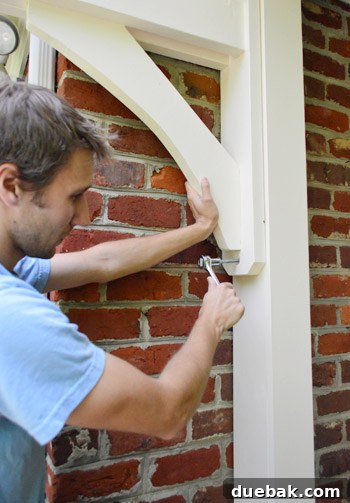
By noon on day three, with the braces firmly in place and looking fantastic, we were finally ready to transition to the third major step of our carport pergola construction.
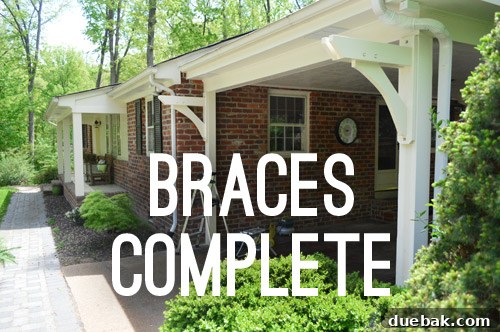
Step 3: Installing the Main Joists for Your Pergola
Step 3 focused on the joists – those two long, substantial pieces of lumber that would elegantly rest upon each of the newly installed braces. Like the braces, these joists were crafted from 2×6 inch boards and also required a decorative curved cut, as indicated in the diagram below. We applied this decorative curve only to the left side, as the right side of the joists would butt snugly against the side of the house, where a decorative edge would be superfluous.
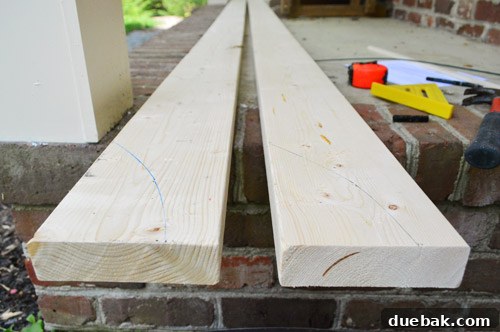
Once the joists were precisely cut to size and shape, we hoisted them into their intended positions atop the braces. This allowed us to accurately mark the exact spots where they made contact with the braces, which was crucial for the next phase of preparation.
These marks served as guides for cutting notches into the joists, ensuring they would sit perfectly tight and flush on the braces. While the joists were off the structure, it was also the opportune moment to prime and paint them, preparing them for their final installation. This pre-painting step simplifies the finishing process and ensures all surfaces are adequately protected.
While the paint dried on the joists, I efficiently moved ahead to begin Step 4. Consequently, it wasn’t until the following morning that we could finally hoist the fully prepared joists into their permanent positions. To securely fasten them, we drilled a long pilot hole through the top of each joist and then used an extended drill bit to drive screws directly through the joist top and into the beam of the brace below. This method ensures a strong, concealed attachment, maintaining the clean lines of the carport pergola.
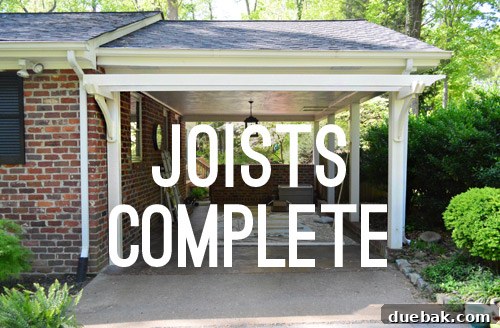
Step 4: Adding the Lath for Shade and Aesthetic Appeal
The final, and perhaps most visually impactful, step was the installation of the lath. These are the smaller strips of wood that create the signature grid pattern across the top of the pergola, offering both decorative charm and essential shade. Given our plan to paint these elements, we couldn’t use pre-cut, pressure-treated 2×2 inch pieces typically sold for deck railings. Pressure-treated lumber requires several weeks to “dry out” before paint or stain can be applied without trapping moisture and compromising the finish. As we wanted to paint immediately, we opted for standard 8-foot long 2×2 inch boards and cut them down to size at home.
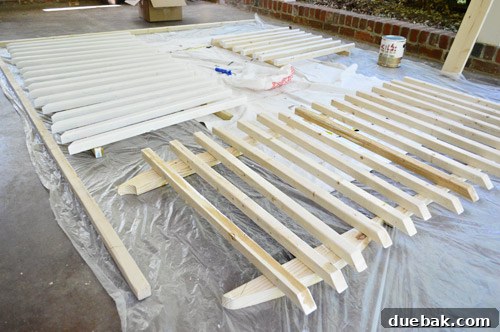
This approach, while substantially cheaper, meant we needed around 50 pieces (including a few extras for contingency). The cutting and sanding alone consumed a solid two hours – a task that was less exciting but pleasantly mindless. Following this, the truly extensive work began: priming and painting every single one of those pieces. We had to ensure all four sides were thoroughly coated, as every surface would be visible once installed. Thankfully, the Benjamin Moore Exterior paint (leftover from the previous owners) offered excellent coverage, requiring only a single coat. Once everything was completely dry, we could finally begin attaching the lath strips atop the joists.
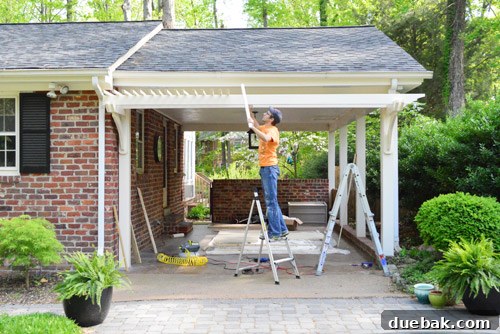
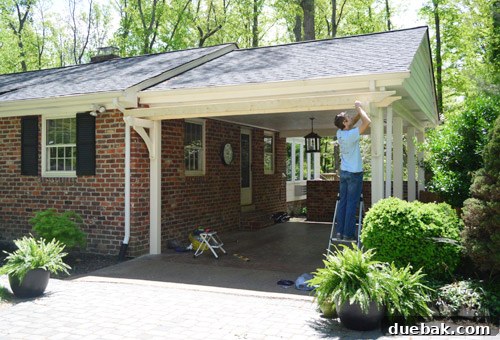
This stage was where the excitement truly began to build, as the carport pergola rapidly transformed into its intended design. To ensure consistent spacing between each lath strip, we cut several 3-inch wide “spacers” from scrap wood. These simple tools were incredibly effective, allowing us to maintain even gaps and screw the lath into place as quickly and efficiently as possible. You can spot two longer, unpainted spacer boards in the image below, demonstrating their utility.
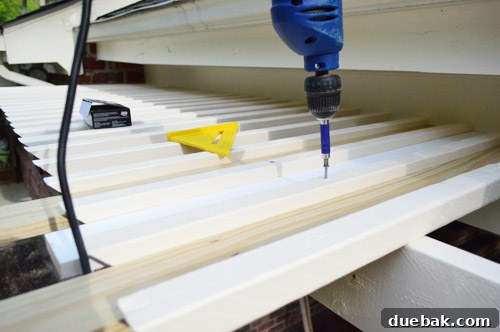
By the close of day four, the fourth and final step was 100% complete. The painstaking process of cutting, sanding, priming, painting, and installing each lath strip had culminated in a beautiful, finished top for our carport pergola. The transformation was truly remarkable.
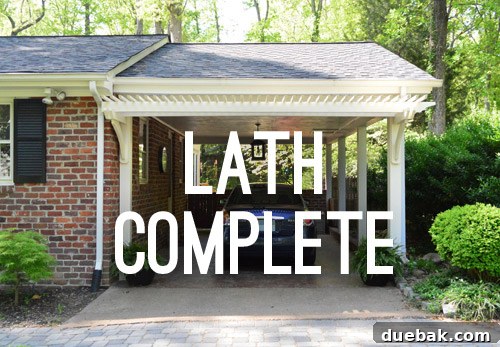
Project Completion and Cost Breakdown: A Rewarding DIY Investment
With every screw tightened and every piece painted, we could finally step back and admire our beautifully gussied-up carport. The sense of accomplishment was immense, and the aesthetic improvement was undeniable. The once plain and functional parking space now exuded character and charm, becoming an integrated part of our home’s exterior design.
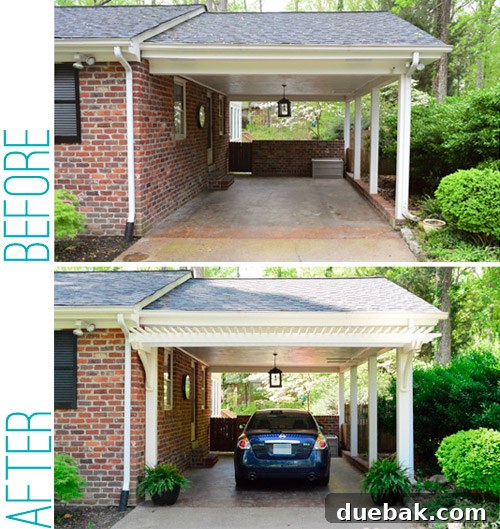
Both of us are absolutely thrilled with the outcome. There was some initial apprehension (mostly on my part) about placing a pergola in what isn’t a conventional spot. However, this structure has proven to be a massive upgrade. It has truly transformed our perspective; we were once staunchly “anti-carport” people – to the point where we almost dismissed buying this house solely because of its carport. Now, we’re proud carport, or rather, “cargola” lovers!
Despite some tedious moments, none of the labor was overly strenuous or back-breaking. The most compelling aspect of this project is undoubtedly the DIY price point, which is simply unbeatable, especially when considering that custom attached pergola kits often retail for well over $2,000! Here’s a transparent breakdown of our total investment:
- Truck rental (for material transport): $19
- Lumber (for all structural and decorative components): $112
- Post bases (for secure anchoring): $23
- Nuts, bolts, & screws (all fasteners): $46
- Materials to reroute gutter & light: $14
- Paint & primer: Already owned (a significant saving!)
- TOTAL: $214
It’s worth noting that if your carport already features two existing columns, or if you have a garage with suitable exterior walls to support the braces, and you opt to purchase pre-made braces instead of building them from scratch, the project would be approximately 50% easier and could shave off around two days of work. This makes it an excellent, accelerated option for anyone looking to reduce the number of construction steps from four to just two!
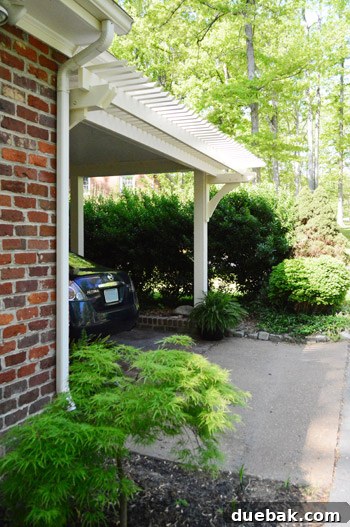
The Stunning Transformation: Enjoying Our New Carport Pergola
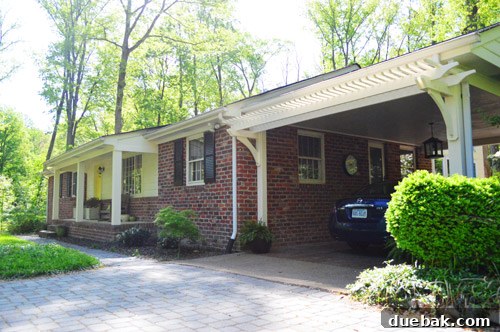
The new carport pergola truly imbues our home with a newfound sense of “quaintness” – if such a word can capture its charming essence. We are particularly fond of how it artfully frames the view of our street, which is currently bursting with vibrant blooms. Regardless of the season, it undeniably adds a beautiful dimension to our otherwise flat ranch-style house, breaking up the monotony and adding visual interest to the exterior.
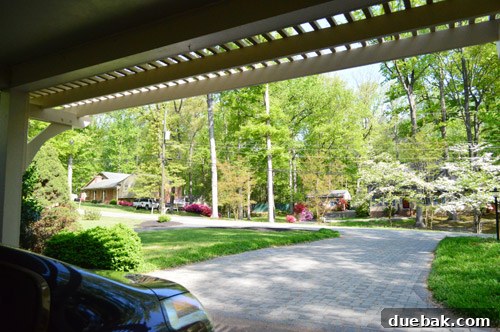
Indeed, between this fantastic addition and our beefed-up porch columns, we are absolutely falling in love with the front of our house all over again. And just imagine the future possibilities: lush, flowering vines gracefully growing up those sturdy posts and delicately draping across the top of the pergola. It would create an utterly enchanting and inviting entrance – truly charming, Batman!
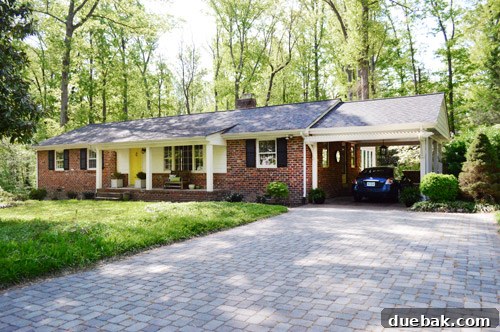
Your Outdoor Vision: What’s Next for Your Home?
We hope our detailed journey inspires you to tackle your own outdoor home improvement projects. Whether it’s a carport pergola, a new deck, or a refreshed porch, transforming your living spaces can be incredibly rewarding. What exciting outdoor projects are on your agenda these days?