

Master the Art of Reverse Canvas: Your Ultimate DIY Guide to Stunning Home Decor
In the vibrant world of DIY home decor, few projects offer the blend of affordability, customization, and stunning results quite like reverse canvas art. If you haven’t yet delved into this ingenious craft, prepare to be captivated! Reverse canvas involves taking an inexpensive, readily available canvas – often found at craft stores or dollar stores – and reimagining its humble components. Instead of painting on the canvas fabric itself, you cleverly utilize the hidden wooden frame as the star, transforming what was once a simple stretched canvas into a unique, custom-designed piece of wall art. It’s a surprisingly simple process that yields incredibly professional-looking results, making it a favorite among DIY enthusiasts and crafters of all skill levels.
This method allows for endless creativity. Imagine crafting personalized signs for every season, elegant quotes for your living room, or custom gifts that genuinely stand out. The rustic charm of the exposed wood frame, combined with the versatility of heat transfer vinyl (HTV) designs, makes reverse canvas a go-to technique for adding a bespoke touch to any space without breaking the bank. It’s an easy, budget-friendly, and infinitely customizable project that anyone can master.
What is Reverse Canvas and Why Is It So Popular?
At its core, reverse canvas is an upcycling technique that re-purposes an ordinary stretched canvas. Instead of focusing on the fabric surface, you deconstruct the canvas to reveal the sturdy wooden frame beneath. This frame then becomes the focal point, stained or painted to your liking, while the trimmed canvas fabric serves as a backdrop for your personalized design. The finished piece typically features the wooden frame on the front, framing your chosen design printed or ironed onto the canvas fabric, which is then reattached to the back of the frame.
The popularity of reverse canvas stems from several key advantages:
- Unbeatable Affordability: Canvases from craft stores or dollar stores are incredibly inexpensive, often costing just a few dollars. This makes it a highly budget-friendly option for creating high-impact home decor.
- Limitless Customization: From choosing the perfect wood stain or paint color for your frame to selecting intricate designs for your canvas, every element is under your creative control. This allows for truly unique pieces that perfectly match your aesthetic.
- Beginner-Friendly: The steps are straightforward and don’t require advanced crafting skills or specialized tools. It’s an ideal project for those just starting their DIY journey.
- Versatile Style: Whether your home decor leans farmhouse, modern rustic, bohemian, or minimalist, reverse canvas can be adapted to fit. The choice of frame finish and design dictates the final look.
- Eco-Conscious Crafting: By transforming an existing item, you’re engaging in a form of upcycling, giving new life to something readily available and often overlooked.
Essential Supplies for Your Reverse Canvas Project
Before you begin, gathering all your materials will ensure a smooth and enjoyable crafting experience. Most items are easy to find at craft stores, hardware stores, or even around your house:
- Inexpensive Stretched Canvas: Choose a size appropriate for your desired project. The quality of the canvas doesn’t need to be premium, as you’ll be disassembling it.
- Staple Remover Tools: A flat-head screwdriver, pliers, or a dedicated staple remover tool will be essential for safely taking apart the canvas.
- Wood Stain or Paint: For customizing your frame. Options include wood stains (like the Varathane wood stain in Carbon Gray mentioned in the original project, which offers a sophisticated, modern look), acrylic paints, chalk paint, or spray paint.
- Brushes or Rags: For applying stain or paint.
- Heat Transfer Vinyl (HTV) or Iron-On Vinyl: This is what you’ll use to create your design on the canvas fabric. Choose colors and finishes that complement your frame.
- Cutting Machine (e.g., Cricut, Silhouette): To precisely cut your vinyl design.
- Weeding Tools: For removing excess vinyl from your design.
- Heat Press or Iron: To apply the HTV to the canvas fabric.
- Scissors or Razor Blade: For trimming the canvas fabric to size. A rotary cutter and mat can also be very helpful for straight lines.
- Staple Gun or Hot Glue Gun: For reattaching the canvas fabric to the frame. A staple gun offers more durability.
- Heavy-Duty Staples (if using a staple gun): Make sure they are short enough not to poke through the front of your frame.
- Hanging Hardware: Options include sawtooth hangers, D-rings, picture wire, or alligator clips.
- Protective Mat or Surface: To protect your work area during staining/painting and heat pressing.
- Ruler or Measuring Tape: For accurate trimming and centering.
Step-by-Step Guide: How to Craft Your Own Reverse Canvas Masterpiece
Ready to transform that plain canvas into a personalized statement piece? Follow these detailed steps:
Step 1: Carefully Disassemble Your Canvas
Turn your canvas over to expose the back. You’ll see numerous staples holding the canvas fabric to the wooden frame. Using a flat-head screwdriver, pliers, or a dedicated staple remover, gently pry out each staple. They are usually not deeply wedged, so removal should be relatively simple. Work slowly to avoid damaging the wooden frame. Once all staples are removed, carefully detach the canvas fabric from the frame. Set the fabric aside – you’ll use it later. Inspect the wooden frame for any remaining staple remnants and remove them to ensure a smooth surface for finishing.
Step 2: Prepare and Personalize Your Wooden Frame
Now that you have your bare wooden frame, it’s time to give it character. You can choose to stain it for a rustic, natural wood look, or paint it for a more modern or colorful finish. For a deep, sophisticated touch, a wood stain like Varathane wood stain in Carbon Gray works beautifully, as demonstrated in the original project. Apply the stain or paint evenly using a brush or a rag, following the grain of the wood. You might need one or two coats for desired coverage. If you’re painting, consider lightly sanding the frame first for better paint adhesion and a smoother finish. Allow the frame to dry completely according to product instructions. This step is crucial for the overall aesthetic of your reverse canvas, as the frame will be prominently displayed.
Step 3: Design, Cut, and Apply Your Heat Transfer Vinyl (HTV) Design
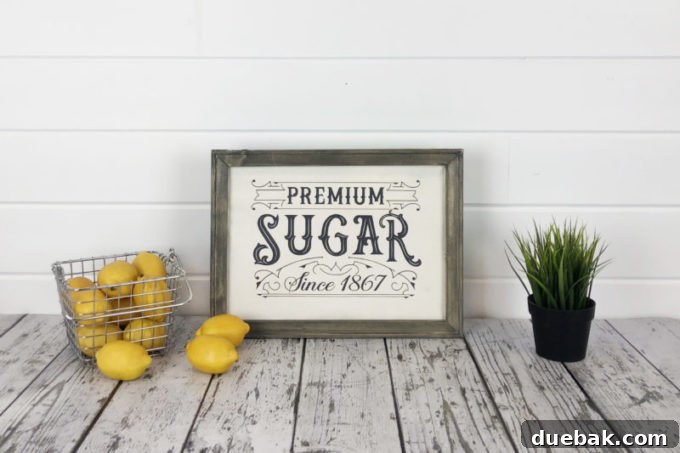
This is where your creativity truly shines! Select a design for your canvas. Many crafters find inspiration from online marketplaces, design bundles, or even create their own unique graphics. For highly detailed and beautiful designs, resources like Board and Batten Designs are fantastic; the intricate cut-outs in their designs, like the word “SUGAR,” add a wonderful touch. Using your cutting machine (e.g., Cricut, Silhouette), cut your chosen design from heat transfer vinyl. Remember to mirror your design before cutting, as HTV is applied face down. Once cut, weed out the excess vinyl, leaving only your desired design on the carrier sheet. Carefully center your design on the canvas fabric. Using a heat press or iron, apply the HTV according to the manufacturer’s instructions for temperature and time. Apply firm, even pressure. Once cooled (or while warm, depending on your vinyl type), carefully peel off the carrier sheet to reveal your crisp design.
Step 4: Trim the Canvas Fabric
With your design now firmly adhered, it’s time to trim the canvas. Lay the canvas fabric with the design facing up. Place the finished wooden frame over the design to visualize its placement and ensure it’s perfectly centered. Using a ruler and a sharp razor blade or scissors, carefully trim the canvas fabric so that it is slightly smaller than the outer dimensions of the wooden frame. The goal is for the fabric to attach to the back of the frame without any visible overlap from the front. Aim for clean, straight edges for a professional finish. If you have a rotary cutter and a self-healing mat, this step becomes even easier for precise cuts.
Step 5: Reassemble and Secure Your Reverse Canvas
Now, it’s time to bring your creation together. Place the wooden frame face down on your work surface. Carefully center your trimmed canvas fabric, design-side up, within the opening of the frame. The design should be visible through the frame’s opening. Ensure the canvas is taut and evenly spaced. Using a staple gun, staple the edges of the canvas fabric to the back of the wooden frame. Start by stapling the middle of each side, then move towards the corners, pulling the fabric slightly taut as you go to prevent sagging. Alternatively, you can use a hot glue gun for this step, applying a bead of hot glue along the edges of the canvas and pressing it firmly onto the back of the frame. The staple gun method generally offers a more secure and durable hold.
Step 6: Add Hanging Hardware
The final touch is to add hardware so you can proudly display your new custom art. An alligator clip, sawtooth hanger, or D-rings are all excellent choices. Attach your preferred hanger to the top center of the back of the wooden frame. Ensure it’s securely fastened and centered for easy hanging. Now your reverse canvas art is complete and ready to adorn your walls!
Selecting the Right Canvas for Your Project
While most inexpensive canvases will work, understanding the subtle differences can help you achieve your desired aesthetic. The type of canvas you start with will influence the profile and look of your finished frame:
- Craft Store Canvases (e.g., Michaels): Canvases from stores like Michaels often feature a slightly more detailed or rounded edge profile on their wooden frames. This can lend itself to a more traditional, ornate, or farmhouse-style look once stained or painted. The “Premium Sugar” sign shown in the examples below was made with a canvas from Michaels, showcasing this more defined edge.
- Dollar Store Canvases (e.g., Dollar Giant, Dollar Tree): Canvases from dollar stores typically have a completely flat, simpler wooden frame profile. This creates a very clean, modern, or minimalist aesthetic when finished. The “Music Feeds The Soul” sign demonstrates this flat, contemporary look.
Both types of frames look fantastic, but knowing these differences helps you choose the perfect starting point for your unique design vision. Consider the overall style you’re aiming for – a more intricate frame might complement a vintage design, while a flat frame enhances a sleek, modern quote. Also, pay attention to the wood quality; some dollar store frames can be a bit flimsier, but for a lightweight project like this, they usually hold up perfectly.

Creative Ideas and Inspiration for Your Reverse Canvas Art
The beauty of reverse canvas lies in its adaptability. Here are some ideas to spark your creativity for your next project:
- Seasonal Decor: Create signs for holidays like Christmas, Halloween, or Thanksgiving, or for specific seasons like “Hello Spring” or “Autumn Leaves & Pumpkins Please.”
- Personalized Family Signs: Incorporate family names, established dates, or meaningful family mottos. These make fantastic custom gifts for weddings or housewarmings.
- Inspirational Quotes: Famous sayings, song lyrics (like “Music Feeds The Soul”), or personal mantras can add a touch of encouragement to any room.
- Kitchen & Pantry Labels: Create chic labels for “Coffee Bar,” “Pantry,” “Baked Goods,” or specific ingredients, giving your kitchen a cohesive, organized feel.
- Nursery Decor: Design cute animal motifs, baby’s name, or sweet dreams quotes for a personalized nursery touch.
- Farmhouse & Rustic Themes: Think buffalo plaid, intricate scrollwork, simple wreath designs, or distressed finishes on the frame for that quintessential farmhouse charm.
- Modern & Minimalist: Opt for bold fonts, abstract shapes, or simple line art with a clean, flat-profile frame and a monochromatic color scheme.
- Gift Giving: Reverse canvas signs make incredibly thoughtful and affordable handmade gifts for birthdays, anniversaries, or just because.
Don’t be afraid to experiment with different vinyl colors, metallic HTV, or even patterned vinyl to add more depth and interest to your designs. The possibilities are truly endless!
Tips for a Flawless Finish and Troubleshooting Common Issues
To ensure your reverse canvas project looks its best, keep these tips in mind:
- Clean Frame Before Finishing: Always wipe down your wooden frame to remove dust or debris before staining or painting for an even finish.
- Even Stain Application: When staining, apply in the direction of the wood grain and wipe off excess with a clean rag to prevent blotchiness.
- Weeding Precision: Take your time when weeding intricate HTV designs. Good lighting and proper weeding tools make a huge difference.
- Heat Press vs. Iron: While an iron works, a heat press generally provides more consistent temperature and pressure, leading to better vinyl adhesion. If using an iron, ensure even pressure across the entire design.
- Canvas Tautness: When reattaching the canvas, ensure it’s pulled taut but not stretched excessively to avoid warping the frame or distorting the design.
- Corner Staples/Glue: Pay extra attention to the corners when stapling or gluing to ensure the canvas is securely fastened.
- Safety First: When using staple removers or razor blades, always exercise caution to prevent injury.
- Dealing with Warped Frames: Occasionally, an inexpensive frame might be slightly warped. Sometimes, securely stapling the canvas can help pull it into shape. For more severe warps, consider reinforcing the corners with wood glue or small brackets before painting/staining.
Reverse canvas is an incredibly rewarding craft that allows you to create stunning, personalized home decor on a budget. With this detailed guide, you have all the knowledge and inspiration needed to start your own reverse canvas journey. Enjoy the process of transforming simple materials into beautiful works of art!
Pin For Later: Save This Reverse Canvas Guide!
Don’t forget to save this comprehensive guide for future reference! Pin these images to your favorite DIY or craft boards on Pinterest so you can easily find it whenever inspiration strikes for your next reverse canvas project.


