
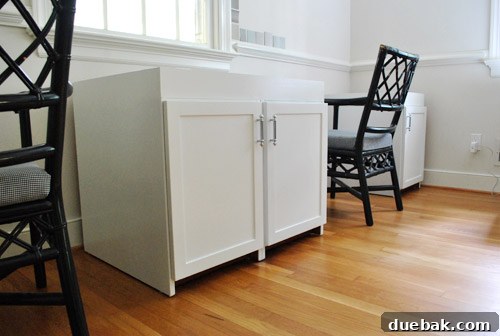
The journey to transform six humble, $6 hotel nightstands into a magnificent, built-in wall-to-wall desk for two continues. If you’ve been following our DIY adventures, you’ll recall our last update involved stripping the hardware, sanding, and priming these budget-friendly cabinets, all in eager anticipation of their crisp, white transformation.
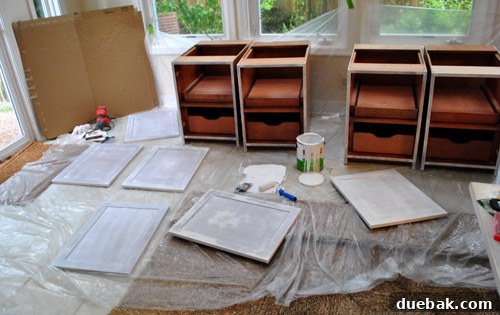
However, before we could even dream of applying that first coat of paint, a crucial construction phase awaited us. Our vision required us to pair the cabinets and elevate them approximately four inches to achieve the ideal desk height. But in true DIY fashion, we learned a valuable lesson: always test your layout in the actual space first.
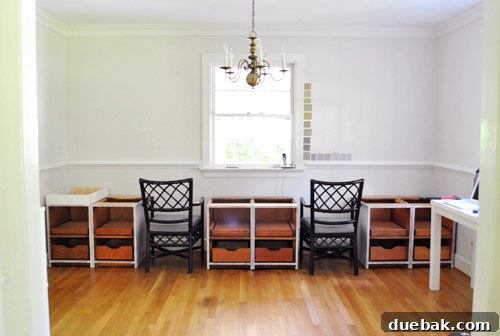
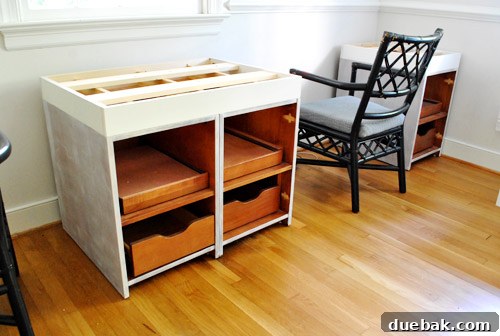
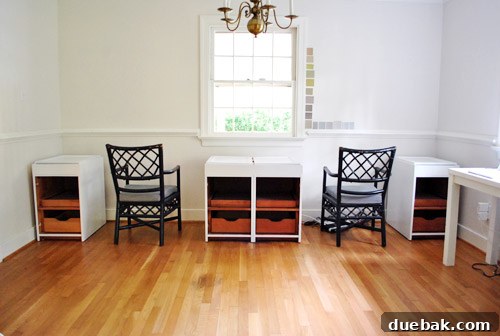
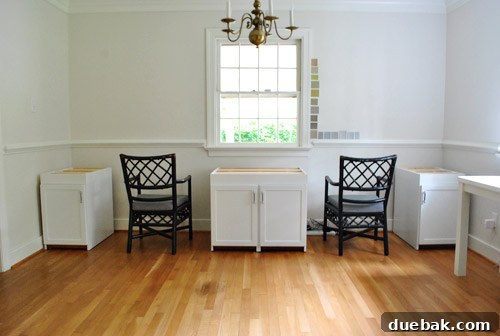
This “better late than never” revelation struck us when we finally maneuvered the primed cabinets into their intended sunroom location. It’s a truth universally acknowledged in DIY projects that some steps, while inconvenient, are absolutely essential. Moving these surprisingly heavy pieces back and forth was no small feat, which is why they initially landed in the sunroom for sanding and priming. But once they were in situ, the reality became glaringly clear: six cabinets, arranged in three pairs, created an uncomfortably cramped setup. There was barely enough room for our chairs, making the entire space feel tight and uninviting. (Please overlook the preliminary construction on the far-left cabinet; our original photo vanished, prompting a retake after modifications. Also, those paint swatches on the wall? Still undecided, back to square one!)
Optimizing Space and Layout for a Functional Desk for Two
This unexpected space planning exercise proved invaluable. It prompted a decisive shift: we removed two cabinets, reimagining the wall with a more spacious four-cabinet configuration—two central units flanked by one on each side. The improvement was immediate and dramatic. This layout felt exponentially better, not only appearing less crowded but also providing the much-needed “breathing room” typically associated with functional desks. The added space on either side of our chairs promised a far more comfortable working environment. Crucially, we still had ample storage, considering the four remaining cabinets and our double-wide, two-tier file cabinet positioned elsewhere in the room.
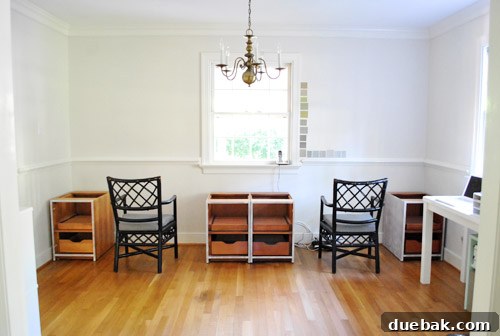
Had we invested more than $6.30 in these six cabinets, parting with two might have been a tougher call. But sacrificing a mere $2 and the minimal time spent priming and sanding those “extras” was a small price for optimal functionality and aesthetics. And who knows what future repurposing projects await these cabinets? Sherry, for instance, has been envisioning a play kitchen for Clara, so stay tuned for potential updates on that front!
Building the Foundation: Elevating and Unifying the Cabinets
With the layout finalized, it was time to move to the structural phase of this exciting project. Our primary objectives were twofold: first, to visually merge the two central cabinets, creating the illusion of one cohesive, large two-doored unit rather than two disparate pieces; and second, to elevate all cabinets by four inches, bringing them to a standard desk height of around 30 inches (including the countertop). This elevation was crucial to ensure our existing office chairs could effortlessly slide underneath the future desk surface.
My mind initially raced through various elaborate construction methods. Ideas like “building a drawer” for the four-inch rise, or “building up from the base” to enhance accessibility, were briefly entertained. However, practicality quickly intervened. A two-inch thick drawer felt like an unnecessary expenditure of time and money, offering minimal functional gain. Similarly, modifying the cabinet bases, which already featured legs, seemed overly complicated for the modest height increase we sought. Ultimately, the simplest, most budget-friendly, and efficient solution became clear: a built-on frame from the top.
I headed to Home Depot and procured a selection of 1×4 inch boards, wisely opting for some pre-primed pieces for added convenience and efficiency. These boards were then precisely cut to size, forming a robust, yet straightforward, frame that would successfully raise the cabinets by the desired four inches.
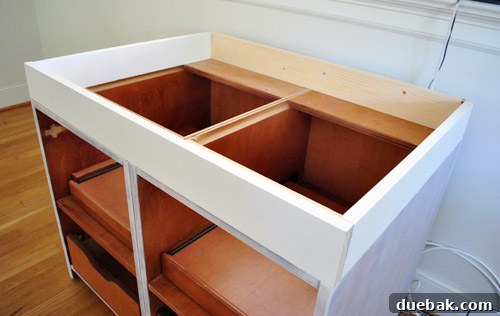
Next, leveraging my trusty Kreg jig, I meticulously drilled pocket holes to facilitate the seamless attachment of the front and side pieces. These framed sections were then securely screwed into the top perimeter of each cabinet. The process is particularly clear on one of the single side cabinets, as captured in the image below, illustrating how the frame integrates with the existing structure.
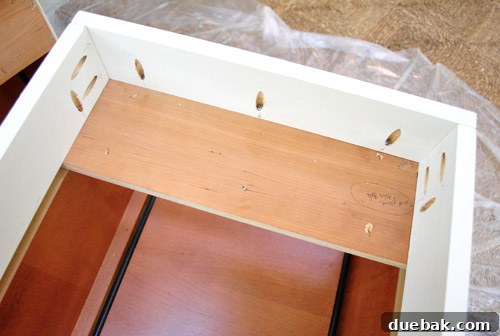
For the back piece of the frame, I utilized an un-primed 1×4 inch board. This decision was purely economic: since this section would be completely concealed against the wall and beneath the future countertop, investing in a more expensive pre-primed board was unnecessary. An 8-foot piece of primed 1×4 cost about $1 more, so these small savings added up. While I could have saved an additional $3.50 by using un-primed wood throughout and priming the visible sections later, we opted for the convenience of pre-primed wood in visible areas. Having just primed all the cabinets, the thought of breaking out the primer and tackling another round of cleanup felt daunting. Our thrifty hearts reasoned that finding $6 cabinets justified a minor indulgence like an extra $3.50 for pre-primed wood in strategic spots.
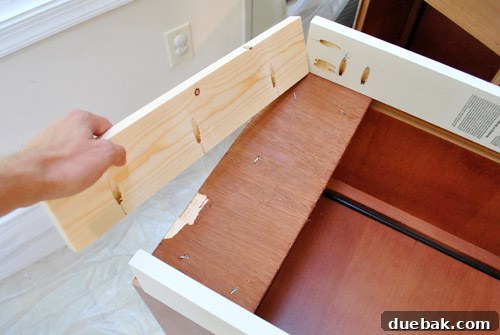
This simple, yet effective, frame successfully accomplished the dual goals of elevating the cabinets and connecting the two central units. However, to ensure the countertop would have a perfectly stable and robust base, further reinforcement was necessary. This is where some additional 1×3 inch boards came into play. I cut several pieces to span the interior of the newly built frame, securing them by drilling them directly into the top of the cabinet structure. This step significantly enhanced the overall strength and stability, a testament to my “Captain Careful” approach to DIY projects.
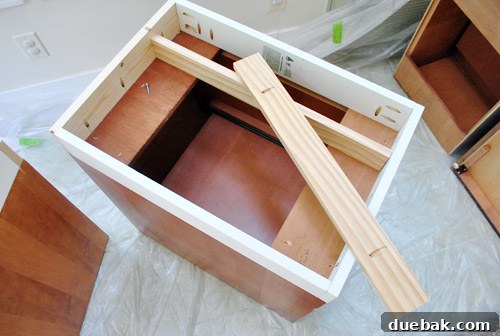
To cap it all off, I used some leftover 1×4 inch slats, laid flat, to create a final, level platform. This platform will serve as the ideal surface for securely screwing down the countertop when the time comes. In the image below, these slats are not yet attached, illustrating how they don’t quite sit flush with the frame at this stage. However, I plan to incorporate washers during the final attachment process to raise them slightly, ensuring a perfectly flat and unified plane for the countertop.
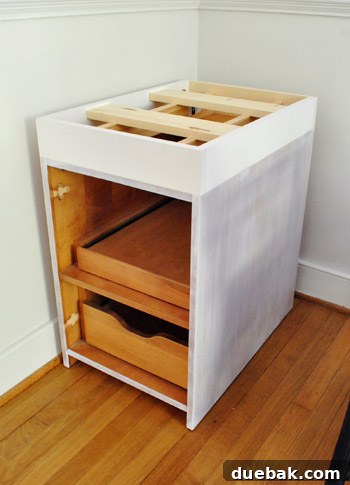
With these structural reinforcements complete, the initial construction phase of our built-in desk was largely finished. Of course, the countertop itself remains a work in progress, a detail we’ll eagerly share in a few days. We’re developing a similar aesthetic to the top of our living room console table, with more specifics to follow as we advance. Post-countertop installation, our plans include adding baseboard trim around the bottom of the cabinets, where they meet the floor on the sides and front. This subtle addition will further enhance their “built-in” appearance, seamlessly integrating them into the room’s architecture. So while major construction is paused, the project isn’t entirely over, but we’re pleased with the progress so far.
Painting Perfection: The Benjamin Moore Advance Experience
Now, let’s dive into the gratifying stage of painting the cabinets. Our chosen color is a pristine white, aiming for a clean, cohesive aesthetic. This decision also ensures visual harmony with the existing white built-ins in our adjoining dining room, creating a timeless, integrated look as if these cabinets have always been part of the home’s design.
This project presented the perfect opportunity to experiment with Benjamin Moore Advance paint, a product that many of our readers have enthusiastically recommended. Its unique self-leveling properties are a game-changer for cabinet projects, ensuring a remarkably even coat and an incredibly smooth, brushstroke-free finish. Furthermore, it boasts a high-quality alkyd formula, promising exceptional durability and resilience—essential qualities for a frequently used desk. What truly sets it apart, especially for us, is its water-based composition and impressively low-VOC (Volatile Organic Compound) content, even after colorants are added. This combination of durability, smooth finish, and eco-friendliness is remarkably rare in cabinet-specific paints, making it an ideal choice for our home.
The only significant drawback, at least for budget-conscious DIYers like us, is the price, hovering around $45 per gallon. However, our thrifty reader, Heather, inspired a clever workaround. Sherry, never one to shy away from a good deal, mentioned a 30% off sale at Sherwin Williams to the Benjamin Moore associate and inquired if he could match it. While a full 30% was out of reach, he promptly offered a 10% discount on the spot, no coupon required! This quick, polite inquiry at the register shaved around $5 off the total, a small win that proves it never hurts to ask.
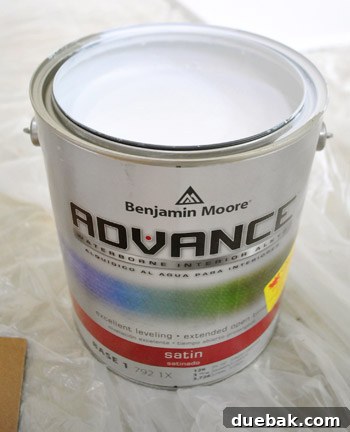
We opted for Benjamin Moore’s bestselling Decorators White, a shade Sherry declared to be the absolute perfect white tone. While to my eyes, fifteen swatches of white paint might appear identical, Sherry possesses an uncanny ability to discern subtle variations and unequivocally favored Decorators White. For the finish, we chose satin, as it was the only alternative to high-gloss. My concern with high-gloss was its tendency to highlight every minor imperfection, whereas a satin finish offers a forgiving elegance.
An interesting observation: the image above, featuring the paint can, was taken *after* we had completed painting all the cabinets. It beautifully illustrates the incredibly small amount of paint we used for this extensive project. The paint’s excellent thickness provided fantastic coverage. While a quart (approximately $25) likely would have sufficed, we’re glad we purchased a gallon. The remaining paint is earmarked for future kitchen cabinet projects, a strategy that further alleviates the initial sting of a $40 gallon of paint. Haha, truly a win in the long run!
Sherry’s preferred tools for this painting task included a brush for meticulously reaching into cracks and corners, complemented by a small foam roller. The roller proved invaluable for achieving a swift, smooth, and brushstroke-free finish across larger flat surfaces, contributing significantly to the professional-grade appearance of the cabinets.
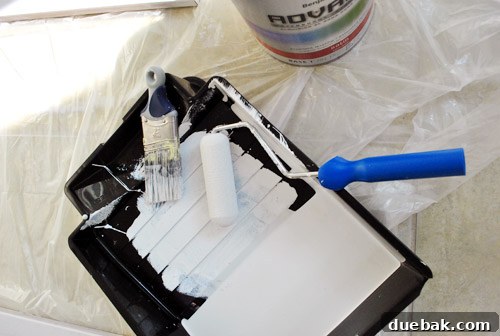
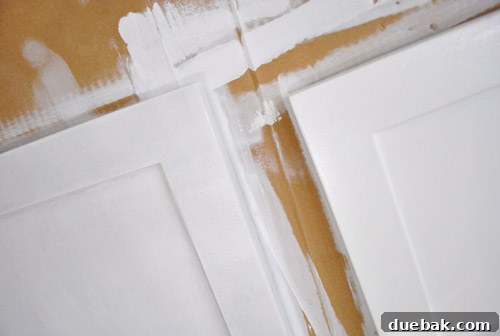
You can (hopefully, depending on your monitor calibration) discern the subtle yet significant difference between one coat (on the left door) and two coats (on the right door) of paint. While two coats might have been adequate, we opted for a third for an abundance of caution and to ensure absolute uniformity. This extra coat was particularly important to seamlessly blend the areas we had primed and painted with the pre-primed 1×4 boards, which were considerably lighter to begin with. Following Sherry’s mantra of “three thin and even coats,” the results were flawless. As the paint can photo attests, we used surprisingly little paint, assuaging our initial concerns about its coverage.
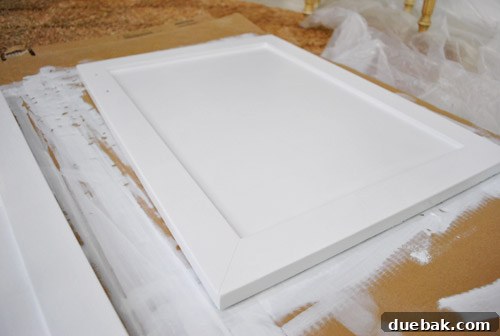
Here stands a finished door, resplendent after three full coats. Each coat required approximately 30 minutes of Sherry’s time, which was a very reasonable duration. The only caveat was the manufacturer’s recommendation of over 16 hours of drying time between coats, transforming what could have been an afternoon project into a multi-day endeavor. Despite the extended timeline, the results were well worth it: everything cured beautifully, achieving a strong, durable, and aesthetically pleasing finish. Sherry’s verdict on the Benjamin Moore Advance paint? A resounding, “I want to marry it.” Clearly, she’s smitten.
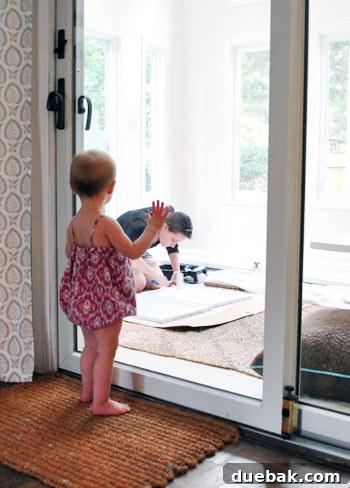
Consecutive days of painting are made considerably easier when you have an adoring fan club watching your every move, as some of you may have seen on Young House Life. Here’s Sherry, clad in her inside-out painting attire, diligently working in the sealed sunroom, with our little bean intently supervising. For a quick and convenient painting surface, we simply repurposed some leftover cardboard from past Ikea purchases, like our file cabinet.
Even with its low-VOC formulation, Benjamin Moore Advance paint is not entirely VOC-free. This crucial distinction guided our painting strategy. Sherry wisely chose the highly ventilated, Clara- and Burger-free sunroom for painting all the cabinet doors, preventing any accidental baby handprints or puppy paw prints. The cabinet bases, however, had to be painted in place within the office. The substantial middle section, once the two cabinets were built up and connected, was simply too heavy to move. To ensure safety, we kept Clara out of the room, opened all windows, and ran multiple fans. Sherry strategically painted during Clara’s naps, allowing ample time for the room to air out before she woke. To protect our floors without the hassle of drop cloths, we employed a clever trick: a flattened cereal box placed directly under the area being painted. Call us rebels!
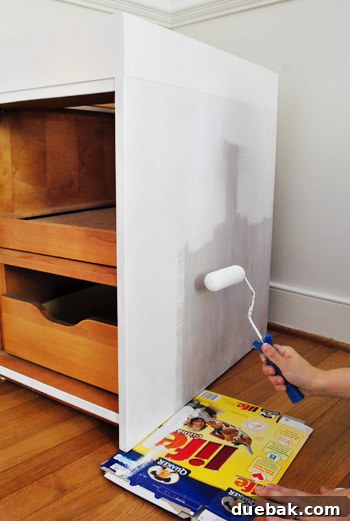
The image above perfectly showcases the impressive coverage we achieved with the BM Advance paint. This shot captures the very first coat being applied over the primer Sherry had meticulously added a few days prior. According to my wife, who possesses vast experience with all things paint, this is an exceptionally strong showing for a debut coat, indicating the paint’s superior quality and efficiency.
And here it is: the finished piece, fully painted, with a cabinet door merely resting on top. This temporary placement allowed us to capture the completed look before moving it out of the sunroom, making way for the upcoming countertop installation.
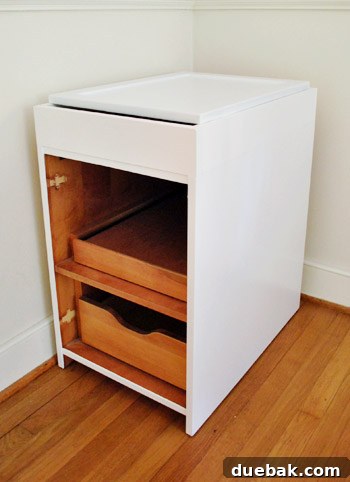
You might be wondering why we chose not to paint the inside of the cabinets. For those who missed our initial post, here’s a quick recap: from the outset, our vision for these wall-to-wall built-ins focused on crisp, clean, glossy white fronts. However, for the backs of the doors and the cabinet interiors (including any slide-out fittings), we decided to retain their original natural wood tone. We understand this isn’t a universal approach, but our experience with the KraftMaid drawers installed during our first house’s kitchen renovation solidified this preference. Those drawers, featuring wood interiors, held up remarkably well to natural wear and tear, even with unconventional storage of tools like hammers and screwdrivers. You can actually see some of them here, packed with various tools:
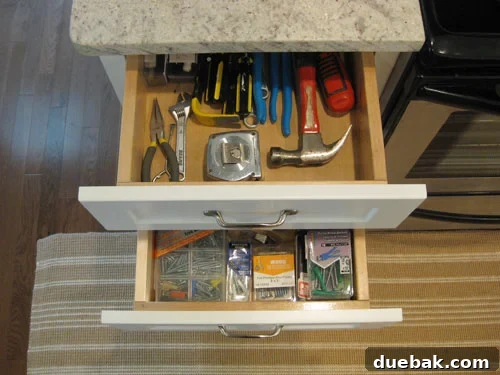
We genuinely appreciate the aesthetic of wood paired with white, a look reminiscent of the dresser we refinished for Clara. In this project, our goal was for the cabinets to present an entirely crisp, white exterior, with the natural wood tone revealed only when the doors are opened. This design choice marries sophisticated external appearance with practical, durable internal surfaces, perfect for everyday use.
Bringing it All Together: The Final Touches (Before the Countertop)
Returning to our freshly painted cabinets, the white paint proved instrumental in creating the desired illusion of a single, unified piece for the middle pair. We initially considered applying caulk or wood putty to the slight crack down the center, but decided to hold off. Our intuition suggested that once the doors were reattached, this minor imperfection would become far less noticeable, and indeed, it was.
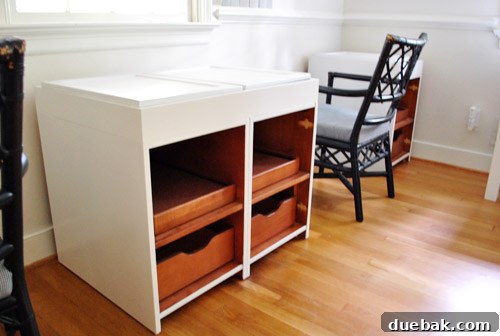
And just as we predicted, the difference was minimal. Here are all the cabinets, successfully built up by four inches and fully painted. The next step, eagerly awaited, was to allow a few days for the paint to fully cure before reattaching the cabinet doors.
Once the doors were securely back in place, the transformation was truly remarkable. The cohesive white finish, combined with the elevated structure, made these once-disparate nightstands look like custom-built cabinetry, perfectly suited for our new double desk.
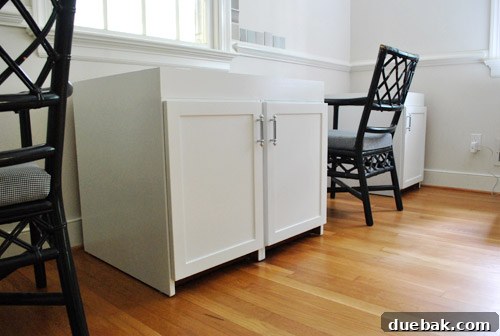
Of course, the project isn’t entirely complete. We still need to add molding around the base of all the cabinets, a critical step to achieve that truly seamless, “built-in” look and conceal any remaining wood tones near the legs. Additionally, we’ll be trimming out the sides of the cabinets to create the illusion that they are seamlessly attached to the walls on either end. We’re hoping to share those details with you very soon! In the meantime, you know we love a good budget breakdown, so here’s the current tally for our evolving wall-to-wall desk:
- Cabinets (from Habitat For Humanity ReStore): $6.30
- Kilz Clean Start No-VOC Primer: $0 (leftover from painting the kitchen paneling; typically around $20)
- Electric sander & sandpaper: $0 (already owned; estimated $25 to purchase)
- Benjamin Moore Advance paint (in Decorators White, satin): $40 (thanks to a 10% discount from friendly haggling)
- Pre-primed & unprimed wood to build up cabinets (from Home Depot): $51
- TOTAL: $97.50 (An incredible value, roughly equivalent to the cost of a single unfinished base cabinet at major home improvement stores like Home Depot or Lowe’s!)
We’ll also be back shortly with all the exciting details about our countertop—we just need to make sufficient progress to capture some great photos and share our process. One thing is for certain: we absolutely cannot wait to start using our new double desk. And yes, Sherry has been amusingly walking around saying “double desk” with the same cadence Robert De Niro uses for “double dose” in the Little Fockers trailer. While I’m not entirely sure how I feel about this quirky club mix version below, it certainly captures the enthusiasm!
What creative projects did you tackle over the long weekend? Did you embark on any building, painting, or perhaps even a De Niro impersonation?
Psst- To follow our cabinet makeover process from the very beginning, explore the post about discovering our $6 cabinets, this one detailing our search for other options, and the post covering the sanding and priming stages to prepare them for paint.
Pssssst- I recently showcased one of the most stunning dresser makeovers we’ve ever encountered on BabyCenter (and it’s not exclusively for kids)!