Sometimes, the path to a functional home involves a little creativity, a lot of elbow grease, and perhaps a late-night circular saw serenade.
DIY Pocket Door Repair: Conquering a Jammed and Misaligned Door
Welcome to another installment of our “learn-as-we-go” home improvement sagas! For many homeowners, the journey of maintaining and upgrading a house is a constant adventure, often requiring us to dive into projects with more enthusiasm than expertise. Our philosophy? Embrace the challenge, roll up your sleeves, and trust that persistence (and a little help from the internet) will lead to success. Today’s tale features a common household hero turned villain: the pocket door.
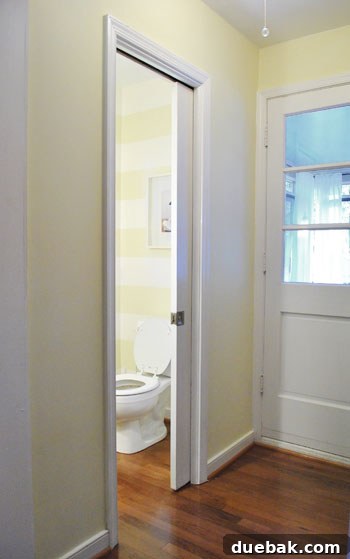
Our half-bath, a small but essential space, is equipped with a pocket door – a fantastic space-saving solution when it works as intended. For nearly six months, however, our particular pocket door had been staging a silent protest, refusing to close or open smoothly. The situation grew so commonplace that the once-unusual phrase, “Don’t look, I’m peeing!” became the default courtesy warning around the house. Yes, we confess to being one of those quaint couples who still value a bit of privacy, much to the amusement of our more open-minded friends. The time had come for a serious intervention.
The Unexpected Start to Our Pocket Door Repair Project
With an impending move looming in a few weeks, fixing the stubborn pocket door vaulted to the top of our priority list. The exact reason we decided to launch this ambitious repair mission on a random Wednesday night at 8:30 PM, armed with zero prior experience in pocket door mechanics, remains shrouded in mystery. Yet, we did. Our secret weapon, as always, was the vast and ever-helpful realm of Google.
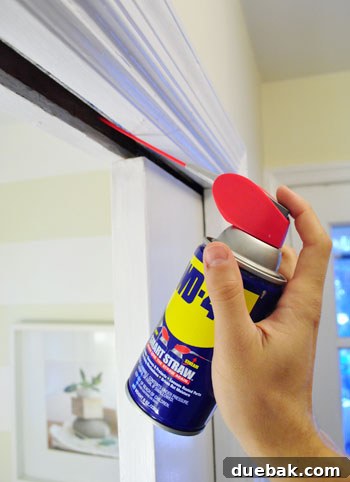
The online world, a seemingly endless repository of DIY wisdom, offered a plethora of potential solutions. Many suggestions involved drastic measures, such as cutting large access holes into the wall to inspect the inner workings of the pocket door frame. The thought of extensive drywall repair and patching filled us with dread. We were determined to explore less invasive options first, hoping for a simpler remedy. Could a quick spray of lubricant, like WD-40, be the magical fix we desperately sought?

Diagnosing the Core Problem: Misalignment and Sagging
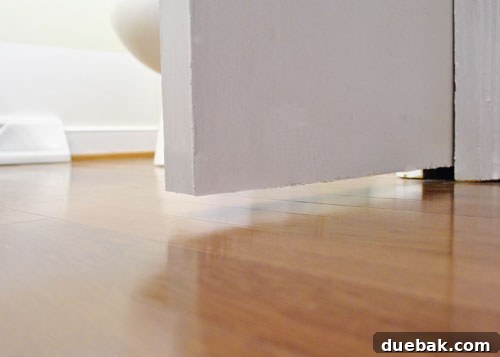
Our initial attempt with WD-40, while not a complete solution, proved incredibly insightful. It helped us better understand the nature of the problem. As we applied the lubricant and gently manipulated the door, a critical issue became evident: the door was no longer hanging level. Specifically, it appeared significantly lower at the back end. This subtle but crucial misalignment meant that when the door was slid into its wall cavity, the bottom corner would consistently snag on the floor, causing the door to jam and its rollers to jump off the track.
This diagnosis shifted our focus from a simple lubrication task to a more involved repair. A pocket door’s smooth operation is entirely dependent on its ability to glide effortlessly within its track, completely clearing the floor and the door jamb. When the door sags or becomes unlevel, even by a small margin, the increased friction at the bottom edge creates resistance, making it impossible for the rollers to maintain their position on the track. Common reasons for a pocket door to become unlevel can include the natural settling of a house over time, loose or worn hanger hardware, or even changes in humidity affecting the door’s material.
Accessing the Mechanism: The Trim Removal Process
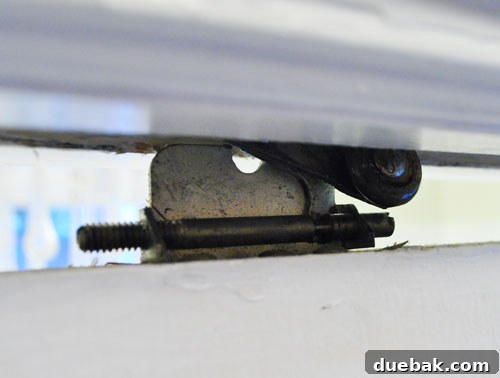
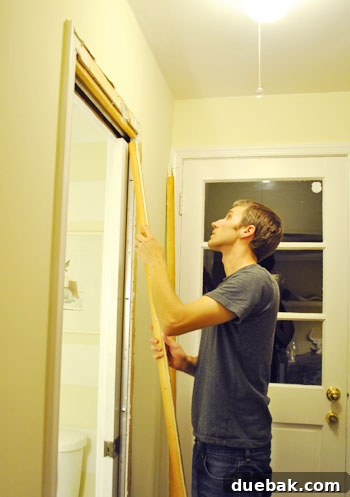
Further inspection revealed an adjustable screw on the front set of wheels, designed precisely for raising or lowering that end of the door to correct level issues. However, a familiar hurdle emerged: accessing this adjustment point required careful removal of the trim located at the top of the door frame. This marked the point where our project transitioned from a cautious investigation to a full-blown DIY endeavor, accompanied by intense focus and, perhaps, a temporary lapse in our commitment to tidiness and detailed photography.
Removing door trim correctly is crucial to avoid unnecessary damage to both the trim and the surrounding wall. Our process involved first scoring the paint line where the trim met the wall using a sharp utility knife. This prevents paint from tearing away in unsightly strips. Next, using a thin pry bar and a protective shim (a small block of wood or a piece of cardboard), we gently worked our way along the trim, carefully easing it away from the frame. Patience is key here; rushing can easily split the wood trim or damage the drywall behind it. While seemingly a minor step, trim removal often serves as the initial test of patience in many home renovation projects, as trim can be surprisingly well-attached after years of paint and nails.
The Bold Solution: Door Removal and Trimming for Clearance
As we delved deeper, it became clear that merely adjusting the front wheel wouldn’t be enough. The door’s sag was significant, and even with minor adjustments, it continued to catch. To definitively solve the problem, we made the decision to entirely remove the door from its track. This necessitated taking off the side trim as well, granting us full access to carefully lift the door off its hanging mechanisms. With the door now detached, I embarked on a late-night, rain-soaked journey to the garage, where the next crucial phase awaited: trimming the bottom edge of the door.
Why Trimming Was Our Chosen Solution
Trimming approximately an inch off the bottom of the door emerged as the most direct and effective remedy for our specific issue. While roller adjustments can compensate for minor misalignments, a door that is fundamentally too tall for its opening (perhaps due to house settling or previous incorrect installation) requires a more permanent alteration. This ensures ample clearance from the floor, thereby eliminating future dragging and jamming. We took meticulous measurements, drew a precise cut line along the bottom, and then utilized a circular saw for a clean, straight cut. My sincere apologies to our neighbors for the symphony of power tools at 10 PM – I hoped the combined efforts of the rain and the closed garage door provided sufficient acoustic insulation!
Essential Safety Tips for Using Power Tools
When operating a circular saw or any power tool, safety must always be the top priority. Always wear appropriate personal protective equipment, including safety glasses to protect your eyes and hearing protection for your ears. Ensure your workpiece is securely clamped to prevent movement, and use a straight edge guide or speed square to ensure accurate and consistent cuts. Rushing this step can lead to uneven results, damage to the door, or, more seriously, personal injury. For those less comfortable with power tools, a sharp hand saw can also be used, though it will require more physical effort and a very steady hand to achieve a professional finish.
The Triumphant Reinstallation and Lasting Improvements
With the now slightly shorter and perfectly dimensioned door back inside, the moment of truth arrived. We carefully re-hung it onto the track, ensuring it was level and properly seated, and then slid it back and forth. The result? A triumphant “Voila!” The sticking was gone. No more frustrating jamming into the floor. No more rollers stubbornly jumping off the track. Our immediate reaction was a blend of disbelief and immense satisfaction: “Did we really just fix it? And without even waking the baby?”
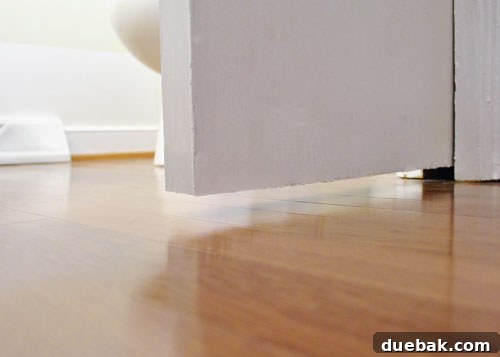
I would confidently say the door is now operating at least 95% better than its former dysfunctional state. While it’s true that if you channel your inner Arnold Schwarzenegger and push or pull it with excessive force or speed, it might still occasionally jump the track. However, the critical difference now is that with the door properly trimmed and meticulously leveled, rectifying this minor issue is a zero-tool, three-second fix: a gentle lift and a simple placement back onto the track. Gone are the days of arduous trim removal and late-night sawing. Perhaps the most astonishing revelation of all? Our baby slept soundly through the entire deconstruction and reconstruction process, despite all our prying, hammering, and sawing. Who knew she possessed such incredible noise-canceling capabilities? This is certainly valuable information for any future household projects!
Celebrating the Victory: A Fully Functional Pocket Door
The satisfaction of having our pocket door back in full, smooth working order after months of frustrating dysfunction is immense. The era of shouting “Don’t look, I’m peeing!” across the house is, thankfully, a thing of the past. Now, we can simply close the door, enjoying the privacy and convenience that a perfectly functioning pocket door is designed to provide.
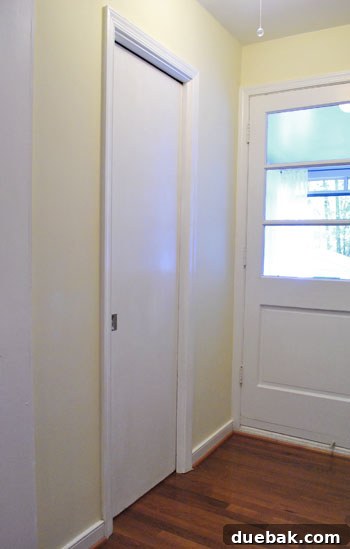
And that, my friends, is no small victory in the often-challenging world of homeownership. This project perfectly embodies our problem-solving philosophy: a generous helping of online research, a hearty dose of trial and error, and a constant reliance on crossed fingers. It’s a powerful testament to the fact that even without prior professional experience, you can cultivate immense confidence and skill simply by daring to try. For more insights on building your DIY confidence from the ground up, we highly recommend checking out this inspiring post.
We’d love to hear from you! Have you tackled a stubborn pocket door repair or any other tricky home project using a similar “fly-by-the-seat-of-your-pants” methodology? Share your successes, your humorous mishaps, and any clever solutions you’ve discovered. Are there any other pocket door issues or brilliant DIY coups you’ve pulled off? And on a lighter note, are we truly the last couple on earth who still values a bit of personal space when nature calls, or are there others out there who prefer a closed door over a communal bathroom experience?
Join the conversation in the comments below! Your experiences and insights are invaluable to our growing community of DIY enthusiasts.