
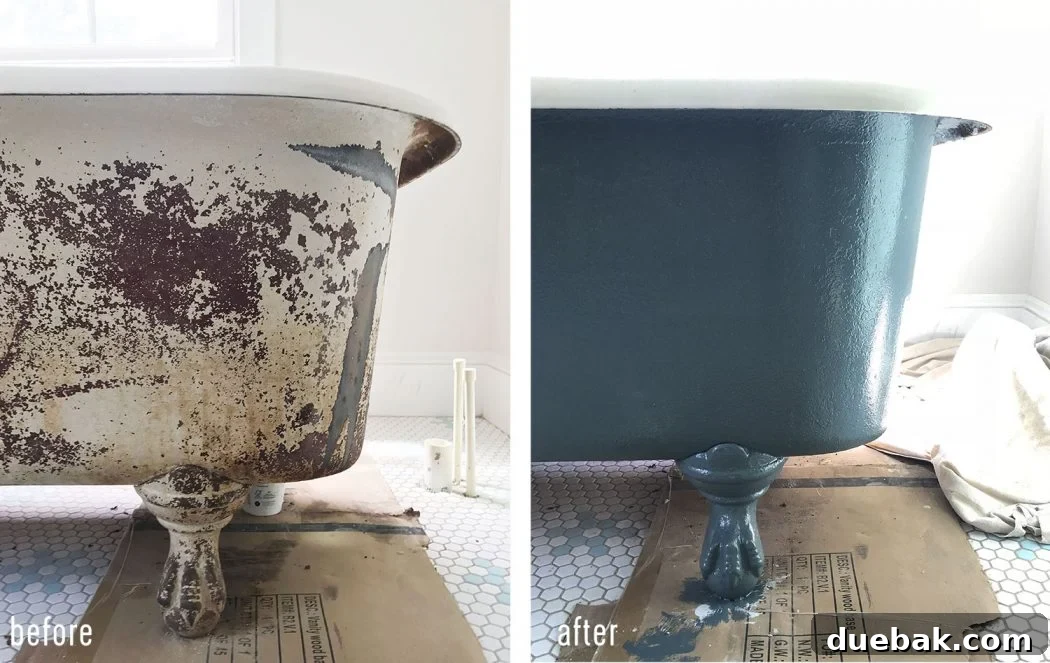
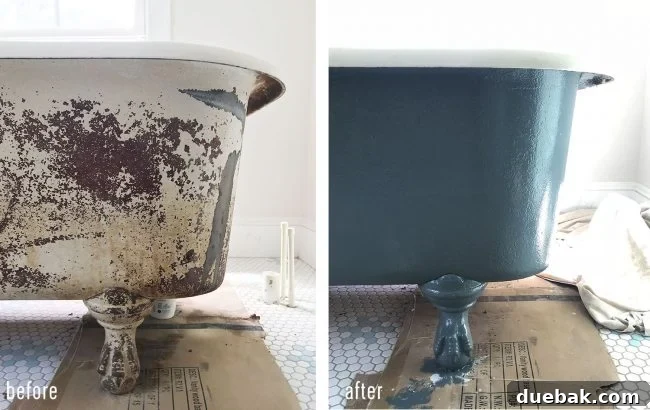
Transforming an old, neglected clawfoot tub into a stunning centerpiece for our beach house bathroom was a project born out of necessity and a desire for a unique, character-filled space. The thought of hiring professionals to reglaze or refinish such a heavy fixture was intimidating and costly. So, with a healthy dose of determination and a modest budget of around $50, we decided to tackle this DIY challenge ourselves. We were pleasantly surprised by how achievable this restoration was, largely thanks to a significant amount of ‘elbow grease’ and the right approach. Join us as we recount our journey, sharing invaluable insights into what proved effective and what minor hurdles we encountered, ultimately breathing new life into this vintage beauty.
Discovering and Acquiring Your Vintage Clawfoot Tub
Our particular clawfoot tub was an unexpected bonus when we purchased our beach house a few years ago. While its presence was a delight, its condition left much to be desired. The bathroom it resided in was in a severe state of disrepair, with crumbling walls and structural issues that necessitated a complete overhaul. Indeed, the entire side of the house had to be rebuilt to ensure its structural integrity. This extensive renovation meant our tub had to patiently await its turn for a refresh.
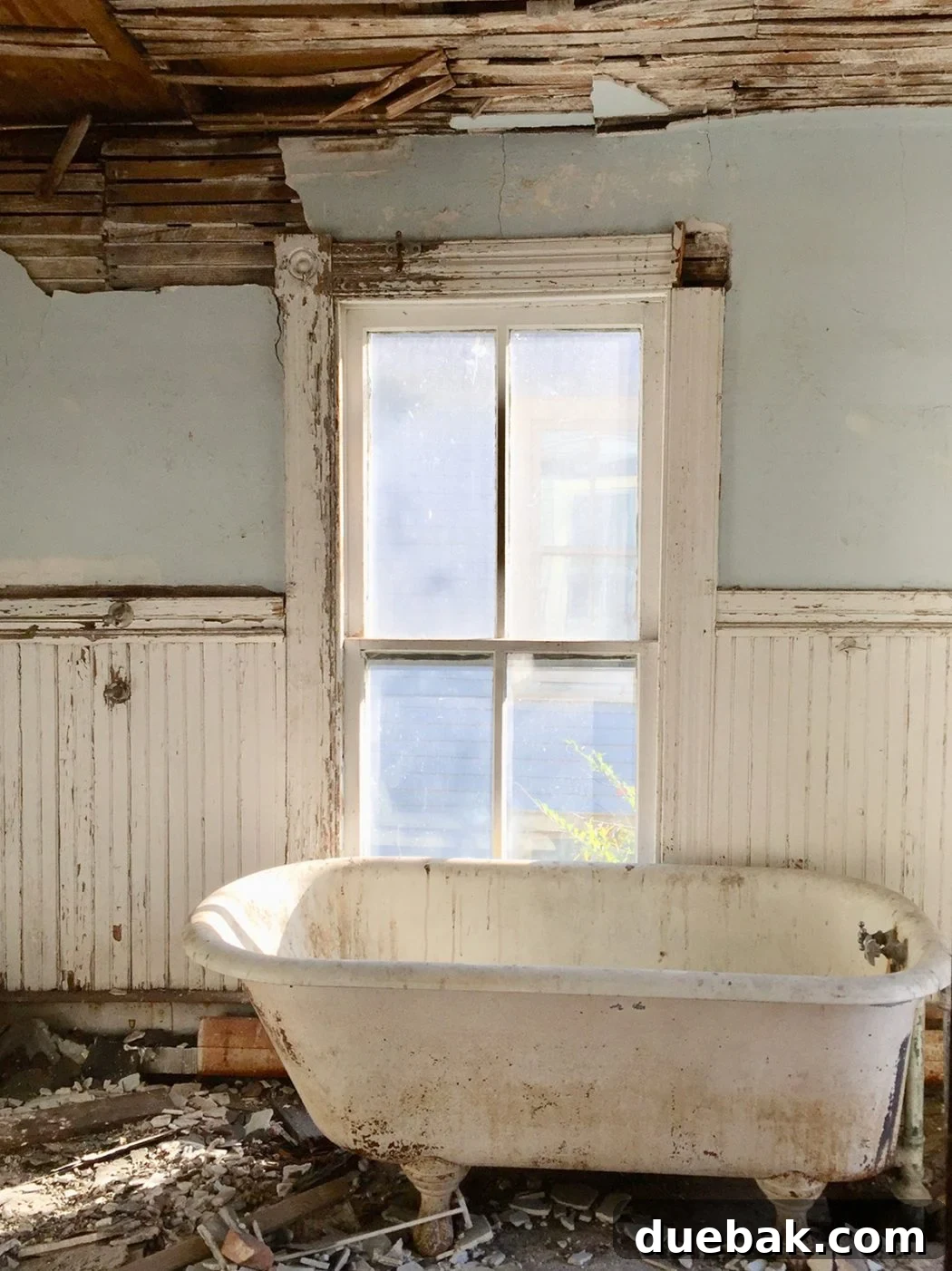
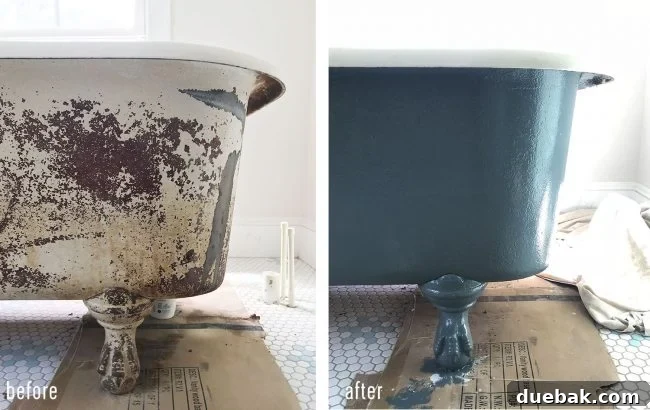
For those actively seeking to embark on their own clawfoot tub restoration journey, finding an antique tub can be an exciting part of the process. Often, neglected clawfoot tubs are available at architectural salvage stores, online marketplaces like Etsy, or even local classifieds. While there will be costs associated with purchasing and transporting these heavy fixtures, the investment can significantly outweigh the expense of buying a brand-new bathtub. The allure of a vintage tub lies not only in its timeless design but also in the potential for a truly unique and personalized restoration. Just look at the remarkable transformation we achieved with ours through dedication and a bit of hard work:
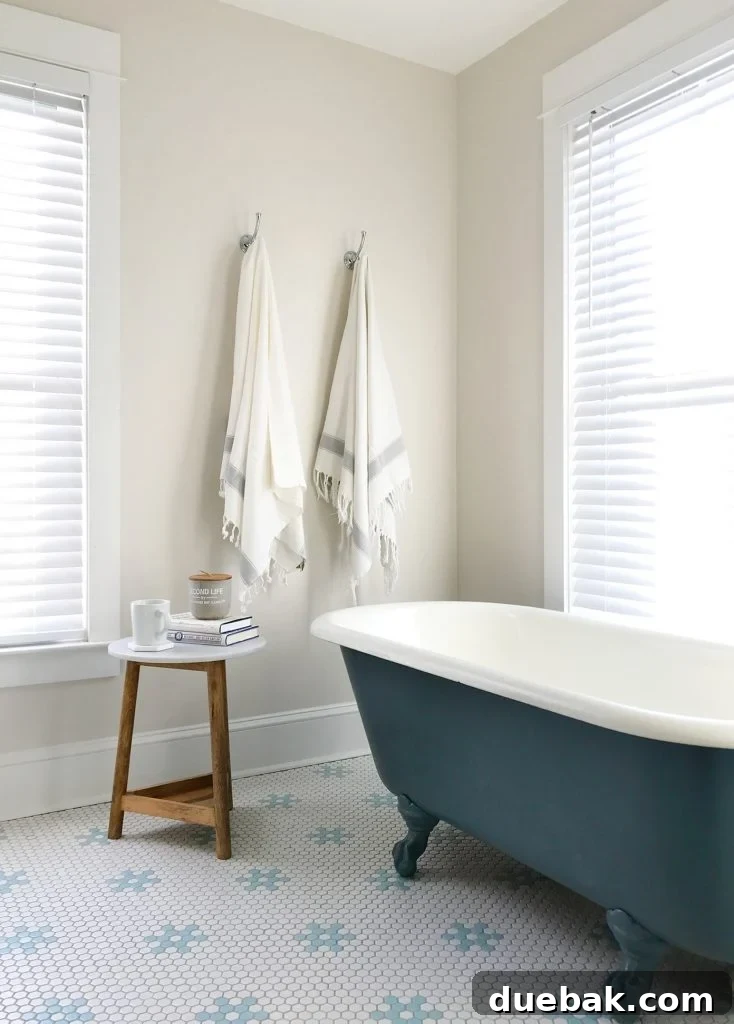
After months of construction, our tub patiently waited for its grand revival as the bathroom neared completion. Once the dust settled, it was time to turn our attention to this deserving antique. Here’s a detailed account of the steps we took to restore its former glory.
Essential Materials for Your Clawfoot Tub Refinishing Project
The restoration of a clawfoot tub typically involves addressing both its interior and exterior surfaces, each requiring a distinct approach and specific materials. The interior primarily focuses on a thorough cleaning and revitalization of the original glaze, while the exterior is a more intensive process of preparation and painting.
For the inside, the goal is to achieve a pristine surface, free from stubborn stains, accumulated grime, or significant damage. While minor imperfections can often be cleaned away, deep scratches, extensive flaking, cracks, or holes in the glaze might indicate a need for professional repair or a specialized refinishing kit to ensure the tub’s ability to hold water effectively. Here’s what you’ll need for the interior:
- Soft sponge: Ideal for initial wipe-downs and applying gentler cleansers.
- Scouring pads: For tackling more persistent stains without excessively scratching the surface.
- Spray bottle: Perfect for evenly distributing cleaning solutions.
- Bar Keeper’s Friend or other soft surface cleanser: A powerful yet gentle abrasive cleaner for tough grime.
- Heavy Duty Magic Erasers: Excellent for removing scuffs and deep-set marks.
- Steel wool, fine grade (#0): For aggressive but careful scrubbing on stubborn stains, especially rust.
- Bathtub and tile refinishing kit (optional): Consider this for minor glaze repairs if professional reglazing isn’t an option.
- Painter’s multi-tool (optional): Useful for scraping off old caulk or stubborn, localized deposits with extreme care.
- Gloves: Essential for protecting your hands from harsh chemicals and abrasive materials.
The outside of the tub is generally more forgiving. While it still benefits from being free of major holes or structural damage, minor imperfections can often be repaired or skillfully concealed beneath layers of primer and paint. Here’s a list of what we utilized for the exterior restoration:
- Fine-, Medium-, and Coarse-grit sanding blocks (optional): For manual sanding to remove old paint and smooth surfaces.
- Rust-removing drill attachment: A highly efficient tool for quickly stripping loose rust and old finishes.
- Power drill: To operate the rust-removing attachment.
- Lead paint test kit: Crucial for safety, especially with older tubs, to detect hazardous lead paint.
- Dust mask / Respirator: Absolutely essential for protecting against dust and paint fumes during sanding and painting.
- A quart of Clean Metal Primer: An oil-based primer specifically formulated to adhere to metal, prevent rust, and prepare for paint.
- A quart of Anti-Rust Paint (in color of your choice): A durable, protective enamel designed for high-moisture environments and metal surfaces.
- Small foam paint rollers: For achieving a smooth, even finish on larger, flatter surfaces.
- Chip paintbrushes: Economical brushes for detailed work, especially in crevices and around the feet.
- Paintbrush for oil paint: A higher quality brush designed to work effectively with oil-based primers and paints.
- Drop cloth or cardboard: Indispensable for protecting your flooring and surrounding areas from drips and dust.
Step 1: Thoroughly Assess the Damage
Our first course of action was to understand the extent of the tub’s condition. Using a soft sponge and plain water, we carefully wiped down both the interior and exterior surfaces. This initial cleaning helped us distinguish between superficial dirt and soap scum, which were easily removed, and more deeply ingrained stains or potential damage. Our primary concern was identifying any rust spots, as these can aggressively corrode the finish, leading to unsightly pits or even holes in the tub’s ceramic or enamel glaze.
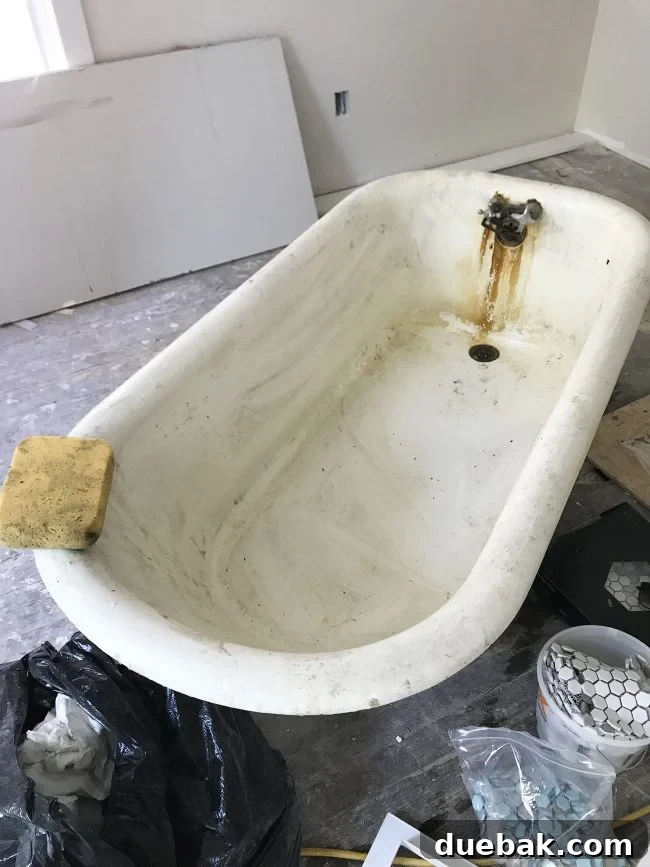
To our great relief, a surprising amount of grime and surface discoloration lifted off with just water, igniting our hope that a full professional reglazing of the interior might not be necessary. This was a significant revelation, as the interior surface requires a robust and durable glaze coating to prevent cracking or flaking over time, which is critical for longevity and maintaining water tightness.
Note: It’s worth mentioning that many home improvement stores offer tub and tile refinishing kits. These DIY epoxy applications can be applied at home and generally receive positive reviews online. While some users report issues like bubbling or a lingering odor, these kits can be an excellent, cost-effective solution if you only need to repair a small section of your tub’s glaze, saving you from the expense of refinishing the entire surface. We opted for a deeper clean rather than a full re-glaze for the interior due to the good condition of the underlying enamel.
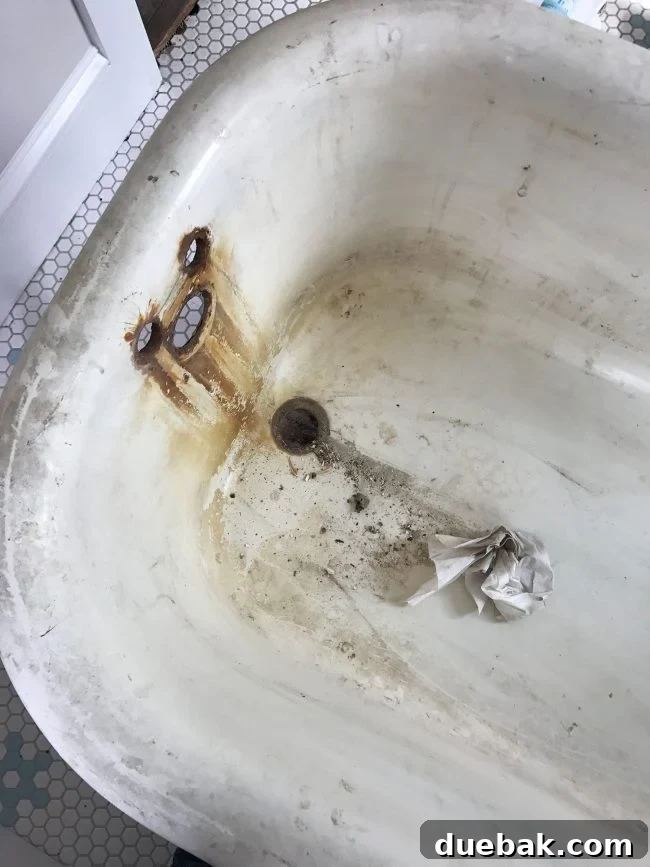
Despite the initial success, substantial amounts of caked-on hard water stains remained, particularly around the drain and faucet areas. These would require more intensive effort. Nevertheless, the fact that we were moving the tub into the bathroom, ready for a DIY transformation, rather than shipping it off to a professional reglazer, filled us with optimism.
Step 2: Tackle Lighter Stains with Vinegar Power
Having assessed the initial state, we moved on to tackling the lighter stains and general discoloration within the tub. For this, we prepared a simple yet effective cleaning solution: a 1-to-1 ratio of white vinegar and water, mixed in a convenient spray bottle. We generously coated the entire inside surface of the tub with this solution. Vinegar’s natural acidity makes it an excellent, eco-friendly cleaner for dissolving mineral deposits and mild soap scum. Following the application, we enlisted the help of a green scouring pad, applying a modest amount of elbow grease to dislodge all the easily removable grime. This step was incredibly satisfying, as much of the superficial dirt lifted away effortlessly.
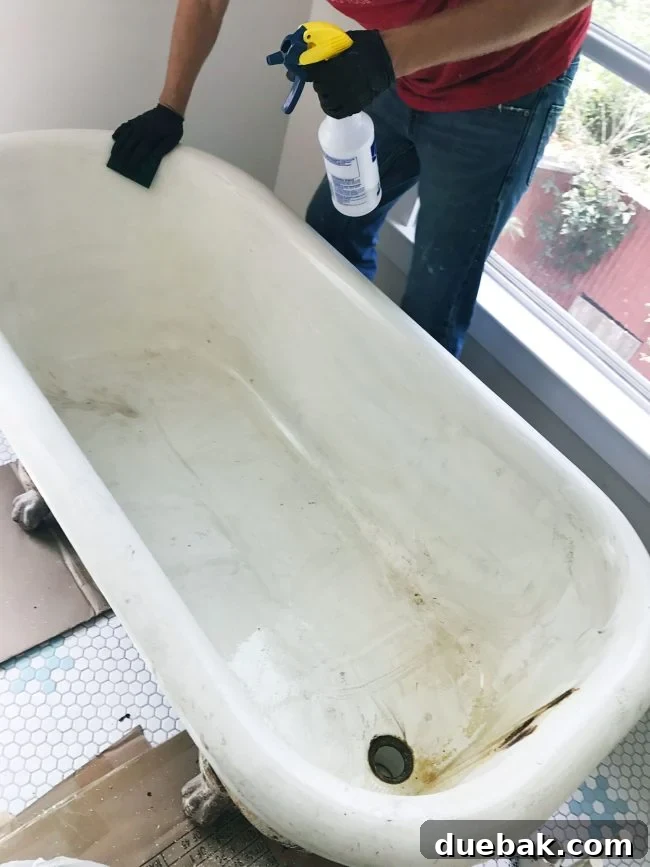
The transformation after this initial vinegar scrub was remarkable, creating a visibly brighter and cleaner surface. While it made a huge difference and significantly improved the tub’s appearance, it wasn’t quite ready for a relaxing soak just yet. We knew the more stubborn, deeply embedded stains still needed our attention.
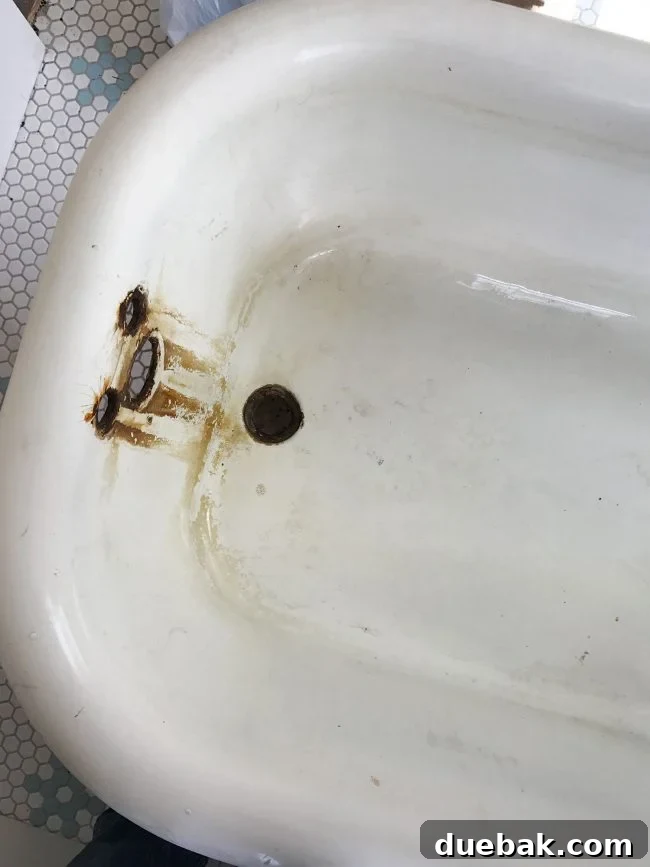
Step 3: The Heavy-Duty Interior Scrub
For the more entrenched stains, particularly the stubborn rust marks and hard water buildup, we turned to a heavy-duty approach. Several readers had highly recommended Bar Keeper’s Friend Soft Cleanser, a product renowned for its efficacy on rust and mineral deposits. Initially, our results were somewhat underwhelming. We followed the package instructions: applying the cleanser to a damp surface, allowing it to sit for a few minutes, and then scrubbing with an ordinary sponge. The most tenacious stains, however, stubbornly remained.
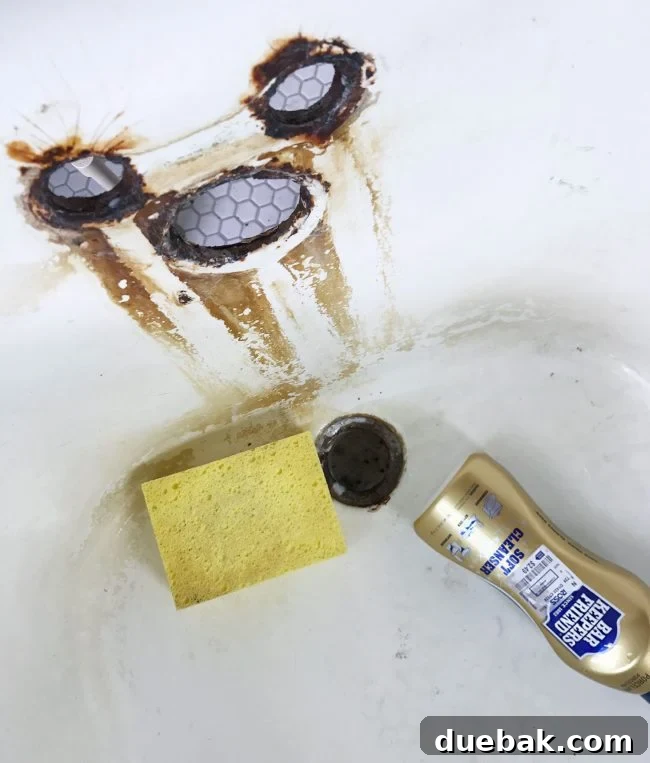
Undeterred, we decided to give the cleanser another chance, modifying our method for increased effectiveness. This time, we applied a generous coating of Bar Keeper’s Friend and allowed it to penetrate the stains for a longer duration—approximately 15 to 20 minutes. Instead of a standard sponge, we opted for a more abrasive tool: a Heavy Duty Magic Eraser. This combination yielded much better results, as the Magic Eraser’s micro-abrasive properties helped to lift the stains. However, it was a slow and meticulous process, and we quickly went through several Magic Erasers.
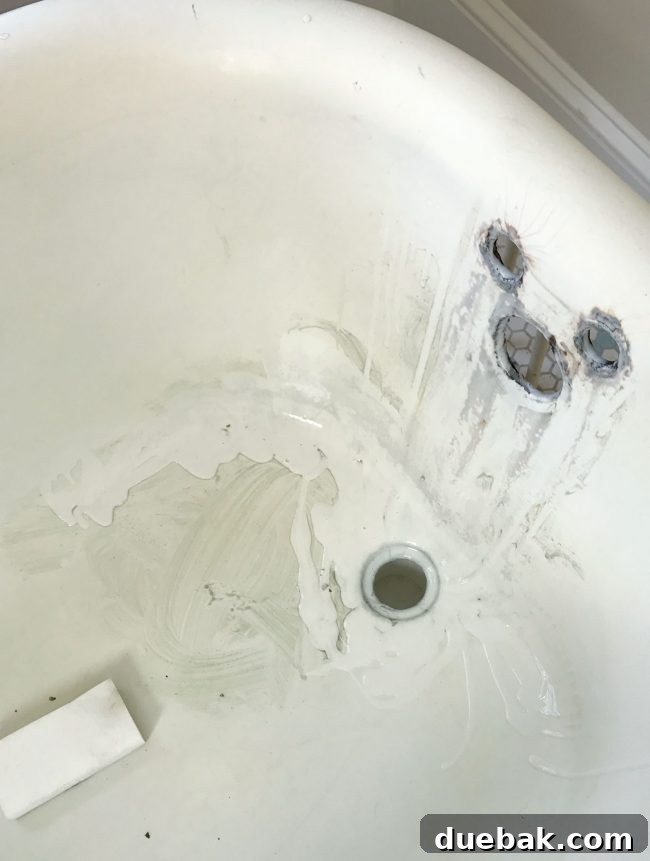
With the second application of soft cleanser still working its magic, we switched from the Magic Eraser to fine-grade steel wool. It’s hard to say whether it was the prolonged contact of the cleanser or the increased abrasiveness of the steel wool, but at this point, we finally began to see truly noticeable progress. This step still demanded a considerable amount of elbow grease, but witnessing those tenacious rust streaks visibly dissipate was incredibly satisfying. The key here was persistence and ensuring the cleanser had ample time to break down the mineral deposits, allowing the abrasive tools to effectively scrub them away.
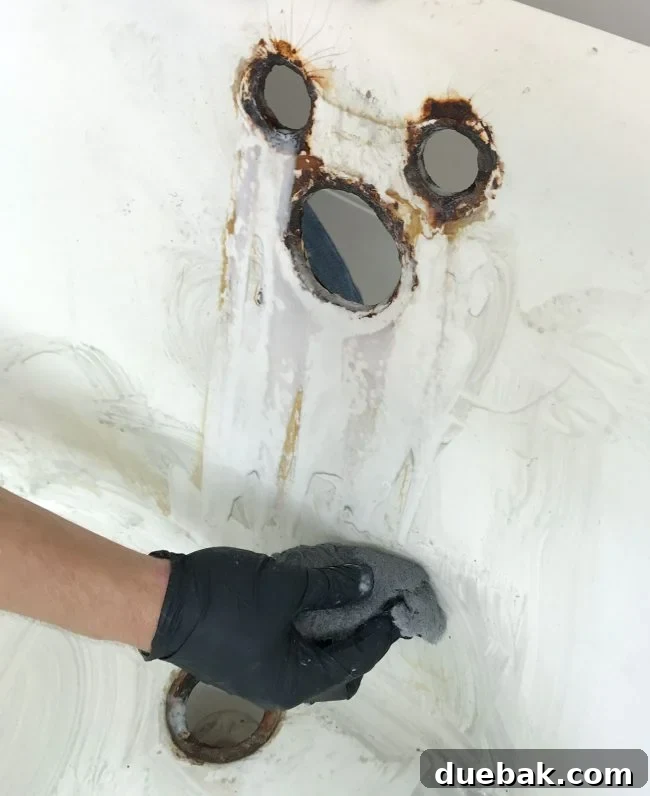
NOTE: In particularly stubborn areas, we also very gently scraped with the dulled tip of our painter’s multi-tool. Alternatively, a razor blade or putty knife could be used with extreme caution. We must emphasize that this technique carries a risk of etching or scratching the tub’s glaze, which is highly undesirable. We constantly checked our progress to ensure we weren’t causing damage, and found it helpful for chipping off large, rust-covered chunks of hard water stains. This method is also highly effective for removing old, hardened silicone caulk. Always proceed with the utmost care and test in an inconspicuous area first.
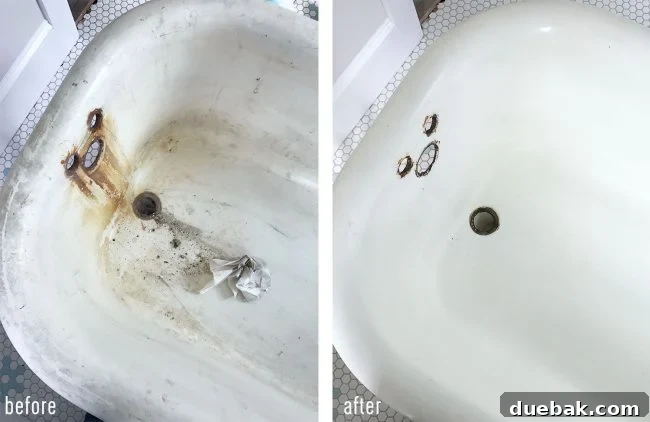
While the final results are not absolutely flawless, we are more than satisfied with the tub’s refreshed appearance. It’s now a welcoming space where we’d gladly settle in for a relaxing soak. Furthermore, the remaining rusty-looking rings you see in the images will be completely obscured once the new drain, faucet, and spigot are professionally installed, completing the interior’s polished look.
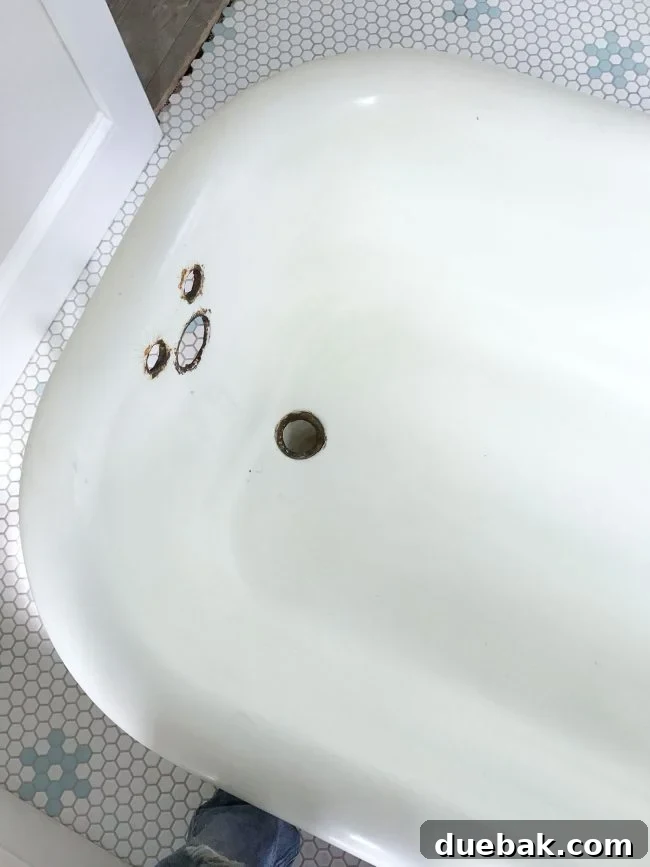
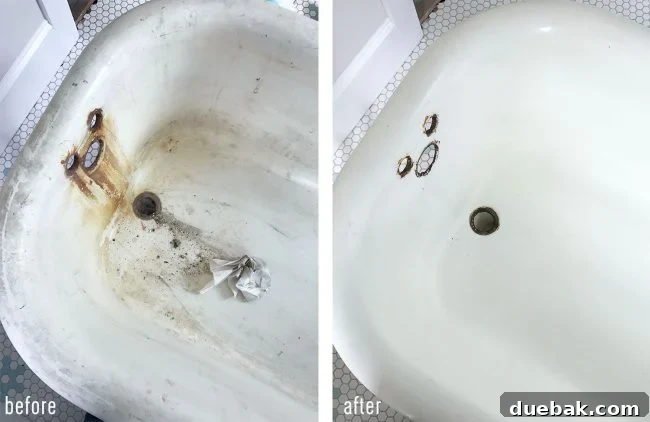
Here’s a compelling side-by-side comparison illustrating the dramatic improvement achieved solely through intensive cleaning – no actual refinishing or reglazing was performed on the interior. The fact that we were able to uncover the original finish in such remarkable condition instilled great confidence in its continued durability and longevity.
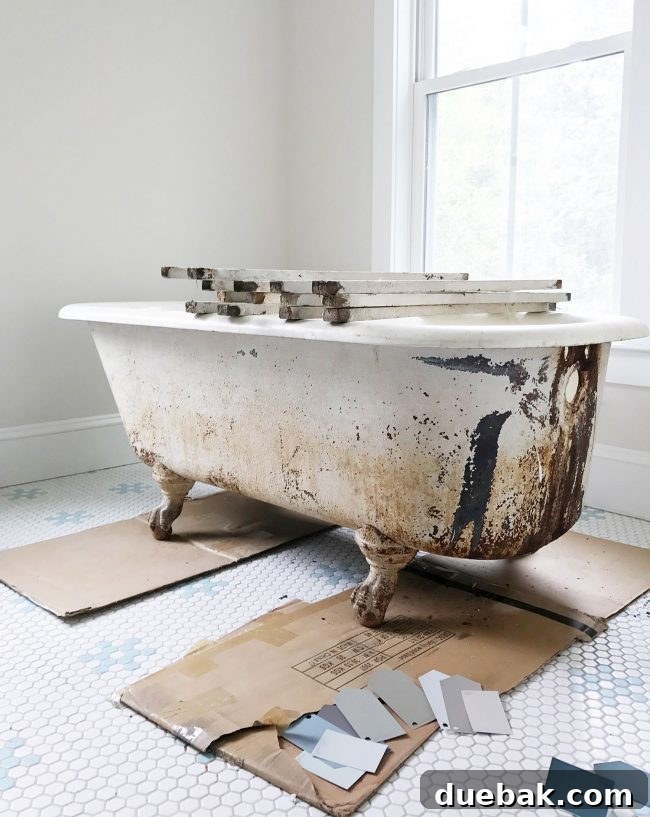
With the interior successfully revived, let’s now shift our focus to restoring the exterior. After all, a beautifully clean interior loses much of its charm if the outside still looks like it belongs in a horror movie set!
Step 4: Prepare the Exterior with Sanding
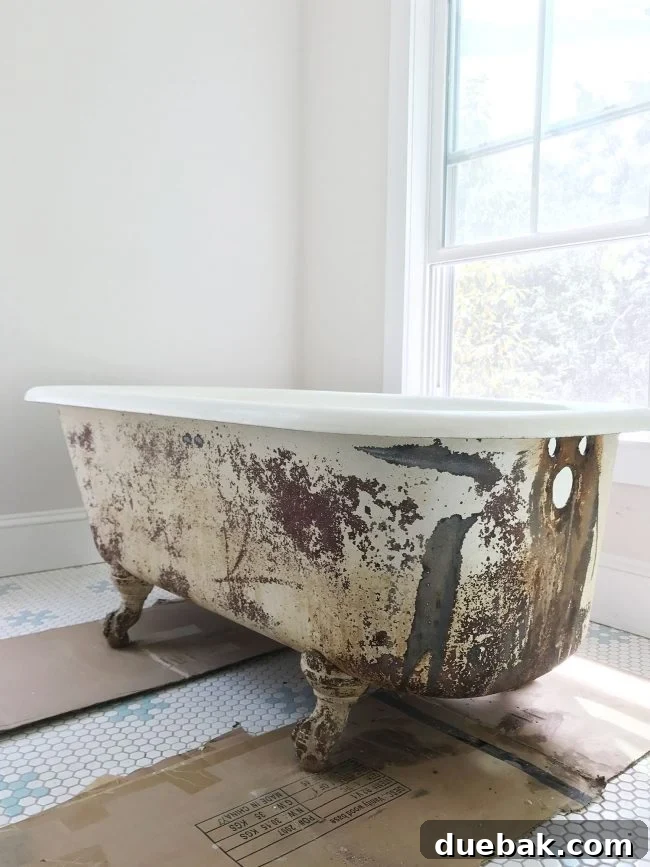
Unlike the interior, the exterior of our clawfoot tub presented a different set of challenges, predominantly characterized by extensive flaking paint and widespread rust. Our initial and crucial step was to meticulously sand down the outside surface. The objective was to remove all loose and flaking paint, creating a relatively smooth and stable foundation for the new coats of primer and paint to adhere properly.
NOTE: When dealing with older tubs, it is absolutely imperative to test for lead paint. Many vintage fixtures contain lead-based paint, which is highly toxic and particularly dangerous if children will be using the tub. We were extremely relieved when our test yielded a clean result, confirming the absence of lead. Always wear appropriate personal protective equipment, even if your test is negative, as dust from old paint can still be an irritant.
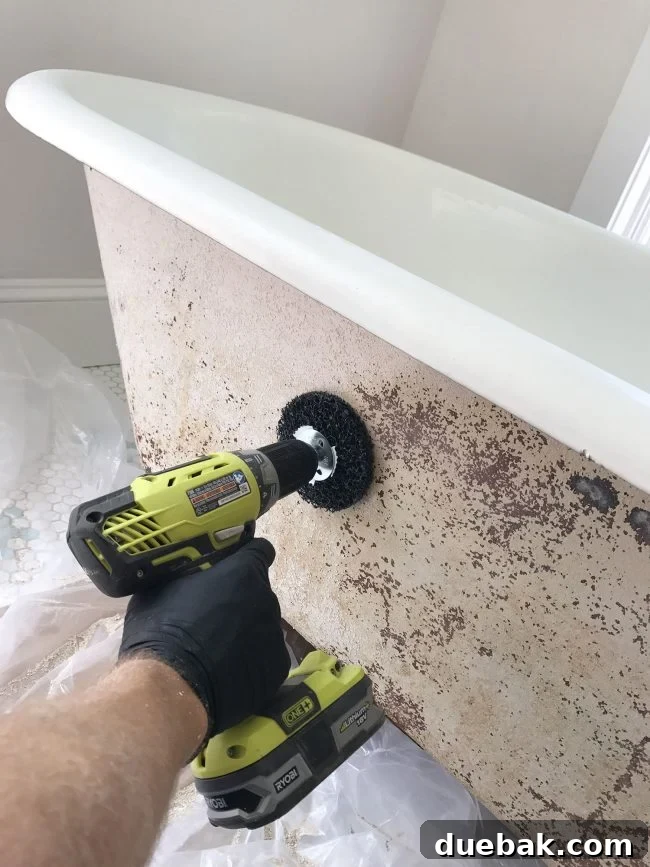
We initially began sanding by hand using coarse grit sandpaper and sanding blocks. While this method was effective, we soon discovered a far more efficient alternative: a rust-removing drill attachment. This powerful tool significantly accelerated the process, effortlessly knocking off even the most stubborn and loosely adhered parts of the old finish in a fraction of the time it would have taken manually. It’s a definite time-saver for such projects.
NOTE: Throughout the entire sanding process, both of us diligently wore heavy-duty lead paint removal masks (respirators). This was a crucial safety precaution, as sanding generates a considerable amount of dust. Even though our tub tested negative for lead, it’s always better to err on the side of caution and protect your respiratory system from airborne particles and potential irritants.
After the initial aggressive sanding, we refined the surface by hand. We progressed from medium-grit sanding blocks to ultimately using fine-grit sanding blocks. The goal wasn’t to strip the tub down to its bare original metal – a task that would have consumed countless hours – but rather to achieve a smooth-to-the-touch finish, entirely free of any flaking paint or loose rust. In approximately 20 minutes, we accomplished this, creating an ideal surface for the subsequent priming stage.
Step 5: Priming with Clean Metal Primer
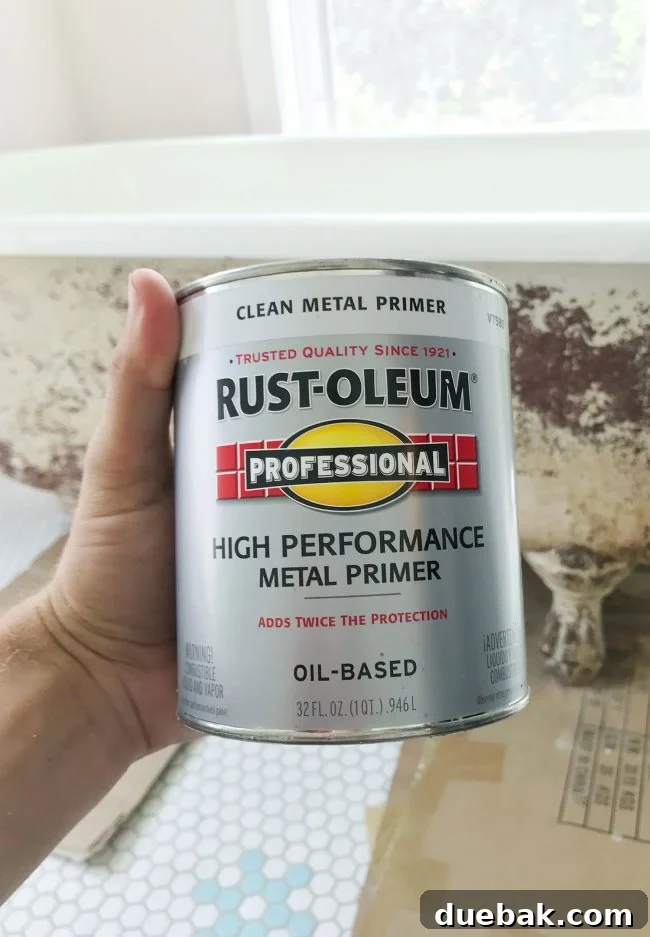
With the exterior meticulously sanded and wiped down with a clean towel to remove all dust, we were ready for the crucial priming stage. Based on an insightful consultation with the paint expert at our local hardware store, we selected this oil-based Rust-Oleum Clean Metal Primer. This particular product was recommended as a triple-threat solution for refinishing the exterior of our cast iron clawfoot tub:
- It effectively covers existing rust: Its specialized formula encapsulates and neutralizes existing rust, preventing it from spreading or bleeding through subsequent paint layers.
- It prevents future rust: By creating a robust barrier against moisture and air, the primer actively inhibits the formation of new rust, ensuring the longevity of your finish.
- It creates an ideal surface for paint adhesion: The primer provides a perfectly textured and stable base, significantly improving the adhesion of your topcoat paint, leading to a smoother, more durable finish.
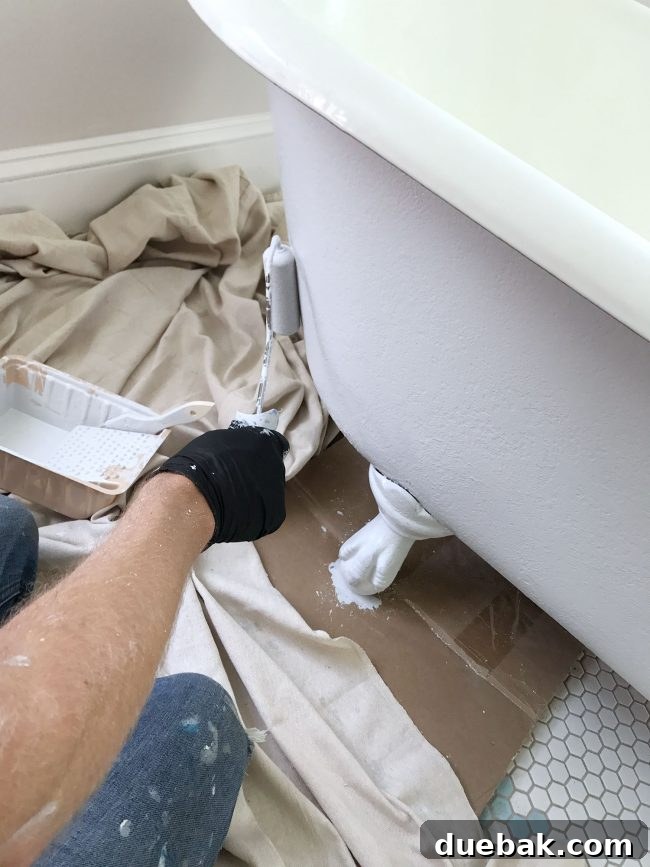
We applied the primer using small foam rollers for the larger, flatter surfaces of the tub, which helped us achieve a smooth and even coat. For the more intricate areas, such as beneath the tub’s lip and around the individual clawfeet, we utilized inexpensive chip brushes to ensure thorough coverage. A word of caution: this primer is quite prone to dripping, so it’s absolutely vital to protect your floors with drop cloths or cardboard. Additionally, it emits a strong odor, so ensure excellent ventilation by opening windows or using a powerful fan to circulate the air.
Step 6: Painting the Exterior with Anti-Rust Armor
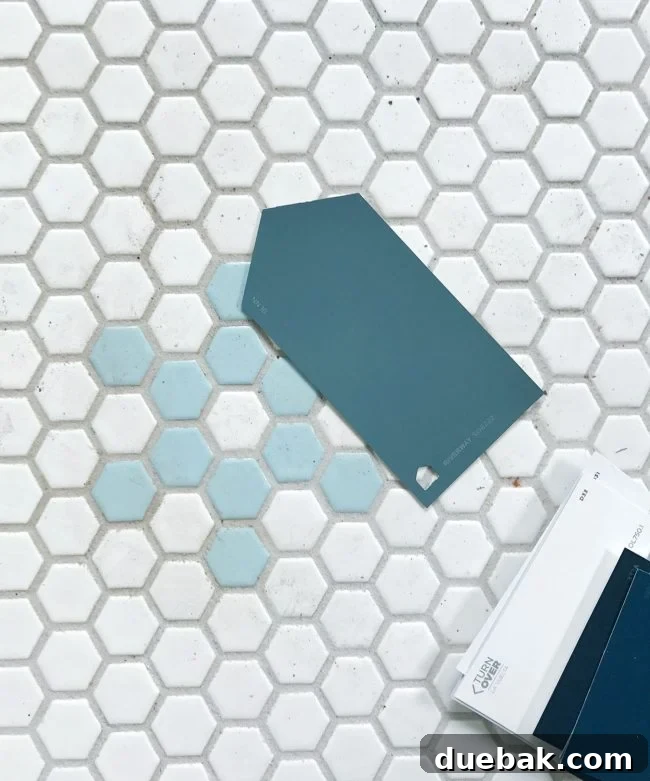
Once the primer had fully dried and cured according to the manufacturer’s instructions, it was time for the exciting part: applying the final color to the tub’s exterior. We explored a wide spectrum of colors for the tub, ultimately settling on a rich, captivating shade called Riverway by Sherwin-Williams. We felt that straightforward taupes or grays would appear too conventional and understated in a bathroom featuring such a playful and dynamic floor pattern. Our aim was to select a color noticeably darker than the subtle accent tiles in the flooring, ensuring the tub would stand out as a distinctive focal point rather than attempting to blend in seamlessly.
We had our chosen color, Riverway, custom-mixed at Lowe’s into this remarkable Valspar Anti-Rust Armor paint. This particular paint was enthusiastically recommended by the same paint professional who advised us on the primer. It boasts excellent moisture and stain resistance, along with additional rust prevention properties embedded directly into its formula, providing a robust, long-lasting finish. The online description humorously notes its suitability for “appliances, playground equipment, mailboxes, and tanks.” While they undoubtedly refer to items like propane tanks, the image of someone hand-painting a giant military tank with this specific paint provided us with a good laugh amidst our DIY efforts.
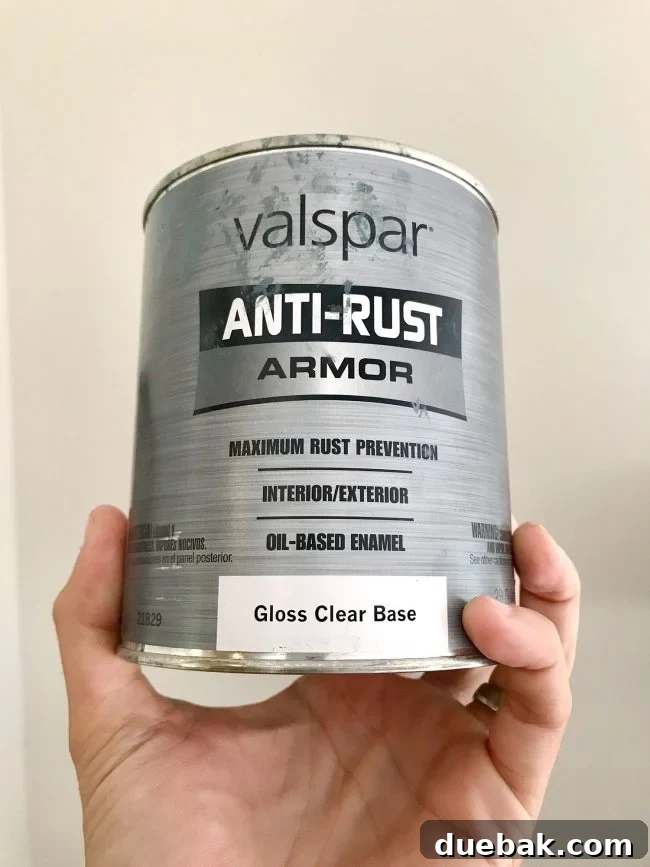
Once again, we relied on small foam rollers for applying the paint to the broader surfaces of the tub, ensuring a uniform and smooth coat. For the intricate details, especially navigating between the “toes” of the clawfeet, we opted for a paintbrush specifically designed for oil-based paints. This allowed for precise application in tight spots. Similar to the primer, this paint also had a rather potent odor, necessitating the reuse of our dust masks (respirators) to protect ourselves from the fumes. However, its consistency was notably thicker than the primer, providing excellent coverage with fewer coats.
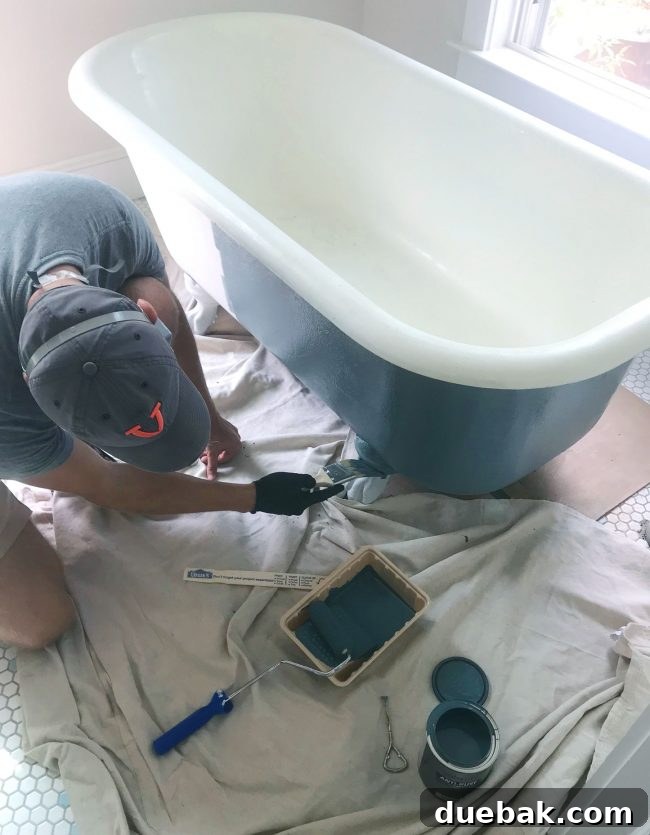
An interesting design choice often considered during clawfoot tub restoration is painting the feet an accent color, such as black, silver, or gold. While this can certainly add a unique touch, all of our inspiration photos showcased a classic two-tone aesthetic: a pristine white interior paired with a vibrant, colorful exterior, rather than a three-tone effect. This allowed the clawfeet to seamlessly blend with the tub’s body, maintaining a cohesive look. However, if you’re inclined towards “foot-bling” and want to highlight the intricate details of the claws, that’s definitely an avenue to explore for added customization!
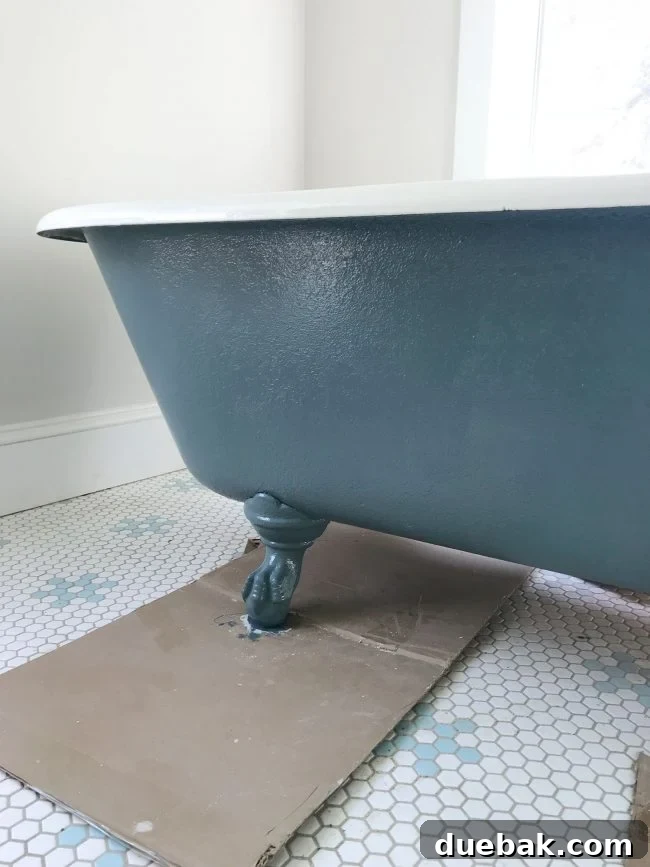
Upon close inspection, you might notice that the exterior isn’t perfectly glass-smooth. The subtle topography of the old finishes beneath the fresh coat of blue paint is still discernible. Far from being a flaw, we actually appreciate this characteristic. It imparts a genuine sense of age and history to the tub, making it feel like an authentic fixture that has graced this house for decades, rather than a new replica brought in. This subtle texture adds to its vintage charm and character.
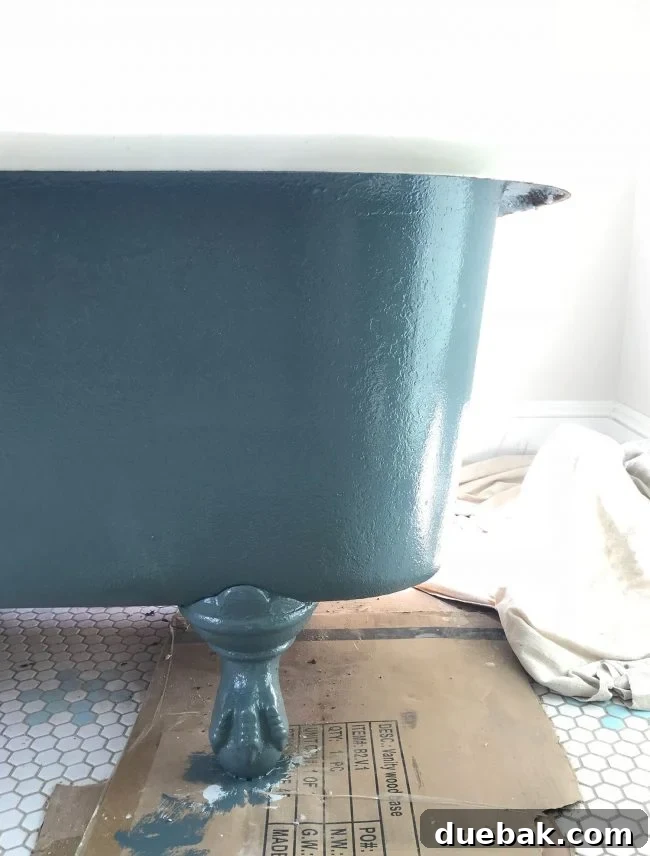
Dappled dots or not, the transformation is unequivocally a monumental improvement! For an investment of roughly $50 in materials and a fair amount of sweat equity, we achieved a result that looks remarkably similar to a high-end clawfoot tub from Rejuvenation, which retails for upwards of $3,300! This DIY project truly underscores the value and satisfaction of taking on home renovations yourself.
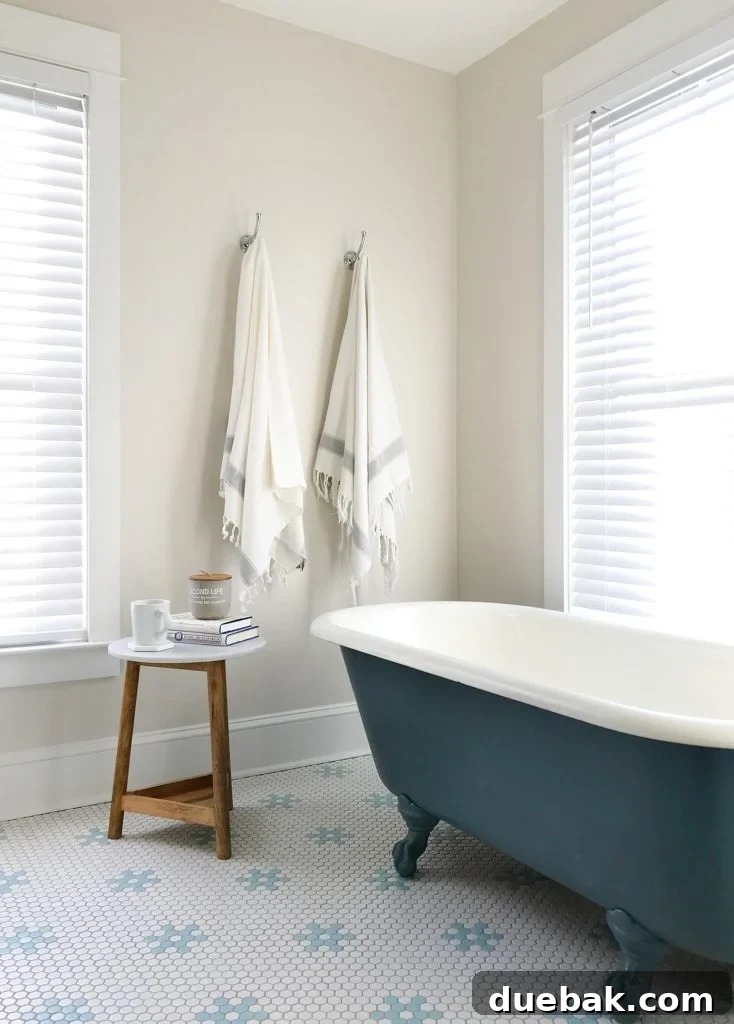
Fast forward a few more weeks, once the rest of the bathroom was assembled and our plumber skillfully installed the new bath fixtures, and here is the breathtaking result:
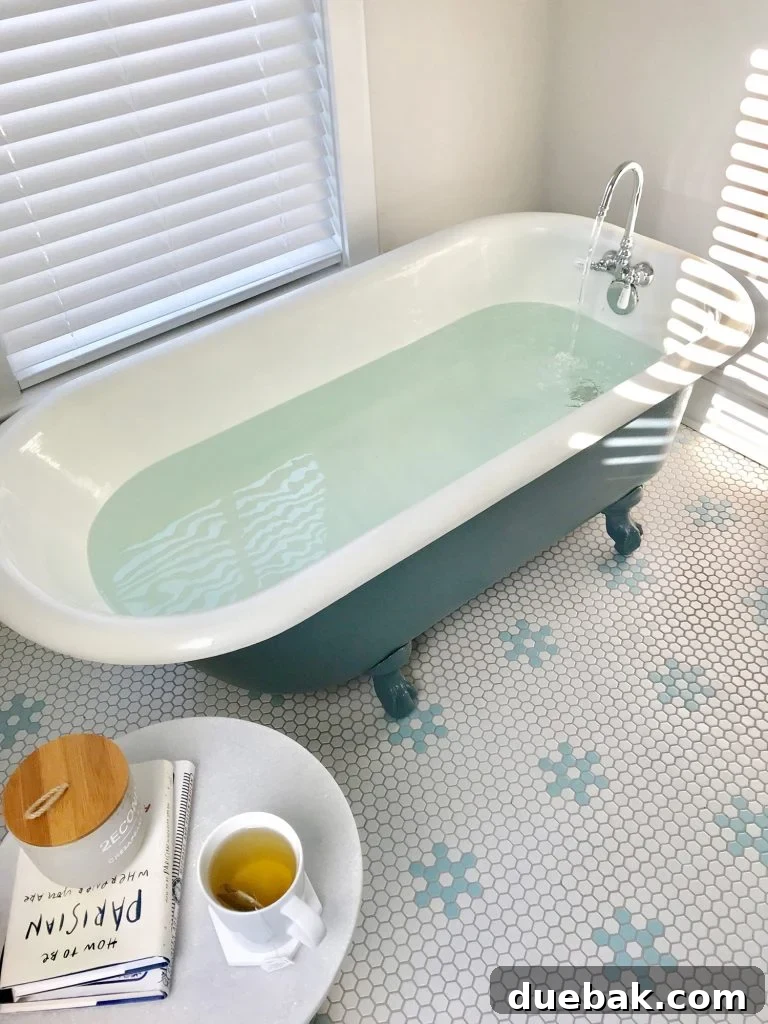
And to truly appreciate the culmination of our efforts, behold how absolutely beautiful she looks, finally filled with sparkling water, ready for a luxurious bath!
We sincerely hope that our detailed journey inspires you to consider giving any old, neglected clawfoot tub you encounter a well-deserved second chance. The satisfaction of restoring a piece of history and creating a unique focal point for your bathroom is truly unparalleled. This DIY project proves that with a little effort and the right techniques, you can achieve professional-looking results on a budget, turning what might seem like a daunting task into a rewarding accomplishment.
Psst – Eager to delve deeper into our complete beach house rehabilitation project? Click here to explore every step and transformation we’ve undertaken over the past year to bring this home to life!
*This post contains affiliate links, which means we may earn a small commission if you make a purchase through them, at no extra cost to you. We only recommend products we genuinely use and believe in.*