

Living in a city where sunshine is usually our most constant companion, the past week has been an anomaly – a continuous symphony of raindrops. For someone accustomed to only a handful of rainy days each year, and certainly not enough to warrant an umbrella collection, this deluge has been quite the change of pace. While we own sturdy rain boots for battling snowmelt and ice chunks, the need for heavy-duty rain gear is typically minimal. This prolonged wet spell, however, has truly tested our indoor resilience and, frankly, driven me a little stir-crazy. With three energetic boys needing a healthy dose of screen-free engagement, we’ve transformed our home into a vibrant craft studio. The beauty of these projects lies in their simplicity: requiring only basic materials readily available around the house and taking less than 30 minutes to complete (not including drying time, of course). They’re perfect for sparking creativity and chasing away those inevitable rainy-day blues.
Unleash Creativity: Engaging Rainy Day Crafts for Kids
When the weather outside is anything but inviting, turning to indoor crafts offers a fantastic solution to keep children entertained and stimulated. These activities are more than just time-fillers; they are crucial for developing a wide range of skills. From enhancing fine motor coordination as little fingers manipulate materials to fostering problem-solving abilities when deciding how to attach a wobbly eye, crafts provide a rich learning environment. They encourage imaginative play, allow for self-expression, and offer a wonderful opportunity for family bonding. Plus, in an increasingly digital world, hands-on, screen-free activities are invaluable for promoting creativity and reducing reliance on electronic devices. Let’s dive into some easy, fun, and highly rewarding craft ideas that will make even the longest rainy day fly by.
Essential Tips for Successful Rainy Day Crafting
- Gather Your Arsenal: Before starting, lay out all your materials. This minimizes interruptions and keeps the creative flow going.
- Prepare Your Workspace: Lay down old newspapers, a plastic tablecloth, or an old sheet to protect your surfaces from paint, glue, and glitter.
- Embrace the Mess: Crafting with kids often involves a bit of chaos. Remind yourself that a messy craft space usually signifies a productive and fun one!
- Age-Appropriate Choices: Adapt crafts to suit the age and skill level of your children. Younger kids might need more assistance with cutting or intricate steps, while older children can tackle more complex designs independently.
- Encourage Independence: Allow children to make their own choices regarding colors, designs, and placement. The goal is self-expression, not perfection.
- Celebrate Imperfections: Every craft made by a child is a masterpiece. Focus on the effort and creativity, not on whether it looks exactly like the example.
- Storytelling Through Craft: Encourage your child to tell a story about their creation. What’s its name? Where does it live? What adventures does it have? This further enhances their imaginative and verbal skills.
Whimsical Paper Plate Animals: A Crafting Safari at Home
Paper plates are a staple in many households, and their versatility makes them an absolute favorite for kids’ crafts. They are inexpensive, easy to cut, and provide a fantastic blank canvas for a myriad of imaginative creations. This craft allows children to transform a simple circle into a vibrant character, fostering creativity and fine motor skills.
Crafting Your Paper Plate Zoo: Step-by-Step
Materials Needed:
- Paper plates (any size works!)
- Scissors (child-safe scissors for younger kids)
- Markers, crayons, or paints
- Glitter, sequins, buttons, yarn, fabric scraps, googly eyes
- Craft glue
- Optional: Animal templates (easily found online)
Detailed Directions:
- Gather Your Supplies: Lay out all your chosen craft materials. A colorful array will immediately spark excitement.
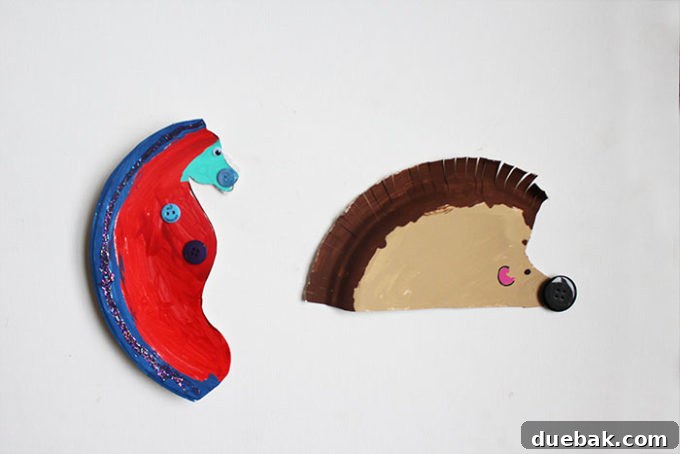
- Shape Your Creature: This is where the magic begins. You can either use online templates for specific animals (like a graceful seahorse or a mighty lion) or encourage freehand cutting. For younger children, pre-cut some basic shapes or assist them with the scissors. Older kids can confidently cut their own designs, transforming the circular plate into wings, bodies, or heads. We found a seahorse template online, but the spiky hedgehog was a delightful freehand creation, proving that imagination is the best guide.
- Let the Decoration Begin: This is arguably the most exciting part! Provide a variety of decorative elements. We used a rich assortment including vibrant markers, washable paints, shimmering glitter (always a favorite!), craft glue, an assortment of colorful buttons, and expressive googly eyes. Encourage your children to think about their chosen animal and what features it might have. Does it have scales? Fur? Feathers? Each addition brings their creature to life. My son, Jett, was particularly enthusiastic about the glitter, reveling in the sparkly transformation of his paper plate.
- Allow to Dry: Once decorated, set your magnificent paper plate animals aside to dry completely. This is a good time for a snack break or another quick activity!
Adorable Recycled Plastic Cup Owls: Hoot-tiful Creations from Reclaimed Materials
Embracing the spirit of “reduce, reuse, recycle” is not only environmentally conscious but also opens up a world of creative possibilities. Ordinary plastic cups, often destined for the recycling bin, can be transformed into charming little owls with just a few craft supplies. This project teaches children about sustainability while engaging their artistic side, proving that treasures can be found in the most unexpected places.
Hoot-tiful Creations: Making Your Owl Friends
Materials You’ll Need:
- Clean, recycled plastic cups (yogurt cups, drinking cups, etc.)
- Acrylic paints or tempera paints in various colors
- Paintbrushes
- Felt scraps in different colors (for body, wings, and facial features)
- Feathers (craft feathers or real ones if found ethically)
- Paper scraps or construction paper
- Googly eyes (various sizes add character!)
- Craft glue (or a low-temp glue gun for older kids with supervision)
Step-by-Step Guide:
- Prepare Your Cups: Ensure all plastic cups are thoroughly washed and dry. This is a great opportunity to talk about recycling and how we can give items a new purpose.
- Paint the Base: Provide paints in different colors and let your children paint the entire exterior of their plastic cups. This will be the owl’s body. Encourage them to experiment with patterns or solid colors. Painting is an excellent activity for developing hand-eye coordination and color recognition.
- Patience is Key: Once painted, set the cups aside to dry completely. Depending on the paint thickness and humidity, this might take an hour or two. This pause teaches patience and anticipation.
- Time to Decorate: Once the paint is dry, it’s time to bring your owls to life!
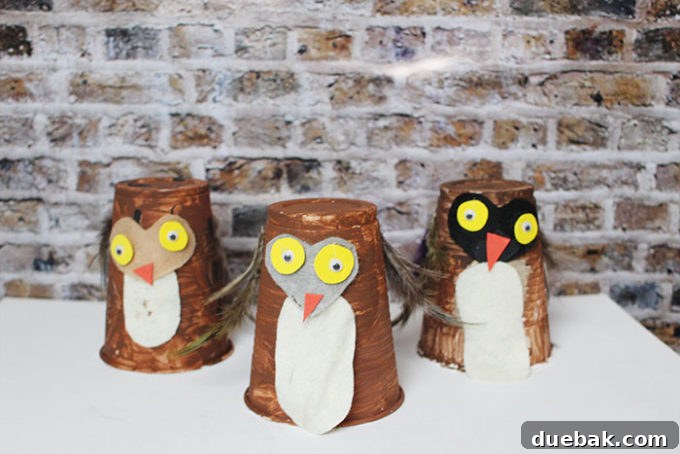
- Felt for Body and Face: Start by cutting felt pieces. You’ll need larger shapes for wings (two per owl), a belly patch, and a round or heart-shaped face. Glue these onto the cup. Felt adds a wonderful tactile element to the craft.
- Add Feathers: Glue craft feathers along the sides for more realistic-looking wings or at the top for some playful ‘ear tufts’.
- Eyes and Nose: Attach googly eyes of varying sizes for different owl personalities. Cut a small triangle from paper or felt for the beak and glue it below the eyes.
- Final Touches: Encourage kids to add any other details they wish – perhaps little eyebrows from felt, or even a tiny twig perch.
I found myself assisting with some of the more intricate cutting for the younger ones, but my seven-year-old son was able to complete this craft almost entirely on his own, from painting to precise placement of the felt and feathers. It’s a fantastic project for building confidence and celebrating independence.
Beyond the Crafts: Fostering Imagination and Open-Ended Play
While structured crafts are wonderful for guiding creativity, it’s also important to provide opportunities for open-ended imaginative play. Once the paper plate animals and plastic cup owls are complete, they can become characters in an elaborate storytelling session. Encourage your children to create a habitat for their creatures, or stage a play with their new friends. The process of crafting often sparks further ideas, leading to spontaneous games and imaginative scenarios that extend the fun long after the glue has dried. A designated “creation station” with a variety of loose parts – fabric scraps, pipe cleaners, empty boxes, natural elements – can serve as a constant invitation for children to invent and explore without specific instructions.
Rainy days don’t have to be synonymous with boredom or excessive screen time. With a little imagination and a few basic supplies, you can transform an ordinary afternoon into an extraordinary adventure in creativity. These simple crafts not only provide entertainment but also contribute significantly to your child’s development, fostering skills that will last a lifetime. So, the next time the rain starts to fall, gather your little artists, unleash their inner crafters, and watch as they turn simple materials into cherished masterpieces.
For more fantastic craft ideas and endless inspiration, explore creative blogs and online communities dedicated to kids’ activities. You’ll find a treasure trove of tutorials, images, and innovative concepts to keep your family entertained, come rain or shine. Happy crafting!