

Mastering Interior Door Installation: A Comprehensive DIY Guide to Hanging Doors and Installing Jambs
Embarking on a home renovation journey often involves tackling projects that transform the functionality and aesthetics of your living space. Among these, installing interior doors and their frames, known as jambs, stands out as a rewarding but sometimes challenging endeavor. This detailed guide will walk you through the process of adding new life to your home by expertly hanging interior doors, complete with insights into crafting perfect door jambs and precision hardware installation. Whether you’re replacing old doors or installing them in new openings, mastering this skill will significantly enhance your home’s appeal and privacy.
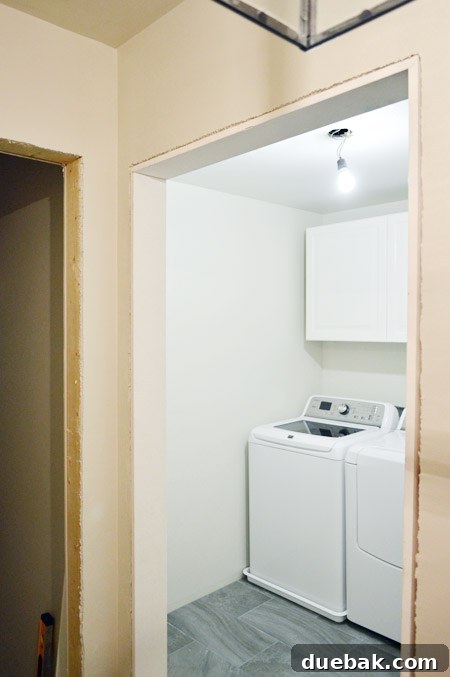
Our recent experience involved upgrading two crucial doorways in our home: the laundry room and a versatile storage room. Prior to this project, the laundry room stood open, while the storage area was less-than-ideally “sealed” with a plastic drop cloth. This arrangement, while functional for a time, highlighted the immediate need for proper doors, not just for aesthetic continuity but for essential sound dampening and convenience. What we discovered during this process instilled a newfound respect for the intricate engineering behind every door. What might seem like a straightforward fixture is, in fact, a relatively complex assembly that profoundly impacts daily living.
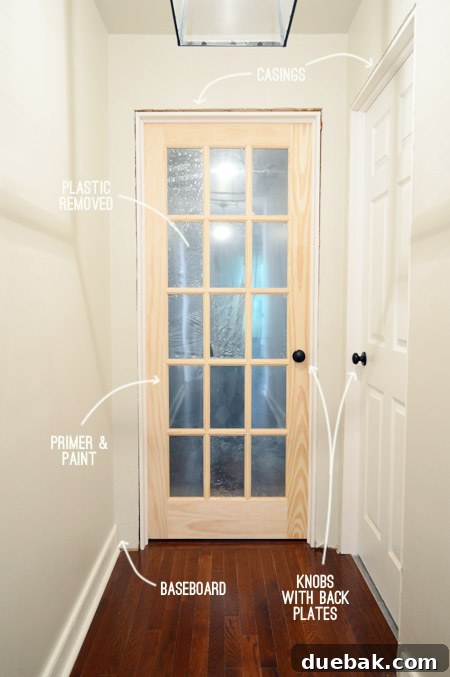
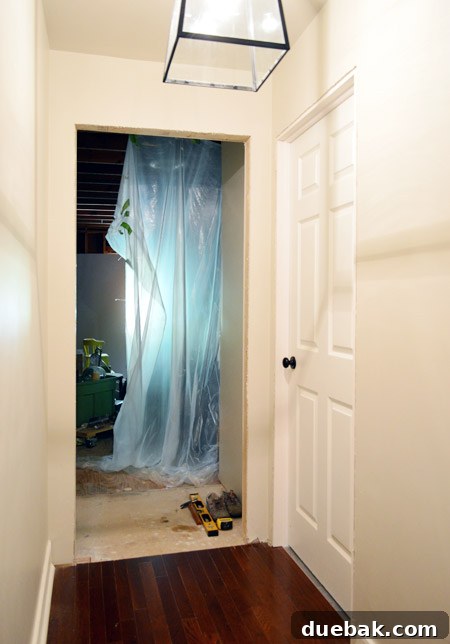
For weeks, these essential openings presented a rather unfinished appearance. The laundry room, while benefiting from an open concept for ease of access during initial renovation work, lacked privacy and sound control. The storage room, on the other hand, was an eyesore, temporarily closed off with a basic plastic sheet – far from convenient or visually appealing. This interim solution made it clear that proper doors were not just an upgrade, but a necessity for comfort and order in our home.

The transformation brought by installing these two doors was immediate and impactful. It dramatically changed the feel of the hallway, transitioning from an open, exposed space to a more defined and cohesive area. This project underscored just how much we had previously taken these ubiquitous home features for granted. The satisfaction of seeing functional, aesthetically pleasing doors in place, even before their final paint coats and casings, was immense.

Understanding Door Frame Components: Jambs, Casings, and Stops
Before diving into installation, it’s crucial to understand the anatomy of a complete doorway. Beyond the door slab itself and the essential hardware (hinges, doorknob, strike plate), the structural integrity and finished look rely on three main trim pieces:
- Jamb: This is the core frame that lines the door opening. It consists of two vertical side pieces and one horizontal head piece at the top. The door itself attaches to the jamb via hinges.
- Casing: These are the decorative trim pieces that cover the joint between the door jamb and the wall. Casings enhance the aesthetic appeal of the doorway and provide a finished look.
- Stop: A thin strip of wood nailed to the door jamb that prevents the door from swinging through the frame. It dictates how far the door can close and provides a surface for the door to latch against.
For our project, we focused initially on installing the jambs and hanging the doors, with casings and final painting to follow in a later phase of the room renovations.

Choosing Your Door: Pre-hung vs. Slab Doors
One of the first decisions in door installation is whether to opt for a pre-hung door or a slab door. Each has distinct advantages:
- Pre-hung doors: These come with the door already mounted within its own frame (jambs), complete with hinges. They are often simpler and faster to install, as the critical alignment of the door within the frame is pre-established. This saves you the effort of precisely routing for hinges and ensuring perfect clearances.
- Slab doors: These are just the door panels themselves, without any frame or hardware cutouts. Slab doors offer greater flexibility in terms of style matching and can be more cost-effective if you already have an existing frame or wish to customize the jambs and hardware from scratch.
For our laundry room, we planned to reuse an existing door slab. For the storage room, we desired a specific style that was difficult to find as a pre-hung unit. Given these factors, and the significant cost savings of slab doors, we decided to tackle the challenge of building and installing our own jambs and hanging both doors from scratch. This approach, while more labor-intensive, provided complete control over the final look and fit, aligning perfectly with our DIY ethos.
The Convenience of a DIY Door Jamb Kit
While installing a door jamb “from scratch” might sound daunting, products like the affordable $19 jamb kits from Home Depot significantly simplify the process. These kits typically include three pre-cut pieces – two vertical side jambs and one horizontal head jamb – designed to fit doors up to 36 inches wide (our doors measured 32 inches). The true advantage of these kits lies in their thoughtful design: the side pieces often feature a pre-cut rabbet joint on one end, allowing the top piece to nestle securely into place. This feature ensures a flush, sturdy joint and reduces complex joinery work for the DIYer.

Even with a kit, some customization is usually required. Our jamb pieces needed a slight trim to fit precisely within our existing framed doorway. When making these cuts, it’s essential to be careful and always cut from the non-rabbeted end to preserve the factory-cut joint for the head jamb. Understanding the components, like the rabbet joint, ensures proper assembly and a professional finish.

Step-by-Step: Installing Door Jambs and Hanging Your First Door
1. Assembling the Jamb with Precision
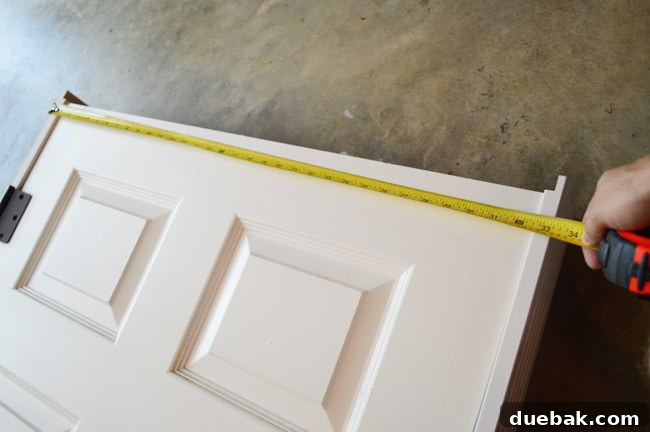
With the door slab propped up on scrap wood for stability, the assembly of the jamb can begin. Positioning the door horizontally makes it easier to work with gravity on your side. Lean the side jamb pieces into place, then carefully measure and cut the head jamb to the correct width. Remember to account for the depth of the rabbet joints where the head jamb will sit, and add a crucial 1/8-inch of breathing room around the door for proper operation. This small gap prevents binding and allows for seasonal wood movement.

Accurate measurements are paramount. Measure the width from the outer edge of one side jamb to the other, then subtract the combined depth of the rabbet joints. Add the desired 1/8-inch clearance on each side of the door (totaling 1/4 inch of play) to ensure the door can open and close freely without rubbing against the frame. This precision ensures a smooth-operating door for years to come.
2. The Art of Mortising for Hinges: Investing in a Router
Once the head jamb is cut, the next critical step is to mortise (or rout out) recesses for the hinges on the jamb. Hinges must be recessed flush with the wood surface to ensure the door closes properly. For our first door, which already had hinges attached, we simply marked their placement on the jamb based on their existing positions on the door.
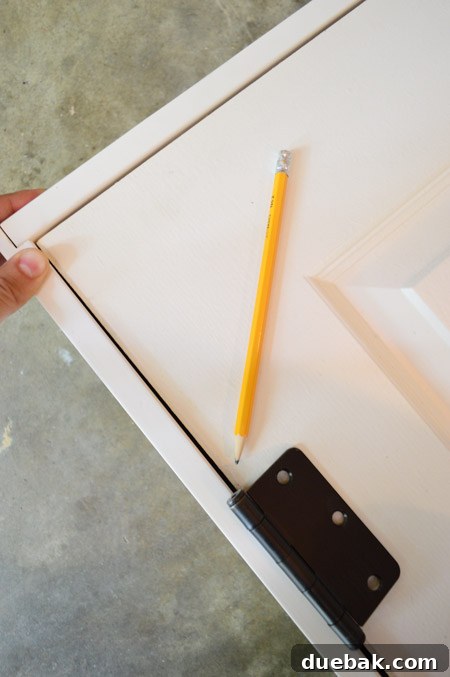
Using a spare hinge, trace its outline precisely onto the marked locations on the jamb. This tracing provides the exact shape and size for the routed recess. Accuracy here is key, as any deviation can impact the door’s swing and alignment.
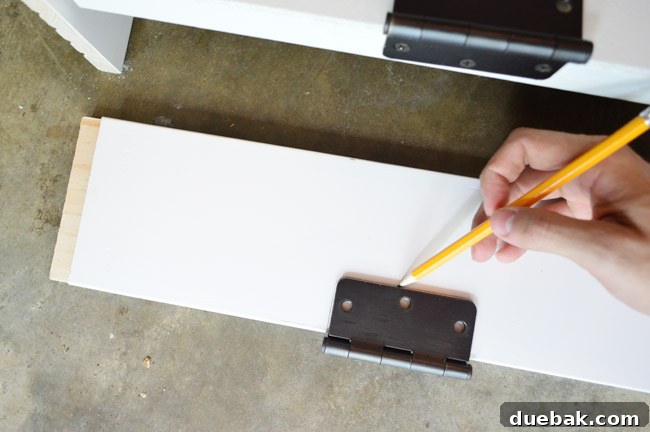
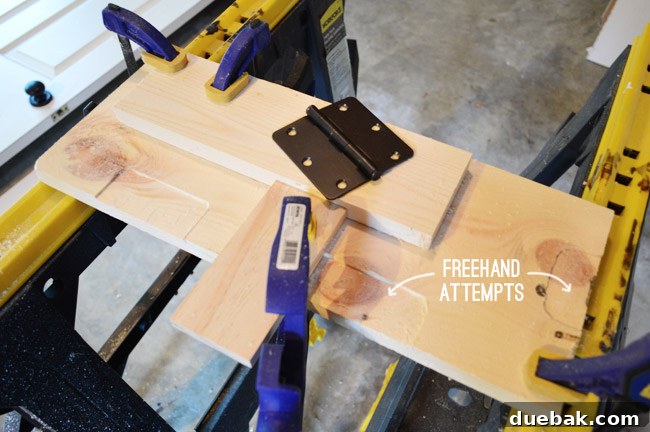
For this task, we invested in a compact router (a Rigid 1-1/2 HP Compact Router) and an appropriate routing bit. While hand-chiseling is possible, a router offers unparalleled speed and precision, making it a worthwhile investment for achieving professional results. Prior to routing the actual jamb, always practice on a scrap piece of wood. Initial freehand attempts might be rough, but clamping wood scraps as guides can significantly improve accuracy, as seen in the cleaner results on the practice board.
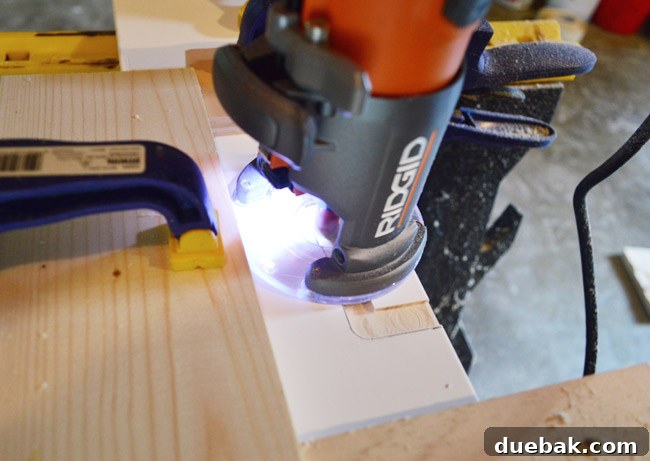
Creating a simple template from scrap wood, using clamps to secure it, can guide your router for perfectly square and consistent hinge mortises. This technique transforms a potentially challenging task into a precise and repeatable process, ensuring your hinges sit flush and function flawlessly.
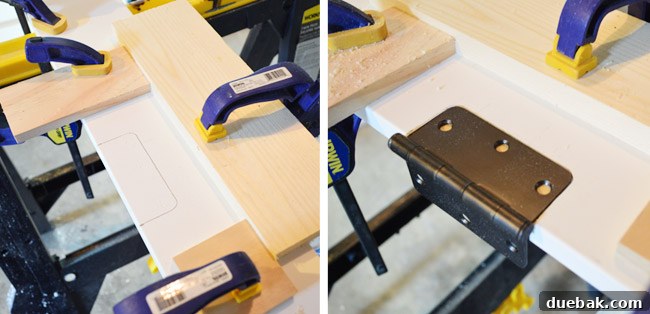
With a successful practice run and a reliable guide, the first official cuts on the jamb for the hinge mortises can be made with confidence. The satisfaction of a perfectly routed recess is immense, setting the stage for a well-hung door.
3. Assembling and Dry-Fitting the Jamb
Once all hinge locations are routed, the three jamb pieces can be securely joined. Use 2-inch nails, driven through the side jambs into the head jamb, to create a robust frame. A nail gun simplifies this step and ensures strong connections.
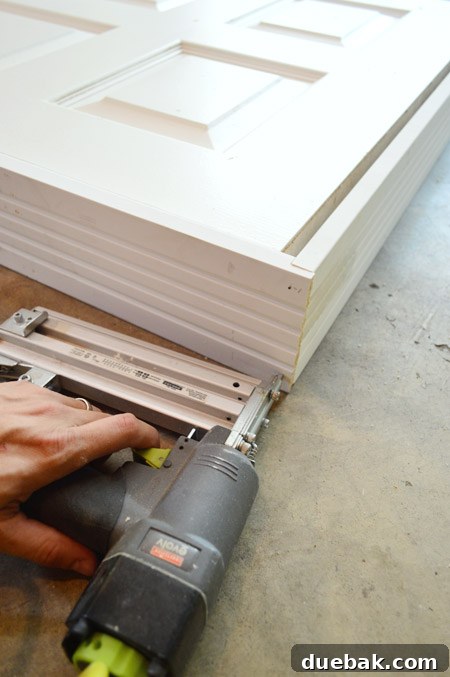
With the jamb assembled, carefully position it within the framed doorway. This “dry fit” allows you to assess the initial fit and plan for necessary adjustments. It’s a critical stage where patience is key, ensuring the jamb is centered and plumb within the rough opening.
4. Leveling, Shimming, and Securing the Jamb
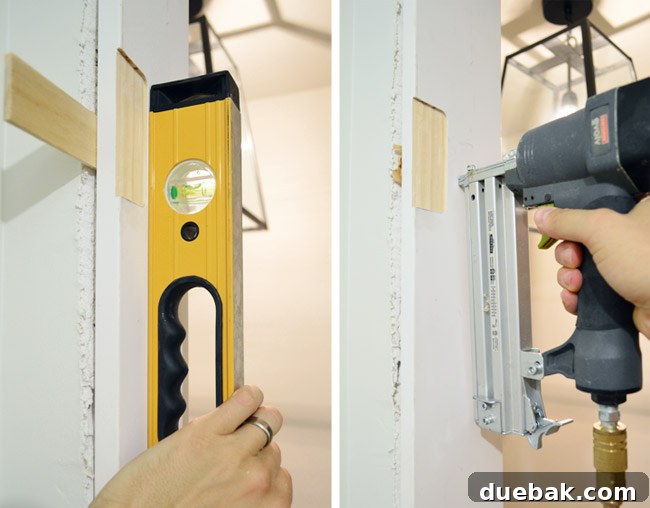
This is arguably the most painstaking part of the process: getting the jamb perfectly level and plumb on all sides. Utilize a level on both the vertical and horizontal jamb pieces. Shims are indispensable here, particularly under the hinge side, to make minute adjustments and ensure the jamb is square and stable. Once satisfied with the alignment, secure the jamb to the wall studs using appropriate nails or screws, making sure not to overtighten and distort the frame.
5. Hanging the Door and Troubleshooting
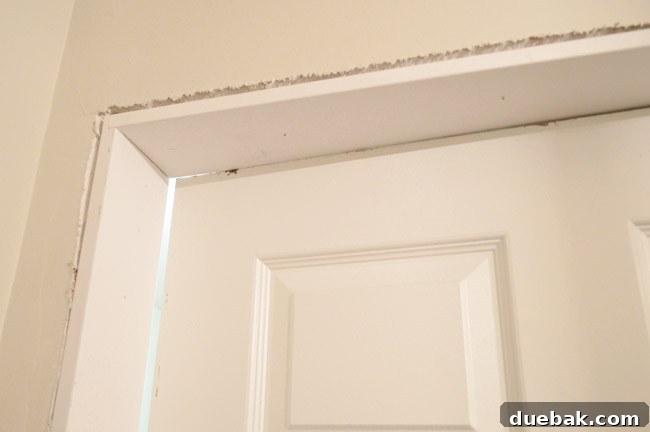
With the jamb securely in place, it’s time for the moment of truth: hanging the door. With assistance, or by carefully propping the door on shims, align the hinges and screw them into the jamb. For our first door, the initial attempt revealed a slight tightness in the top corner – a common issue that signifies the jamb is not perfectly plumb. A quick check of the levels confirmed that the top had shifted slightly. Correcting this by adding a few more shims to that corner resolved the issue, allowing the door to close smoothly.
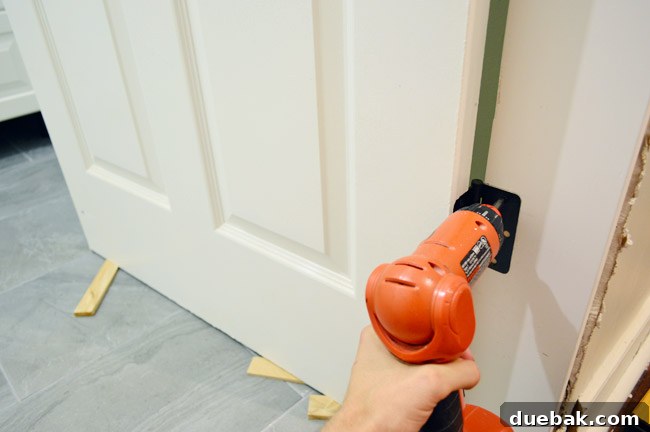
Always test the door’s swing and closure thoroughly. Look for any rubbing, sticking, or gaps. These indicate areas where further shimming or adjustment might be needed. The goal is a door that opens and closes freely, without binding, and stays in place when opened.
6. Installing the Strike Plate and Door Stop
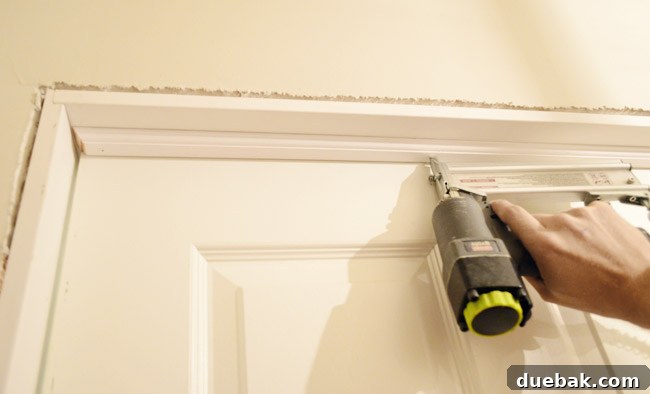
Once the door operates perfectly, install the strike plate on the jamb, ensuring it aligns precisely with the door latch. Finally, nail the door stop molding around the jamb. This molding provides a physical barrier, preventing the door from swinging too far into the frame and offering a surface for the door to seal against when closed. The satisfaction of a well-executed door installation, though not a speedy process, is truly rewarding.
Second Door Installation: Refining the Process
After successfully installing the laundry room door, we moved on to the storage room, which required a heavier, glass-paneled door. This time, since the door came as a blank slab without hinge mortises, we had to route hinge locations on both the door and the jamb. Due to the increased weight, we opted for three hinges for added support and stability.
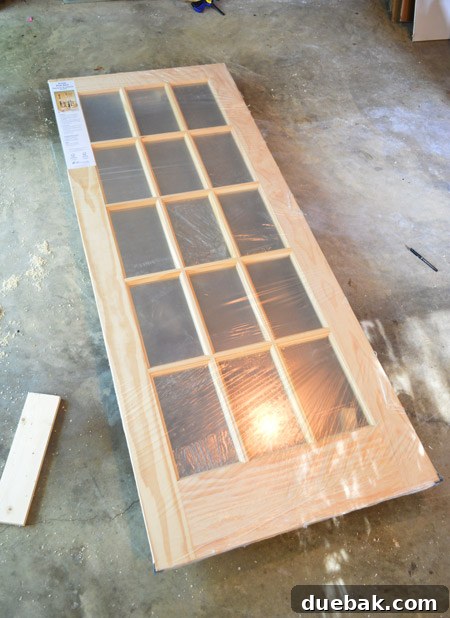
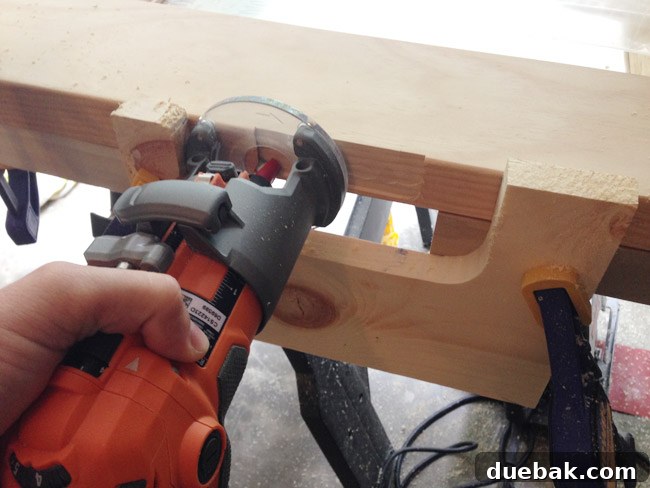
To expedite the routing process and ensure consistency, we decided to create a reusable template from our practice board. This template allowed for quick and precise hinge mortising on both the door slab and the jamb pieces. Mark the necessary cutouts for the template using a jigsaw, ensuring it perfectly matches the hinge dimensions.

Using the wooden guide clamped securely to the door, routing out the hinge mortises became a much faster and more accurate task. This template method drastically improves efficiency and consistency, especially when dealing with multiple hinges or doors.
Once the hinge mortises were cut on the door, we temporarily propped it up and loosely positioned the jamb pieces around it. This allowed us to accurately mark the corresponding hinge placements on the side jamb piece. Learning from our first door’s slight alignment issue, we proactively placed shims at the top of the jamb during this dry fit to ensure proper clearance and prevent a tight fit. With the hinge locations traced and the reliable wooden template in hand, routing the jamb pieces was a quick and efficient process, resulting in perfectly recessed hinge pockets.
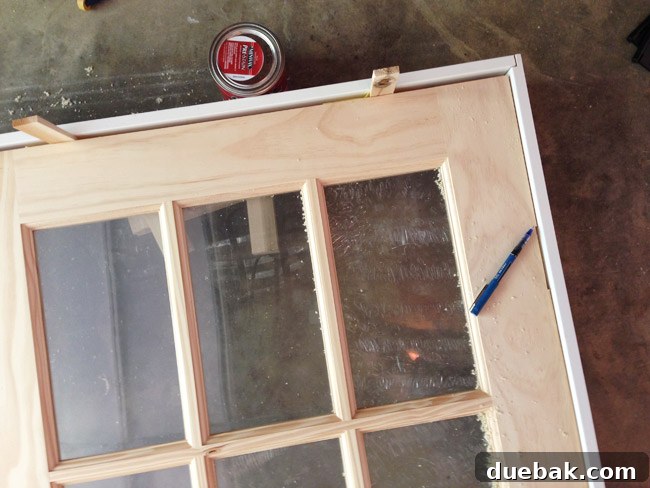
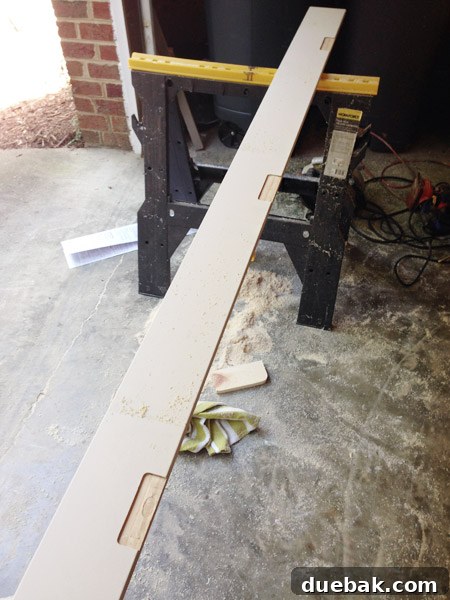
From this point, the installation mirrored the first door’s process: assembling the jamb pieces, carefully positioning them in the doorway, and then meticulously leveling, shimming, and nailing everything into place. With the experience gained from the first door and the use of the hinge template, the second door was hung much faster and worked flawlessly from the outset. This success brought a wave of relief and justified the learning curve of the initial installation.
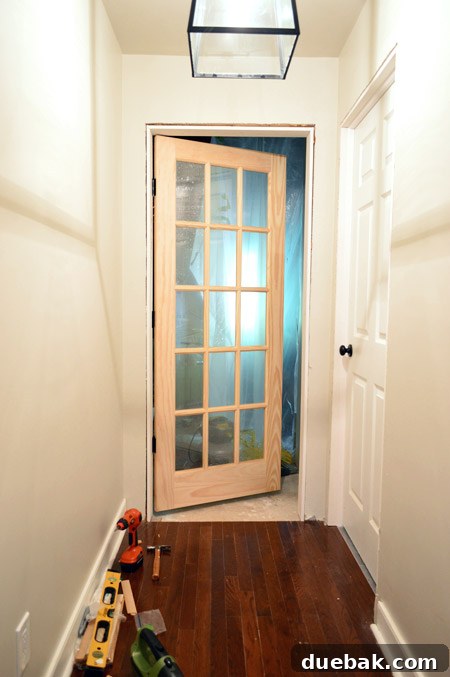
Installing the Door Knob: A Precise Approach
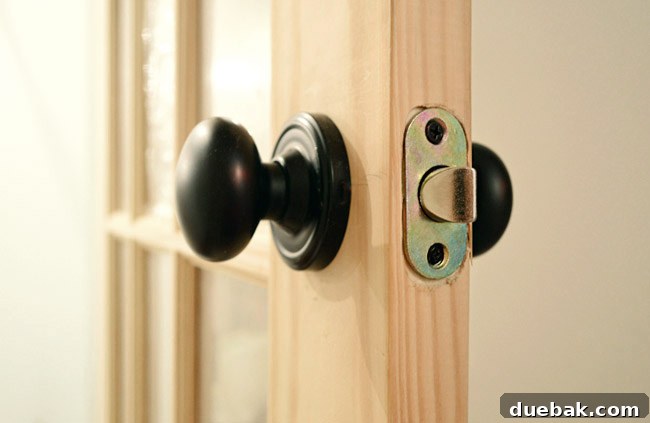
With both doors hung, the final functional element was the doorknob. For this, we utilized a specialized doorknob installation kit, which proved invaluable for drilling precise holes. While not the most robust tool, its clear instructions and included drill bits made the task significantly easier for just under $20.
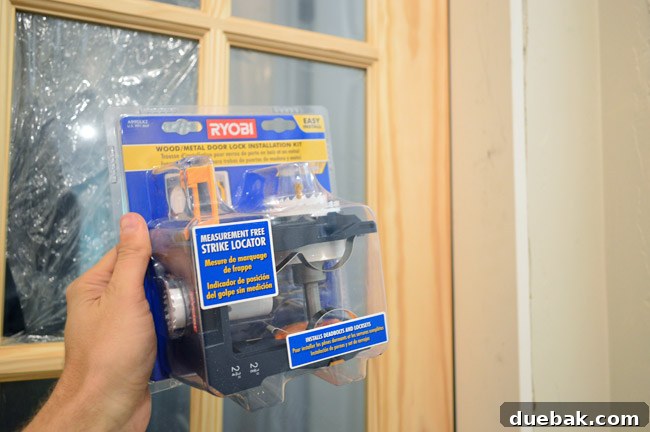
The kit essentially clamps onto the door, using the strike plate (which must be installed first) as a guide for correct positioning. This ensures the doorknob aligns perfectly with the latch mechanism in the jamb.
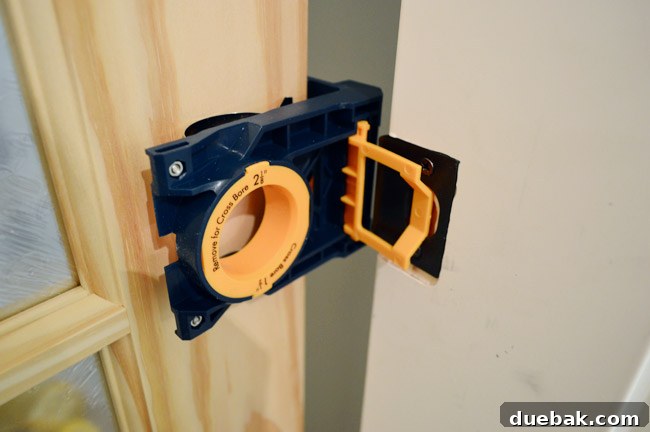
Following the kit’s instructions, use the appropriate cross bore bit to drill the main, large hole through the door where the doorknob will sit. Precision here prevents misalignment and ensures a clean installation.
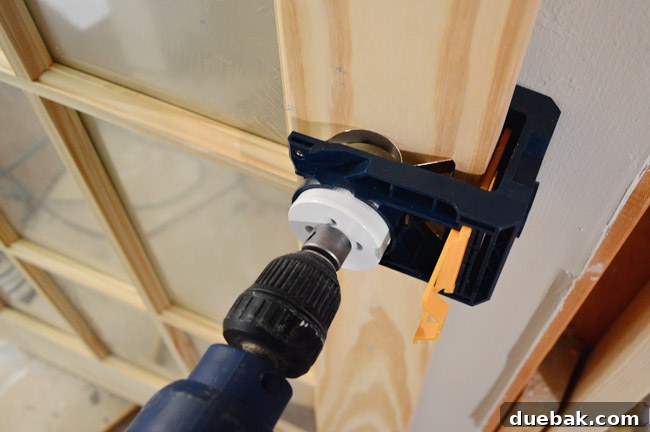
Next, use the smaller bit provided in the kit to bore the hole through the side of the door, where the latch mechanism will extend. These two interconnected holes form the foundation for the doorknob assembly.
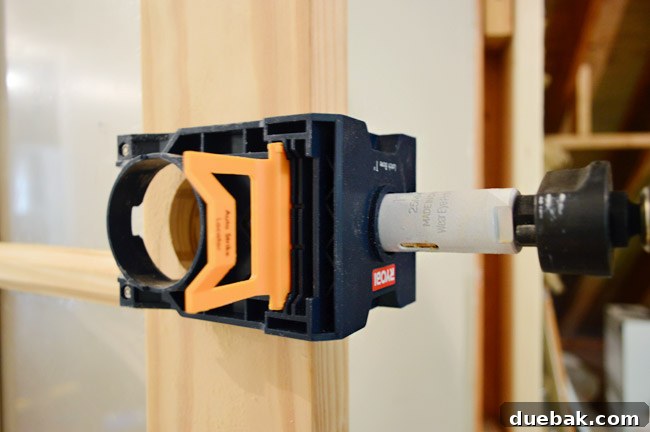
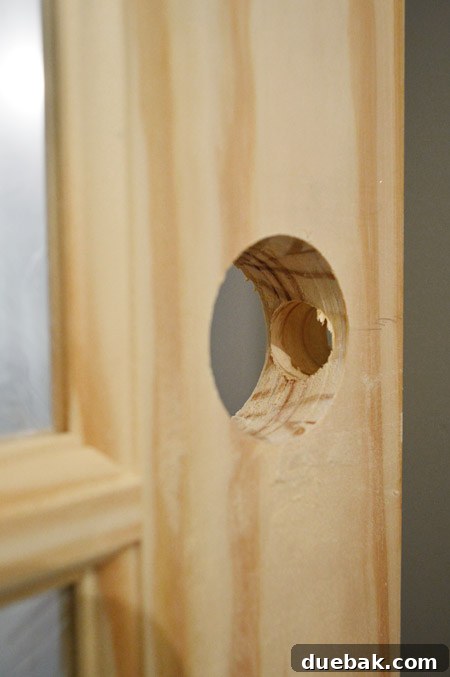
When executed correctly, these steps result in perfectly placed and sized holes, ready for the doorknob hardware. While the kit covers the main drilling, a final, often overlooked step is to route out a shallow recess on the door’s edge for the latch plate to sit flush. This can be done carefully freehand with a router, or with a chisel. Any minor imperfections can be filled with wood putty or caulk before priming and painting for a seamless finish.
The Impact of New Doors: Functionality and Aesthetics
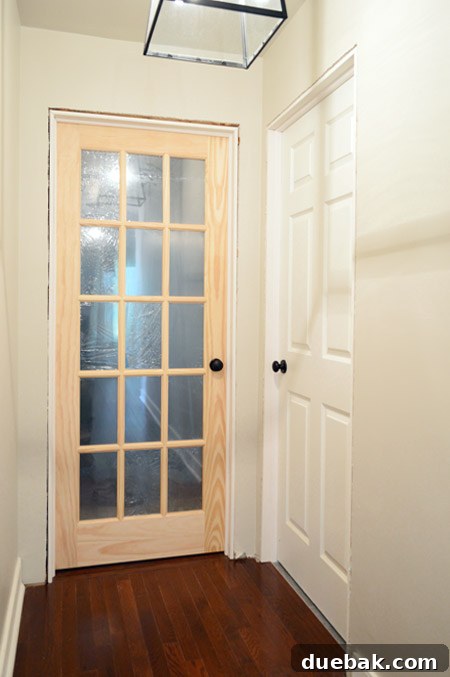
The ultimate victory of this project was having both doors securely hung, closing perfectly, and remaining open when desired. Even in their unfinished state, covered in protective film, they significantly elevated the appearance of the hallway. The change was immediately noticeable and profoundly positive.
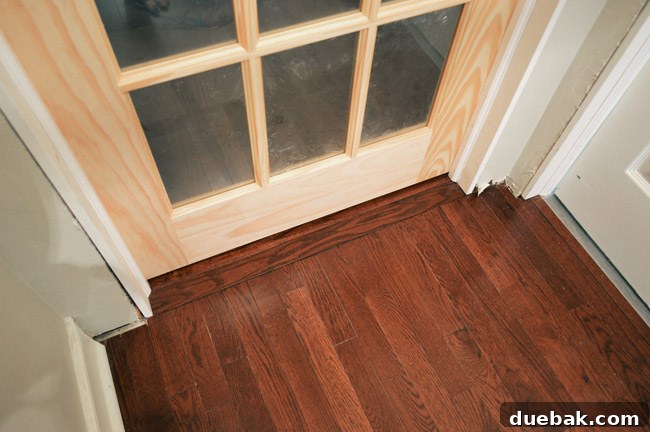
As part of the finishing touches, we added a small horizontal hardwood threshold where the wood flooring met the door, creating a clean transition. While we wished the hardwood extended just an inch further into the laundry room to completely hide the tile edge, the resulting threshold has a pleasing aesthetic. It’s comforting to realize that many existing thresholds in homes aren’t perfectly aligned, often going unnoticed until you undertake such a project yourself. This minor detail will be easily addressed during future flooring work in the storage room.
Looking ahead, these doors will be painted when we tackle the rest of the room’s molding and trim. The decorative casings will also be installed then, providing the final, polished look. We’ve already ordered matching back-plated doorknobs to ensure consistency with other rooms off this hallway, creating a harmonious design throughout the space.

Conclusion: The Reward of DIY Home Improvement
The practical benefits of these new doors were immediately apparent. Using the laundry room became a much quieter experience with the ability to close the door, significantly reducing noise transfer. More importantly, the hassle of wrestling with a plastic drop cloth every time we needed to access the storage room became a distant memory. Life genuinely improves when these small, persistent inconveniences are resolved.
Reaching this stage feels like staring down the barrel of “close-to-done” for this addition to our home. Considering that the laundry room was unfinished space just a month prior, the progress is remarkable. While the journey felt long at times, reflecting on past kitchen renovations that took over four months each – and those were already finished rooms – truly highlights the efficiency of this project. In the spirit of continuous progress, we embrace the mantra: “just keep swimming.” DIY home improvement, with its challenges and triumphs, continues to be a deeply satisfying endeavor, bringing both functionality and beauty to our living space.