
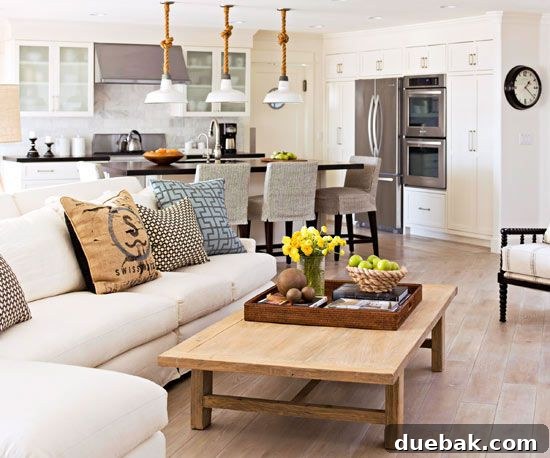
Mastering the Corner Fireplace: Design Solutions for Challenging Living Rooms
Once a hallmark of innovative design, the corner fireplace offered a clever solution for homeowners with bulky, deep televisions that dominated a room. By positioning the hearth in a corner, it created an ideal recessed spot for these large entertainment units, preventing them from monopolizing precious living room real estate. This design choice allowed for more open floor plans and seemingly less cluttered spaces during an era when flat-screen TVs were still a futuristic dream.
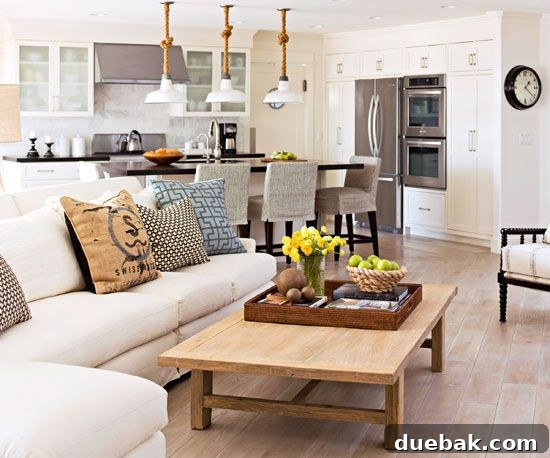
via BHG
However, what was once a pragmatic design choice has, for many modern homeowners, evolved into a significant decorating conundrum. Moving into a home blessed (or perhaps cursed) with a corner fireplace can present an immediate and overwhelming challenge. The presence of a massive window directly adjacent, or quirky half-walls that disrupt symmetrical layouts, only compounds the issue. These elements collectively restrict furniture placement, dictate traffic flow, and often leave residents feeling a profound sense of frustration, lamenting the very existence of such an architectural feature.
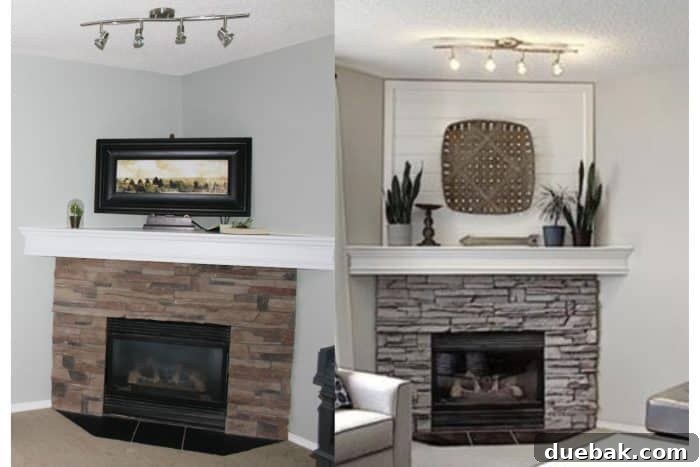
See how this corner fireplace was updated on a budget HERE.
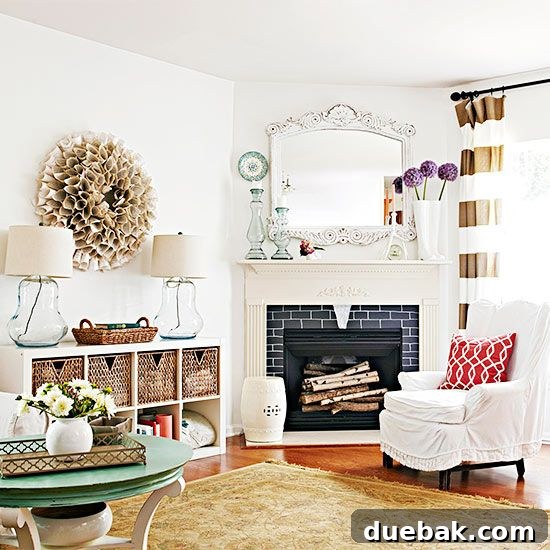
via BHG
The Corner Fireplace Conundrum: A Modern Design Dilemma
In a quest to truly embrace the challenges posed by a corner fireplace, many homeowners find themselves endlessly scouring inspiration, particularly on platforms like Pinterest, for “living rooms with corner fireplaces.” The goal isn’t just to find pretty pictures, but to unearth functional layouts that truly work. There’s a persistent urge to attach a disclaimer to every inspiring image: a gentle warning to future homeowners about the inherent frustrations and design limitations, urging them to avoid selecting such a spatial “nightmare” for their own custom builds or renovations.
So, a crucial piece of advice for anyone embarking on building a new house: strongly reconsider placing your fireplace in the corner of any room. Its aesthetic appeal rarely outweighs its functional drawbacks in contemporary design. However, if you’ve purchased an existing home where this architectural feature is already entrenched, and the prohibitive cost of renovation makes its removal an impossibility, despair not. This guide offers a collection of living room ideas that successfully navigate and even celebrate the presence of a corner fireplace, transforming perceived weaknesses into unique strengths.
Strategic Furniture Placement for Corner Fireplace Living Rooms
The primary hurdle with a corner fireplace is often its impact on furniture arrangement. Unlike a traditional wall-mounted fireplace that provides a clear focal point and backdrop, a corner unit angles into the room, creating awkward sightlines and dead zones. The key to successful design lies in thoughtful spatial planning.

Mastering the Layout: Options and Considerations
- Angle Your Seating: Instead of fighting the angle, embrace it. Angle a sofa or a pair of accent chairs towards the fireplace. This can create a cozy conversation area and makes the fireplace a natural, if angled, focal point.
- Create Distinct Zones: In larger rooms, you might be able to create a primary seating area focused away from the fireplace, and a secondary, smaller seating nook or reading corner near it. This lessens the pressure on the fireplace to be the sole star.
- Utilize Sectionals Wisely: A sectional can be a powerful tool, but careful planning is essential. A smaller sectional with one arm extending along an adjacent wall can work, allowing the other section to face the room. Avoid massive sectionals that overwhelm the space or block pathways.
- Opt for Smaller Scale Furniture: In rooms with limited space, or those plagued by challenging architectural features like windows and half-walls, swapping a large sofa for a love seat and a couple of armchairs can dramatically improve flexibility. This allows for easier reconfigurations and maintains an open feel.
- Floating Furniture: Don’t feel obligated to push all furniture against the walls. Floating a sofa in the center of the room can define the seating area and allow for better flow around the corner fireplace.
Integrating the Television: Above or Adjacent?
One of the most frequent dilemmas when decorating a living room with a corner fireplace is where to place the television. You essentially have two primary options, each with its own set of pros and cons:
Option 1: Mounting the TV Above the Fireplace
- Pros: This solution saves wall space and can create a singular, albeit vertically stacked, focal point. It can work well if the fireplace is relatively low or if your seating allows for comfortable viewing angles.
- Cons: Often, mounting a TV above a corner fireplace results in a screen that is too high for comfortable, ergonomic viewing, leading to neck strain. It also forces the TV to compete directly with the fireplace for attention, potentially diminishing both. Heat from the fireplace can also be a concern for electronics over time.
Option 2: Placing the TV on an Adjoining or Opposite Wall
- Pros: This is generally the more ergonomically sound option, allowing the TV to be placed at an optimal viewing height. It also enables you to create a separate entertainment zone, freeing the fireplace to be a decorative element without the pressure of being the main focal point. This configuration offers greater flexibility in furniture arrangement.
- Cons: It requires careful consideration of the room’s configuration to ensure good viewing angles from all seating positions. Depending on the room’s shape, it might mean the TV isn’t perfectly centered from every seat.
Ultimately, while you can make these rooms work, it often involves treating the fireplace as a secondary consideration in the overall layout. It’s much easier to decorate for holidays, events, and everyday living when you have a very clear, undisputed focal point established early in your design process.
Holly has a corner fireplace too, and shows how it can be embraced!

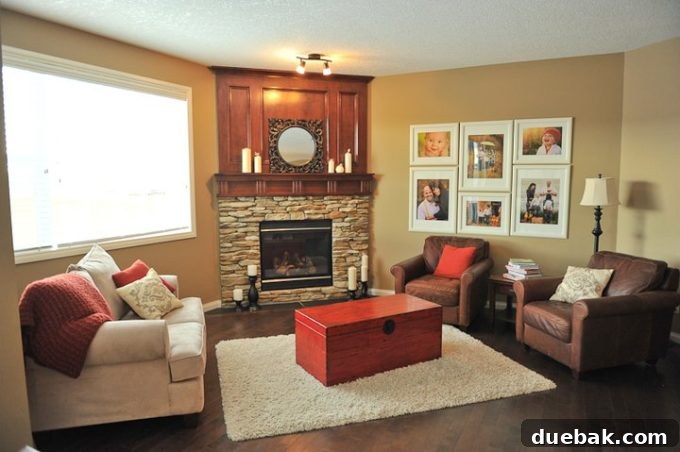
Discovering ingenious furniture layouts that cleverly integrate a corner fireplace can be incredibly inspiring. For instance, the arrangement shown in Emily Clark’s home is truly admirable. It achieves a balance and flow that many aspire to replicate. While it requires a certain room dimension to pull off perfectly, the principles of creating distinct conversational areas and optimizing pathways are universally applicable. This particular layout, for example, successfully creates multiple seating options without overwhelming the fireplace or making it feel like an obstruction. It shows how strategic placement of a sofa, armchairs, and even a coffee table can transform a challenging space into a harmonious retreat.
via Emily ClarkInspiration Gallery: Real-Life Solutions for Corner Fireplaces
Beyond the Basic Layout: Enhancing Your Corner Fireplace Room
While furniture placement is critical, several other design strategies can help optimize a room with a corner fireplace:
- Embrace Built-ins: Consider adding custom built-in shelving or cabinetry on the adjacent walls to create a more cohesive look around the fireplace. This can provide valuable storage and display space, turning awkward corners into functional design features.
- Symmetry where Possible: Even with an angled fireplace, you can strive for visual balance. For example, place two identical armchairs or side tables on either side of the fireplace, even if one is slightly further out than the other.
- Rugs to Define Zones: An area rug is an excellent tool for defining seating areas, especially when furniture isn’t directly against walls. It can ground your main living space and draw attention away from the fireplace’s unusual position.
- Lighting as an Ally: Use a combination of ambient, task, and accent lighting to highlight desired areas and diminish the impact of the fireplace if it’s not your preferred focal point. Floor lamps, table lamps, and even recessed lighting can direct attention where you want it.
- Artwork and Mirrors: Strategically placed large artwork or a statement mirror on an opposing or adjacent wall can serve as an alternative focal point, drawing the eye away from the corner.
- DIY Updates: As seen in some examples, a simple DIY update like whitewashing stone or adding shiplap can modernize an outdated corner fireplace, making it feel more integrated and less anachronistic.
A Final Word: The Case for Banning Corner Fireplaces
Having explored numerous ways to coexist with and even enhance the corner fireplace, it’s important to conclude with a firm recommendation: if you are designing a new home or undertaking a major renovation, avoid the corner fireplace. While we’ve seen examples of how to make them work, they undeniably introduce a layer of complexity to interior design that most other fireplace configurations do not. They often require compromises in furniture scale, layout flexibility, and overall room flow. The struggle to create a truly balanced and functional living space is real for those who inherited this architectural choice. The following pictures often exemplify the common and somewhat less-than-ideal outcomes when homeowners grapple with this challenge. They work, but perhaps not as elegantly or efficiently as a room designed around a more traditional focal point. This is precisely why a strong argument can be made to permanently banish corner fireplaces from future home designs, opting instead for solutions that promote effortless beauty and functionality.