
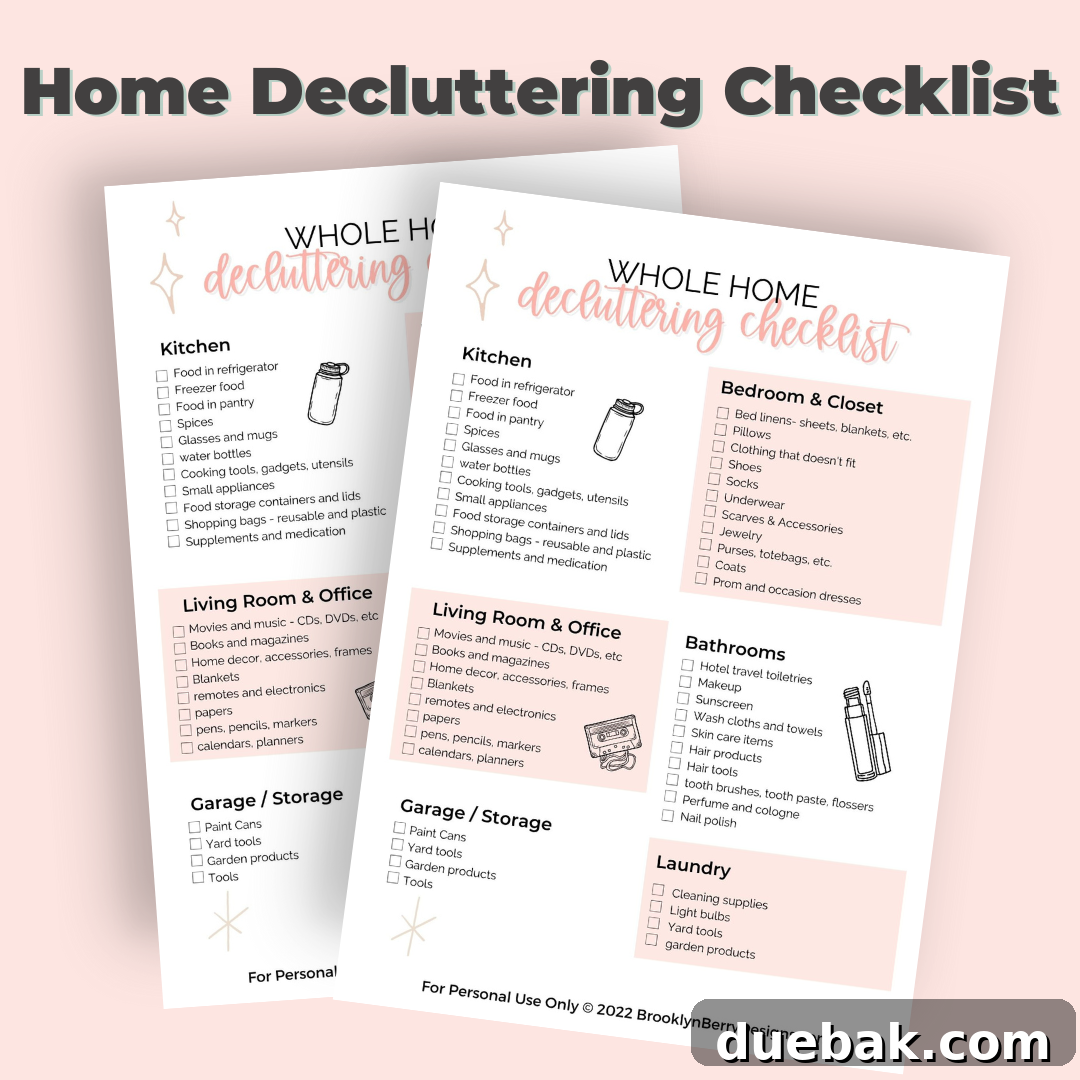
Are you dreaming of a calmer, more organized home but feel lost on where to begin? Do piles of clutter leave you feeling overwhelmed and stressed? You’re not alone! This comprehensive guide is designed to empower you with the essential knowledge, practical strategies, and a powerful home decluttering checklist to transform your living space into a sanctuary of peace and productivity. We’ll cover everything from the psychological benefits of a tidy environment to actionable tips for conquering clutter in every room, ensuring your journey to a more serene home is both effective and enjoyable.
As a busy mom navigating the vibrant chaos of four boys and ADHD, I understand the constant battle against clutter. My home can transform from tidy to ‘hot mess’ in the blink of an eye, which is why I’ve developed simple yet effective systems to maintain order. I’m not a professional organizer, but rather someone who has found practical solutions to keep my family life running smoothly. This article shares the very tips that have helped me not just get organized, but *stay* organized, offering a lifeline to anyone feeling swamped by their surroundings.
The feeling of being surrounded by too much stuff, or having an endless to-do list, can be incredibly overwhelming. For me, the simple act of writing things down brings immense comfort, assuring me I won’t forget vital tasks. Even more powerful is the satisfaction of checking off just one item, achieving one small win. This immediate progress calms anxiety and builds momentum, showing that even small steps can lead to significant change in creating a more harmonious living space.
The Profound Link Between Decluttering and Mental Health
The impact of decluttering extends far beyond aesthetics; it profoundly influences our mood, mental health, and overall well-being. A clean, well-organized, and brightly lit space doesn’t just look good – it feels good. There’s a direct correlation between less stuff and less stress. When you have fewer possessions, you naturally spend less time constantly picking things up, searching for misplaced items, or finding storage solutions for things you rarely use. This reduction in daily friction frees up mental energy, leading to a calmer, more focused mind.
Numerous studies highlight the strong connection between a cluttered environment and feelings of stress, anxiety, and even depression. A chaotic physical space often mirrors or contributes to mental chaos. Conversely, a tidy home can promote feelings of peace, control, and clarity. It allows your mind to relax and recharge, rather than being constantly bombarded by visual noise. Think of your home as a backdrop to your life; when it’s serene, it empowers you to be more present and productive.
However, it’s crucial to approach decluttering with a positive mindset. Avoid “angry cleaning,” where you declutter out of frustration or anger. This can create negative associations, making a clean home feel like a consequence of conflict rather than a reward for mindful effort. Instead, let a clean and organized home be a testament to your hard work, a tranquil reward that enhances your daily life and boosts your mental well-being. Embrace the process as an act of self-care, creating a peaceful haven that makes your heart sing every time you walk through the door.
Understanding the Difference: Decluttering vs. Organizing
Many people use “decluttering” and “organizing” interchangeably, but they are distinct processes that should occur in a specific order for lasting results. Understanding this fundamental difference is crucial for successful home transformation. Decluttering is the act of removing excess items, making decisions about what to keep, donate, recycle, or discard. It’s about purging and reducing the sheer volume of possessions in your home. It’s about creating space.
Organizing, on the other hand, is the process of arranging the items you’ve decided to keep in a logical, accessible, and aesthetically pleasing manner. It involves creating systems for storage, designating specific “homes” for every item, and optimizing space. As the experts at Go Clean Co wisely state, “You can’t clean your baseboards if you can’t find them!” The same logic applies to organizing. You cannot effectively organize a space that is overflowing with unnecessary items. Attempting to organize before decluttering is like trying to arrange a pile of sand – it will inevitably shift back into disarray. First, edit the items you have, making tough but necessary decisions about their value and utility. Only once you’ve significantly reduced your belongings can you then make the space look pretty and functional, creating a system you’ll actually want to maintain.
Essential Strategies for Successful Decluttering
Start Small & Build Momentum
The thought of decluttering an entire house can be paralyzing. The secret to overcoming this inertia is to start incredibly small. Don’t aim to clear an entire room in a day, let alone your whole home. Instead, focus on achieving “quick wins” that build confidence and motivation. Begin with a single drawer, a small section of a bookshelf, or even just your bedside table. These small victories prove to yourself that you *can* make progress, sparking the desire to tackle more.
Embrace the philosophy of “micro-decluttering.” Dedicate just 10-15 minutes each day to one small area. Over time, these consistent, little changes evolve into significant differences, transforming your home into a calmer, clutter-free haven. When you approach any space, keep a trash bag for immediate discards and a laundry basket or designated bin for items that belong elsewhere. For items with strong sentimental value, set them aside for later review in a specific “sentimental box” to avoid getting bogged down in emotional decisions during the initial purge. This systematic approach will soon become a positive daily habit that truly sparks joy.
Embrace the “Keep, Donate, Recycle, Trash” System
As you go through your belongings, categorize each item into one of four distinct groups: Keep, Donate, Recycle, or Trash. This systematic approach ensures that every item has a clear destination, preventing undecided piles from accumulating. When it comes to items you’re parting with, consider their journey beyond your home. We have a collective responsibility to minimize waste and contribute positively to our communities.
If an item is still functional and has life left in it, consider donating it to a charity, thrift store, or local shelter. What might be excess to you could be a blessing to another family in need. Designate a “donation bin” in your home where you can easily toss items as you declutter. The trick here is immediate removal. Many well-intentioned donations have lingered in car trunks for weeks (trust me, I’ve been there!). Enlist the help of a family member or friend to drop off donations if it’s difficult for you, or set a firm deadline for yourself to make the trip.
Beyond traditional donations, explore local “Buy Nothing” groups or online giveaway platforms in your community. These platforms connect you with neighbors who are actively looking for specific items, ensuring your pre-loved possessions find a grateful new home. It’s incredibly rewarding to know that an item you no longer need will be used and appreciated by someone nearby, rather than ending up in a landfill. For items that are broken, stained, or truly unusable, assess if they can be recycled according to local guidelines. Only after exhausting these options should an item be destined for the trash.

Thinking about the entire lifecycle of your belongings can make the decluttering process more meaningful and less guilt-inducing. It’s about making conscious choices that benefit both your home and the wider world.
Implement Smart Storage and Labeling
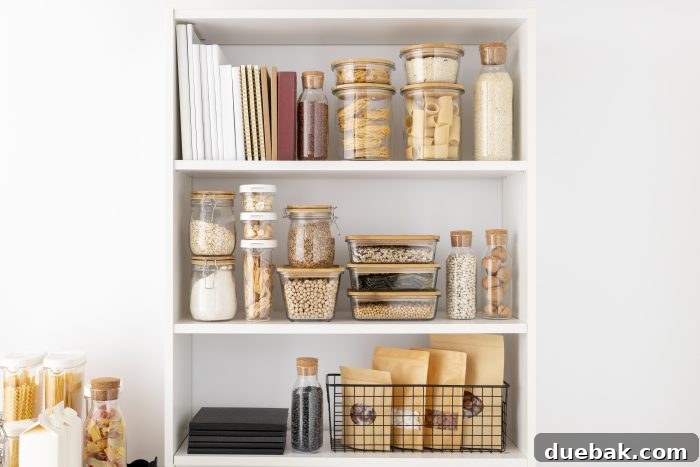
Once you’ve decluttered and decided what to keep, effective storage and labeling become your best allies in maintaining an organized home. The principle is simple: if every item has a designated “home,” it’s far more likely to be put back in its proper place – even by children or a busy partner. This reduces daily friction and prevents clutter from creeping back in.
Invest in functional storage solutions like clear bins, drawer dividers, shelf risers, and attractive baskets. These tools help to contain items, maximize vertical space, and keep categories distinct. But the real magic happens with labels! A fun label maker (like this affordable one) can transform chaotic cupboards into clearly defined zones. You can also get creative by making custom labels with your Cricut machine, adding a personal touch while enhancing functionality. Labels should be clear, concise, and visible, ensuring everyone in the household knows where things belong. This simple step is a game-changer for long-term organization and a truly tidy space.
Gamify Your Decluttering Journey
Decluttering doesn’t have to be a chore; turning it into a game can inject fun and motivation into the process. Short bursts of focused activity can be surprisingly productive. Have 10 minutes before you need to leave the house? Set a timer and challenge yourself to declutter one specific area, like a counter or a small shelf. Not excited about tackling the dishes? Set a 15-minute timer and see how many you can get done before it rings. You’ll be amazed at how much you can accomplish when you concentrate on a single task for a very short, defined period.
Beyond individual challenges, consider involving the whole family. Make it a “Decluttering Bingo” game or a “5-Minute Tidy-Up Race” before dinner. Reward progress with non-material incentives. This playful approach can make daunting tasks feel lighter and foster a shared responsibility for maintaining a tidy home. The satisfaction of beating the clock or achieving a mini-goal can be a powerful motivator.
Implement the “One In, One Out” Rule
Once you’ve achieved a decluttered space, the challenge becomes maintaining it. Clutter has an insidious way of creeping back into your home. A highly effective preventative measure is to adopt the “one in, one out” rule. This simple principle states that for every new item that enters your home, an existing, similar item must leave.
For example, if you buy a new pair of shoes, you must donate or discard an old pair. Get a new book? Time to part with one you’ve already read or no longer want. Acquire a new kitchen gadget? Evaluate if you have a duplicate or an item you rarely use that can be removed. This rule forces you to make conscious purchasing decisions and continuously evaluate your possessions, preventing the accumulation of excess. It’s a powerful tool for maintaining minimalism and ensuring your home remains a tidy, stress-free zone.
Set Clear Deadlines and Celebrate Milestones
Without a deadline, tasks tend to expand indefinitely. Giving yourself a specific completion date for your decluttering project can provide the necessary motivation and focus. A fantastic strategy is to plan an event at your house – perhaps a dinner party, a family gathering, or even just inviting a friend over. This creates a tangible deadline that encourages you to get things done. The anticipation of guests provides a powerful incentive to ensure your home is guest-ready and clutter-free.
Equally important is to celebrate your progress along the way. Decluttering can be a long journey, so acknowledge and reward yourself for reaching milestones. Finished an entire room? Treat yourself to a relaxing bath or your favorite coffee. Cleared out a challenging closet? Enjoy a movie night. These small celebrations reinforce positive habits and help you stay motivated for the next stage of your decluttering adventure, making the entire process more enjoyable and sustainable.
Combatting Sentimental Clutter
One of the biggest hurdles in decluttering is often sentimental items. These aren’t just “stuff”; they represent memories, emotions, and personal history. It’s easy to feel guilty about letting go of items tied to loved ones or significant life events. However, holding onto everything can create immense clutter and prevent you from fully enjoying your living space.
Develop strategies for dealing with sentimental items. Instead of keeping every physical token, consider digitalizing memories – scan old photos, letters, and children’s artwork. Create a “memory box” for each family member, limiting items to what fits within that designated space. This forces thoughtful curation. Ask yourself: “Does this item truly enhance my life now, or does the memory exist independently of the object?” It’s okay to release items while holding onto the precious memories they represent. Sometimes, photographing an item before donating it can provide closure without keeping the physical object. Remember, your memories are not stored in objects, but in your heart and mind.
Your Room-by-Room Decluttering Checklist
Conquer the Kitchen Clutter
The kitchen is often hailed as the heart of the home, but it can quickly become a hotspot for clutter. It’s an excellent place to begin your decluttering journey because, unlike other areas, it typically contains fewer deeply sentimental items, allowing for quicker, more objective decisions. From overflowing pantries to chaotic junk drawers, the kitchen offers abundant opportunities for quick wins. Here’s a targeted list of kitchen items to tackle:
- Expired Food: Go through your pantry, refrigerator, and freezer. Discard anything past its expiration date or that you know you won’t eat.
- Plastic Utensils: Keep only a small handful for emergencies or takeout. Most households don’t need dozens of plastic forks.
- Food Containers without Lids (and vice versa): Match all bottoms with tops. Discard any orphans.
- Water Bottles with Broken or Missing Lids: If it’s not fully functional, it’s clutter. Limit your collection to what you regularly use.
- Recipe Books You Never Use: Keep only your favorites and those you actively cook from. Many recipes are now easily found online.
- Old Pots and Pans: Discard or donate scratched non-stick pans, warped bakeware, or any cookware that is no longer safe or efficient to use.
- Small Appliances That Don’t Get Used: That bread maker or specialized juicer gathering dust? If you haven’t used it in a year, it’s time to let it go.
- Grungy or Old Kitchen Towels: Replace worn-out, stained, or torn towels. Keep a few for dirty tasks, but upgrade your main collection.
- Spices: Check expiration dates. Spices lose potency over time. Discard anything out of date or that you haven’t used in a long while.
- Duplicate Kitchen Tools: How many spatulas, whisks, or can openers do you truly need? Keep the best ones and let go of the rest.
- Mugs: Keep only the number of mugs that comfortably fit your storage space, plus a few extras for guests. Discard chipped or unused ones.
- Cookie Cutters You Don’t Use: If you only bake holiday cookies once a year, you likely don’t need a drawer full of cutters for every conceivable shape.
- Extra Pans You Don’t Use: Specialty pans (e.g., Bundt, springform) that are rarely used can take up valuable space. Assess their true utility.
Looking for more home organizing and cleaning tips? Check out this Laundry Symbols Guide – it’s a free printable to simplify laundry day!
Streamline Your Bathroom, Medicine Cabinet, and Linen Closet
The bathroom, often a small space, can quickly become overwhelmed with personal care products, old medications, and linens. Taking the time to declutter these areas will not only make them more functional but also feel more luxurious. A clean, uncluttered bathroom sets a calming tone for your morning and evening routines.
- Makeup That Has Expired: Makeup, especially mascara and liquid products, has a shelf life. Check for expiry dates or signs of spoilage.
- Empty or Nearly Empty Shampoo Bottles: Finish products before opening new ones. Consolidate and recycle empties promptly.
- Broken or Unused Hair Clips, Bows, Accessories: Discard anything damaged or items you no longer wear.
- Dried Up Nail Polish: If it’s clumpy and unusable, it’s time for it to go.
- Unused Perfume/Cologne Samples: Use them or discard them. Full bottles of unused fragrances can be gifted.
- Makeup You Have Never Used: If it’s been sitting untouched for months, it’s likely not going to be used. Donate (if new) or discard.
- Travel Size Shampoo and Lotion: Consolidate samples into one bag. Use them on your next trip, or if they’ve been there for years, discard them.
- Hair Tools You Don’t Use: Old curling irons, crimpers, or specialty tools that rarely see the light of day are prime candidates for decluttering.
- Lip Balm You Don’t Use: Gather all lip balms. Discard old, sticky, or unliked ones. Keep only a few favorites.
- Old Toothbrushes: Replace toothbrushes every 3-4 months or after illness. Don’t keep extras “just in case.”
- Expired Drugs or Vitamins: Properly dispose of expired medications. Check with your local pharmacy for safe disposal guidelines.
- Excessive Towels: Keep enough for daily use and a few for guests. Donate old or stained towels to animal shelters.
- Unused Toiletries: Those hotel soaps and lotions that pile up? Use them or donate new, unopened items.
Master Your Bedrooms and Closets
Bedrooms should be havens of rest and relaxation, but they often become dumping grounds for clothes, papers, and miscellaneous items. Tackling this space, especially the closet, can be incredibly rewarding, leading to better sleep and a more peaceful start to your day.
- Dried Up Pens, Markers, Glue: Test all writing instruments. Discard anything that doesn’t work.
- Old Magazines: If you’ve read them and don’t plan to reference them, recycle them.
- Clothes That Don’t Fit: Be honest with yourself. If it doesn’t fit or flatter you now, let it go. Keeping “skinny clothes” can be demotivating.
- Jewelry You Don’t Wear: Repair broken pieces, sell valuable items, or donate/discard pieces you haven’t worn in years.
- Shoes You Haven’t Worn in a Year: If they’re uncomfortable, out of style, or simply forgotten, it’s time to part ways.
- Clothing You Haven’t Worn in Two Years: A classic decluttering rule. If it hasn’t been worn in two full seasons, it’s likely not going to be.
- Extra Plastic Hangers: Invest in matching, slimline hangers for a cohesive closet. Recycle or donate excess plastic ones.
- Socks with Holes or Without Mates: Pairing socks can be tedious, but discard the lone soldiers and anything with significant wear.
- Grungy Underwear: It’s okay to replace worn-out intimate apparel.
- Ties: Evaluate your collection. Keep those that are in style and regularly worn.
- Belts: Similar to ties, keep only functional and stylish belts.
- Purses/Handbags: Limit your collection to bags you actively use and rotate.
- Blankets: Keep a functional number of blankets. Donate or repurpose old, worn ones.
- Pillows: Replace old or uncomfortable pillows. Keep only the ones you genuinely use. Decorative pillows should be purposeful.
- Books You Won’t Reread: Donate books you’ve finished and don’t plan to revisit.
- Unnecessary Papers: Go through drawers and surfaces, shredding or filing important documents and recycling the rest.
- Old Electronics & Cables: Chargers for devices you no longer own, tangled unused cables – these are prime clutter. Recycle responsibly.
Your Ultimate Decluttering Action Plan: A Free Printable Checklist
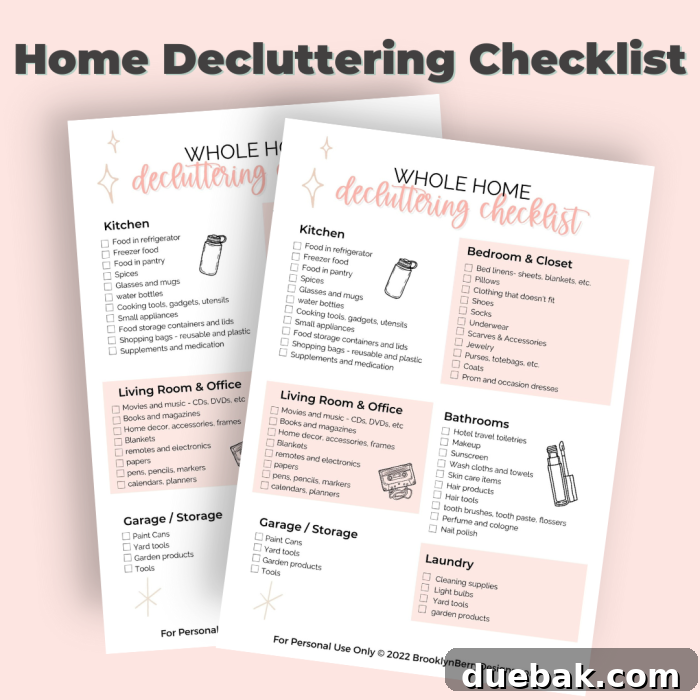
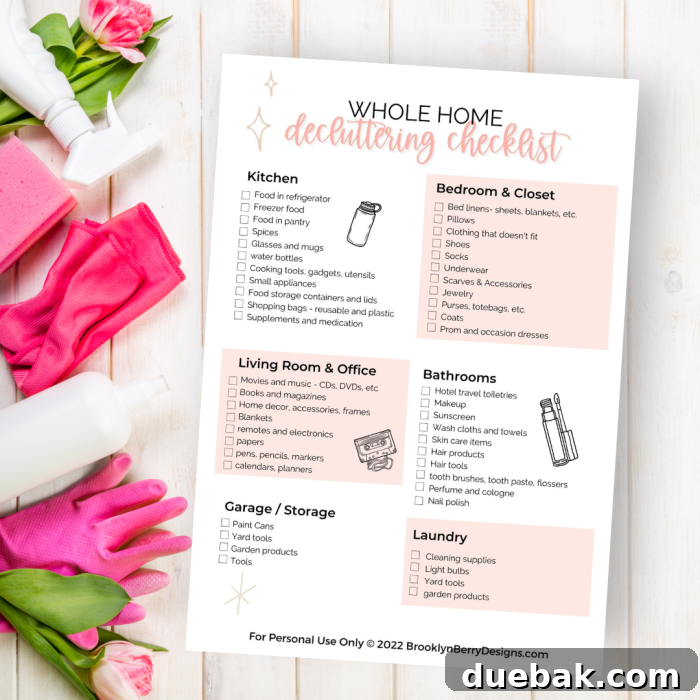
Embarking on a decluttering journey is significantly more manageable and motivating when you have a clear plan to follow. That’s why I’m excited to share a free printable checklist of items for you to systematically work through. This isn’t a one-size-fits-all solution, but a flexible guide. For each area or category, you get to decide for yourself what items need to go. The “right” amount of each item – whether it’s mugs, towels, or shoes – will be uniquely different for every household. Naturally, anything with missing parts, broken components, or significant wear can be immediately discarded. Beyond that, empower yourself to make the decisions that best serve your lifestyle and create the tranquil home you desire.
To maximize the effectiveness of your decluttering checklist, start by printing it out. Attaching it to a clipboard can make it easier to carry around the house as you tackle each zone. Next, go through the list and check off any items that you’ve already decluttered, or that simply don’t apply to your home. This gives you a clear visual of what remains and the progress you’ve already made, setting you up for success!
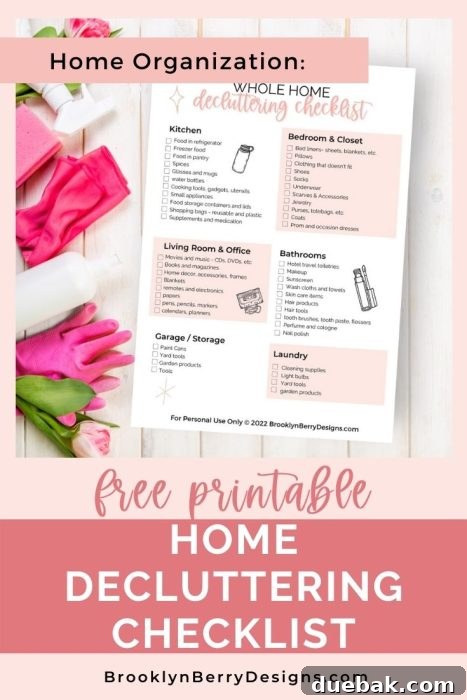
DOWNLOAD YOUR FREE DECLUTTERING CHECKLIST HERE:
This file is Printable File P30 in our Freebie Library! If you already have the password, jump on over to the Freebie Library to download the file now!
All free downloads from Brooklyn Berry Designs are for PERSONAL and CLASSROOM USE ONLY. You MAY NOT share, distribute, sell, or use these files for commercial purposes, including print-on-demand. Commercial licenses for SVG and PNG crafting files may be purchased separately.
Embarking on a decluttering journey is an investment in your well-being, paving the way for a more peaceful, functional, and joyful home. By adopting these strategies and utilizing your personalized checklist, you’re not just organizing physical items; you’re creating space for clarity, calm, and renewed energy in your life. Embrace the process, celebrate every small victory, and enjoy the transformative power of a truly clutter-free living space.