

Navigating Dated Homes: Your Essential Guide to House Hunting Potential
Q: I have a house-hunting question for you. What do you look for? What do you look past? Help! My main complaint of all the older homes that we’re looking at in our price range is that they all feel dated, but that seems to be what you guys look for. How do you know which dated houses are worth buying and which ones are lost causes? I keep worrying we’ll end up in a money pit! – Aviva (not the one from Housewives of NY).
A: Aviva, it’s great you clarified you’re not the NYC Aviva! And believe us, your question is incredibly common. Many aspiring homeowners fall in love with the idea of an older home but get intimidated by its current state. The key to successful house hunting, especially with older properties, is learning to differentiate between superficial flaws and fundamental issues. We’ve certainly learned a lot through our own experiences, and we’re here to share our strategy for spotting a diamond in the rough versus a potential money pit.
When approaching dated homes, our philosophy boils down to a simple principle: focus on what you can’t easily change and be fearless about what you can. Many features that make a house feel “dated” are often the easiest and most affordable to update. Don’t let cosmetic imperfections overshadow a home’s true potential.
What to Confidently Look Past: The Easy Fixes & Cosmetic Updates
One of the biggest mistakes house hunters make is letting minor aesthetic details deter them from a great property. The following items are almost always quick, relatively inexpensive fixes that can dramatically transform a space. When you encounter these, train yourself to see past their current state and envision the ‘after’ picture.
- Bad Paint on Walls or Trim: This is arguably the easiest and most impactful change you can make. A fresh coat of modern, neutral paint can instantly brighten a room, make it feel larger, and erase decades of outdated color choices. Don’t let a lime green living room or a mustard yellow kitchen scare you away; a gallon of paint and a weekend can work wonders.
- Nasty Wallpaper (Borders or Entire Walls): While removing wallpaper can be a bit more labor-intensive than painting, it’s a completely manageable DIY project. Steaming, scraping, and a little patience will reveal a blank canvas ready for your personal touch. Think of it as uncovering a hidden treasure rather than tackling a chore.
- Dated or Not-Your-Style Furniture: Furniture is almost never included in a home sale (unless specifically negotiated), so it’s irrelevant to the house itself. Mentally “remove” all the current owner’s furnishings when you walk through. Focus on the bones of the room, not their decor choices.
- Ugly Curtains or Window Treatments: Just like furniture, curtains are easily replaced. Old, heavy drapes can block natural light and make a room feel dark and small. Imagine the space with new, light-filtering blinds or stylish modern curtains that complement your aesthetic.
- Dark Brick or Paneling: While natural wood paneling or exposed brick can be beautiful, sometimes they’re simply too dark or worn for modern tastes. The good news is that both can often be painted! White-washed brick or painted paneling can completely revitalize a room, transforming a gloomy space into something bright and contemporary.
- Not-Your-Cup-of-Tea Light Fixtures: Swapping out light fixtures is a relatively simple task for a DIYer (with proper safety precautions) or an affordable job for an electrician. Dated chandeliers or clunky ceiling fans can instantly age a room; modern fixtures can bring a fresh, current vibe.
- Green, Blue, or Pink Toilets/Sinks: These colorful bathroom fixtures are a hallmark of certain eras. While replacing them requires plumbing work, it’s a common and standard bathroom renovation. Don’t dismiss a home with great layout and potential just because of a pastel toilet; focus on the bathroom’s size and functionality instead.
To illustrate just how off-putting these dated features can be – and how much potential lies beneath them – here are a few “before” photos of our first house. These demonstrate exactly the kind of cosmetic hurdles many buyers face, which can all be remedied with a little elbow grease and vision if you’re a willing DIYer:

The dining room, overwhelmed by busy wallpaper and bold blue trim.

A bedroom featuring an outdated wallpaper border and heavy cream trim, making it feel confined.

A den characterized by dark wood beams, exposed brick, and extensive wood paneling, contributing to a dim and heavy atmosphere.

A bathroom showcasing a distinctly dated green toilet, typical of a certain era’s design.
What to Always Pay Attention To: Unchangeable Foundations & Features
While cosmetic flaws are easy to remedy, there are fundamental aspects of a home that are either impossible or prohibitively expensive to alter. These are the “must-haves” you should prioritize when evaluating a property. These elements dictate the long-term value, functionality, and livability of your home.
- The Neighborhood: This is paramount. You can renovate every inch of a house, but you can never move it. Consider factors like school districts, proximity to work, parks, amenities, and the general vibe of the community. A great house in a bad neighborhood is still a bad investment.
- The Overall Layout & Floor Plan: While minor wall removals or additions are possible, completely repositioning rooms or altering the fundamental flow of a house gets incredibly pricey and complex. Look for a layout that generally suits your lifestyle, even if it needs minor tweaks. Consider natural light paths and how rooms connect.
- The Size of Rooms and Number of Bathrooms: These are significant structural considerations. If bedrooms are too small for your needs, or if a single bathroom won’t suffice for your family, adding space or an additional bathroom is a major undertaking. It requires extending the footprint of the house or reconfiguring existing space, which can be costly and disruptive. Ensure the existing dimensions and count align with your baseline requirements.
- Ceiling Height and Window Placement: These elements dictate the light, airiness, and overall feel of a space. Low ceilings can make a home feel cramped, and awkwardly placed or too few windows can limit natural light. Changing these involves significant structural work and expense, making them crucial factors to consider upfront.
- Interesting Architecture and Original Features: Look for “good bones” and unique character that cannot be replicated. This could include a beautiful centered fireplace, exposed ceiling beams, built-in shelving, elegant crown molding, or original hardwood floors. These are elements that add charm, value, and a sense of history that are often expensive to add to a new build.
- The Terrain of Your Lot: The land your house sits on is another unchangeable factor. A steep drop-off, poor drainage, or a tiny, unusable backyard can be difficult and costly to remedy. Conversely, a flat, private, or well-treed lot offers immense potential for outdoor living and adds significant property value.
Here are some photos from our first house that exemplify these crucial “diamonds in the rough” we sought out. The very same den that initially appeared dated with dark brick and paneling also boasted a beautiful, cozy, centered fireplace and architectural beams overhead. These were the structural assets we recognized:

The den, despite its dated facade, reveals a charming centered fireplace and architectural beams as underlying strengths.
Once we painted all the dark wood and brick, these inherent architectural features truly shone, completely transforming the feel and brightness of the room:
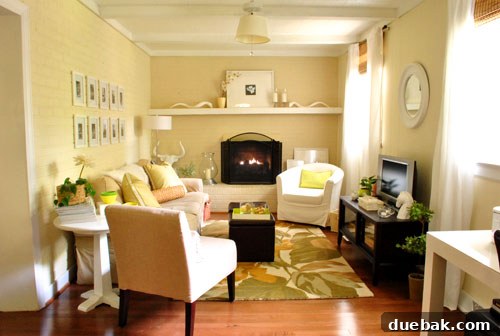
The den after renovation, featuring painted brick walls and paneling, along with updated white beams and contemporary furniture, creating a brighter, more inviting space.
Another significant selling feature for us was the lot itself. It was nearly an acre – a characteristic you absolutely cannot change once you buy a house – featuring a wonderfully flat and wooded backyard, offering both privacy and immense potential:

The backyard before renovation, showing a boxwood path, a rustic wood arch, and a small shed, hinting at overgrown but promising outdoor space.
While the existing landscaping was certainly a bit rough and required significant upkeep, we knew the private, level, and wooded nature of the lot held incredible potential. Through clever methods like posting “you-dig-it-up-and-it’s-yours” ads on platforms like Craigslist – which even helped us clear out all that pea gravel – we were able to transform it into an easy-to-maintain yard that brought us (and especially our dog, Burger) endless joy:

The backyard after extensive landscaping, featuring a sprawling grassy field and a small, neatly kept shed, creating an open and enjoyable outdoor area.
Developing Your Vision: Seeing Past the Present to the Future
For those who struggle to see beyond outdated curtains, crusty wallpaper, or a questionable color scheme, developing a clear vision is crucial. Start by gathering inspiration! Magazines, Pinterest boards, and online galleries are excellent resources. Save images of rooms you love, paying close attention to layouts, light, and overall ambiance. Then, when viewing a potential home, try to visualize how its core structure could be adapted to achieve those looks.
For example, if you see an inspiring living room online, but the house you’re viewing has a completely different aesthetic, look closer. Is the room the same size and general shape? Does it have similar window placement? If so, you could totally repaint, replace curtains, and arrange furniture to capture that desired look in your new space. This mental exercise helps detach you from the current dated appearance and connect you with the home’s underlying potential.
Beyond vision boards, consider making concrete lists: “must-haves,” “nice-to-haves,” and “deal-breakers.” This disciplined approach ensures you don’t get swayed by a “nice-to-have” feature and compromise on a fundamental “must-have.” A property might have a gorgeous garden (nice-to-have), but if it lacks the number of bedrooms you need (must-have), it’s probably not the right fit.
Avoiding the Money Pit: The Indispensable Home Inspection
Aviva, your concern about a “money pit” is absolutely valid, and this is where the home inspection becomes your most powerful tool. While we advocate for seeing past cosmetic issues, we are equally fervent about thoroughly investigating structural, mechanical, and safety concerns that could lead to unforeseen and expensive upgrades. We would never buy a house without a comprehensive home inspection.
A diligent inspector will delve into every accessible part of the home: the foundation, roof, attic, crawl spaces, plumbing, electrical systems, HVAC units, and more. They look for signs of water damage, mold, structural integrity issues, outdated wiring, furnace problems, and potential pest infestations. Our own preferred inspector is incredibly thorough, spending a minimum of three hours on-site, meticulously checking every vent, cranny, and crevice. This level of detail is invaluable.
While an inspection can’t catch absolutely everything, it significantly increases your odds of uncovering potential issues before closing. Armed with this knowledge, you can make informed decisions: negotiate repairs with the seller, request a price reduction, or, if the problems are too extensive or costly, opt out of the purchase altogether. Think of it as your insurance policy against a “lemon.” For both of our house purchases, a thorough inspection proved to be an essential step in ensuring we invested wisely and avoided major hidden pitfalls.
Our House Hunting Philosophy: Embrace Potential, Prioritize Permanence
Though we’ve only navigated the house-hunting process a couple of times, our lessons are clear: the sweet spot for finding an ideal home, particularly an older one, is to completely disregard superficial elements that can be easily and affordably changed. If the walls are an undesirable color, we don’t even register it as a flaw because we know a simple paint job will fix it. The same goes for cabinet colors that can be painted, or wallpaper that can be removed. These are merely surface-level considerations.
Instead, our focus is unwavering on the things that are difficult, expensive, or impossible to alter: the home’s location, the overall floor plan, the natural light and window placement, the ceiling heights, and the size and number of essential rooms like bedrooms and bathrooms. These fundamental elements are the true indicators of a home’s long-term suitability and value. They are the characteristics that, once secured, allow you the freedom to personalize everything else without major structural headaches or financial strain.