
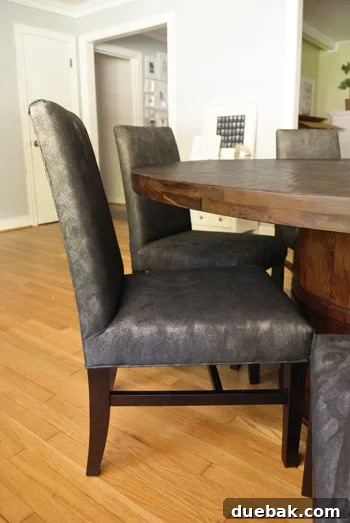
Yes, I spray painted upholstered chairs. It sounds odd—and if you’re sane, it’s probably not your first choice—but when you’re desperate and determined, unconventional solutions happen.
These were the Craigslist chairs we scored last March. They came from an old hotel and showed it: faded, stained eighties-patterned upholstery. We paid $25 each and thought they were a steal.
I first tried to paint one in a soft apple-green after following a tutorial, which didn’t go perfectly (you can read about that experiment elsewhere). For a while we considered keeping them green, but with eight chairs in the room I worried a bright color would compete with other elements like our patterned curtains and boldly painted built-ins.
So I bought off-white slipcovers from World Market for about $20 each. They clashed a bit with our white trim, so I dyed them brown to better blend with the room and keep costs down compared to custom slipcovers or reupholstering.
The slipcovers worked, but they were a little sloppy. After a wash and dry they’d look tight and neat, but they soon went droopy and baggy again. Washing them every week wasn’t realistic for a low-maintenance solution, so they just started to look messy, even from a distance in photos on our House Tour page.
Since I’d already painted one chair and it still worked fine with a slipcover on, I figured I had nothing to lose by trying to paint the rest. Instead of using craft paint mixed with textile medium (which I’d tried and didn’t love), I opted to spray paint—an impulsive early-morning decision—and grabbed a familiar can of spray paint I already owned.
Yes, it’s a little ridiculous. But sometimes you’ve got eight slipcovers to hide any potential disaster, so you go for it.
First, I put on my designated spray-painting socks to keep my shoes clean. Practical and glamorous, right? With sweatpants tucked into the socks I avoided getting paint on the bottoms of my pants.
I started slowly—very light, misted coats on just one chair. No heavy layers, no drips. After a few light passes (probably four coats in total), the first chair actually looked surprisingly good. The fabric’s embossed pattern still shows through—paint can’t change texture—but the crazy eighties stains and swirls were gone and the chair read as one cohesive color.
The result was a gunmetal charcoal tone, almost the same color as our sectional, which was an unexpected but pleasing match. I’d been expecting a darker brown look from the oil-rubbed bronze spray paint, but upholstered fabric reacted differently and produced a charcoal finish—an accidental win that balanced the rooms nicely.
If you want the technical details: I used Rust-Oleum Universal Metallic in Oil-Rubbed Bronze and followed general spray-painting best practices—buy a quality product, mist to avoid drips, keep your hand moving. The paint can have a subtle metallic sheen at certain angles, but it mostly appears as charcoal gray fabric. In photos the pattern sometimes appears more pronounced than it does in real life, likely due to lighting and reflection.
I also sprayed the slightly battered wood legs, which took on a richer ORB-like chocolate tone with a little metallic sheen. We like those legs—they help the chairs look intentional whether the slipcovers are on or off, and they’d remain a nice detail if we reupholster in the future.
Here’s a long shot of them in the room. Photos make the chairs look a bit darker and more patterned than they are in person. We’re excited to add a large chandelier above the table and bring in a sizeable rug to break up all the wood tones. Eventually we’ll probably refinish the floors to match the kitchen and add a lighter rug to help the darker table and chairs stand out without blending into one big wood expanse.
One common question is how the fabric feels after painting. I expected a rough, crunchy texture, but the chairs felt much the same as before—firm, durable upholstery—not soft like cashmere, but not stiff or crunchy. My guess is the spray paint sits relatively thinly on the surface compared to rolled or brushed paint, so it doesn’t dramatically alter the hand of the fabric. A reader suggested the hotel fabric might be Crypton (a protective finish), which would make the paint sit on the surface rather than soak in—this could explain the good results.
Another concern is whether paint rubs off on clothing. We let the chairs cure outside for four days, and once dry they didn’t smell of paint or transfer color. The oil-based paint, once fully cured, shouldn’t rub off—even when wet—based on our testing with a wet white rag and washing painted clothing where the paint remained adhered.
Would I recommend this for every fabric? No. These were heavy-duty upholstery fabrics, not delicate materials like velvet or silk, which could become crunchy or damaged by spray paint. If you’re considering this route, test on a hidden scrap or similar fabric with several light, even coats before committing.
To be clear, I wouldn’t have tried this if I hadn’t already painted one chair successfully and had slipcovers ready in case the paint went badly. That made the risk manageable.
Overall, we think the spray-painted chairs are an improvement over the green experiment and a slight improvement over the droopy slipcovers. We’ll probably reupholster or replace them someday, but for now they work. We still have the brown slipcovers, so we can cover the chairs if needed or pursue better-fitting slipcovers down the line.
In short: cheap Craigslist chairs with hotel-grade upholstery, a can of spray paint, and a willingness to experiment yielded an unexpected but functional update. If you ever find yourself at the end of your rope, a little spray-paint defiance might be worth a try—carefully and with tests first.