
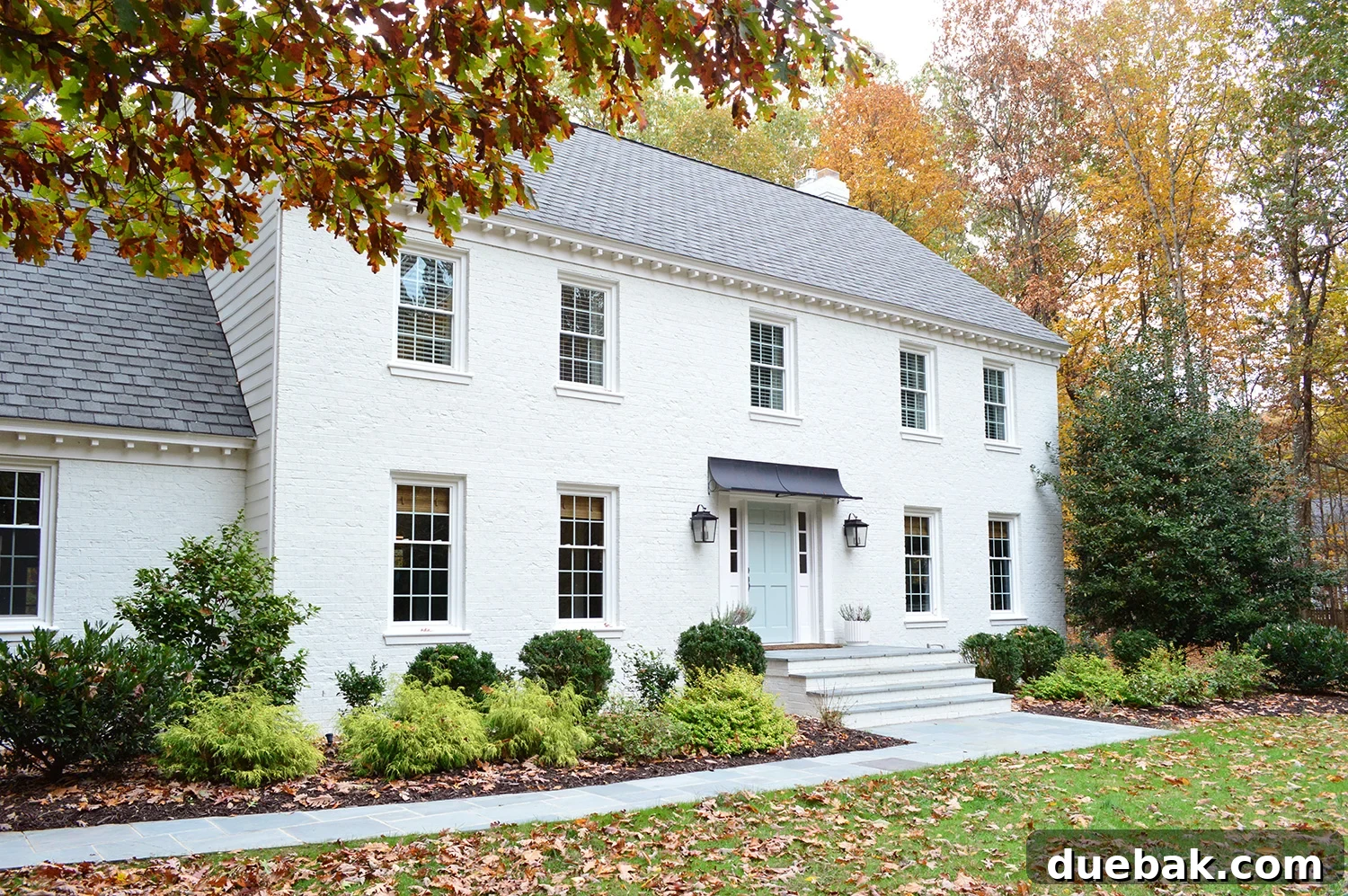
The weather hasn’t been ideal for photos and the landscaping is still a work in progress, but I’m so excited about our painted brick house that I couldn’t wait to share these pictures. I’m a suburban mom in my mid-thirties, and this transformation feels thrilling.
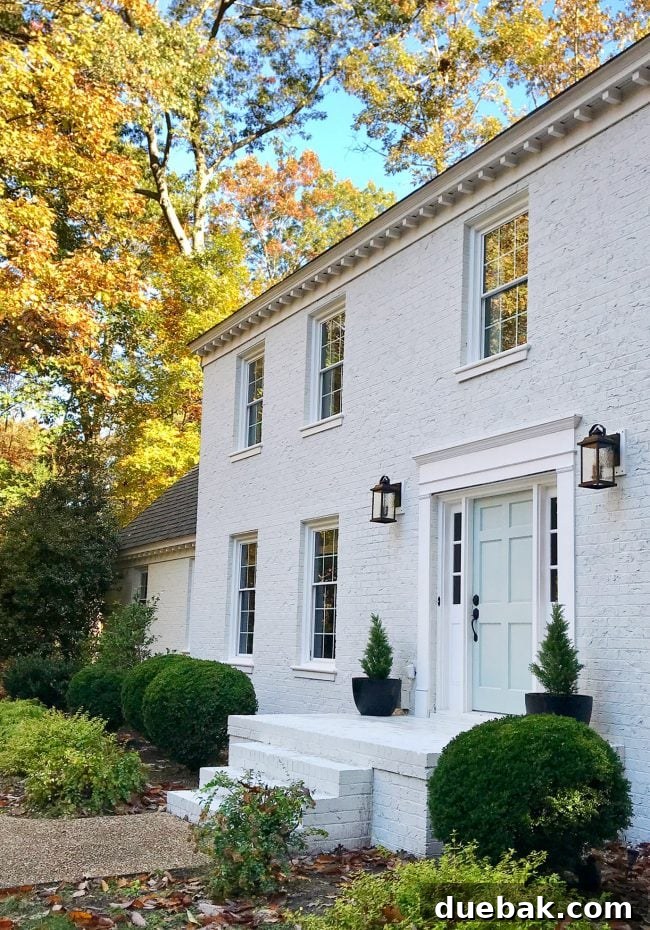
In this article we cover:
- Why we painted our brick house
- What type of paint we used
- How we chose the right white
- The process of painting brick
- How much the project cost
We are in love with how the house looks now. Below are before and after photos, plus details about the paint, the application process, timeline, and costs.
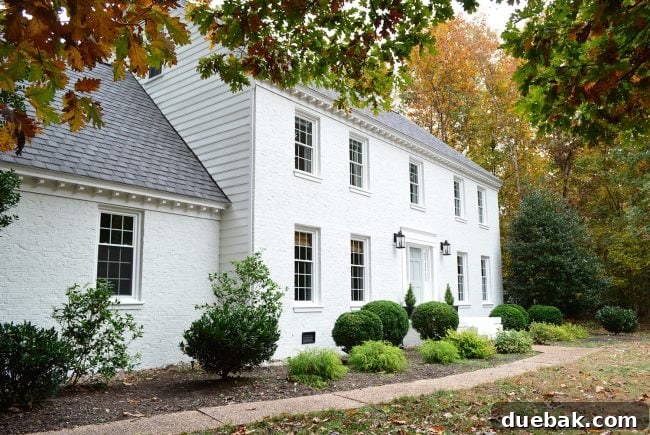
We’ll keep this practical and useful for anyone considering painting brick.
Painted Brick House Before & Afters
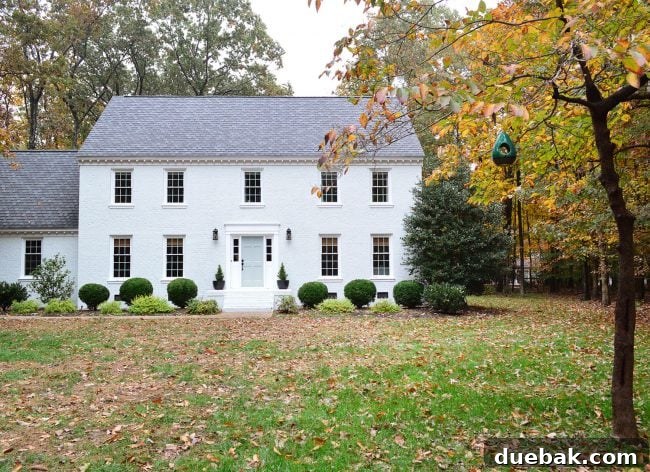
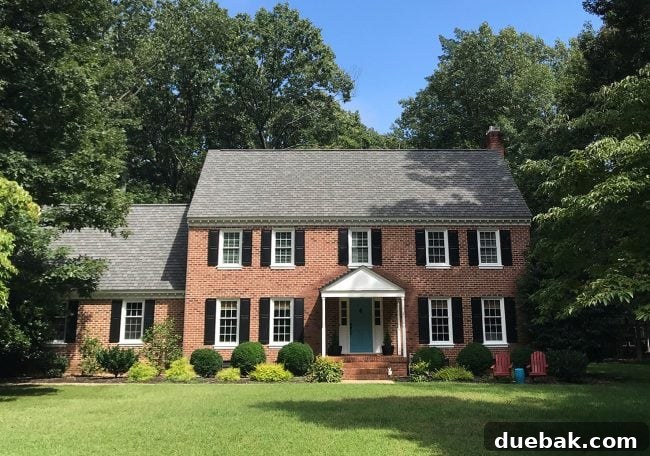
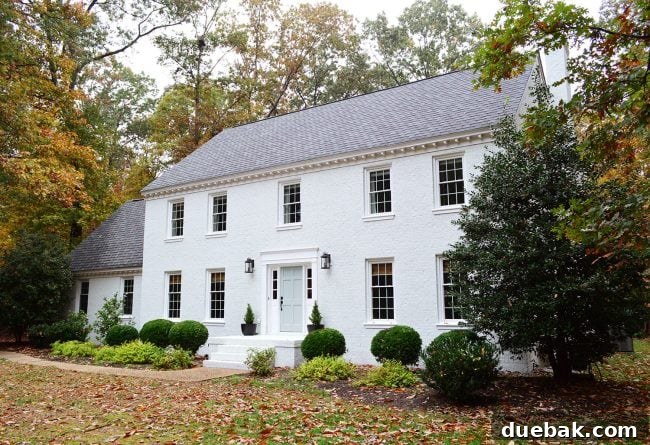
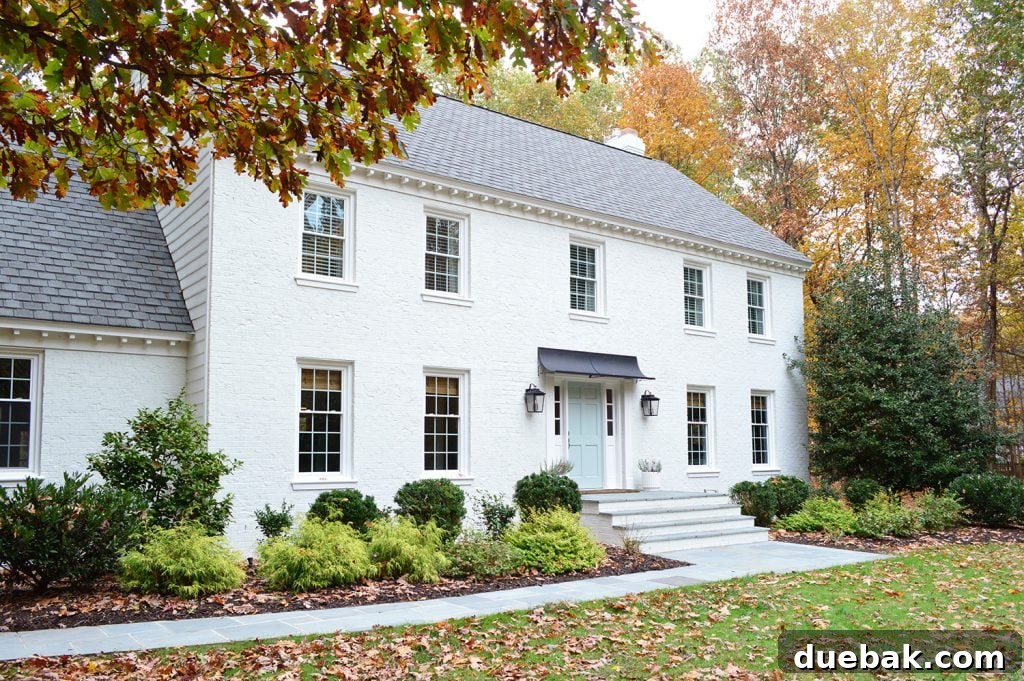
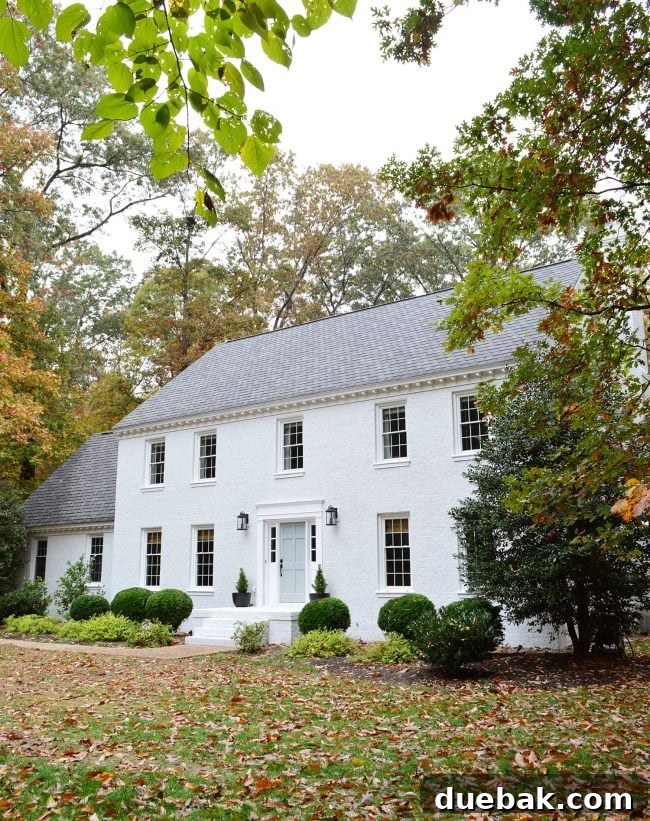
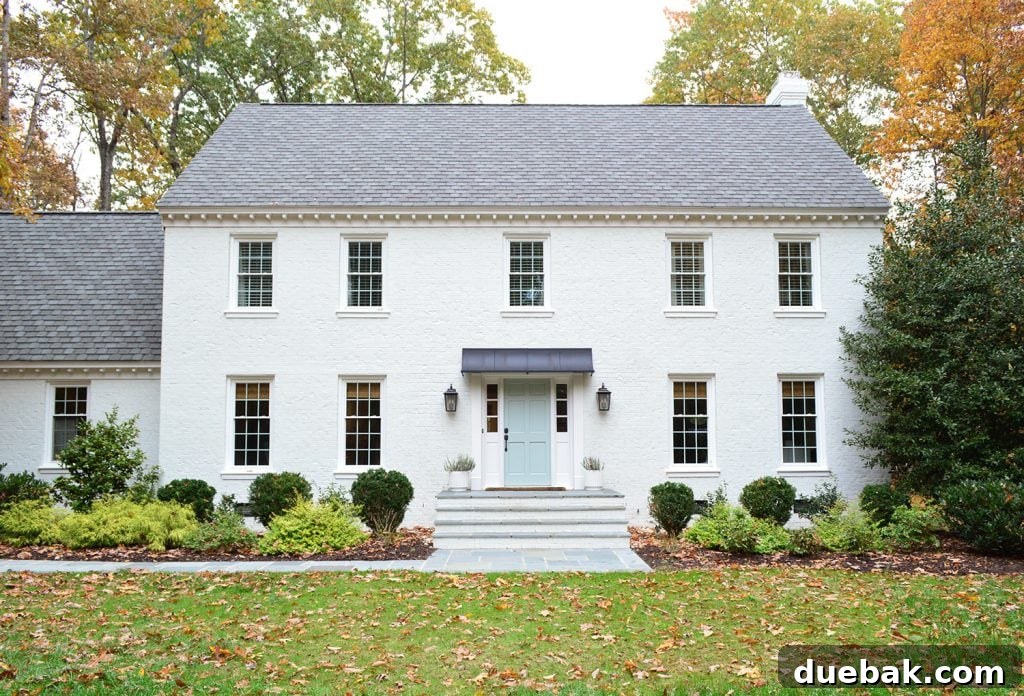
We have plenty of before and after photos throughout this post. The images show the painted brick alongside other exterior improvements like a new walkway and portico. The transformation is quite dramatic compared to how the house looked when we first bought it.
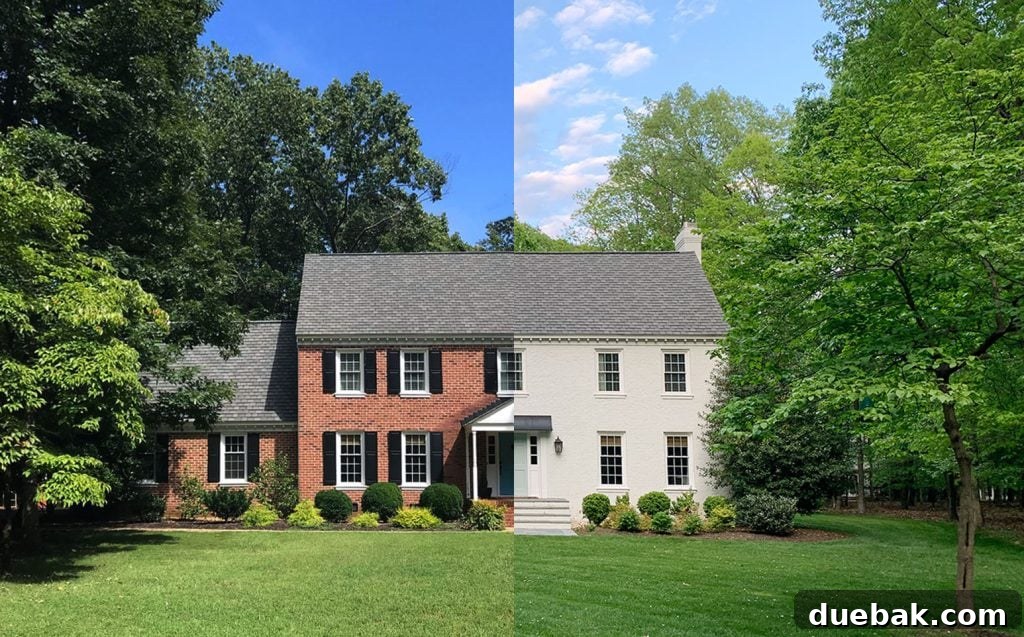
The “before” photos show the house after several exterior updates, so the contrast with the painted brick is especially striking. Painting the brick made the whole home feel more modern and brought more light to the facade, especially after removing the old porch.
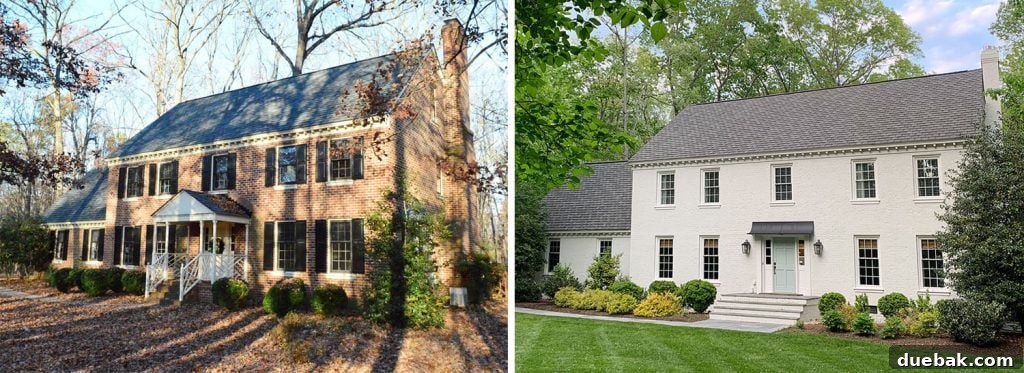
We love how unified and updated the exterior feels now.
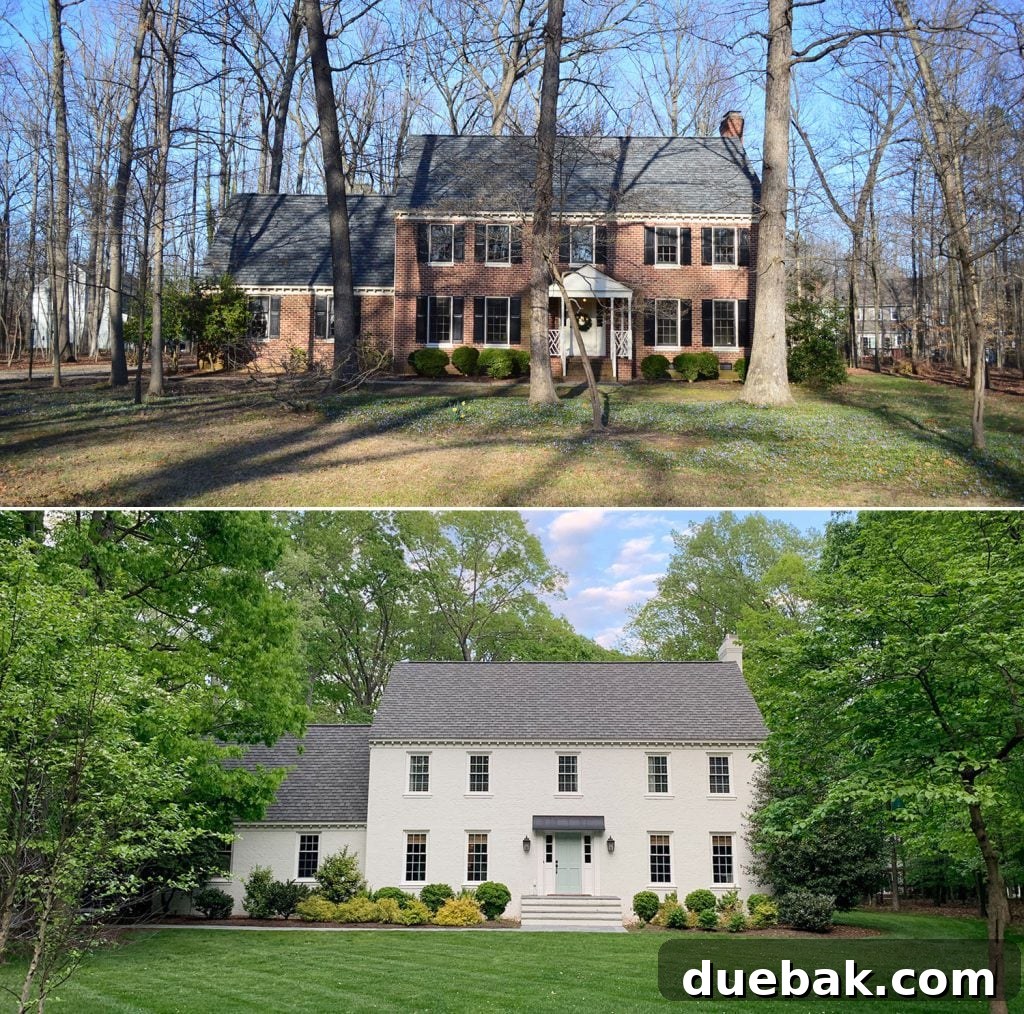
Keep reading for the step-by-step process and product details that made this successful.
Why Paint Our Brick House?
The simplest reason: we wanted to. This is our third brick home and painting brick has been a long-time idea. After listening to other homeowners’ positive experiences and researching products, we felt confident that painting the brick would be a lasting, low-maintenance change rather than an ongoing hassle.
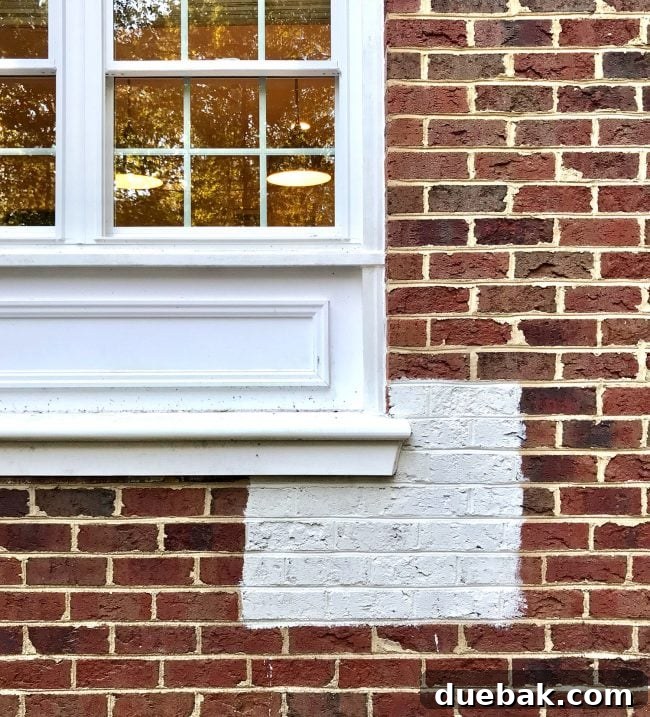
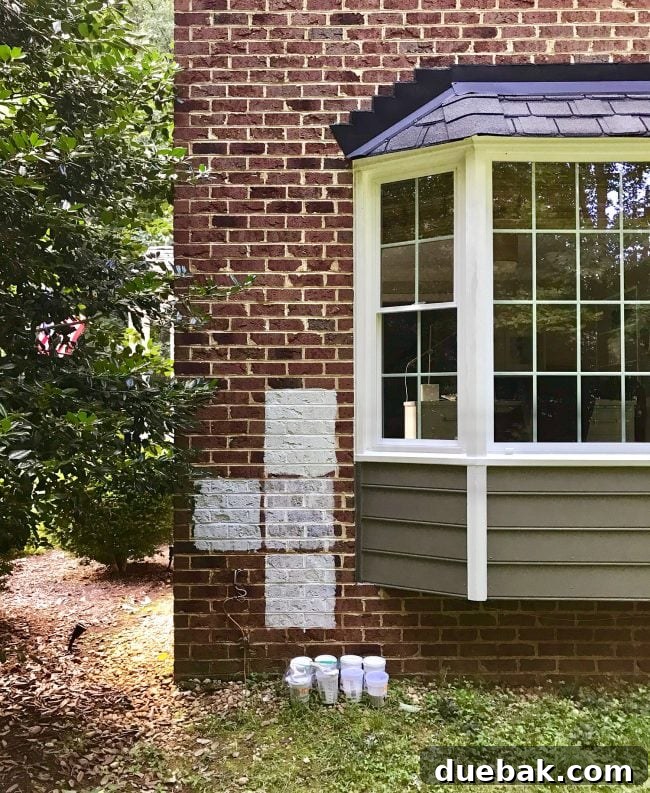
This particular house felt like a great candidate: it’s an early-80s build with maroon, textured brick and uneven mortar, not historic masonry we wanted to preserve. A small test swatch of white immediately softened the look and neutralized the uneven mortar, and that convinced us to move forward.
Painted brick is common in our city, including in older, historic neighborhoods, so we weren’t alone in this choice. In our part of the neighborhood most nearby houses were dark brick, so painting ours brightened the block and provided contrast.
We also made several other exterior improvements over the years—new roof, painted trim and siding, new windows, landscape lighting, grading and seeding—so painting the brick felt like the natural next step to tie everything together.
The back of the house benefited even more from the paint, especially after we removed a rotting deck and opened up the sunroom into a covered porch. Painting unified the varied surfaces and vents so the rear elevation feels calmer and more intentional.
What Brick Paint We Used
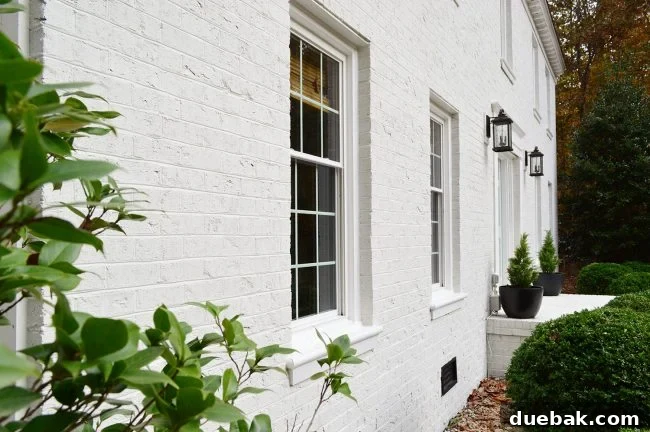
After researching options and listening to recommendations, we used Romabio’s Masonry Flat Paint (also known as Biodomus). This is a mineral-based masonry paint formulated for brick, stone, and stucco—not a traditional latex exterior paint. The mineral formulation allows the masonry to breathe, which reduces the risk of trapped moisture and related damage. It performs more like a durable stain with an opaque, painted finish.
Key benefits that influenced our choice:
- High pH makes it naturally mold-resistant, reducing mildew issues.
- It can be pressure-washed with low pressure when needed.
- It comes with a long warranty (Romabio offers up to 20 years), and many users report it lasting decades.
- It’s breathable, so it won’t chip or peel like sealed masonry can.
- The product is concentrated, non-toxic, and mixed on-site with water.
- The flat, matte finish provides a refined, historic look rather than a shiny or glossy surface.
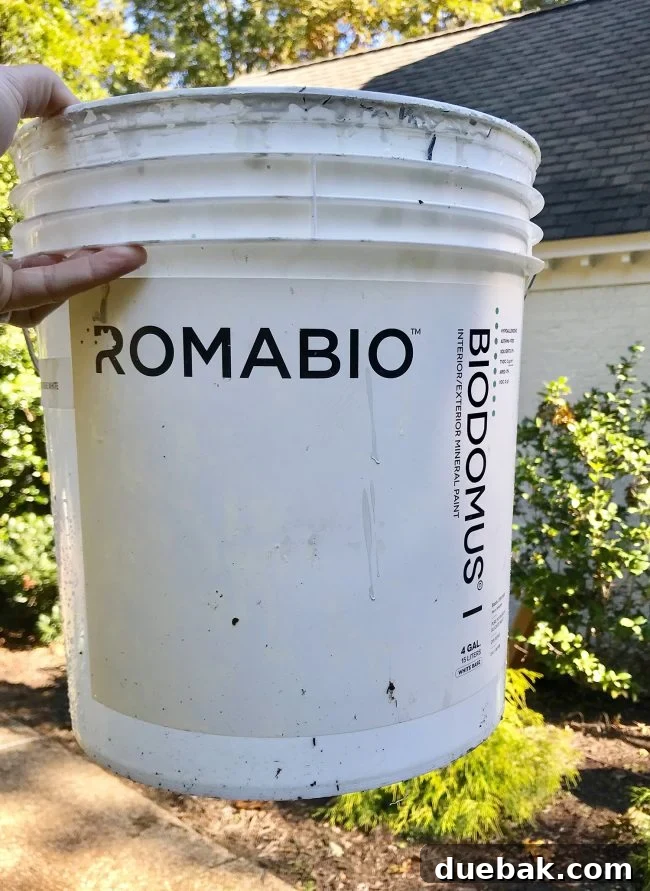
What White Paint Color We Chose
Romabio offers a small palette and can color-match to Benjamin Moore or Sherwin-Williams colors. We narrowed choices with test pots color-matched to four popular whites and chose Sherwin-Williams Moderne White. It reads as a soft, warm white—neither too beige nor too stark—and pairs well with our existing trim. For exact results, Romabio’s formula called “Richmond White” matches what’s on our house.
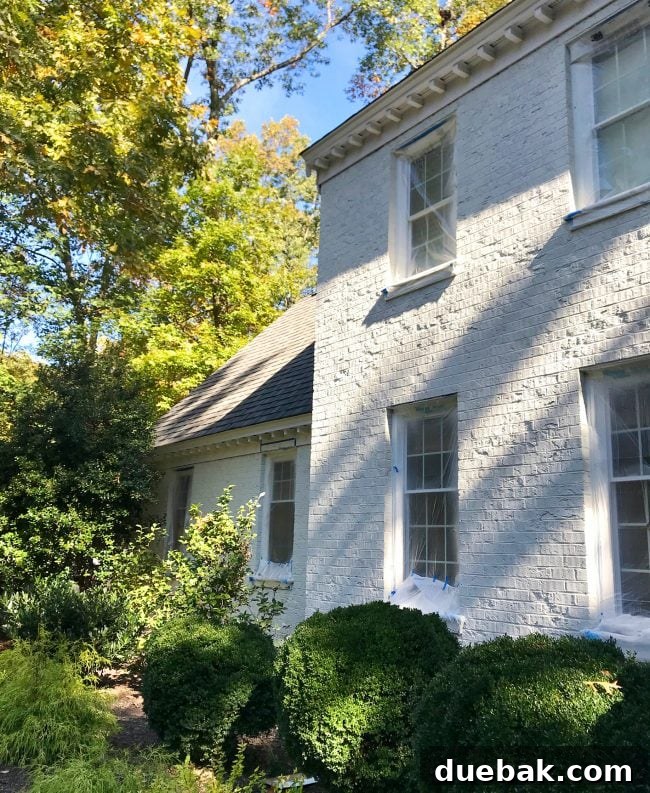
The warm, matte finish helped the home read as more classic and grounded rather than overly modern or stark.
How To Paint Your Brick House
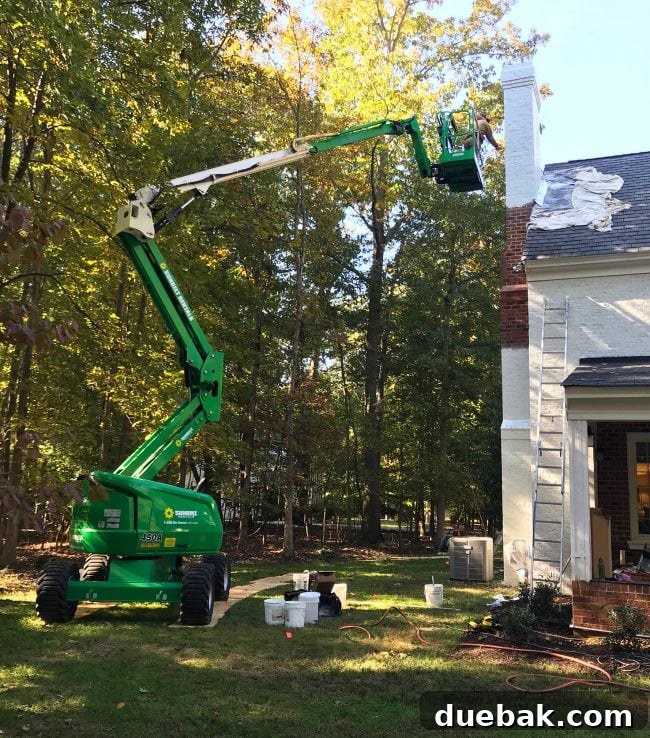
We hired professionals because our house is large and tall, but many people can DIY smaller or single-story projects. The Romabio masonry paint is straightforward to apply, but here are the basic steps the crew followed so you can plan accordingly.
1. Prep Your House
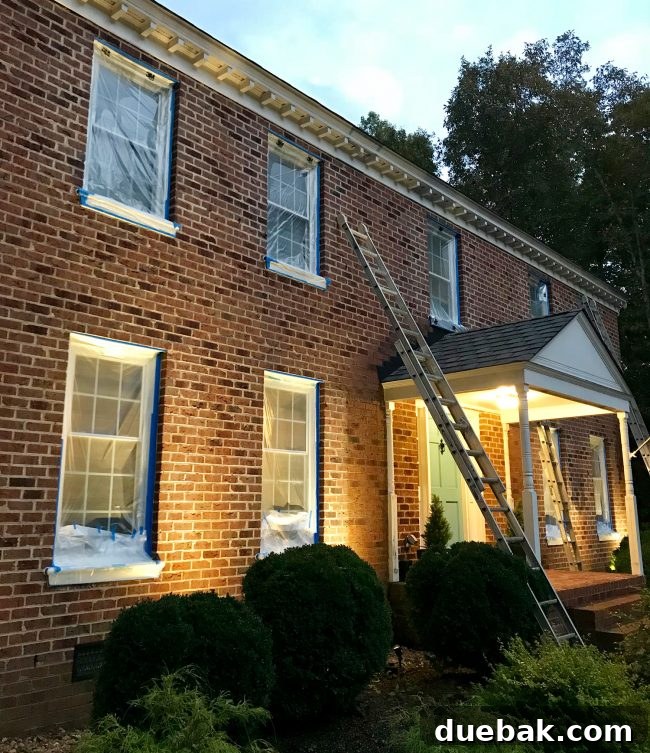
Prep included moving furniture, removing shutters and hardware, taping and covering windows and fixtures, and pressure-washing areas with dirt or mildew. You don’t need to pressure-wash every inch—focus on grimy spots. No primer is required for sound masonry.
2. Mix, Spray, and Backroll the First Coat
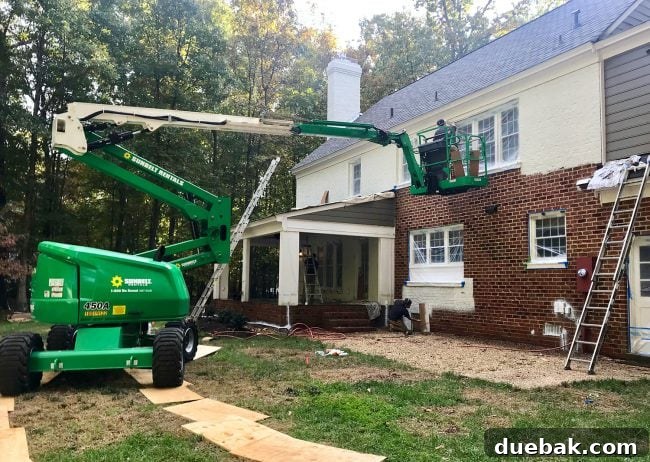
Romabio’s Masonry Flat Paint is concentrated and is diluted with water per label instructions. Spraying is faster and better for textured brick; after spraying, the crew backrolled the first coat to press the product into pores and even out coverage. They wetted the brick before application to help penetration since the product behaves more like a stain.
3. Caulk Deep Gaps
After the first coat dried, the crew filled deep crags and cavities with paintable outdoor caulk to reduce shadows and dark spots. It’s optional but gives a more uniform final appearance.
4. Spray the Second Coat
The second coat typically goes on faster and more evenly; with thorough first-coat coverage and Romabio’s strong opacity, the team sprayed the second coat without backrolling.
5. Paint Non-Brick Areas Properly
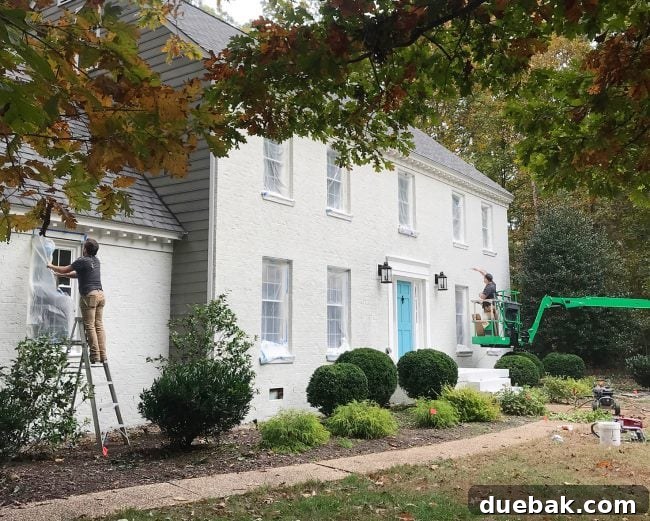
Use appropriate exterior paint for siding, metal, or wood elements. For our hardboard siding, a low-luster exterior paint matched the matte look of the masonry. Prime metal or previously painted elements when needed.
6. Clean Up and Reinstall
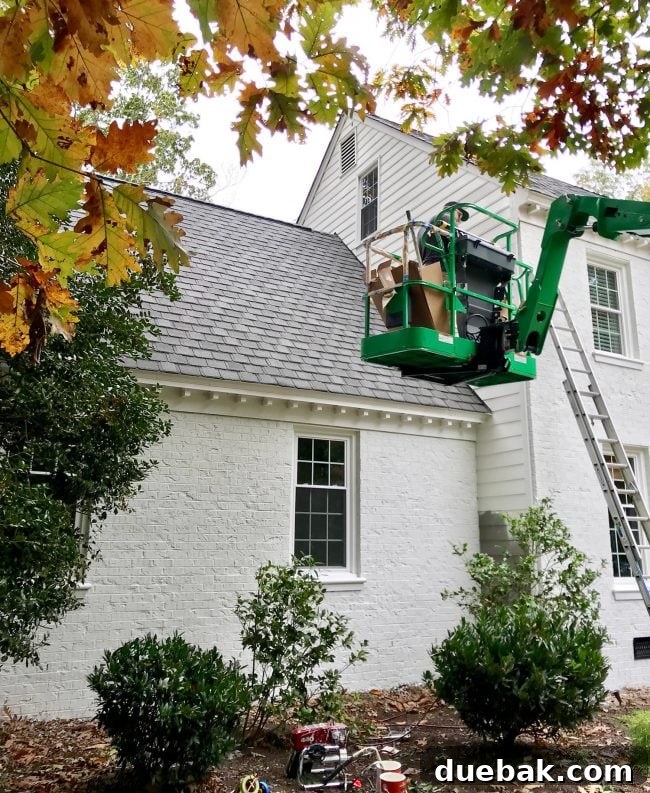
Remove tape and protective coverings, return furniture, and rehang hardware if desired. We opted not to rehang shutters because we liked the cleaner look without them.
How Long Did It Take?
For our two-story home with a chimney and high areas requiring a lift, the job took a professional crew about five days total (four work days plus travel):
- Day 1: Travel and prep
- Day 2: First coat on front and chimney side
- Day 3: First coat on back and garage side (plus portico work)
- Day 4: Second coat on entire house
- Day 5: Siding paint, cleanup, and travel
Smaller homes or DIY projects will take less time.
How Much Did It Cost?
Costs vary by region and scope. Our painter initially estimated $4,500 in labor. We purchased seven four-gallon buckets of masonry paint for about $1,700 and additional siding paint for roughly $200, putting our estimated painting cost around $6,400 before final invoices. After all invoices were in, the final total was $7,500. Lance suggested clients budget roughly $1.50–$2.50 per square foot for a pro to apply Romabio Masonry Flat Paint, including labor and materials, depending on location and job specifics.
What’s Next?
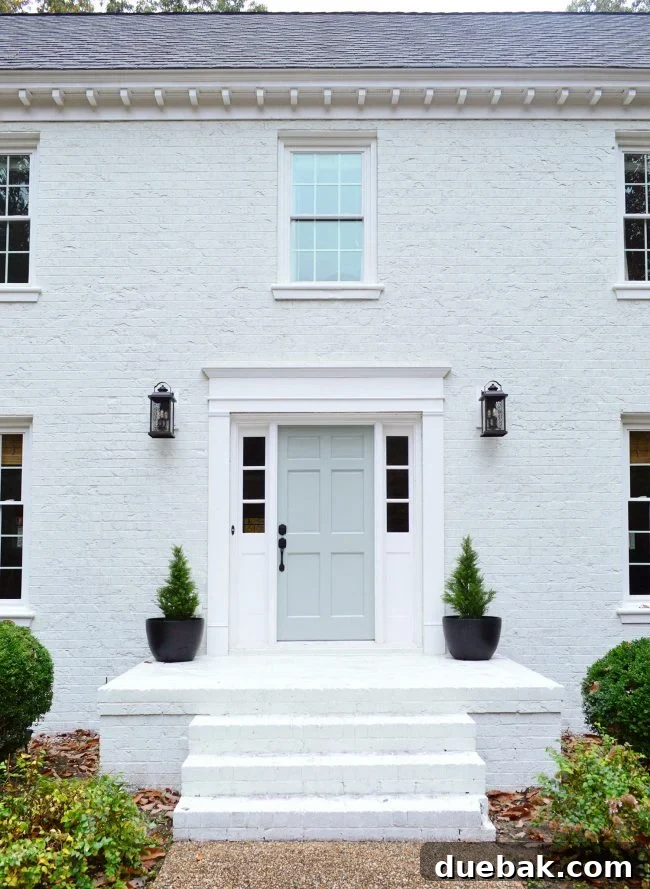
During the painting week we also unexpectedly removed and rebuilt the portico, updated the door surround, added new lanterns, and touched up trim. We’ll probably tile the porch floor and continue refining landscaping, add window boxes or potentially change windows for better balance, and paint the back doors to match the new front door color. The exterior update opened up a long list of improvements, but the painted brick made a dramatic, unifying impact.
In short: we’re thrilled with the result. The white masonry brightened the home, unified varied materials, and gave the house a fresh, classic feel. Neighbors and friends have loved the change too, and the new look has energized our plans for the rest of the yard.
*This post contains affiliate links*