

Transforming your staircase with a beautiful, functional runner might seem like a daunting home improvement project, but we’re here to tell you it’s incredibly achievable for any DIY enthusiast. In fact, we’ve tackled this project multiple times, even showcasing our technique on live television! Our comprehensive guide below will walk you through every step, ensuring your stair runner installation is smooth, successful, and leaves you with professional-looking results. Get ready to add comfort, safety, and a touch of elegance to your home.

Beyond its aesthetic appeal, a stair runner is a smart and practical addition to any home. It’s not just about introducing vibrant colors, engaging patterns, or unique textures; stair runners significantly enhance home safety. They provide crucial traction, drastically reducing the risk of slips and falls for both humans and pets. Our furry friends, in particular, find carpeted stairs much easier and less intimidating to navigate. Additionally, runners act as excellent sound dampeners, muffling the thud of footsteps and contributing to a quieter, more peaceful home environment. Therefore, whether you have young children, pets, or simply desire a safer and more serene living space, installing a stair runner is a highly recommended upgrade.
DIY Stair Runner Installation: A Complete Guide to Transforming Your Stairs
Stunning Stair Runner Before & After Transformations
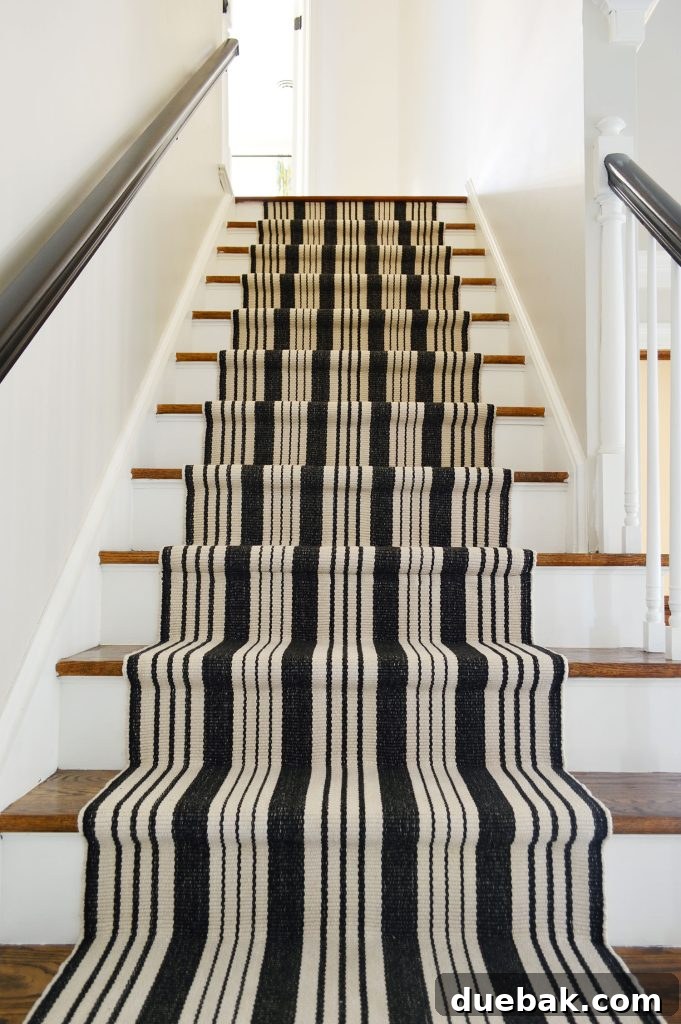
Witnessing the dramatic impact of a stair runner transformation is incredibly motivating. Our first DIY stair runner project involved replacing a worn, outdated carpet runner that came with the house. The before-and-after photos below highlight not only the visual upgrade but also the significant modernization achieved. We opted for a bold striped rug, breathing new life into the staircase. To complement this, we painted the risers, trim, and balusters a crisp white and stained the wood handrails a rich, dark hue. This combination created a fresh, contemporary look that instantly elevated the entire entryway.

For our second installation, in our current home, we chose a more natural, beach-inspired aesthetic with a sisal runner. This choice brought an earthy texture and a relaxed vibe to the space. To further brighten the staircase, we painted the stair treads a soft, warm gray, creating a cohesive and inviting look that perfectly suited our home’s coastal charm.

Our “third” stair runner experience took us to the set of The Rachael Ray Show for a DIY segment. While we only had the chance to demonstrate a few staples on camera, we meticulously prepped a small, faux staircase backstage. It was a fantastic opportunity to share the ease of this project, and that particular runner was exceptionally charming. These varied projects demonstrate the versatility of stair runners and how they can be customized to fit any design preference.

As you can see, there are countless ways to customize this DIY stair runner project to perfectly align with your personal style and the unique architecture of your home. From bold patterns to subtle textures, the possibilities are endless. Now, let’s delve into the detailed tutorial so you can start your own staircase transformation!
Essential Tools, Materials, & Cost for Your Stair Runner Project
Before you begin your stair runner installation, gathering all necessary supplies and tools is crucial for a smooth and efficient process. Here’s a comprehensive list of what you’ll need to have on hand:
- Stair Runner: Your chosen rug, measured and sized appropriately for your staircase.
- Rug Pad: Essential for cushioning, preventing slips, and extending the life of your runner. Look for non-slip varieties.
- Tape Measure: For precise measurements of your stairs and runner placement.
- String or Flexible Measuring Tape: Useful for accurately measuring the contours of each step.
- Painter’s Tape: For marking your runner’s placement and creating straight guidelines.
- Electric Staple Gun & Staples: A powerful electric gun is vital for securely fastening the runner. Ensure you have plenty of staples.
- Sharpie Markers: Various colors to camouflage your staples, matching your runner’s pattern.
- Sharp Scissors: For clean cuts on your runner and rug pad.
- Needlenose Pliers: Indispensable for removing any misfired or stubborn staples.
- Utility Knife (Optional): For cutting thicker rug pads or runners.
- Safety Glasses (Recommended): To protect your eyes during stapling and cutting.
Rest assured, this project doesn’t have to break the bank. Our initial stair runner installation, for instance, cost less than $300. The primary cost driver will be your choice of runner and the total length required for your staircase. By carefully selecting your materials, you can achieve a stunning update without a hefty investment.
Step-by-Step Guide to Installing a DIY Stair Runner
Our complete stair renovation, including removing the old runner and painting, took approximately 20 hours. However, the actual stair runner installation typically only requires about 4 hours, depending on the length and complexity of your staircase. We’ll delve into each step in detail, but here’s a quick overview of the process to give you a clear roadmap:
- Remove your old runner (if applicable)
- Accurately measure your stairs for the runner
- Select the perfect stair runner for your style and needs
- Paint or stain your stairs (an optional, but highly recommended, preparatory step)
- Mark your runner’s precise placement on each step
- Cut the rug pad to size for each tread
- Prepare your staples by coloring them for camouflage
- Begin installation at the top of your staircase
- Seamlessly connect two runners (if your stairs require more than one piece)
- Finish the bottom edge for a clean, professional look
Step 1: Efficiently Remove Your Old Stair Runner

This initial step is only necessary if your stairs currently have an existing rug, runner, or carpet that needs to be removed. Be prepared for this to be a time-consuming part of the process, particularly when it comes to extracting all the old staples. In one of our previous projects, we counted nearly 600 staples! To make this task easier, we have a dedicated stair runner removal tutorial that provides specific tool recommendations and tips for efficiently tackling old carpeting. Having the right tools, such as a sturdy pry bar, pliers, and a sharp utility knife, will significantly expedite this often-frustrating phase.
Step 2: Precise Measurement for Your Stair Runner
Before making any purchase, accurately measuring your stairs is paramount to ensure you buy the correct amount of runner material. The two critical measurements you’ll need are the total length and the ideal width of your future stair runner. These figures will guide you in determining whether a standard stock size will suffice or if a custom order is required.
Measuring Runner Length Accurately
To determine the length needed, we recommend using a flexible measuring tape or a simple piece of string. Measure one complete step: this includes the vertical riser, the flat tread, and wraps around the front bullnose edge. Once you have this single step measurement, multiply it by the total number of steps on your staircase. Crucially, always add an extra 10-15% to this total length. It’s always better to have a bit too much material, which can be easily trimmed, than to run short mid-project. This extra length also accounts for potential errors, pattern matching, or future repairs, providing peace of mind during installation.
Determining Runner Width for Optimal Aesthetics and Fit

Unlike wall-to-wall carpeting, most stair runners are designed to leave a margin of exposed wood on either side, typically 2-3 inches (as illustrated above). This margin is largely a matter of personal preference and can also be influenced by the standard widths available for stock runners. To calculate your ideal runner width, measure the width of your narrowest stair tread. Then, subtract approximately 4-6 inches from this measurement. This ensures a consistent reveal of wood on both sides. Remember that many staircases tend to “flare out” at the bottom, so it’s vital to confirm that your chosen width will look proportionate and fit well from the very top to the very bottom of your stairs, avoiding any awkward narrowing or widening effects.
Step 3: Selecting the Ideal Stair Runner for Your Home
While almost any carpet or rug can theoretically be converted into a DIY stair runner, choosing the right material is crucial for longevity and ease of maintenance, especially in high-traffic areas like staircases. We highly recommend selecting options known for their durability and cleanability. Indoor/outdoor rugs, often made from polypropylene, and natural fiber rugs like wool or cotton, are excellent choices for these reasons. Furthermore, a low-pile runner is generally preferable as it’s easier to keep clean and less prone to trapping dirt and debris. We’ve successfully used both stock and custom-ordered runners for our various stair projects.
Utilizing a Stock Runner for Convenience and Value
For our vibrant striped runner, we chose a rug from Annie Selke (formerly known as Dash & Albert). Their rugs are renowned for their exceptional durability, making them ideal for high-traffic areas. They also offer an impressive array of patterns and colors, with most styles available in a variety of standard sizes. We used two 2.5′ x 8′ Birmingham runners for our installation, though they now offer a convenient 20-foot version and even customizable sizes. After more than seven years of continuous use, we can confidently attest to its excellent performance, apart from some expected fading due to prolonged sun exposure. It also maintained a wonderfully soft feel underfoot. Stock runners are typically more budget-friendly, but they may require a bit more ingenuity and careful planning to ensure a precise fit for your unique space. Don’t worry – our tutorial will guide you through how to achieve that perfect fit!

Investing in a Custom Runner for Tailored Perfection
When we sought a specific aesthetic for our sisal runner, we opted for a custom outdoor rug from Sisal Rugs. This choice provided unparalleled control over every design detail – from the exact color and border material to the border color and precise dimensions. This level of customization allowed us to create a runner that perfectly complemented our home’s decor. Surprisingly, the cost was only slightly over $100 more than what two stock Annie Selke rugs would have been at the time, making it a worthwhile investment for a truly bespoke look.

We’ve been equally satisfied with both types of rugs we’ve used – stock versus custom, cotton versus sisal, and bold versus neutral designs. This demonstrates that the best choice truly depends on your individual preferences, budget, and desired aesthetic. Feel confident in selecting the option that best suits your home and vision for your staircase.
Step 4: Prepare Your Stairs – Paint or Stain for a Flawless Foundation
If your stair transformation plans involve any painting, staining, or other potentially messy updates, now is the opportune moment to tackle them! Completing these tasks before runner installation prevents the risk of accidental drips or splatters on your brand-new rug, saving you considerable time and effort in the long run. This foundational work also ensures that the exposed areas of your stairs look pristine and finished.
Before installing our striking striped runner, we undertook a significant refresh: we stained the handrail a deeper, more sophisticated color and painted the balusters, trim, and risers a clean, bright white. These tasks, while somewhat time-consuming, are excellent projects to complete while you’re waiting for your custom rug order to arrive or for a stock runner to be delivered. This staggered approach helps maximize your project timeline.

Prior to adding our sisal runner, we noticed some discoloration in the existing stain on the stair treads. To remedy this and further brighten the space, we decided to paint the treads a warm gray. We utilized Sherwin-Williams Porch & Floor Enamel in Requisite Gray. This product was fantastic as it didn’t require a primer and has demonstrated exceptional durability, holding up beautifully against daily foot traffic.

This phase is also an ideal time to address any other necessary repairs to your stairs. This could include tightening loose or squeaky treads, mending any damaged molding, or filling small imperfections. A solid, smooth, and newly finished stair surface will provide the best possible foundation for your new runner, ensuring it looks its best and lasts for years to come.
Step 5: Mark Your Placement for a Perfectly Straight Runner
Once your stairs are prepped and your runner is ready, the next crucial step is to meticulously mark its placement on every single step. This initial setup is vital for ensuring your runner remains perfectly straight and doesn’t gradually shift or drift to one side as you proceed with the installation. Precision here saves a lot of headaches later on.
Our preferred method involves using a measuring tape to determine the desired margin of exposed wood on each side, then carefully applying painter’s tape to mark these edges along each tread. As you can observe in the image below, these tape lines serve as clear visual guides throughout the entire stapling process, helping you maintain perfect alignment.

While you could theoretically check your runner’s placement with a ruler or measuring tape as you go, we’ve found that pre-taping these guides at the start of the project is significantly faster and more reliable. It allows you to focus purely on stapling and tensioning the runner, knowing that your alignment is already set. This small preparatory step makes a huge difference in achieving a professional and aesthetically pleasing result.
Step 6: Custom-Cutting Your Rug Pad for Enhanced Comfort and Security
Incorporating a rug pad beneath your stair runner serves two primary, yet equally important, functions: firstly, it provides an additional layer of cushioning, making your stairs more comfortable underfoot; and secondly, it acts as a crucial non-slip barrier, helping to keep the runner securely in place and further reducing the risk of slips. If extra cushioning isn’t a priority, you can opt for carpet tape as an alternative non-slip solution.
We’ve achieved great success with both felt rug pads and rubber rug pads. The key is to select a pad specifically designed with a non-slip backing. Both types are widely available in various sizes, including runner lengths, and typically do not need to be very thick; a 1/8″ depth usually provides ample cushioning and grip.
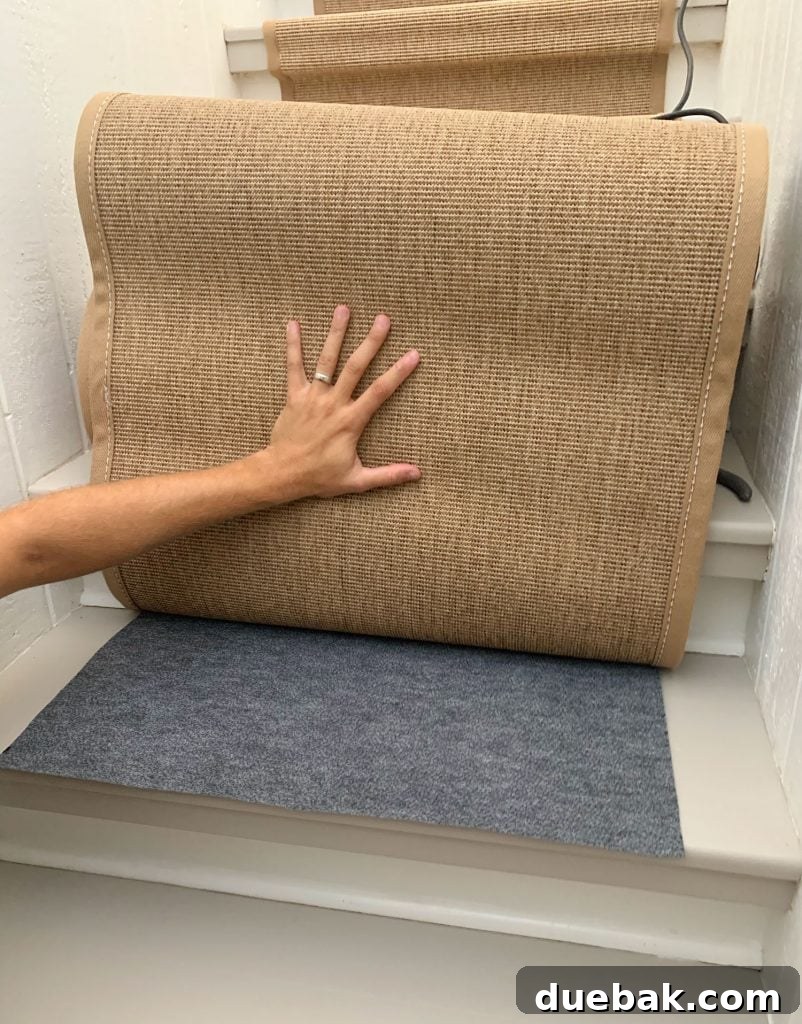
We prefer to use the rug pad exclusively on the horizontal tread surface, avoiding the vertical riser. This strategic approach offers several benefits: it saves material and cost, and more importantly, it prevents unnecessary bulk and an uneven profile against the riser. This method does require some upfront time to cut the rug pad into individual strips for each tread. Fortunately, most rug pads are designed to be easily cut with standard household scissors. Ensure you leave enough length for the rug pad to wrap comfortably around the front bullnose (rounded edge) of each stair, providing continuous cushioning and support.

As illustrated above, the overhang of the rug pad around the bullnose ensures complete coverage and optimal performance, preventing the rug from flattening or wearing unevenly at this high-contact point.
Step 7: Prepare Your Staples for Invisible Fastening
This step might seem a bit unusual, but trust us, it’s a game-changer for achieving a professional finish! After some trial and error, we discovered that an electric staple gun, specifically designed for upholstery projects, is by far the most effective tool for securely fastening a stair runner. Standard hand-powered staple guns often lack the necessary “oomph” to drive staples deeply and consistently into solid wood, making an electric model indispensable for this task.
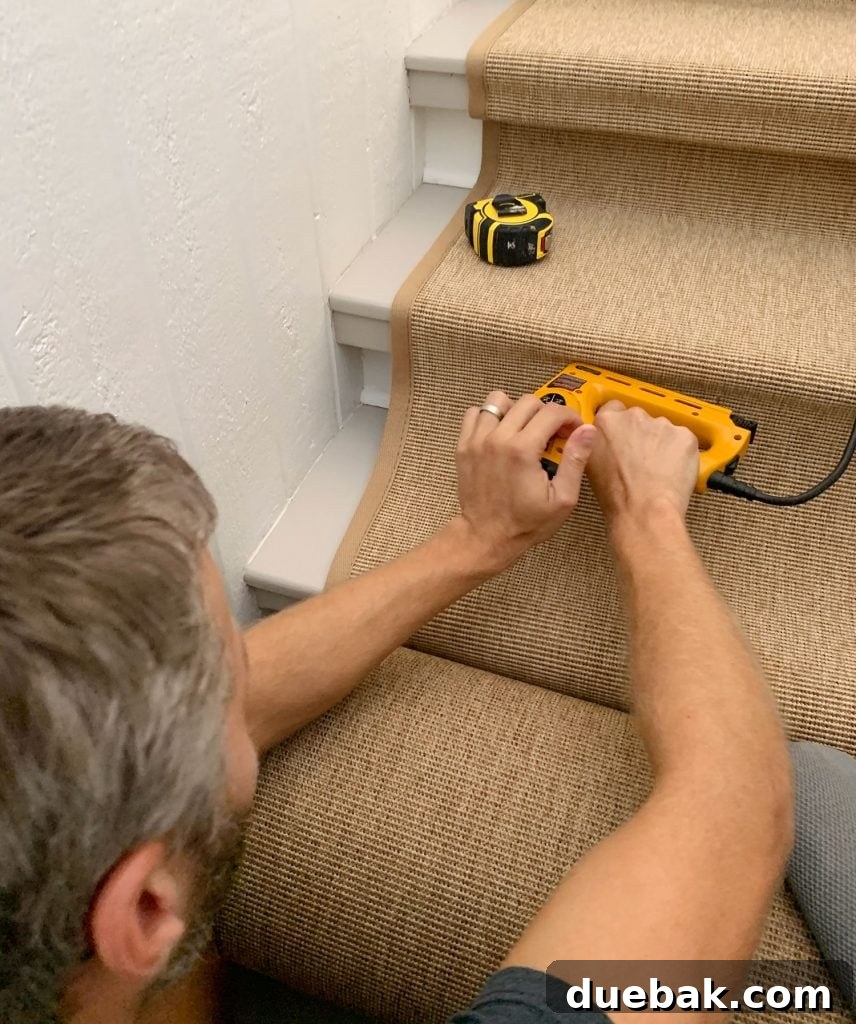
The main challenge with using staples is their potential visibility, especially if they catch the light. However, this drawback can be completely mitigated by taking a few moments to color your staples beforehand. We know it sounds quirky, but this simple trick works wonders!

For our sisal runner, we used a gold Sharpie to quickly color a whole strip of staples before loading them into the stapler. Similarly, for our striking black and white runner, a black Sharpie did the trick. The goal isn’t necessarily to match the exact color of your rug flawlessly.

The primary benefit of this technique is to dull the natural shine of the metal staples. Staples are most noticeable when light reflects off their shiny surface. By coating them with Sharpie ink, you effectively remove this reflective quality, allowing them to seamlessly camouflage into the rug’s pattern and texture. Coloring an entire strip of staples before loading them is significantly faster and more efficient than trying to color individual staples after they’ve been inserted into your rug. For optimal results, you might test a few colored staples on a scrap piece of your runner to confirm which color offers the best disguise.
Step 8: Begin Installation at the Top of Your Staircase
You’ll commence stapling your runner directly under the lip of the very top stair. This starting point is crucial for a clean, secure beginning. Take your time to position the runner precisely, ensuring the top edge is flush and the side edges are perfectly aligned with your painter’s tape markings. Use your electric staple gun to secure it at each edge and in about 4-5 strategic places across the middle. The specific pattern and texture of your rug may guide where best to place staples to keep them as hidden as possible. Don’t hesitate to add more staples later if you notice any sagging or looseness. The immediate goal is simply to get it firmly attached.
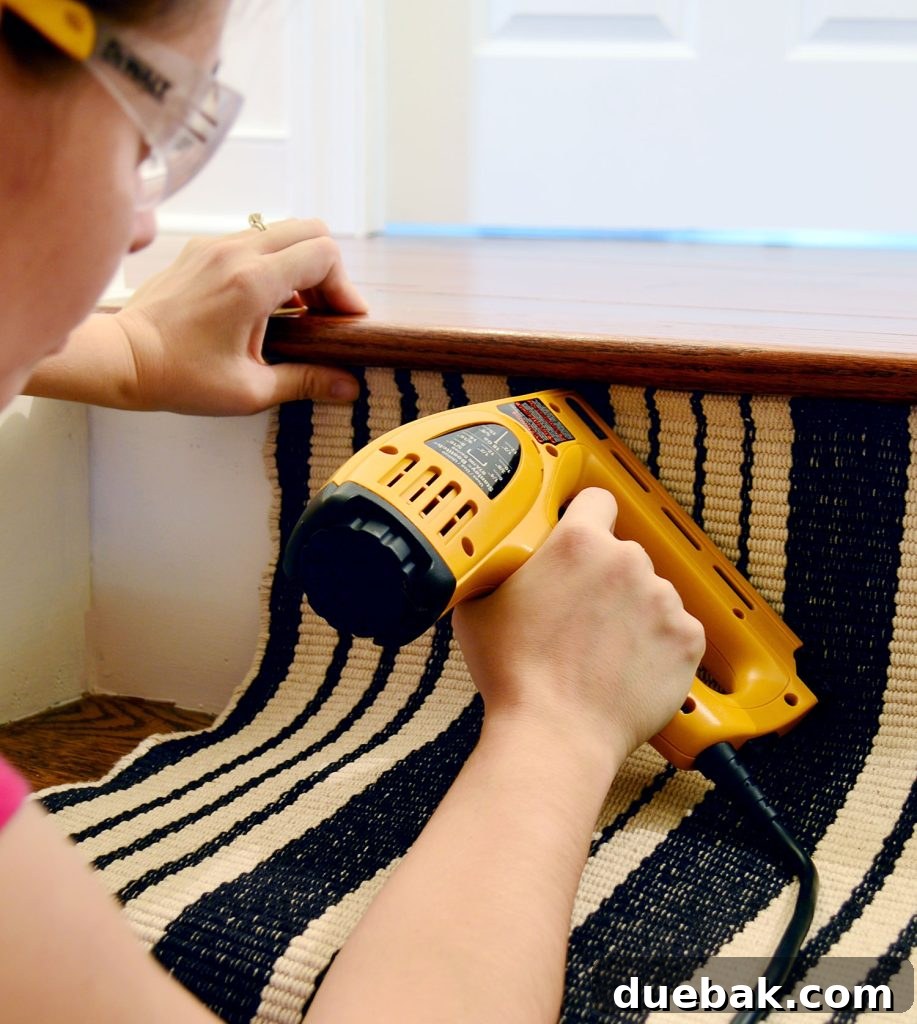
Once the runner is stapled securely along the top, pull it tautly down against the vertical riser and staple it along the bottom edge, directly into the RISER, not the TREAD. This is a critical point: throughout the entire installation process, you should avoid nailing or stapling into the horizontal treads where bare feet will make contact. This ensures that no cold, hard metal will ever be felt underfoot, preserving comfort and safety.

Next, pull the runner tightly along the horizontal tread, creating a neat fold at the bullnose. Repeat the stapling process: begin with another row of staples positioned firmly under the lip of the next tread. Maintain consistent tension as you move down the stairs, ensuring each section is snug and wrinkle-free.

Use your best judgment to determine the optimal number and placement of staples required to hold your runner firmly against the stairs. For our sisal runner (pictured above), we encountered two distinct “lips” under each tread, necessitating two rows of staples along the top of each step for maximum security. Don’t be discouraged if you occasionally misfire a staple; simply keep your trusty needlenose pliers handy for quick and easy removal.

Continue this methodical process, working your way down the stairs towards the bottom. Always remember to maintain consistent tension on your runner and frequently check its alignment against your tape markings to prevent any drifting. And, critically, don’t forget to lay down your pre-cut rug pad strips on each tread just before stapling the runner over them.

A helpful tip for using the electric staple gun effectively: apply firm pressure to the back of the gun as you fire. This technique helps drive the staples deeper and more securely into the wood, ensuring a tighter, more lasting hold.
Step 9: Seamlessly Connecting Multiple Runners (If Required)
For longer staircases, a single runner may not be sufficient to reach the bottom. Fortunately, connecting two separate runners can be done almost invisibly with a few simple techniques. The most effective way to conceal this transition is to strategically hide the seam directly under the lip of a stair tread. Begin by using sharp scissors to trim any excess material from the end of your first runner, ensuring it terminates neatly just beneath the tread’s bullnose.

Once trimmed, firmly staple that cut end right under the bullnose edge of the tread, following the same pattern and technique you’ve used for previous steps.
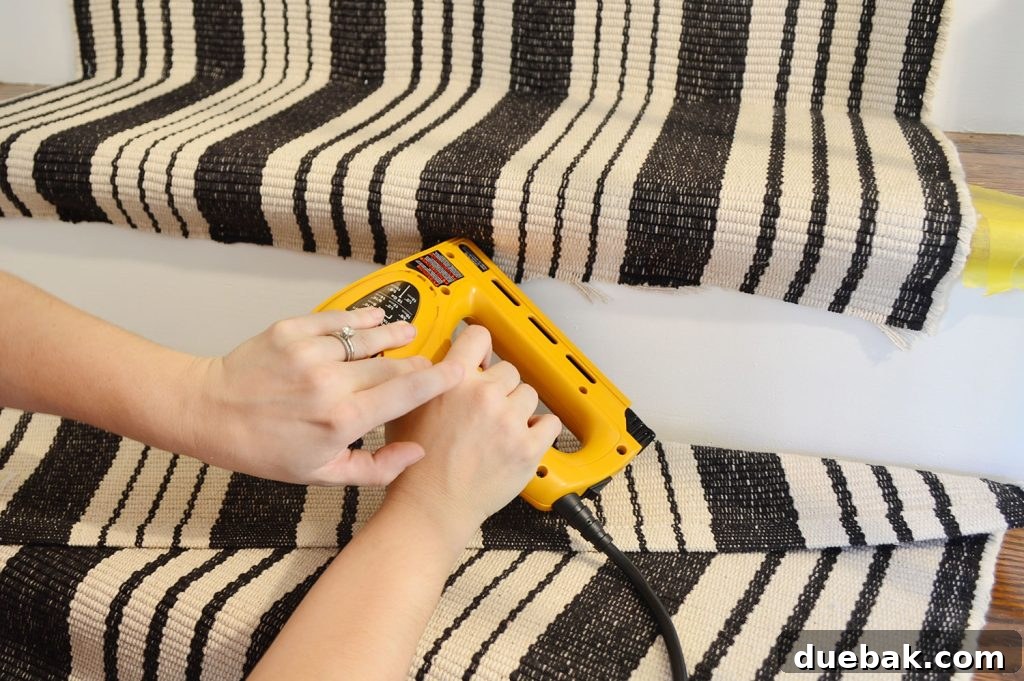
Then, take your second runner and attach its starting end under the same tread lip, mirroring the way you began with the first runner at the top of your stairs. From this point, you can seamlessly continue down your stairs with the second runner, maintaining the consistent tension and alignment. Observe the finished picture of our stairs below. Can you pinpoint the exact spot where one runner transitions into the other?
With careful inspection, you might just discern the transition about three steps up. While not entirely imperceptible, the seam is remarkably subtle and typically only noticeable if you’re actively searching for it, proving the effectiveness of this hidden connection method. Matching patterns perfectly (if applicable) is also key to making this seam blend in.
Step 10: Achieving a Polished Finish on the Bottom Edge
As you reach the final step at the bottom of your staircase, the goal is to create a clean, professional-looking edge. Begin by using your scissors to carefully trim off any excess runner material, leaving approximately an extra inch beyond the last riser. This additional inch is crucial for the next step.
Next, fold this extra bit of material back underneath the runner, creating a neat hem. This fold accomplishes two important things: it provides a smooth, even edge that looks much more finished than a raw cut, and it helps prevent any potential fraying of the runner over time, particularly important for materials like sisal or certain woven rugs. Once folded, securely staple this hemmed edge into the bottom of the riser, ensuring it’s taut and flush.

And just like that, with your final staples in place and the bottom edge neatly finished, you’ve successfully completed your DIY stair runner installation! Stand back and admire your handiwork – a beautifully transformed staircase that is now safer, quieter, and significantly more stylish.

For more detailed insights and additional before & after perspectives, feel free to explore our comprehensive post on installing our sisal stair runner.
Frequently Asked Questions About Stair Runner Installation (FAQs)
Here are answers to some of the most common questions we receive regarding DIY stair runner installation, maintenance, and benefits.
How Durable Are Stair Runners in a Busy Home?

Our personal experience confirms that stair runners are remarkably durable, even in homes bustling with active children and playful pets. Like any rug or carpet, they require routine vacuuming and occasional spot cleaning for spills. However, by selecting a robust material such as an indoor/outdoor polypropylene rug or a resilient natural fiber rug (like wool or sisal), you can expect minimal issues. We lived with our striped runner for over seven years before moving, and it held up beautifully. The only noticeable wear was some light fading at the bottom of the stairs, where it received abundant sunlight, and very minor, barely perceptible fraying on the bullnose of one or two steps. Regular maintenance and choosing the right material are key to their longevity.
Do Stair Runners Cause Damage to the Underlying Stairs?
When you install a stair runner, you will inevitably create small staple holes in the stair risers. While these are typically small, they are a factor to consider. Additionally, covering a portion of your stairs with a runner might lead to uneven fading of your paint or stain finish on the exposed wood over time. However, both of these concerns are easily remedied. The staple holes can be filled with wood putty and then touched up with paint or stain. Should you decide to remove the runner in the future, a fresh coat of paint or stain across the entire staircase will restore it to a pristine condition. The aesthetic and safety benefits typically far outweigh these minor, reversible alterations.
What Are the Key Advantages of Installing a Stair Runner?
Beyond the significant improvement in the visual appeal of your stairs, installing a stair runner offers a multitude of practical advantages, primarily enhancing both the safety and acoustics of your home. Rugs are excellent sound absorbers, effectively cutting down on the noise generated by loud footsteps and general foot traffic, creating a much quieter living environment. Moreover, carpeted stairs are inherently less slick than bare wood steps, drastically reducing the likelihood of dangerous slips and falls for all household members, including children, adults, and pets. They also provide a warmer surface underfoot in colder months and can protect your beautiful wooden stairs from daily wear and tear, extending their life.
How Do Stair Runners Remain Securely in Place?
Stair runners stay firmly in position through a strategic combination of staples and rug pads. The staples are meticulously placed to hold the rug tightly against each riser, ensuring it conforms precisely to the contours of the staircase. Meanwhile, dedicated rug pads, installed beneath the runner on each tread, provide essential non-slip properties, preventing any unwanted movement underfoot. As an aesthetic alternative, some homeowners choose to use stair carpet rods, which not only provide an additional layer of security by holding the rug tight to the riser but also add a traditional, decorative touch to the staircase design.
Are There Any Effective Alternatives to a Permanent Stair Runner?
Absolutely! In our historic beach home, for example, we opted against installing a permanent, full-length stair runner due to the unique character of the stairs. Instead, we successfully employed two alternate solutions primarily to help our dog navigate the stairs without slipping. For our front steps, we used individual non-slip sisal treads, which were held firmly in place with carpet tape. These treads provided excellent grip and a natural look. On our back stairs, where we desired a more discreet solution, we installed clear non-slip treads. These clear strips offer almost invisible protection, maintaining the aesthetic of the bare wood while still providing crucial traction. These alternatives are fantastic for those seeking flexibility, minimal installation, or a less permanent commitment.
*This post contains affiliate links, so we may earn a small commission when you make a purchase through links on our site at no additional cost to you.