

Is your beloved home a source of constant joy or a perplexing financial conundrum? Many homeowners, like Molly, grapple with the delicate balance of loving their current space while simultaneously planning for a potential future move. The dilemma is real: how much should you invest in renovations when you might be eyeing a bigger, better home in just a year or two? The fear of overspending and not recouping your investment is a common sentiment that can turn any exciting home project into an anxious debate. This tension between enjoying your present home and preparing for its future sale creates a unique love-hate relationship with the very walls that shelter you.
Molly’s question resonates deeply with many of us who find ourselves in similar situations. Should you “bite the bullet” and splurge on that dream kitchen renovation to fully enjoy your home now, even if a move is on the horizon? Or should prudence dictate smaller, less impactful changes? It’s a conversation that touches upon personal happiness, financial foresight, and the ever-present question of home value.
Embracing Small Spaces: A Shift in Perspective
That’s an excellent question, Molly, and one we ponder frequently in our own home. Our humble abode measures a modest 1350 square feet, and our dream is to stay right here forever, even if our family grows with a “gaggle of little ones” someday. We’re confident we can make this space work for us, adapting it to our evolving needs. It’s fascinating how different people define “big” and how much space they truly believe is essential. Personally, the thought of cleaning a much larger house is enough to make me appreciate our quaint casa even more!
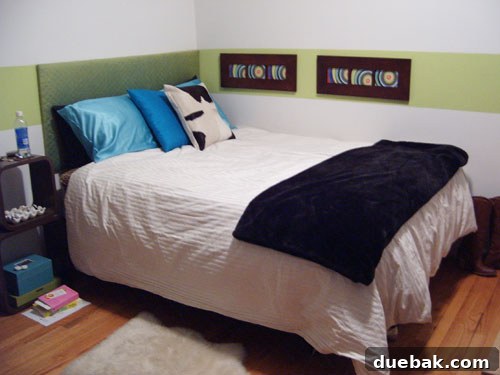
My perspective on space was profoundly shaped by my time in Manhattan, where I inhabited a room the size of a closet for a staggering $1200 a month. By comparison, our little ranch feels like an absolute palace! Even many affluent residents on the Upper East Side often live in spaces under 1000 square feet, and numerous families thrive in New York City’s compact environments. This experience helps me keep things in perspective, reminding me that effective utilization of space often trumps sheer square footage. Here’s a glimpse into my cute, albeit tiny, NYC apartment from around 2005. It was so small, it couldn’t even accommodate a couch, so guests had to perch on my full-sized bed to watch VHS movies on my trusty 13-inch TV. Oh, the cringe! On a side note, notice my clever egg-crate-turned-jewelry-organizer on the makeshift side table! In truly small spaces, you really only have room for the things you genuinely love, don’t you?
The Golden Rule of Home Investment: Location Over Perfection
Now, let’s address your critical concern about “pricing your house out of your neighborhood.” This is a fundamental aspect of savvy home investment. The universally accepted recommendation for anyone planning significant renovations is to purchase “the worst house in the best neighborhood.” This strategy provides the greatest potential for increasing your property’s value. The logic is simple: while getting the best house in a struggling neighborhood might seem appealing at first, it won’t yield the same returns on your renovation efforts. You’d merely end up with an even nicer house surrounded by less appealing properties, making yours look disproportionately expensive and out of place, potentially hindering resale.
When we embarked on our homeownership journey, we deliberately sought out a complete “beater” of a house. If our “before” pictures didn’t make that abundantly clear, let me assure you, it was far from perfect! This intentional choice allowed us the freedom to undertake major upgrades without the nagging feeling of overcapitalizing. We knew there was ample room for improvement, ensuring our investments would elevate the property’s value within its desirable location.
For instance, while every other house on our street boasted a meticulously maintained, spacious front lawn set back from the road, ours presented a stark contrast. It was set back just as far, but instead of lush grass, it featured a neglected curb-to-house mulch bed and what could only be described as a veritable forest out front. This was just one of many unmistakable signs that our property offered significant potential for enhancement. In essence, our house was the proverbial “giant zit” on our charming neighborhood’s otherwise beautiful face. For anyone else facing a similar affliction, consider it permission granted to roll up your sleeves and get to work!
Of course, the initial purchase price of your home plays a crucial role in determining your renovation budget. Our home, for example, was about $35,000 cheaper than comparable houses of the same size in the same general area. This significant price difference provided a clear benchmark for how much we could comfortably “put into” it without feeling financially imprudent or “guilty” about our spending. This margin allowed us to envision transformative projects without immediate concern for diminishing returns.

Knowing When to Halt: When Your Home Outshines the Rest
On the flip side, if you already perceive your house as being significantly nicer or more upgraded than the surrounding properties, it’s a strong indicator to pump the brakes on any additional major renovations. This is especially true for costly projects like a full kitchen remodel. In such a scenario, further investment might push your home’s value beyond what the neighborhood market can support, making it difficult to recoup your expenses upon sale. A good rule of thumb is to avoid being the most expensive house on the block, as this often means your home’s value is capped by the surrounding properties.
To gain an objective perspective, consider a few practical steps. Befriending your neighbors and casually checking out their homes (perhaps by taking them a pie, as suggested!) can offer subtle insights into the local renovation standards. However, the most reliable approach is to consult with a local real estate agent. A seasoned realtor can provide an invaluable comparative market analysis (CMA) for your area, detailing recent sales of similar properties. They can candidly advise you on which renovations are likely to maximize your profit and which might be considered over-improvements, potentially vetoing a pricey kitchen remodel right from the start. This professional insight can save you considerable time, money, and stress before you even think about opening your wallet.
The “Forever Home” vs. “For Now Home” Investment Strategy
It’s important to acknowledge that our personal perspective on home renovation diverges slightly from mainstream advice, primarily because we affectionately refer to Casa Petersik as our “forever home.” Our long-term vision means we place less emphasis on immediate resale value when making decisions about improvements. If a realtor were to recommend against certain “switcheroos,” like converting our formal dining room into a much-needed third bedroom, it wouldn’t deter us. Our goal is to create a living space that perfectly suits our family’s lifestyle and brings us joy for decades to come, rather than optimizing for a quick sale.
However, if your plan, like Molly’s, involves selling your home within a year or two, the calculus changes entirely. You are operating in a completely different ballgame, especially in today’s dynamic economy. In this scenario, major renovations carry a significantly higher degree of risk. The time and substantial financial outlay required for projects like a full kitchen or bathroom overhaul might not translate into a profitable return on investment within such a short timeframe. Instead, smaller, more cosmetic, and less expensive projects tend to be a much safer bet, offering greater flexibility and a quicker turnaround with less “loot and effort.” These minor upgrades are more likely to appeal to a broader range of buyers without requiring you to sink excessive capital into a property you’re planning to leave soon.
The Verdict: Smart, Inexpensive Upgrades for Immediate Enjoyment and Future Value
Given your situation, Molly, our strong recommendation is to focus on making as many inexpensive yet impactful upgrades as you can. These types of projects not only enhance your current enjoyment of the home but also offer excellent returns on investment, making your property more appealing to potential buyers without breaking the bank. Consider these high-impact, low-cost transformations:
- Switching Out Light Fixtures: Dated light fixtures can instantly age a room. Modern, stylish replacements can dramatically update the look and feel of your space, often for a modest investment.
- Installing a Programmable Thermostat: This is a smart upgrade that appeals to buyers interested in energy efficiency and modern conveniences. Plus, it can save you money on utility bills while you still live there.
- Updating Bathroom Vanities: A new bathroom vanity or simply painting your existing dated one can refresh an entire bathroom. Complement this with new hardware for a cohesive, modern look.
- Changing Kitchen and Bathroom Hardware: Swapping out old cabinet pulls and drawer knobs for sleek, contemporary designs is a surprisingly effective way to modernize these key spaces without the expense of a full remodel.
- Upgrading Doorknobs: Replace old, brass doorknobs with chrome or nickel finishes throughout your home. This small detail creates a sense of consistency and modernity that buyers notice.
- Enhancing Curb Appeal: Don’t underestimate the power of a well-maintained exterior. Fresh landscaping, a clean entryway, and a freshly painted front door can significantly boost your home’s first impression.
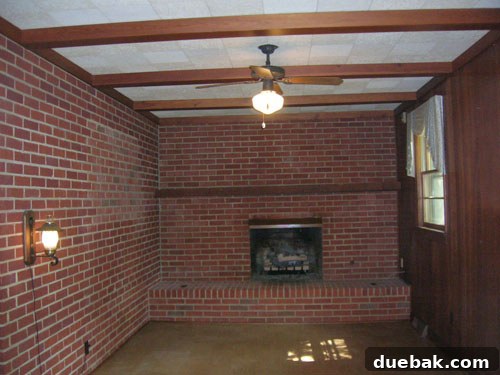
And, of course, we cannot forget the undisputed champion of inexpensive home transformations: paint! It is, without a doubt, the number one way to completely freshen up your home, often in just an afternoon and on the cheap. The power of a fresh coat of paint to revitalize a space is truly remarkable. Here’s a look at our dark and dated den before we introduced the magic of paint:
And now, behold the same space after just a few gallons of creamy, transformative goodness:
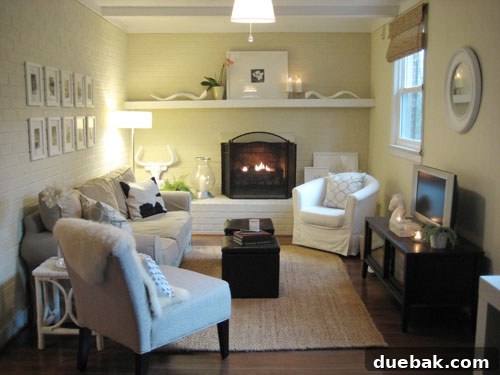
It’s almost unbelievable, isn’t it? The paint truly made the room come alive. We didn’t even bother with drywalling over the paneling; we simply rolled right over it. Despite having two walls of painted brick and two walls of painted paneling, the entire room now feels incredibly light, airy, and wonderfully cohesive. What’s even more astonishing is that this complete transformation only took about seven hours in total and cost us under $100 worth of paint. The lesson here is profound: a few well-chosen, inexpensive tweaks can be all it takes to make you, Molly, fall deeply in love with your house all over again—without the gnawing worry of overpaying or diminishing your future return.
Your Home, Your Happiness: Making Thoughtful Choices
Ultimately, the decision of how much to invest in your home before a potential move comes down to a thoughtful balance between your current enjoyment and future financial goals. For a “for now” home, prioritize updates that offer a high return on investment and broad appeal, ensuring you enjoy your time there while also making it attractive to future buyers. For a “forever home,” the calculus shifts, allowing for more personalized and lifestyle-driven renovations.
What are your thoughts, dear readers? Can you think of any other clever, inexpensive upgrades that might help Molly with her property predicament? Have you personally undertaken any “just-for-now” house projects that made it feel more like a “forever home” without breaking the bank? Perhaps you have tales of a love-hate relationship with your own house, wanting to sell only to fall inexplicably and deeply in love with it all over again, finding yourself still there ten years later? Do tell us your stories and share your wisdom in the comments below. Your experiences could be the perfect inspiration Molly needs!
Update – Craving details about our home decor or curious about the specific paint colors we’ve used? Simply click the button below to explore our curated selections and discover the secrets behind our most loved spaces.