Updated January 2022
Are you looking for a transformative, durable, and surprisingly achievable flooring solution for your home or outdoor spaces? A stained concrete floor offers incredible aesthetic versatility, robust durability, and can be a highly cost-effective option for areas like garages, sunrooms, basements, porches, or patios. The good news is that tackling a concrete staining project yourself is an entirely manageable task, even for DIY novices. While we’ll share a common pitfall we encountered to help you avoid it, the overall process is straightforward and doesn’t demand specialized tools or extensive experience.
Imagine turning that dull, utilitarian concrete slab into a stunning, custom-colored surface that elevates the look and feel of any room. This guide will walk you through every step, ensuring a smooth and successful DIY experience.

Transforming your concrete floor into a work of art is broken down into these four essential steps:
- Choose your ideal concrete stain
- Thoroughly clean and prepare your floor
- Expertly apply your chosen stain
- Protect and seal your newly stained floors
It sounds simple, and with the right approach, it truly is!
Step 1: Choose Your Concrete Stain – Setting the Foundation for Style
The first decision in your concrete staining journey is selecting the right product. For most homeowners embarking on a DIY project, a water-based concrete stain is an excellent choice. Products like the one offered by Behr are user-friendly, offer a wide palette of colors, and provide a consistent finish without the complexities often associated with acid stains. While acid stains can create a unique, marbled, and long-lasting finish, they react chemically with the concrete, making the final color less predictable and their application more challenging and often best left to professionals.
Beyond the stain type, you’ll need to decide between a semi-transparent or solid stain. This choice significantly impacts the final aesthetic:
- Solid Stains: These provide opaque coverage, similar to paint. They will completely cover the existing color and minor imperfections of your concrete, resulting in a uniform and consistent look. Choose a solid stain if your concrete has noticeable flaws or if you desire a bold, consistent color.
- Semi-Transparent Stains: As the name suggests, these stains allow some of the concrete’s natural variations and character to show through. They impart a beautiful wash of color, creating a more organic, variegated, and natural stone-like appearance. The final color will be influenced by the original concrete’s tone and texture. This is an ideal choice if your concrete is in good condition and you appreciate its inherent beauty.
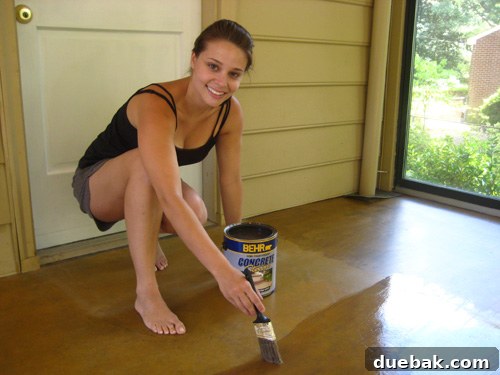
Consider the current condition and appearance of your existing concrete floor, as well as the desired final look for your space. For our sunroom project, we opted for a Behr Semi-Transparent Concrete Stain in “Tuscan Gold.” This choice allowed us to infuse our unfinished concrete floors with a warm, honey-gold hue that brightened the room while retaining some of the concrete’s natural texture and depth.
Step 2: Clean & Prepare Your Concrete Floor – The Foundation of Success
This step is arguably the most crucial for a successful and long-lasting stain application. Just like any painting project, the longevity and appearance of your stained concrete depend heavily on a meticulously clean and properly prepared surface. Skipping or rushing this stage can lead to uneven color, poor adhesion, and premature wear. Begin by removing all loose debris – sweep thoroughly, then follow with a vacuum cleaner to eliminate dust bunnies, dirt, and fine particles. For indoor areas, a final wipe-down with a mildly soapy wet rag ensures the surface is squeaky clean and free of residues. Allow it to dry completely.
For outdoor areas like concrete patios, walkways, or garage floors, a pressure washer can be an invaluable tool for deep cleaning. We highly recommend a powerful model like this one to dislodge any caked-on dirt, grime, moss, or mildew. Ensure ample drying time after pressure washing, which can take several days depending on weather conditions.
Beyond general cleaning, inspect your floor for any imperfections. This is the ideal time to address them:
- Crack and Hole Repair: Even if your floor appears to be in great condition, minor cracks can become more pronounced once stained. Fill any cracks or small holes using a suitable concrete repair product, such as a durable crack repair sealant or a pourable concrete filler for larger areas. Follow the manufacturer’s instructions for application and curing time, typically 24-48 hours.
- Grease, Oil, and Paint Stripping: Concrete, especially in garages or workshops, can accumulate oil stains, grease, or old paint spills. These must be removed for the stain to adhere properly and evenly. Use a specialized concrete degreaser or paint stripper, following safety precautions and ventilation guidelines.
- New Concrete Curing: If you’re working with newly poured concrete, it’s crucial to allow it to fully cure for at least 28 days (and sometimes up to 60 days) before applying any stain or sealer. Premature application can trap moisture, leading to bubbling, peeling, or an uneven finish.
- Etching (If Necessary): For very smooth or troweled concrete, or if you’re concerned about stain penetration, an acid etch or mechanical abrasion may be necessary. An etching solution creates a porous surface, allowing the stain to penetrate deeper and adhere better. Always follow product instructions carefully and ensure proper ventilation and protective gear. Thoroughly rinse the floor after etching and allow it to dry completely.
Once your floor is impeccably clean, completely dry, and any repairs are fully cured, you are ready for the exciting application phase.
Step 3: Apply Your Stain – Bringing Color to Life
With your floor prepped, it’s time to apply the stain. While professional-grade paint sprayers or pump sprayers can offer quick and even coverage, particularly for large areas, you can achieve excellent results with common tools like a trusty paintbrush and paint roller. The roller is perfect for covering large surface areas efficiently, while the paintbrush allows for precise edging around corners, walls, and obstacles. This manual application method, though potentially more time-consuming for vast spaces, has the advantage of not requiring any specialized equipment and minimizes the need for extensive masking to protect surrounding areas from overspray.
Regardless of your application technique, the golden rule for a seamless finish is to maintain a “wet edge.” This means ensuring that as you apply new stain, you are always overlapping onto an area that is still wet with stain, not one that has already dried. Applying fresh stain over a “dry edge” creates a double layer of stain in those areas, which can result in a darker, less transparent, and streaky finish that detracts from the uniform look you’re aiming for. Work in manageable sections, moving systematically to avoid dry edges.
For semi-transparent stains, the color will intensify and deepen with each additional coat. Continue applying thin, even coats until you achieve your desired color saturation and depth. Ensure that each coat is completely dry before applying the next to prevent lifting or unevenness; drying times will vary based on your specific product, ambient temperature, and humidity levels. For our project, we applied three coats to reach the rich, warm color we envisioned. To minimize the appearance of brushstrokes and ensure uniform coverage, we alternated the direction of our application with each coat – first applying lengthwise, then widthwise, and finally lengthwise again.
A critical piece of advice for any floor staining or painting project: always plan your “escape route” in advance! Ensure you work your way out of the room or area, finishing near an exit, so you don’t accidentally stain yourself into a corner with wet product.
Step 4: Seal Your Concrete – Protection and Lasting Beauty
Once your final stain coat has fully dried and cured (check the manufacturer’s recommendations for specific timing), the crucial last step is to apply a concrete sealer. Sealing is non-negotiable; it protects your beautifully stained floor from abrasion, moisture, chemical spills, and UV fading, significantly extending its life and maintaining its aesthetic appeal. Concrete sealers come in a wide variety of finishes, allowing you to customize the final look:
- Low-Luster or Matte Sealers: These provide a subtle, natural finish, perfect for those who want to enhance the color without adding shine. They offer a refined, understated look.
- Satin or Semi-Gloss Sealers: Offering a moderate sheen, these options provide a slight gleam that enhances the stain’s depth without being overly reflective.
- Glossy or “Wet-Look” Sealers: For maximum impact, these sealers add a significant amount of shine, making the colors pop and giving the floor a rich, wet appearance.
Beyond finish, consider the type of sealer. Acrylic sealers are common and user-friendly, offering good UV resistance. Polyurethane or epoxy sealers provide superior durability and chemical resistance, ideal for high-traffic areas or garages. Choose a sealer specifically designed for stained concrete and compatible with your chosen stain. Application is similar to the stain itself: apply thin, even coats using a roller or sprayer, always following the manufacturer’s instructions for number of coats, drying times, and proper ventilation.
Avoid The Mistake We Made: The Perils of Staining Over Stain
Our initially stained concrete floor performed admirably – even surviving the dragging of heavy appliances without a single scratch to its finish! However, about two years after completing the project, we desired a change. We wanted a richer, more chocolate brown color that would better harmonize with the flooring inside our house. Our assumption was simple: just apply a darker stain right over the existing one. We were gravely mistaken!
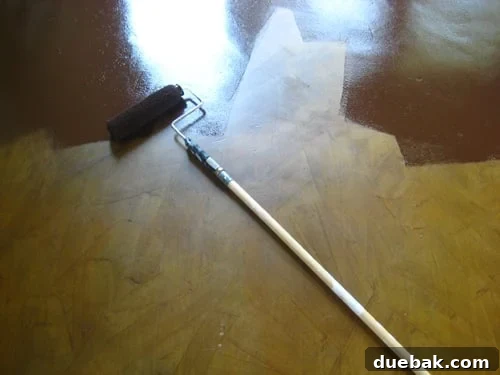
We attempted to apply a darker semi-transparent stain (a color called “Loden”) directly over our existing Tuscan Gold floor. The results were dishearteningly streaky, muddy, and frankly, looked almost dirty, as seen in the image below. Since then, we’ve heard from countless other DIYers who confirm this critical lesson: attempting to apply a darker semi-transparent stain over an existing lighter semi-transparent stain almost invariably yields unsatisfactory results. Semi-transparent stains are designed to tint the concrete, allowing its natural variations to show. Layering them often leads to uneven absorption and a patchy, mottled appearance rather than a uniform color change.
So, what was our successful alternative? Rather than staining, we decided to paint the stained floor, and the outcome was fantastic! Painting provides opaque coverage, allowing for a complete color transformation without the issues of layering semi-transparent stains.
If you’re considering a complete color change or seeking full coverage, we highly recommend following our detailed tutorial on how to paint a floor for all the specifics on that process. Spoiler alert: it’s quite similar to staining in its simplicity and accessibility!
We even took our concrete floor transformation a step further by later applying a decorative stencil to the painted floor. This added an extra layer of visual interest and personalized style to what began as a completely plain, uninspired concrete slab.

In essence, the takeaway is clear: there are numerous excellent options for upgrading and revitalizing your concrete floors. The key is to select your initial stain color with careful consideration and, if a drastic change is desired later, explore alternatives like painting for optimal results.
Why Choose Stained Concrete for Your Home?
Stained concrete floors offer a multitude of benefits that make them an increasingly popular choice for both interior and exterior spaces:
- Exceptional Durability: Concrete is inherently strong. Staining penetrates the surface (unlike paint which coats it), creating a finish that resists chipping, peeling, and fading under normal conditions. Once sealed, it stands up incredibly well to heavy foot traffic, furniture, and even spills.
- Low Maintenance: Stained concrete floors are remarkably easy to clean. Regular sweeping or vacuuming, followed by occasional damp mopping with a mild cleaner, is usually all that’s required to keep them looking pristine. They don’t harbor dust mites, pet dander, or allergens, making them an excellent choice for allergy sufferers.
- Aesthetic Versatility: From natural earth tones to vibrant hues, the range of colors and effects achievable with concrete stain is vast. Whether you desire the look of natural stone, leather, or a contemporary abstract design, staining offers incredible customization.
- Cost-Effectiveness: Compared to many other flooring options like hardwood, tile, or carpet, staining an existing concrete slab is often a more budget-friendly choice, especially for larger areas.
- Eco-Friendly: Utilizing an existing concrete slab eliminates the need for additional materials, reducing waste. Many water-based stains are also low in VOCs (Volatile Organic Compounds), contributing to better indoor air quality.
- Increased Property Value: A well-executed stained concrete floor can significantly enhance the visual appeal and perceived value of your home, offering a unique and sophisticated finish.
Essential Tools & Materials Checklist
Before you begin, gather these items to ensure a smooth workflow:
- Concrete stain (water-based or semi-transparent recommended)
- Concrete sealer (matte, satin, or gloss)
- Broom, vacuum, and mop
- Mild detergent and buckets
- Pressure washer (for outdoor concrete)
- Concrete degreaser/stripper (if needed)
- Concrete crack repair sealant or filler (if needed)
- Concrete etcher (if concrete is very smooth or new)
- Paint rollers (with extension pole)
- Paintbrushes (for edging and corners)
- Paint trays
- Drop cloths or plastic sheeting
- Painter’s tape
- Protective gear: gloves, safety glasses, respirator (especially for etching or solvent-based products)
Maintenance Tips for Your Stained Concrete Floors
To keep your stained concrete looking its best for years to come, consistent care is key:
- Regular Cleaning: Sweep or vacuum frequently to remove grit that can abrade the sealer. Mop weekly or as needed with a pH-neutral cleaner specifically designed for sealed floors. Avoid harsh chemicals, abrasive scrubbers, or cleaners containing bleach, ammonia, or citrus, as these can dull or damage the sealer and stain over time.
- Prompt Spill Cleanup: Wipe up spills immediately, especially acidic liquids like wine, fruit juice, or vinegar, which can etch the sealer and potentially stain the concrete if left for too long.
- Protect from Furniture: Place felt pads under furniture legs to prevent scratches and scuffs, especially when moving items.
- Use Mats: For outdoor areas, use doormats to trap dirt and moisture before it tracks onto your stained surface. For indoor areas, consider area rugs in high-traffic zones, but be mindful of their material, as some rubber backings can discolor sealers.
- Re-sealing: The lifespan of your sealer depends on traffic, UV exposure, and the type of sealer used. Generally, interior floors may need re-sealing every 3-5 years, while exterior floors, exposed to harsher elements, might require it every 1-3 years. Regularly inspect your floor for signs of wear in the sealer (dullness, water penetration) and reapply as needed following the manufacturer’s instructions.
More Flooring Projects
If you would like to read about other flooring projects we’ve done, please check out the posts below:
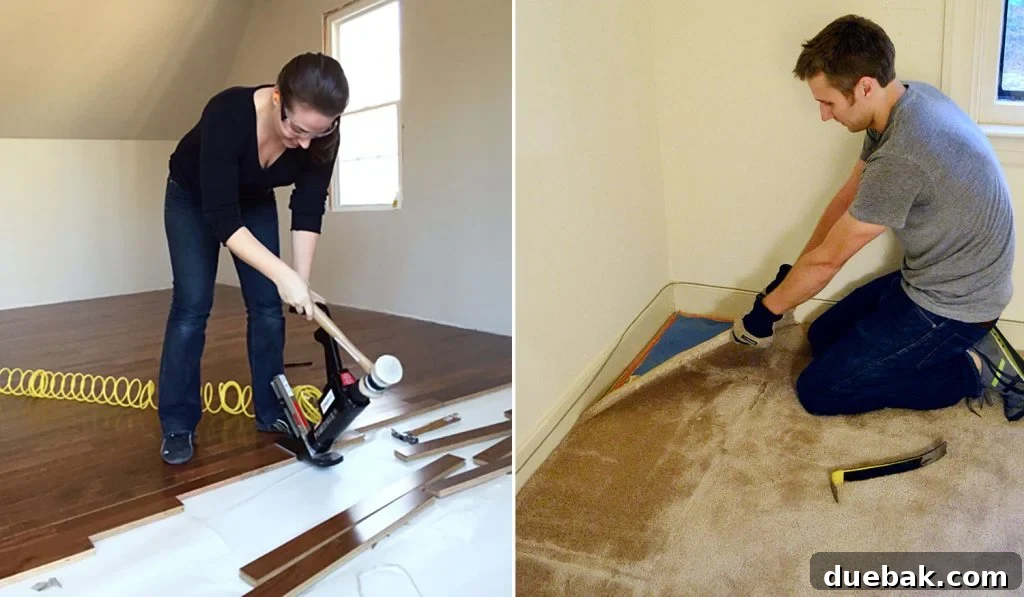
- Refinishing Hardwood Floors 101: A Comprehensive Guide
- How To Install Hardwood Flooring Yourself: Step-by-Step DIY
- How To Select The Perfect Hardwood Flooring For Your Home
- Innovative Ways To Install Hardwood Floors Without Nails
- How To Install Click-And-Lock Cork Flooring With Ease
- Transform Your Space: A Complete Guide To Painting A Floor
- Mastering Carpet Removal: A Guide To Prepping For New Floors
*This post contains affiliate links, so we may earn a small commission when you make a purchase through links on our site at no additional cost to you.