
Building a Backyard Oasis: Installing Girders, Prepping the Ground, and Setting Joists for Our DIY Deck
Transforming our backyard into a functional and beautiful outdoor living space has been an exhilarating journey, and our DIY deck project is truly at its heart. We’re beyond excited to share the significant progress we’ve made, moving from foundational elements to the very skeleton of what will soon be our perfect retreat. This phase has seen us tackle the crucial installation of girders, meticulously prepare the ground beneath, and finally, lay down the joists, making our vision of a new deck feel incredibly tangible. Join us as we recount the steps, challenges, and rewarding moments of this vital stage in our deck-building adventure.
Phase 1: Establishing a Robust Foundation with Double Girders
The arrival of my dad from West Virginia marked the official commencement of ‘Operation Double-Up the Girders,’ a critical step for ensuring the structural integrity of our deck. His presence was invaluable, not just for the extra hands but for his seasoned experience and problem-solving acumen. My initial thought involved a tricky maneuver: holding the heavy girder boards aloft while drilling pilot holes into the posts. However, my dad quickly interjected with a far more practical and safer approach. His suggestion? Assemble the two girder boards on the ground first, nailing them together, which would then allow them to rest securely on the pre-notched posts without the need for precarious overhead lifting. It was a testament to his smart thinking and a reminder of why he’s such an essential partner in these projects.
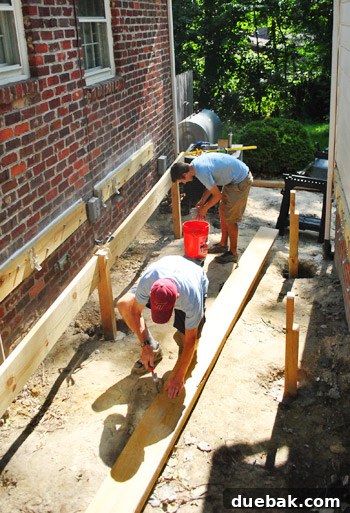
With the smarter plan in motion, we began by clamping the two girder boards tightly together. This step was crucial to ensure that their top edges were perfectly aligned, despite the inherent variations in lumber (even boards marked “2×10” can have slight differences in width). Once aligned, we securely nailed them together, effectively creating a single, robust double-thick girder. This technique not only simplifies the installation but also significantly enhances the load-bearing capacity of the deck’s primary support structure, distributing weight more effectively across the posts.
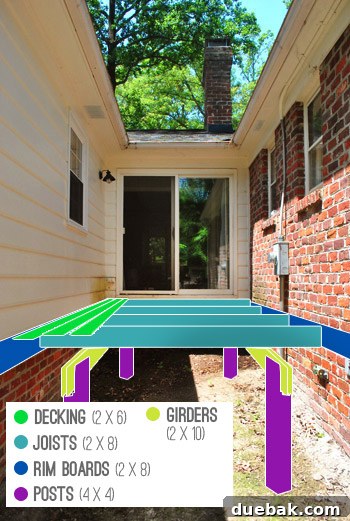
To help visualize how these crucial components integrate into the overall deck design, here’s a helpful graphic illustrating the structural framework. Understanding this blueprint is key to appreciating the role each element plays in creating a sturdy and compliant deck:
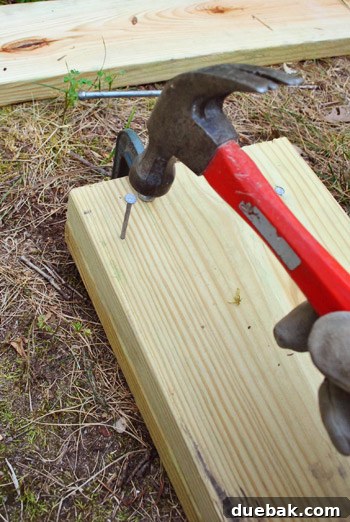
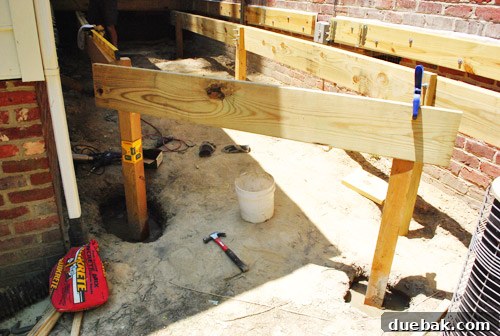
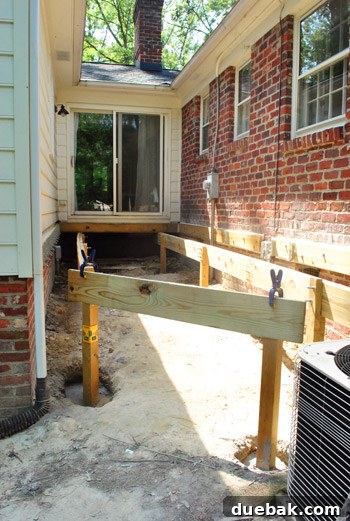
With the double-thick girders pre-assembled, the next step was to carefully rest them onto the notches of our previously installed posts. This seamless fit confirmed the precision of our earlier measurements and cuts. The real challenge, however, came with bolting these massive components together. Our local county regulations mandate the use of “two 1/2-inch through bolts” for each connection. This required drilling 1/2-inch pilot holes through approximately 4.5 inches of dense wood – a task made slightly more complex by the fact that my longest drill bit was barely sufficient for the job. Precision here was paramount to prevent splitting the wood and ensure a secure, code-compliant connection.
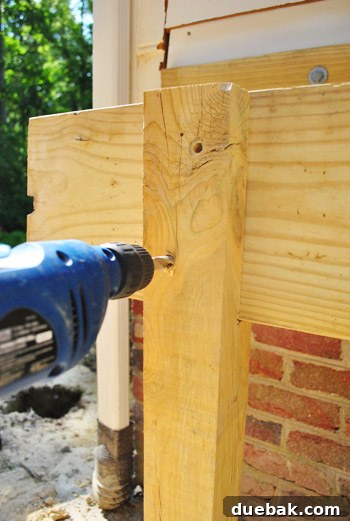
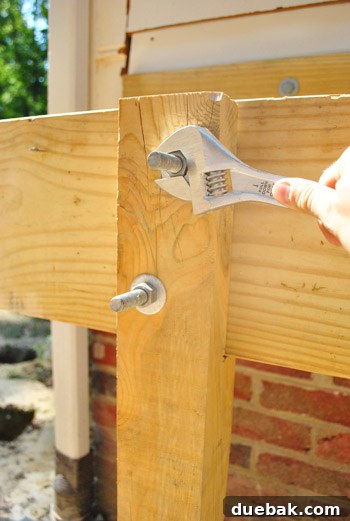
Despite the slight challenge with drill bit length, we successfully bored the necessary holes. Sliding the hefty bolts through the thick timber required a bit of targeted hammering, but they eventually passed through cleanly. Once in place, we tightened the nuts on the opposing end, securing the girders firmly to the posts. This process, while physically demanding and taking about two hours under the intense 95-degree morning heat, proved to be remarkably straightforward. We were pleasantly surprised that this foundational stage proceeded faster than our initial estimations, giving us a morale boost for the rest of the project.
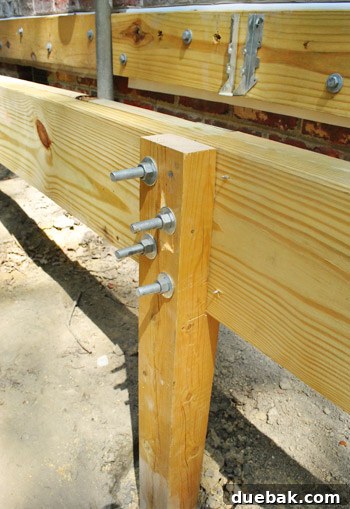
For the longer sections of our deck, where two sets of girder boards meet, we implemented a strategic joining method. These boards butt up against each other on a single post, creating a continuous and strong support beam. The image below clearly shows how we used multiple through-bolts to reinforce these critical connections, ensuring maximum stability and adherence to building codes. It truly felt like a ‘through-bolt party’ as we worked to fortify every joint!
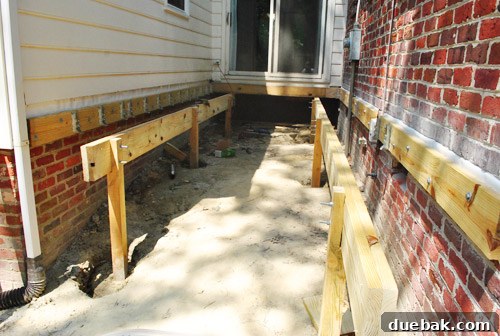
Given our efficient progress through the morning, I seized the opportunity to convince my dad to help measure, cut, and temporarily set the diagonal girder and its corresponding posts. This foresight saved us valuable time later on, demonstrating how planning a few steps ahead can greatly streamline a DIY project. By noon, we had achieved nearly all our goals for the day, a gratifying sense of accomplishment filling the humid air.
Phase 2: Preparing the Under-Deck Area for Longevity and Pest Control
While my dad departed to attend to other commitments, my day was far from over. After a brief respite indoors, I returned to the steadily progressing deck, ready to tackle the critical step of preparing the ground beneath. Many fellow DIY enthusiasts had strongly recommended proactive weed-preventative measures, and I recognized this as my last opportunity for easy, unobstructed access to the entire under-deck area before the joists would create numerous obstacles. The first order of business was to temporarily remove the diagonal girder that we had pre-positioned but not yet permanently bolted, ensuring a completely clear workspace.
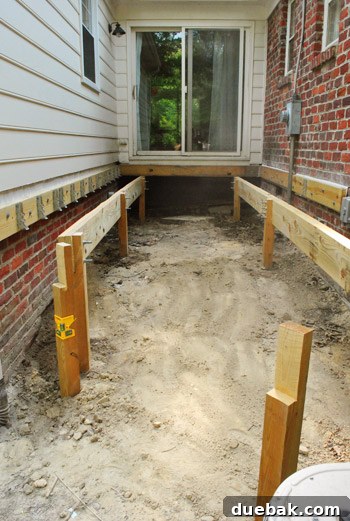
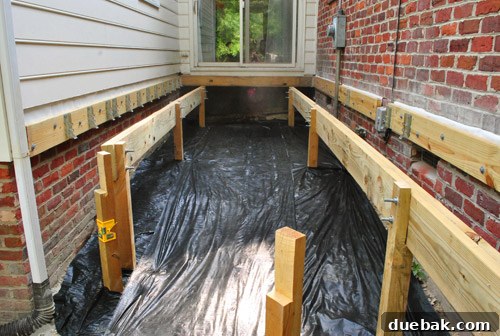
Next came the installation of a weed block fabric. Utilizing some leftover material from Clara’s rock box, supplemented by an affordable $12 roll from Home Depot, I managed to cover the entire ground area with ease. While I hold somewhat mixed feelings about weed block – having observed instances where stubborn weeds manage to grow on top rather than being deterred from underneath – I concluded that any preventative measure is superior to none. For an investment of around $15, including the ground staples required to secure it, it felt like a worthwhile endeavor, especially since this method is widely recommended in our region for managing the space beneath decks. This layer provides an initial defense against unwanted growth, reducing future maintenance significantly.
Following the weed block, the next layer was gravel. Creating a soil-less environment is a highly effective strategy for inhibiting weed growth, as it deprives them of the medium they need to flourish. Furthermore, a weed-block-and-gravel combination makes the under-deck area far less appealing to pests seeking damp, muddy, and secluded spots to hide. My initial plan involved a bulk delivery of gravel from the same stoneyard where we sourced materials for our DIY patio. However, a lapse in placing the order and an surge of impatience led me to an alternative solution: two car-loads of bagged gravel from Home Depot. Fortunately, I caught it on sale, marked down from $3.38 to $2.50 per bag, resulting in a welcome saving of approximately $35!
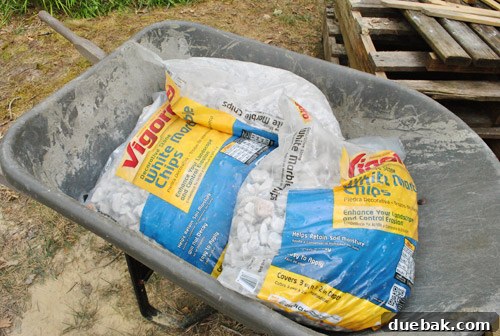
Transporting all those bags of gravel from our driveway to the deck area, around the other side of the house, was far from an easy feat – especially under the relentless near-100-degree heat. By this point in the project, I had become quite accustomed to being perpetually sweaty and grimy, a state which the staff at Home Depot seemed to have grown unfortunately familiar with as well. Nevertheless, the effort was worth it as the space beneath the deck slowly began to fill with protective rock, promising a cleaner, more pest-resistant foundation for years to come.
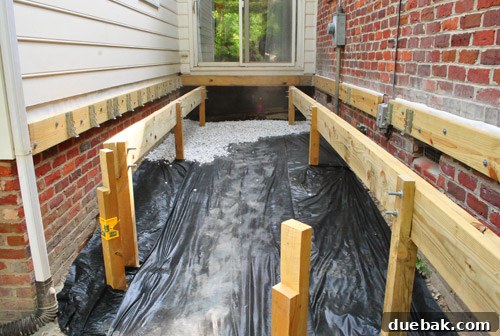
We were almost there, seeing the entire area steadily being covered…
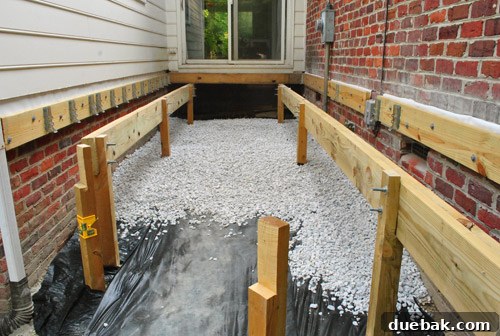
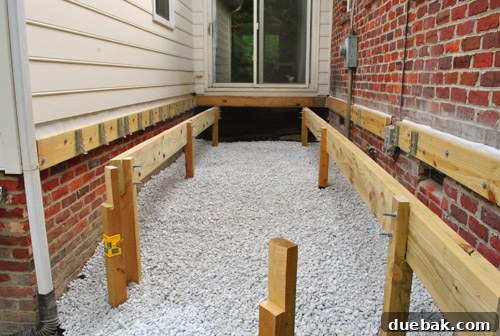
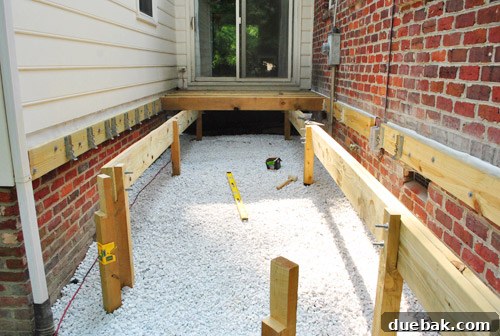
…and finally, complete for this section. A total of 40 bags of gravel were used to cover the main under-deck footprint. I anticipate needing more when the stairs are installed, but for now, I’m content to address that requirement when the time comes. Finishing this task by 7:30 PM, I decided to call it a day. Despite the exhaustion, a sense of quiet excitement stirred within me, knowing that the next phase would involve installing the joists, which would finally make the structure begin to truly resemble a deck.
Phase 3: Framing the Deck – Installing the Joists
The following day dawned, bringing with it a profound sense of soreness from the previous day’s exertions – easily the most sore I’ve been in recent memory. Yet, the anticipation of seeing the deck take its final form spurred me on. It was time to “get my joist on.” Each of our deck joists needed to be approximately 7.5 feet long, requiring me to trim a small segment off each 8-foot-long 2×8-inch board. This precise cutting ensures the joists fit perfectly across the girders, forming a level and sturdy platform for the deck boards.
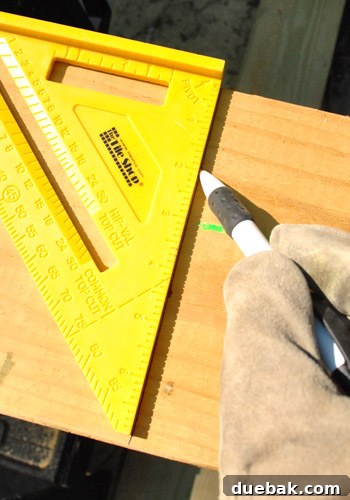
As I marked each cut, a curious thing happened. My eyes repeatedly caught the word “PIVOT” printed in the corner of my straight edge, instantly triggering a replay of that iconic scene from Friends in my head. It provided a much-needed moment of levity during what was otherwise a focused and demanding task.
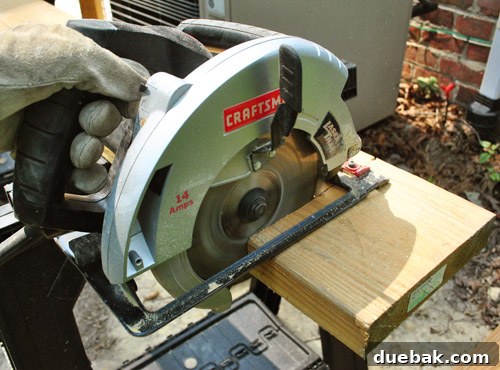
Once Ross Geller’s voice finally faded from my mind, I got down to the serious business of cutting with my circular saw – which has quickly become my indispensable companion on this deck project. Its efficiency and precision are critical for ensuring all joists are uniformly cut to length, a fundamental requirement for a level deck surface. After cutting, the joists simply rest on top of the girders, a design that simplifies initial placement as no immediate additional support is needed to hold them up temporarily.
However, to provide essential side-to-side stability and prevent any lateral movement, it was crucial to add joist hangers on both ends. I had already installed all the hangers on the house’s siding side during an earlier phase, so this step involved adding them to the brick side of the structure. These metal connectors are key for a secure frame, transferring the load from the joists directly to the girders and the house ledger board.
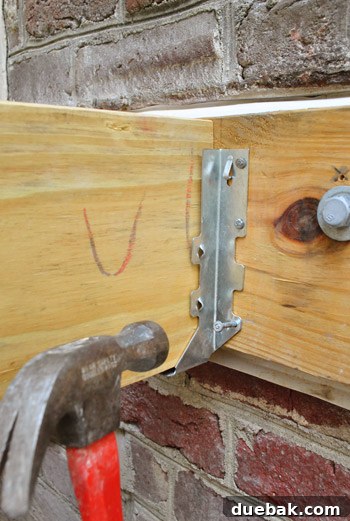
Unlike the initial hangers that supported the joists’ vertical position, these particular hangers were primarily for lateral stability. This meant it was even more critical to nail them securely into the sides of the joists and ledger, utilizing the handy angled-nail guides integrated into the hanger design. These guides ensure that nails are driven in at the correct angle for maximum holding power, a detail often overlooked but vital for long-term structural integrity.
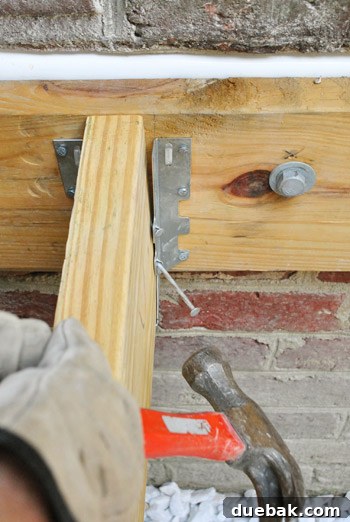
This process of securing each joist was anything but swift; each hanger demanded ten nails, meticulously driven into place. It wasn’t long before I started contemplating whether a nail gun would have been a wise investment for this project. Moments later, that contemplation solidified into a certainty – a nail gun absolutely would have been a wise investment. Alas, without one, I simply persevered, hammering away with a slightly delusional fantasy of emerging with Herculean biceps. (Spoiler alert: that particular outcome, strangely enough, did not materialize.)
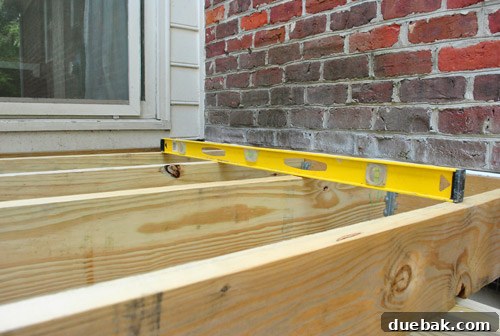
As each joist was installed, I diligently checked its level, ensuring a slight slope away from the house for proper drainage – a crucial detail to prevent water pooling and potential damage over time. While the primary girders were already set, limiting major adjustments, this continuous checking helped me identify and discard one severely warped board that curved noticeably upwards at one end, which would have compromised the deck’s flatness. Had I encountered any significantly un-level joists, I would have considered renting or purchasing a planer to shave a small amount off the top of the offending timber, bringing it into perfect alignment. This meticulous attention to detail at the joist stage is paramount for a smooth and safe deck surface.
A delightful interruption during this phase was Clara, my daughter, observing my work and adorably dubbing it my “pretty pretty deck.” While “pretty” might not be my first choice of adjective for a bare wooden frame, her genuine interest in the project was heartwarming, and I embraced her enthusiasm wholeheartedly. It’s moments like these that add an extra layer of joy to the demanding nature of DIY.
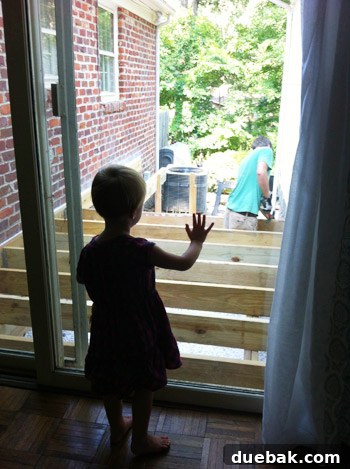
Slowly but surely, more joists joined their brethren, transforming the raw framework into something increasingly recognizable as a deck. Each newly installed joist brought us closer to the final structure, filling the space with the promise of future relaxation and enjoyment. The repetitive nature of the task, though tiring, was punctuated by the visible progress, providing constant motivation.
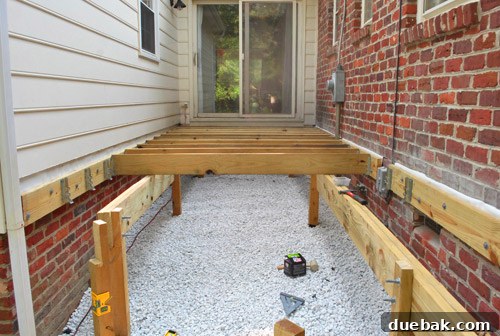
As I neared the end of joist installation, it became necessary to permanently bolt the diagonal girder into its final position. This was a critical step because the joists at that end of the deck would need to securely rest upon it, completing the structural support for that section. Proper fastening here is paramount for the stability of the entire deck periphery.
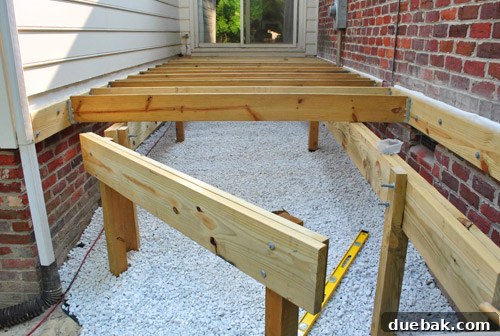
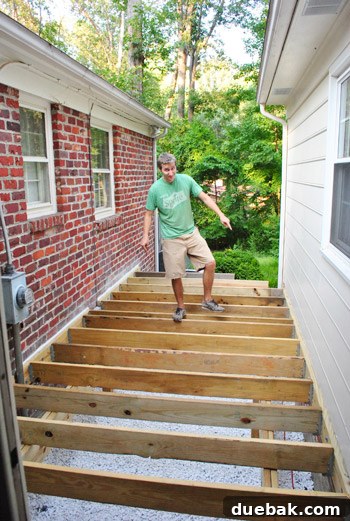
Finally, after an intense four hours of cutting, positioning, and hammering, all of my joists were securely in place. The skeletal frame of our deck stood proudly, a testament to dedication and hard work. It was a significant milestone, marking the transition from abstract planning to concrete structure.
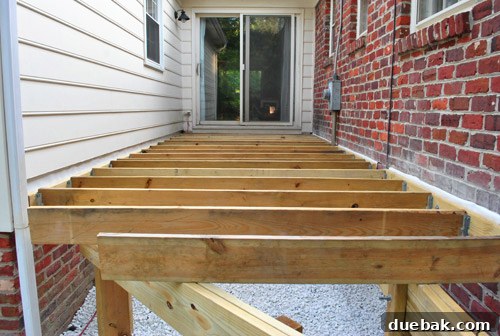
My next immediate task will involve adding the rim boards along the exposed edges of the deck. This step promises a bit more complexity, as it demands precise angled cuts to follow the deck’s perimeter seamlessly. After such a long and physically demanding day, my mental reserves were depleted, so I decided to defer this intricate cutting until I was fresh. For now, I’ve left the end joists intentionally long, knowing I can trim them with the circular saw to the exact angle once I’m ready to tackle the rim board challenge. The thought of that precision work could wait until tomorrow.
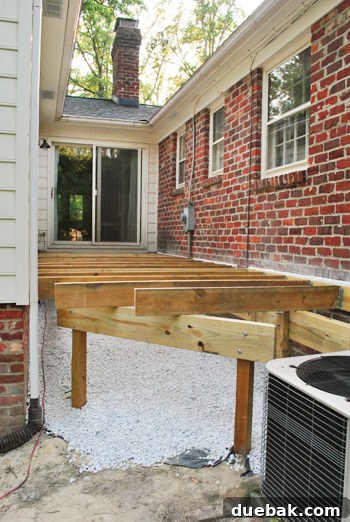
Considering the sheer amount of work involved, the progress is truly impressive, wouldn’t you agree? The frame, even without its finishing touches, already conveys a sense of strength and purpose, hinting at the beautiful outdoor space it will soon become.
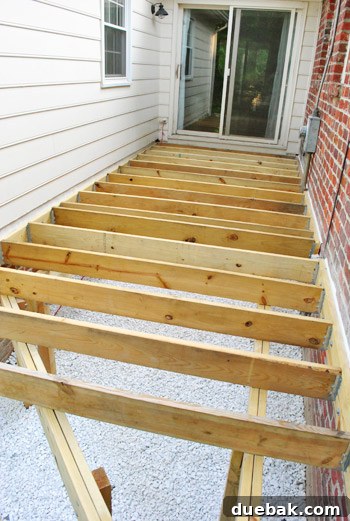
Before finally calling it a night, I couldn’t resist a moment of triumph: a quick test run of my new creation. It was imperative to ensure that the frame could indeed support human weight – specifically, my weight! Stepping onto the joists for the first time was a deeply satisfying experience, a tangible reward for all the effort.
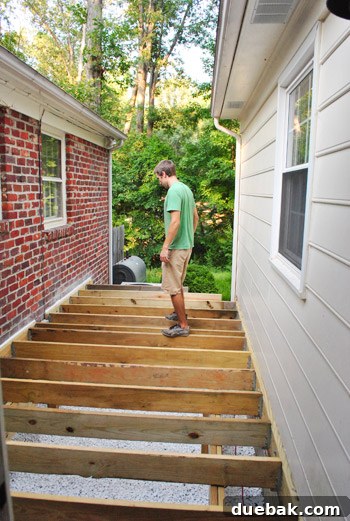
And it held! A small, spontaneous “Happy Happy Joist Joist” dance ensued, a private celebration of structural success and a step closer to our dream deck. The feeling of the solid frame beneath my feet was exhilarating.
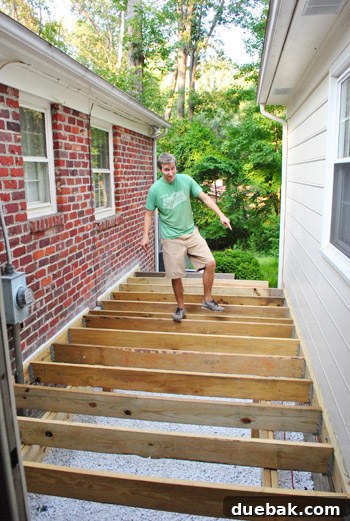
Conclusion: Nearing Completion and Envisioning Our Outdoor Haven
Once those rim boards are meticulously installed, our next major milestone will be laying the actual deck boards. I cannot express how genuinely excited we are to finally reach this stage. This entire project has undoubtedly taken longer than we initially anticipated – a timeline I attribute in equal measure to our own learning curve, the necessary involvement of inspectors, the oppressive summer heat, and frankly, the lack of an immediate army of helpers to accelerate progress. But that, as many DIYers know, is simply the nature of the beast. We firmly believe it will all be unequivocally worth it when we’re finally lounging out here, sipping cool lemonade, enjoying the fruits of our labor. It’s the vision of those peaceful moments that fuels our perseverance through every challenging step.
What about your own weekend endeavors? Have any outdoor or indoor projects in your life finally rounded a corner, looking more finished than undone? We’d love to hear about your progress and insights!
Psst- Want to catch up on all the exciting deck action from the very beginning? Here’s where we shared our initial vision for the space. Then, we meticulously removed the existing plantings and painstakingly dismantled the old balcony structure. This was followed by the crucial step of selecting our materials and documenting our first day of building progress. Next, we diligently dug our post holes, only to learn, quite disappointingly, that we failed our very first inspection. Undeterred, we revised our plans, dug more holes (which thankfully got approved), and proceeded to set our robust posts. Whew, now you’re completely caught up and ready for the next phase of our build!