
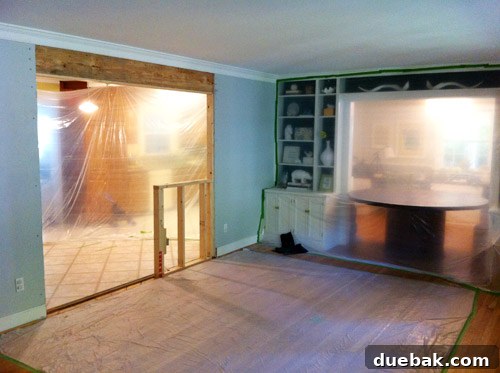
The exhilarating moment when a significant section of wall vanishes and the contractor packs up is undeniably thrilling. Yet, as any seasoned renovator knows, this is merely the end of one chapter and the beginning of another, often equally demanding, phase. The dream of a beautifully transformed space doesn’t materialize overnight; it demands dedication, meticulous planning, and a good deal of elbow grease. For now, what stands before us, while a huge leap forward, is still a raw, unfinished opening where our dining room will eventually flow seamlessly into a more functional and aesthetically pleasing space.
Choosing the Right Partner: A Note on Structural Contractors
Speaking of contractors, we often receive inquiries from locals asking for recommendations, particularly for significant structural work. We always make it a point to share contact information only after experiencing their services firsthand and being thoroughly satisfied with the outcome. We’re delighted to confidently recommend Steve, our Class A licensed contractor, whose professionalism and expertise exceeded our expectations.
It’s crucial to understand the distinction between a Class A contractor and a general handyman. A handyman typically handles smaller tasks like hanging doors, assembling furniture, or performing minor repairs. In contrast, a Class A contractor is licensed and qualified for substantial structural projects. If your renovation involves knocking down load-bearing walls, building new additions, or any complex structural modifications, a Class A contractor like Steve is indispensable. His expertise ensured the structural integrity of our new opening was impeccable. You can reach Steve at [email protected] for your major renovation needs.
Tackling Drywall: The Next Crucial Step in Our Home Transformation
With the major demolition complete, our focus shifted to the subsequent stages of our renovation: installing drywall. We deliberately kept the protective plastic barriers in place, anticipating the dust that drywall installation, especially the sanding phase, inevitably generates. While neither of us claims to be drywall installation maestros – in fact, it was arguably my least favorite part of our extensive bathroom renovation a couple of years ago – this particular job felt manageable and straightforward enough to tackle ourselves. The scope was relatively small: we needed to cover the exposed header above the new doorway on the dining room side and wrap a few sections around the newly formed half-wall.
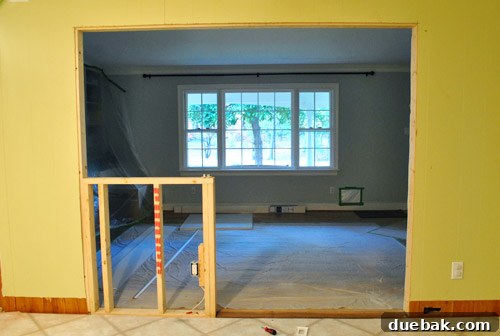
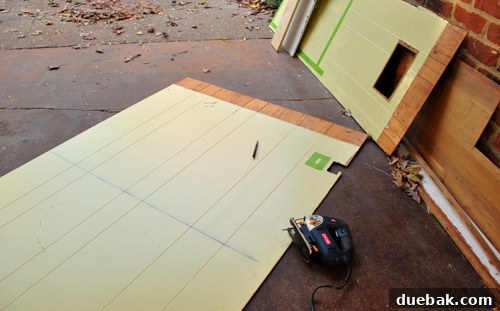
Interestingly, the kitchen side of the half-wall was always slated for paneling rather than drywall. This foresight allowed us to save all the usable scraps from the contractor’s demolition, which we then repurposed for this section. The initial steps were refreshingly simple: precise measuring, careful marking, and quick cuts with my trusty jigsaw. This part of the process was surprisingly quick and efficient, laying the groundwork for the more intricate steps to come.
Strategic Cabinet Placement: Planning for the Future
The ease of these initial cuts encouraged me to take a proactive step, a brilliant suggestion from Steve the contractor: I temporarily set the cabinet against the half-wall before proceeding with drywalling the back side. This allowed me to clearly see the studs, making it significantly easier and more accurate to drill into them later when permanently installing the cabinet. This small but strategic move prevents guesswork and potential costly errors down the line.
A crucial design note: The finished peninsula will feature a generous 12-inch counter overhang, creating space for stools to be tucked underneath. This means that once completed, very little of the half-wall will be visible from this angle, integrating seamlessly into the kitchen’s functionality. Furthermore, we plan to cap the half-wall with a substantial, chunky wooden ledge. This not only adds an aesthetic element but also enhances functionality, providing an additional surface and visually balancing the entire structure.
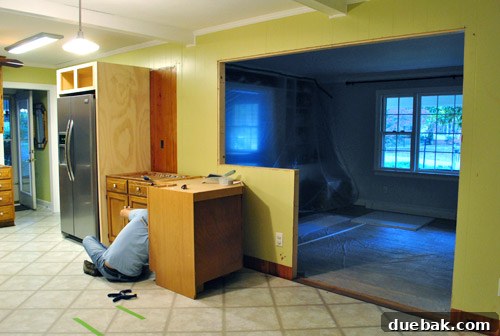
Even at this preliminary stage, with the cabinet in place, the space began to feel more defined and purposeful. It offered a glimpse into the finished vision, inspiring confidence that we were on the right track.
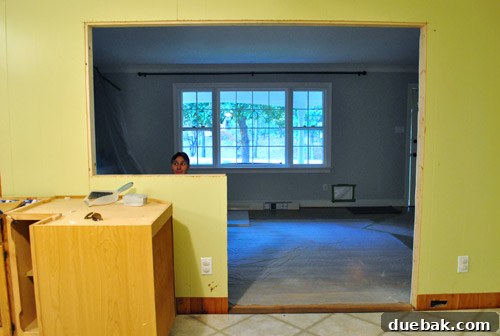
Okay, perhaps “finished” is a strong word at this point. There was still a long way to go to transform this raw opening into the elegant feature we envisioned.
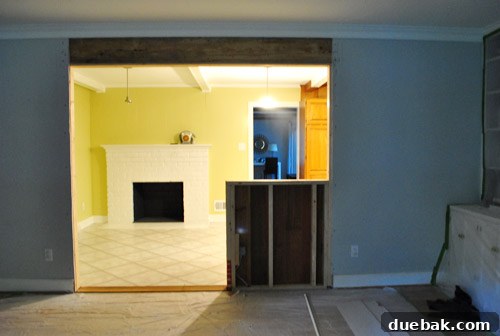
The Parking Lot Drywall Odyssey: Budget-Friendly Transport Solutions
My next task, however, was one I had been actively avoiding: transporting the drywall panels home. Fitting standard 4-foot by 8-foot sheets of drywall into our sedan, an Altima, was an impossibility. While renting a truck from Lowe’s or Home Depot is always an option, the prospect of spending $19 to transport just $14 worth of drywall felt, frankly, absurd. This is where Steve the contractor’s ingenuity shone once again. He suggested a brilliant workaround: cutting the drywall to size *before* leaving the store. Thus began my impromptu DIY workstation in the Lowe’s parking lot. Did I feel a pang of shame? Absolutely not! When it comes to saving money and time on a renovation project, practicality often trumps conventional decorum.

Equipped with my essential tools – a measuring tape, pen, a blue chalk line for precise marking, a sturdy razor blade for scoring, a yardstick as a straight edge, and a towel to minimize mess in the car – I purchased the drywall. For about 45 dedicated minutes, I meticulously measured, scored, and snapped the large sheets into manageable, pre-sized pieces right outside the store. A key detail for our project was that the existing drywall in the dining room was actually two panels thick, presumably for enhanced sound insulation or structural rigidity. To ensure a perfectly flush and seamless result, I had to cut two pieces of each size, effectively doubling up on our new drywall panels as well.
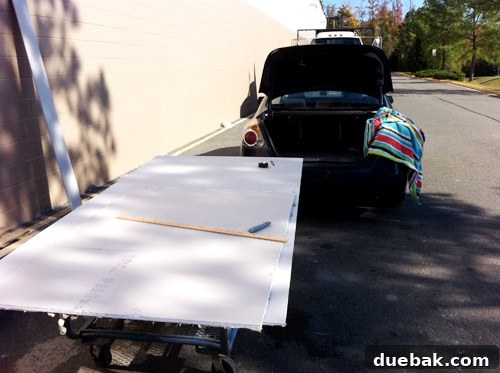
The efforts in the parking lot paid off handsomely. I managed to comfortably fit all the pieces for the half-wall, along with a few useful scraps, into the trunk of our car.
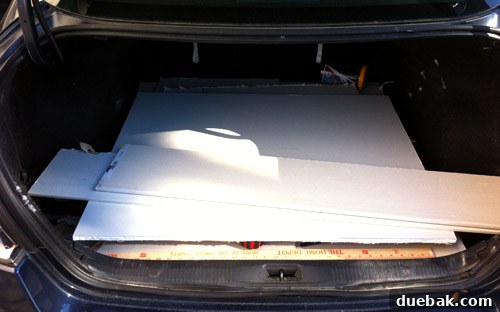
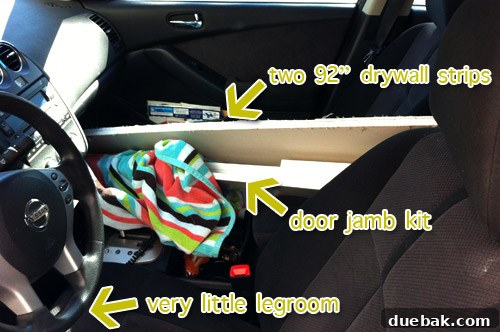
The longer sections, destined to cover the new doorway header, were carefully slid through the middle of the car, extending all the way to the front. Alongside them, I also managed to fit the door jamb kit, which would be essential for a subsequent phase of the project. It was a logistical victory, allowing us to proceed without the added expense and hassle of a truck rental.
The Drywall Installation: From Triumph to Troubleshooting
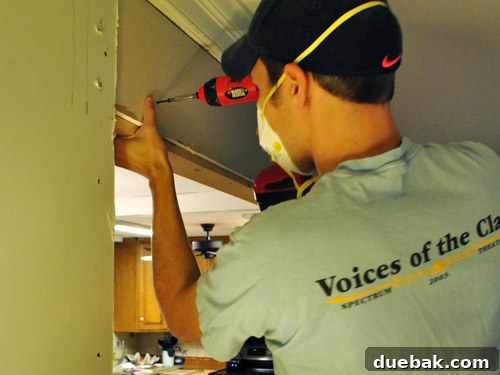
Despite the initial awkwardness of working in a public parking lot, returning home with pre-cut drywall pieces was a genuine pleasure. We could immediately jump into screwing the panels into place. Sherry was an invaluable help, holding one edge of the drywall while I secured it with a few “holding” screws. This allowed her to step back and capture some flattering progress photos, documenting our journey.
The Infamous “Smidge” Dilemma: When Precision Matters Most
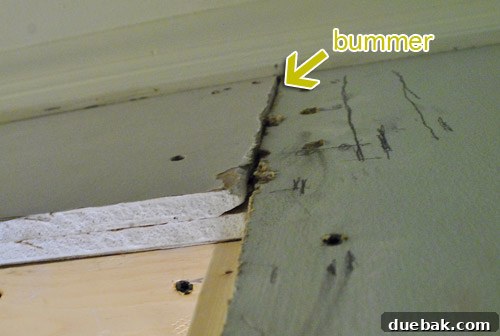
However, this is precisely where our streak of “this-is-going-better-than-expected” luck took a slight detour. Despite my most diligent measuring efforts – we even took comparative photos of tape measures against the existing drywall and the new drywall at the store to ensure the correct depth – our newly installed, doubled-up drywall proved to be a mere *smidge* thicker than the existing doubled-up drywall. In the world of drywall finishing, a “smidge” is an unacceptable discrepancy. Even with meticulous mudding, taping, and sanding, such a difference would create a noticeable slope, especially when illuminated by natural light, detracting significantly from the seamless finish we aimed for.
Resourceful Solutions: Shims and Stir Sticks to the Rescue
Faced with this challenge, I decided to ditch one of the new drywall panels and instead employ a technique I had successfully used during a previous renovation: shimming. Specifically, I recalled using shims when hanging Hardiebacker and drywall in the bathroom we had completely gutted. The goal was to use small pieces of wood to build out the framing just enough to bring the new single-layer drywall perfectly flush with the existing thicker wall. Our existing stash of shims and furring strips was limited, prompting a creative solution: our accumulated stockpile of paint stir sticks. We discovered that several stir sticks screwed together provided just the right density and thickness to act as effective shims, perfectly aligning the new drywall. Given the solid wood and steel header, everything held firmly and securely. You can spot the stir sticks peeking out slightly at the bottom, but rest assured, these will be completely covered by trim later on, making them invisible in the final aesthetic.
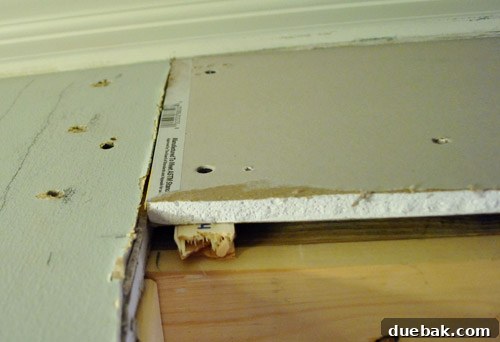
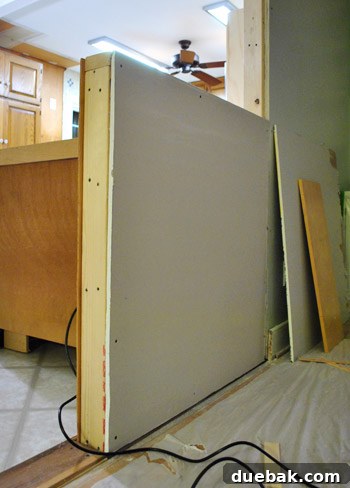
I replicated this shimming process for the larger drywall panel on the half-wall, painstakingly ensuring everything was as flush as humanly possible before securing it with screws. It’s true, over the years, we’ve amassed quite a collection of paint stir sticks. This is largely because paint stores often provide one with each can, and we typically dive straight into painting upon returning home, so the paint is still well-mixed from the store’s machine.
Finishing Touches: Corner Strips and the Art of Improvisation
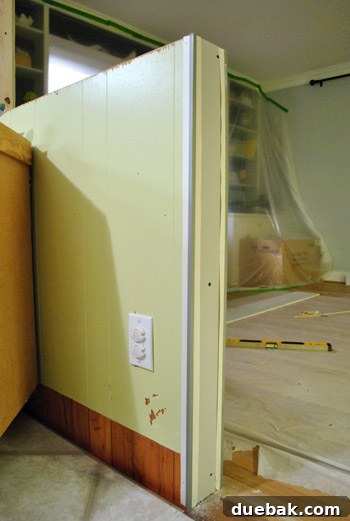
Fortuitously, for the small end cap of the half-wall, we didn’t have to contend with matching any existing drywall thickness, as it was a completely new plane. A single piece of drywall simply attached directly to the wooden frame, a straightforward task. To achieve crisp, sharp edges, we then applied metal drywall corner strips. While these strips aren’t typically designed for the exact intersection where paneling meets drywall, we’re certainly not averse to a little “improvisation” during our DIY projects. And as you’ll see later, this creative solution worked remarkably well (spoiler alert: it looks fantastic!).
With the drywall panels successfully hung – thankfully with only one minor hiccup that we cleverly resolved – the next critical phase was drywall mudding. This is where Sherry truly shines. I willingly ceded this task to her, often joking that she possesses a finesse that I lack when it comes to such detailed work. It’s the same rationale I use for her being superior at cutting-in paint lines; sometimes, recognizing and utilizing each other’s strengths is key to a successful renovation.
The Art of Drywall Finishing: Mud, Tape, and Patience
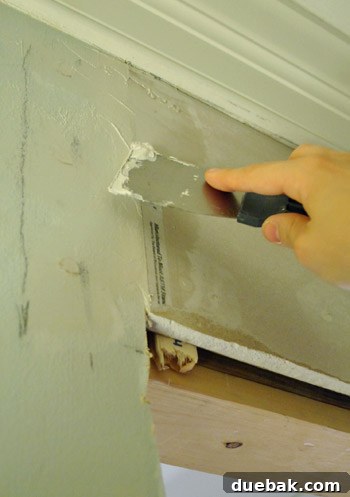
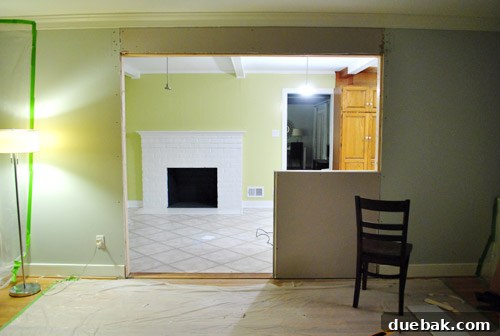
Sherry, armed with her impressive collection of spackle knives, embarked on the meticulous process of taping seams, applying drywall mud, smoothing it meticulously, allowing it to dry, and then sanding it to perfection before repeating the entire cycle. For particularly tight cracks, like one near the crown molding that was exceptionally snug, she opted for caulking instead of mud and tape, achieving a cleaner finish without the bulk of mud. This strategic decision showcases the nuanced approach required for professional-looking drywall work.
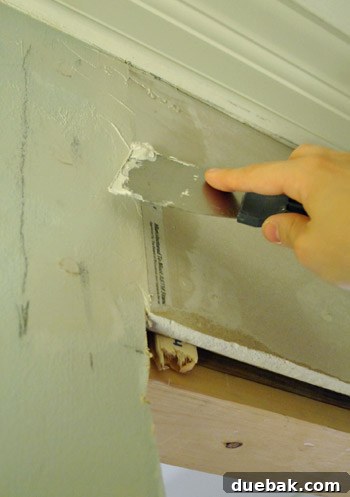
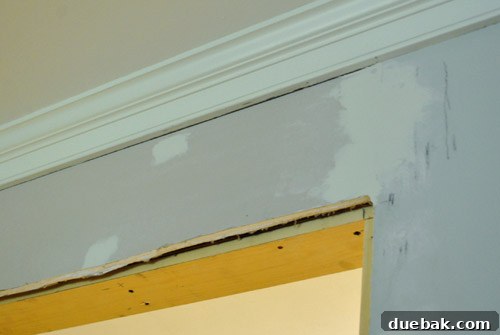
In most areas, Sherry applied three meticulous rounds of mud and sanding, driven by her commitment to achieving the smoothest, most seamless finish possible. Her dedication ensures that the walls will look flawlessly integrated once painted. (The crack near the crown molding, as mentioned, was left untouched in this photo because she decided to caulk it for a precise finish, an excellent alternative for very narrow gaps where mud might be too thick).
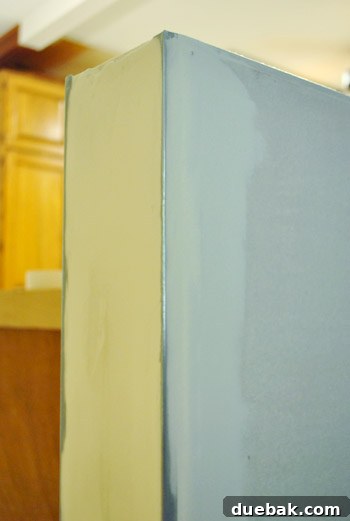
Regarding the corner strips we improvised around the half-wall where it meets the future paneling, the results were genuinely impressive—even better than I had initially hoped. I often harbor a slight worry that such improvisations might lead to odd, lumpy wall surfaces, but this was far from the case. I realize now that I didn’t capture a photo from the other side, a detail I’ll make sure to include in a future update. However, the combination of the corner piece and drywall mud has integrated beautifully with the wood paneling. Once primed and painted, this junction will be effectively “sealed,” creating a durable, straight, and professional-looking end result. It’s a testament to the power of thoughtful improvisation in home renovation.
The Bigger Picture: Understanding the Vision Beyond the Drywall
So, is it looking *more* finished than it did this morning? Absolutely. Is it anywhere near completely finished? Not by a long shot. The entire opening, I’m the first to admit, still presents a somewhat “crazytown” appearance, but this is entirely by design and due to several pending elements that are crucial for its ultimate aesthetic and functionality:
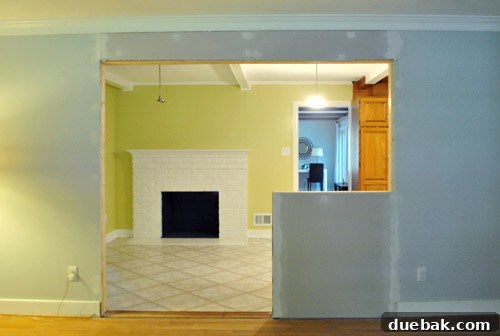
- Lack of Trim: Without elegant trim work to unify it with the adjacent doorways, the opening currently appears isolated and incomplete. Trim is essential for a polished, integrated look.
- Incomplete Baseboards: The baseboards abruptly end at the half-wall on both sides. Extending them seamlessly or incorporating appropriate end caps is vital for a finished appearance.
- Missing Wooden Ledge: The chunky wooden ledge intended for the top of the half-wall is yet to be installed. This piece will add significant function (as a display surface or even extra seating space with the peninsula) and visual balance.
- The Unfinished Peninsula: The half-wall’s true purpose will only become apparent once the large peninsula, complete with stools and a giant slab of countertop, is assembled behind it. It’s the anchoring element that gives the half-wall context.
- Priming and Painting: Currently, the various raw surfaces – new drywall, existing walls, wood – contribute to an “extra rough” appearance. A fresh coat of primer and paint will dramatically transform and unify the space.
Essentially, the entire structure is somewhat out-of-context right now, awaiting its supporting elements. However, it will get there, slowly but surely. For those just tuning into our renovation journey, we’ve previously discussed our deliberate choice for a half-wall instead of a full, open doorway with a freestanding peninsula. Our decision was guided by several key design and functional considerations:
- Preventing an “Afterthought” Look: We wanted the peninsula to feel intentionally integrated into the space, not like an element haphazardly placed in the middle of a doorway without proper planning.
- Anchoring the Peninsula: The half-wall provides a solid foundation, making the peninsula feel grounded and robust, rather than appearing to float awkwardly between two distinct rooms. This adds to the sense of stability and permanence in the kitchen design.
- Optimizing Storage: Given that our dining room already features four base cabinets thanks to existing built-ins, we didn’t require additional cabinetry or storage space that a full-height wall might offer.
- Visual Balance: Placing an open bookcase, cabinet, or another built-in form less than three feet from a massive wall of existing built-ins would have created an overwhelming and visually cluttered effect. The half-wall provides a lighter transition.
- Seamless Threshold: The half-wall plays a crucial role in creating a more seamless flooring transition. Without it, there would have been an awkward strip of cork flooring visible between the peninsula cabinet and the dining room floor, disrupting the flow.
What’s Next: Bringing the Vision to Life
Our immediate next steps involve installing the door jamb, fabricating and installing that essential wooden ledge atop the half-wall, and finally, cutting and fitting all the trim work. Following this, the transformative stages of priming and painting will commence. It is at this point that the entire opening will truly begin to look finished, especially once we start assembling and integrating the kitchen peninsula behind it. Of course, the broader kitchen renovation, currently without countertops, is still underway, but at this stage, we prefer to consider that a minor, albeit significant, detail within the larger tapestry of our home’s transformation. The journey continues, one carefully planned step at a time, towards a beautiful and functional open-concept living space.