
The Ultimate Guide to Monstera Deliciosa Care: Grow Your Own Indoor Jungle
Few houseplants command attention quite like the Monstera deliciosa. Revered for its striking, fenestrated leaves and vigorous growth, this tropical beauty has become an iconic staple in homes and offices worldwide. Whether you’re a seasoned plant parent or just starting your green journey, the Monstera deliciosa offers a rewarding experience, transforming any space into a lush, vibrant oasis. Known colloquially as the “Swiss Cheese Plant” due to the unique holes and splits that develop in its leaves, this plant is not only visually stunning but also surprisingly adaptable and relatively low-maintenance, making it an excellent choice for modern living. While often starting as a compact, bushy plant, the Monstera deliciosa is a natural climber, capable of ascending to impressive, tree-like heights indoors with proper support.

The genus Monstera encompasses over 50 distinct species, each boasting its own unique charm, but the Monstera deliciosa stands out as the undisputed king of indoor varieties. Its name, “deliciosa,” hints at the edible fruit it produces in its native habitat, although this is a rare treat for indoor growers. This comprehensive guide will delve into everything you need to know to cultivate a thriving Monstera deliciosa, from understanding its unique characteristics to mastering its care requirements and troubleshooting common issues.
Table of Contents
What Is A Monstera Deliciosa?
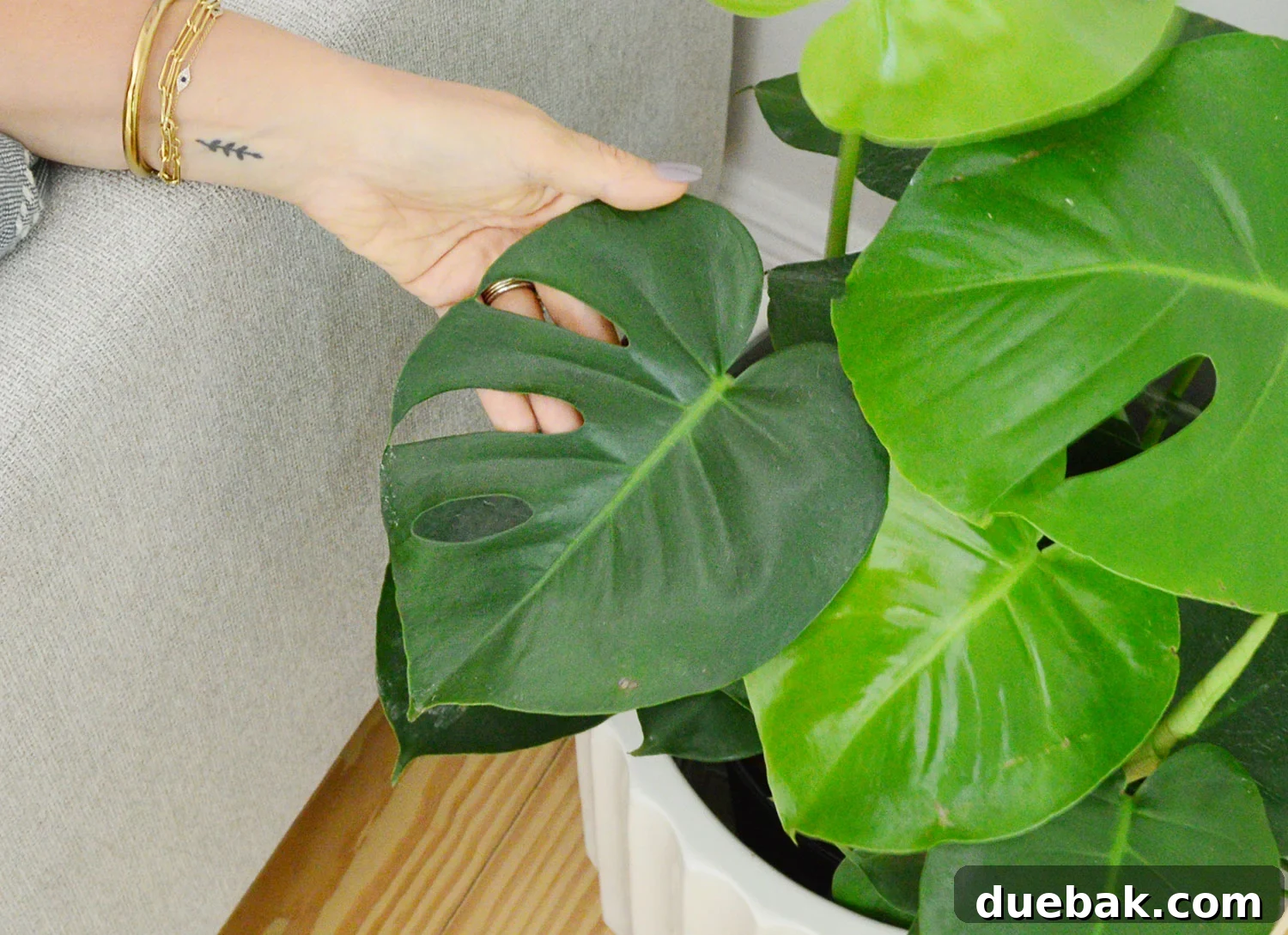
Native to the humid, tropical rainforests of Central America, particularly southern Mexico and Panama, Monstera deliciosa has evolved fascinating adaptations to thrive in its challenging natural environment. Its most distinctive feature – the large, deeply lobed leaves with characteristic holes and splits, known as “fenestrations” – serves several vital purposes. These unique openings allow sunlight and rain to penetrate through the dense canopy, reaching lower leaves and the roots below, ensuring efficient resource distribution. Furthermore, these fenestrations help reduce wind resistance, preventing large leaves from tearing during tropical storms.
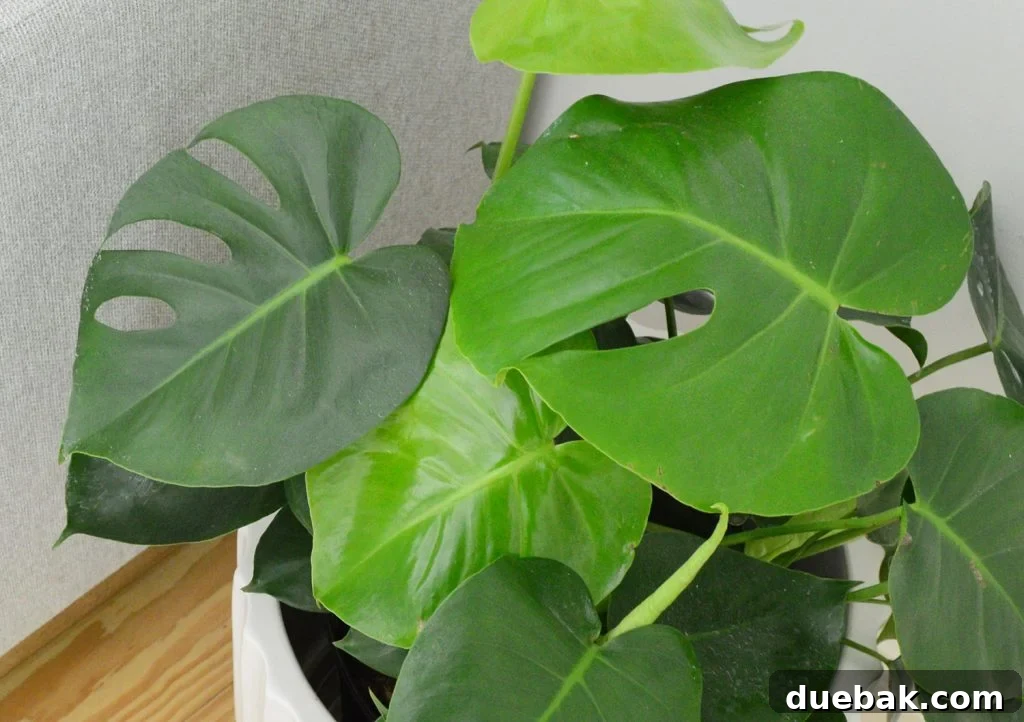
Beyond its striking foliage, the “deliciosa” in its name refers to the edible fruit it produces in the wild, resembling a corn cob with a sweet, pineapple-like flavor when ripe. However, indoor monsteras rarely fruit. The plant is also classified as an epiphyte, meaning it naturally grows on or climbs up other plants, like large trees, using them for support without drawing nutrients from them. This epiphytic nature explains why many Monstera owners choose to provide their plants with moss poles or stakes, mimicking its natural climbing habit and encouraging larger, more mature leaves with enhanced fenestrations. Its prominent aerial roots are another tell-tale sign of its climbing nature, allowing it to anchor itself to surfaces and absorb moisture from the air.
Monstera Deliciosa vs. Split Leaf Philodendron
A common point of confusion for plant enthusiasts is distinguishing between Monstera deliciosa and plants often mislabeled as “Split-leaf Philodendron” or “Tree Philodendron.” While both are popular tropical plants with impressive foliage, they belong to different genera and have distinct characteristics. Monstera deliciosa is not a philodendron, despite the widespread misconception. The plant frequently confused with it is typically Thaumatophyllum bipinnatifidum (formerly Philodendron selloum or Philodendron bipinnatifidum), which has a more tree-like growth habit and deeply lobed but generally not fenestrated leaves.
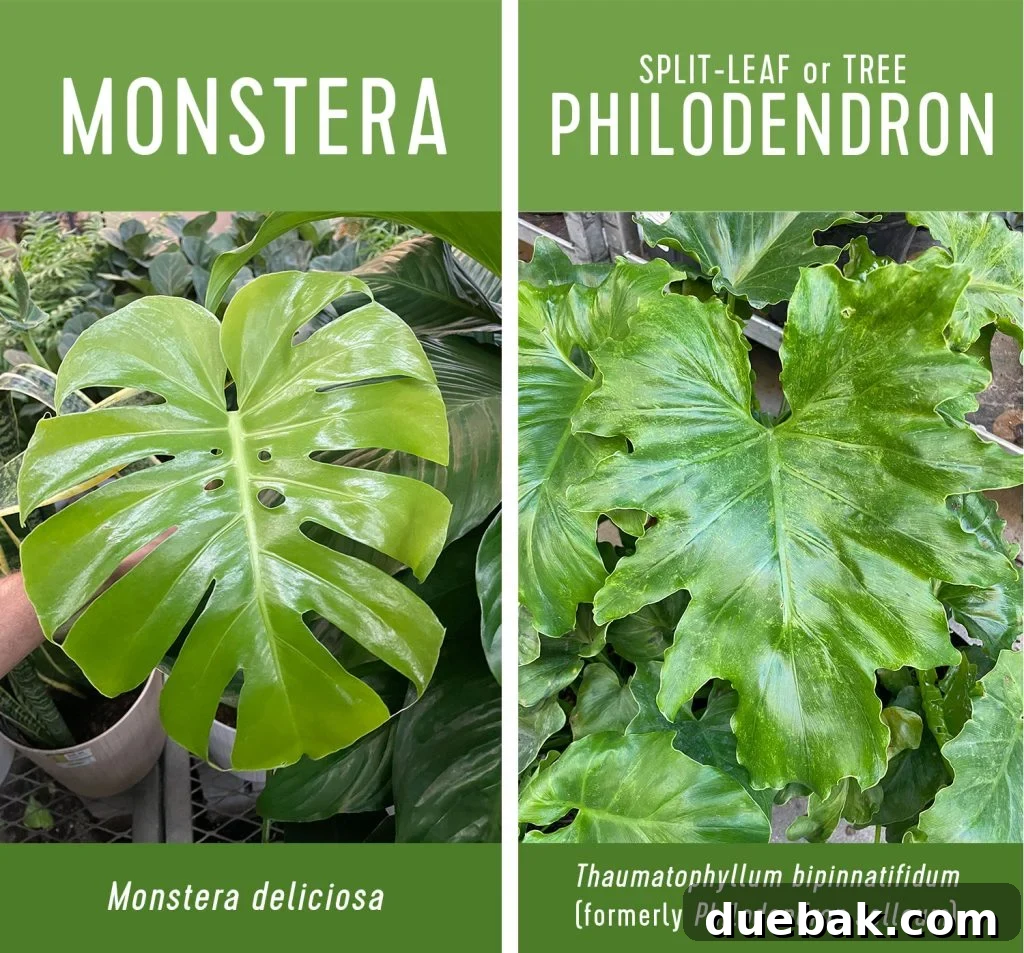
Key differences include the leaf texture and pattern: Monstera deliciosa leaves tend to be glossier, often featuring clean, distinct holes and splits that appear as the plant matures. In contrast, the “Split-leaf Philodendron” (Thaumatophyllum) typically has less glossy, more deeply serrated or frilled edges, but rarely true fenestrations or holes within the leaf blade itself. Young plants of both species might appear similar, lacking the mature characteristics, which exacerbates the confusion. To ensure you’re getting the plant you desire, always double-check the botanical name on the plant tag or listing. Knowing the scientific name guarantees you acquire the true “Swiss Cheese Plant” with its iconic fenestrated leaves.
How to Care For Monstera Deliciosa
One of the many reasons for the Monstera deliciosa’s enduring popularity is its relatively forgiving nature. These plants are generally easy to care for and grow at a moderate to fast pace, making them incredibly rewarding for both novice and experienced plant enthusiasts. By understanding and meeting their basic needs, you can ensure your Monstera thrives and develops its impressive, iconic foliage.
Light & Placement
Monstera deliciosa plants flourish in bright, indirect light. Think of their natural habitat: beneath a dense rainforest canopy where dappled sunlight filters through. While they can tolerate lower light conditions, bright indirect light is crucial for encouraging robust growth and the development of those coveted fenestrations. Direct, harsh sunlight, especially afternoon sun, can scorch their leaves, leading to unsightly brown spots or a bleached appearance. An ideal spot would be near a north or east-facing window, or a few feet back from a south or west-facing window where the light is filtered by sheer curtains or other obstructions. Rotating your plant periodically will ensure even growth and prevent it from leaning too heavily towards a light source.
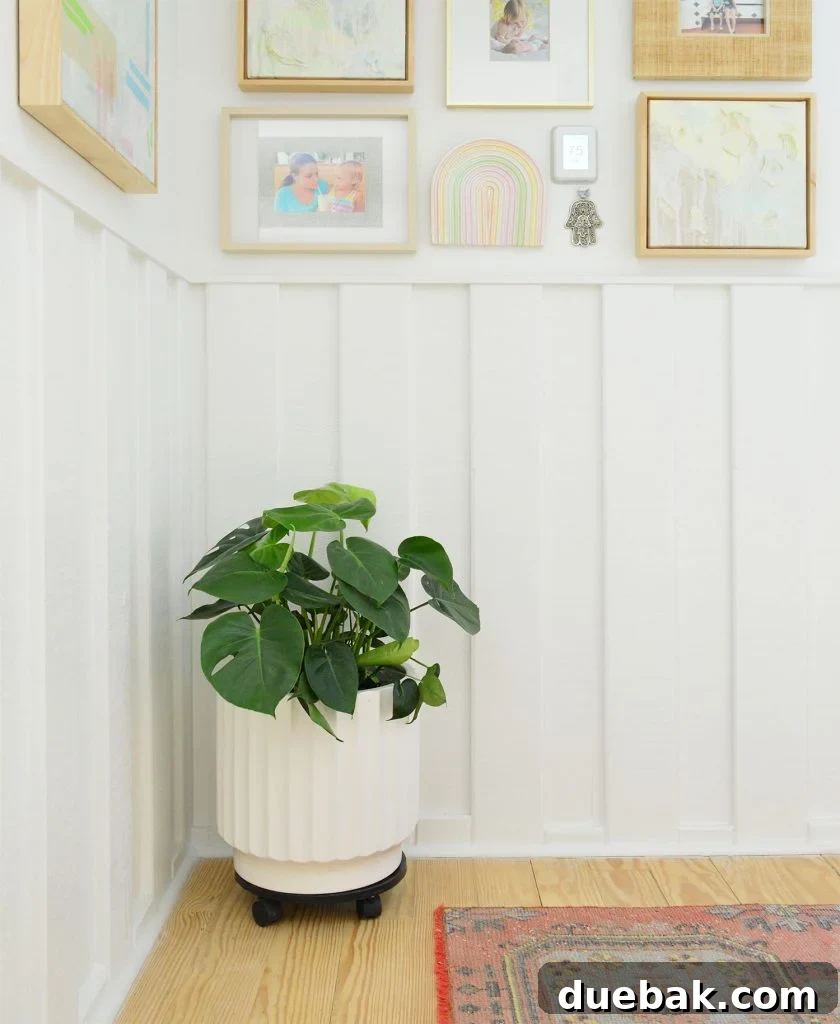
If your Monstera isn’t producing fenestrations, lack of sufficient light is often the culprit. While it can survive in relatively low light, its growth will be slower, and new leaves may remain small and unfenestrated. Conversely, if you notice brown, crispy edges on your leaves, it’s likely receiving too much direct sun and needs to be moved to a shadier spot.
Watering Your Monstera
Proper watering is critical for Monstera deliciosa. As rainforest natives, they are accustomed to periods of heavy rainfall followed by drying spells. This means they prefer their soil to dry out between waterings rather than remaining constantly soggy, which can lead to root rot. A good rule of thumb is to water thoroughly when the top 2-3 inches of soil feel dry to the touch. You can test this by sticking your finger into the soil or by lifting the pot to gauge its weight; a light pot often indicates dry soil.
During the active growing season (spring and summer), your Monstera may need watering every 1-2 weeks. In the cooler fall and winter months, when growth slows, reduce the frequency of watering significantly, allowing the soil to dry out even more. When you do water, ensure that water drains freely from the bottom of the pot. Avoid letting the pot sit in standing water. Signs of overwatering include yellowing leaves (especially lower ones) and a general droopy appearance, while prolonged underwatering can result in wilting and brown, crispy leaf edges.
Humidity & Misting
Originating from humid tropical environments, Monsteras appreciate high humidity. An indoor humidity level of 50-70% is ideal for promoting lush growth and healthy fenestrations. While most homes don’t naturally maintain such high humidity, Monsteras are quite adaptable and can often thrive in average household humidity (around 40-50%).
To boost humidity, especially in drier climates or during winter heating, consider placing your plant near a portable humidifier. Grouping plants together can also create a microclimate of increased humidity. While misting the leaves can temporarily raise humidity, its effect is short-lived. However, regular misting can help keep leaves clean and deter some pests. For a more consistent humidity boost, a pebble tray filled with water beneath the pot (ensuring the pot doesn’t sit directly in the water) can be effective.
Soil & Repotting
Monstera deliciosa thrives in a well-draining, airy potting mix that mimics its natural environment. A standard houseplant potting mix can be enhanced by adding perlite, orchid bark, or coco coir to improve drainage and aeration. A good chunky mix prevents waterlogging, which is crucial for root health. The soil should hold some moisture but allow excess water to escape quickly.
Your Monstera will likely outgrow its pot every 1-2 years, or when you notice roots growing out of the drainage holes or circling the pot. Repotting into a slightly larger pot (one size up) with fresh, nutrient-rich soil encourages continued growth and provides essential nutrients. If you wish to maintain its current size, you can root prune by gently trimming about 20-30% of the outer roots and replenishing with new soil in the same pot. The best time to repot is during the spring or early summer, coinciding with its active growing period.
Feeding Your Monstera
During the active growing season (spring and summer), your Monstera will benefit from regular fertilization. Use a balanced liquid houseplant fertilizer, diluted to half strength, every 2-4 weeks. Avoid fertilizing during the fall and winter months when the plant’s growth naturally slows down. Over-fertilization can lead to salt buildup in the soil, potentially burning the roots and causing leaf tip burn. If you notice a white crust on the soil surface, it’s a sign of mineral buildup, and a thorough flush with plain water can help.
Temperature Considerations
Monstera deliciosa prefers warm temperatures, ideally between 65-80°F (18-27°C). They are sensitive to cold and should be protected from temperatures below 50°F (10°C). Keep them away from cold drafts from windows or air conditioning vents, and sudden temperature fluctuations, which can stress the plant and lead to leaf damage or slowed growth.
Cleaning Leaves
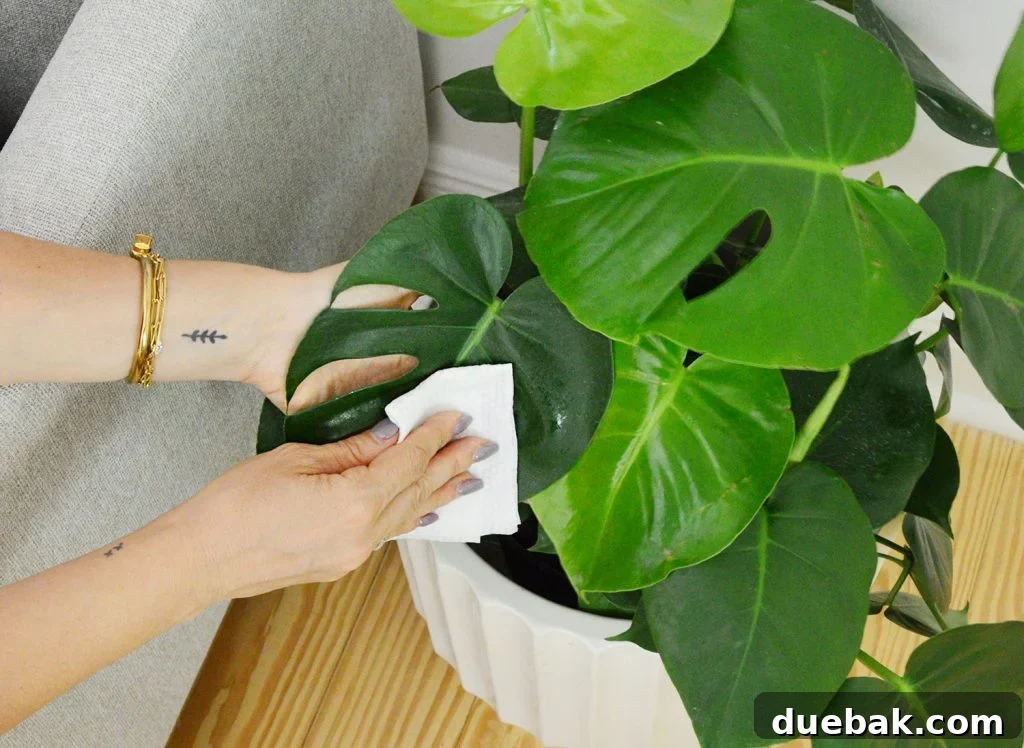
The large leaves of a Monstera can accumulate dust, which can hinder photosynthesis and block light absorption. Regularly wiping down your Monstera’s leaves with a damp, soft cloth is beneficial for its health and appearance. This not only keeps your plant looking its best but also allows the leaves to absorb light more efficiently. You can also use specialized plant wipes or leaf shine sprays for an extra glossy finish, but always use them sparingly to avoid clogging leaf pores.
Staking & Support
As natural climbers, Monsteras greatly benefit from some form of support to encourage upward growth and larger, more fenestrated leaves. In the wild, they cling to tree trunks using their aerial roots. Indoors, a moss pole or sturdy plant stake can replicate this environment. When choosing a stake, ensure it’s robust enough to support your plant as it grows. Gently guide new growth and aerial roots towards the support and secure them with soft plant tape or ties, being careful not to damage the stems. Providing support not only enhances the plant’s aesthetic appeal but also promotes healthier, more vigorous growth.
Pruning for Shape and Health
Pruning is an essential part of Monstera care, allowing you to manage its size, shape, and overall health. You can prune to remove yellowing or damaged leaves, control leggy growth, or simply maintain a desirable size and bushiness. Always use clean, sharp pruning shears to make cuts just above a node (the point where a leaf or aerial root emerges from the stem). Pruning can also encourage the plant to produce new growth from dormant nodes, leading to a fuller appearance. Don’t discard healthy cuttings; they can be used for propagation!
Common Monstera Problems & Solutions
While Monstera deliciosa is generally easy to care for, you might encounter a few common issues. Fortunately, most problems are simple to diagnose and rectify, allowing your plant to quickly recover and continue thriving.
- Brown Tips & Crispy Edges: This is often a sign of insufficient humidity, underwatering, or too much direct sunlight.
- Solution: Increase ambient humidity with a humidifier or pebble tray. Check soil moisture and water more consistently when the top few inches are dry. Move the plant to a location with bright, indirect light, away from direct sun exposure. Mineral buildup from tap water can also cause this; try using filtered water or rainwater.
- Yellow Leaves: The most common cause of yellowing leaves is overwatering, leading to root rot. However, it can also indicate nutrient deficiencies, old age, or pest infestations.
- Solution: Allow the soil to thoroughly dry out between waterings. If the soil is consistently moist, reduce watering frequency. Check for root rot by gently inspecting the roots; remove any soft, mushy, or black roots. Ensure good drainage. If overwatering isn’t the issue, consider if the plant needs fertilizer or inspect for pests. Older, lower leaves naturally yellow and drop off as part of the plant’s life cycle.
- Drooping Leaves: Drooping can signal both overwatering and underwatering.
- Solution: If leaves are soft and yellow, it’s likely overwatering. If they are crispy and the soil is bone dry, it’s underwatering. Check the soil moisture carefully to determine the cause.
- Lack of Fenestrations (Holes & Splits): If your Monstera isn’t developing its signature holes, it’s typically due to immaturity or inadequate conditions.
- Solution: Young plants need time to mature before fenestrations appear. Ensure your plant is receiving bright, indirect light; insufficient light is a major inhibitor. Good humidity and consistent feeding also contribute to healthy, fenestrated growth. Provide a moss pole for climbing, as vertical growth often encourages larger, more mature leaves.
- Pests: Common houseplant pests like spider mites, mealybugs, aphids, and scale insects can affect Monsteras. Signs include sticky residue, small webs, tiny visible insects, or unexplained damage to leaves.
- Solution: Regularly inspect your plant. If pests are detected, isolate the plant. Wipe leaves thoroughly with a damp cloth to physically remove pests. For more stubborn infestations, use an insecticidal soap or neem oil spray, ensuring thorough coverage of both the top and underside of leaves. Repeat treatment as directed on the product. Prevention through good airflow and regular inspection is key.
Other Monstera Deliciosa FAQs
Are Monsteras toxic to cats, dogs, and humans?
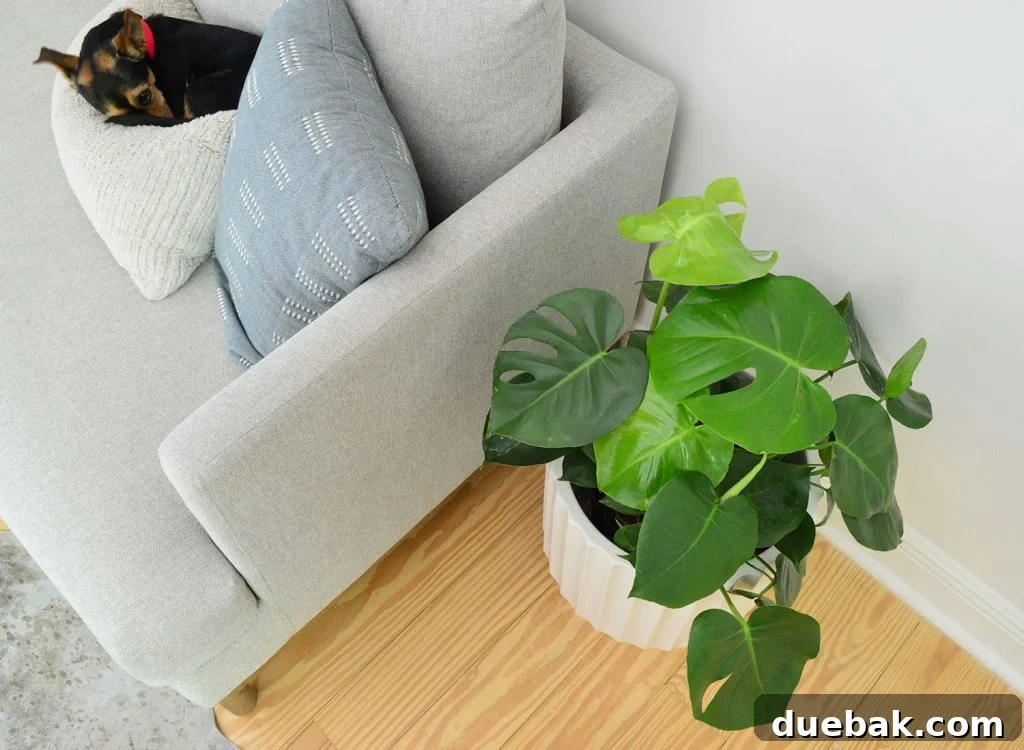
Yes, Monstera deliciosa leaves are considered toxic to cats, dogs, and humans if ingested. They contain insoluble calcium oxalate crystals, which can cause irritation to the mouth, throat, and digestive tract, leading to symptoms like swelling, burning, difficulty swallowing, vomiting, and excessive drooling. It is always safest to keep Monsteras out of reach of small children and pets who might be tempted to nibble on houseplants. Position your plant on a high shelf or in a room inaccessible to curious companions.
Can you propagate a Monstera?
Absolutely! Monsteras are wonderfully easy to propagate, allowing you to expand your collection or share with friends. The most common and successful method is stem cutting. Using clean, sharp shears, cut a section of stem that includes at least one leaf and one node (the bump on the stem where a leaf or aerial root emerges). Ensure the cutting is below the node. Allow the cut end to callus over for a few minutes to an hour to prevent rot. Then, submerge the node end in water in a clear vessel, placed in a bright spot with indirect light. Change the water weekly. You should see roots developing within a few weeks. Once the roots are a few inches long (typically 1-2 months), you can transfer the cutting into a small pot with well-draining potting soil. Keep the soil consistently moist during this transition period to help the new plant establish itself.
Can I grow Monstera outdoors?
Monstera deliciosa can be grown outdoors year-round only in tropical and subtropical climates, specifically in USDA Plant Hardiness Zones 10-12. This typically includes areas of South Florida, coastal Southern California, and Hawaii within the continental United States. In these regions, Monsteras can grow to impressive sizes, often producing fruit. If you live outside these zones, you can enjoy your Monstera outdoors during the warmer months, but it must be brought indoors before temperatures drop below 50°F (10°C). When grown outdoors, choose a location with partial, filtered sunlight to protect its leaves from scorching direct sun.
How fast does Monstera deliciosa grow?
Monstera deliciosa is a relatively fast-growing plant, especially when provided with optimal conditions (bright indirect light, proper watering, humidity, and nutrients). In ideal environments, it can put out several new leaves during the growing season (spring and summer). Indoors, it can reach heights of 6-10 feet or more with proper support. Regular pruning can help manage its size and encourage a bushier growth habit.
Why are my Monstera leaves not splitting?
As mentioned earlier, the absence of fenestrations (splits and holes) in your Monstera leaves is usually a sign of immaturity or suboptimal growing conditions. Young plants will always produce solid, heart-shaped leaves. As the plant matures and grows, and if it receives adequate bright, indirect light, consistent humidity, and proper nutrients, the leaves will begin to develop their characteristic splits and holes. Patience and providing ideal care are key to encouraging fenestrations.
More Plant Guides and Resources
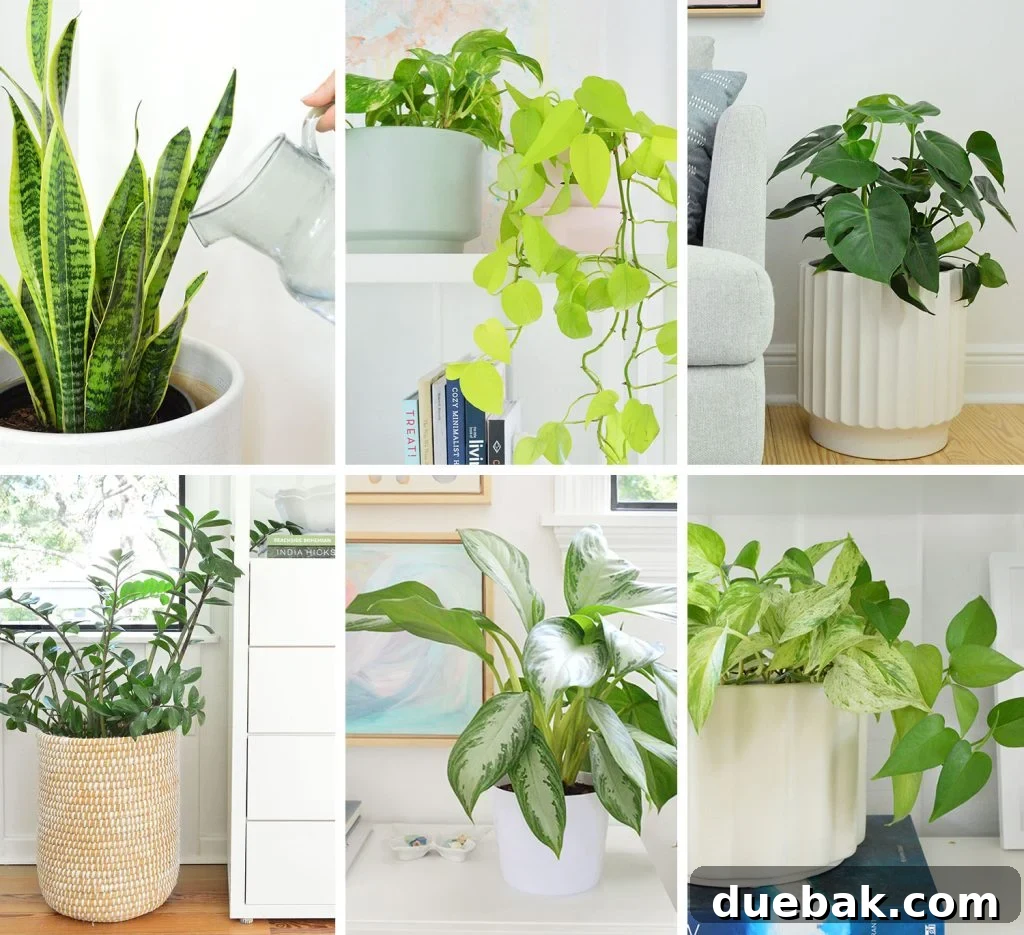
Cultivating a Monstera deliciosa is a rewarding experience, bringing a touch of the tropics and a statement piece to your home. With the right care, your “Swiss Cheese Plant” will flourish, delighting you with its magnificent, ever-evolving foliage. If you’re eager to expand your indoor jungle or explore more plant care topics, dive into some of our other helpful guides below:
- Best Low-Light Houseplants
- Best Air Purifying Indoor Plants
- Golden Pothos Care Guide
- Marble Queen Pothos Care Guide
- Snake Plant Care Guide
- Fiddle Leaf Fig Care Guide
- Corn Plant Care Guide
- Aglaonema Plant Care Guide
- Tree Philodendron Care Guide
- How to Build An Easy Plant Shelf
- Make A DIY Wire Trellis
- What Is Keiki Paste For Plants?
- Protecting Outdoor Plants In A Deep Freeze
*This post contains affiliate links, so we may earn a small commission when you make a purchase through links on our site at no additional cost to you.