
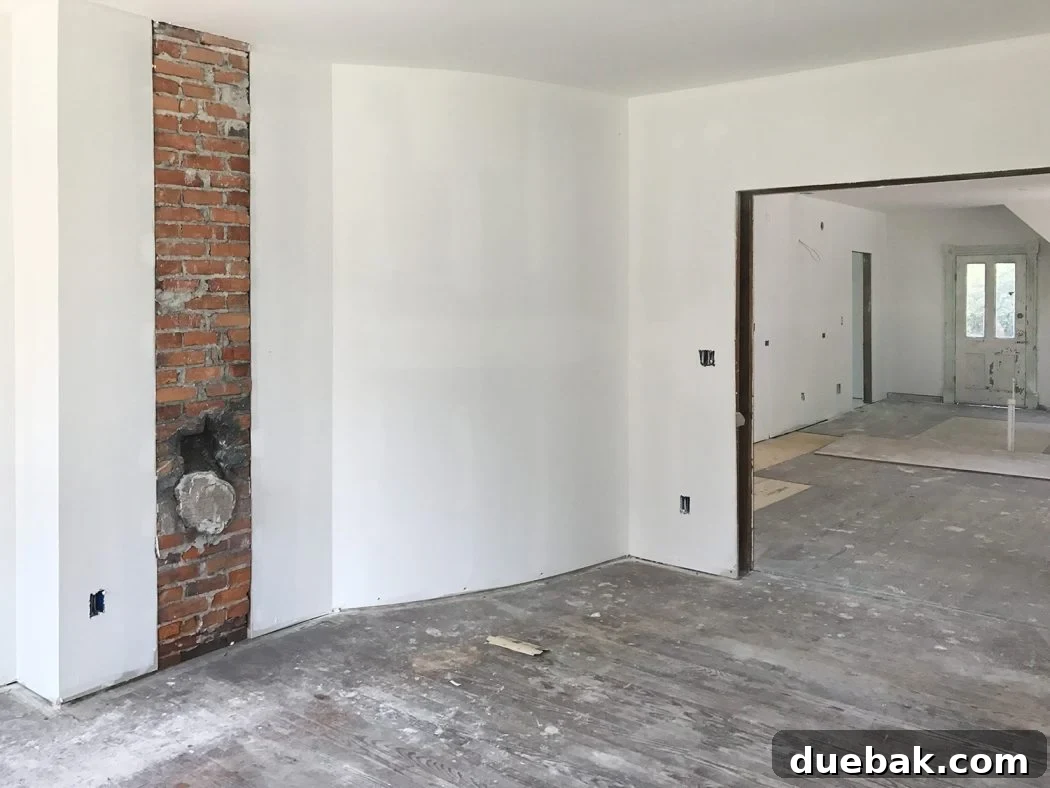
This has been a long time coming, and we couldn’t be more excited: our beach house finally has walls again. When we first “met” the house the original plaster was falling apart and riddled with mold and termite damage, so it has taken over eight months to rebuild much of it from the studs up. That included installing new electrical and plumbing, updating the HVAC, and even removing and rebuilding one side of the house. This stage might not be flashy, but to us it feels like a huge milestone.
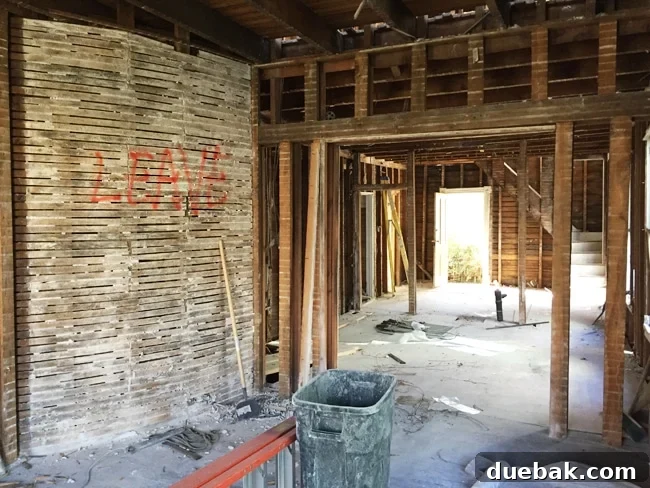
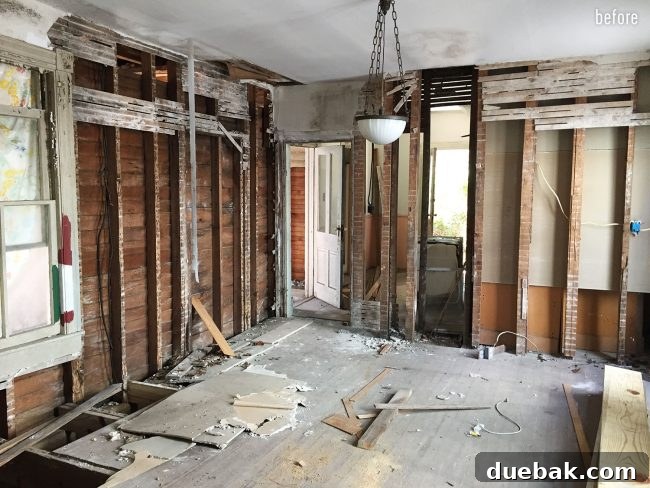
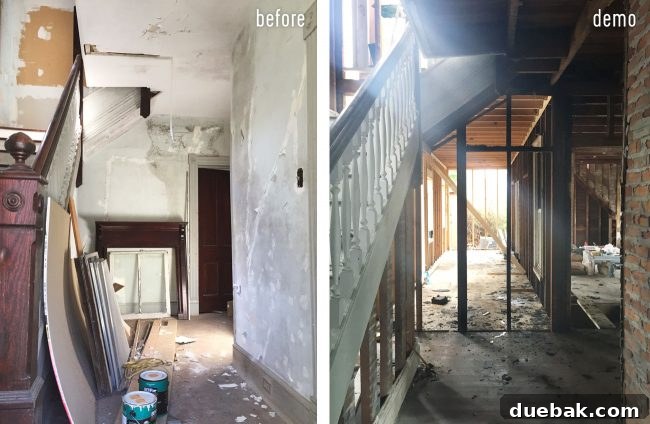
To refresh your memory, here are a few before photos. You can see the house’s original condition and the fully gutted demo stage in the earlier posts, including the photo below showing how open and exposed everything was.
We still don’t have a permanent water and sewer connection yet, which turned into an unexpected ordeal involving city officials, metal detectors, and excavating a large section of the front yard. We did find an old hookup and are working to get it operational again. Renovations rarely run perfectly, but we love this little old house and today we’re celebrating the not-so-small victory of seeing walls go up.
I filmed a video tour last week to show the drywall and explain the new layout—what will go where, what we’re excited to do next, and how the updated floor plan will work for both our family and future renters.
If you’re in a feed reader you may need to click through to see the video. You can also view it on YouTube.
For comparison, here’s the original video tour we shot shortly after closing on the house.
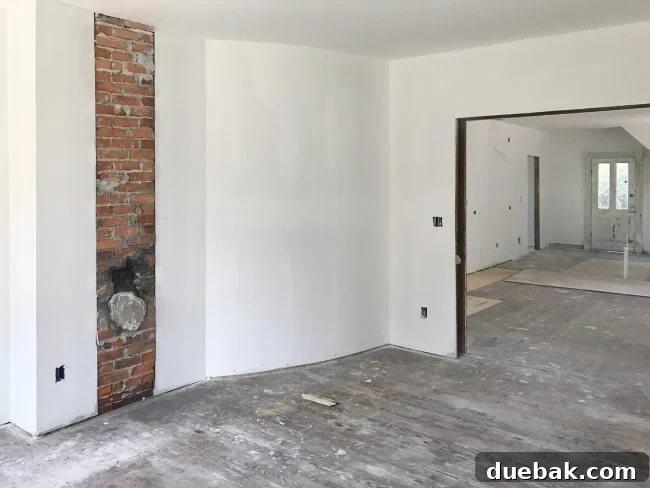
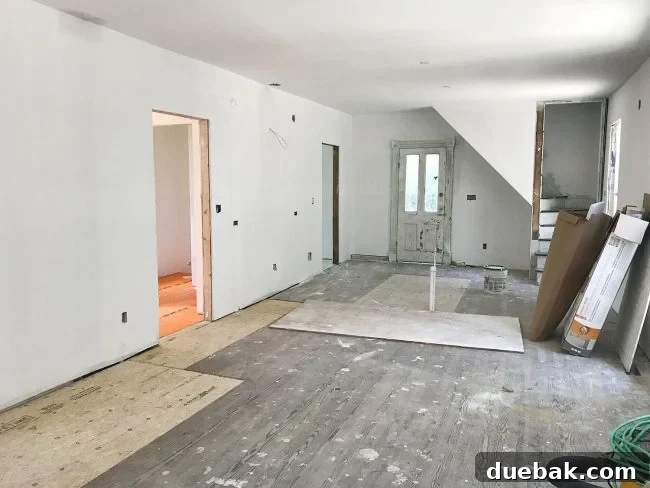
Seeing the before-and-after images really highlights how far this place has come. The back of the first floor used to have crumbling walls, missing floors, and major termite and mold damage on one wall and the ceiling.
Now the same view shows fresh drywall and primer, and a slightly refined layout. For example, what was once a window into an enclosed porch is now a door leading into a mudroom. The video tour gives a clearer sense of the new flow and how the spaces connect.
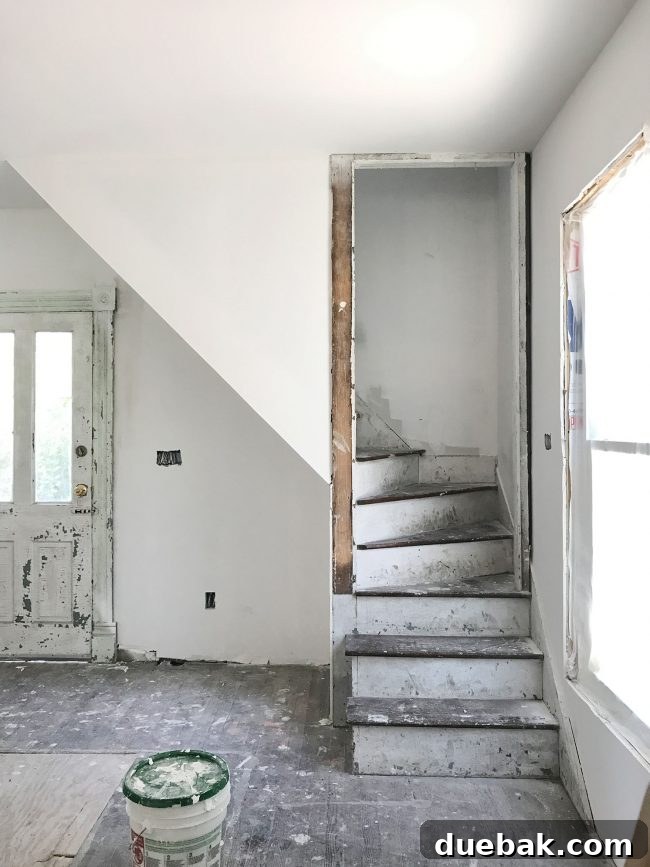
We’re fortunate to have kept the original back stairs—many of the neighboring houses lost theirs before their owners moved in. Though a small house doesn’t need two staircases and they complicated floor planning, we couldn’t resist retaining them for the charm and character they provide. They’re one of our favorite historic features in this 100-year-old home.
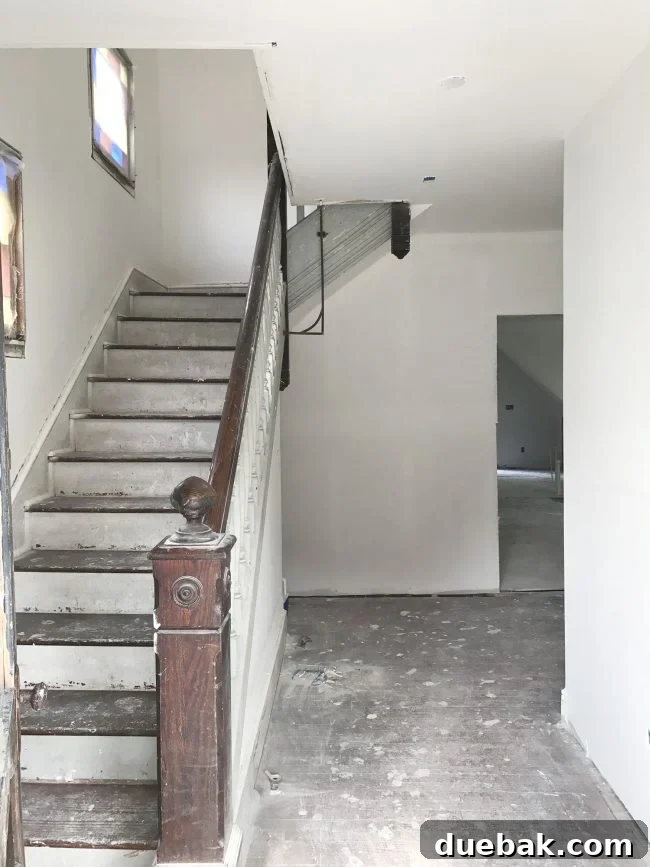
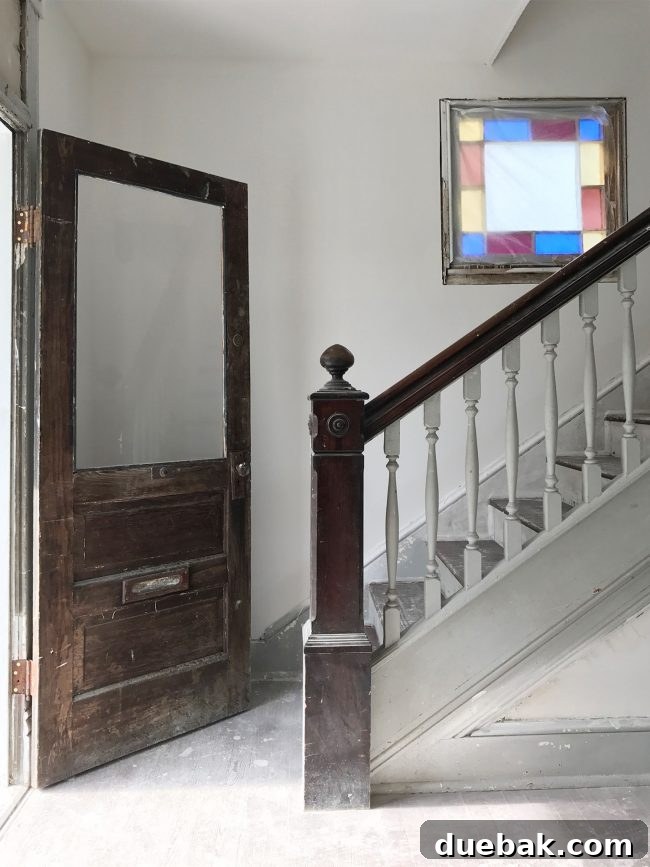
Another space that’s changed dramatically is the foyer, seen from the front door. The stained glass on the stairs is protected with plastic for now, but with the new walls and primer in place we can already picture the finished look.
We’ve chosen a soft, light neutral paint with crisp white trim for this area. That palette will let the stained glass, the restored newel post and railings, and the refinished heart pine floors take center stage. Add cleaned-up moldings and a pretty light fixture and the room will feel like itself again.
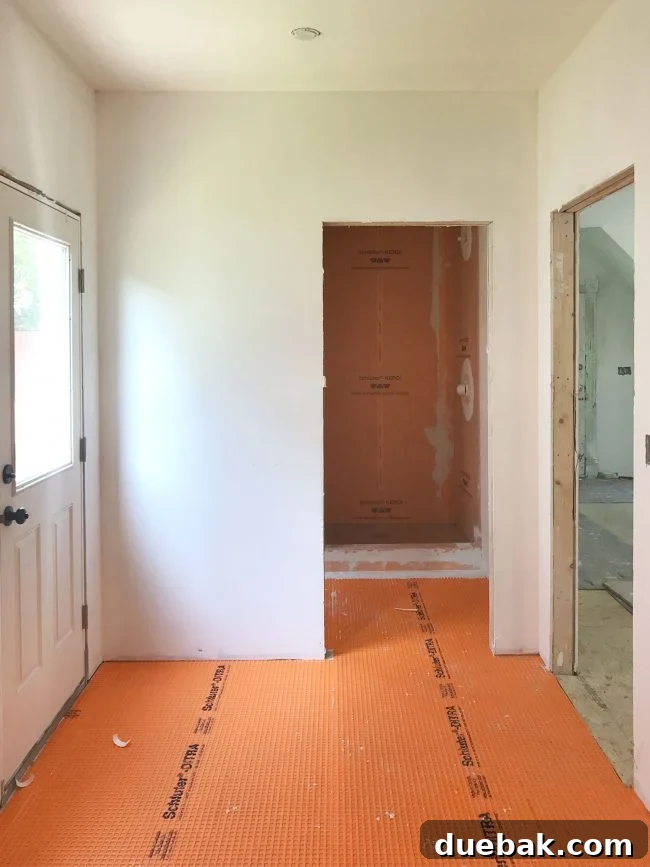
Here’s another satisfying transformation. This room used to be a poorly enclosed side porch on the side of the house that had sunk several inches because it practically had no foundation. We rebuilt that side and repaired the structure.
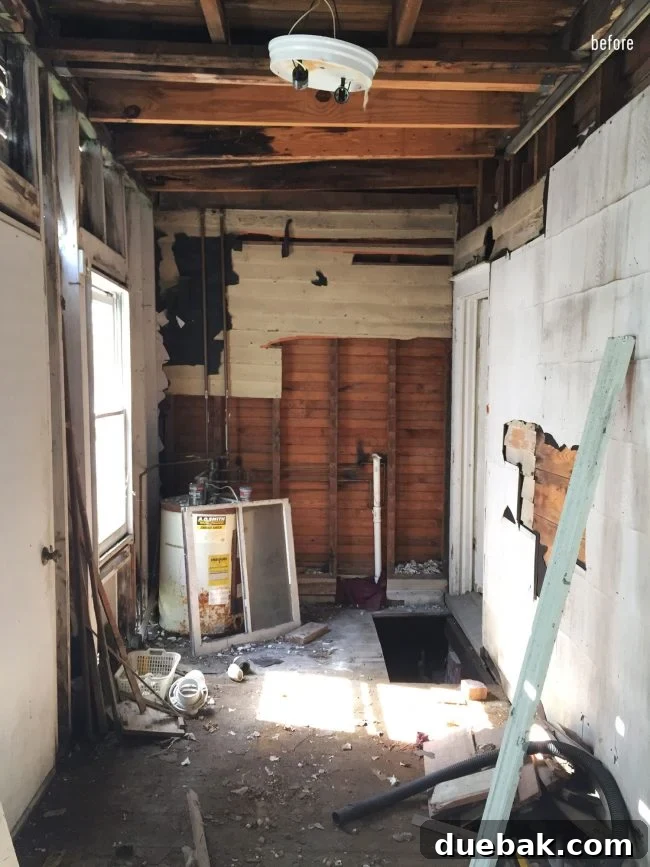
The space will become a compact but functional mudroom, our main entrance after a day at the beach. It’s right next to a full bathroom for rinsing off, and there will be hooks, baskets for gear, and a washer and dryer for towels. The bright orange you see is a waterproof underlayment we’ve begun tiling over—not the final color.
Upstairs was one of the most precarious spots when we bought the house, part of the sinking side we rebuilt. At one point the contractor rushed us out when floorboards noticeably sagged under our weight—miraculously the tub hadn’t fallen through.
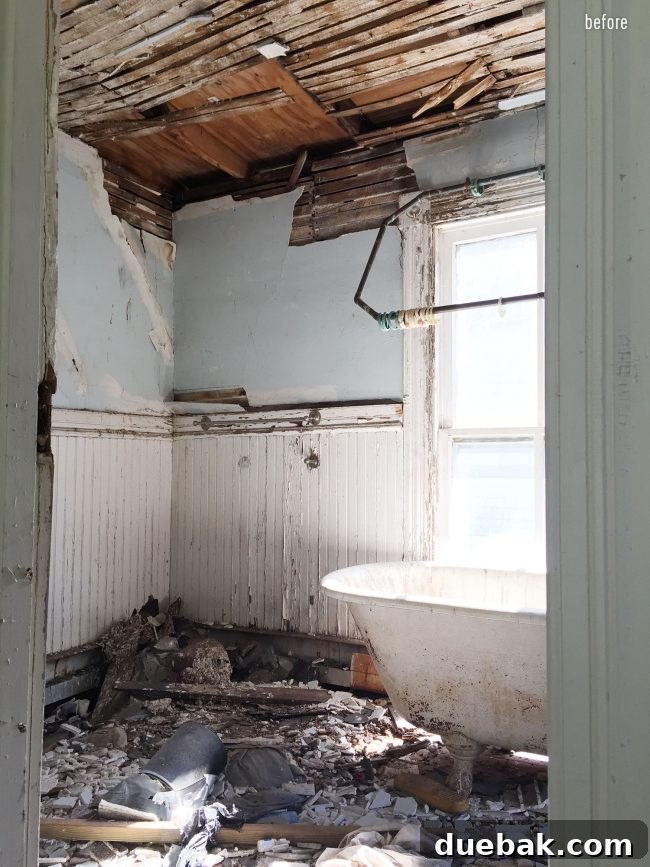
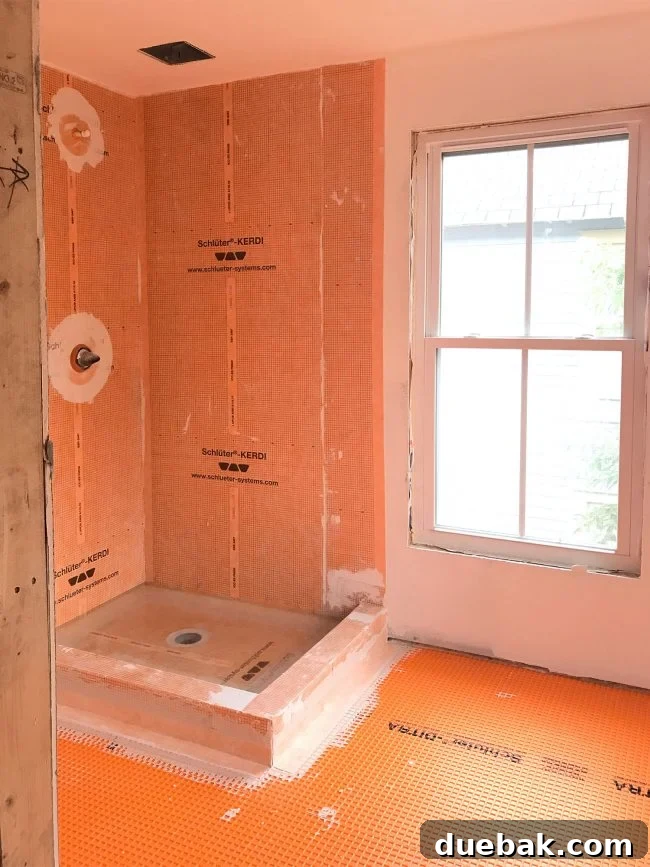
Now that the structure is sound we don’t have to worry about supporting the heavy cast-iron tub, which we plan to refinish and reinstall across from the shower. We wanted both a shower and a tub in the largest bathroom. More of the orange underlayment is visible here while we continue tiling.
We’re giddy, grateful, and relieved—especially about moving toward resolving the water and sewer situation soon.
Next steps include painting the walls and ceilings, continuing tile work, installing doors (we saved the original doors with their great old details), hanging trim, adding lighting and fans, fitting kitchen cabinetry, installing bathroom fixtures and the tub, refinishing the floors, bringing in appliances, and handling countless small details that come with a renovation. One tip for big projects: take it one step at a time. After that, it’ll be time to furnish the house and enjoy a long nap—preferably on the beach.