
The Digital Wild West: Our Ongoing Battle Against Online Content Theft
As bloggers navigating the ever-evolving landscape of the internet, we’ve witnessed our fair share of peculiar incidents. However, few things have truly startled us as much as the recurring phenomenon of discovering our personal photographs, depicting our carefully curated home and life, being brazenly used by complete strangers for their own gain. What began as an exciting journey of sharing our home decor and DIY projects has, at times, turned into an unexpected lesson in digital intellectual property and the bizarre world of online scams. This isn’t just about images; it’s about the violation of creative ownership and the unsettling reality that in the vastness of the web, anything can be misappropriated.
When Your Home Becomes Someone Else’s Story: Tales from the Front Lines of Content Theft
The digital realm offers incredible opportunities for sharing and connection, but it also harbors a shadow side where content can be lifted and repurposed without permission or attribution. We’ve had several encounters with this darker aspect, each more perplexing than the last. These incidents serve as a stark reminder of the importance of vigilance, not just for content creators but for every internet user.
The Airbnb Deception: Our Richmond Home, a Pasadena Rental?
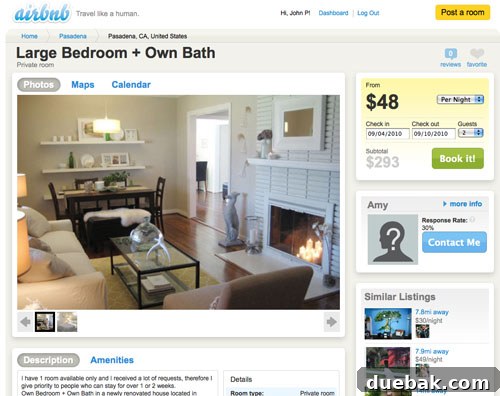
Picture this: a reader, with an eagle eye and a keen memory for our interior spaces, sends us an alarming message. She had stumbled upon what appeared to be our living room and guest bedroom photos on a popular vacation rental site, Airbnb. The twist? They were being advertised as a rental property in Pasadena, California – a place thousands of miles from our actual home in Richmond, Virginia. This wasn’t a case of mistaken identity; it was a deliberate and audacious act of deception.
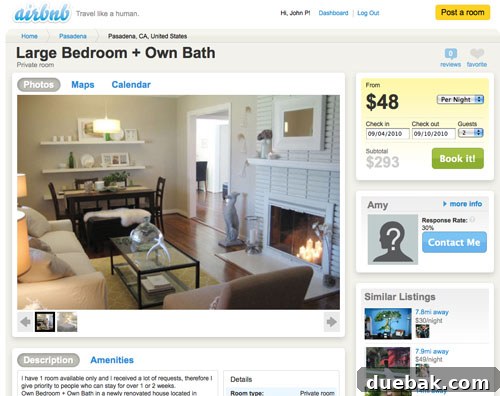
The “landlord” of this phantom Pasadena property had even established a pricing structure, charging $48 per night, with enticing incentives for longer bookings. Priority was given to those who reserved the non-existent rental for one or two weeks straight, offering what seemed like a deal: $336 to $672. The listing even claimed to have “received so much interest,” a classic psychological tactic designed to create a sense of urgency and scarcity, pushing potential renters to book quickly without asking too many questions. The implications were chilling: what would happen to unsuspecting travelers who arrived in Pasadena expecting a charming rental, only to find nothing? Or, more sinisterly, was this a pure phishing scam designed to collect money and vanish without providing an address? The entire situation left us feeling deeply disturbed and utterly “skeevy.” We immediately contacted both the Airbnb webmaster and the individual behind the fraudulent listing, unequivocally stating that the images were ours, our home was firmly in Richmond, and it was certainly not for rent. Thankfully, the response was swift, and the photos were removed shortly thereafter. It was a moment of relief, but the sheer audacity of the scam lingered.
The Rate My Space Impersonation: Amber’s “Bathroom” That Wasn’t
Long before the Airbnb incident, we encountered another baffling case of image appropriation. Shortly after we unveiled our big bathroom reveal on the blog, another diligent reader, Michael, alerted us to a peculiar sighting. Our newly renovated bathroom photos had resurfaced on a site called Rate My Space, attributed to a user named Amber. What made this particularly bizarre was that Amber wasn’t attempting to profit financially; she was simply claiming our hard work as her own, seeking online validation.
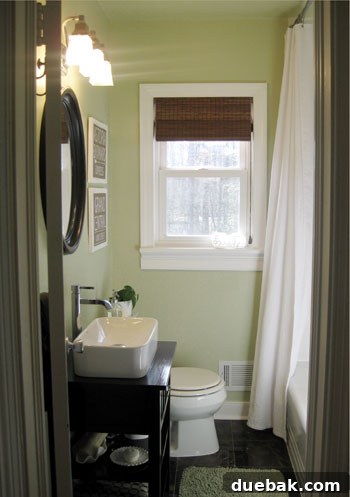
The irony was almost comical: our bathroom photos were indeed receiving positive feedback, but the person enjoying the accolades wasn’t the one who had poured hours into its design. Even more amusing, Amber was actively engaging with commenters, answering questions about paint colors and where she sourced items. Her answers, however, were entirely fabricated and laughably incorrect. For instance, she claimed our modest $100 Overstock sink was a luxurious $400 Kohler splurge and that our walls were painted a shade called “Cucumber Dream,” rather than the true “Dune Grass” hue we had carefully selected. This level of fabrication left us utterly bewildered. Unlike the Airbnb scam, where financial gain was clearly the motive, Amber’s reasoning was murky. Was it for attention? A shortcut to online fame? Whatever her motive, we swiftly intervened. We simply commented directly under her post, providing a link back to our original blog post, politely clarifying, “Wait – that’s actually our bathroom! You can see where we got everything and how it all came together by following this link.” The effect was immediate; the post was removed literally within a minute. While resolved quickly, it highlighted a different facet of content theft: the desire for recognition without genuine effort.
Beyond the Bizarre: Other Encounters with Stolen Images
These two incidents, particularly the Airbnb and Rate My Space scenarios, stand out as the most perplexing. However, they are far from our only brushes with digital image misappropriation. Over the years, we’ve grown accustomed to hearing from readers who spot our photos on platforms like eBay or Craigslist, usually when someone is attempting to sell a rug or duvet identical to one we’ve featured. In these cases, it often feels more like a lazy shortcut than malicious intent, though it still constitutes unauthorized use. We’ve even seen “before and after” photos of our front yard proudly displayed on a landscaping contractor’s website in Texas, presented as their own project! Each instance, while varying in severity and intent, underscores the porous nature of online content and the constant challenge of maintaining control over one’s intellectual property. It’s a perpetual reminder that the internet, while a powerful tool for sharing, also demands constant vigilance.
Understanding the Landscape of Digital Image Theft
These experiences compel us to delve deeper into why content theft occurs and what its broader implications are. It’s a phenomenon that affects not just bloggers and creators, but also consumers and the integrity of online platforms.
Why Do People Steal Content? Unpacking the Motives
The motivations behind stealing digital content, especially images, are diverse and often complex:
- Financial Gain: This is the most straightforward motive, as seen in the Airbnb scam. Thieves aim to profit directly by misrepresenting goods or services, luring unsuspecting victims into fraudulent transactions.
- Ease and Convenience (The Shortcut): For those lacking original content or the time/skill to create their own, stealing images offers a quick and effortless way to populate a website, social media profile, or listing. Why do the work when someone else already has?
- Lack of Creativity or Originality: Some individuals struggle to generate unique ideas or visuals. They might feel pressure to maintain an online presence or portray a certain lifestyle, leading them to pilfer existing, appealing content.
- Desire for Attention and Validation: The Rate My Space incident perfectly illustrates this. Amber wasn’t seeking money, but rather the positive feedback and recognition that came with showcasing an attractive bathroom, even if it wasn’t hers. It’s about borrowing credibility.
- Misunderstanding or Disregard of Copyright: Many internet users simply don’t understand intellectual property laws. They operate under the misconception that if something is available online, it’s free to use. Others may understand but choose to disregard it, believing they won’t be caught or held accountable.
These varied motives paint a picture of an online environment where convenience often trumps ethics, and personal gain, whether financial or social, can drive individuals to take what isn’t theirs.
The Broader Implications: For Creators and Consumers Alike
The impact of digital image theft extends far beyond the immediate discomfort of the content creator:
- Erosion of Trust: When consumers encounter fake listings or misrepresented products, their trust in online platforms and the genuine businesses operating on them diminishes. This makes the entire online marketplace less reliable.
- Damage to Intellectual Property: For creators, their images are their intellectual property. Unauthorized use dilutes their brand, undermines their creative efforts, and can devalue their work. It’s akin to having someone else claim credit for your art.
- Risks for Consumers: The Airbnb scam highlights significant risks for consumers, ranging from financial loss to wasted travel plans and even safety concerns if they unknowingly interact with fraudulent individuals.
- Emotional and Time Toll on Creators: Discovering and pursuing content theft is emotionally draining and time-consuming. It diverts resources and energy away from creative work and towards policing online infringement.
- Legal Ramifications: While often resolved with simple takedowns, severe cases of intellectual property infringement can lead to costly legal battles, which is a burden for both parties.
Ultimately, widespread content theft creates a less authentic, less trustworthy, and more precarious digital ecosystem for everyone.
Protecting Your Digital Creations: A Proactive Approach
While battling content theft can feel like an endless game of whack-a-mole, there are proactive steps both creators and the wider online community can take to protect digital content and promote a more ethical internet.
Practical Steps for Content Creators
- Use Copyright Notices: Clearly state your copyright on your website and alongside your images. While it doesn’t prevent theft, it establishes your ownership and can deter casual misuse.
- Watermarking: For highly valuable or distinctive images, consider subtle watermarks. While not foolproof (they can be cropped or edited), they make unauthorized use more difficult and instantly identify the source.
- Metadata: Embed copyright information and contact details into the metadata of your image files. This invisible data can help prove ownership.
- Regular Reverse Image Searches: Tools like Google Images and TinEye allow you to upload an image and find where else it appears online. Make this a routine check.
- Platform-Specific Reporting: Familiarize yourself with the intellectual property reporting mechanisms on popular platforms like Airbnb, Pinterest, Instagram, Facebook, and Google. These platforms usually have procedures for DMCA (Digital Millennium Copyright Act) takedowns.
- Educate Your Audience: Empower your readers to be your eyes and ears. Clearly communicate that your content is protected and encourage them to report instances of misuse they encounter.
Vigilance for the Online Community: How Readers Can Help
Our experiences would have been far more damaging had it not been for the incredible vigilance of our readers. Their sharp eyes and thoughtful emails are invaluable in identifying misuse. Here’s how everyone can contribute:
- Report Suspicious Activity: If you see content that looks familiar or out of place, especially on rental sites, e-commerce platforms, or personal profiles, report it to the platform directly.
- Verify Sources: When considering an online purchase or rental, take a moment to verify the listing. Does the property owner have other listings? Do the images appear elsewhere? A quick reverse image search can often uncover fraud.
- Be Skeptical: If a deal seems too good to be true, it often is. An unbelievably low price for a prime location, or a profile with suspiciously perfect images, should raise red flags.
- Support Original Creators: Always credit the original source when sharing content, and report those who don’t. This reinforces the value of original work.
A Call for Awareness and Collective Responsibility
These recurring encounters with stolen content, from a bizarre Rate My Space impersonation to a deceptive Airbnb listing, serve as a constant reminder of the “digital wild west” we inhabit. It’s a space of incredible innovation and connection, but also one where boundaries are frequently tested and ownership can be easily disregarded. We are profoundly grateful for our vigilant readers – those with “eagle eyes” who thoughtfully email us every time they spot our “casa” somewhere it doesn’t belong. Their community support is our strongest defense.
Ultimately, navigating the complexities of online intellectual property requires a collective effort. It demands creators to be proactive in protecting their work, platforms to enforce their terms of service robustly, and every internet user to practice discernment and report suspicious activity. The question remains: Can we, as a collective online community, cultivate an environment where creativity is celebrated and protected, rather than exploited? What do you think? Have you ever had your photos appear somewhere they didn’t belong? Do tell, we’re eager to hear your stories and insights as we all strive for a more respectful and secure digital landscape.