
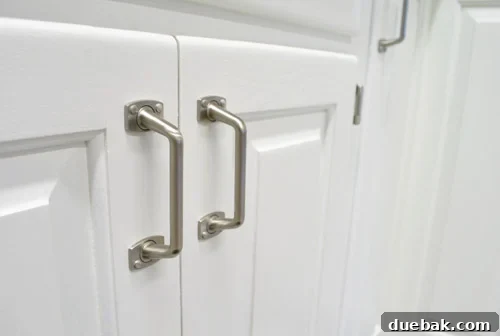
Painting cabinets is one of the most cost-effective ways to refresh a dated kitchen without a full remodel. With careful preparation and attention to technique, a DIY cabinet paint job can look professional and last for years. We’ve used the process outlined below on cabinets in multiple kitchens and other rooms, so the method is proven and repeatable. Follow these steps to achieve a durable, attractive finish.
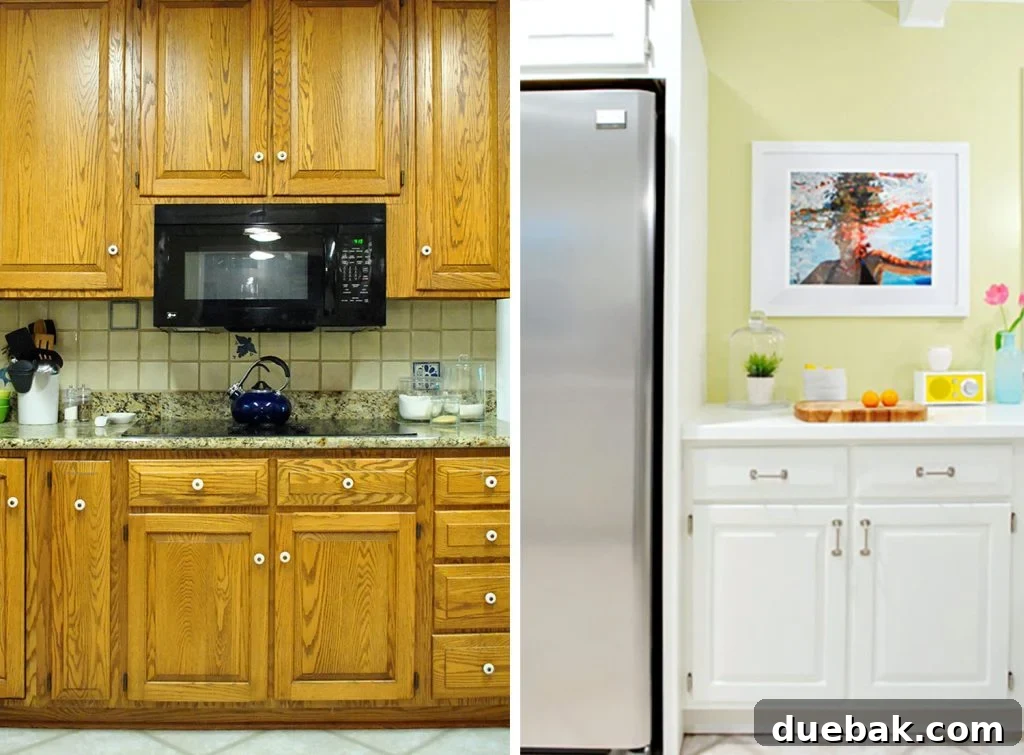
This tutorial uses examples from our second house, which had solid oak cabinets and wood paneling. While the instructions emphasize wood cabinets, the overall process applies to most cabinet materials. If your cabinets are already painted or are Ikea stock, similar preparation and application techniques still apply.
Steps To Painting Cabinets
Painting cabinets requires time, patience, and a bit of elbow grease. Nothing here is technically difficult, but proper preparation is essential for a long-lasting result. Below is an overview of the steps you’ll take:
- Remove cabinet doors and hardware
- Patch cracks and holes (optional)
- Lightly sand all surfaces
- Apply a liquid deglosser
- Prime one coat
- Paint two coats
- Rehang cabinet doors
- Reinstall cabinet hardware
The project can be done solo but goes faster with an extra set of hands. Don’t rush the prep steps—clean, sand, degloss, and prime carefully for the best results.
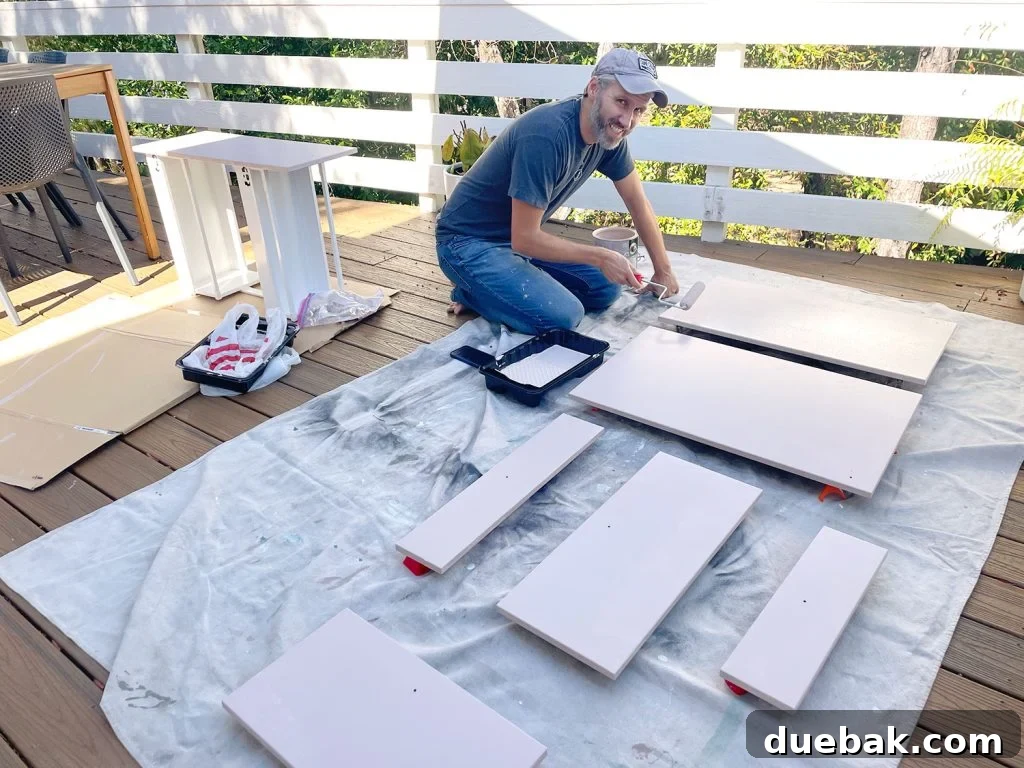
Even a small kitchen will take several days because of drying and cure times between coats. Plan a workspace where doors and drawer fronts can lie flat or be propped up to dry—garage, spare room, or covered porch work well.
How To Paint Cabinets Video Overview
Watching a step-by-step video can be helpful to see the techniques in action. The video demonstrates preparation, priming, and painting so you can follow along visually and better understand the order and approach.
Note: you can also view this content on the host platform if preferred.
Supplies Needed To Paint Cabinets
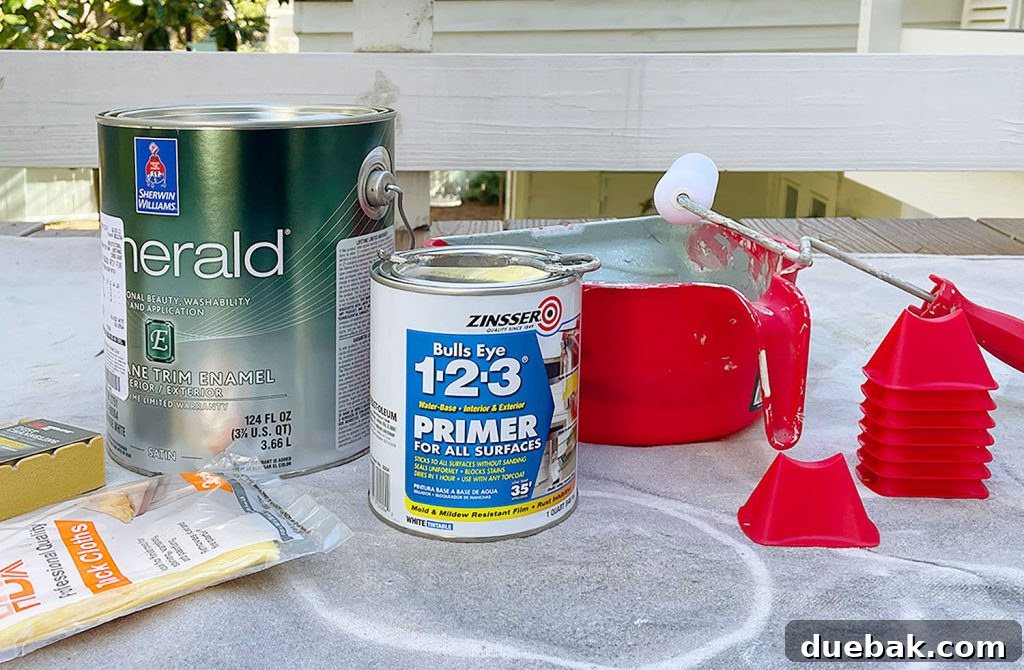
Most supplies are standard painting tools. You might already have many on hand.
- Primer (all-surface or one formulated for trim)
- Paint (satin or semi-gloss recommended)
- Small 4″ or 6″ foam rollers
- Roller trays
- Short angled paint brush
- Drop cloths
- Painter’s tape
- Painter stands or tripods
- Electric sander & sandpaper
- Electric drill & driver
- Liquid deglosser
- Wood filler and putty knife (optional)
A paint sprayer can speed the job if you’re experienced with one, but a brush-and-roller approach gives excellent results for most DIYers.
What paint should I use to paint my cabinets?
Water-based latex paints formulated for cabinets or trim are best for DIY projects. They clean up easily, are less odorous than oil-based formulas, and no longer sacrifice durability. High-quality cabinet or trim paints from reputable brands offer smooth, durable finishes. Consult the paint professional for the appropriate formula and choose the best quality your budget allows.
Step 1: Remove cabinet doors & hardware
Carefully unscrew cabinet doors using an electric driver or screwdriver. Remove hinges, knobs, and pulls and store hardware in labeled bags so reassembly is straightforward. Label doors and drawer fronts with painter’s tape (for example, “lower left stove”) to keep everything organized.
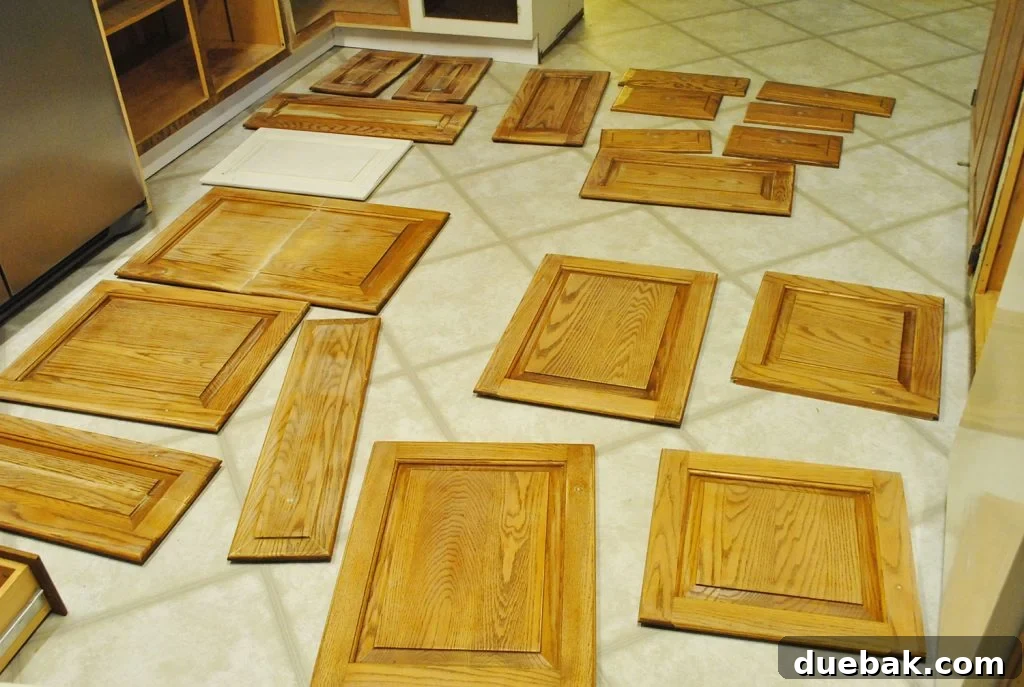
Remove drawers and, if possible, unscrew drawer fronts from the boxes. You don’t usually need to paint the inside of cabinets, so most contents can remain in place—cover them to protect against sanding dust.
Step 2: Patch cracks and holes (optional)
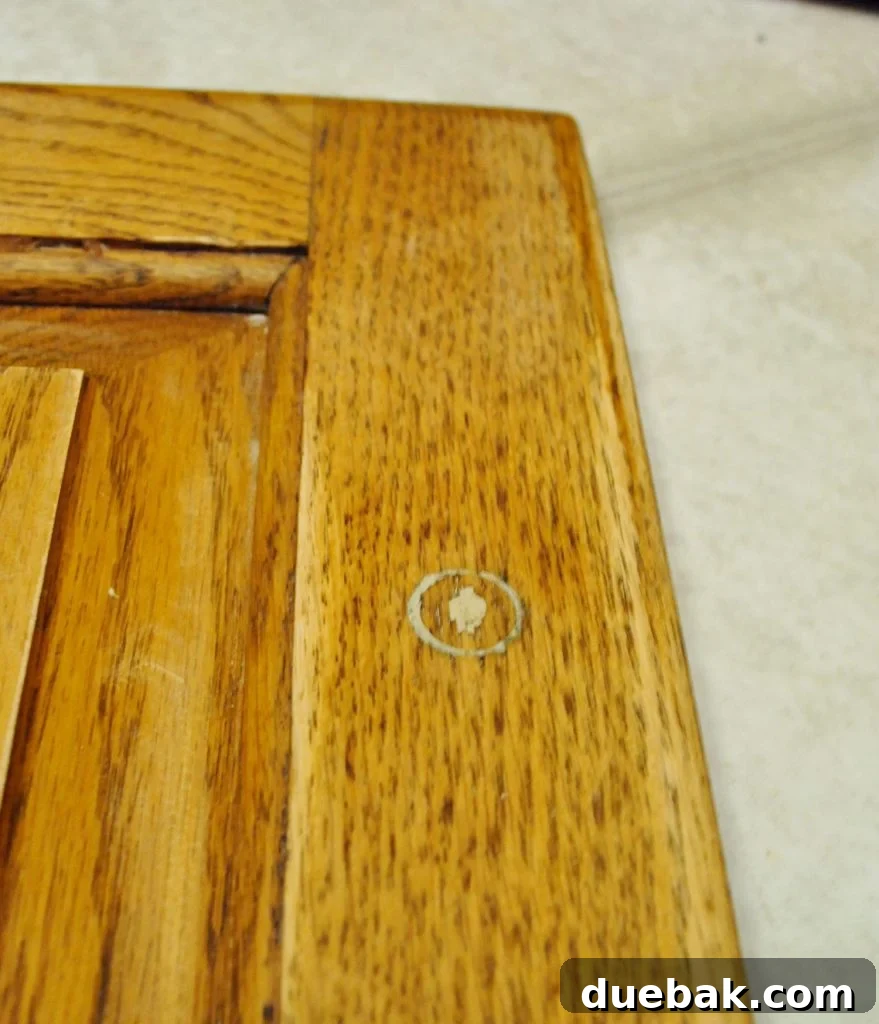
If you plan to change hardware or hinge placement, fill old holes with wood filler before sanding and painting. Apply filler with a putty knife, smooth it, and once dry sand flush. A second application may be necessary if the filler shrinks as it dries.
Step 3: Lightly sand all surfaces
Preparing the surfaces is the most important step for a durable paint job. Use an electric sander with medium-grit paper (around 120) to lightly scuff all surfaces you will paint—doors, drawer fronts, cabinet faces, and sides. The goal is to roughen the finish enough for primer and paint to adhere, not to remove all finish down to raw wood. Hand-sand corners and details as needed.
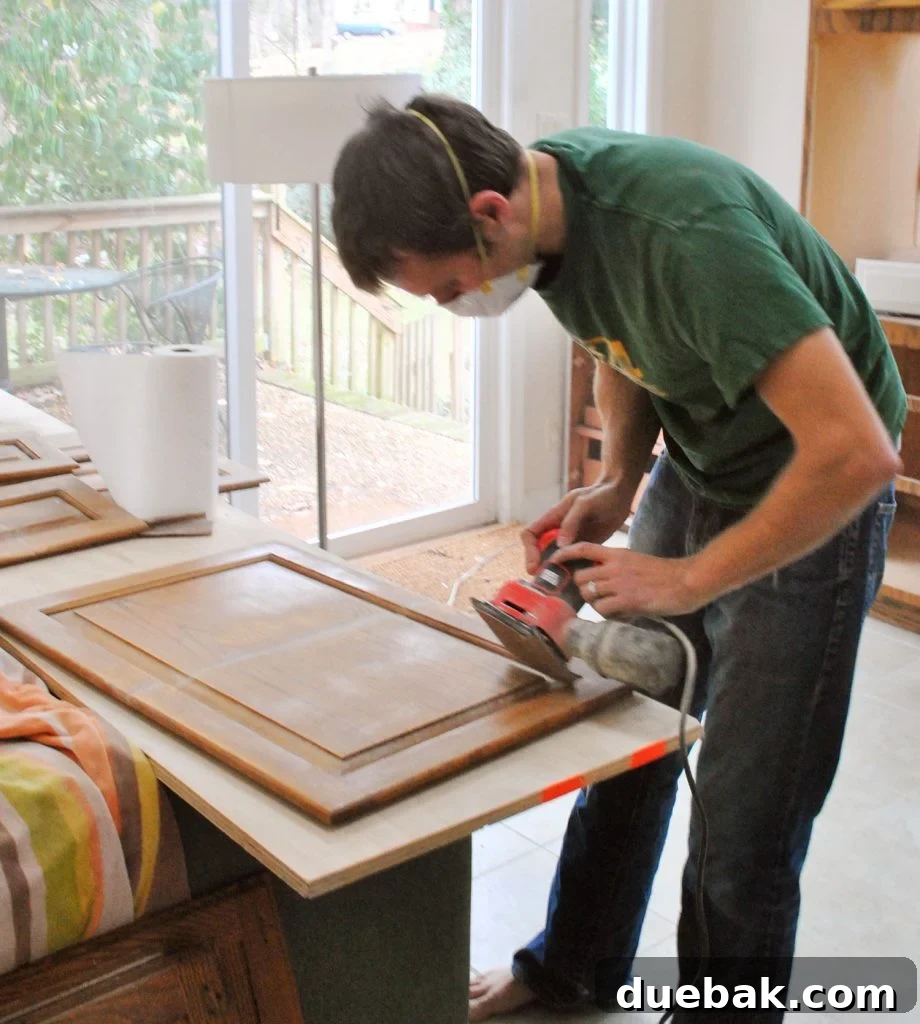
Sanding is dusty—work outside or in a well-ventilated area when possible. When sanding frames in place, cover nearby items to protect them from dust. After sanding, wipe surfaces with a tack cloth to remove fine dust before moving on.
Step 4: Apply a Liquid Deglosser
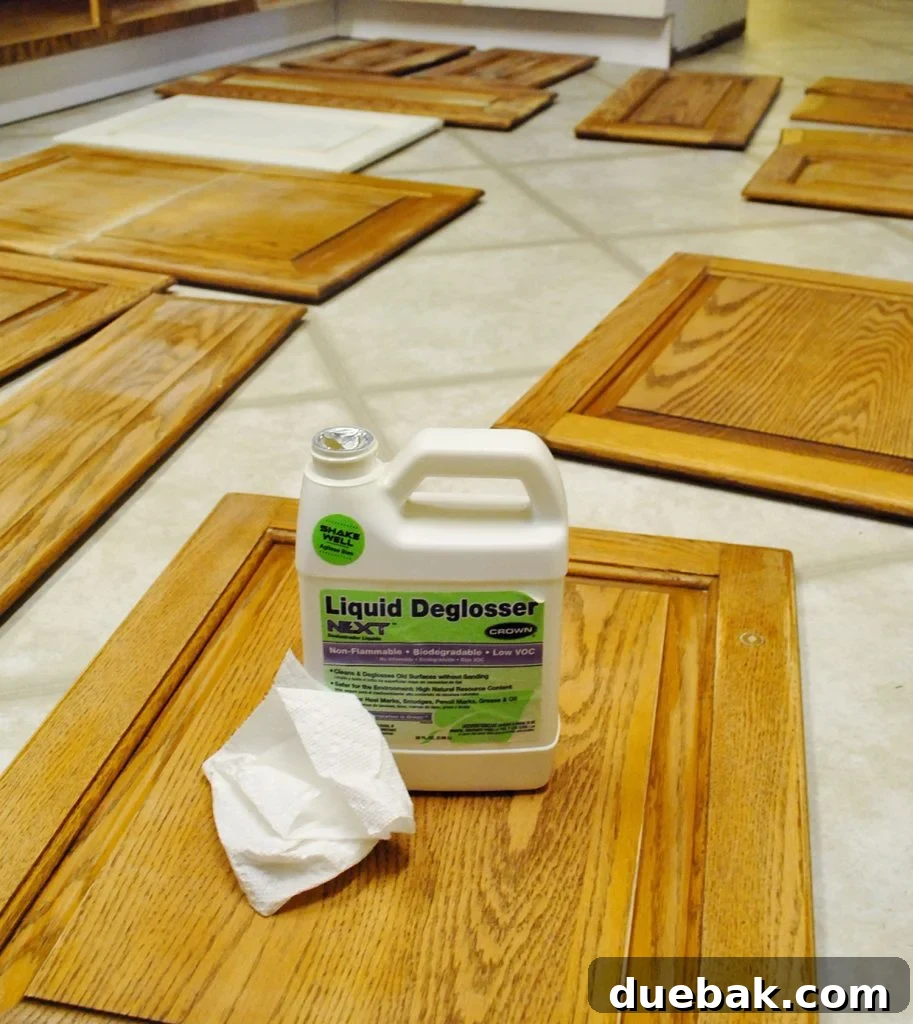
A liquid deglosser helps etch and clean the surface so paint bonds more reliably. Apply with a rag or spray bottle, allow it to penetrate for a few minutes, and let it dry—no rinsing required. For wood cabinets we recommend using both light sanding and a deglosser for the most reliable adhesion.
Step 5: Prime One Coat
Primer is crucial for good coverage and a durable finish—don’t skip it. Apply a thin, even coat of primer, using an angled brush for edges and a small foam roller to smooth flat areas and minimize brush marks. Primer can appear patchy while drying; that’s normal. If you plan to use a dark paint, consider tinting the primer to speed coverage.
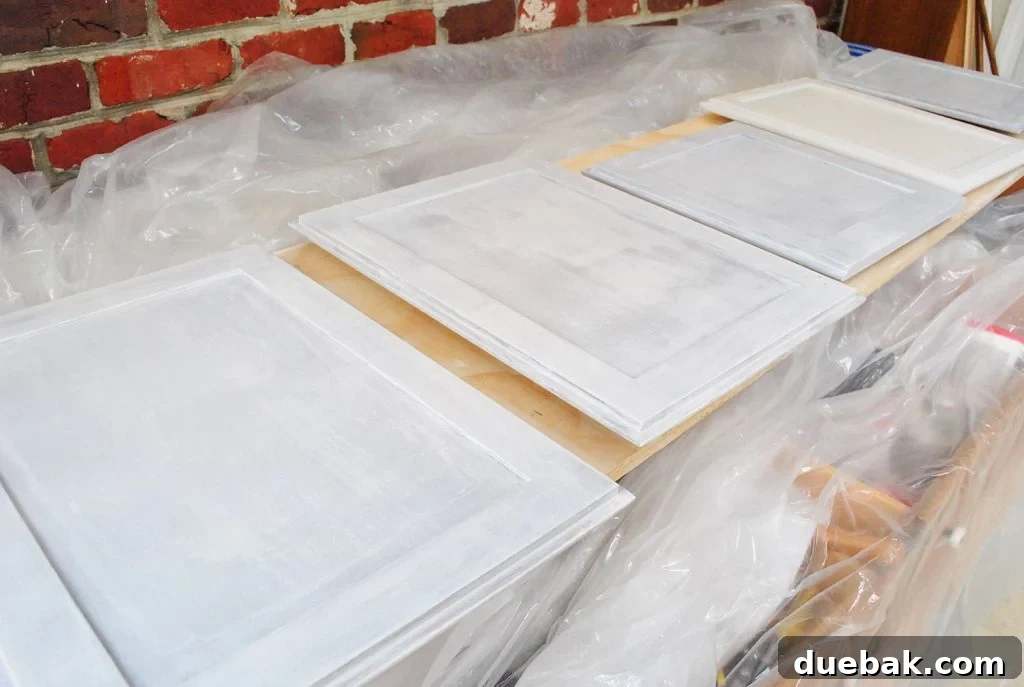
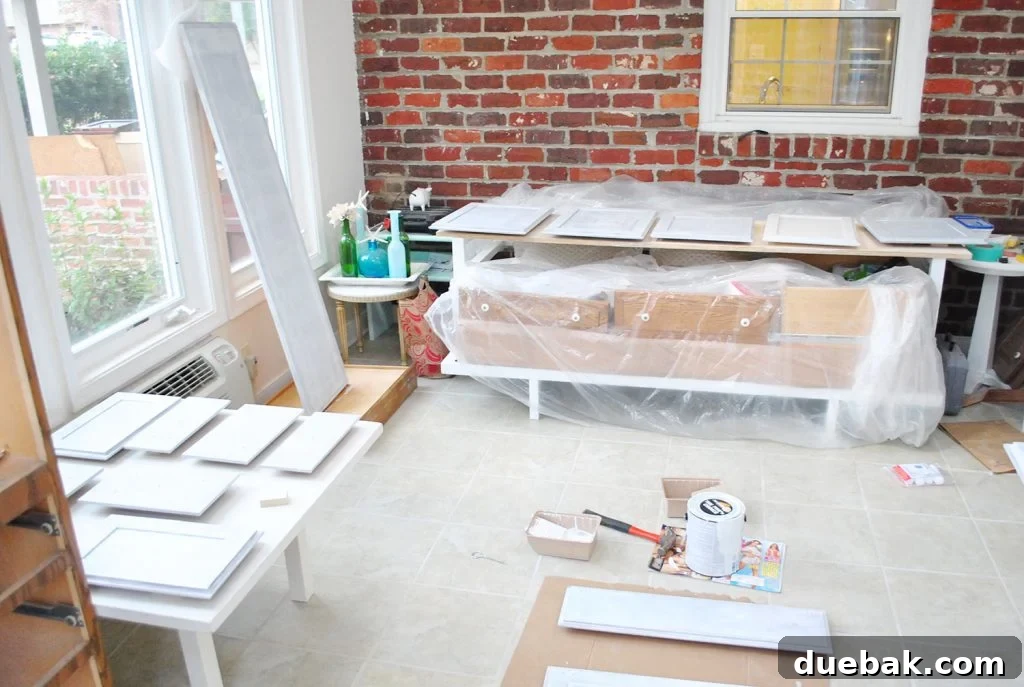
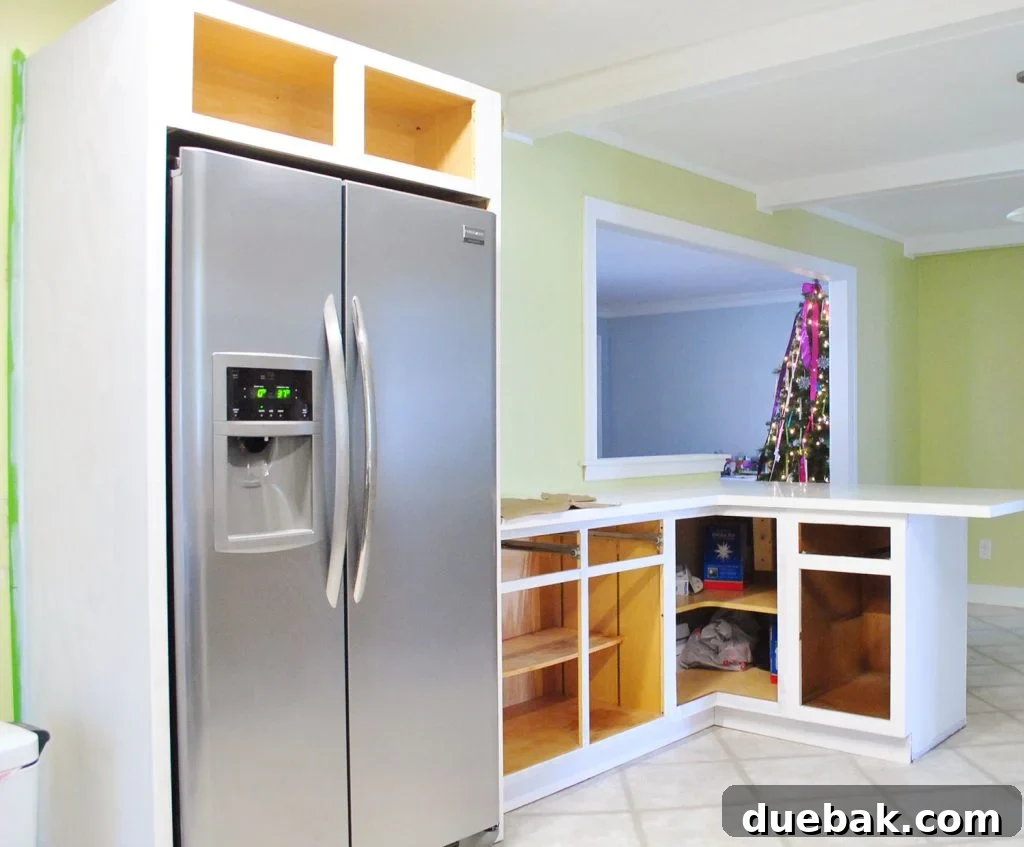
Use painter stands to prop doors for easier access and drying. If you paint both sides of doors, follow an order that allows one side to fully cure before flipping to avoid smudges. Prime cabinet boxes and frames in place, using painter’s tape and drop cloths to protect surrounding surfaces.
Step 5: Paint Two Coats
After the primer has fully dried, apply two thin, even coats of your chosen paint, allowing recommended drying time between coats. Use an angled brush for detail work and a foam roller for flat areas to minimize texture and brush marks. Thin layers are stronger and more resistant to scratches than a single heavy coat.
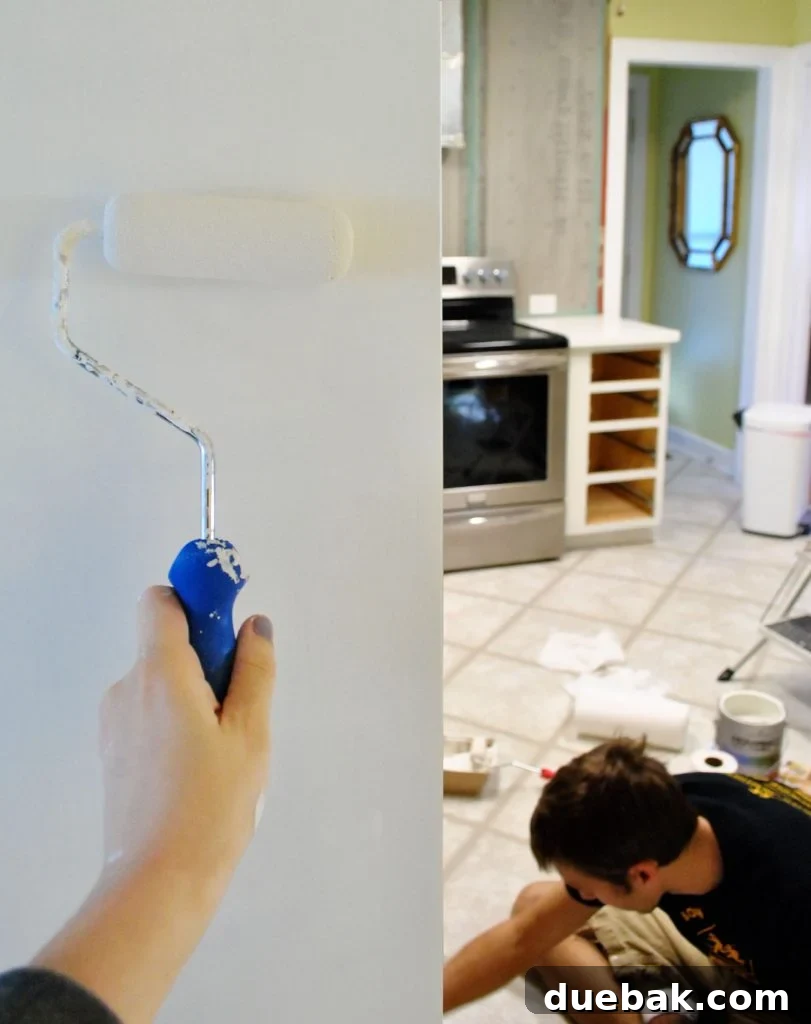
As you work, watch for drips at edges and remove them immediately. Take your time—this is where the transformation becomes visible and satisfying.
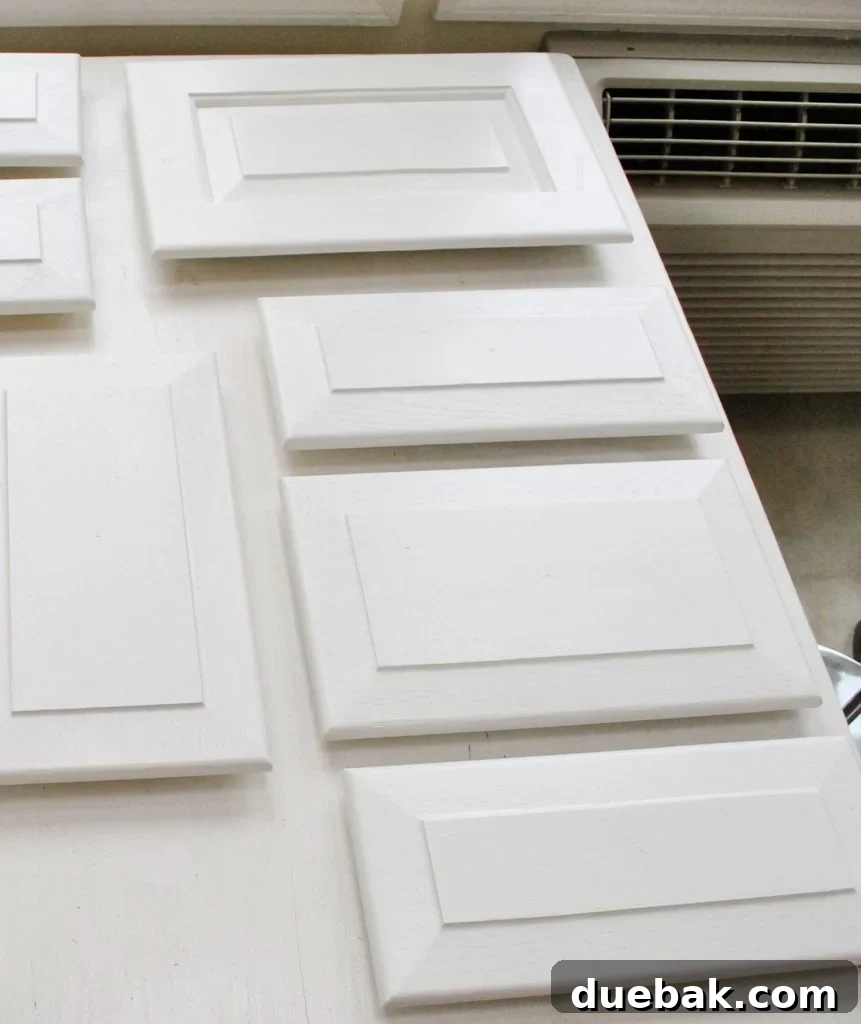
Step 7: Rehang cabinet doors
Once paint has fully cured, reattach hinges and hang doors. Slide drawers back in and return cabinet contents. Allowing an extra day of cure time before heavy use reduces the risk of scuffs or dings during reassembly.
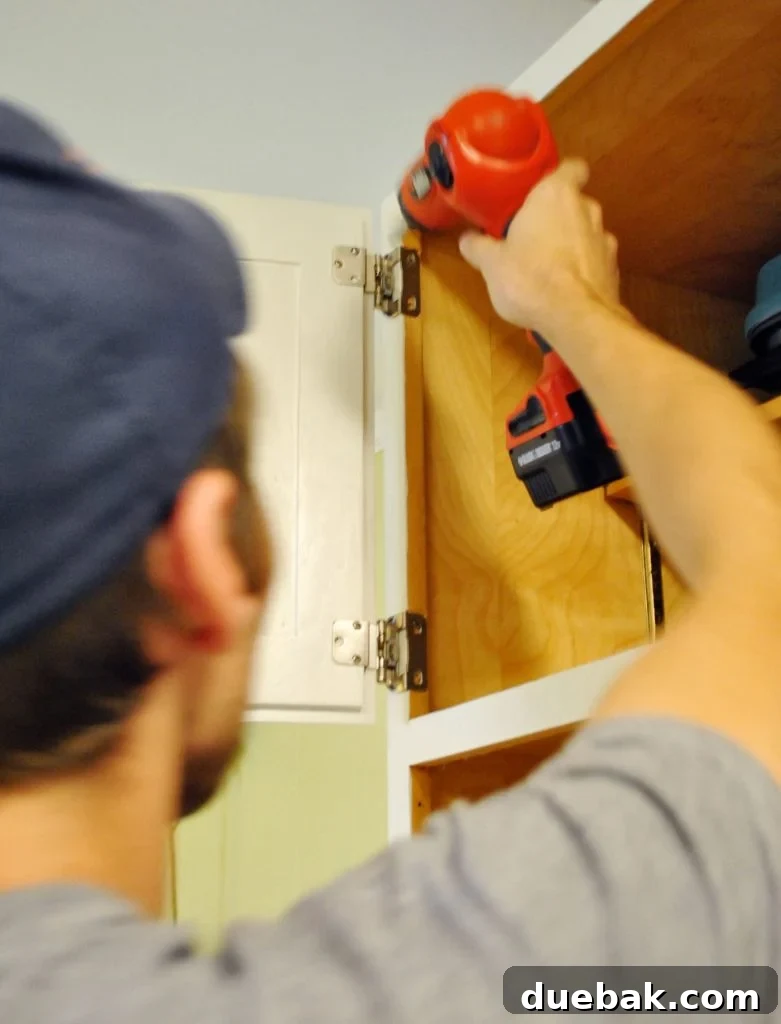
Step 8: Reinstall cabinet hardware
Reinstall knobs and pulls. If you filled old holes and need to drill new ones, use a hardware template or jig to ensure consistent, accurate placement. A template speeds the process and helps avoid mistakes.
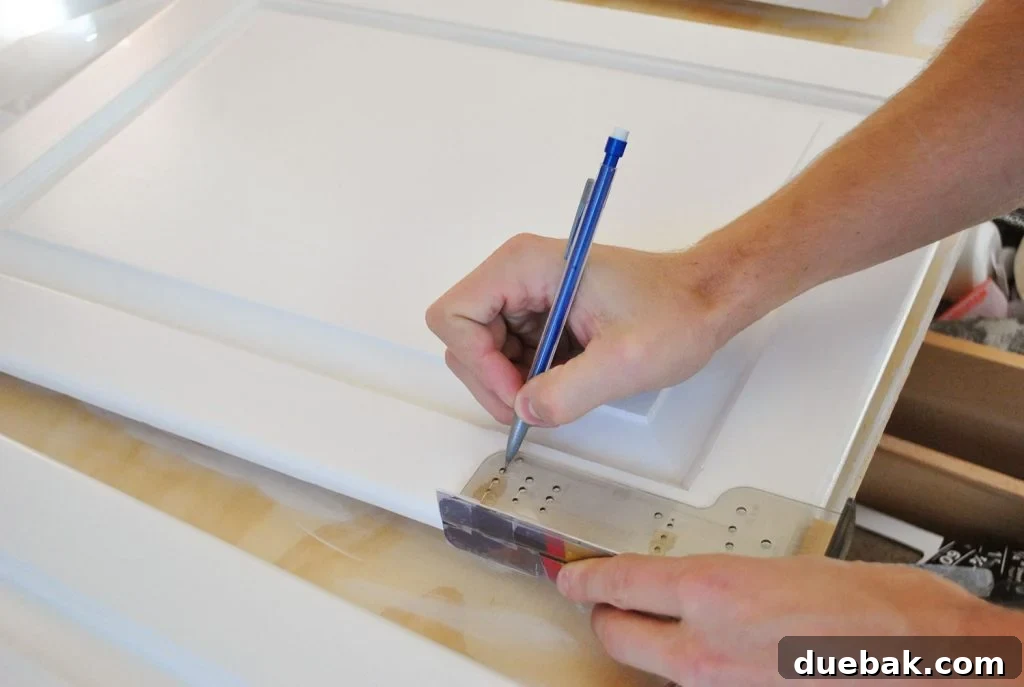
How long does it take to paint kitchen cabinets?
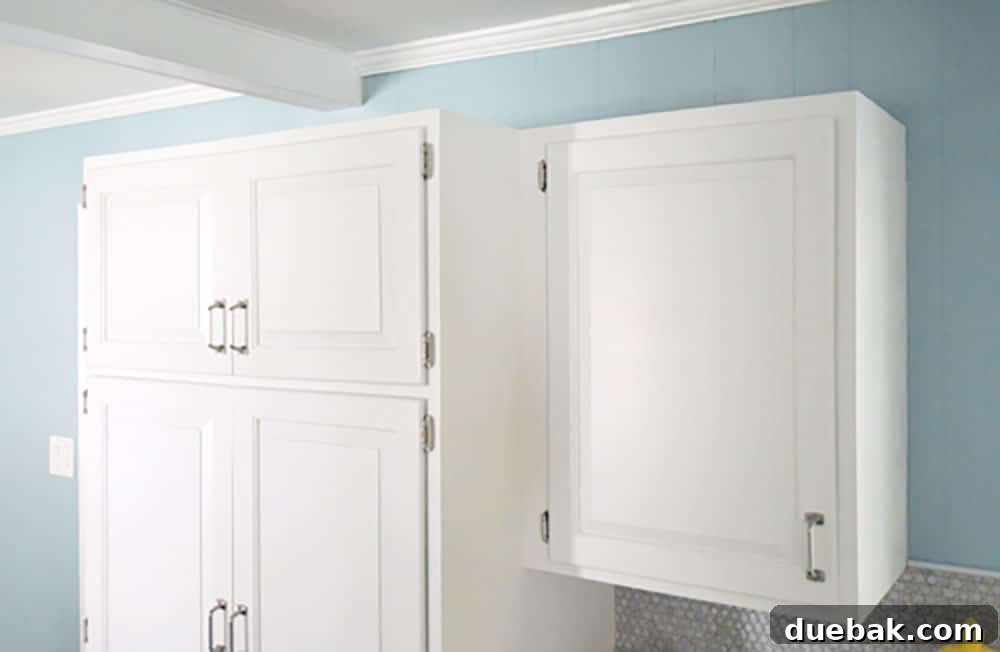
In our experience, a full cabinet painting project spanned 15 days, largely due to drying and curing times rather than continuous work. It’s realistic to complete the work on nights and weekends without taking extended time off.
How much does painting cabinets cost?
Painting cabinets yourself is far less expensive than replacement or professional refinishing. In one project we spent around $300 total, with half of that on new hardware. If reusing hardware, your cost will be lower. Typical material estimates:
- Sandpaper: $10
- Liquid deglosser: $10
- Primer, 1 gallon: $30
- Paint, 1 gallon: $80–$120
- Paint supplies (roller, brush, trays): $40–$60
- TOTAL COST: $170–$230
If you don’t own power tools like a sander or drill, they add to the cost but can often be rented or borrowed. Doing everything by hand is possible but increases time and effort.
Other Cabinet Painting FAQs
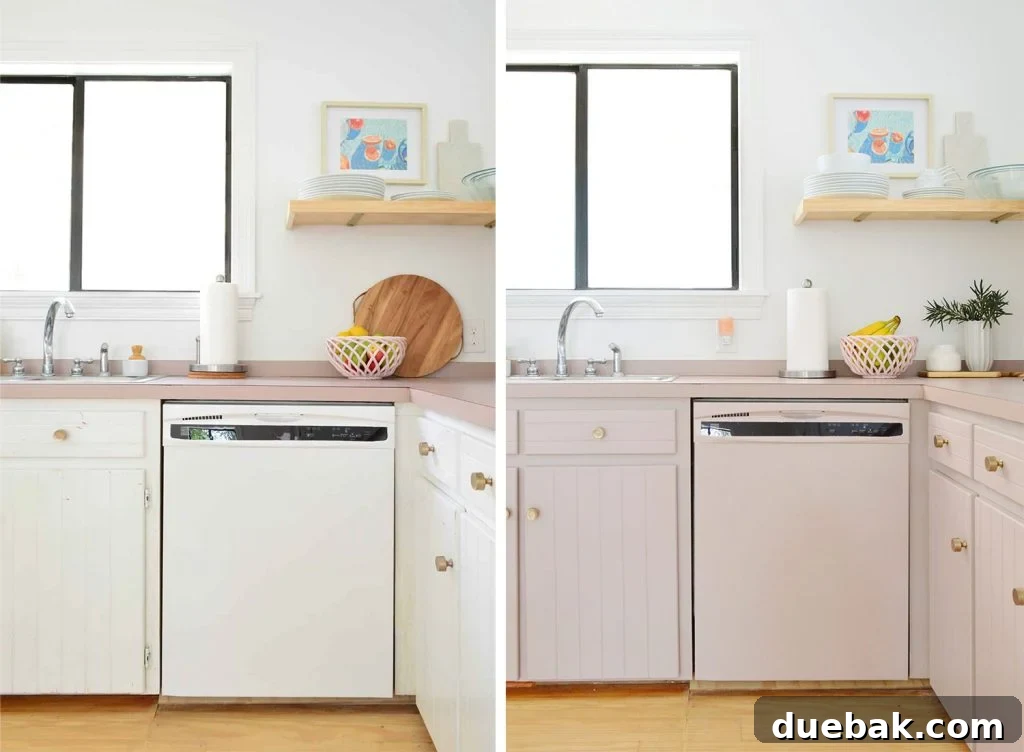
Answers to common questions:
Do I need a sealer or topcoat?
No—paints formulated for cabinets or trim typically provide a durable finish without an added sealer. A separate topcoat can sometimes yellow or change the look, so it’s usually unnecessary.
What finish should I use?
Satin or semi-gloss finishes provide a hard, wipeable surface that stands up to kitchen wear. High-gloss is an option but is best applied with a sprayer to avoid visible brush and roller marks. Flat or matte finishes are harder to keep clean in high-use areas.
What color should I paint my cabinets?
Color is a personal choice. Classic white remains popular for its brightness and versatility, while colored cabinets—soft blues, greens, or warm neutrals—can add personality. Test samples in your kitchen lighting before committing, as colors can read differently on large surfaces than on small swatches.
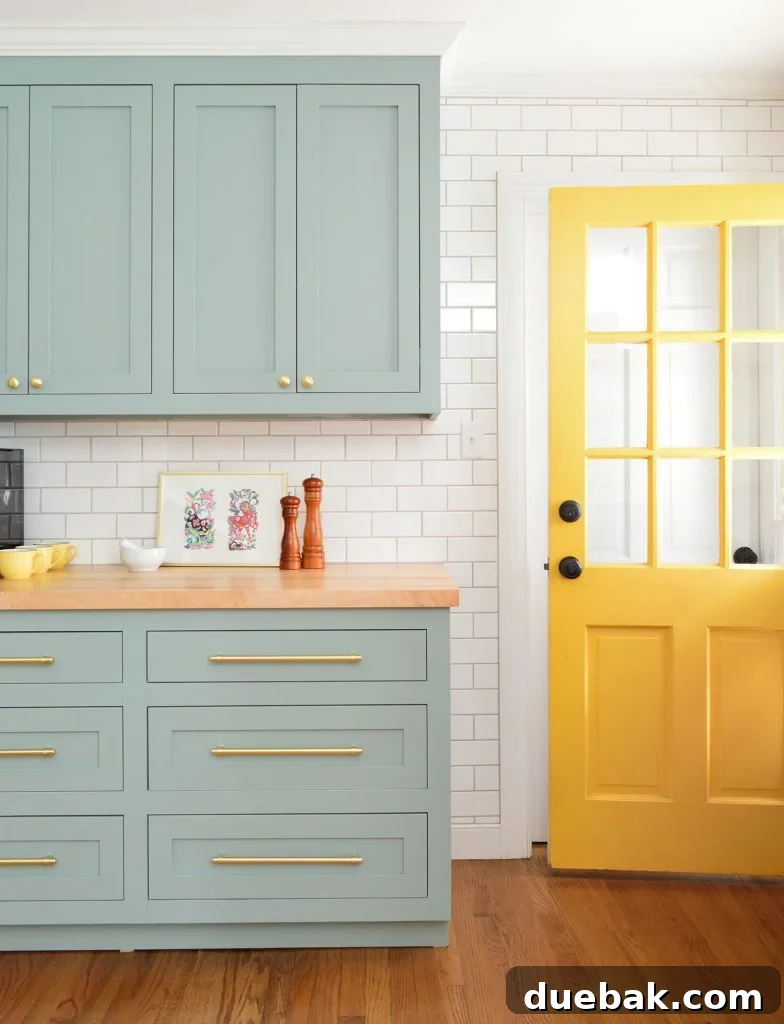
More Kitchen Cabinet Projects
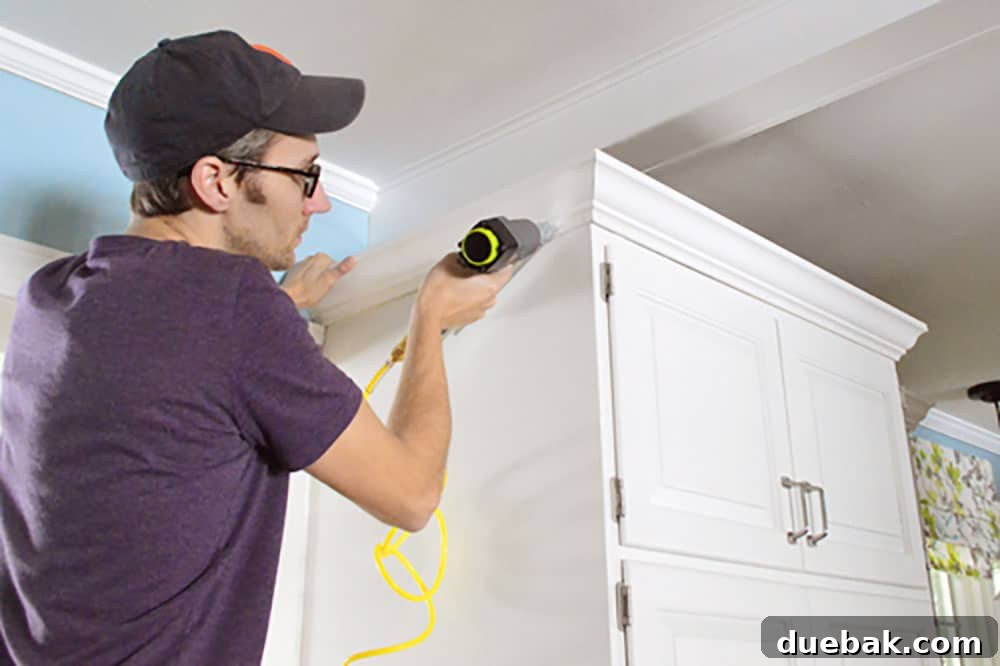
If you’re updating cabinets on a budget, consider additional projects like adding crown molding, improving organization, changing hardware, or installing hidden hinges—each can dramatically enhance the look and function of your kitchen.
Update: our painted cabinets have held up well over time.
Note: some product references in this article may be associated with affiliate links.