
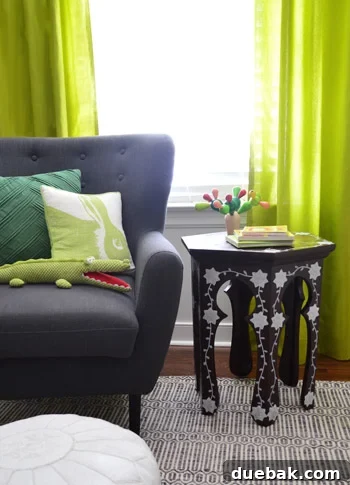
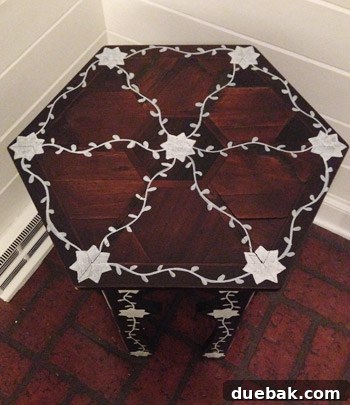
Sometimes, it’s best to cut straight to the chase and reveal the stunning “after” shot first. While it might spoil the anticipation of a grand reveal, the transformation of this particular piece is simply too good not to share immediately. Prepare to be amazed by an incredibly affordable and deceptively simple thrift store table upgrade that proves anyone can achieve a high-end look on a budget.
The Unveiling: A Glimpse of the Transformed Moroccan Table
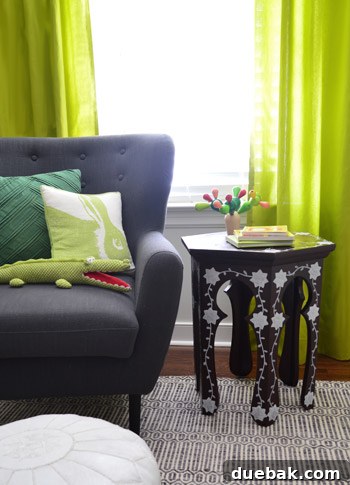
This isn’t just another DIY project; it’s a testament to creativity and perseverance, turning a humble, worn-out thrift store find into a captivating centerpiece. Seriously, don’t tell yourself you can’t tackle a project like this. With a little guidance and the right tools, you absolutely can. And if you still doubt your abilities, just remember: a little encouragement (or a playful challenge) goes a long way!
If you’re looking for more DIY inspiration or a dose of motivation, sometimes a short visual can spark that creative fire. Take a moment to see why this transformation truly matters.
The Origin Story: A $25 Thrift Store Moroccan Table
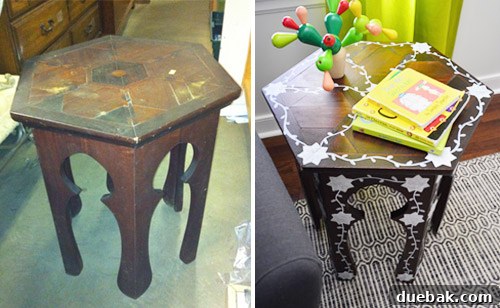
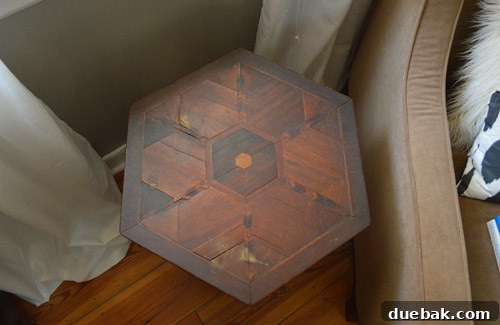
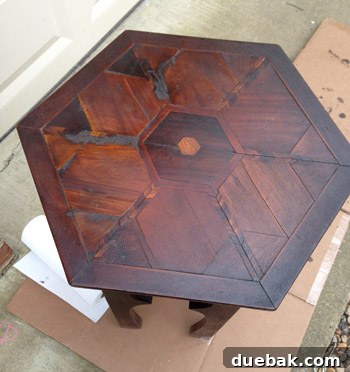
Do you recall the captivating $25 thrift store Moroccan table that graced our home nearly two years ago? It was a unique find, brimming with potential despite its imperfections. The original wood tone was rich and inviting, and the cool interlocking shapes on its surface gave it an authentic Moroccan charm that we instantly fell in love with.
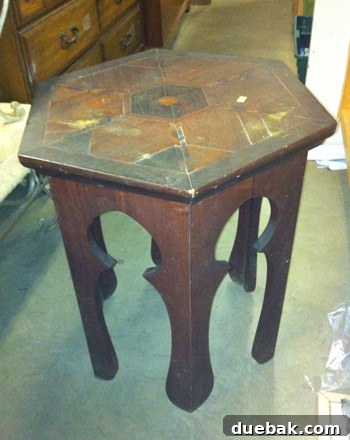
Even after a thorough cleaning, the table’s top presented a few notable issues. There were visible cracks and stubborn water-stained areas that detracted from its overall beauty. However, we were hesitant to rush into any major alterations. The thought of puttying, sanding, priming, and then staining or painting it seemed like a daunting task that we weren’t ready to commit to immediately. So, our initial solution was simple: strategically place a few decorative items on the top to discreetly hide those flawed areas. We truly cherished the table’s inherent character, opting to live with it “as-is” for a while, allowing its natural beauty to shine through despite its minor blemishes.
The Test of Time: When Imperfections Worsened
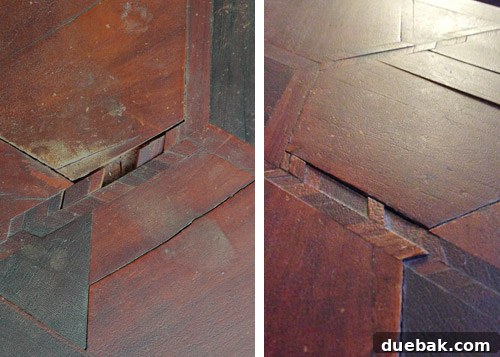
Fast forward nearly two years, and it’s safe to say we’ve definitely lived with it for “a while.” Our initial patience certainly paid off in terms of not rushing any decisions. However, the passage of time wasn’t particularly kind to the table’s top. And by “the years,” I’m primarily referring to the joyful, albeit destructive, antics of Clara, who discovered that the interlocking wood shapes could be pulled out, much like pieces from a puzzle. This newfound “game” led to a significant deterioration of the table’s surface.
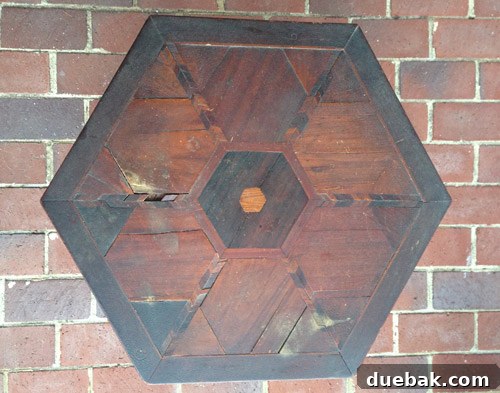
What started as minor cracks evolved into more significant gaps. Some areas that initially seemed stable proved to be much looser than anticipated. Inevitably, a few of the precious wood pieces began to pop out entirely and eventually got lost in the daily shuffle of family life. The table was slowly but surely falling deeper into disrepair, prompting us to seriously reconsider its future.
The Refinishing Dilemma: To Paint or Not to Paint?
The temptation to give our beleaguered little table a complete paint job resurfaced with full force as its condition continued to decline. This urge grew especially strong as we started noticing beautifully painted versions, like this vibrant example and this elegant iteration, popping up in our feeds. Meanwhile, our old thrift store find was practically emanating a “you don’t really have much to lose at this point” vibe. So, we decided to embark on a refinishing journey with a contingency plan: “Let’s just try refinishing it, and if that backfires, we can always paint it as a backup.”
The initial step in our ambitious plan was to thoroughly sand the entire surface of the table. This crucial preparation would create a smooth canvas for the next phase. Following the sanding, we meticulously applied wood filler to all those cracked, broken, or uneven areas, hoping to seamlessly restore the table’s integrity.
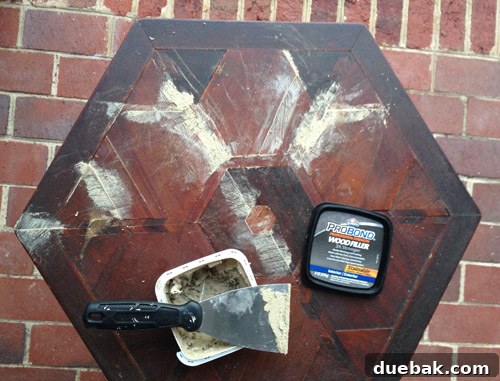
We had previously found success using this same type (and tone) of wood putty on our dark-stained kitchen cabinets (you can read more about that here). Although we briefly considered purchasing a darker wood putty specifically for this project, we ultimately reasoned that we would likely achieve similar positive results by evening things out with a bit more stain on the puttied areas. This hopeful assumption, as you might infer, contained a subtle hint of foreshadowing. Feel free to interpret that as you wish!
After allowing everything to dry completely, we carefully sanded down the puttied areas to ensure a perfectly smooth and flush surface. This meticulous preparation was essential before moving on to the exciting, and sometimes challenging, phase of staining.
The Staining Setback: A Stubborn Problem
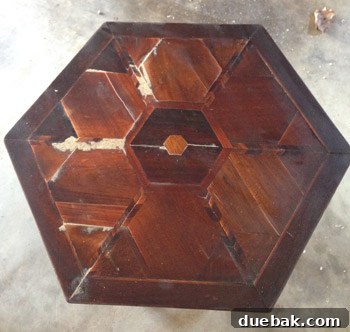
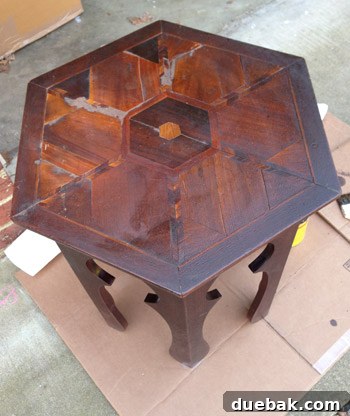
Our goal was to restore the table’s original rich, reddish-brown tone. For this, we chose Minwax Red Mahogany stain, a reliable product we’d had on hand since using it four years prior on Clara’s two-tone dresser. We applied two coats, carefully following the instructions: brushing it on and then wiping off the excess. However, after the second coat, a frustrating reality became clear: the wood puttied areas were proving far more stubborn than they had on our kitchen cabinets. They simply weren’t absorbing the stain in the same way, creating noticeable lighter patches. Bummerz, indeed!
Eureka Moment: The Stain Pen Solution
When a DIY project hits a snag, especially one as frustrating as uneven stain absorption, my usual coping mechanism kicks in: I step away for a while. John and I pivoted to another task, often involving a trip to Home Depot for other materials. This brief respite allows for mental space, hoping a solution will spontaneously emerge. Honestly, I half-expected the ultimate solution to be, “Well, painting was our backup plan, and it looks like that’s our best option now.”
However, as we pulled into our garage after a Home Depot run, a brilliant idea sparked: stain markers! I immediately recalled having one in a dark color, which I often use for quick touch-ups on our dark wood furniture pieces, such as our foyer console table, Clara’s dresser, and our sofa table. I figured it was worth a shot to try it on the stubborn wood puttied areas, hoping it would deepen their color and help them blend seamlessly with the rest of the table’s rich tone.
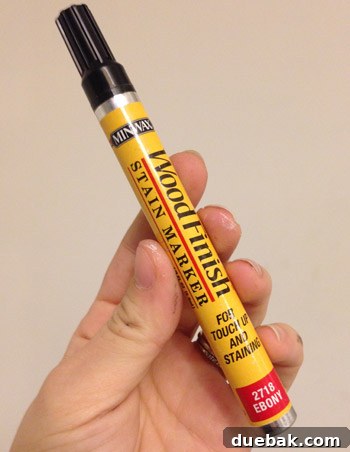
And in a miracle of all miracles, it worked! I simply scribbled the stain marker directly onto the lighter putty spots and then gently wiped it with a paper towel to blend the color. The transformation was immediate and satisfying. It wasn’t a complete disappearance of the putty (you could still discern the spots if you stared intently, as seen in the picture), but it was a significant leap closer to the subtle, less-obvious effect we were striving for. This simple trick saved the day and averted a full paint job, allowing the beautiful wood grain to remain the star.
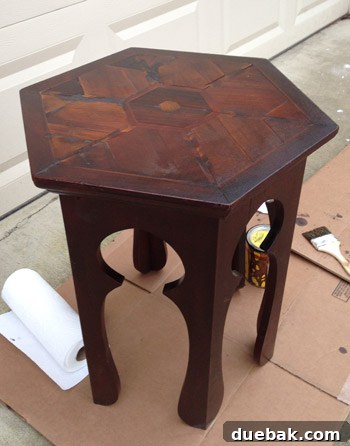
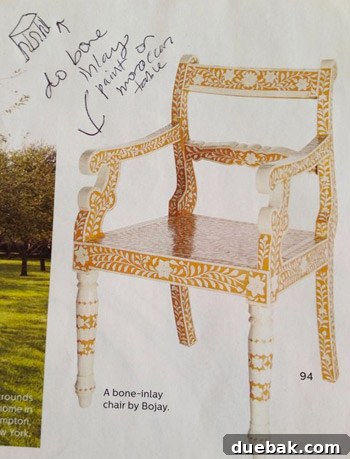
While the stain pen offered a fantastic improvement, I realized we could take it a step further to completely obscure any lingering imperfections. What if, instead of painting 80% of the table, I added an intriguing, inlay-inspired detail to a few key areas? My thought was that this intricate detailing would draw the eye away from those subtly patched spots, simultaneously adding a playful aesthetic without completely sacrificing the wood look that a full-on paint job would. I even stumbled upon an old magazine tear sheet in a binder that sparked this idea – a reminder that I had vaguely considered such a “down the line” concept a year or two ago. Turns out, I’d even jotted down a little note to myself, ensuring the idea wouldn’t be forgotten.
The Faux Inlay Transformation: Design & Execution
This was definitely a bolder furniture move, perhaps even bordering on the “kinda crazy” category for some. However, with the table already having seen better days, we truly didn’t feel we had much to lose. John was also enthusiastic about the idea, giving me his full blessing to proceed. The next challenge, then, was the “how” of bringing this vision to life. I considered various methods, from using pre-made stencils and stamps to attempting a completely freehand design. Ultimately, I settled on a hybrid approach: freehanding the flowing, leafy vines that would connect everything, while creating a precise cardboard template for the distinctive star-like shapes often seen in Moroccan designs.
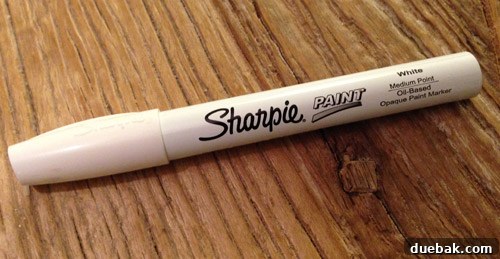
For the actual application, I believed a paint pen would offer significantly more control than a traditional paintbrush, so I decided to experiment with that first. Thankfully, this particular Sharpie paint pen performed admirably, and I highly recommend it for similar projects. A crucial tip: ensure you use their oil-based version if you’re working on a stained piece of furniture. Their water-based version, which I also adore for other crafts, might cause bleed-through on stained surfaces. To ensure safety and minimize fume exposure, I opened multiple windows and donned my trusty respirator, ensuring I wasn’t inhaling any harmful substances during the process.
Creating the Star Template
To craft my cardboard stencil, I searched online for a seven-pointed star design. Once found, I printed it out onto card stock in a variety of sizes. From this selection, I meticulously chose the size that I felt would best complement the table and then carefully cut it out. My decision to go with a seven-sided shape was inspired by observing various Moroccan designs, which often feature stars with five, six, seven, or eight points. Since seven holds a special significance as our favorite number, it felt like the perfect choice for this project.
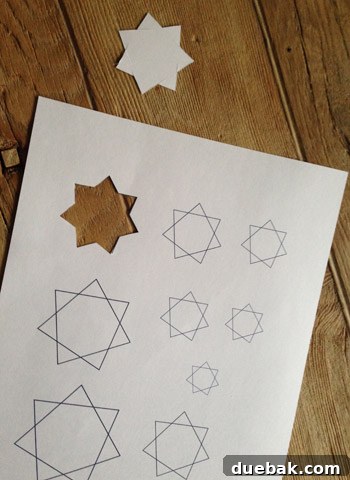
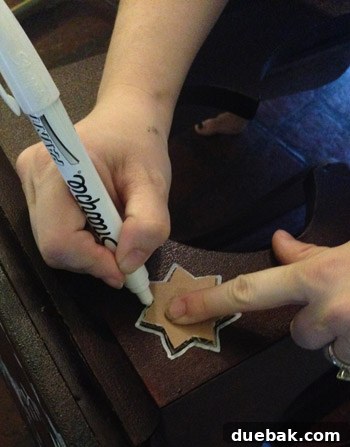
With the star shape finalized, I traced it onto a piece of sturdy cardboard and cut it out precisely. The process then became quite straightforward: I used this cardboard cutout as a template, tracing around it directly onto the table’s surface. After outlining, the next step was to carefully fill in the traced star shapes with the paint pen. This required a few coats of “filling in” to achieve a nice, solid, and opaque appearance, so please excuse the somewhat sketchy look of the progress pictures. A note in hindsight: I actually wish my stars were a tiny bit smaller. Therefore, if you’re attempting this, I’d recommend choosing a star printout that’s slightly smaller than your desired final size, as the traced outline tends to make the shape expand just a touch.
Adding the Connecting Vines
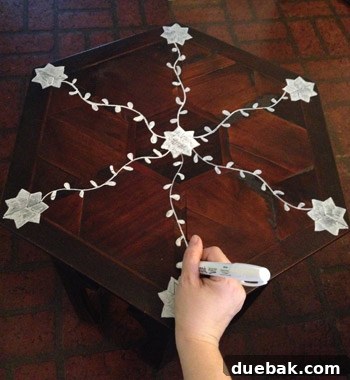
Once the stars were in place, I drew one prominently in the center of the tabletop and then strategically placed one on each of the corners. The next, and arguably most organic, step was to create a series of random, flowing wavy lines to elegantly connect all these star elements. These connecting lines were, surprisingly, the simplest part of the entire design. By adding small, delicate leaves on alternating sides of these squiggles, they effortlessly transformed into charming, leafy vines, mimicking the intricate patterns found in traditional Moroccan inlay. If you’re thinking you can’t do this, I’d playfully challenge you to a duel with a paint pen because I truly believe anyone can. Just grab a regular marker and a piece of paper, practice drawing some simple wavy lines, and then add a few leaves. It’s an incredibly easy technique, I promise!
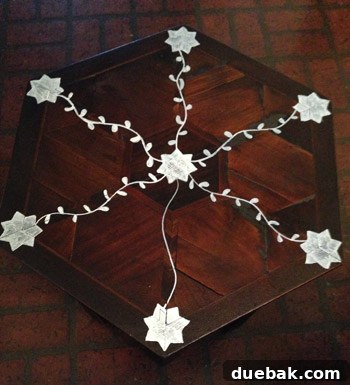
After establishing the primary connections, I continued adding more vines to link the outer edges of the design, creating a cohesive and expansive pattern across the tabletop. The image below shows this stage before I applied one final “coat” to the stars, which is why some areas still appear a bit sketchy. The truly remarkable aspect of incorporating this faux inlay detailing was its incredible ability to render the previously puttied parts virtually invisible. The stark contrast introduced by the white detailing masterfully diverted the eye, effectively camouflaging any remaining imperfections. Can you even tell where the putty once was? It’s genuinely astonishing what a clever “look over here” diversion can achieve for an otherwise cute but flawed patch-job on a beloved old secondhand table.
Extending the Design to the Table’s Sides
To ensure the design felt complete and integrated, I extended the faux inlay pattern to each of the table’s six sides. I achieved this by carefully laying the table down on its side, working on one panel at a time. On each leg, I added a star to the top, middle, and bottom, connecting these points with the same hand-drawn leafy vine motif that adorned the tabletop. This ensured a harmonious and intricate look from every angle, truly transforming the piece into a cohesive work of art.
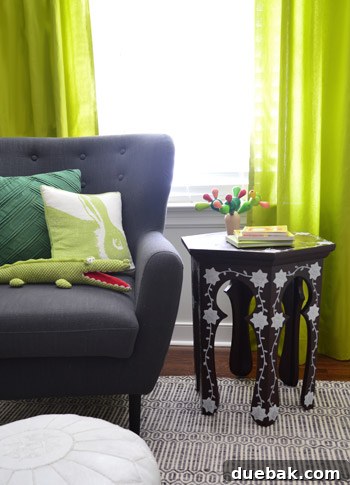
As I mentioned earlier, the paint pen initially filled those stars in a somewhat sketchy manner. To achieve a perfectly solid and polished look, I went back over all of them with another “coat.” The vines, however, looked great with just a single application, which saved quite a bit of time. I might even consider one more star coloring session to ensure absolute opacity before I proceed with sealing the entire piece. For sealing, we plan to use Safecoat Acrylacq, our preferred non-toxic poly alternative, ensuring a durable and safe finish.
The Final Result: A High-End Look on a Budget
Overall, the entire refinishing process, including sanding and initial staining, took a few hours. The intricate inlay-inspired stenciling and freehanding probably added another two hours to the total project time. While it wasn’t as quick as simply painting the table a solid color, it was an incredibly rewarding experience to try something new and more artistic. We particularly loved that this design is so characteristic of traditional Moroccan tables, allowing us to retain and even enhance that beautiful wood tone peeking through the delicate white detailing. The effort was certainly worth the stunning outcome.
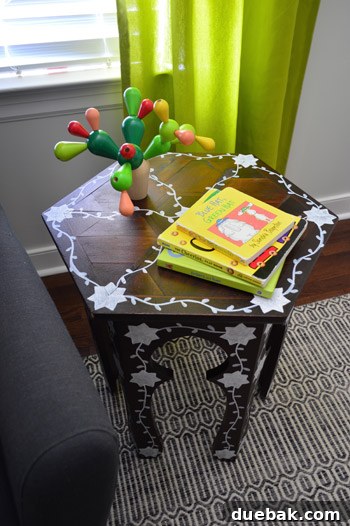
Considering that authentic mother-of-pearl inlay tables can retail for well over $1000 (a truly staggering price!), we are absolutely thrilled with this $25 “look for less” result achieved with just some paint and creativity on our sweet little thrift store find. We were fortunate enough to have most of the necessary materials already in our DIY arsenal. However, even if you had to purchase the wood putty, stain, a stain pen, and a paint pen from scratch, your total material cost would likely only hover around $25. This makes it an incredibly budget-friendly way to achieve a high-impact home decor transformation.
This project definitely falls into the category of bolder furniture transformations, so it might not appeal to everyone’s aesthetic. Nevertheless, it was an immense amount of fun to experiment with a different style and technique. The beauty of this kind of DIY is its relative flexibility. It’s not an irreversible commitment; if we ever tire of the design down the line, we can always sand it down and re-stain it, or even opt for a solid paint color someday. The possibilities for future updates remain open, giving us peace of mind.
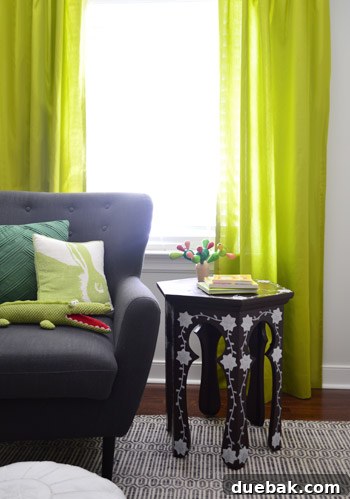
Currently, the transformed table looks absolutely charming in the nursery, where its warm wood tone complements other existing wooden elements. These include the built-in dresser tops, the crib drawer, the cleverly wood-wrapped toy cabinet, and the distinctive wooden bike frames. While it’s a perfect fit for now, we’re not entirely sure if it will remain in the nursery indefinitely. Rest assured, we’ll keep you updated on its future adventures!
Join the Conversation: Your DIY Adventures!
Were any of you tackling furniture makeovers this week? Have you ever experimented with stain pens on wood putty to achieve a seamless blend, or perhaps used a Sharpie paint pen for intricate detailing on your DIY projects? I was genuinely relieved and impressed by how effectively the stain pen helped disguise the putty and how beautifully the paint pen worked for the faux inlay – I imagine my lines would have been far more challenging to control with a traditional craft brush.
When your DIY project encounters a roadblock or seems to stall out, what are your go-to strategies for dealing with it? Do you step away and switch to a different task, hoping for renewed inspiration? Do you dive into extensive online research, Googling around for fresh ideas and solutions? Or perhaps, like some of us, do you consult your all-knowing chihuahua for sagely advice? Share your tips and tricks in the comments below!