
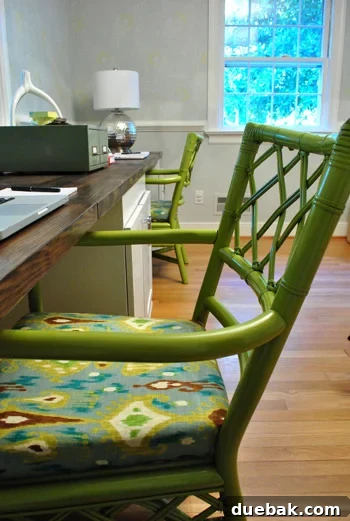
DIY Office Chair Makeover: Transform Your Workspace with Paint and Upholstery
There’s nothing quite like the satisfaction of giving tired, old furniture a new lease on life, especially when it results in a vibrant, personalized piece that elevates your entire living space. We recently tackled a pair of office chairs that, while perfectly functional, were severely lacking in personality. The goal was clear: infuse them with character and a pop of color that would seamlessly integrate into our home office design. And now, we’re thrilled to report that our wish list item for cheerful desk chairs can finally be checked off!
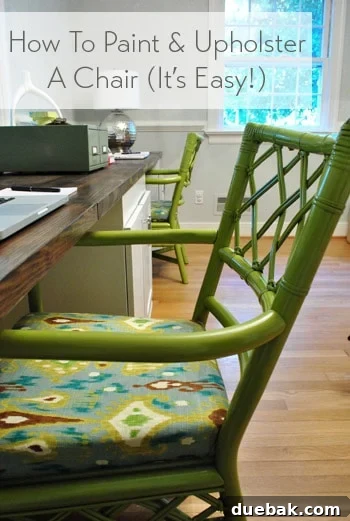
The journey began with preparing and painting the chair frames, a crucial step in setting the foundation for their fresh new look. We thoroughly documented the process of prepping, priming, and painting them, which you can read all about here. Now, with the frames ready for their grand reveal, it was time to dive into the art of upholstery. This next phase is where the real magic happened, transforming simple cushions into inviting, eye-catching seating that truly makes a statement.
The Upholstery Unveiled: Bringing Fabric to Life
Once the chair frames were meticulously painted and curing, our attention shifted to the seats. Upholstery might sound daunting, but with a few simple tools and a methodical approach, it’s a highly rewarding DIY project that can be completed surprisingly quickly. Our aim was to create a cohesive look, using a cheerful fabric that complemented the new paint color while also being durable enough for everyday use. Let’s walk through the steps to achieving beautifully reupholstered office chairs.
Gathering Your Upholstery Essentials
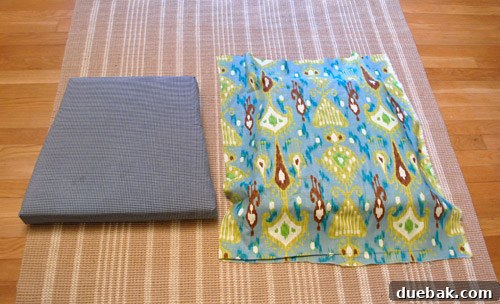
Before beginning any upholstery project, it’s wise to gather all your materials. For this task, you’ll need a suitable fabric, a sturdy staple gun (a basic manual one, like our $20 model from Home Depot, works perfectly), plenty of staples, sharp fabric scissors, and possibly a screwdriver to detach the chair seats. We were fortunate to have some leftover fabric from our dining room curtains, a vibrant green-yellow pattern, which perfectly suited our vision. This not only saved on cost but also ensured a harmonious flow between different areas of our home.
Preparing Your Chair Cushions for a Fresh Look
The first practical step involves detaching the seats from the chair frames. This usually requires unscrewing them from the underside. With the seats free, you can easily work on them on a flat surface. Our cushions were in good condition structurally, meaning they weren’t lumpy, stained internally, or emitting any odors. This made the decision to upholster directly over the existing fabric a simple one. Had there been issues with the foam or internal structure, we would have needed to strip down to the bare cushion and replace the foam, a task that would require different materials like new foam from a craft store.
Centering Your Fabric Pattern: The “Grellow” Advantage
With the detached seats in hand, the next step is to lay your chosen fabric over them. If your fabric has a distinct pattern, like our “grello thingies” (our affectionate term for the green-yellow motif), careful centering is key for a professional finish. We positioned the fabric to ensure one of these patterns was perfectly aligned in the center of each cushion. Once satisfied with the placement, we roughly trimmed the fabric around the cushion, leaving ample excess – typically enough to comfortably pull and staple to the backside, allowing for a tight, wrinkle-free finish.
Update: For those admiring our choice, here’s an affiliate link to the same fabric on Amazon for anyone looking to replicate the look.
The Strategic Staple: Establishing Tension and Alignment
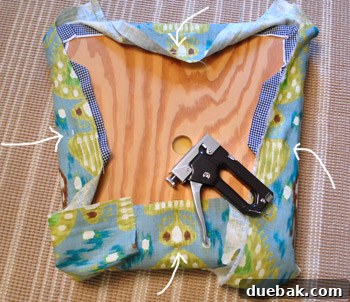
Maintaining the centered pattern, we carefully flipped the cushion over. This is where the initial stapling strategy comes into play. To ensure even tension and to hold the fabric securely in place while you work, shoot four staples into the fabric: one at “noon” (the top), one at “three o’clock” (the right side), one at “six o’clock” (the bottom), and one at “nine o’clock” (the left side). As you do this, pull the fabric nice and tight, but not so tight that it distorts the pattern. This preliminary stapling allows you to flip the cushion back over and inspect the front. If the pattern is straight and the fabric taut, you’re good to proceed. If not, it’s just four staples to pop out and readjust, a much easier fix than undoing dozens of staples later.
Finishing the Edges: Smooth and Secure
Once you’ve confirmed the pattern is perfectly aligned and the fabric is sufficiently taut from the front, flip the cushion back over. Now, continue stapling along each side, spacing about six staples per side. The key here is to continuously pull the fabric tight as you staple, moving systematically from the center outwards on each edge. This creates a smooth, professional finish, free of wrinkles or sagging. Don’t worry too much about the back looking perfectly neat at this stage; the focus is on how it appears from the front.
Mastering the Corners: A Simple Gift-Wrapping Technique
Corners can often be the most intimidating part of upholstery, but they don’t have to be. We approach them much like wrapping a present. It’s a technique that’s simpler in practice than it is to describe in words. Essentially, you gather the excess fabric at each corner and fold it into small triangles, similar to how you’d fold the paper at the side of a gift box. Staple these folds securely, always pausing to flip the cushion over and check the appearance from the front. The mantra here is: the front is all that matters. The backside of the corner might look a bit unconventional, with various folds and staples, but as long as the front is crisp and clean, you’ve succeeded.
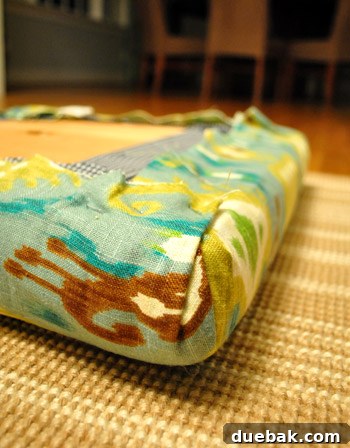
As long as you turn it over and things look great, you’re golden. This simple strategy allows for a clean, tailored finish on the visible side of the cushion, regardless of the behind-the-scenes complexity.
Replicating Perfection: Upholstering Multiple Cushions
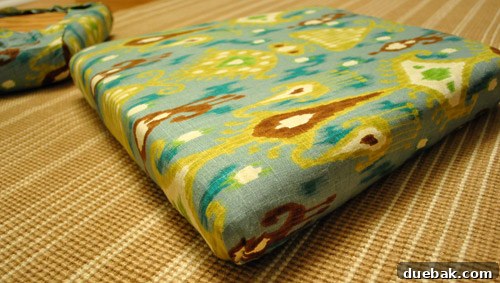
If you’re working on multiple chairs, consistency is paramount. We followed the exact same steps for the second cushion, carefully lining up the “grello thingies” pattern in the same manner as the first. This ensures both cushions look like identical twins, creating a cohesive set. With practice, the process becomes incredibly efficient. Each cushion took about 30 staples, and before we knew it, both were beautifully upholstered. The entire upholstery project, from start to finish, probably took no more than thirty minutes per chair – perhaps 45 if you, like us, get distracted by reality TV.
When to Keep the Old Fabric: A Smart Decision
As mentioned, we chose to upholster directly over the existing fabric. This is a practical and time-saving approach if your cushions meet certain criteria. We had no issues with unpleasant odors, no flattened or lifeless foam needing replacement, and no structural damage to the original fabric. Our only concern was the aesthetic appeal of the old fabric. If your cushions suffer from any of these problems, removing the old fabric and replacing the foam would be a necessary extra step, which would involve a trip to a fabric store for new foam and batting.
The Waiting Game: Curing Your Painted Chair Frames
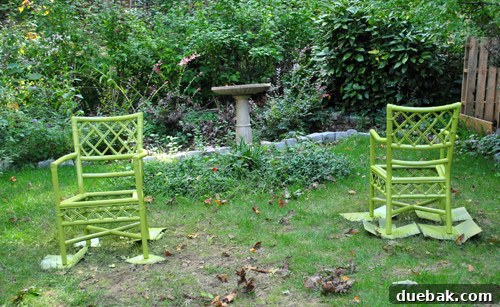
While the upholstery was a quick win, the painted chair frames required patience. Spray paint, especially for high-traffic items like office chairs, needs ample time to fully cure. This isn’t just about the paint feeling dry to the touch; it’s about it hardening completely to resist scratches, dings, and everyday wear. We gave our chairs two full sunny days outside, which helps accelerate both the drying and off-gassing process – spray paint can be quite pungent until it’s fully cured. To be extra cautious, we moved them into a sunroom for a third day, with windows cracked and a fan running, ensuring thorough ventilation before bringing them indoors for good.
The Grand Finale: Reassembly and Integration
Finally, late last night, the moment of truth arrived. With the painted frames fully cured and the cushions freshly upholstered, it was time for reassembly. We joyfully danced a giddy little chair-time jig as we slipped the newly dressed cushions onto those vibrant, “so-fresh-and-so-green” chair frames. Securing them with the same four screws we had originally removed, the result was nothing short of magic. Not the cheesy kind involving bad card tricks, but the cool kind – the sort that conjures levitation and mind-reading. The transformation was truly astonishing.
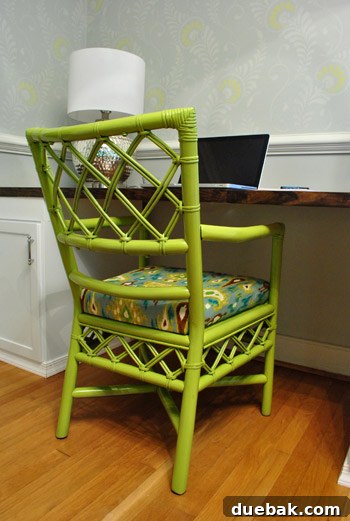
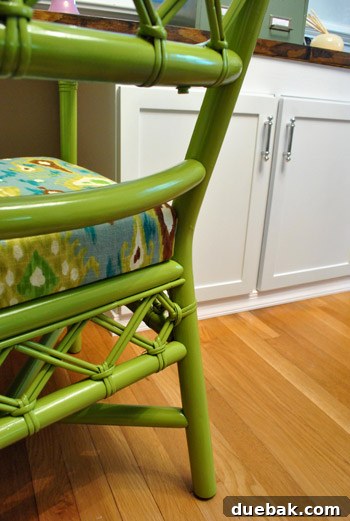
This photo’s coloring is probably the most true to life (below). They look so great with the white cabinets and the dark wood counters, creating a cohesive and inviting workspace.
Designing with Confidence: Color Harmony in Your Home Office
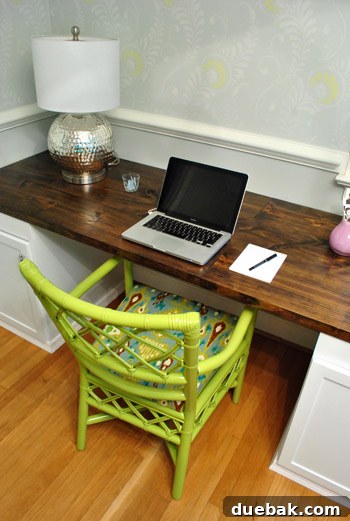
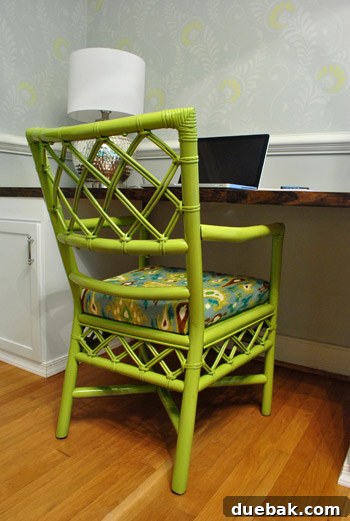
We are completely obsessed with the outcome. The intense green-yellow hue of the chair paint and fabric beautifully relates to the subtle pop of color in the wall stencil. Instead of clashing or competing, the chairs enhance the “grello” accent on the wall, bringing it to life in a way that truly adds depth and personality to the room. While colors can vary by monitor, in person, the pairing is nothing short of amazing. The synergy between the bold chairs and the more understated wall detail creates a dynamic yet harmonious visual experience.
The Art of Layering: Bold Chairs and Subtle Stencils
The beauty of this design lies in its thoughtful layering. Since the stencil is quite subtle and the chairs are wonderfully bold, they don’t fight for attention. Instead, they interact harmoniously, creating a balanced and inviting atmosphere rather than a chaotic one. This delicate balance might have been lost if the stencil had been high-contrast or the chairs more muted. The key to successful interior design is often keeping elements at different levels of visual intensity – for instance, pairing bold pillows with a more subtle tone-on-tone rug or sofa. If every textile, accessory, and piece of furnishing were vying to be the star, the result could quickly become overwhelming – perhaps a bit too “Lady Gaga” for some tastes. Of course, there’s nothing wrong with that if it’s your intended aesthetic!
Beyond the Chairs: Future Decor Plans
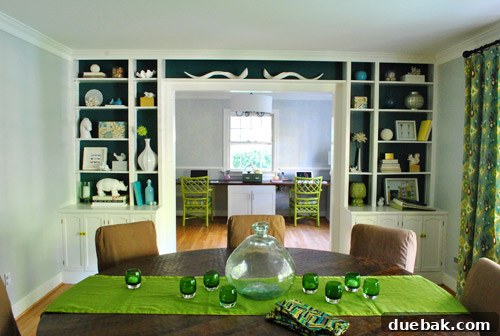
One of our favorite views of the refreshed office is looking through from the dining room. Me-ow! The flexibility of the decor is also a bonus; the table runner, for example, can be easily swapped out if we ever decide to dial back the green, though for now, we absolutely love it. Our next step is to add some large-scale art above each chair to introduce much-needed vertical height to the office, ensuring it complements rather than competes with our fantastic chair-and-stencil combo.
Detailed Views: Appreciating the Craftsmanship
But for now, let’s get back to the close-ups and truly appreciate the details of this transformation. Our office just got a whole lot happier, and so did we! Picture us serving up the biggest, cheesiest grins imaginable.
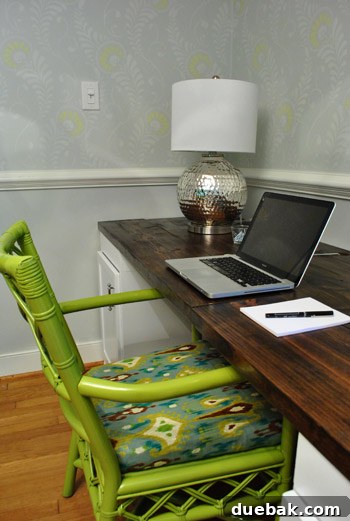
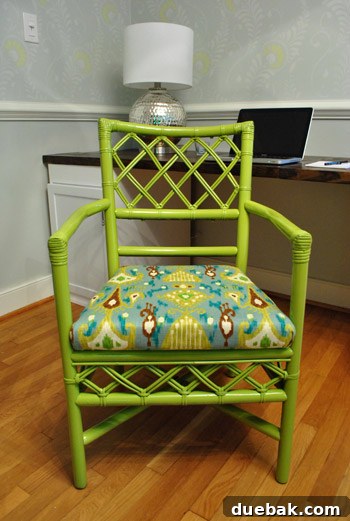
The Incredible Before & After: A Budget Makeover Success
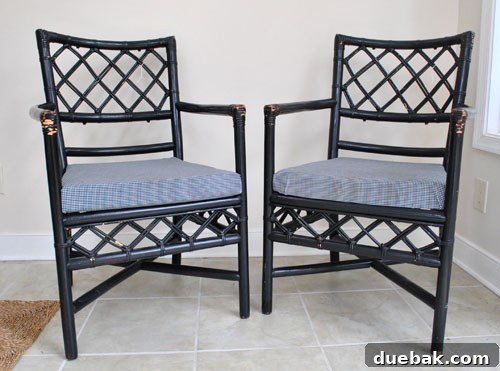
These $35 secondhand beauties have truly come a long way. It’s hard to believe they started like this, right after we bought them from a local secondhand store, looking rather forlorn and outdated:
Breaking Down the Costs: Smart Savings
The financial aspect of this DIY project is almost as satisfying as the aesthetic one. Since we already had the fabric on hand (which was leftover from another project, a fantastic way to save!), our total makeover cost was a mere $18 – the price of three cans of “Ivy Leaf” spray paint from Michael’s. Even if you were to factor in the initial cost of the chairs ($35 each) and the fabric (approx. $12.99 for a yard, which was more than enough for both seats), the grand total per chair comes to an incredibly reasonable $50.50. This figure makes us positively giddy when we compare it to similar designer chairs that retail in the $200-$250 range. And don’t look now, but a chair of this style recently fetched $694 on eBay! Woah nellie, talk about incredible savings and a truly budget-friendly transformation.
A Glimpse of the Elusive Stencil
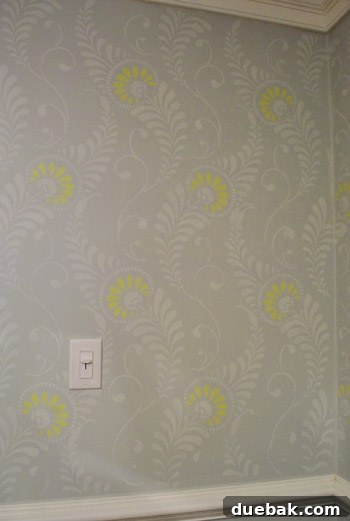
Just to round out the picture, here’s another snapshot of the stencil. It always makes us happy, but it’s notoriously difficult to capture its true essence in photographs. This elusive little guy often appears yellow in pictures, but in real life, it’s a lighter, more nuanced shade of the green-yellow that defines our new chairs.
Your Turn to Transform: Engage and Create!
We hope our office chair makeover inspires you to tackle your own home decor projects. Have you recently painted or upholstered any chairs? Do you have a stash of extra fabric lying around, just itching to be used for a creative DIY? And on a lighter note, do you share our particular “magic hierarchy” – with feats like levitation and mind-reading at the top, and less impressive tricks like bad card games and double-sided coin gags at the bottom? We’d love to hear your thoughts and experiences in the comments below!
Psst- Check out the first half of this chair makeover, covering the painting process, here.
Psssst- We just announced this week’s giveaway winners. Click hereto see if you’re one of them.