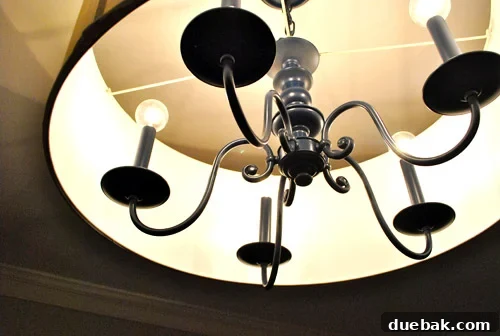
Welcome back to another exciting chapter in our home transformation journey! Today, we’re shedding some light – quite literally – on a significant update in our home office. Gone are the days of drab, outdated fixtures and accidental head bumps. We’re thrilled to unveil our revamped chandelier, now sporting a sophisticated indigo blue finish and a grand drum shade. This isn’t just a simple repaint; it’s a complete reimagining that infuses our workspace with modern elegance and a touch of unexpected color. Get ready to dive into the details of how we transformed an old brass relic into a contemporary statement piece, proving that sometimes, working with what you have can lead to truly remarkable results.
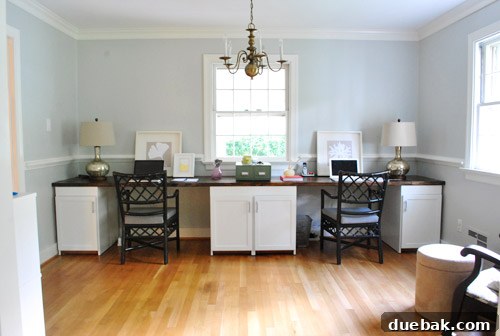
Before we fully immerse ourselves in the “after,” let’s take a quick trip down memory lane to appreciate the “before.” Our office, originally the formal dining room of our house, naturally came equipped with a chandelier that perfectly matched its previous purpose. This meant an ornate, traditional formal dining room fixture, complete with all the brass trimmings. For context, try to overlook the temporary wall art (frames leaning, not properly hung) and the lamps that were clearly not meant to be permanent fixtures beside our new, impressively long desk. This particular image captures the initial state, highlighting the fixture that, while grand in its own right, was far from the modern aesthetic we envisioned for our bustling home office.
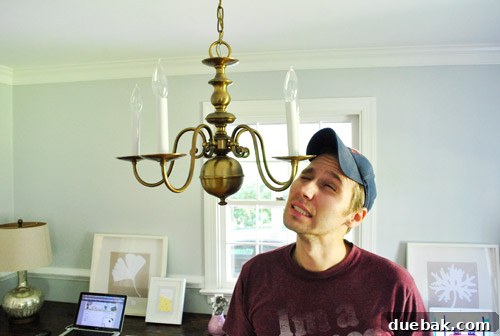
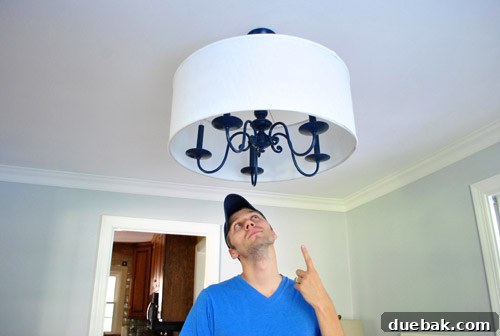
Beyond its aesthetic mismatch, this chandelier presented a daily challenge, especially for someone of my height. Over the past nine months, this fixture and I have had more than a few intimate encounters – primarily involving my head. It hung just a little too low for comfort, turning routine walks through the office into a high-stakes game of limbo. The constant ducking and occasional painful thuds made it clear that a change wasn’t just about style; it was about practicality and avoiding daily concussions.

To give you a more accurate visual, imagine this scene, but with a dramatic flair. My daily run-ins often involved a combination of surprise, frustration, and perhaps a few choice words that are best left to the imagination. This wasn’t just a minor inconvenience; it was a persistent design flaw that needed immediate attention. The vision for our home office included comfort and functionality, neither of which were being met by the current lighting situation.
Despite our adversarial relationship with the low-hanging chandelier, the idea of replacing it entirely felt wasteful. After a pivotal brainstorming session with our friend Katie B, Sherry and I were convinced to embrace the challenge of working with what we already had. This wasn’t our first rodeo when it came to transforming existing fixtures; we had previously spray painted a similar brass chandelier in our last dining room. This time, however, we wanted to go beyond just a fresh coat of paint. Our goal was to truly “modernize” it by altering its silhouette, integrating a large white drum shade for a contemporary feel, and introducing a sophisticated yet unexpected pop of color to truly make it shine.
Our quest for the perfect jumbo drum shade began with a stroke of luck. Our first stop was The Decorating Outlet, a local gem we’ve frequented countless times (it’s where we discovered Clara’s capiz chandelier and the shade for our previous office/guest room pendant). Miraculously, we found a shade that was precisely 24 inches wide – the minimum dimension required to achieve the impactful look we were after. This discovery set a positive tone for the entire project, proving that sometimes, the ideal solution is just around the corner.
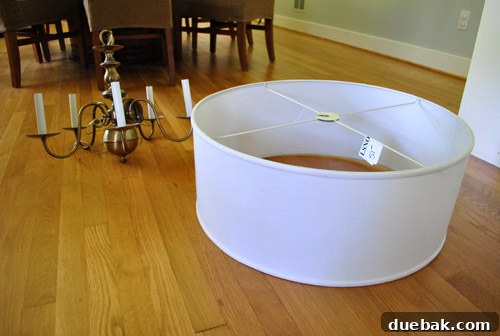
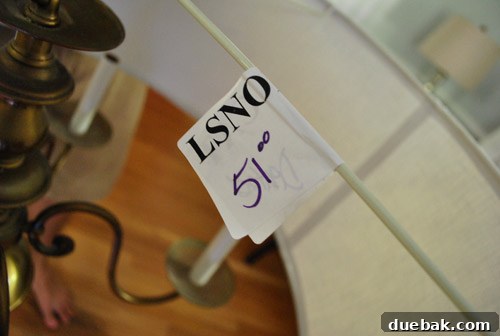
The shade was initially priced at $51, which was already a steal compared to similar 24-inch drum shades on the market (for instance, a 20-inch version costs $199). However, Sherry, ever the savvy negotiator, gently pointed out a few minor dents to the salesperson. To our delight, she agreed to sell it for $39! These dents were so subtle they were barely noticeable, especially from a distance, but Sherry’s keen eye and charming approach secured an even better deal. This significant saving reinforced our belief in the power of asking and proved that a little negotiation can go a long way in budget-friendly DIY projects.
The next crucial step in our modernization plan was to modify the chandelier’s existing structure. We decided to remove the large decorative ball at the bottom, which we felt would look awkward and out of place sticking out from beneath the new drum shade. Sherry vividly described it as “like butt cheeks hanging out of a short skirt,” a colorful analogy that perfectly captured our concern. Fortunately, this modification was surprisingly straightforward. A few simple twists of the bottom finial, and the entire ball, along with its long connecting rod, unscrewed with ease. We were astonished to find it was hollow, having assumed it would be filled with complex wiring. This unexpected simplicity was a welcome relief and a major win for our DIY efforts.
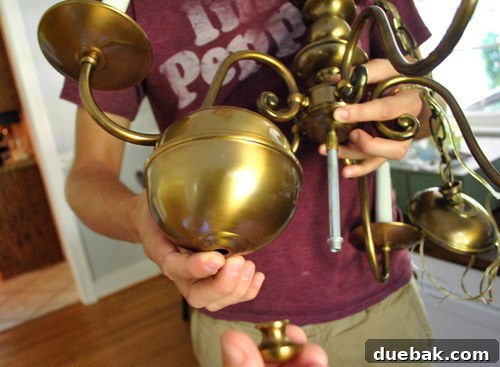
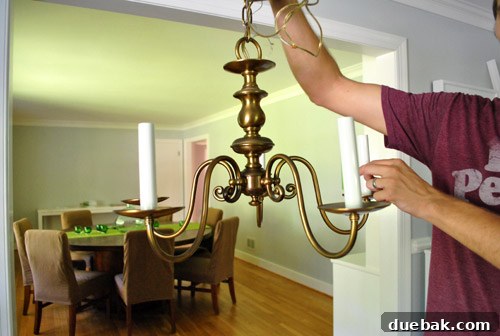
With the cumbersome ball removed, the chandelier immediately adopted a cleaner, more streamlined profile – definitely less “junk in the trunk,” as we playfully put it. We simply reattached the original finial to the now-shorter central rod, as the extension rod that held the ball had easily unscrewed. This simple alteration significantly improved the fixture’s aesthetic, making it ready for the integration of the drum shade and aligning it closer to our vision of a modernized piece. The unexpected ease of this step boosted our confidence for the challenges ahead.
Attaching the drum shade proved to be the project’s first real head-scratcher. Since the shade wasn’t custom-made for our specific antique brass chandelier, we had to get creative. Our initial thought was to attach it from the bottom, utilizing a small nub on the chandelier’s structure where the shade’s ring could slide and be secured by the finial. However, this method revealed the shade’s straight and narrow crossbars prominently, which clashed with the chandelier’s existing curves. The visual discord was undeniable, prompting a collective groan and a decision to explore alternative attachment methods. The image above captures my less-than-thrilled reaction to this initial setback.
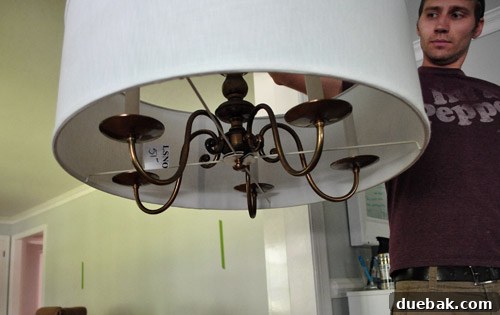
The most logical alternative was to hang the shade from the top, which would neatly tuck the crossbars out of sight. The only hurdle was that the shade’s top attachment mechanism was too narrow to fit over the chandelier’s upper structure. This discovery led to a moment of collective “Harumph!” – a clear indication that more customization would be required. It was evident that the existing metal piece on the shade designed for attachment simply wouldn’t work with our chandelier’s wider top section, pushing us to devise a more inventive solution.
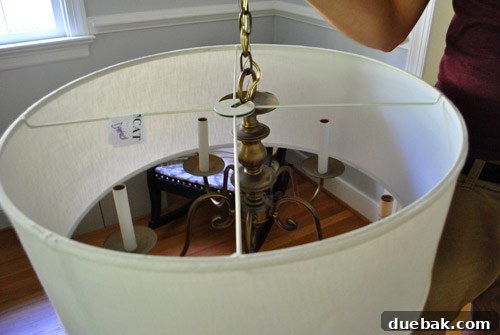
Thus began the era of improvisation. The existing notched metal piece on the shade had to go. Sherry, with her characteristic determination, managed to pry off half of it using just a screwdriver, carefully steadying the shade’s “legs” to prevent any bending or damage. This initial success gave us hope that the rest would follow suit with minimal fuss. However, we soon learned that this project would demand a bit more elbow grease and ingenuity than anticipated.
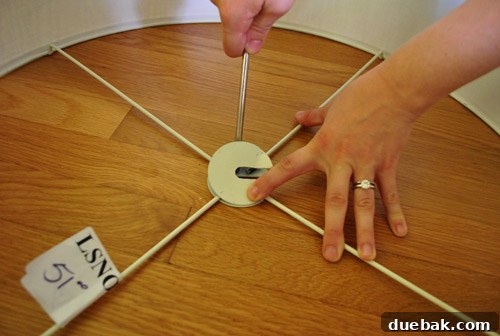
The remaining half of the metal ring proved far more stubborn, resisting all our attempts with various tools. The amount of force required started to make us uneasy, as we feared damaging the delicate shape of the drum shade. (A quick side note: if you look closely at the upper right of this image, you might spot a couple of the subtle dents we used to negotiate the shade’s price – they’re incredibly hard to detect from the outside.) Faced with this impasse, we knew a more drastic approach was necessary to overcome this particular challenge.
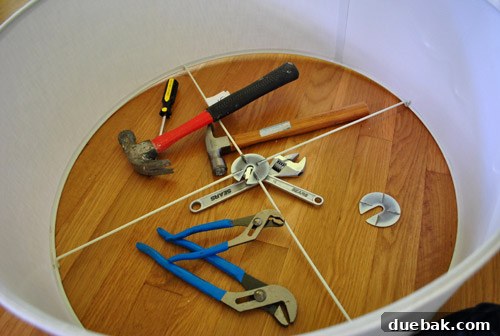
When conventional tools fail, true DIY enthusiasts turn to more robust methods. We broke out the hacksaw! While Sherry graciously captured my “sawing superhero” pose, it was actually she who handled the majority of the sawing, tackling three out of the four “legs” of the ring. She truly earned her title as my hacksaw heroine, demonstrating remarkable strength and precision in the face of a challenging task. This aggressive but necessary step finally freed the shade from its incompatible attachment point, propelling us forward.
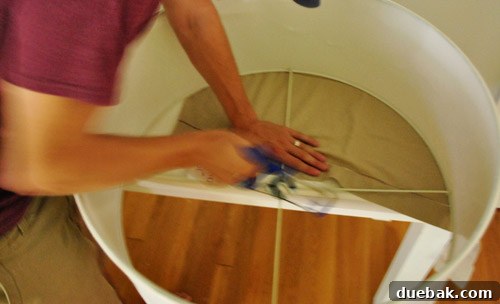
Removing the metal ring was only part of the solution; now we had four individual rods floating precariously within the shade, desperately needing stabilization and a method to attach them securely to the chandelier. This was a critical juncture in the project, demanding an inventive approach to ensure the shade sat perfectly and securely. The challenge was to find something that could both hold these rods together and fit snugly onto the chandelier’s top. Our creative problem-solving skills were definitely put to the test here.
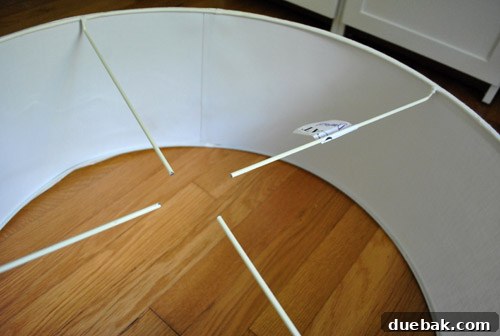
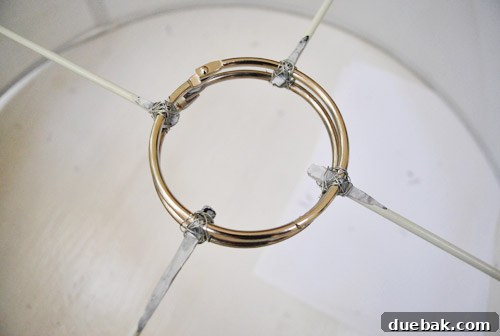
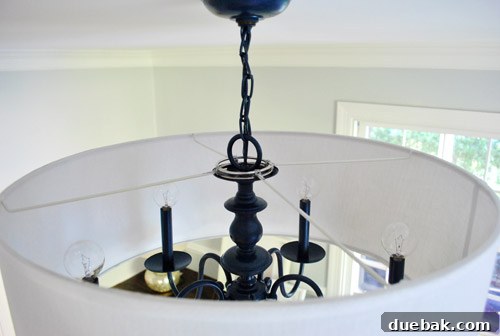
The solution, surprisingly, came from our office supply drawer: 3-inch binder rings. They were perfectly sized to fit over the top of the chandelier. After a failed attempt at super-gluing a single ring (which promptly broke off), I decided to sandwich the shade’s four rods between two binder rings, securing them with craft wire. The method was simple yet effective: I haphazardly tied the wire around and around, creating a figure-eight pattern to firmly hold everything in place. While my wire knots wouldn’t win any awards, they were remarkably sturdy and, more importantly, would be completely invisible in the final assembly. This ingenious, low-cost fix was a testament to the power of using readily available materials to overcome DIY obstacles.
Amidst all the structural modifications, I almost forgot to mention one of the most vital steps for my personal comfort: raising the chandelier! This was paramount to preventing further head injuries. The process involved shortening the existing chain and carefully snipping the wiring to match the new, elevated height. We employed a highly scientific method to determine the ideal height: Sherry held the fixture up while I walked underneath it, repeatedly, until we found the sweet spot. Once the desired length was set, we used two channel lock pliers to easily pry open and remove the extraneous chain links. This simple, yet crucial, adjustment was a giant leap towards me (and my delicate man-face) finally enjoying our beautiful new light fixture without fear of collision.

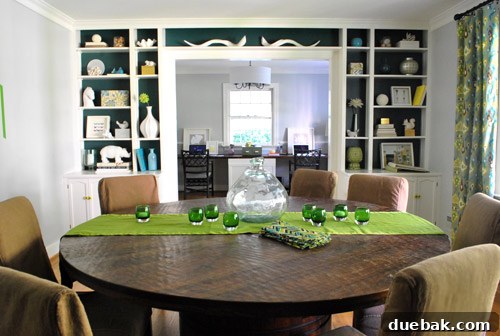
Of course, painting the chandelier was another incredibly important step in its transformation. Initially, we considered a smoky, matte charcoal gray – something akin to a sophisticated gunmetal. However, as we browsed the spray paint aisle, evaluating various options like yellow, green, teal, and even orange (colors we might incorporate elsewhere with upholstery or art), a can of indigo blue spray paint in a satin finish caught our eye. This rich, deep hue seemed like a perfect, subtle nod to the backs of the built-in shelves in the adjoining dining room, creating a cohesive flow between spaces. It felt like a bold yet classic choice, promising to inject personality without overpowering the room.
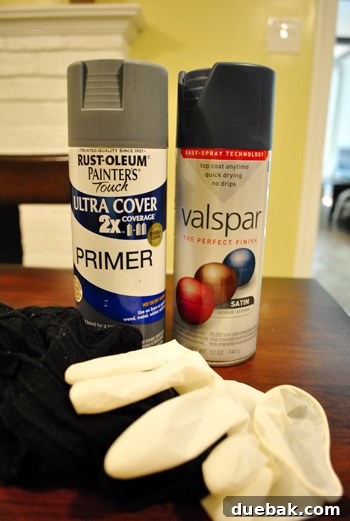
With our color chosen, Sherry meticulously gathered her painting supplies: spray primer, the newly acquired indigo spray paint, rubber gloves, and, for reasons best known to her, some “sexy black socks” (perhaps to impress the neighbors with those legendary legs). To ensure the most even coverage and easy access, we decided to paint the chandelier while it hung. Our basement, with its open door for ventilation and an equally-as-sexy-as-the-socks gas mask for Sherry, became our makeshift spray booth. We suspended the chandelier from the ceiling and surrounded it with a drop cloth to protect the surroundings, ready to begin the colorful transformation.
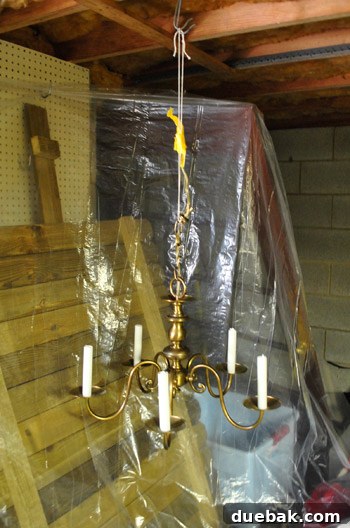
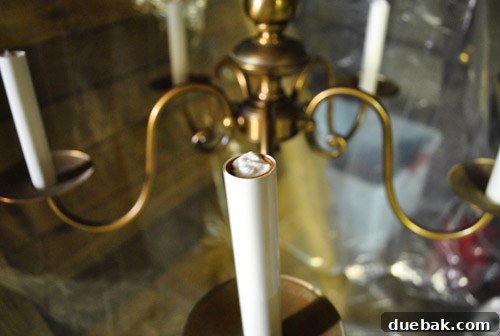
Before any paint touched the fixture, a crucial protective measure was taken: we carefully stuffed paper towels into all the light sockets. This prevented any paint from gumming up the interior mechanisms where the bulbs screw in, ensuring the chandelier would remain fully functional and safe to use after its makeover. This small but important detail highlights the meticulous planning involved in achieving a professional-looking DIY finish.
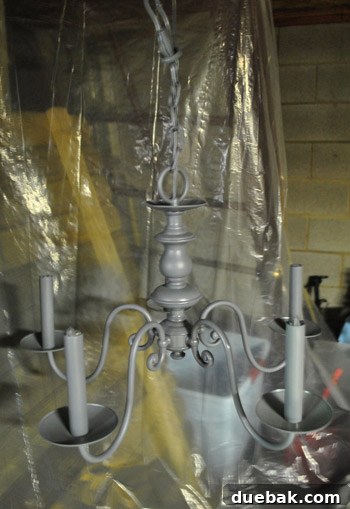
Sherry began with a smooth, even coat of spray primer. The primer itself was a rather appealing shade, leading to a brief, whimsical debate about whether to simply leave it as is. Its uniform color offered a surprising minimalist charm that almost convinced us to forego the indigo. However, our commitment to a bold, rich color ultimately prevailed, pushing us towards the final chosen hue.
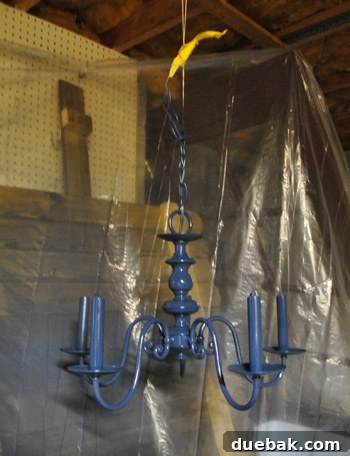
After applying the indigo, any fleeting doubts about our color choice vanished instantly. The deep, rich blue transformed the chandelier, making it feel both classic and thoroughly updated at the same time. In our humble, “what-the-heck-do-we-know” opinion, the satin finish brought out the depth of the indigo beautifully, creating a sophisticated focal point that perfectly matched our modernized vision. The color truly brought the old fixture to life, proving to be the ideal choice for this renovation.
Unfortunately, I have very few (okay, absolutely zero) pictures of the reinstallation process, as it was a hands-on, all-four-hands-required operation (Clara was napping, and Burger’s paws were likely indulging in a sleep-sesh too). Once the shade was carefully slid down the chain, allowing the binder rings to rest perfectly on the chandelier’s fluted center part (you’ll see a detailed pic of this clever arrangement coming up), Sherry expertly held the entire assembly aloft. Meanwhile, I meticulously rewired it to the ceiling, reversing the steps I had taken during its removal. My electrician expertise is limited to carefully undoing what was done and then redoing it precisely. And yes, I always cut the power to the entire house, just in case the fuse box labels aren’t perfectly accurate – they don’t call me John “Paranoid” Petersik for nothing! And just like that, with careful planning and a bit of teamwork, our stunning new fixture was officially installed.
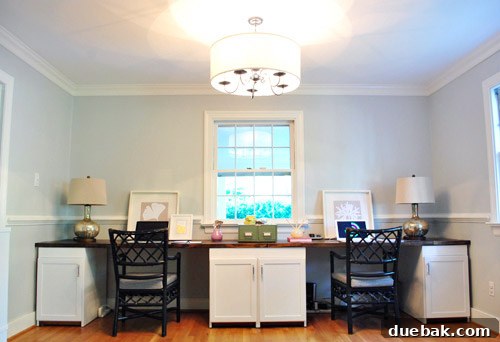
And voila! The rich indigo blue color, while subtly captivating in photographs, truly comes alive and reveals its full depth in person. It’s a sophisticated hue that adds a touch of understated luxury to the office space.
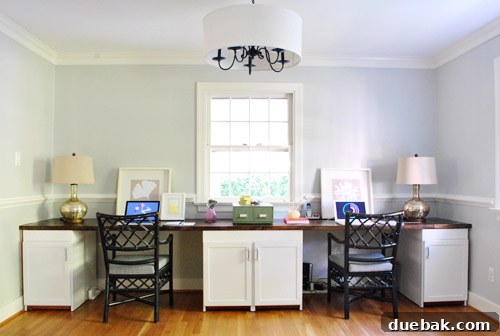
One of our favorite aspects of this transformation is how clean and understated the fixture appears from a distance. This subtle elegance is intentional, as we envision a much larger, more dramatic chandelier eventually hanging over our expansive dining table in the adjacent room. We wanted to ensure the office fixture complemented, rather than competed with, that future grand statement piece, maintaining a harmonious balance within our open-concept living space.
For those curious about the clever binder ring attachment, here’s a detailed shot from above. You can clearly see how the rings gracefully rest on top of the chandelier’s central flute, securely holding the shade in place. Because these rings are smaller than the disk they sit on, they are completely invisible from below, maintaining the fixture’s seamless appearance. This ingenious solution is truly a secret for the flies on the ceiling – and now, for you, our dedicated readers – providing both stability and a clean aesthetic that enhances the overall design.
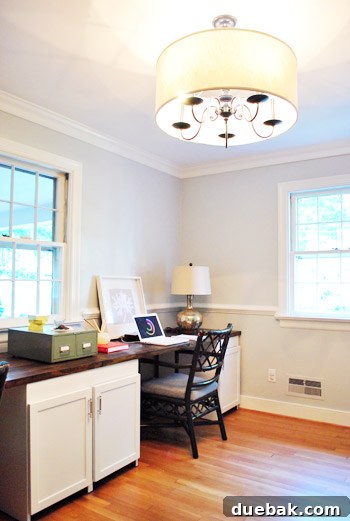
And of course, one of the most cherished features of our newly elevated fixture is the simple, yet profound, pleasure of being able to walk directly underneath it without fear of impact. Oh, the joys of unobstructed movement! For our detail-oriented readers, the bottom of the chandelier now gracefully hangs at 78 inches from the floor, a perfect height that combines functionality with aesthetic appeal. This seemingly minor adjustment has made a significant difference in the daily comfort and usability of our home office, transforming a previous hazard into a truly harmonious space.
As much as we admire the light fixture when it’s off, its true magic is revealed when it’s illuminated. The room instantly feels brighter and more inviting, thanks to the drum shade’s ability to diffuse the light much more evenly throughout the space. Gone are the days of eerie, five-legged shadows dancing across the walls – a peculiar side effect of the old chandelier’s bare bulbs. Now, the light is soft, warm, and beautifully distributed, creating an atmosphere that is both productive and peaceful, enhancing every aspect of our home office environment.
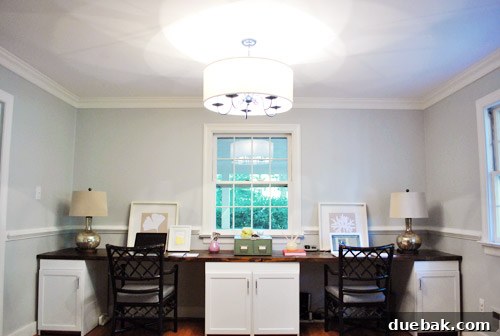
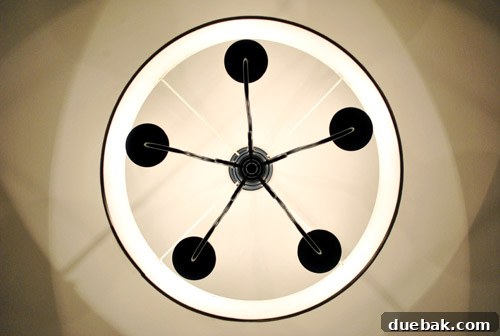
And as an added bonus, we absolutely adore the intricate, kaleidoscope-like pattern that the light casts upon the ceiling when switched on. It’s an unexpected and delightful detail that adds a touch of whimsical charm and visual interest, turning our ceiling into a subtle piece of art. This unique effect truly elevates the overall ambiance of the room, making our DIY efforts even more rewarding.
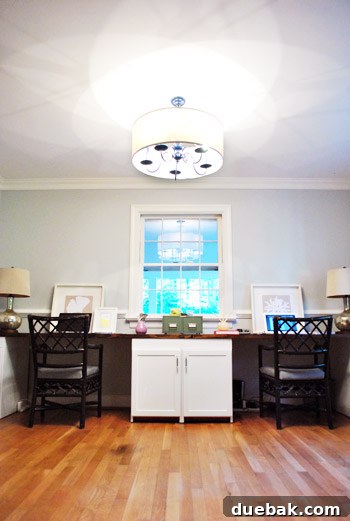
In person, the chandelier’s size is truly impressive and perfectly scaled for the room. Our giant 13-foot desk could easily dwarf a smaller fixture, but the generous 24-inch drum shade, coupled with its light color and clean lines, prevents it from feeling too heavy or imposing. Instead, it maintains a wonderfully airy and balanced presence, even with the deep indigo blue tone accentuating the old brass structure. This thoughtful proportion ensures the fixture commands attention without overwhelming the space, striking an ideal balance between scale and sophistication.
Oh, and one more small but impactful detail: we swapped out the traditional “flame” style light bulbs for sleek, modern globe-style bulbs from Lowe’s. This seemingly minor change makes a significant difference in crisping up the overall aesthetic. We first fell in love with round bulbs about four years ago when we used them on a similar, spray-painted white dining chandelier in our first house. While we initially searched for CFL versions, we had no luck. However, with the current shift towards LED technology, we’re hopeful that small, round chandelier-compatible LED bulbs will become readily available soon, further enhancing the fixture’s energy efficiency and modern appeal.
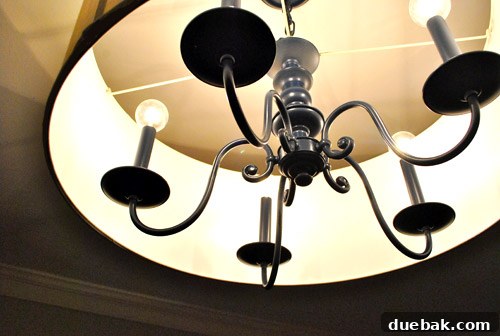
In summary, we are absolutely smitten with the final outcome. Here’s a charming view from the floor, a perspective often enjoyed by Clara and Burger. Speaking of Clara, she’s a rapidly expanding vocabulary enthusiast these days. It melted our hearts when she woke from her nap after the “new” fixture was installed, pointed right up at it, and with wide-eyed wonder, simply said, “oooooh, light.” Her sweet approval was the ultimate testament to a successful project, validating all our efforts in making our home office a brighter, more beautiful place.
While this update wasn’t entirely free, the total cost was remarkably low, especially when compared to purchasing a brand-new fixture, particularly one that’s a full two feet wide. Our DIY approach allowed us to achieve a high-end look without the high-end price tag. Here’s a transparent breakdown of our expenses, demonstrating just how budget-friendly this significant transformation turned out to be:
- Chandelier: $0 (Already owned. Similar brass fixtures can often be found for under $10 at yard sales or thrift stores, making this an incredibly accessible starting point.)
- Drum Shade: $39 (Discovered at The Decorating Outlet, skillfully negotiated down from its already discounted price of $51 – a true bargain!)
- Binder rings & wire: $0 (Already had these in our office supply drawer. If purchased new, they would likely cost around $4, a minimal expense for such a crucial structural element.)
- Tinted spray primer: $0 (We had some on hand. A can typically runs about $7.50 from retailers like Lowe’s, an essential first step for proper paint adhesion.)
- Indigo spray paint: $3 (A single can from Lowe’s was all it took to transform the fixture, an incredibly cost-effective way to introduce a bold color.)
- New globe light bulbs: $9 (Purchased from Lowe’s, these modern bulbs add the perfect finishing touch to the updated aesthetic.)
- TOTAL: $51
This total is truly outstanding, especially when considering that a nearly identical version (minus our unique indigo blue color) was recently retailed by Pottery Barn for $299 (though it appears to be currently out of stock). Our DIY ingenuity saved us a significant amount, proving that creativity and a little effort can yield results comparable to high-end retail options.
We’re confident we’re not alone in undertaking such ambitious lighting makeovers. We’d love to hear about your own experiences updating chandeliers or other light fixtures! Have you tackled a similar project? Perhaps you’ve opted for a non-traditional yet surprisingly classic color, or discovered another ingenious way to refresh an old fixture? And, importantly, who else can relate to hitting their head on a light fixture at least five times a week for thirty-six consecutive weeks? Seriously, why did we wait so long to embark on this transformative update? Share your stories, tips, and even links to your project photos (Flickr or your blog would be great!) in the comments below. We can’t wait to see your creative solutions!