
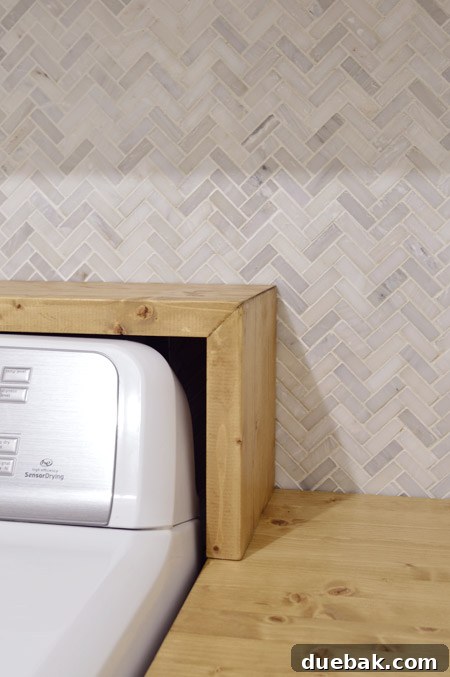
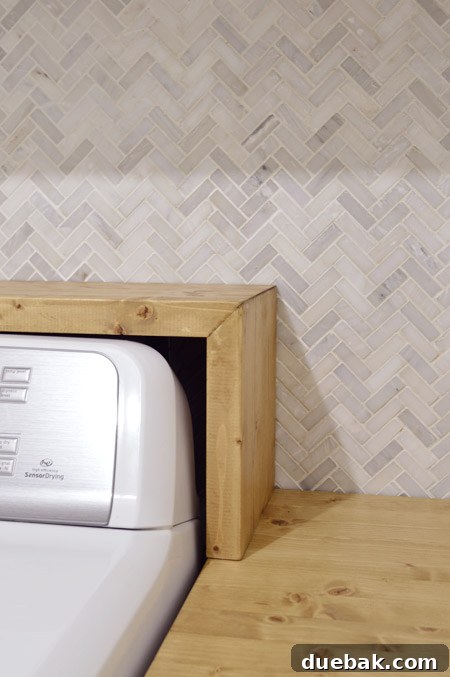
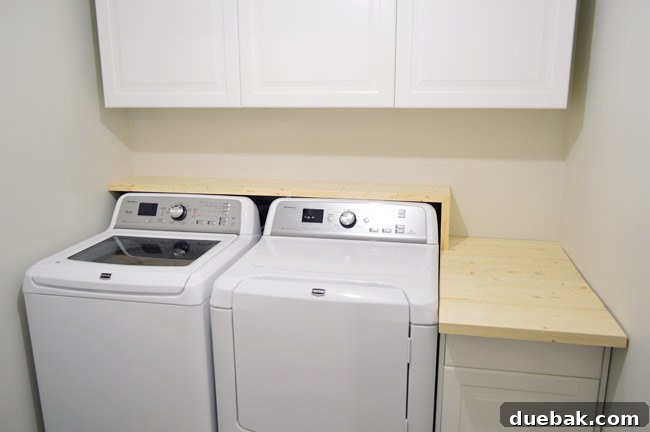
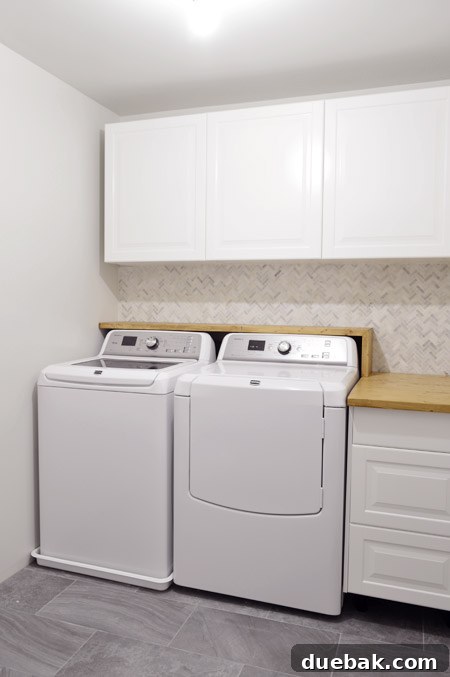
Embarking on a home renovation project, especially one as essential as a laundry room, often presents a rewarding blend of creativity and practical problem-solving. Today, we’re thrilled to share the latest transformation in our laundry room: a brand-new, custom-built shelf featuring an elegant waterfall edge and a beautifully light, natural wood stain. This DIY endeavor, crafted from simple wood panels and a carefully chosen stain-and-sealer combination, perfectly mimics the coveted butcher block aesthetic, adding both functionality and a touch of modern warmth to the space. It’s a significant departure from our past design choices, inspired by contemporary interiors that expertly blend light cabinetry and tiling with the rich texture of natural wood elements, creating an inviting and harmonious atmosphere.
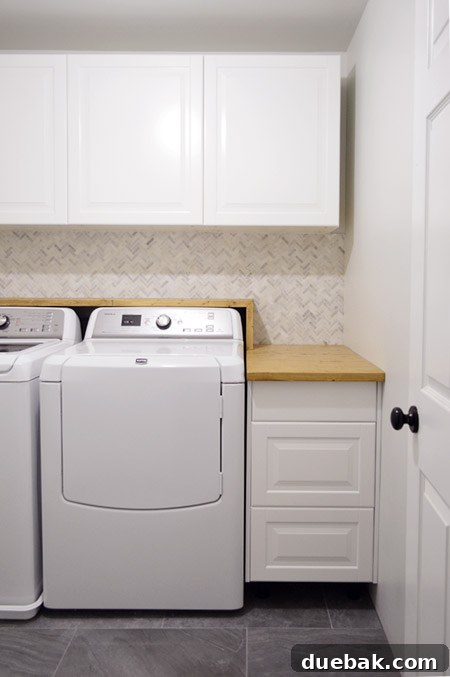
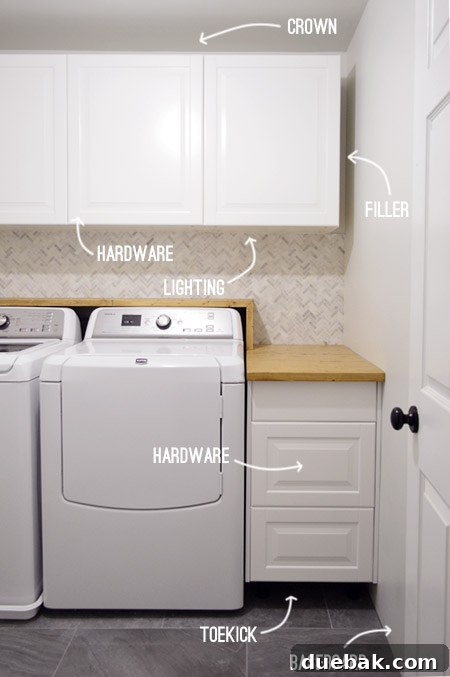
Stepping back, you can appreciate the wider perspective of our refreshed laundry area. While we’re still in the process of adding the finishing touches like filler pieces, crown molding, toe kicks, baseboards, and hardware – which are definitely on our project checklist, much like perfecting those elusive waterfall edges – the foundational elements are truly coming together. This project has been a journey of careful planning and execution, ensuring every detail contributes to a cohesive and highly functional space. The vision for a brighter, more natural aesthetic is clearly taking shape, creating a welcoming environment that makes laundry a less daunting task.
Before delving deeper into the specifics of our shelf construction and staining process, it’s crucial to discuss a foundational step in any laundry room overhaul: appliance installation. We had intended to cover this aspect much earlier, as it posed some unique challenges despite primarily involving the re-attachment of components previously disconnected during demolition. A particular hurdle we encountered was the precise placement of the washer pan beneath the washing machine and its connection to our newly installed overflow drain. Given the scarcity of detailed tutorials on this specific step, we wanted to walk you through our approach, offering insights that might prove invaluable for your own DIY projects.
For those unfamiliar, a washer pan is a crucial safety feature, typically recommended, especially for washing machines located on upper floors. Its primary purpose is to contain any water that might escape due to a leak, preventing potential catastrophic damage such as widespread flooding, severe floor rot, and even the structural failure of joists that could send an appliance plummeting to the floor below. While such scenarios might seem like something out of a cartoon, the real-world implications are dire and costly, making preventative measures like a washer pan an intelligent investment for peace of mind. Many homeowners overlook this critical component, yet its presence can save immense trouble and expense down the line.
Interestingly, when we consulted various contractors and plumbers, they universally described the installation of a washer pan and overflow drain as optional, noting that it wasn’t mandated by local building codes in our area. One professional even expressed skepticism about its efficacy in the event of a major appliance malfunction, suggesting that a gushing leak might overwhelm the pan’s capacity regardless. However, contrasting opinions highlighted the significant benefits for detecting and managing slower, less obvious leaks that might otherwise go unnoticed for extended periods, leading to gradual but persistent water damage. Prioritizing safety and minimizing future risks, we opted for proactive protection. Our plumbers seamlessly integrated the pan and drain during their visit to handle other essential hook-ups, a service included within our total plumbing fee of $375. As a helpful aside, several readers have inquired about the electrical setup; this image also clearly displays the additional outlets we installed for enhanced convenience and safety in the room.
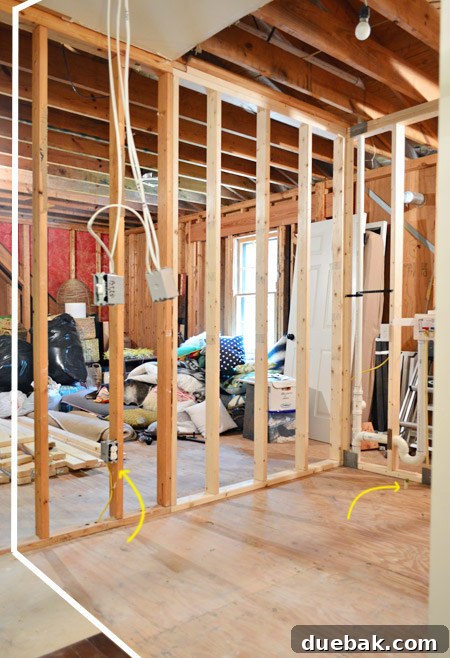
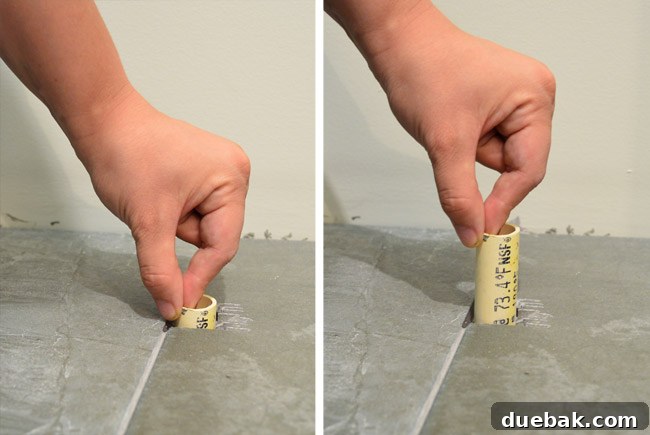
Sharp-eyed observers may have noticed the strategically cut opening around the overflow drain as we meticulously laid various layers of flooring. This detail is particularly visible in progress shots, such as a thinset application photograph from our earlier floor tiling post, where the drain pipe is seen protruding. The design of the drain allowed for subtle adjustments, enabling us to gently raise or lower the pipe from the garage ceiling below. This flexible positioning proved incredibly convenient during the renovation, preventing it from becoming a tripping hazard during the bustling construction phase. Such thoughtful pre-planning in plumbing can significantly streamline subsequent DIY steps and improve overall project safety and efficiency.
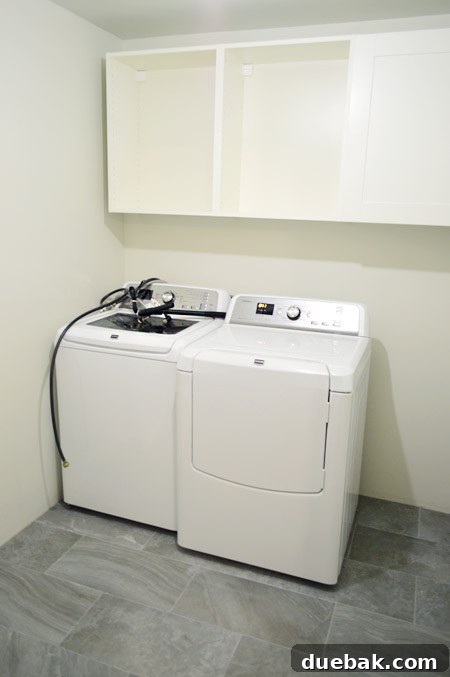
Upon receiving the washer pan from our plumber, we were provided with instructions for its self-installation. However, the critical first step involved accurately determining the precise placement of both our washing machine and dryer. This seemingly simple task is paramount, as exact appliance positioning dictates where the washer pan must be set to ensure optimal functionality and aesthetic alignment. Without this foundational measurement, the pan could end up misaligned, compromising its protective purpose and making future appliance maintenance more cumbersome. Careful planning here saves considerable re-work later.
While our washing machine could easily sit almost flush against the back wall, the dryer presented a more complex challenge due to its venting requirements. During installation, it’s highly recommended to leave a sufficient length of excess semi-rigid ducting behind the dryer. This allows the appliance to be pulled away from the wall for maintenance or cleaning without the risk of violently yanking the ducting from its wall connection. This necessary ducting, as you can imagine, occupies considerable space. Although it’s shown pulled out here for clarity, even when nested as compactly as possible, our dryer extends approximately eight inches from the back wall. It’s worth noting that specialized systems exist to recess ducting directly into the wall between studs, minimizing protrusion. However, all compatible systems we researched were designed for ceiling-vented setups, whereas our dryer vents straight out under the attic stairs. This incompatibility meant we had to accommodate the external ducting.
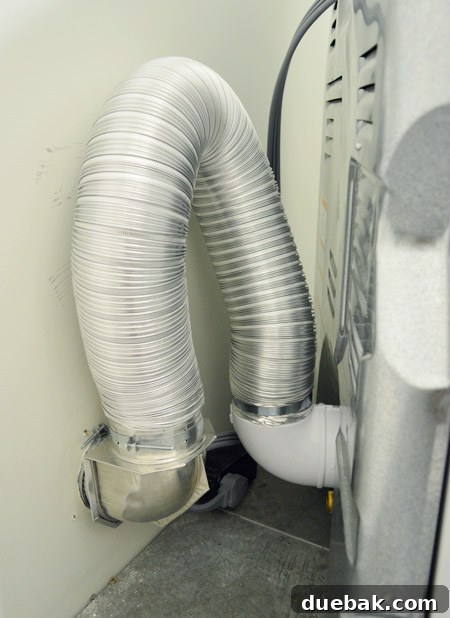
Fortunately, the space required for the dryer’s vent wasn’t an unexpected obstacle for us; we had anticipated it and factored it into our initial design for the custom shelf. After confirming the dryer’s optimal placement, we were finally able to pinpoint the exact position for the washing machine, ensuring its depth precisely matched the dryer’s. This precise alignment was crucial to prevent the washer pan from sitting either too far inward or outward, which would compromise both aesthetics and practicality. To facilitate accurate re-placement, we marked the floor with tape, creating a clear guide for setting the washer pan once the washing machine was temporarily moved aside.
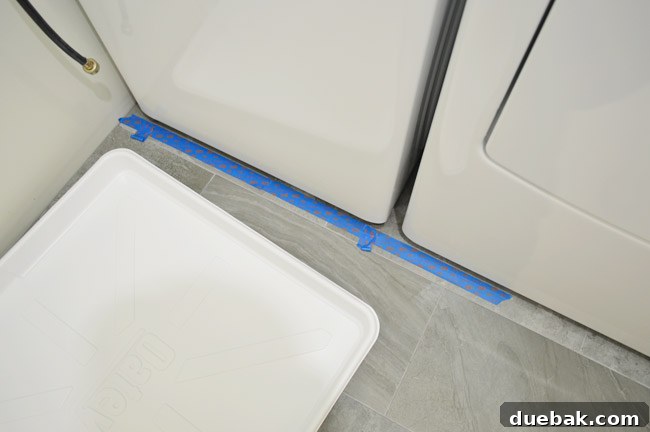
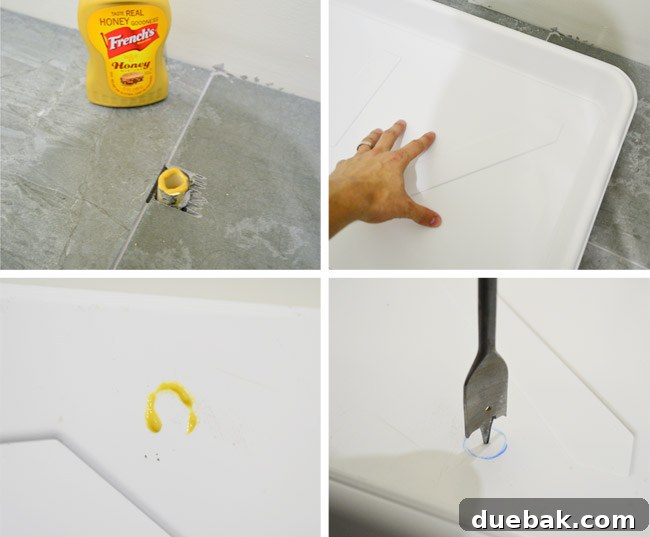
To create the necessary opening in the washer pan for the drain pipe, our plumber suggested an unexpectedly unconventional yet highly effective method involving mustard. The technique was delightfully simple: apply a small amount of mustard directly onto the drain pipe’s opening, then carefully press the washer pan onto the pipe, using the floor tape as a guide to ensure accurate alignment. The mustard leaves a distinct mark on the pan, indicating the precise spot for drilling. I reinforced this mustard outline with a Sharpie, as the lingering scent of the condiment, while effective, wasn’t quite the aroma we wanted permeating our new laundry room. This “super scientific” approach proved to be incredibly precise, making an otherwise tricky measurement straightforward.
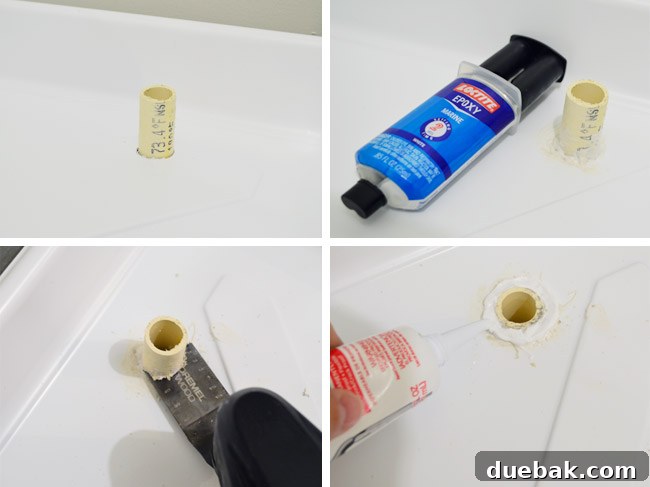
Once the drain pipe was inserted through the newly cut hole in the pan, the initial instructions were to “silicone caulk the heck out of it.” However, I harbored some reservations about relying solely on silicone caulk as the primary adhesive. Silicone’s inherent flexibility concerned me; I worried that the substantial weight of the washing machine, once placed into the pan, could potentially dislodge the caulked seal. To ensure maximum durability and waterproof integrity, I sought additional advice from another plumbing professional and an experienced employee at Home Depot. Both independently recommended the use of an epoxy, specifically a marine-grade option like Loctite Marine Epoxy, known for its exceptional waterproof properties and strong bonding capabilities. Following their guidance, I first securely glued the pipe and pan together with the epoxy, allowing it to cure thoroughly overnight. After curing, I meticulously trimmed any excess pipe flush with the pan using my Dremel tool, ensuring an unobstructed flow for water drainage. Only then did I apply a generous amount of silicone caulk around the joint, serving as an additional, impenetrable barrier for ultimate safety and leak prevention. This multi-layered approach provided significant peace of mind.
With the washer pan fully prepared, the most physically demanding part of the appliance installation began: carefully maneuvering the washing machine into its new home within the pan. Unfortunately, no cameras were rolling to capture Sherry and me in action as we hoisted the bulky appliance over the pan’s lip. I can only imagine the strained, possibly even veiny, expressions adorning our faces during that arduous task! Despite the physical exertion, the satisfaction of successfully seating the washer securely within its protective pan was immense, bringing us one step closer to a fully functional laundry room.
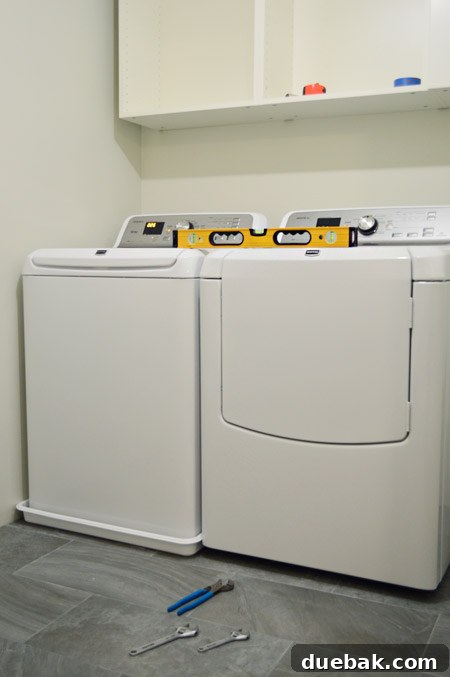
The final stage of appliance installation involved meticulous adjustments to the dryer’s feet to achieve perfect alignment with the washer. Our goal wasn’t just for the fronts of both appliances to be flush; we also meticulously leveled their tops to ensure a seamless, uniform appearance. This required careful use of a level and wrenches, as seen on the floor in the image above, to fine-tune the height of each foot. Achieving this precise equilibrium felt like hitting a jackpot; a small victory in a larger project, signifying that we finally had a fully installed and operational washer and dryer once again. It was a moment worthy of celebration, marking a significant milestone in our laundry room renovation.
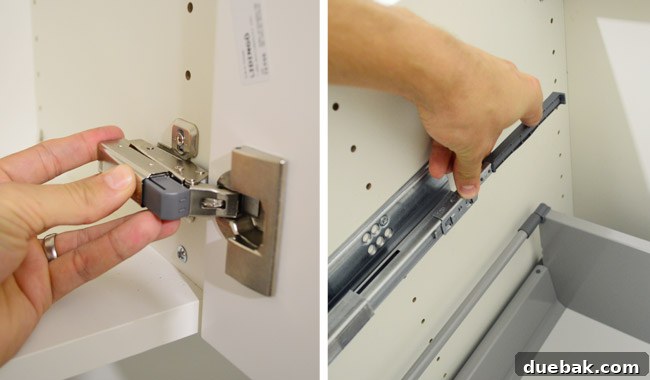
Speaking of small but impactful adjustments, we recently implemented an upgrade that has made a surprising difference: soft-close drawer and door add-ons for our Ikea cabinets. Following recommendations from readers in an earlier post about our Ikea cabinet installation, we had planned to acquire these on a future trip to the store. To our delightful surprise, just twelve hours after our initial cabinet purchase, we discovered that an astute Ikea associate must have included them in our order, as they were nestled at the bottom of our bag alongside the under-cabinet lighting components. The impact is remarkable; we estimate that the drawers and doors are now approximately 35 times less “slammy,” providing a noticeably quieter and more luxurious user experience. This upgrade, though seemingly minor, has proven to be well worth the addition, significantly enhancing the functionality and feel of our new laundry room space.
Now, let’s circle back to the centerpiece of this transformation: the new laundry room shelf. You might recall from our previous updates that we strategically constructed this shelf before undertaking the tiling work. This specific sequencing was crucial because it allowed us to precisely define the boundaries for our tile installation, ensuring a perfect fit and finish once the shelf was in place. This foresight prevented potential measurement errors and ensured a seamless integration of all elements, showcasing the importance of thoughtful planning in any home improvement project.
The foundation of our robust new shelf and counter system was built using two solid 2 x 4-foot panels sourced from Lowe’s. We specifically chose these panels for their substantial 1.5-inch thickness, which not only offered superior durability but also lent themselves perfectly to achieving that desirable butcher-block aesthetic we were aiming for. The inherent charm and sturdiness of these wood panels provided an excellent starting point for crafting a functional yet stylish surface that would withstand the rigors of a busy laundry room while complementing its overall design. Their natural grain patterns further contributed to the organic, warm feel of the space.
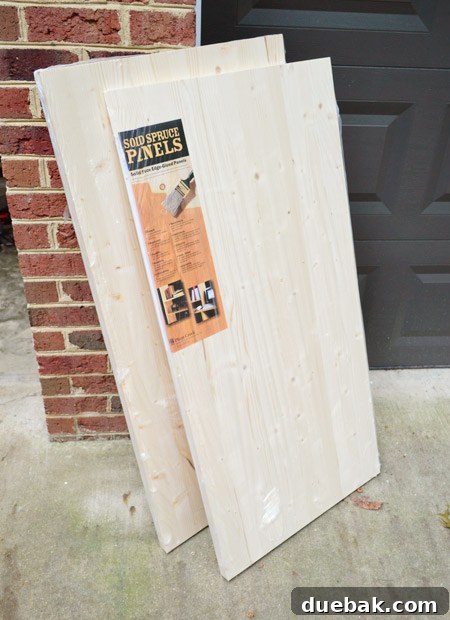
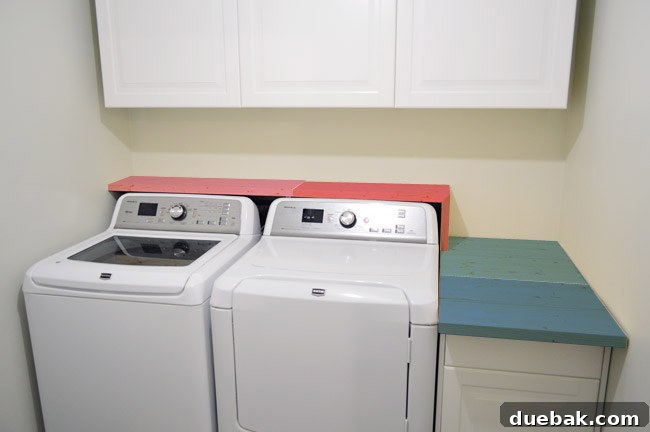
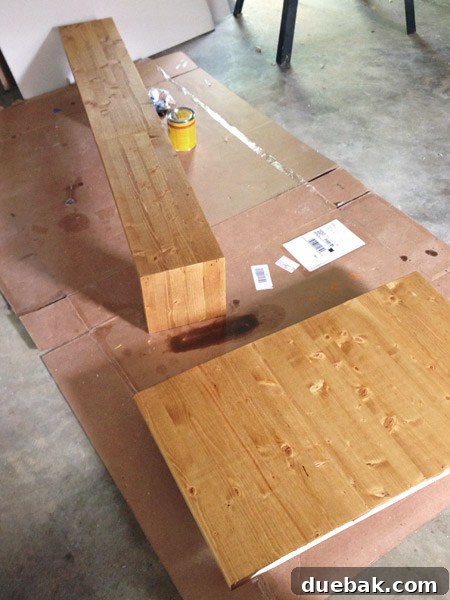
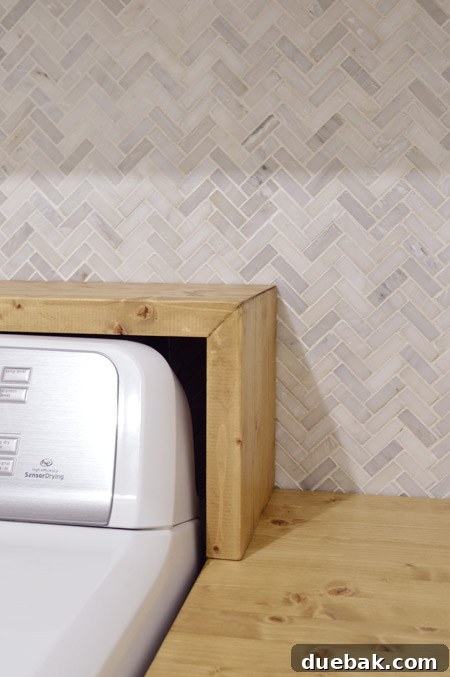
Our custom shelf and counter were meticulously crafted from these two robust wood panels. For the shelf component, I carefully cut one panel into two distinct 9-inch wide boards. These were then joined together using a Kreg jig, creating a single, elongated shelf that spans the width of our laundry space. The counter portion involved a similar process: the second panel was divided into two 18-inch wide pieces, which were then also joined with the Kreg jig. A crucial decision was to delay trimming the excess length from the counter until after the tile installation was complete. This allowed us to precisely measure and cut the overhang, ensuring it integrated flawlessly with the newly tiled wall. As such, in this image, you can still observe the counter extending beyond its final dimensions, awaiting its precise cut to achieve the perfect finish.
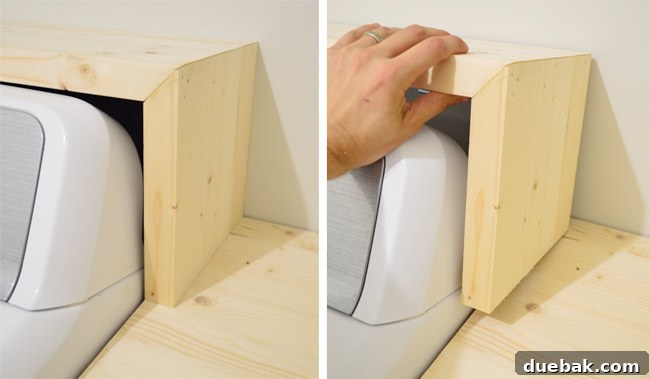
The distinctive waterfall edge, a key design element, was achieved through a precise and careful process. We cut the end of the shelf at a perfect 45-degree angle, then meticulously glued and nail-gunned it back together at a right angle to form the continuous vertical drop. A critical aspect of our design was making the shelf removable, allowing easy access to the appliance hookups whenever maintenance or adjustments are needed. To ensure a seamless look despite its removability, I took precise measurements, ensuring the waterfall edge would rest perfectly on the counter below and align flawlessly with the left edge, creating the illusion of a single, continuous piece of wood. It’s important to clarify that the shelf itself does not bear weight directly on the appliances; instead, it is securely supported by four heavy-duty brackets mounted above them. These brackets, three of which are anchored directly into wall studs for maximum strength, are designed to prevent any vibrations from the washing machine during its cycle from dislodging items from the shelf. We’ve already run three substantial loads of laundry, and so far, the shelf has remained perfectly stable and functional, demonstrating the success of this robust support system.
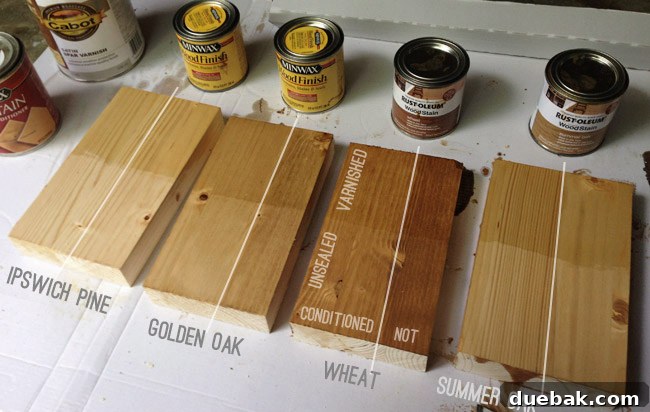
Selecting the ideal lighter wood stain was a crucial step, and since we didn’t have a pre-existing preference, we embarked on a comprehensive testing process. We applied various stain options to scrap pieces leftover from the shelf and counter construction. Sherry meticulously prepared half of each sample piece with a pre-stain conditioner, then applied one of four different stain colors—two from Minwax and two from Rustoleum—to the entire block. After allowing the stains to dry completely, we experimented with a varnish on the top half of each sample. However, the varnish imparted an undesired yellow tint to the wood, leading us to quickly rule it out. While the subtle nuances are more apparent in person, our evaluation determined that Ipswich Pine and Summer Oak appeared too light for our aesthetic, while Wheat was slightly too dark and leaned towards a reddish hue. Consequently, Golden Oak emerged as the clear and straightforward choice, offering the perfect balance of warmth and lightness we envisioned for our laundry room shelf.
Following the successful selection of our Golden Oak stain, we proceeded with its application. A single, even coat of stain was applied to the shelf and counter surfaces, allowing the natural wood grain to shine through beautifully. To protect this finish and ensure long-term durability, especially in a moisture-prone environment like a laundry room, we then applied three coats of Safecoat Acrylaq. This particular sealer was our preferred choice because we had previously used it to seal the wood vanity top in the bathroom of our first home, where it demonstrated exceptional resistance to water and humidity. Its proven performance in a challenging bathroom setting gave us complete confidence that it would provide outstanding protection and resilience for our new laundry room surfaces, safeguarding them against spills and daily wear while maintaining their aesthetic appeal.
I am genuinely thrilled with the final outcome of this project. The new shelf, with its natural finish and elegant waterfall edge, perfectly complements the room’s aesthetic, providing exactly the touch it needed. It’s incredibly exciting to begin layering decorative and functional items onto the light and bright foundation established by the cabinets and tile. While our beautifully crafted shelf might appear a little sparse or “lonely” at the moment, this is just the beginning of truly personalizing and optimizing the space. We anticipate adding various organizational and stylistic elements in the coming weeks and months, transforming this functional area into a truly inspiring and efficient part of our home.
While there are still a few loose ends to address on this particular wall, marking them off on our visual checklist, we’re delighted to report a significant milestone: the door has been successfully hung! This brings us one step closer to completing the structural elements of the room. Furthermore, work is actively progressing on the elegant glass door that will eventually lead to the future bunk-room. We’re optimistic that we’ll be able to finalize that installation and share all the intricate details with you next week. Looking ahead, we’re also planning to integrate essential laundry room features such as a dedicated laundry sorter, a convenient pull-out drying rack, and a space-saving wall-mounted ironing board on other walls within the room. Be sure to stay tuned for updates on these practical additions, which will further enhance the room’s functionality and organization.
This feels like an opportune moment to provide a comprehensive budget update, offering full transparency on our expenditures for this extensive laundry room renovation. Here’s a detailed breakdown of the costs incurred thus far:
- Framing (labor & materials): $360
- Electric (labor & materials): $400
- Plumbing (labor & materials): $375
- New dryer vent: $87
- New HVAC vent: $59
- Drywall & insulation: $298
- Drywall mudding: $84
- Sub-floor materials: $30
- Tiled floor: $451
- Ikea cabinets & under-cabinet lighting: $862
- Appliance re-install: $15
- Tiled marble accent wall: $281
- Shelf & counter (including stain testers & stain): $97
- TOTAL: $3,399
It’s incredibly reassuring to note that our current total remains on the lower end of the contractor estimates we initially received for just the core structural elements—framing, electrical, plumbing, and drywall. Those initial bids ranged from $3,250 to $5,000. To be able to include significant upgrades like a luxurious marble backsplash, durable tiled floors, stylish cabinetry, and a custom shelf and counter—complete with enhancements like soft-close doors and under-cabinet lighting—all while staying within this conservative range, is a testament to careful planning and strategic DIY efforts. We have, however, nearly doubled our budget since our last check-in, primarily due to the acquisition and installation of major items such as the extensive tiling and cabinetry. Our optimistic hope is that once the door installation and the final trim and crown molding are complete, we will have passed the phase of major expenses. Dare I suggest that this entirely new room, including the reconfigured entrance to the bunk-room, might impressively come in under the $4,000 mark? This seems like a bold claim, perhaps even tempting fate.
Perhaps it’s wiser to temper such declarations to avoid any unforeseen jinxes! Instead, let me confidently state something unequivocally safe: I am absolutely certain we will successfully complete this project for under $100,000. Now, I genuinely hope I haven’t tempted fate with that statement either! But on a serious note, we are immensely proud of the progress made in transforming this laundry room into a highly functional, aesthetically pleasing, and budget-conscious space. Every step, from the precise appliance installation to the handcrafted shelf, reflects our commitment to creating a home that is both beautiful and practical. Stay tuned for more updates as we bring this vision to its final, polished conclusion.