
The dreaded scenario. You wake up, grab your coffee, and head into the kitchen, only to find a tiny, unwelcome army marching across your countertops. This was precisely my experience about a week ago. An unsolicited invasion of ants had claimed our kitchen, with some even boldly traversing our beloved eco-friendly skillet, left innocently to dry on the stove. This wasn’t a “pants on fire” emergency, but certainly an “ants in the pans” predicament that demanded immediate, thoughtful action. Before diving into our battle against these tiny intruders, a quick update for those who’ve been asking about our new cookware: our Teflon-free, petroleum-free nonstick set (a Greenware collection from Cuisinart, purchased at Bed Bath & Beyond) has been a revelation since Christmas. We use them constantly and are genuinely impressed by their performance. They’ve made cooking a joy and certainly live up to their eco-friendly promise, earning our enthusiastic recommendation for anyone looking to embrace a greener kitchen.

Confronting the Tiny Invaders: Why Natural Solutions Are Key
But enough about our fantastic pots and pans. Let’s return to the more pressing issue at hand: the ant problem. The audacity of these minuscule creatures, parading through our kitchen as if they hadn’t witnessed us endure 113 days without a functional sink or stove during our renovation! While the frustration was palpable, our commitment to maintaining a toxin-free home, especially in the heart of our culinary space, meant traditional chemical ant baits and sprays were absolutely off-limits. The thought of introducing poisons near food preparation surfaces, where our children and pets also roam, was simply unacceptable. We firmly believe that a healthy home environment starts with conscious choices, and that extends to pest control.
Therefore, we resisted the knee-jerk reaction to grab commercial ant killers. Instead, we adopted a more strategic, and frankly, ant-like approach: we let our fingers do the walking, or rather, the marching, across the keyboard. A quick search for “natural ant remedies” revealed a treasure trove of non-toxic, everyday items that could effectively combat our unwelcome guests without compromising our home’s safety. This discovery was incredibly empowering, proving that powerful solutions don’t always come in brightly colored, warning-laden packages. It highlighted the vast array of green pest control options available to environmentally conscious homeowners.
Effective & Eco-Friendly Ant Solutions: Your Non-Toxic Arsenal
Our research uncovered a variety of ingenious, all-natural anti-ant solutions that leverage common household ingredients. These methods are not only effective but also ensure the safety of your family and pets. Here are some of the fantastic non-toxic strategies we found to reclaim your kitchen from ant invasions:
- Cinnamon: The Aromatic Barrier
Ants, much like many insects, are highly sensitive to strong scents. Ground cinnamon acts as a potent deterrent, disrupting their pheromone trails and disorienting them. Sprinkling a generous amount of cinnamon where you observe ants congregating or along their perceived entry points can quickly encourage them to seek greener pastures. For best results, reapply every few days or after cleaning the area. You can also use whole cinnamon sticks in corners or cabinets for a longer-lasting, subtle deterrent. - Vinegar Power: White Vinegar & Apple Cider Vinegar
Vinegar is a versatile household hero, and its acidic nature makes it an excellent natural ant repellent. You can create a powerful spray by filling a squirt bottle with plain white vinegar, or a 50/50 mixture of apple cider vinegar and water. Spray this solution directly onto surfaces where you see ants, especially countertops, floors, and windowsills, several times a day. Not only does it kill ants on contact, but the lingering scent also deters others from entering the treated areas. Its acidity also helps to clean and sanitize surfaces, offering a dual benefit. - Black Pepper: A Spicy Repellent
Similar to cinnamon, black pepper is another powerful, readily available spice that ants detest. Sprinkle black pepper wherever you notice ants marching, paying close attention to their entry and exit points. A thin line of pepper across a crack or threshold can form an invisible barrier that ants are reluctant to cross. This method is particularly useful for delicate surfaces as it won’t stain or leave a residue, making it a safe choice for granite or other natural stone countertops. Reapply after cleaning or if you see renewed ant activity. - Shaklee’s Basic H: The Gentle Soap Solution
For those seeking a non-toxic cleaning agent that doubles as an ant deterrent, Shaklee’s Basic H is an excellent choice. This concentrated, biodegradable soap made from soybeans can be watered down and sprayed directly where ants are entering or exiting your home. The soapy solution disrupts their scent trails and can smother them. A word of caution: while effective, this formula may bubble paint, so it’s best suited for use on counters, tile, and other soap and water-friendly surfaces rather than painted walls or trim. - Bay Leaves: Nature’s Long-Term Guard
Bay leaves offer a remarkably simple yet effective long-term solution for ant control. The strong aromatic compounds in bay leaves are highly repulsive to ants. Placing bay leaves in corners, cracks, or behind appliances where ants commonly emerge can immediately deter them. For sustained protection, you can leave them in place for extended periods. They are perfect for discreet placement behind canisters, in pantry corners, or even under sinks, providing a continuous, natural repellent without any mess or odor noticeable to humans. - Garlic Cloves: A Pungent Alternative
Much like bay leaves, garlic cloves possess a potent aroma that ants find highly unpleasant. Substituting fresh garlic cloves for bay leaves in strategic locations can also prove very effective. Simply crush a few cloves slightly to release their scent and place them where ants are active or might enter. While bay leaves offer a more subtle approach for humans, garlic provides a more intense, immediate deterrent dueishing a different type of protection. Remember to replace them every few days as their potency diminishes. - Diatomaceous Earth (Food Grade): The Microscopic Destroyer
While not in the original list, food-grade diatomaceous earth (DE) is another incredibly effective and non-toxic solution worth mentioning. DE is a natural, powdery substance made from fossilized diatoms. When ants walk over it, the microscopic, razor-sharp edges of the DE cut into their exoskeletons, causing them to dehydrate and die. It’s safe for pets and humans, but it’s essential to use food-grade DE. Sprinkle a fine layer in cracks, crevices, and along ant trails. It works best when dry and should be reapplied if it gets wet.
Implementing a combination of these methods can create a robust, multi-layered defense against ant infestations, ensuring your home remains a sanctuary free from both pests and harsh chemicals.
Our Winning Strategy: The Black Pepper and Bay Leaf Duo
So, from this delightful menu of non-toxic options, which did we ultimately choose to combat our kitchen invaders?
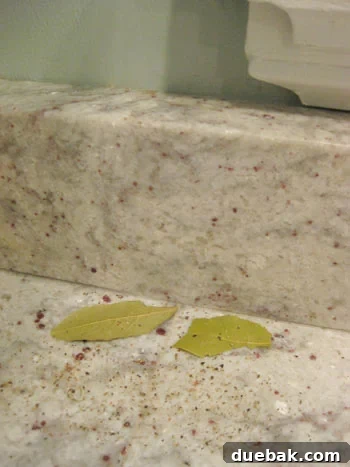
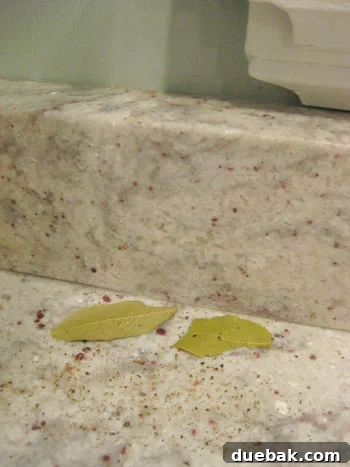
We opted for a straightforward yet incredibly effective combination: the black pepper and bay leaf recipe. This choice was driven by several factors. Firstly, both ingredients are dry, eliminating any concern about staining our beautiful granite countertops or compromising the safety and integrity of our cooking surfaces. Secondly, they were readily available in our pantry, allowing for an immediate response to the infestation. The application was simple: we carefully sprinkled a generous amount of black pepper around the areas of ant activity on our counters and, crucially, into the narrow crack behind the counter where we had clearly identified their primary emergence point. Following this, we gently pushed a few bay leaves deep into that same crack and strategically placed a few more on the counter surface near their known pathways. This dual approach created both an immediate sensory assault and a long-term deterrent for the ants.
The Sweet Victory of Natural Pest Control
And the best part? It worked like an absolute charm. Within hours, the ant traffic significantly reduced, and by the next day, our kitchen was entirely ant-free. No more tiny invaders marching across our pans or counters. This success reinforced our belief in the power and efficacy of natural, non-toxic solutions for common household pest problems. It proved that you don’t need harsh chemicals to maintain a clean, pest-free home; sometimes, the most effective remedies are found right in your spice rack.
Beyond Ants: Embracing a Holistic Approach to Pest Prevention
While our immediate ant problem was resolved, the experience underscored the importance of ongoing pest prevention through natural means. To truly maintain an ant-free home, it’s crucial to adopt a holistic strategy:
- Maintain Impeccable Cleanliness: Ants are attracted to food sources. Regularly wipe down counters, sweep floors, and clean up spills immediately. Store food in airtight containers.
- Seal Entry Points: Inspect your home for cracks and crevices in foundations, walls, and around windows and doors. Seal these gaps with caulk or weatherstripping to block potential entryways.
- Trim Vegetation: Keep trees and shrubs trimmed away from your home’s exterior, as they can provide “bridges” for ants to access your house.
- Address Moisture Issues: Ants, like many pests, are drawn to moisture. Fix leaky faucets, pipes, and address any dampness in basements or crawl spaces.
- Regular Inspections: Periodically check common problem areas (kitchens, bathrooms, pantries) for any signs of ant activity so you can act quickly at the first sign of an invasion.
By integrating these practices with the natural remedies mentioned, you can create a resilient, eco-friendly defense system against ants and other common household pests, ensuring a safer and healthier living environment for everyone.
PS: Looking for more natural solutions to getting rid of bugs? Dive into our comprehensive guide on 7 ways to effectively get rid of pesky fruit flies!