

Transforming a living space can often start with one fundamental element: lighting. We recently embarked on an exciting home improvement journey, focusing on a significant lighting overhaul in our living room. What started as a simple idea for enhanced illumination quickly evolved into a comprehensive project, incorporating the strategic installation of recessed lighting and a stylish new pendant fixture. This upgrade wasn’t just about adding light; it was about creating ambiance, improving functionality, and ultimately, revitalizing the heart of our home.
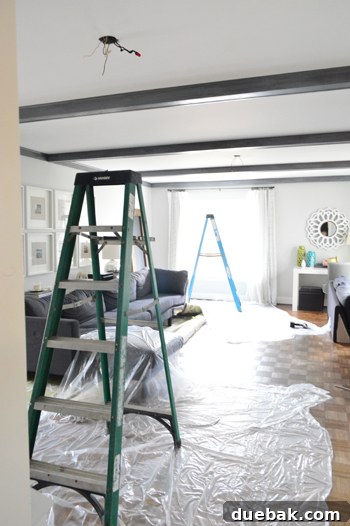
The decision to tackle our living room lighting came after realizing that for nearly three years in this house, overhead lighting remained a distant dream. Our reliance on floor and table lamps, while excellent for creating a warm, inviting ambiance, often fell short when true illumination was required. Whether it was searching for a misplaced toy (the infamous rogue doll shoe!) or needing brighter light for reading and everyday tasks, the absence of proper overhead fixtures was keenly felt. This experience underscored the wisdom of interior design experts like Candice Olson, who champion the power of “light layering”—a combination of ambient, task, and accent lighting working in harmony.

Embracing the Power of Layered Lighting
Layered lighting is more than just a design trend; it’s a practical approach to illuminating a space that allows for flexibility and control over the room’s mood and functionality. It typically involves three main types:
- Ambient Lighting: This is the general illumination of a room, providing a comfortable level of brightness without glare. Recessed lighting is a prime example, offering widespread light that can be dimmed to suit any occasion.
- Task Lighting: Focused illumination for specific activities like reading, cooking, or working. While a desk lamp is a clear example, a well-placed pendant light can also serve as task lighting over a dining table or seating area.
- Accent Lighting: Used to highlight specific features, such as artwork, architectural details, or plants. This adds depth and visual interest to a room.
Our living room previously lacked effective ambient lighting, relying solely on lamps that offered more of an accent or localized task light. The transformation with recessed lights and a central pendant has dramatically improved the room’s versatility. We now have the option for bright, clear illumination when needed, alongside the cozy glow of our lamps for evenings.
A fortunate starting point for our project was the presence of two existing fixture boxes in the ceiling, remnants of large, clunky fans that we never used. This part of the house benefits from natural cooling and ample windows, making fans unnecessary. These existing boxes provided a convenient and code-compliant access point to tap into for our new recessed lights, simplifying the initial wiring phase and minimizing the need to “swiss-cheese” the ceiling for entirely new electrical runs.

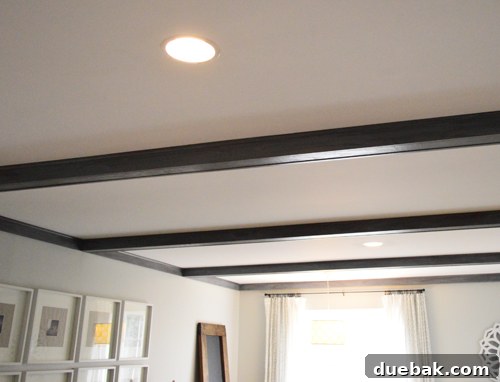
With the initial wiring and conversion complete, the impact of the new lighting was immediate and, frankly, glorious. The room felt brighter, more open, and significantly more functional. We initially considered branching out from these two points to add many more recessed lights – perhaps four, six, or even eight. However, after careful consideration, we decided to begin with just the two, making use of the existing fixture boxes. This approach allowed us to see the immediate impact without overcommitting to extensive ceiling work. The beauty is knowing that the foundation is now in place; should we decide in the future that more ambient lighting is desired, expanding the system will be much simpler, as the initial wiring infrastructure is already established.
Professional Expertise Meets DIY Enthusiasm
When undertaking electrical work, especially anything involving existing wiring, safety and code compliance are paramount. For this reason, we entrusted the critical electrical aspects of our living room lighting upgrade to our trusted local electrician, Sean from S.J. Ryan Electric. His professionalism and expertise, which we experienced during our kitchen renovation, gave us invaluable peace of mind. The wiring in our attic above the living room was, to put it mildly, a bit concerning and certainly not up to current safety codes. Dealing with potentially hazardous wiring is not a task for the faint of heart or the inexperienced, and the peace of mind that comes from knowing an expert is handling something with the potential to cause a fire is truly priceless.
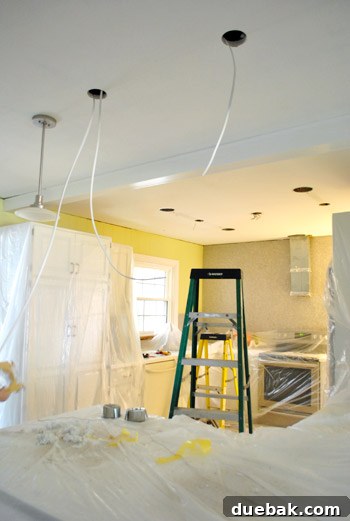
However, like many enthusiastic DIYers, we are always eager to tackle tasks within our skill set to save on labor costs. Our approach balances professional help for specialized, high-risk tasks with hands-on involvement for simpler installations. This meant that while Sean’s team handled the complex wiring, the recessed light conversions, and, crucially, repositioning the fixture box for our pendant light, we were more than happy to take on the installation of the pendant itself. The original pendant fixture box was about a foot off-center, making any light hung from it appear wonky and misaligned with the window. While we’ve successfully moved fixture boxes ourselves in other projects, like our bathroom renovation showcased here, this particular situation presented challenges.

In this instance, there wasn’t enough slack in the existing wiring to move the box ourselves, and a tangle of other wires converging on the box added to the complexity. It was clear this was a job best left to the professionals. Having Sean’s team not only bring everything up to code but also perfectly center the pendant fixture box saved us a significant amount of hassle and ensured a flawless finish. This hybrid approach – hiring experts for critical tasks and tackling the finishing touches ourselves – is a fantastic way to manage renovation budgets without compromising on quality or safety. It’s similar to how we hired a contractor to open up the wall between our kitchen and dining room, then completed all the drywall, trim, and finishing work ourselves to save on expenses. In this lighting project, we joyfully took on the pendant installation and the necessary ceiling patching.

Maximizing Savings: Smart Preparation and DIY Finishes
Another excellent way to save money on hourly professional services is by thoroughly preparing the room before the contractors arrive. For our living room lighting adventure, we took several proactive steps:
- Moved the sofa and other furniture: Clearing the work area not only makes it easier for the electricians but also protects your belongings.
- Rolled back the rug: Preventing dust and debris from settling on textiles is crucial.
- Put down drop cloths: Essential for protecting floors from dust, plaster, and paint.
- Marked the ceiling for placement: This was a significant time-saver. By pre-measuring and marking an ‘X’ on the ceiling where we wanted the pendant to be perfectly centered, we eliminated any need for lengthy discussions with the electrician about placement. Every minute spent debating while they’re on the clock is money out the door.
Once the electricians completed their work and departed, our DIY tasks began:
- Hung the pendant light: A straightforward installation once the fixture box was perfectly positioned.
- Patched the hole in the ceiling: Essential for a seamless, finished look.
- Caught our breath: A well-deserved break after the initial flurry of activity!
- Put the room back together: Returning furniture and decor to their places, revealing the newly illuminated space.
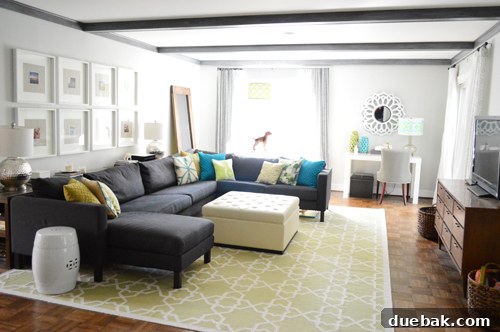
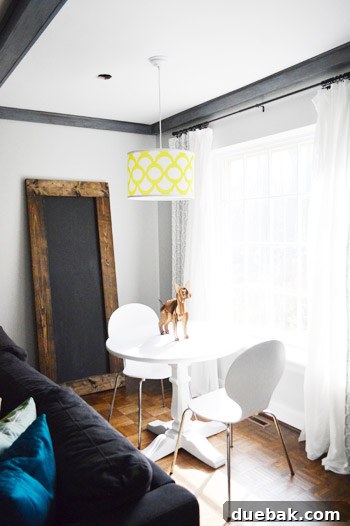
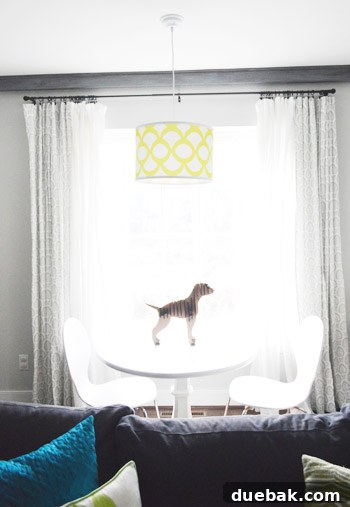
The transformation was remarkable. While our large window makes the elegant pendant light appear somewhat understated in photos, in person, it’s crisp, noticeable, and beautifully integrates with the room’s design. Going from zero overhead lights to two strategically placed recessed lights and a perfectly centered pendant over the table has made an awesome difference. It truly reinforces the adage: “good lighting is a room changer.”
Pro Tips for Flawless Ceiling Patching
Patching holes in the ceiling is a common post-renovation task, and doing it correctly is key to a smooth, professional finish. Here are our top tips for achieving perfect results:
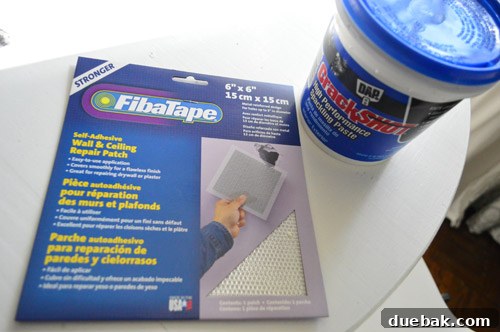
1. Use Mesh Patches for Best Results: For anything larger than a nail hole, we highly recommend using self-adhesive hole-patching mesh, readily available at home improvement stores like Home Depot. Apply this mesh over the hole first, then cover it with a high-quality spackle, such as Crackshot Spackle by Dap. Use a spackle knife to apply a thin, even layer, ensuring the mesh is fully covered. This technique provides structural integrity and prevents the patch from cracking over time.
2. Apply Multiple Thin Coats: Patience is key in patching. Resist the urge to apply one thick coat of spackle. Instead, aim for 2-3 thin applications. This method allows you to catch any tiny imperfections or low spots you might miss with a single pass. You can lightly sand between each application, or simply build up thin layers and do a thorough sanding once you’re confident all low points are filled and the surface is nearly flush. For a visual guide to this process, check out our video here.
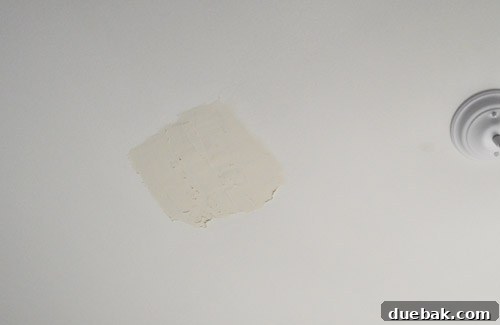
3. Discover the Magic Eraser Technique: For a less dusty sanding experience, try a Magic Eraser! After the spackle is completely dry, gently buff the patched area with a slightly damp Magic Eraser. This innovative tool works wonders for filing down high points and achieving a smooth surface with significantly less dust compared to traditional sandpaper. The key to its success, in our experience, is to avoid mounding the spackle; aim to keep it as flush as possible during application, minimizing the need for aggressive sanding later.

4. Feather Your Paint for a Seamless Blend: Before you even think about painting, ensure your smoothed-out spackle is absolutely flawless. Paint doesn’t hide imperfections; it tends to emphasize them. Once smooth, apply your ceiling paint, making sure to feather it out approximately 12 inches beyond the patched area. This technique prevents an obvious blob of new paint on the ceiling, allowing for a gradual, seamless blend with the existing paint. Two thin, even coats applied with long, feathery brush strokes usually work best for achieving an unnoticeable repair.
Choosing the Perfect Pendant and Accent Lighting
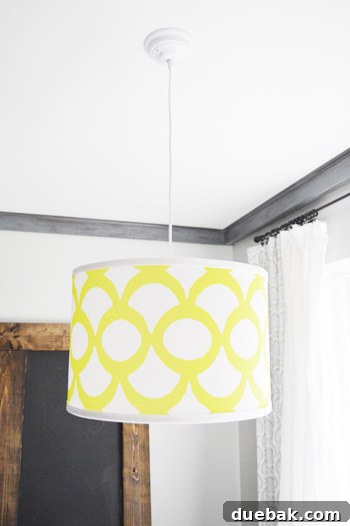
The pendant light we ultimately chose for our living room was a piece we had admired for some time, featured in our past lighting collection post. It was incredibly satisfying to finally see this beautiful fixture installed, especially knowing it was now perfectly centered over the table and framed by the window. The clean, crisp white of its wire and canopy creates a visually appealing “floating” effect, almost like a radiant sun hanging in the sky. Its minimalist design complements the room without overwhelming it, providing both essential task lighting for the table below and an elegant focal point for the space.
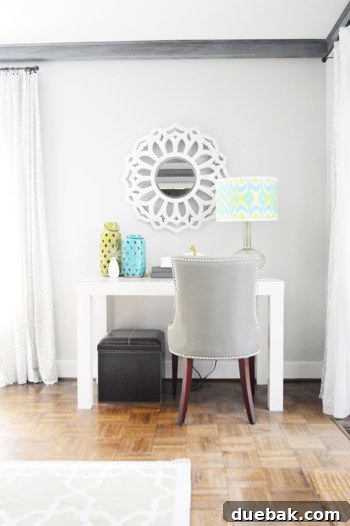
Beyond the main overhead lighting, the third piece from our curated collection, a vibrant and colorful shade, found its perfect home on our small stationery desk. This desk, affectionately known as Burger’s treat desk due to its dual purpose, now benefits from a pop of color and an additional layer of ambient lighting. The shade’s hues beautifully echo the green and blue lanterns already present on the desk, while its intricate shapes tie into the mirror’s design and the cutouts of the lanterns. This thoughtful inclusion of accent lighting brings a playful, personalized touch to the neutral backdrop of the walls, desk, chair, ottoman, and curtains, enhancing the room’s overall aesthetic and contributing to the desired layered lighting scheme.
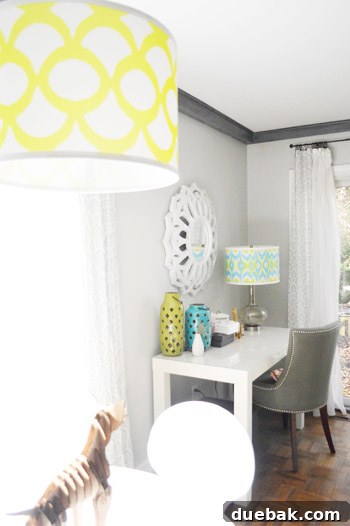
We even had a little “lamp shade fashion show” with this piece, trying it out on various lights, including a floor lamp in the sunroom, where it also looked quite charming. For now, however, its place in the living room feels just right, adding that much-needed splash of character. Who knows where it might end up next in our ongoing home styling adventures?

The Cost and the Unquantifiable Value of Good Lighting
Every home improvement project comes with a budget, and our lighting upgrade proved to be incredibly cost-effective given the scope of work and the transformative results. The total cost for materials was approximately $72, covering the two recessed light fixtures, their trims, some necessary wiring, and junction boxes to address a few problematic connections in the attic. The labor cost, which included converting the existing fixtures to recessed lights, moving the pendant fixture box to the perfect center, and, critically, rectifying some tangled and potentially hazardous wiring in the attic, came in at around $200. Considering that adding a single overhead light often costs around $100 for labor, we felt that this comprehensive electrical service for $200 was an exceptional value, especially when factoring in the significant safety improvements made to our home’s wiring system.
Looking back at how far this room has come, especially when comparing it to an older “before” picture from 2010, the transformation is truly astonishing. The addition of thoughtful, layered lighting has not just brightened the space; it has fundamentally altered its character and usability.
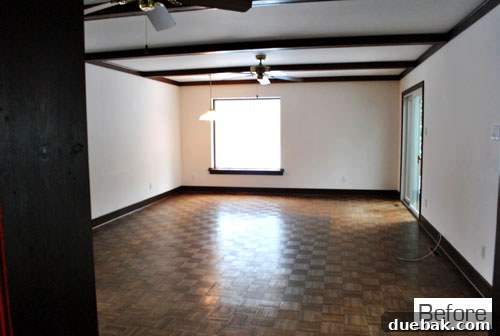
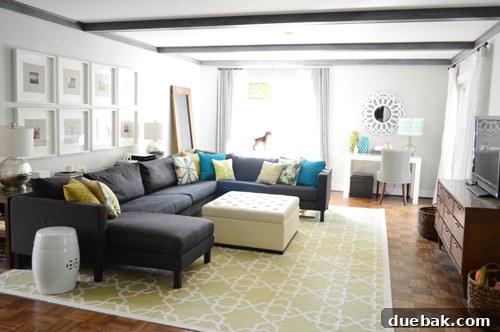
The only bittersweet part of this entire experience is the common homeowner’s lament: “Why did we wait so many years to do this?!” It’s a familiar refrain after completing a project that brings such immense satisfaction. But, as they say, better late than never! Now, we can fully enjoy the enhanced brightness, the improved ambiance, and yes, even the occasional pun-tastic declaration of “I see the light!” every time we walk into the room. Because, let’s be honest, that absolutely happens.
What are your experiences with tackling lighting, ceiling, or hole-patching projects in your home? Do you, like us, embrace a hybrid approach, hiring out specialized tasks while confidently tackling the DIY portions? We estimate we saved around $100 by patching that ceiling hole and installing the pendant ourselves. As we often quip, a little bit of DIY can go a long way: “everyday I’m shuffling spackling…”