OK, it’s day two of our organizing week and we’re focusing on the sink drawer project we mentioned yesterday. This post isn’t a step-by-step play-by-play with the before and after images (that comes this afternoon). Instead, it’s a clear, practical system that helps us manage Clara’s ever-growing stash of toys and kid stuff. We get asked about this all the time—“How do you organize Clara’s things?”—so here’s a simple rundown of what has worked for our family.
When Clara was a baby, organizing was easy: a small ottoman, a basket with rattles and a few blankets for tummy time. Those early days are covered in an older post about baby gear. But toddlerhood changed everything. Suddenly she had books, crayons, bowls, drums, stuffed animals, pretend food, buckets, balls, blocks, toy cars, dolls, and more. We tried not to buy too much, but hand-me-downs and gifts added up quickly.
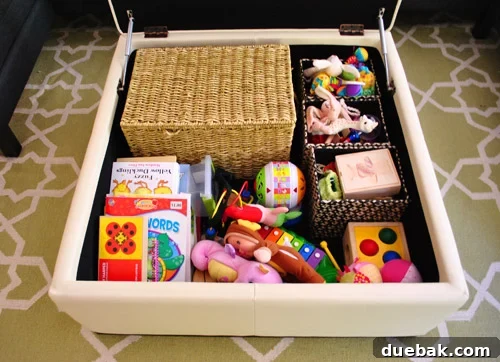
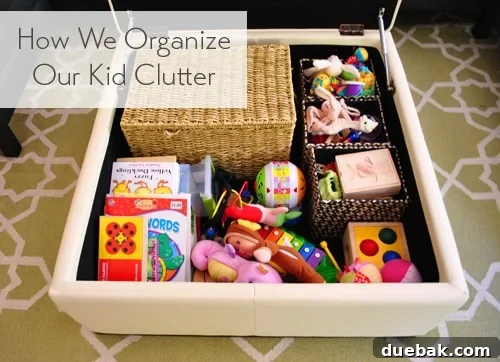
For nearly a year I was not great at keeping things organized. Toys got tossed into multiple baskets and ottomans—seven of them, actually—without any system. Some nights toys stayed on the floor if I was too tired to deal with them. At some point our big white ottoman became the catalyst for a better approach.
The idea that changed everything was intentional rotation. Instead of leaving every toy available all the time, I filled one small basket with Clara’s current favorites and stashed the rest in the ottoman. The result: a single, manageable basket of toys that she actually played with more consistently. This “toy store” concept reduced overwhelm and made play more focused.
Rotating toys is quick. It took me about half an hour to sort and remove anything she wasn’t actively using—no “maybes,” just favorites. The extras went into a big plastic bin in the closet or under-bed storage. Keeping only one basket out made cleanup fast (two minutes) and made new or rotated toys feel special again. The current basket includes a few stuffed animals, a wooden pull toy, balls, a small purse from Grammy, baby dolls, a dress-up skirt, and a pot she likes to fill and empty. Her absolute favorite items live in a small fabric pouch that she carries everywhere: a few cars, a pretend phone, a wood train, a small ball, plastic animals, a toy plane, and a small shaker set from music class.
That little pouch is a hit—she reaches for it multiple times a day—and everything tucks neatly into the toy basket at night. Having a limited number of items out at once encourages longer independent play and reduces clutter.
Books are handled similarly. We keep two book baskets: one in the office and one in the living room. Clara occasionally moves books around, but most return to one of those two baskets. Previously books were mixed in with toys everywhere; now they have a clear home. A bookcase might be nice someday, but for now baskets are practical and simple.
We also recognize different play zones around the house. Clara has a coloring desk where marker time is supervised and crayons live in a small zippered pouch. Stickers are kept in another small pouch—both are inexpensive finds that provide a lot of entertainment from simple opening, closing, and sorting actions. In the hallway she has a small rocker she enjoys, and her play kitchen stores dishes and pretend food in the cabinet underneath and a tiny thrift-store shopping basket. When items wander into the kitchen or other rooms, we make a habit of returning them to their designated spots instead of tossing them into a random heap.
Under her dresser we use two shallow baskets: one for blocks and one for puzzles. The shallow basket idea keeps puzzle boards and pieces together and prevents that annoying scatter where some pieces end up in one room and the rest in another. Each night, when we do a quick tidy on the way to bed, I make one trip down the hall returning any stray pieces or kitchen items to her room. It’s efficient and keeps frustration low.
We also keep a small book basket and a bucket of wooden blocks in Clara’s room. If those items move to other rooms during the day, they usually get returned at night. The predictable “homes” for toys make cleanup straightforward, and we’ve even started encouraging Clara to help—she’ll sometimes bring toys back while singing a tidy-up song. Teaching her that things have a place makes a big difference.
Some activities are reserved for supervised times and stored in a kitchen drawer for special occasions. Because these items aren’t always available, they feel exciting when we bring them out. For outdoor play we have a rock box that’s been a big hit; it’s another zone where she can dig and explore with neighbor kids. We’re planning an outdoor storage bin for buckets and trucks that don’t fit under the covered rock box—another small improvement on the list.
This system—one small basket of favorites, rotated extras in storage, clear book baskets, shallow baskets for puzzles, and defined play zones—may change as Clara grows, but for now it keeps our home manageable and play more engaging. What methods do you swear by for organizing kids’ things? There are countless approaches, so we’d love to hear what works for you.
Psst- Wanna know where we got something in our house or what paint color we used? Just click on this button: