
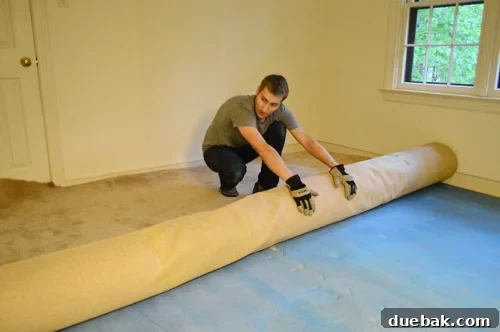
Embarking on a home renovation project can be a daunting yet incredibly rewarding experience, especially when it involves transforming a fundamental aspect like your flooring. One of the most impactful changes you can make to refresh a space is removing old, worn-out carpeting. This weekend, we tackled the Herculean task of stripping away wall-to-wall carpeting and all its underlying layers from the upstairs bedrooms and hallway of our new home. It was a journey of sweat, grit, and significant transformation, proving that progress indeed smells a lot better than decades-old carpet fibers.
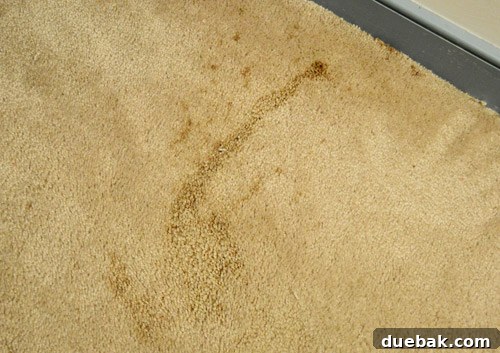
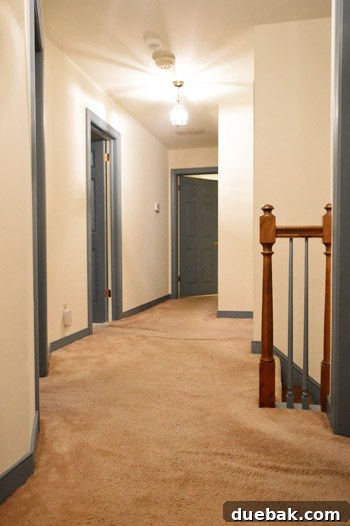
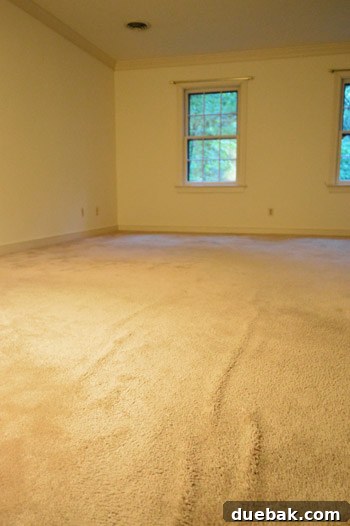
When we first purchased this house, it was clear that the flooring in the four upstairs bedrooms and the connecting hallway desperately needed an upgrade. The once-cream, now decidedly tan, wall-to-wall carpets were beyond their prime. They were visibly stained, threadbare in high-traffic areas, and in some spots, even had holes that hinted at the age and wear they had endured over the years. This wasn’t just a cosmetic issue; it was a matter of hygiene and creating a fresh foundation for our family.
Unveiling the Foundation: What Lies Beneath?
One of our initial discoveries during the first walkthrough was quite telling. Fortunately, a few sections of the carpet were so loose that we could easily peek underneath, giving us a crucial glimpse of what we’d be working with. While we harbored a secret hope of finding original hardwood floors waiting to be restored, we were instead greeted by a bare subfloor. This wasn’t entirely a disappointment, as we made this discovery before finalizing our purchase, allowing us to factor the cost of new flooring into our budget and decision-making process. Once we moved past the initial wistfulness of not having antique hardwoods to revive, a new excitement began to build: the freedom to choose entirely new flooring tailored to our tastes and lifestyle.
Choosing the Perfect Floor: Functionality Meets Style
The decision-making process for new flooring was extensive, as we explored a wide array of options. We considered everything from classic hardwoods and updated wall-to-wall carpeting to modern bamboo and durable tile. After careful deliberation, weighing the pros and cons of each, we ultimately circled back to oak hardwoods. This choice was largely influenced by our experience in our previous home and other areas of our current house, where oak flooring is already present, even in bedrooms. The consistency of material offers a seamless flow throughout the home, creating a cohesive and elegant aesthetic.
Beyond aesthetics, there were practical considerations. Hardwood floors provide immense flexibility; we can easily introduce area rugs to add warmth, texture, and a touch of personal style. These rugs can be changed over time, allowing for evolving decor preferences without the commitment of a specific carpet type or color for a decade or two. Moreover, with a busy household including a child and a dog, we’ve found wood flooring to be exceptionally easy to clean and maintain, resisting stains and holding up well against daily wear and tear. Its durability and timeless appeal also add significant value to the home.
Our existing oak flooring on the stairs leading to the second level, as well as in the future office, dining room, and living room, further solidified our decision. Finding new oak in a similar finish and grain would create a harmonized look, making it feel as if the hardwoods had always been there. This seamless integration was a key design goal. However, before we could begin the exciting process of installing delicious new hardwoods ourselves – which is indeed the plan – we faced the formidable challenge of stripping away all the aforementioned old, unpleasant carpeting from the four bedrooms and the hallway. This task, as we quickly discovered, was quite the undertaking. Here’s a detailed look at how we conquered it, step by meticulous step.
The Carpet Removal Process: A Step-by-Step Guide
Phase 1: Removing the Carpet Layers
The journey began with the carpet itself. We started in a corner of one of the bedrooms, armed with a mini crowbar. The goal was to pry back the carpet, separating it from the tack strips and underlying padding.
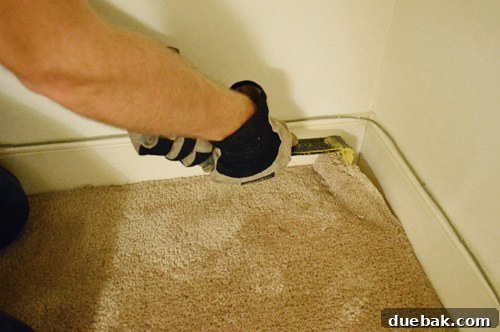
With a bit of careful, gentle force, the corner lifted, allowing us to begin pulling the carpet free. This initial release was a small victory, signaling the start of a much larger transformation.
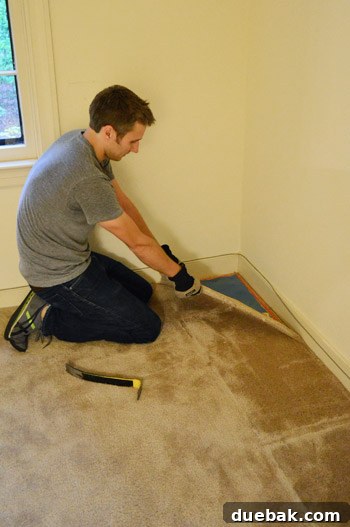
The pulling wasn’t delicate; it was more of a forceful yanking motion. Having two people for this part of the job proved invaluable. With one person working on a corner and the other mirroring the effort on the opposite side, we were able to free up large sections of the carpet. We then began rolling it tightly towards the center of the room. This rolling technique makes the carpet more manageable for removal and disposal. It’s definitely one of those tasks where four hands are infinitely better than two, allowing for more efficient and less strenuous progress.
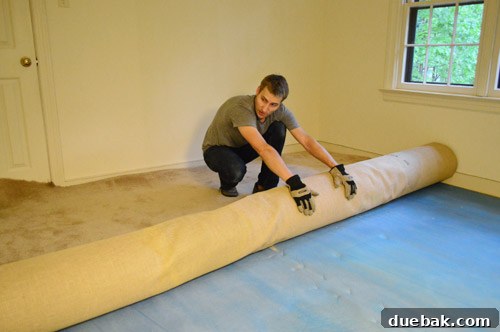
A crucial tip we learned quickly: wear protective gear! Gloves are a must to protect your hands from abrasions and dirt, and long sleeves are highly recommended. Our forearms quickly became raw from carrying the heavy, rough rolls of carpeting down to the garage. We stored these rolls in the garage until we could figure out the best disposal method. Given its condition, donation was not an option. We explored renting a Bagster, but thanks to helpful advice from our community, we also looked into carpet recycling facilities and options for cutting it down for curbside pickup, which proved to be greener and more cost-effective alternatives to simply trashing it.
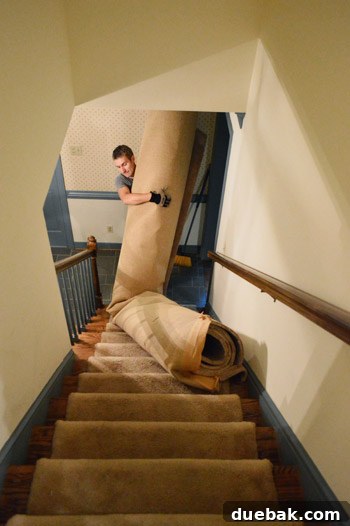
Room by room, and down the hallway, we repeated this process: pry, yank, roll, and drag. In areas where the carpet was exceptionally thick or heavy, we used a box cutter to slice it into smaller, more manageable sections before carrying it downstairs, easing the load significantly. Once the top layer of carpet was gone, we were left with the next challenge: the carpet padding.
Phase 2: Tackling the Carpet Padding and Tack Strips
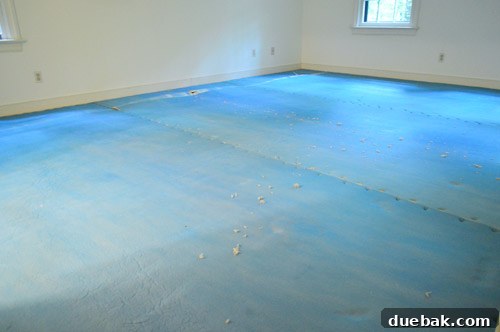
Beneath the carpet, we uncovered a distinct blue carpet padding. This padding, while serving its purpose for comfort, was secured to the subfloor with what felt like a thousand staples and nails per room—a slight exaggeration, perhaps, but it certainly felt that way! Removing the padding involved a similar yanking motion, but it left behind a formidable array of small staples, nails, and perimeter tack strips.
Tack strips are thin, wooden strips embedded with sharp nails that run along the perimeter of the room. Their purpose is to grip both the carpet padding and the carpet itself, holding them firmly in place. These can be particularly stubborn to remove. Often, you can position a crowbar underneath them and, with significant brute strength, pop them up in relatively long, intact pieces. Be prepared for your palms to be red even with gloves on!
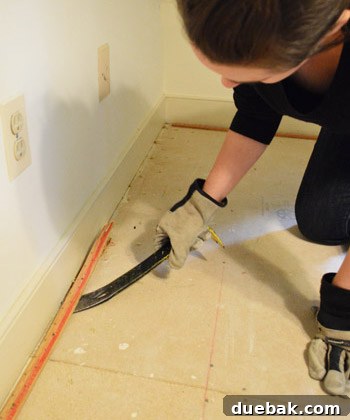
The difficulty escalates if the tack strips are old and brittle, as ours often were. Instead of lifting cleanly, they tended to splinter and break apart. This meant that a task that ideally should take about 30 seconds per 2-foot strip could easily stretch into five minutes as we painstakingly dug out individual nails and fragments of splintered wood still embedded in the floor. My partner, John, and I divided the labor: I worked on the tack strips in the master bedroom, while John handled the hallway and nursery. Then, I moved to the guest room while John tackled Clara’s room. This section alone took us approximately an hour and a half to complete. A single person attempting this might face a three-hour endeavor, likely accompanied by blisters despite wearing gloves.
Once all the tack strips were finally up, we faced what seemed like an even more formidable opponent: the hundreds of tiny staples.
Phase 3: Conquering the Staples
These persistent little staples were everywhere, driven deep into the subfloor, and the crowbar was utterly useless against them. Initially, our only successful method was to remove them one by one, using needle-nosed pliers. This approach, while effective, was agonizingly slow. John spent over an hour just on Clara’s closet, which quickly made us realize this was not a sustainable strategy for four bedrooms and a hallway. We desperately needed an alternative.
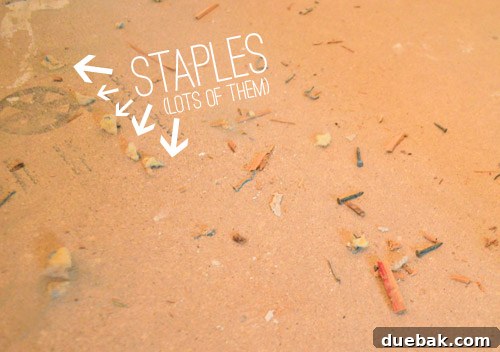
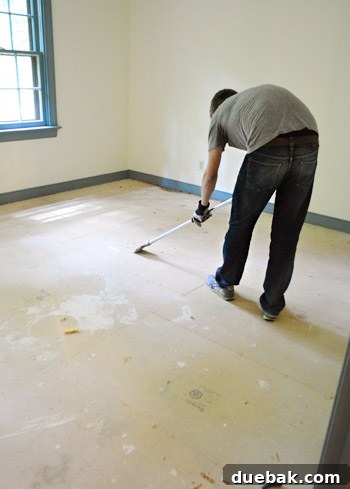
A quick online search led us to the solution: a heavy-duty, long-handled floor scraper. We picked one up for about $25 at Lowe’s, and it proved to be a game-changer. While it still demanded significant physical strength and left us with sore backs, it dramatically sped up the process. What we initially estimated would take two full days with pliers, we managed to complete in approximately two hours for all four bedrooms and the hallway using the scraper. A word of caution: if you have existing hardwood floors, a scraper might ding or damage them. However, for a durable subfloor, it is an absolute marvel.
The Final Cleanup and Awaiting New Floors
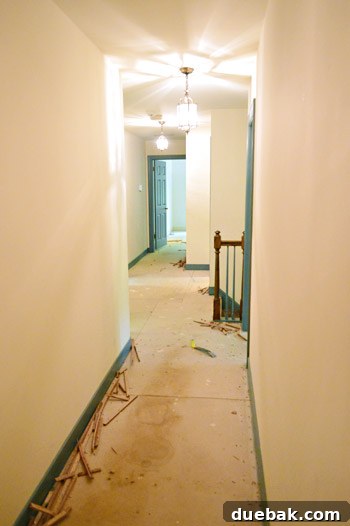
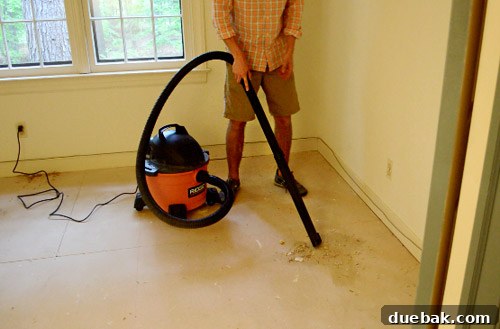
The day after the primary demolition, we returned to perform the crucial cleanup. We used a sturdy broom to sweep all the freed staples, nails, and wood splinters into manageable piles, followed by a powerful shop-vac to suck up every last piece of debris, ensuring a clean and safe surface.
For a more dynamic view of each step, especially how to effectively tackle those stubborn tack strips and staples, we created a video. It offers a clearer demonstration than still photos alone can provide:
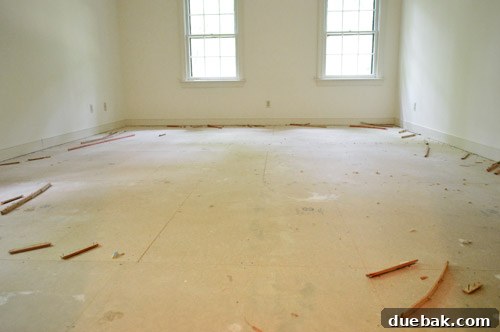
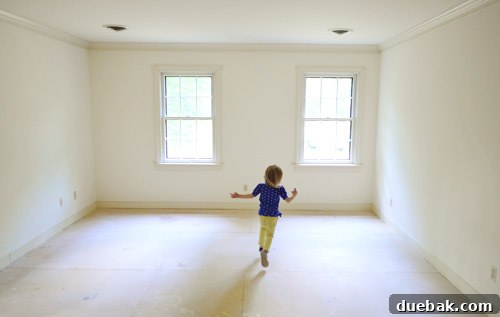
Now, we are left with beautifully smooth, bare subfloors, perfectly primed and ready for the installation of our new hardwood flooring. It’s an incredible feeling of accomplishment.
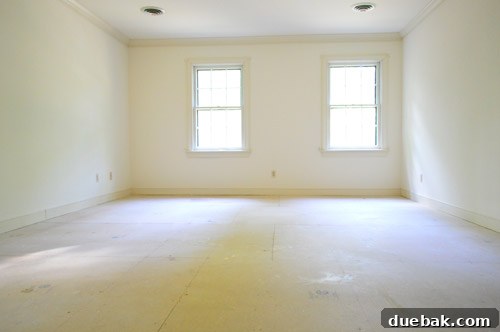
We truly never thought we’d be so utterly thrilled to see pure, unadulterated pressed wood in our lives!
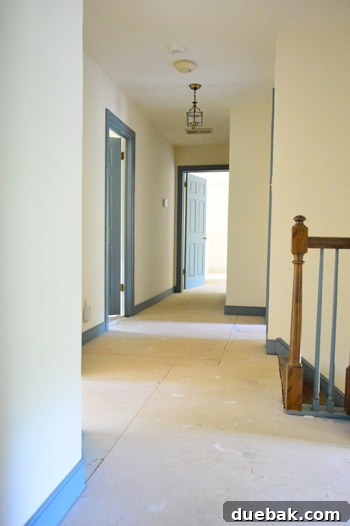
And as for proof of our strenuous weekend, our garage stands as a testament:
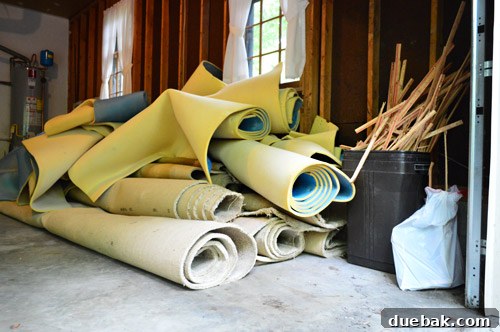
That, dear friends, is what true progress looks like in the world of DIY home renovation. Turns out, progress often resembles stacks of stinky, rolled-up carpeting awaiting proper disposal. But despite the mess and the muscle ache, it’s an incredibly happy day, knowing we are moving in the right direction towards creating our dream home. Our little one already enjoys the expansive new space!
Are you currently wrestling with carpet stripping in your own home? Did the staples become your arch-nemeses, those infuriating little buggers that seemed impossible to conquer until you discovered your own “Amazing Wonder-Scraper”? We’d love to hear about your experiences! Seriously, if asked what superhero power I’d want now, it would be to possess a paint roller on one arm and a floor scraper on the other. You never know when you’ll need them!
More Essential Flooring Projects & Guides
If you’re inspired to tackle other flooring projects or simply curious about the world of home flooring, we invite you to explore our comprehensive guides and articles below:
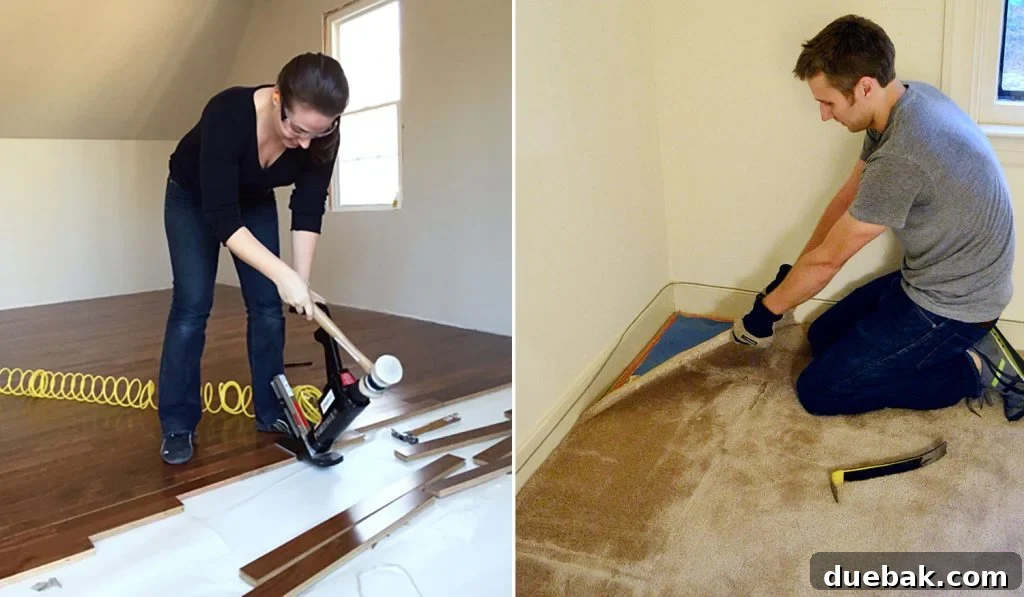
- Hardwood Floor Refinishing 101: Revive Your Old Floors
- DIY Hardwood Flooring Installation: A Step-by-Step Guide
- How To Select the Perfect Hardwood Flooring for Your Home
- Innovative Methods: Installing Hardwood Floors Without Nails
- Effortless Installation: How To Install Click-And-Lock Cork Flooring
- Transformative Power: How To Paint a Floor for a Fresh Look
- Beyond Basic: How To Stain a Concrete Floor for Unique Style