
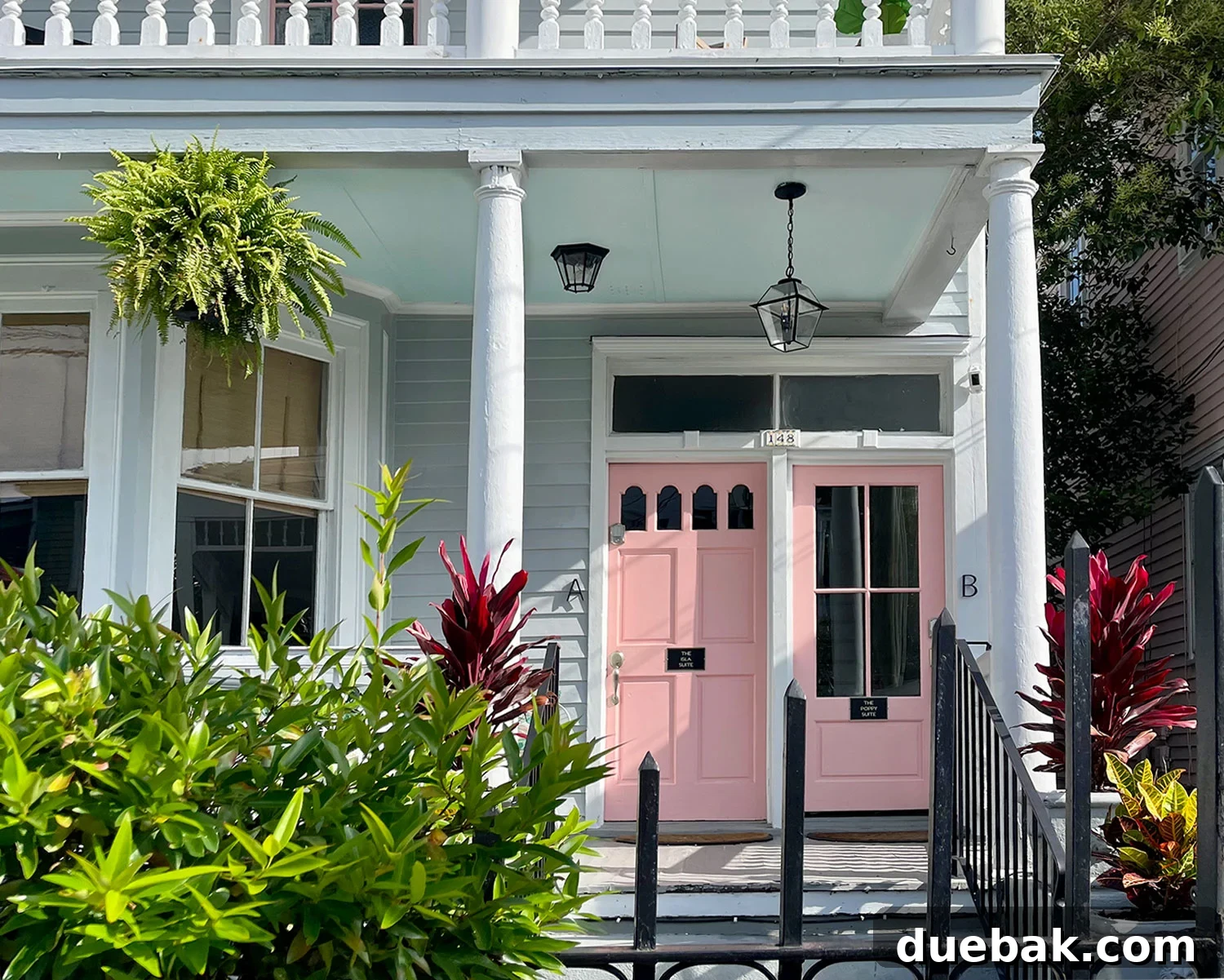
There’s a certain enchanting quality about a blue porch ceiling, a sight particularly common and beloved across the Southern United States. More than just a charming aesthetic choice, this distinctive sky-hued tradition carries a rich tapestry of history, cultural significance, and surprisingly practical reasoning. This iconic blue, often referred to as “Haint Blue,” has graced the ceilings of countless porches, from historic Charleston homes to cozy suburban dwellings, for generations. For many homeowners, including ourselves, painting a porch ceiling in a soft, inviting blue is an almost instinctive nod to this cherished tradition. In nearly all of our own homes, we’ve embraced a light blue shade for our porch ceilings, experiencing firsthand the unique ambiance it creates.
This comprehensive guide delves deep into the fascinating world of Haint Blue, exploring its mysterious origins, the captivating folklore that surrounds it, and the practical benefits many homeowners swear by. Whether you’re drawn to its historical allure, its purported bug-repelling properties, or simply its undeniable beauty, you’ll find everything you need to understand and incorporate this Southern design staple into your own home. We’ll also share our top recommendations for the best Haint Blue paint colors, ensuring you can confidently select the perfect shade to transform your outdoor living space.
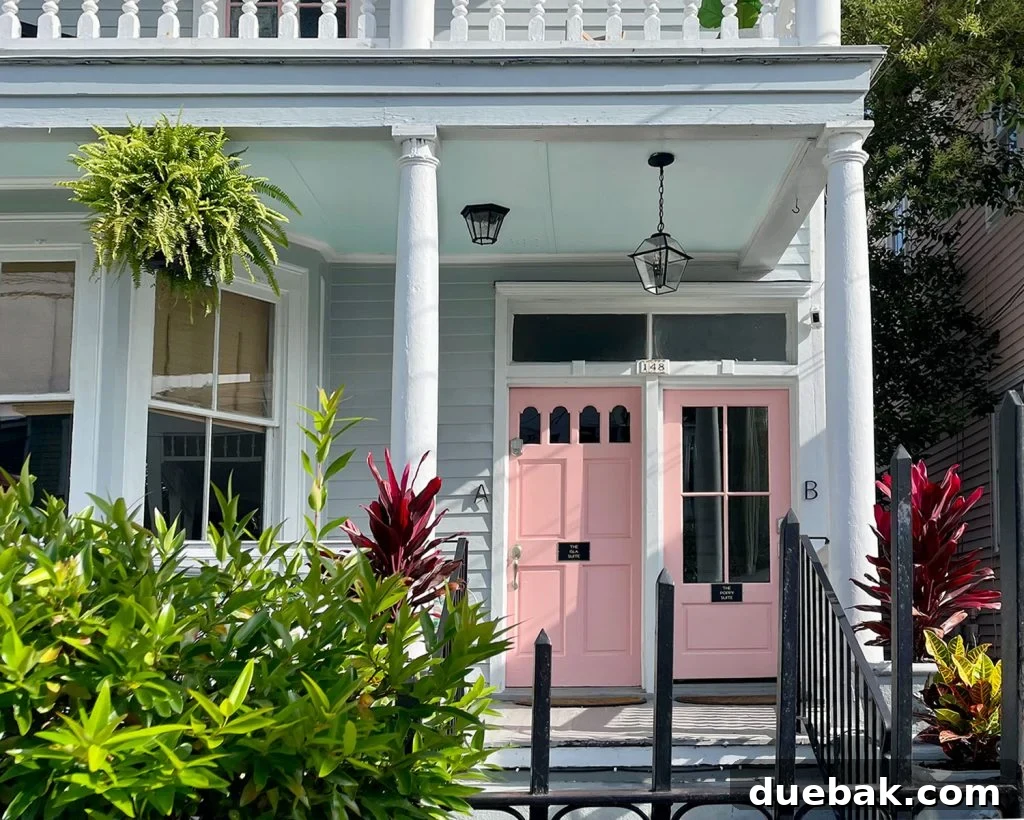
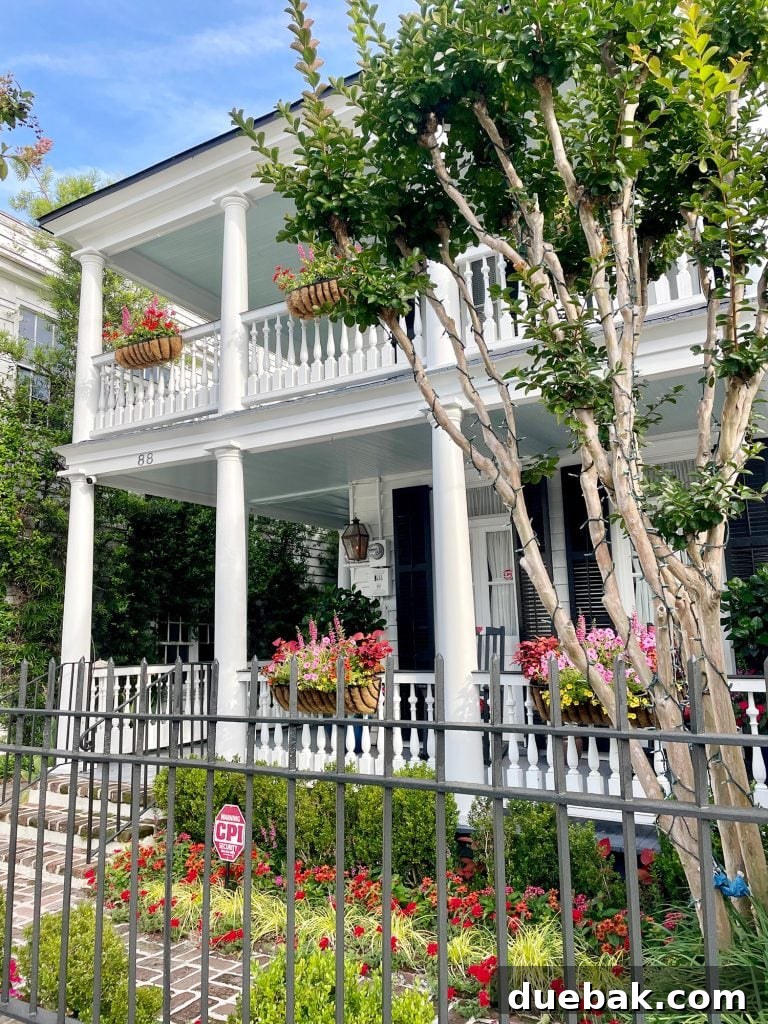
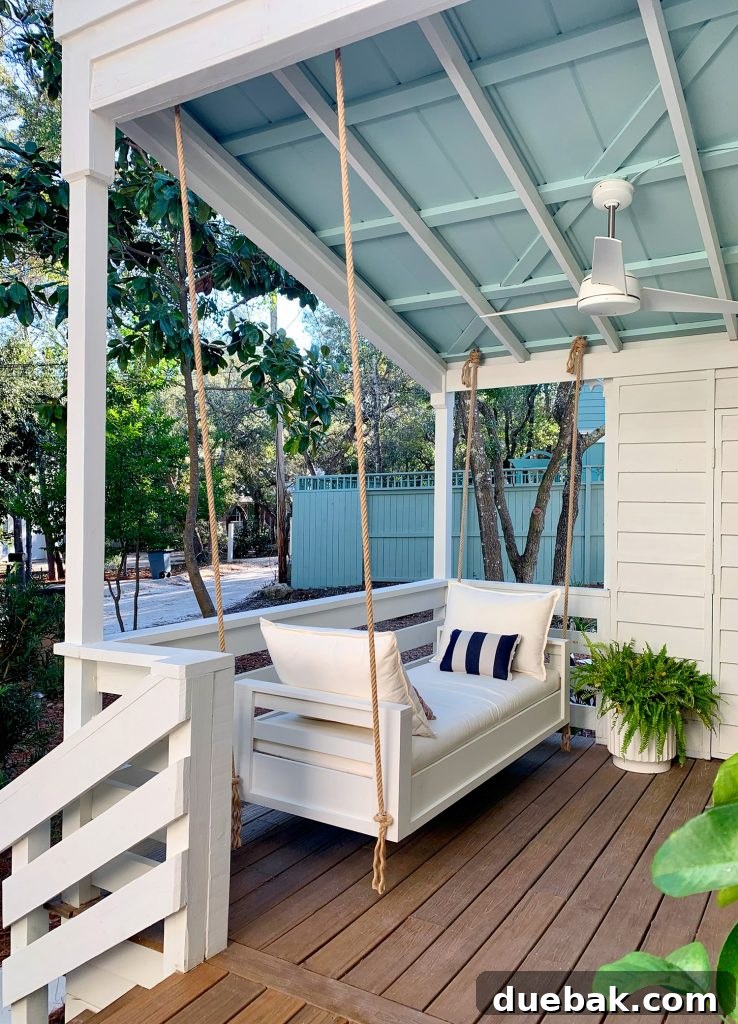
Throughout this article, you’ll find inspiring photos not only from our personal homes but also from our recent family trip to Charleston, South Carolina. This historic city, renowned for its architectural beauty and deep-rooted traditions, provided a wealth of stunning Haint Blue porches, including the picturesque Airbnb featured above.
What Exactly Is Haint Blue? Defining This Iconic Southern Shade
Far from being a single, specific shade, Haint Blue is a collective term referring to a range of soft, luminous blue-green paint colors predominantly used on porch ceilings. This distinct palette evokes a sense of calm and openness, making it an exceptionally popular choice, especially in the historic cities of the Southern United States, such as Charleston, SC, and Savannah, GA. The hues often hover between a pale sky blue and a subtle mint or robin’s egg blue, designed to mimic the expansive, clear skies above.
The appeal of Haint Blue isn’t solely in its aesthetic beauty; it’s deeply intertwined with a captivating history and cultural narratives. It’s a color that feels simultaneously inviting and mysterious, creating an outdoor living space that is both refreshing and comforting. While the exact formulation might vary, the spirit of Haint Blue remains consistent: a light, ethereal blue that brings a touch of the heavens down to your porch.
For those looking to capture this timeless look, several paint brands offer colors that perfectly embody the Haint Blue aesthetic. Some of the most beloved and frequently chosen Haint Blue paint colors include the serene Palladian Blue and elegant Woodlawn Blue by Benjamin Moore, both celebrated for their nuanced blue-green undertones. Sherwin-Williams also offers an exquisite option, Atmospheric, which captures that perfect balance of lightness and depth. These colors provide an excellent starting point for anyone wishing to infuse their porch with the charm of Haint Blue.
The Intriguing Etymology: Why It’s Called “Haint Blue”
The name “Haint Blue” itself is steeped in folklore and whispers of the supernatural. The term “haint” is a regional variation of the word “haunt,” directly referencing the spirits or ghosts that the color was traditionally believed to repel. This fascinating belief system, deeply rooted in the cultural heritage of the American South, suggests that painting a porch ceiling this particular shade of blue served as a protective barrier against malevolent entities.
According to age-old lore, evil spirits, or “haints,” would be deceived by the distinctive blue color. There are two primary theories behind this spiritual deterrence: one suggests that spirits would mistake the blue for water, an element they purportedly could not cross. The other popular belief posits that haints, seeking to ascend into the afterlife, would perceive the blue ceiling as an extension of the sky, passing directly through it and away from the home’s inhabitants. By employing blue paint on the exterior surfaces of a home, especially the porch ceiling, families sought to safeguard their sanctuary and its occupants from any unseen, unwelcome visitors.
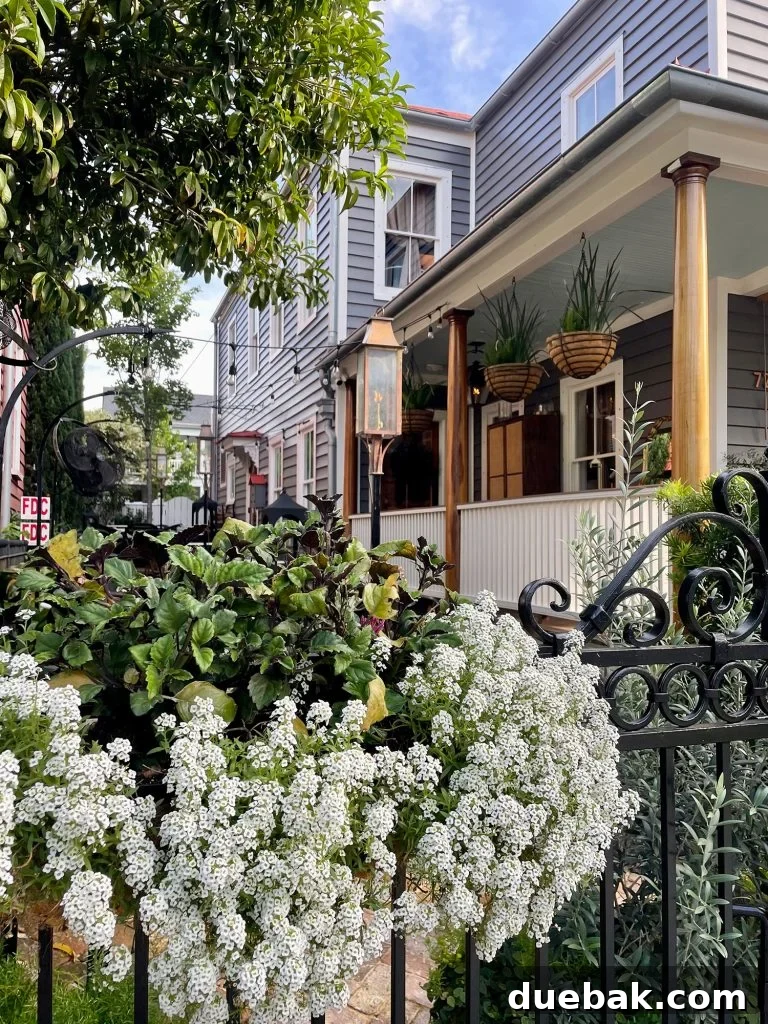
While today the term “Haint Blue” is predominantly associated with porch ceilings, historical accounts and architectural preservation efforts suggest that its application was once far more widespread. In earlier times, Haint Blue was also reportedly used on shutters, doors, window frames, and other exterior architectural elements. This broader application underscores the deep conviction that the color offered comprehensive protection, not just for the immediate entryway but for the entire home’s perimeter. It speaks to a rich past where color was not merely decorative but deeply imbued with meaning and purpose.
Tracing the Roots: The Cultural Origins of Haint Blue
The captivating tradition of Haint Blue is widely believed to have originated within the vibrant Gullah Geechee communities of the American South. From these culturally rich enclaves, the practice gradually spread, becoming a widespread phenomenon throughout the region. However, pinpointing the exact historical timeline and specific origins can be challenging, as historians note that the history is often difficult to definitively trace due to oral traditions and limited documented records from early periods.
The Gullah Geechee people are direct descendants of enslaved Africans who were brought to the coastal regions and Sea Islands of South Carolina and Georgia. Their relative geographic isolation allowed them to preserve an extraordinary number of their ancestral cultural practices, including a distinctive language (Gullah), unique art forms, culinary traditions, and spiritual beliefs. To learn more about this remarkable heritage, we highly recommend exploring the Gullah Geechee Cultural Heritage Corridor, an invaluable resource dedicated to preserving and sharing their legacy.
A significant aspect of this cultural heritage involves the deep spiritual symbolism of the color blue. For many African cultures, blue has long been associated with protection, spirituality, and warding off evil. In the context of the Gullah Geechee, the color blue held particular resonance due to the historical importance of indigo cultivation in the Lowcountry. Enslaved Africans, many of whom possessed indigenous knowledge of indigo dyeing, were instrumental in the success of the indigo cash crop in the colonial South. This connection to indigo, a plant that produces a rich, vibrant blue dye, likely reinforced the protective qualities associated with the color.
The Atlas Obscura article on the significance of indigo and the color blue among African cultures provides further insightful details into how these beliefs translated into practices like painting home exteriors blue. The earliest Haint Blue paints were likely made from natural pigments, possibly incorporating indigo or other locally sourced blue materials, mixed with lime. This natural composition not only provided the desired color but, as we’ll discuss, may have also contributed to some of its practical benefits.
Understanding the Gullah Geechee influence enriches our appreciation for Haint Blue, transforming it from a mere decorating trend into a powerful cultural artifact that speaks volumes about resilience, heritage, and the enduring human desire for protection and beauty.
Beyond Spirits: Do Blue Porch Ceilings Really Repel Bugs?
While the spiritual protection offered by Haint Blue remains a cherished piece of folklore, many contemporary homeowners are less concerned with warding off ghosts and more interested in a different kind of pest: insects. For generations, a pervasive rumor has circulated throughout the South that blue porch ceilings possess the remarkable ability to deter bugs and birds from nesting. The common belief is that insects and birds confuse the light blue ceiling with the vast, open sky, making them less likely to build nests or linger in the area.
The scientific community, however, offers a more nuanced perspective. There is admittedly not much concrete scientific evidence to definitively prove that a blue ceiling alone actively repels insects. Some researchers suggest that this enduring rumor might be a fascinating holdover from a bygone era when many blue paints were formulated using lye, a highly alkaline substance known to have insect-repelling properties. In such a scenario, the repellent effect would have been due to the chemical composition of the paint rather than the color itself. However, even without a conclusive scientific backing, the belief persists, and anecdotal evidence often fuels its popularity.
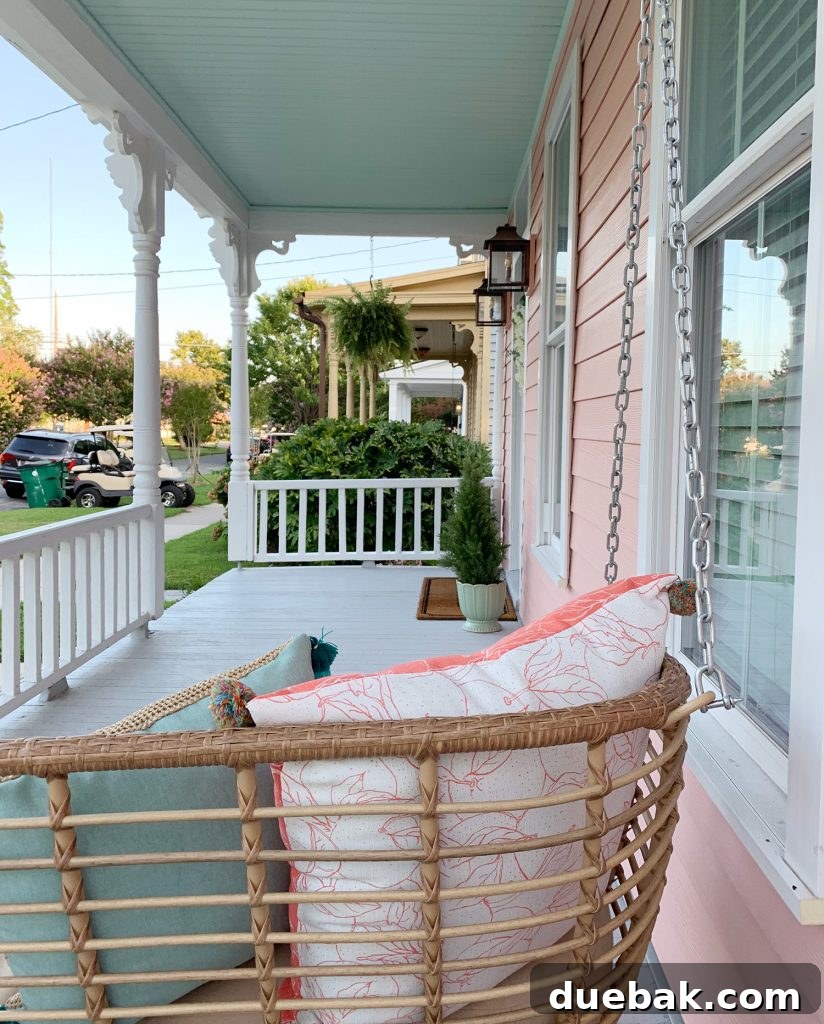
From our own personal experience, we can share a compelling, albeit tiny and unofficial, study. At our pink house, which featured a beautifully painted Haint Blue porch ceiling, we observed zero bees or bothersome bugs. Conversely, just two doors down at our duplex, where the porch ceiling was painted a standard white, we encountered wasps busily constructing a nest. While this is purely anecdotal and far from scientific proof, it certainly makes one wonder! It’s enough to suggest that for some, the tradition offers a tangible benefit that goes beyond aesthetics.
Whether it’s a psychological trick on the insects, a lingering effect from historical paint formulations, or simply a charming coincidence, the idea that Haint Blue keeps bugs at bay adds another layer of intrigue and practicality to this beloved Southern tradition. For many, even the possibility of a bug-free porch is enough to choose this classic hue.
Why Haint Blue Ceilings Captivate Homeowners: Aesthetics, Tradition & Serenity
The enduring popularity of Haint Blue porch ceilings stems from a compelling blend of cultural heritage, psychological comfort, and undeniable aesthetic appeal. Many individuals, particularly throughout the Southern states, choose to paint their ceilings this distinctive shade as a proud continuation of a longstanding tradition that dates back to the early 1800s. It’s a way to connect with history, honor cultural practices, and infuse a home with a sense of place and belonging. This connection to the past is a powerful motivator, linking contemporary homes to generations of Southern charm and folklore.
Beyond tradition, the visual impact of a Haint Blue ceiling is profoundly appealing. The color expertly mimics a clear, expansive blue sky, creating an optical illusion that makes covered porches feel more open, airy, and inviting. It’s akin to bringing the refreshing feeling of a bright, sunny summer day directly to your outdoor living space, regardless of the actual weather. This subtle visual trick can even make it seem as if the daylight hours are extended just a little bit, bathing your porch in a gentle, ambient glow that feels natural and uplifting.
Blue paint colors, in general, are universally well-loved and sought after in interior and exterior design for their versatility and calming effects. They effortlessly complement a wide variety of design styles, from rustic farmhouse to modern coastal, and integrate beautifully with diverse color schemes. Haint Blue, specifically, isn’t confined to a single hue, which allows homeowners the flexibility to select a shade that perfectly harmonizes with their home’s unique architectural character and their personal aesthetic preferences. This adaptability ensures that Haint Blue can feel both traditional and contemporary, classic yet fresh.
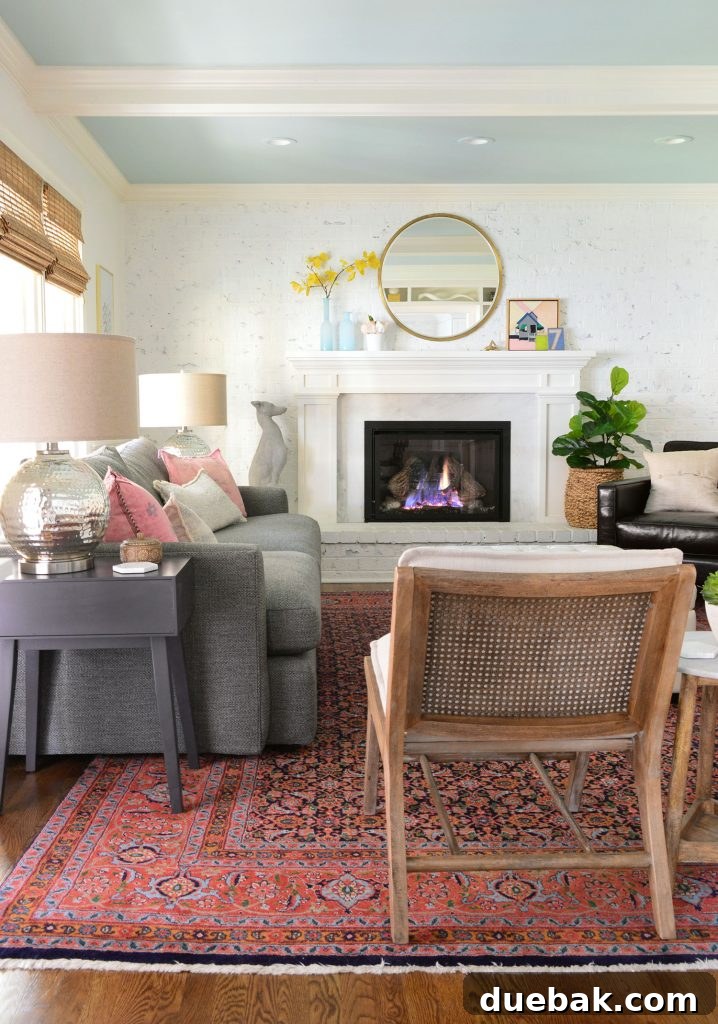
We’ve personally embraced the allure of blue ceilings not only outdoors but also within our homes for these very reasons. For instance, we painted our old living room ceiling in the captivating Benjamin Moore Galt Blue (shown below), creating an unexpected layer of depth and interest. Similarly, our pre-renovation bathroom ceiling featured the soft and playful Benjamin Moore Spring Mint. Incorporating these lighter blue tones overhead is a brilliant strategy for adding a subtle pop of color and playfulness without making the space feel dark, heavy, or closed-in. Instead, the ceilings feel elevated and expansive, contributing to an overall sense of serenity and refined charm.
Ultimately, whether your motivation is to honor ancient traditions, deter unwelcome insects, or simply to infuse your outdoor (or indoor) spaces with a unique blend of color and serenity, embracing a Haint Blue ceiling is almost always a brilliant design decision. It’s a choice that offers both rich history and timeless appeal.
Discovering Your Perfect Shade: The Best Haint Blue Paint Colors
Given that “Haint Blue” is more of a concept than a singular color, the quest for the perfect shade can feel both exciting and slightly overwhelming. While there isn’t an “official” Haint Blue paint color designated by any paint company, certain hues have consistently risen to prominence, becoming synonymous with this beloved tradition. To help simplify your search, we’ve diligently scoured dozens of popular design lists and homeowner recommendations, compiling a comprehensive tally of the most frequently mentioned and highly-regarded Haint Blue paint colors. We even went into “spreadsheet mode” to ensure accuracy!
Our research reveals a beautiful spectrum of options, ranging from incredibly light, almost ethereal blues to slightly deeper, more saturated blue-greens. This variety ensures that every homeowner can find a shade that perfectly complements their home’s exterior, regional light conditions, and personal taste. The curated list below is presented starting with the most popular selections, offering a fantastic springboard for your Haint Blue project.
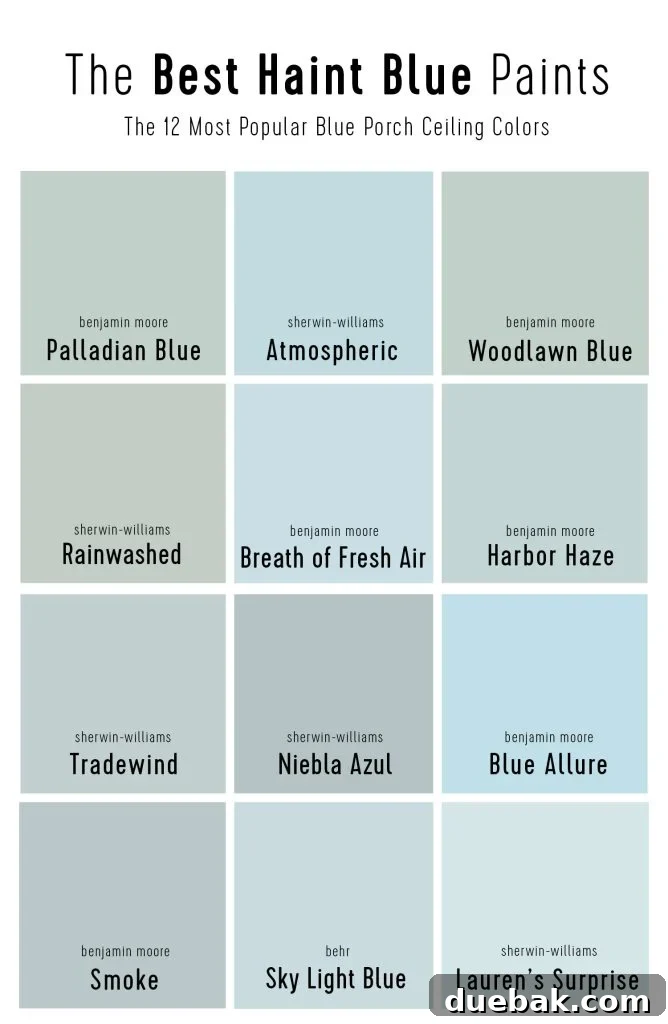
Explore the details of these top Haint Blue paint colors below, and consider ordering a convenient, removable sample sticker to effortlessly test them on your own porch ceiling before making a final decision. This crucial step will allow you to see how each shade interacts with your home’s unique lighting and existing exterior elements.
- Benjamin Moore Palladian Blue HC-144 (Sample Sticker)
- Sherwin-Williams Atmospheric SW 6506 (Sample Sticker)
- Benjamin Moore Woodlawn Blue HC-147 (Sample Sticker)
- Sherwin-Williams Rainwashed SW 6211 (Sample Sticker)
- Benjamin Moore Breath of Fresh Air 806 (Sample Sticker)
- Benjamin Moore Harbor Haze 2136-60 (Sample Sticker)
- Sherwin-Williams Tradewind SW 6218 (Sample Sticker)
- Sherwin-Williams Niebla Azul SW 9137 (Sample Sticker)
- Benjamin Moore Blue Allure 771 (Sample Sticker)
- Benjamin Moore Smoke 2122-40 (Sample Sticker)
- Behr Sky Light Blue MQ3-53
- Sherwin-Williams Lauren’s Surprise SW-6791
Expert Tips for Selecting the Perfect Haint Blue for Your Home
While our curated list of popular Haint Blue paint colors provides an excellent starting point, the ideal shade for your home will ultimately depend on a variety of factors unique to your property. There are hundreds of beautiful blue-green options available, so feel empowered to explore beyond the most common choices and find a hue that truly resonates with your home’s character and your personal style. To guide you through this selection process, here are some invaluable tips to keep in mind:
1. Assess Your Porch’s Natural Lighting Conditions
The amount of natural light your porch receives is arguably the most critical factor in choosing the right Haint Blue. Some porches are deeply shaded by architectural features or lush tree cover, receiving significantly less light than others. In such darker spaces, a lighter, more reflective Haint Blue is often preferred. These paler shades will help to brighten the area, making it feel more open and less cavernous.
Conversely, a porch that basks in abundant direct sunlight might benefit from a slightly darker, more saturated blue. Intense sunlight can have a washing-out effect on very light colors, making them appear bland or nonexistent. A more vibrant Haint Blue will maintain its depth and character even under bright conditions. For example, our own north-facing back porch, heavily shaded by mature trees, prompted us to select a notably lighter blue for its ceiling: Benjamin Moore In Your Eyes.
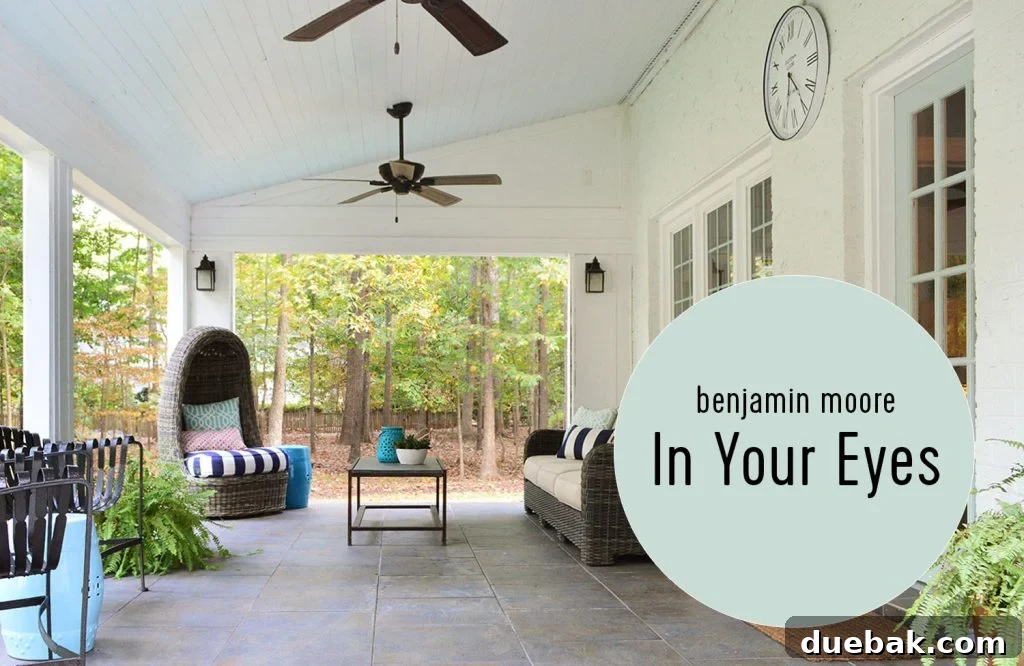
When evaluating paint colors, it’s incredibly smart to compare their LRV (Light Reflectance Value). LRV is a number from 0 to 100 that indicates how much light a paint color reflects. Higher numbers signify lighter, more reflective colors, while lower numbers denote darker colors that absorb more light. Most classic Haint Blue colors typically have an LRV ranging from 55-65. Our choice, Benjamin Moore In Your Eyes, with an LRV of 75, is noticeably brighter, making it ideal for our dimly lit porch. In contrast, one of the most popular Haint Blue options, Benjamin Moore Palladian Blue, has an LRV of 60, offering a beautiful mid-range balance.
2. Harmonize with Your Home’s Existing Color Palette and Undertones
Blues are remarkably agreeable colors, making it difficult to go significantly wrong with a Haint Blue selection. However, for a truly cohesive and harmonious look, it’s beneficial to consider the undertones of the other prominent colors on your home’s exterior. Does your house feature warm tones, perhaps with subtle hints of yellow, red, or earthy browns? Or does it lean towards cooler tones, incorporating grays, greens, or crisp whites?
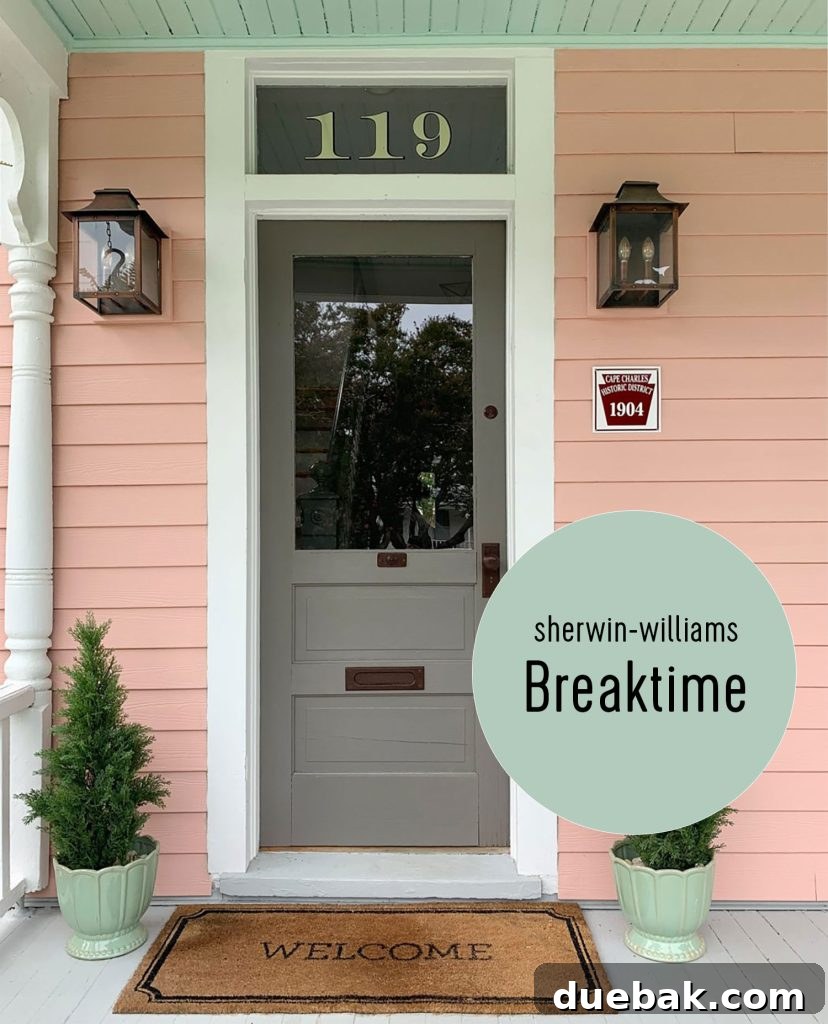
Understanding these existing undertones can guide you toward Haint Blues that share similar characteristics. Yes, there are “warm blues” that carry a touch of green or gray, making them incredibly versatile. For instance, the warmer Sherwin-Williams Breaktime proved to be a perfect match for our charming, warm pink beach house, creating a cohesive and inviting exterior palette.
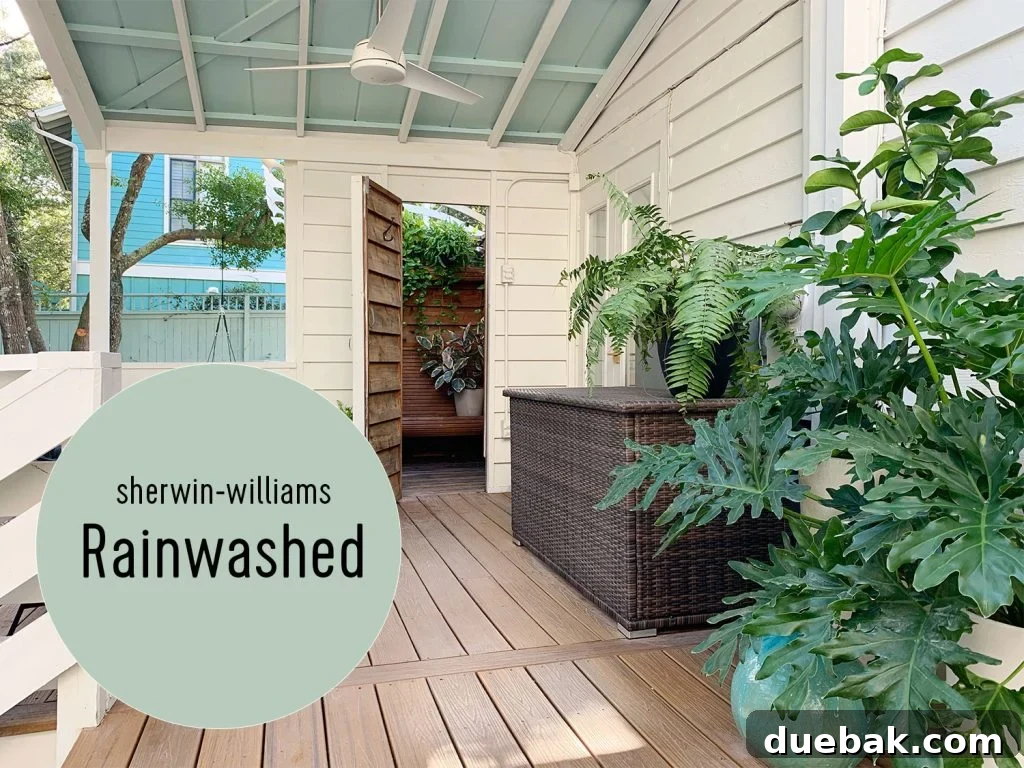
Furthermore, if your home’s existing color scheme already includes blues or greens, be mindful of how these neighboring hues might influence the perception of your Haint Blue ceiling. A Haint Blue tone might appear distinctly bluer when positioned next to a green-dominant home, or conversely, it could take on a greener cast when surrounded by more intense blue elements. The eye perceives colors in relation to their surroundings, so a slight shift in tone can occur. For our front porch, shown above, we deliberately selected a greener Haint Blue, Sherwin-Williams Rainwashed, to beautifully coordinate with the abundant natural greenery around our house and our striking blue-green fence in the background. Notably, our fence color, Sherwin-Williams Halcyon Green, is actually a darker shade from the same paint swatch, ensuring a perfectly harmonious “family” of colors.
3. Consider Your Exterior Trim Color and Its Impact
The color of your home’s exterior trim plays a significant role in how your Haint Blue ceiling will ultimately appear. White trim, for example, acts as a crisp, bright frame that helps paint colors pop and enhances their saturation. If your home features prominent white trim, you might find that a less saturated or slightly paler Haint Blue paint is sufficient to achieve the desired effect, preventing your ceiling from looking overly bold or intensely colored against the clean white backdrop.
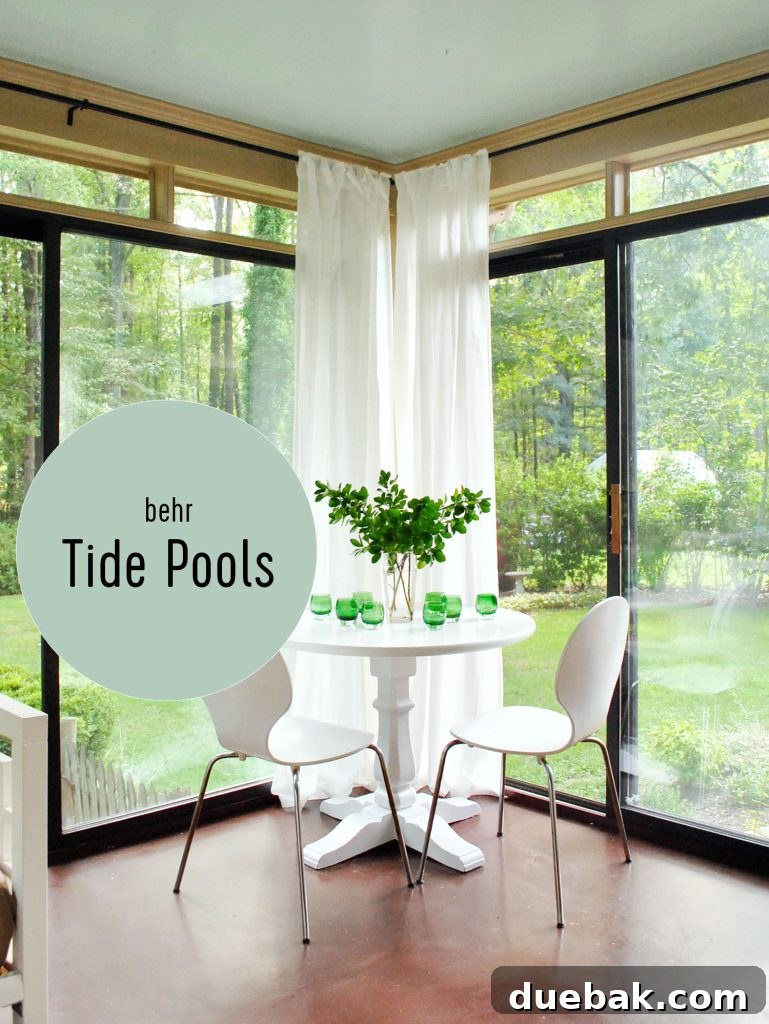
Conversely, if your porch space features darker or non-white trim (such as natural wood, gray, or a complementary accent color), you may want to opt for a more saturated or slightly deeper Haint Blue. A richer blue will ensure that the color holds its own and truly “pops” against the darker framing, creating a defined and intentional statement. This was precisely our reasoning when we chose Behr Tide Pools for the ceiling in our first home’s sunroom, where the trim colors were not a stark white, allowing the blue to shine through beautifully.
Even after meticulously considering all these factors—lighting, existing colors, and trim—we cannot stress enough the paramount importance of testing a paint color in your specific space before committing to a full application. The way a color appears on a small swatch in a store can dramatically differ from how it looks on your porch ceiling under natural light throughout the day. Services like Samplize offer an incredibly convenient solution: removable, pre-painted sticker samples. These allow you to easily test various hues directly on your ceiling without the mess or commitment of painting multiple test patches.
For your convenience, here are direct links to order the exact paint color samples for some of the Haint Blue ceilings we’ve personally used and loved:
- SW Rainwashed Sample Sticker
- SW Breaktime Sample Sticker
- BM In Your Eyes Sample Sticker
- BM Galt Blue Sample Sticker
- BM Spring Mint Sample Sticker
Your DIY Guide: How to Paint Your Porch Ceiling Haint Blue
Transforming your porch ceiling with a beautiful Haint Blue hue is a highly rewarding and surprisingly accessible DIY project. If you’ve ever painted a wall, you absolutely possess the skills to tackle this! The process is straightforward, requiring careful preparation and the right tools. Here’s a detailed guide to help you achieve a professional-looking finish on your porch ceiling painting project.
Essential Tools and Materials:
In addition to your standard paintbrush (for cutting in edges and corners) and a paint roller (for larger surfaces), consider gathering these specialized supplies to make the job easier and more efficient:
- Sturdy Ladder or Step Ladder: Ensure it’s tall enough to comfortably reach your ceiling without overstretching. Safety first!
- Dropcloths or Plastic Sheeting: Essential for protecting your porch floor, furniture, and surrounding areas from paint drips and splatters.
- Extension Pole for Your Paint Roller: This will save your back and allow you to cover large areas of the ceiling more quickly and uniformly.
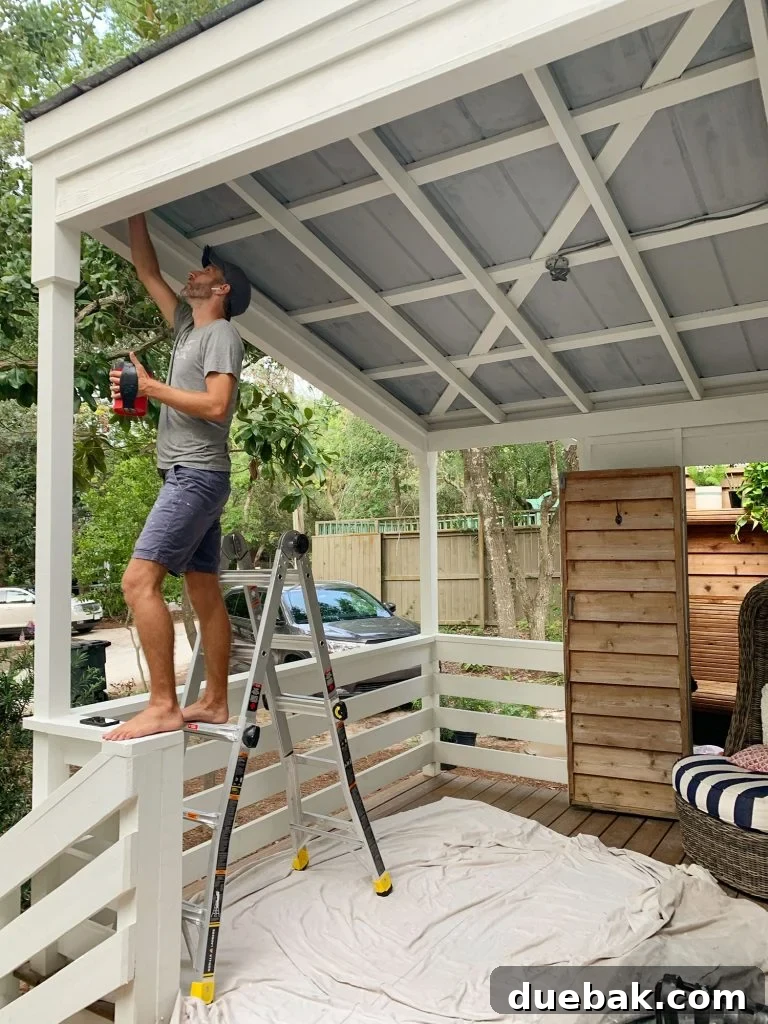
- Handy Paint Pail (or a small paint bucket with a handle): Far more convenient and lighter than carrying a full paint can, especially when working on a ladder. It’s what you see us holding below!
- Painter’s Tape: For crisp lines along edges where the ceiling meets walls or trim.
- Sponge/Cleaner: For pre-painting prep.
- Caulk Gun & Exterior Caulk: To fill any gaps or cracks before painting.
- Primer (if needed): Appropriate for your ceiling material (e.g., metal primer, stain-blocking primer).
- Exterior Grade Paint: In your chosen Haint Blue shade.
Preparation is Key:
Before dipping your brush, thorough preparation is crucial for a lasting and beautiful finish. Begin by meticulously cleaning your porch ceiling. Use a broom, duster, or a damp cloth to remove any cobwebs, pollen, dust, or accumulated dirt. For stubborn grime, a mild exterior cleaner and scrub brush might be necessary. Ensure the surface is completely dry before proceeding.
Next, inspect your ceiling for any imperfections. This is the perfect opportunity to address loose paint, fill minor cracks, or caulk any gaps around the edges or where different ceiling panels meet. Quality exterior caulk will create a seamless surface and prevent moisture infiltration. Sand down any rough patches or flaking paint to ensure a smooth canvas for your new color.
Choosing the Right Paint and Sheen:
Always opt for an exterior grade paint, as it’s specifically formulated to withstand the elements – humidity, temperature fluctuations, and UV exposure. We particularly recommend Sherwin-Williams’ Emerald paints for their durability and excellent coverage. While interior ceilings are typically finished with a flat or matte sheen, we advise using a semi-gloss sheen for exterior surfaces like porch ceilings. Semi-gloss paints are not only more resistant to moisture but also significantly easier to clean, which is a major advantage for outdoor areas prone to pollen and dirt accumulation.
Priming Your Ceiling:
Depending on your ceiling’s material and current condition, you may need to apply a primer. Our porch ceiling, for example, was metal, necessitating a dedicated coat of metal primer to ensure proper paint adhesion and rust prevention. You will also likely need to prime if you’re painting over raw wood (to seal and prevent tannin bleed-through) or if your existing paint color is significantly darker or lighter than your chosen Haint Blue. Primer creates a uniform base, enhances paint coverage, and improves durability, ensuring your Haint Blue shines true.
Painting Technique:
Once primed and dry, begin by “cutting in” the edges and corners of your ceiling with a brush. Use painter’s tape to create crisp lines where needed. Then, use your roller with an extension pole to apply thin, even coats of paint to the larger flat surfaces. Overlap each stroke slightly to avoid roller marks. Most projects will benefit from two coats of paint for optimal color depth and longevity. Allow adequate drying time between coats, as recommended by the paint manufacturer.
For a visual step-by-step guide to painting a room – including a ceiling! – check out our comprehensive video tutorial. The techniques demonstrated can be easily adapted for your exterior porch ceiling, providing you with professional results.
Note: You can also watch this video on YouTube for additional painting tips.
Explore More of Our Favorite Paint Colors & Design Inspiration
The journey to finding the perfect paint color, whether it’s a specific shade of Haint Blue or another hue, is an exciting part of creating a home that truly reflects your style. If you’re passionate about color and design, we invite you to explore more of our tried-and-true, go-to paint colors and gather endless inspiration for your next home project. You can take a virtual tour of our various homes through the menu at the top of our blog – specifically, our current home is prominently featured throughout this post, showcasing many of our favorite selections.
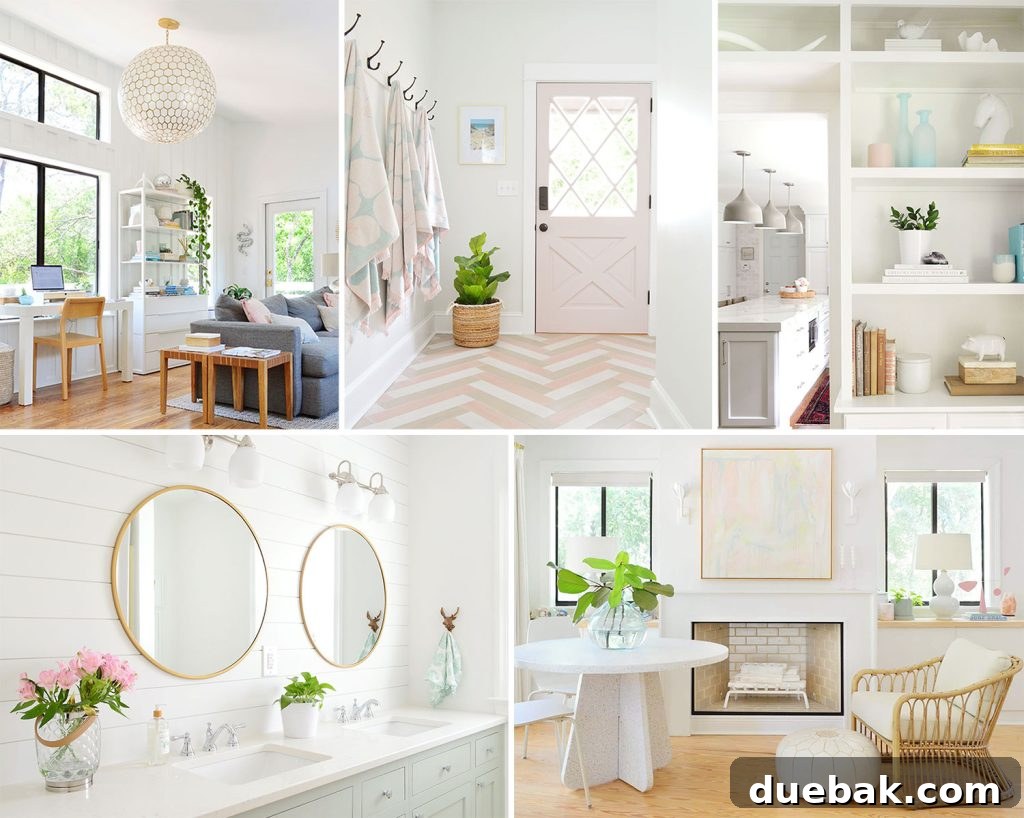
Additionally, our comprehensive Painting Projects section is a treasure trove of articles and guides dedicated to all things paint. We’ve published in-depth reviews and deep-dives on some of our other consistently beloved paint colors, helping you make informed decisions for any space in your home, including:
- Benjamin Moore Edgecomb Gray: A versatile and warm greige that works in nearly any setting.
- Benjamin Moore Simply White: A crisp, clean white that remains a top choice for interiors.
- Sherwin-Williams Pure White: Another fantastic, balanced white that complements various schemes.
- Sherwin-Williams Extra White: For those seeking a truly bright and pure white.
- The 12 Best White Paint Colors: A curated list to help you navigate the nuances of white paint.
- The 9 Best Greige Paint Colors: The ultimate guide to finding the perfect blend of gray and beige.
- Every 2024 Color of the Year in One Place: Stay current with the latest trends and popular hues.
- Every 2025 Color of the Year… So Far: A peek into future color trends to inspire your upcoming projects.
*This post contains affiliate links, so we may earn a small commission when you make a purchase through links on our site at no additional cost to you.