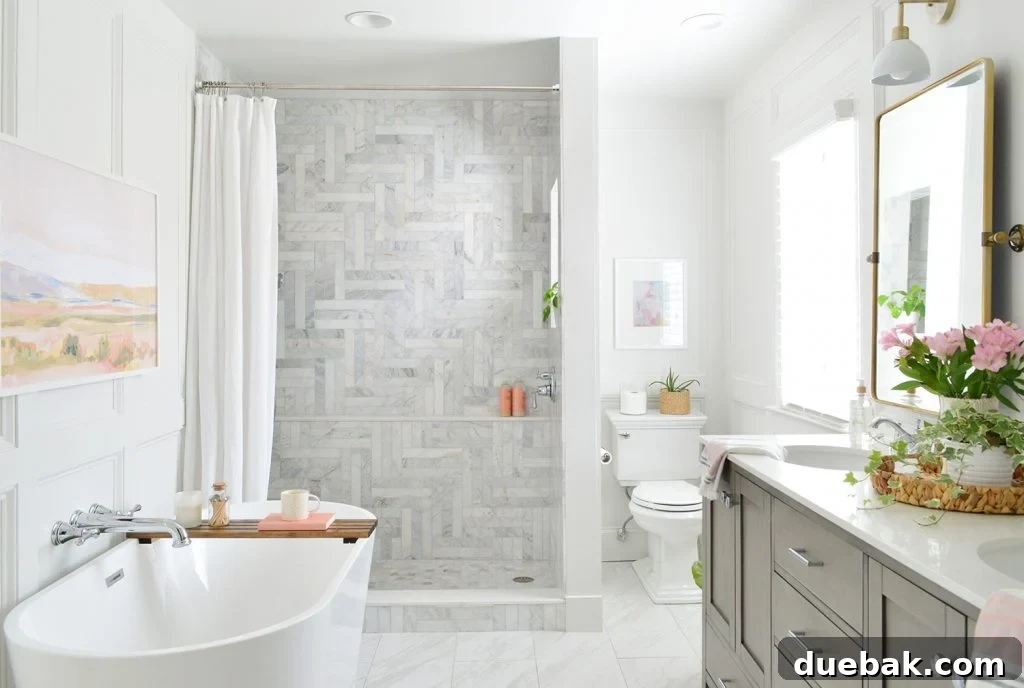
The concept of managing a household with just one bathroom often sparks a flurry of questions and interest, especially among modern families accustomed to multiple facilities. While it might seem challenging to some, living with a single bathroom is a practical and fulfilling reality for countless families, both in the U.S. and around the globe. Our family of four is a prime example, and we’ve discovered that with thoughtful planning and strategic habits, a single indoor bathroom can be remarkably efficient and easy to live with. Furthermore, the availability of an outdoor shower almost year-round significantly alleviates pressure on our main bathroom, proving to be an unexpected asset in our daily routine.
This article aims to demystify our experience, offering insights into why this setup has worked so seamlessly for us and the actionable strategies we’ve implemented to maximize its efficiency. Our journey isn’t about advocating for fewer bathrooms but rather providing a transparent look into how one bathroom can serve a busy family without compromising comfort or convenience. We understand that every family’s needs are unique; what works for one may not work for another. Therefore, this post serves as a guide for those curious about optimizing their existing space or considering a transition to a more minimalist bathroom setup, ensuring functionality and harmony.
Some readers might instantly feel a strong reaction – either “I could NEVER live that way!” or “I’ve ALWAYS lived that way, what’s the big deal?” Both perspectives are valid. Our intention here is not to suggest a “right” number of bathrooms, but simply to share our lived experience and the practical adjustments that have made our single-bathroom setup not just manageable, but genuinely comfortable. It’s about finding equilibrium and understanding your family’s authentic needs, rather than adhering to societal norms or expectations.
Tip #1: Embrace Your Space – Live With It Before You Transform It
When we first moved into our current home, transitioning from a much larger house with three bathrooms, we fully anticipated that adding a second bathroom would be an immediate priority. This seemed like a logical step, a given in our renovation plans. However, life often throws delightful curveballs, and our experience became a testament to the wisdom of observing before acting. We spent an entire year navigating the challenges of at-home learning and living within a smaller footprint almost 24/7. This period, which truly tested the limits of our space, surprisingly revealed that the “one-bathroom squeeze” we had so confidently predicted simply didn’t materialize. There was no overwhelming feeling of needing another bathroom; in fact, its absence wasn’t even noticeable.
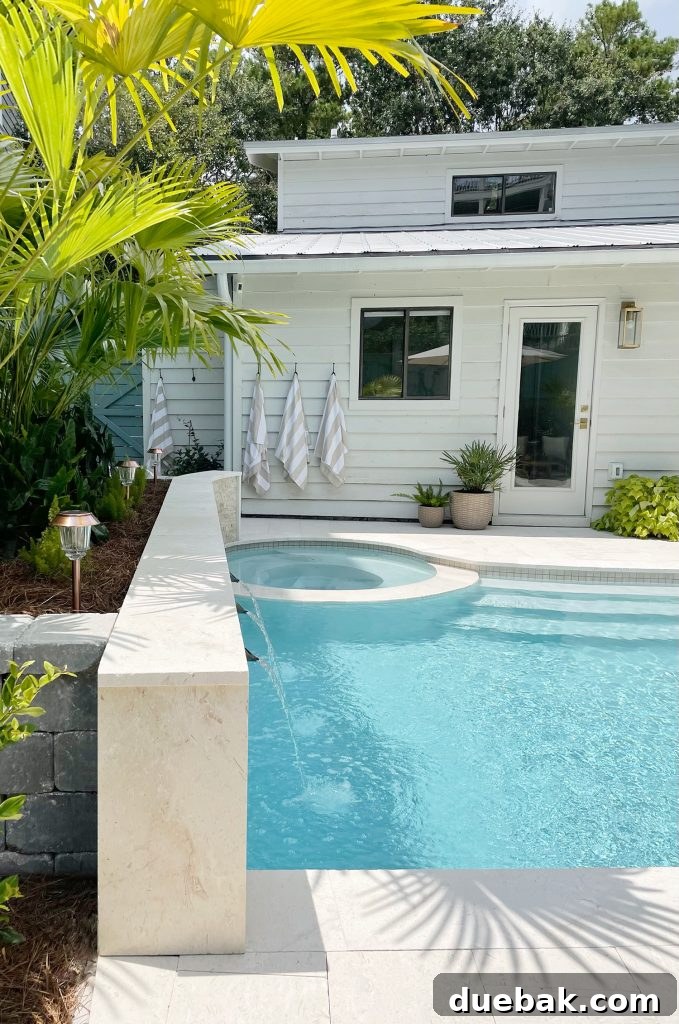
This crucial insight allowed us to shift our renovation focus. Instead of investing time and resources into a bathroom addition that we now realized wasn’t an immediate necessity, we prioritized projects that genuinely enhanced our daily life. We went ahead and added a pool, creating a fantastic outdoor oasis, and undertook a significant kitchen renovation, transforming the heart of our home. Throughout these projects, the urgent desire for a second bathroom remained absent.
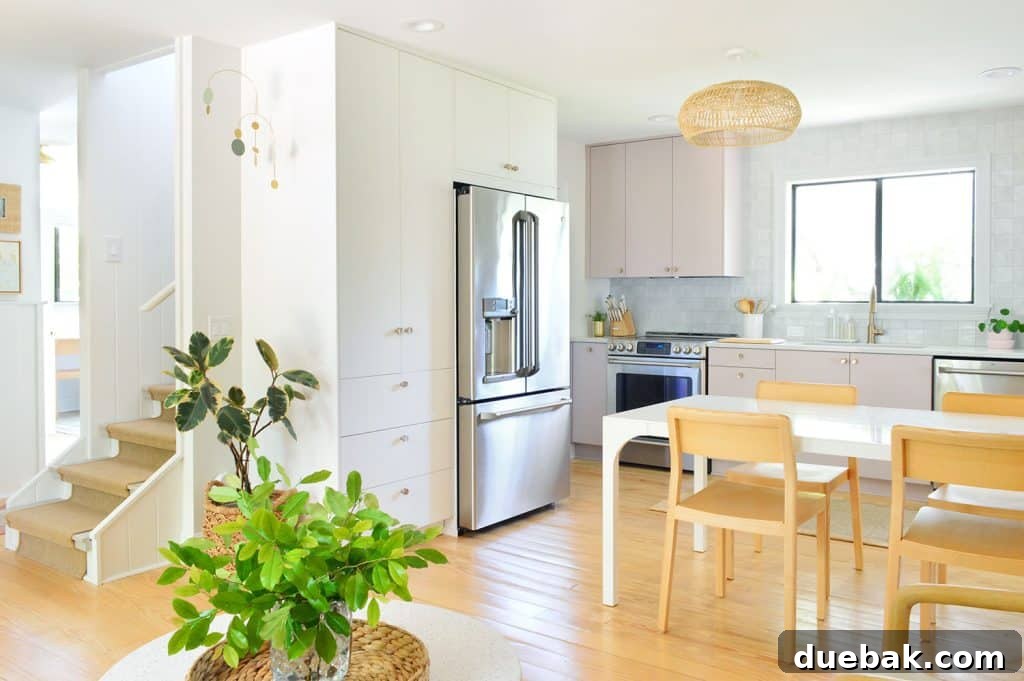
Fast forward nearly three years, and our family continues to thrive with a single bathroom, with zero plans to undertake the significant cost, disruption, and dust of adding another. This experience underscores a fundamental principle of thoughtful home improvement: live in your home for a meaningful period before making any major renovation decisions. Your initial assumptions might be far removed from your family’s actual living patterns and needs once you’re fully settled. What you initially perceive as “must-haves” might naturally float to the bottom of the list, while unexpected priorities emerge. If you can, take the time to truly understand how your family interacts with the space; the discoveries might surprise you and save you from unnecessary expenses or regrets.
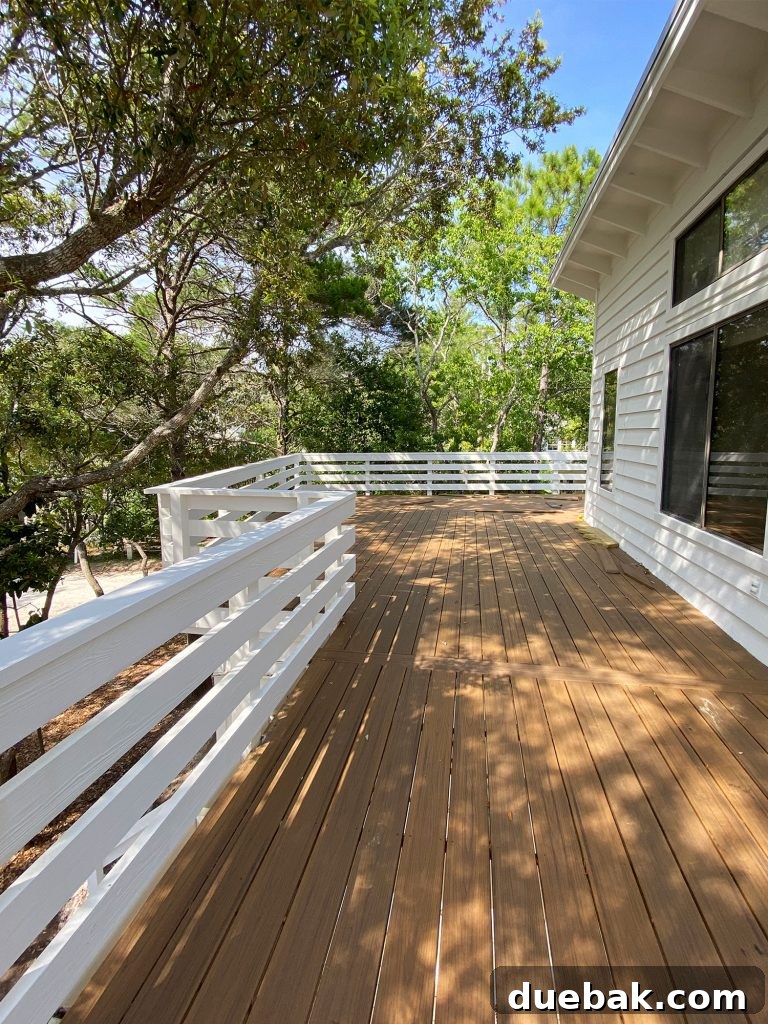
Our situation was unique due to the February 2020 purchase of our house followed by immediate lockdowns, forcing many initial renovation decisions (like exterior paint or deck colors) to be made remotely. However, when it came to major layout changes or structural additions, we held back. We chose to drywall over a wide doorway that could easily be reopened, but largely kept the existing room configurations. This patience paid dividends, allowing us to make more informed choices once we truly inhabited and understood the rhythms of our new home.
Tip #2: Distinguish Between Immediate Needs and Projected Future Needs
Building on our first tip, this next piece of advice encourages a deeper introspection into your renovation desires. After living in your home and identifying potential areas for improvement, it’s crucial to ask yourself: Is this renovation driven by an immediate, pressing need, or is it merely a projected future need based on hypotheticals or guesses? There’s a profound distinction between addressing actual, current challenges and preemptively tackling what you *think* you might require down the line. Ignoring this difference can lead to renovations that don’t truly serve your family’s present (or even future) needs.
Having fixed up seven houses, some involving incredibly extensive projects, we are certainly no strangers to significant renovations. In the past, we might have instinctively jumped to add a second bathroom with the reasoning, “someday we’ll probably want it, even if we don’t strictly need one right now, so let’s just get ahead of it.” However, years of experience have taught us that one of the most regrettable renovation decisions is to embark on a project based purely on a projected future need, only to discover later that your actual circumstances have changed, or your real needs were entirely different.
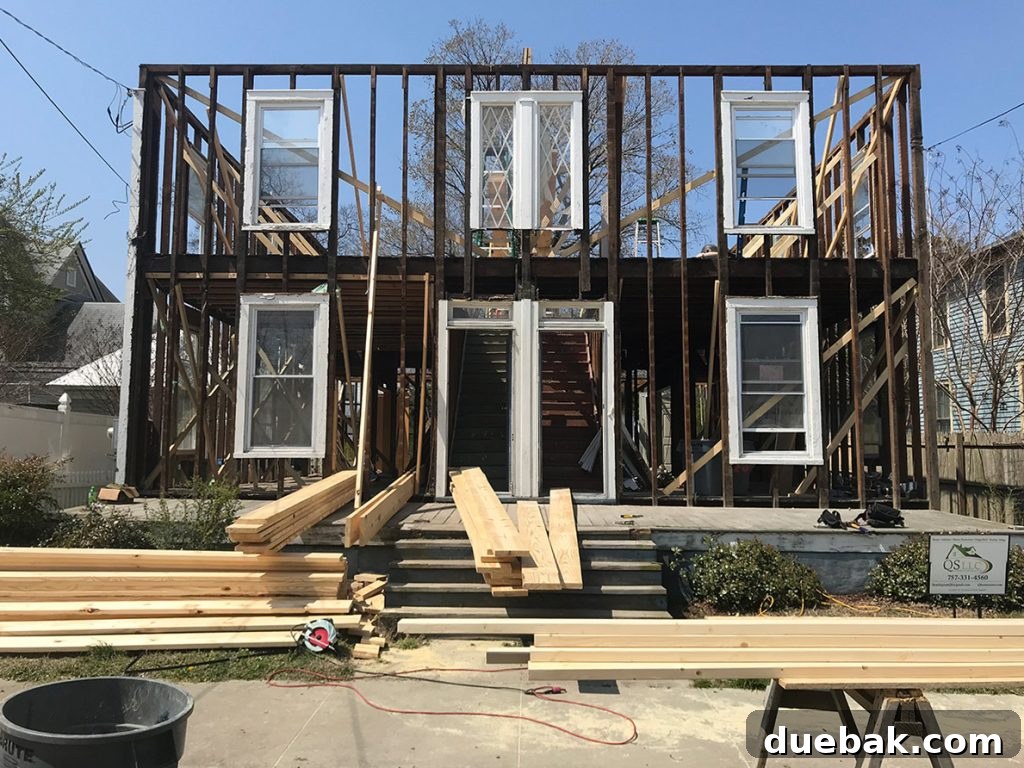
Consider the example of a deck that was once connected to our bedroom. When we purchased the house, a set of doors opened directly from our bedroom onto this exterior space. Our initial thoughts might have drifted towards converting it into an ensuite bathroom.
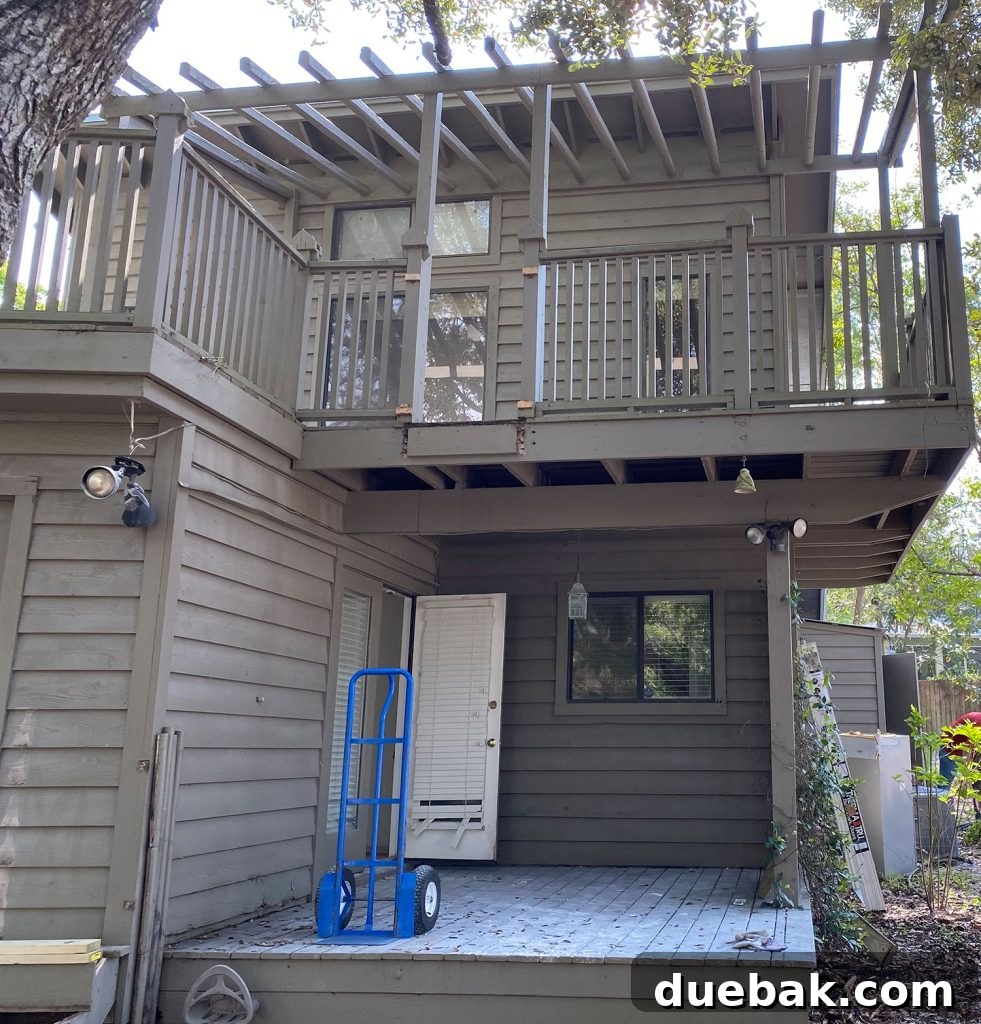
However, after living in the house for about a year – a period that included all four of us working and schooling virtually from home – the single indoor bathroom never became a point of contention. There were no arguments, no queues, and no real problems. This observation was key. We also realized that the wall with these doors was an ideal location for our king-sized bed, offering a much better room layout (especially since we have six other glass doors leading outside from another wall in the bedroom!).
Over time, we explored various options for that porch, ultimately deciding it would serve our family best by sealing off the two extra doors to the bedroom. Instead, we transformed it into a covered side entryway leading directly into our kitchen, which is incredibly convenient given where we park our car. This transformation created a seamless flow from the car to the kitchen, perfect for unloading groceries or muddy boots.
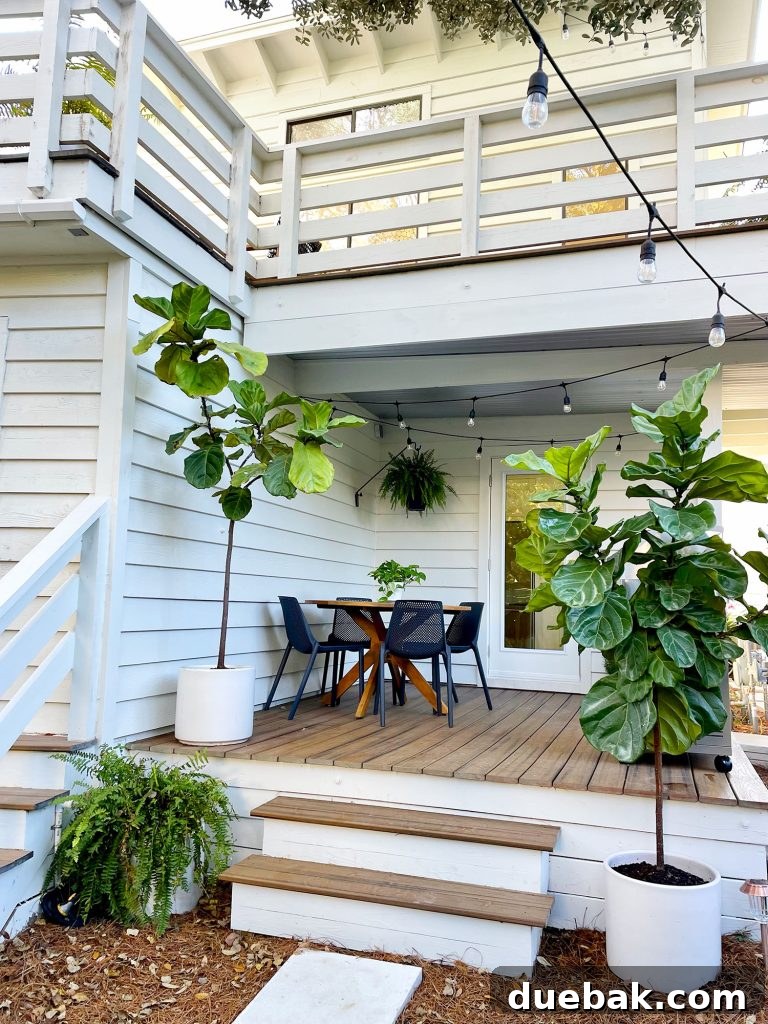
This reconfigured porch even evolved into a mini “outdoor kitchen,” complete with the addition of a storage sideboard for food prep, a grill, and an outdoor dining table. This setup is something we absolutely love and use constantly.
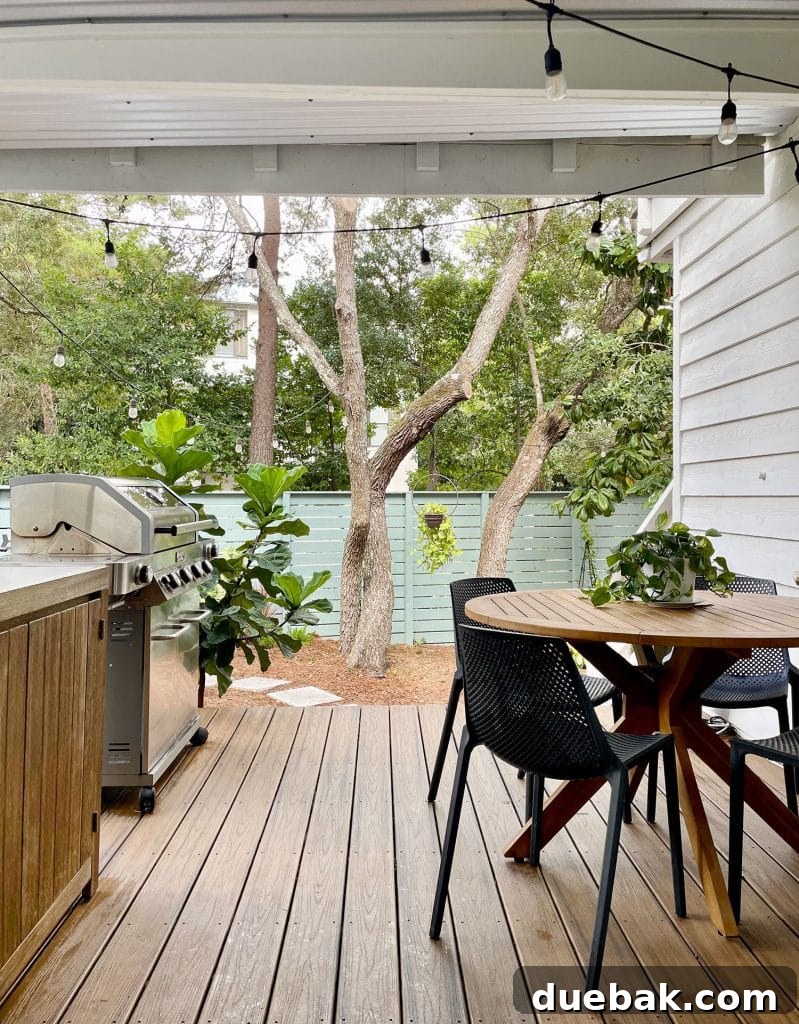
Thanks to the patience of living here and allowing our actual needs to surface, closing off the bedroom door and adding one to the kitchen was a truly outstanding decision. You can read more about the porch renovation here. If we had rushed into converting that porch into a bathroom during lockdown, based on a hypothetical future need, we would have irrevocably lost this incredibly functional and beloved setup. This experience taught us that even if you’re confident about a future need, waiting for clarity often leads to a far superior and more tailored solution.
Another classic example: renovating a kids’ bathroom when they’re toddlers, adding a tub they’ll quickly outgrow, only to later wish you had prioritized a larger double sink and shower as they become teenagers. Or worse, investing in a renovation for a “future need” and then moving before that future ever arrives! Waiting for real clarity on what you *actually need* versus guessing what your family might want years down the road is an invaluable approach to home planning, saving both money and potential regret.
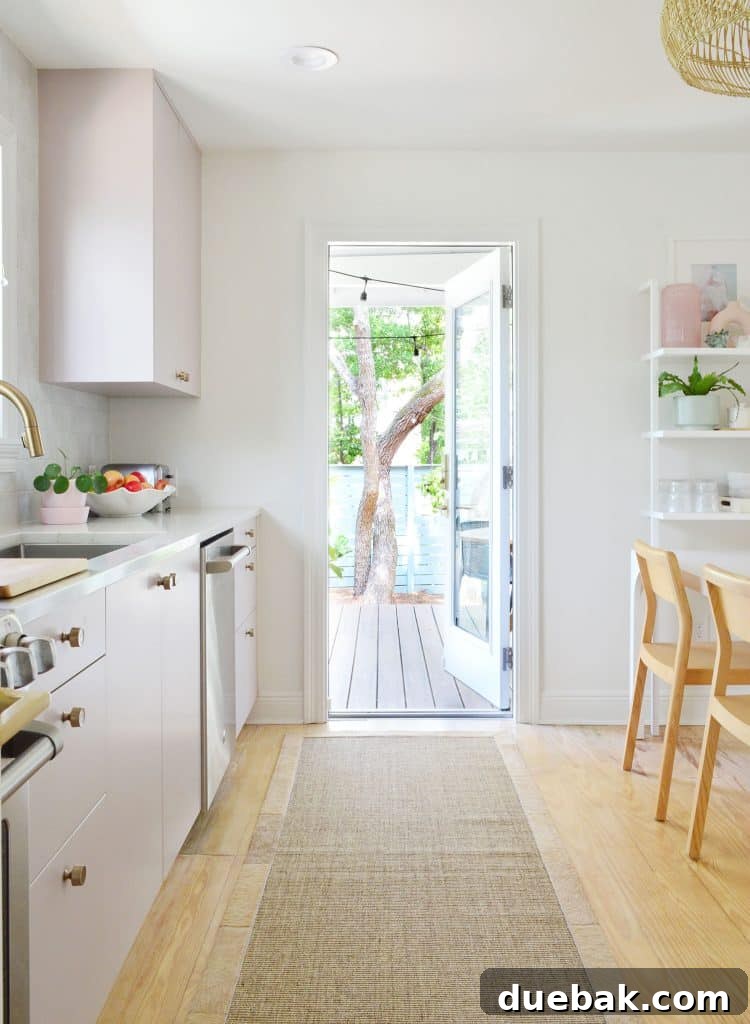
The beauty of this approach is that with time and careful consideration, we gained a super functional kitchen porch, enhancing our daily life significantly. Simultaneously, we still have a perfect, well-identified spot to add a second bathroom *when and if the need genuinely arises*. This flexible strategy means our primary focus remains on making our house work optimally for our family *right now*, rather than bearing the burden of trying to perfectly predict and accommodate some distant, hypothetical future version of our family.
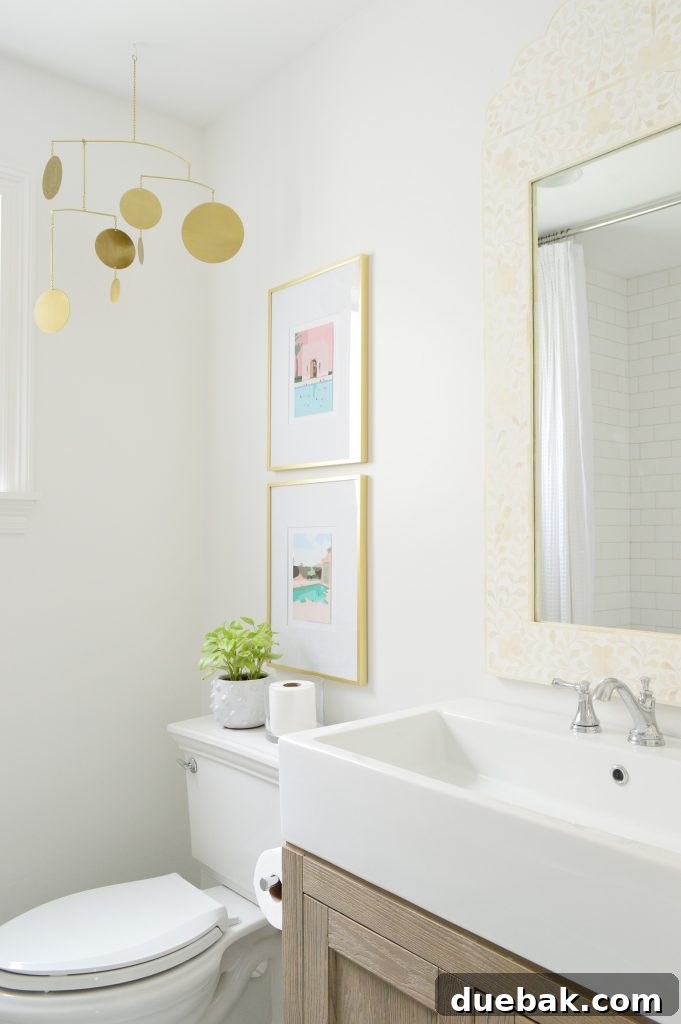
It’s worth remembering that we initially bought this house *assuming* a single bathroom would pose a significant problem. Our surprise at how smoothly it has functioned reinforces the age-old lesson about the pitfalls of making assumptions. Upon deeper reflection, the reasons for its success aren’t complicated; they boil down to a few key strategies, which leads us to our next crucial tip.
Tip #3: Leverage Alternative Showering Facilities (Like an Outdoor Shower)
One of the most significant factors that allows our single indoor bathroom to function effortlessly for a family of four is the presence of an excellent alternative: our outdoor shower. While it doesn’t offer the full amenities of a second indoor bathroom (no toilet or sink), having this dedicated alternate showering space provides an enormous relief on the indoor facility. For nearly the entire year, we all prefer to use the outdoor shower, unless the weather is particularly cold or rainy.
This outdoor oasis offers a showering experience that genuinely surpasses any indoor shower we’ve ever used. Beyond its refreshing nature, it serves multiple practical purposes. It’s the perfect spot to rinse off after a sweaty workout, clean up after a messy day working in the yard without dragging grime through the house, or, most importantly, wash off sand after a trip to the beach, preventing it from tracking indoors. This alone is a game-changer for maintaining cleanliness in a beachside home.
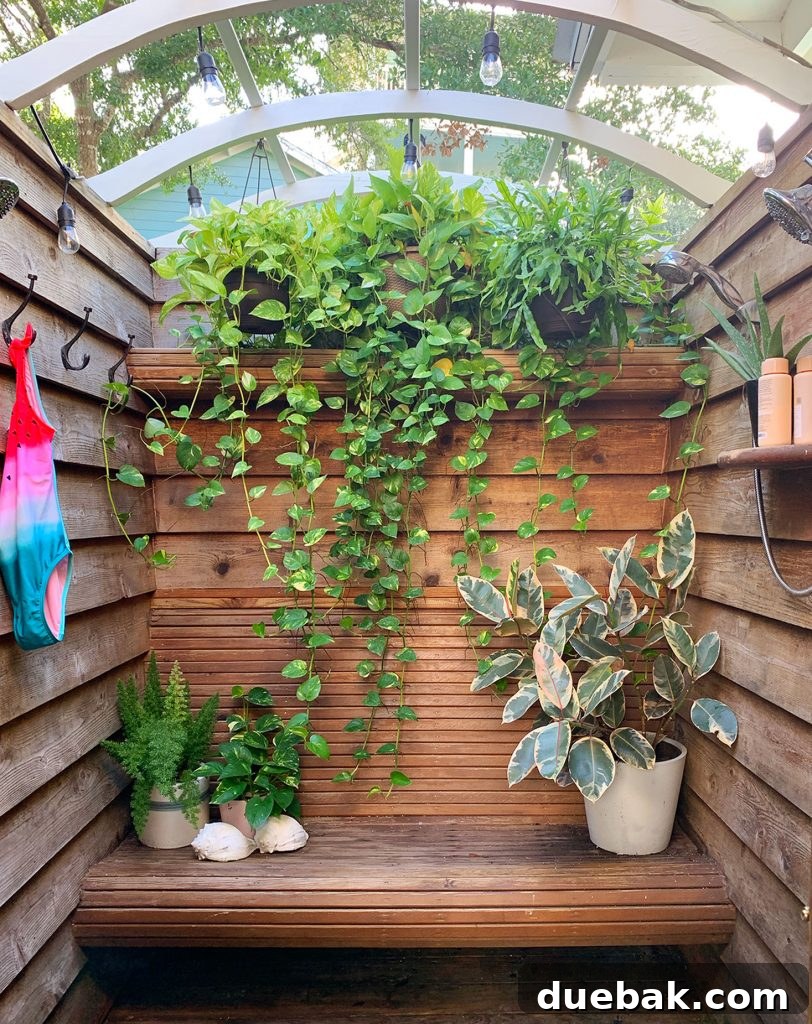
Showering can often be the most time-consuming activity in a bathroom, effectively “hogging” the space. The outdoor shower eliminates this bottleneck. I can take a long, leisurely post-run shower amidst the calming outdoor environment without feeling rushed or concerned about someone else needing the bathroom. Meanwhile, my partner, Sherry, enjoys an evening shower under the twinkle lights, transforming a simple daily routine into a moment of tranquility. While not a lavish ensuite, this outdoor shower truly checks the box for a special, “luxurious” feeling shower experience within our home, connecting us with nature. The sun streaming down and surrounding plants create an unparalleled ambiance. If you’ve never experienced an outdoor shower, it’s something truly transformative to consider, even in a simpler form.
Tip #4: Staggered Morning Schedules Minimize Congestion
Another pivotal reason our single bathroom setup works so effectively is the natural staggering of our family’s morning routines. Our children leave for school approximately an hour apart, meaning one is often just beginning to stir as the other is heading out the door. As both Sherry and I work from home, we have the flexibility to delay our morning routines, typically monopolizing the bathroom only after the kids have departed. This fortunate alignment means we rarely, if ever, encounter those chaotic, cliché family scenes depicted on TV where everyone is vying for bathroom access simultaneously.
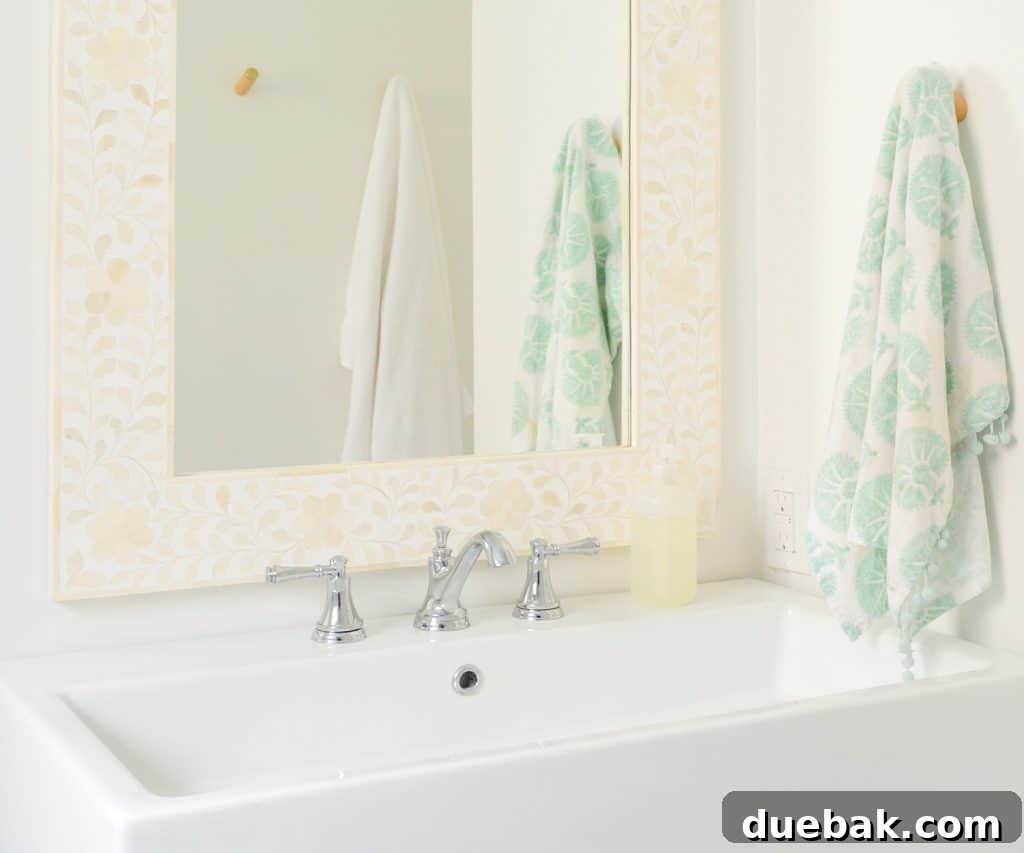
The age gap between our two children – four grades apart – further contributes to this harmony, as they are unlikely to ever share identical school schedules. This predictability gives us confidence that even as they grow older and potentially require more time for grooming, we won’t face daily conflicts over bathroom access during peak morning hours. While we acknowledge that families with children on the same schedule might experience more of a “tight squeeze,” our staggered routines are a significant blessing, effectively distributing bathroom usage throughout the morning and maintaining peace in the household.
Tip #5: Children’s Personalities and Habits Play a Key Role
The success of managing a single bathroom is also significantly influenced by the personalities and evolving habits of our children, currently aged 8 and 12. They have yet to reach the teenage years stereotypically associated with prolonged bathroom “grooming” rituals. I recall vivid memories from my own youth, with two older sisters painstakingly curling their bangs in the mirror during the late ’80s! While we’ll soon have a teenager in the house, we’ve yet to experience the full influx of curling irons, hair gels, and body sprays that often accompany adolescence. However, we have a proactive strategy for that, which ties into our next tip.
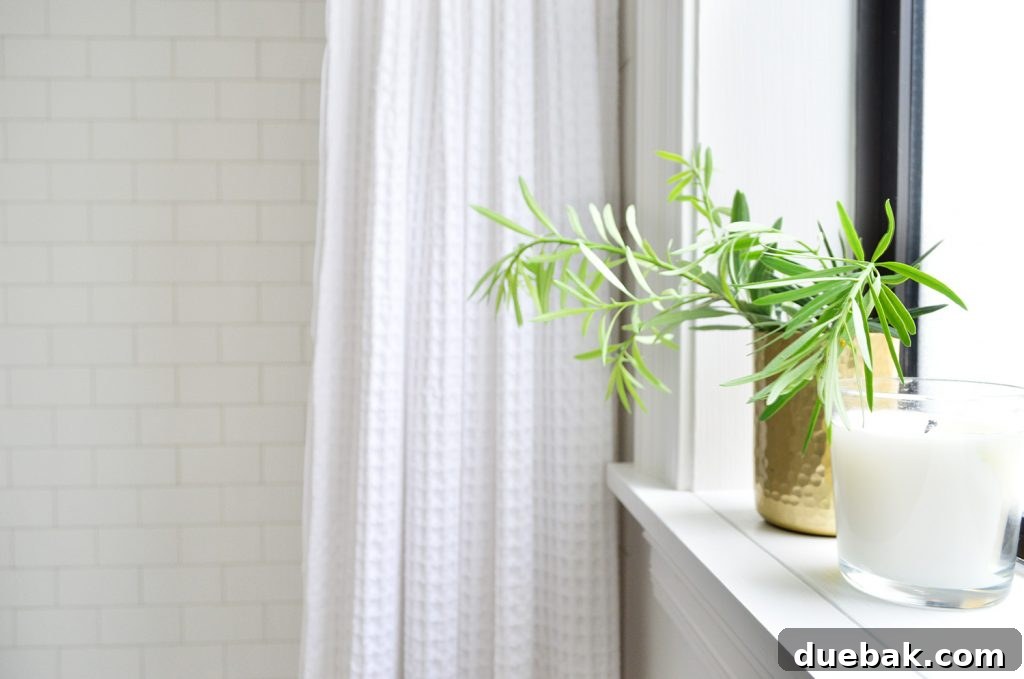
Conversely, their current ages mean we’ve moved past the phase of hour-long, play-filled bathtimes or toddlers camping out in the bathroom during potty training. While our youngest might occasionally bring out bath toys or fill the sink for water play, these activities are generally flexible and can be easily interrupted if someone else needs the bathroom for essential use. This current stage of relative independence, combined with their understanding of shared space, greatly contributes to the smooth functioning of our single bathroom.
Tip #6: Strategic Grooming Takes Place Outside the Bathroom
To further ensure that no single person monopolizes the bathroom, we’ve implemented a crucial strategy: reserving the bathroom primarily for essential activities like showering, brushing teeth, and using the toilet. Almost all other grooming tasks are delegated to our respective bedrooms. This includes doing hair, applying makeup, and using various lotions and potions that promise to keep us looking perpetually youthful, much like Paul Rudd!
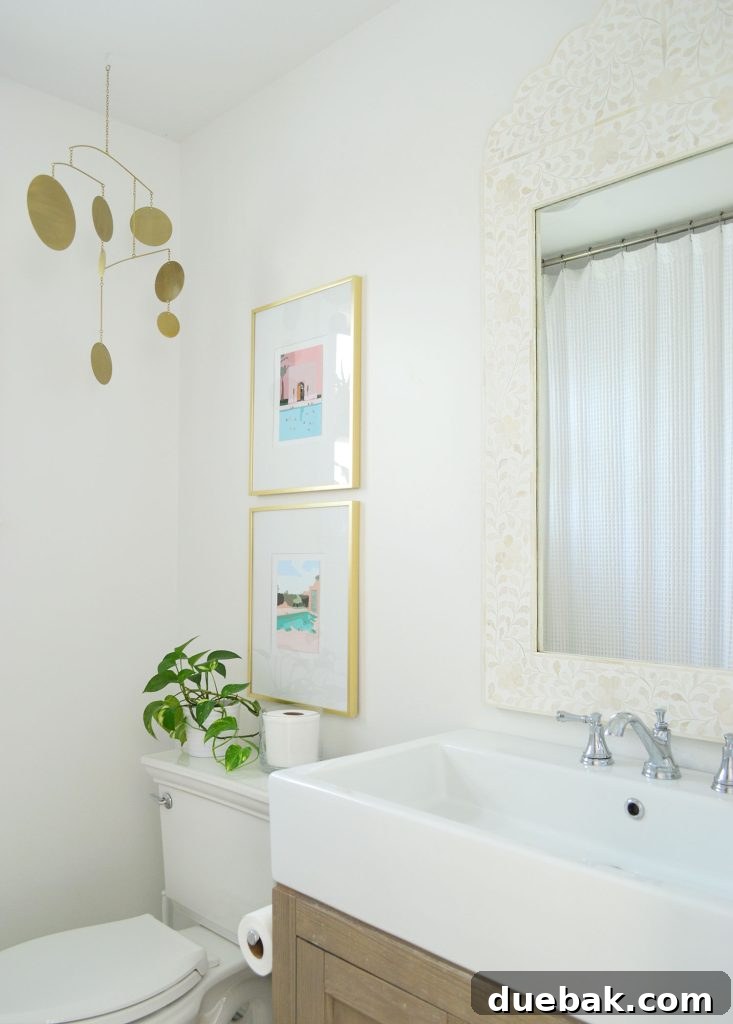
This simple yet highly effective habit significantly reduces the amount of time any one person spends in the bathroom, preventing bottlenecks during busy periods. An added benefit is that our sole bathroom’s storage space – specifically the vanity pictured below – doesn’t overflow with a multitude of personal grooming supplies such as makeup, hairbrushes, hair gel, or deodorants. This keeps the bathroom tidy and functional, free from clutter.
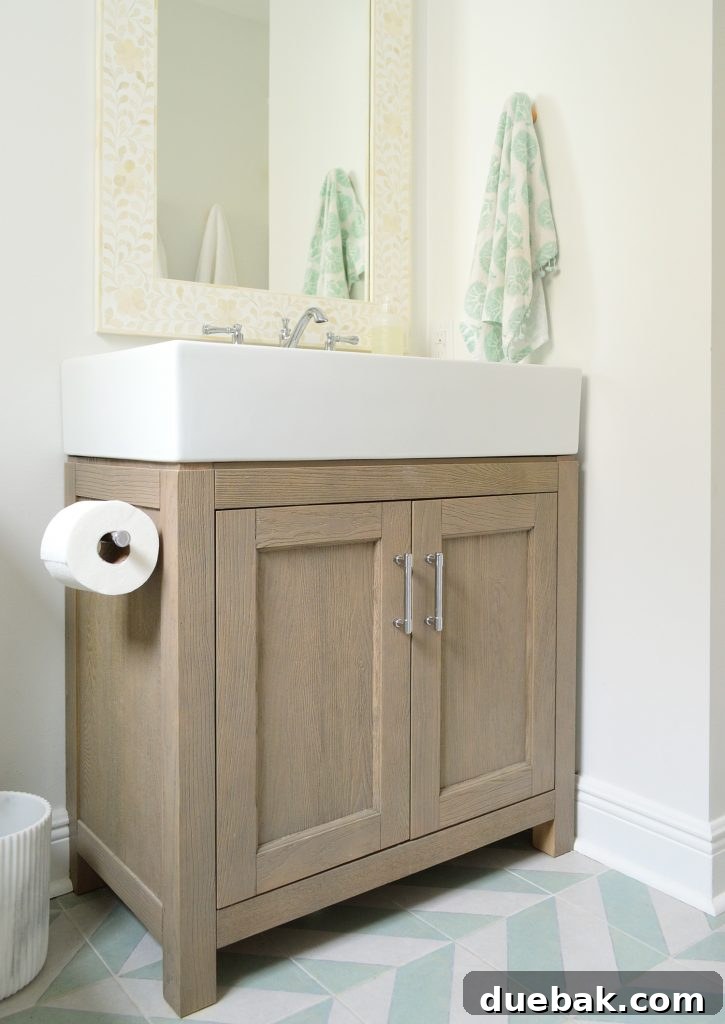
Both of our children have mirrors in their bedrooms and keep their personal hygiene items, such as deodorant, hair products, and hairbrushes, neatly stored in their top dresser drawers. Similarly, Sherry and I have designated small sections within our bedroom closets for our grooming essentials. I even went a step further and installed small mirrors inside our closet doors, providing a convenient and private space for quick touch-ups. For instance, I keep a compact tray with my hair gel, deodorant, and beard cream right by my clothes, utilizing the mirror inside the closet door for my morning routine. This setup is incredibly convenient, and since I’m not in anyone’s way, I can take as much time as I need without feeling rushed.
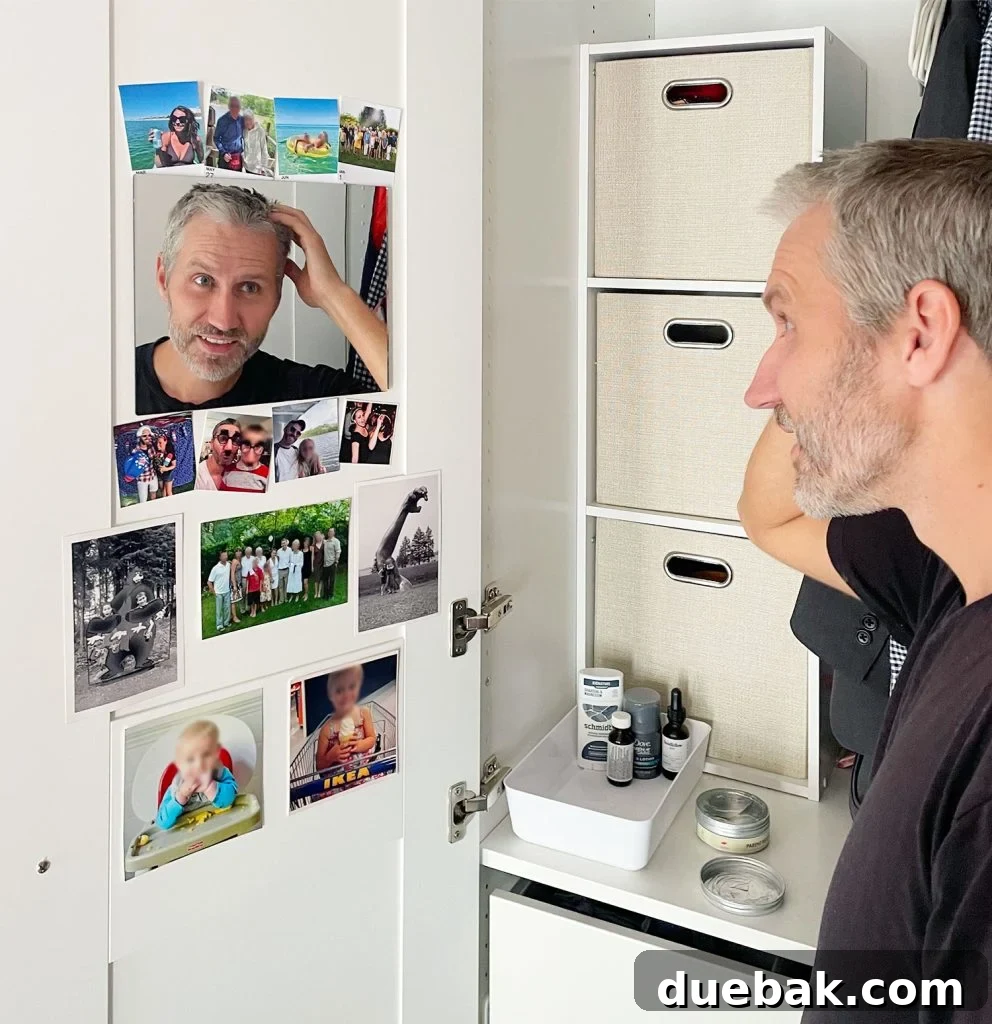
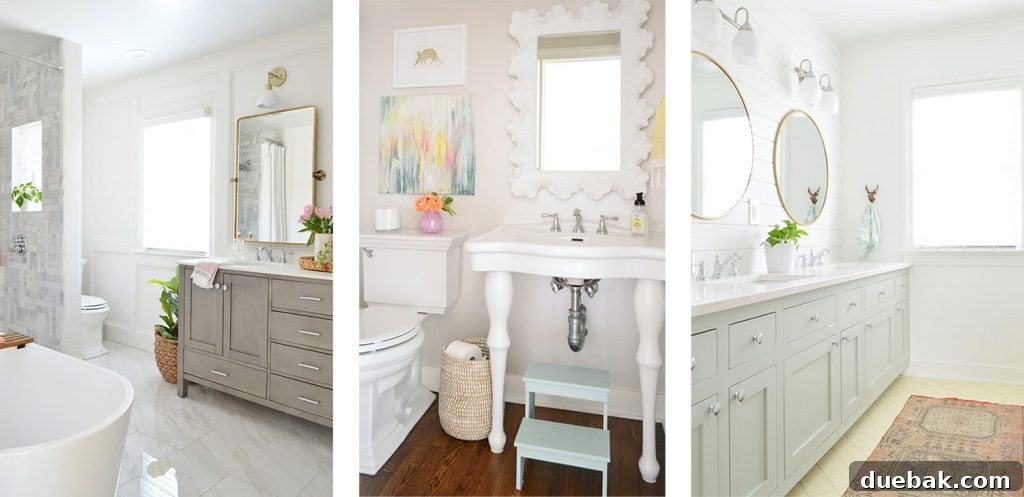
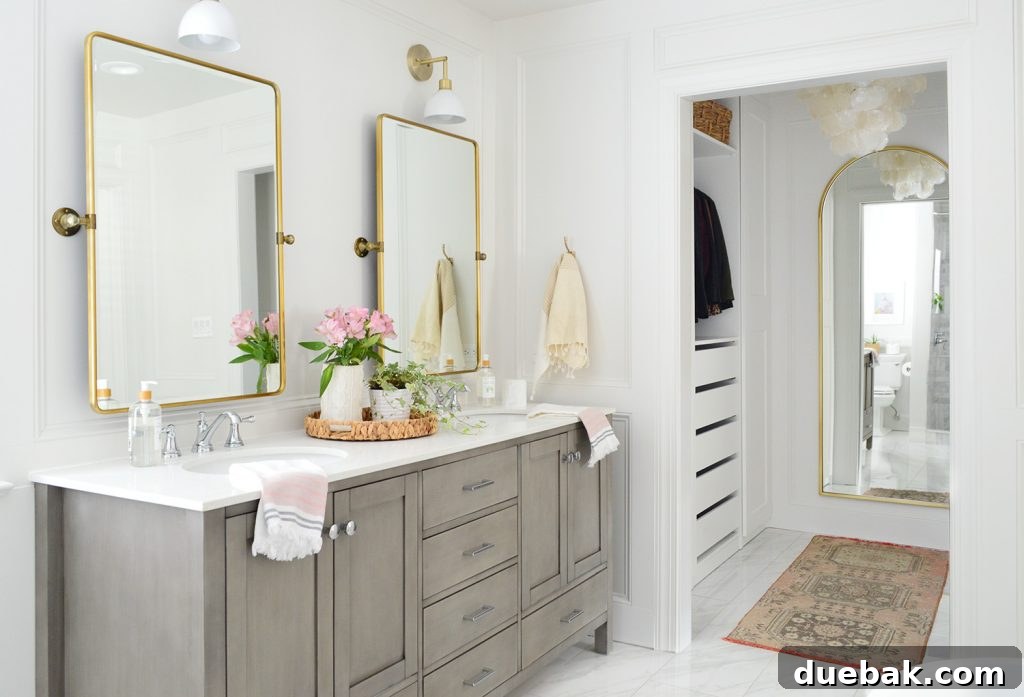
Sherry has a similar arrangement, with a pullout drawer next to her in-door mirror containing her makeup, deodorant, and hair products. She has always been efficient with her getting-ready routine, so this setup has seamlessly worked for us for over a year. Our daughter’s setup is more akin to a traditional vanity, complete with a seat and a large mirror. Sherry often reminds me that many people she knew in Jersey would sit on their bedroom floors to curl their hair, indicating that conducting grooming activities outside the bathroom isn’t an alien concept. We realize this might feel like a downgrade for those accustomed to their own dedicated bathroom sink or vanity. However, we only briefly experienced a nice double-sink setup in our previous house (pictured below), so it was never a long-term habit we grew accustomed to. Sherry, in fact, used to frequently do her makeup in the car on the way to events. The point is, relocating these types of activities from our only bathroom has not been a significant adjustment for us.
Tip #7: Prioritize Open Communication (Even Over-Communication)
While it may sound incredibly obvious, a cornerstone of preventing conflicts and ensuring smooth operation of our single bathroom is consistent, open communication among family members. It’s as straightforward as asking, “Hey, I’m about to take a shower; does anybody need to use the bathroom first?” This simple query acts as a proactive measure, giving everyone a heads-up and preventing unexpected dashes to the door. This level of openness and directness might require a bit of adjustment for some families, but for us, it’s become a natural and essential part of living harmoniously in a smaller home. We like to think of it as a form of family bonding!
The true test of this system came during instances of illness. Over the past three years, we have navigated through bouts of norovirus and even salmonella, conditions that typically cause significant bathroom emergencies. These experiences provided ample opportunity for us to declare, “Nope, this isn’t working!” Yet, surprisingly, our system held strong. We’ve managed the typical 24-48 hour tiered event of family members falling ill with a stomach bug. Crucially, after someone was sick, we thoroughly cleaned our one bathroom, and, miraculously, nobody else contracted the illness. This reinforces the resilience of our communication and maintenance system, leading us directly to our next tip.
Tip #8: The Unsung Benefit – Only One Bathroom to Clean
A common question we receive pertains to hosting guests with only one bathroom. We’ve comfortably entertained as many as 15 people in our home without encountering any significant issues. While guests naturally cycle in and out throughout the evening, there’s never a panicked queue or a line of people hopping from foot to foot outside the door. Much like a restaurant with a single, clearly marked restroom, people instinctively understand the protocol. The world doesn’t grind to a halt at a bistro if someone has to wait momentarily for the facilities, and the same principle applies in our home.
The often-overlooked advantage of sharing one bathroom, and consequently having only one bathroom to clean, is its inherent tidiness. Because it’s in constant use, it never sits unattended for days or weeks, preventing that gradual accumulation of grime that can plague less-used bathrooms. We no longer experience the frantic “Is the upstairs hall bathroom clean?! I just cleaned the powder room downstairs!” moment that was common in our old, larger house with multiple facilities. In our current home, the bathroom is regularly used, and therefore regularly maintained. It doesn’t have the chance to “get away from us” in the way secondary bathrooms often did.
We never have to worry about a kids’ bathroom becoming unsightly because it hasn’t been seen or cleaned in a week. As an adult who once had the responsibility of maintaining, fixing, and worrying about twelve bathrooms across multiple properties (yes, our previous house had three, a beach house had three, and a duplex had six!), I can unequivocally state that one bathroom equates to a truly good life for us. Especially when coupled with the bonus of our outdoor shower, the pressure on our single indoor bathroom is almost entirely alleviated, making cleanliness and maintenance a breeze.
Final Thoughts: Embracing the Utilitarian Bathroom
To conclude, I want to share a profound perspective offered by our friend Shavonda, whose family of four, including teenagers, also thrives in a small home with a single bathroom. She eloquently summarized her household’s philosophy on Instagram: the bathroom is viewed strictly as a utility space. “You get in. You do what you gotta do, and you get out,” she articulated. This sentiment perfectly encapsulates our own approach and is a major contributing factor to the seamless functioning of our single bathroom setup.
This utilitarian mindset can be somewhat unusual for those accustomed to the prevailing trend, particularly in America, where bathrooms have evolved far beyond mere functional spaces. Often, they are envisioned as luxurious, spa-like retreats, designed for unwinding after a busy day. However, for us, this home and its idyllic location offer an abundance of other spaces for “luxuriating” and unwinding. Our refreshing pool, the calming beach, our inviting hot tub, evenings spent soaking up the stars by the fire pit, our spacious upstairs deck, and even the invigorating outdoor shower all provide ample opportunities for relaxation and indulgence. This trade-off has proven to be incredibly worthwhile and entirely feasible, allowing us to embrace a more practical view of our indoor bathroom.
We are more than content to relegate our indoor bathroom to a simple, utilitarian role. Yet, we fully acknowledge that someone else might vehemently disagree, stating, “No way, I need my own private bathroom with a huge soaker tub; that’s what keeps me sane.” And to that, we agree wholeheartedly. Every person and every family has unique, non-negotiable house perks that contribute to their well-being and happiness. Our journey simply demonstrates that with mindful planning, communication, and a clear understanding of what truly matters to your family, living with one bathroom can be a surprisingly efficient and joyful experience.
P.S. You can see all the details of our bathroom before & after right here in this renovation post. And you can see the extra fancy bathroom renovation that we undertook right before we moved out of our last house here (plus the budget breakdown for that reno).