

Knooking: The Seamless Bridge from Crochet to Knitting Mastery
For countless fiber artists, the allure of knitting is undeniable – the beautiful drape of a knitted fabric, the intricate textures, and the vast array of patterns. However, for those who have grown comfortable with the rhythmic flow of a crochet hook, the transition to knitting needles can often feel like learning an entirely new language. The unfamiliar grip, the challenge of managing multiple needles, and the dreaded fear of dropped stitches often lead to frustration, leaving many crocheters to admire knitted creations from afar. But what if there was a way to achieve that sought-after knitted look, all while utilizing the familiar comfort of a single hook? Enter knooking, a revolutionary craft that promises to unlock a world of knit-like possibilities for every crocheter.
Knooking, a portmanteau of “knitting” and “crochet hook,” is more than just a technique; it’s an innovation designed specifically to bridge the gap between these two beloved crafts. If you’ve ever yearned to create scarves with the classic V-stitch of knitting, or blankets with the soft, stretchy appeal of stockinette, but found traditional knitting needles cumbersome, then knooking is your answer. It empowers crocheters to create genuine knitted fabric using a tool that feels wonderfully familiar in their hands, eliminating the most common hurdles faced by knitting novices.
Understanding the Knook Tool: A Hybrid Marvel
At the heart of this ingenious craft lies the “Knook” – a specialized hook that cleverly combines elements of both knitting and crochet. Visually, the Knook tool resembles a standard crochet hook, complete with a comfortable shaft and a familiar hook at one end. However, its distinguishing feature is a small hole or eyelet located at the opposite end of the shaft. This seemingly minor detail is the key to its transformative power.
Through this eyelet, a flexible cord (typically made of nylon or a similar smooth material) is threaded. This cord serves a critical function, analogous to the second needle in traditional knitting. As you work your stitches, the live loops are slipped onto this cord, securing them in place. This innovative design directly addresses one of knitting’s biggest challenges for beginners: preventing dropped stitches. With the Knook, your stitches are held securely on the cord, providing peace of mind and allowing you to focus on mastering the new stitch patterns rather than constantly retrieving runaway loops. The result is a seamless, frustration-free experience that truly opens up the world of knitting to crocheters who once felt intimidated by needles.
Why Crocheters are Embracing the Knooking Revolution
The appeal of knooking for crocheters is multifaceted, stemming from its ability to leverage existing skills while introducing new ones in a gentle, accessible manner. Here’s why so many are making the switch:
1. Familiarity and Comfort: The Crocheter’s Grip
The most immediate benefit is the ergonomic familiarity of the tool. Crocheters are already accustomed to holding and manipulating a single hook. The Knook fits naturally into this established grip, eliminating the awkwardness and hand fatigue often associated with learning to hold two knitting needles simultaneously. This comfort allows you to focus on the stitch formation itself, rather than struggling with the tool.
2. The End of Dropped Stitches: Secure and Stress-Free Crafting
As mentioned, the integrated cord is a game-changer. For many, the fear of dropping a stitch and watching an entire row unravel is a major deterrent to knitting. With the Knook, once a stitch is formed, it slides onto the cord, where it remains safe and sound. This inherent security allows beginners to relax, experiment, and build confidence without the constant anxiety of unraveling.
3. Achieving the Coveted Knit Look with Ease
Knooking techniques allow you to create fabrics that are indistinguishable from those made with traditional knitting needles. You can produce classic knit and purl stitches, leading to textures like stockinette, garter stitch, ribbing, and more – all with the simplicity of a single hook. This means you can finally achieve the drape, stretch, and aesthetic qualities unique to knitted items, expanding your creative repertoire dramatically.
4. Portability with Purpose: On-the-Go Potential
While the original thought might suggest knooking isn’t travel-friendly due to the cord, it often proves more portable than traditional knitting with multiple long needles. The single hook and flexible cord can be more compact and less prone to snagging or losing a needle. For larger projects, the cord can be adjusted, allowing you to roll up your work and secure it easily. As long as you ensure the cord’s ends are secure (perhaps with stoppers), your knooking project can be a wonderful companion for commutes or travel.
Your First Steps into the World of Knooking: Getting Started
Embarking on your knooking journey is exciting, and fortunately, the initial steps are straightforward. The easiest and most recommended way to begin is by investing in a comprehensive starter kit. These kits are specifically designed for beginners and typically include:
- A Variety of Knook Hooks: Often in different sizes, allowing you to experiment with various yarn weights.
- Nylon Cords: Multiple cords of different lengths to accommodate various projects.
- Stitch Markers and Stoppers: Essential accessories for keeping your stitches organized and secure.
- An Instruction Book or DVD: This is crucial. A good beginner’s guide will walk you through the basics, from threading your cord to forming your first stitches.
I highly recommend exploring kits like this Knook beginner’s kit, which provides all the essentials to kickstart your learning experience. These curated sets remove the guesswork and provide a solid foundation.
Beyond the physical tools, a wealth of learning resources awaits:
- Online Video Tutorials: Websites like Leisure Arts (check out their Knook instructional videos) offer step-by-step visual guides that are incredibly helpful for understanding the unique movements of knooking. A quick search on platforms like YouTube for “learn to knook” will also yield numerous helpful demonstrations.
- Dedicated Books and Patterns: As you progress, specialized knooking books offer more advanced techniques and a wider range of patterns specifically adapted for the Knook. Many knitting patterns can also be easily converted to knooking with a basic understanding of the stitches.
- Online Communities: Engaging with fellow knookers on social media groups or forums can provide invaluable tips, encouragement, and inspiration.
Mastering the Basics: Knook Knit and Knook Purl
Just like traditional knitting, knooking relies on two fundamental stitches: the Knook Knit (KK) and the Knook Purl (KP). These stitches are the building blocks for virtually all knitted fabrics. The beauty of knooking is that while the end result mimics knitting, the actual motion of creating these stitches feels far more akin to crochet, making the learning curve much gentler for those with a crochet background.
- Knook Knit (KK): This stitch creates the classic V-shape seen on the right side of knitted fabric. The process involves inserting your hook, wrapping the yarn, and drawing a loop through, then slipping the loop onto the cord.
- Knook Purl (KP): The purl stitch creates the horizontal bump texture on the wrong side of knitted fabric. It involves a slightly different hook manipulation to achieve the opposite texture.
Once you’ve mastered these two foundational stitches, you can combine them in various ways to create popular fabrics like Garter stitch (all knit stitches), Stockinette stitch (alternating rows of knit and purl), and Ribbing (alternating knit and purl stitches within the same row). The familiar act of holding a hook makes these new stitch patterns feel much less daunting than they might with two needles.
Beyond the Beginner: Exciting Knooking Projects
The possibilities with knooking are virtually endless, allowing you to create a wide array of projects that were once the exclusive domain of knitters:
- Accessories: Scarves, cowls, hats, headbands, and mittens are perfect starter projects that allow you to practice your stitches and tension.
- Garments: Sweaters, cardigans, and vests can be beautifully crafted with knooking, offering that desirable drape and stretch.
- Home Decor: Blankets, throws, pillows, and dishcloths are excellent ways to experiment with different stitch patterns and yarn types.
- Working in the Round: The flexible cord makes knooking in the round (for items like hats or seamless tubes) incredibly easy and comfortable, far less cumbersome than using circular knitting needles for some.
You’ll find that many knitting patterns can be easily adapted for knooking, and there’s a growing collection of patterns specifically designed for the Knook. Don’t be afraid to experiment with different yarn weights and fibers to see how they behave with your Knook hook and cord.
Comparison: Knooking vs. Knitting vs. Crochet
Understanding where knooking fits in the fiber arts landscape helps appreciate its unique value:
- Knooking vs. Knitting: Knooking delivers the same knitted fabric structure but uses a single hook and cord instead of two needles. This eliminates the multi-needle coordination challenge and the dropped stitch fear, making it more accessible for crocheters.
- Knooking vs. Crochet: While both use a single hook, crochet creates a series of interlocking knots, resulting in a denser, often stiffer fabric. Knooking creates loops that slide off a cord, producing a stretchier, more fluid fabric with the distinct V-shapes of knitting.
Knooking truly stands as a hybrid craft, offering the best of both worlds. It allows crocheters to expand their creative horizons without having to completely abandon their preferred tool and familiar hand movements.
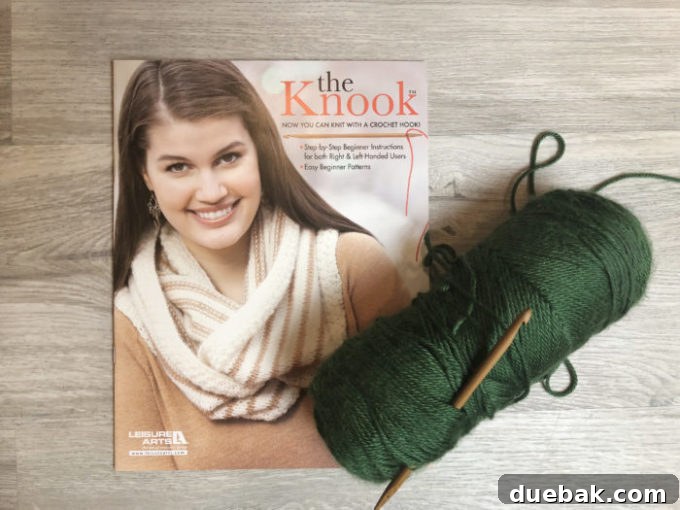
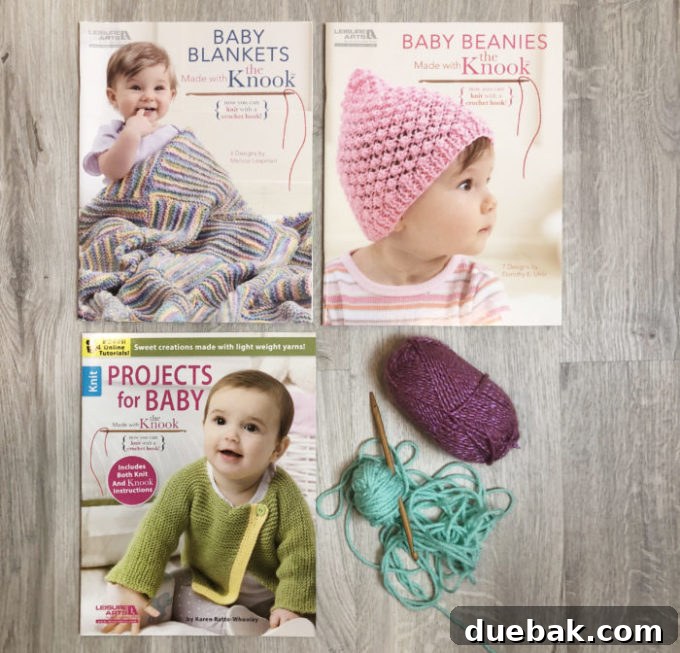
Beginning Sets to check out:
Here is what I am starting with on my journey into knooking!

Final Thoughts on Embracing Knooking
Knooking offers a refreshing perspective for anyone who loves yarn crafts but has felt limited by the perceived difficulty of traditional knitting. It’s an accessible, enjoyable, and incredibly rewarding skill that leverages your existing crochet prowess to open new creative doors. Whether you’re dreaming of a cozy knitted sweater, a delicate lace shawl, or simply want to expand your textile repertoire, the Knook provides the perfect pathway.
So, why not pick up a Knook and embark on this exciting journey? Have you ever tried knooking, or perhaps considered it? Do you enjoy both crochet and knitting, or are you primarily a crocheter seeking to expand your skills? I would love to hear about your experiences, challenges, and triumphs with this wonderful craft. Share your thoughts in the comments below!
-Brooke