
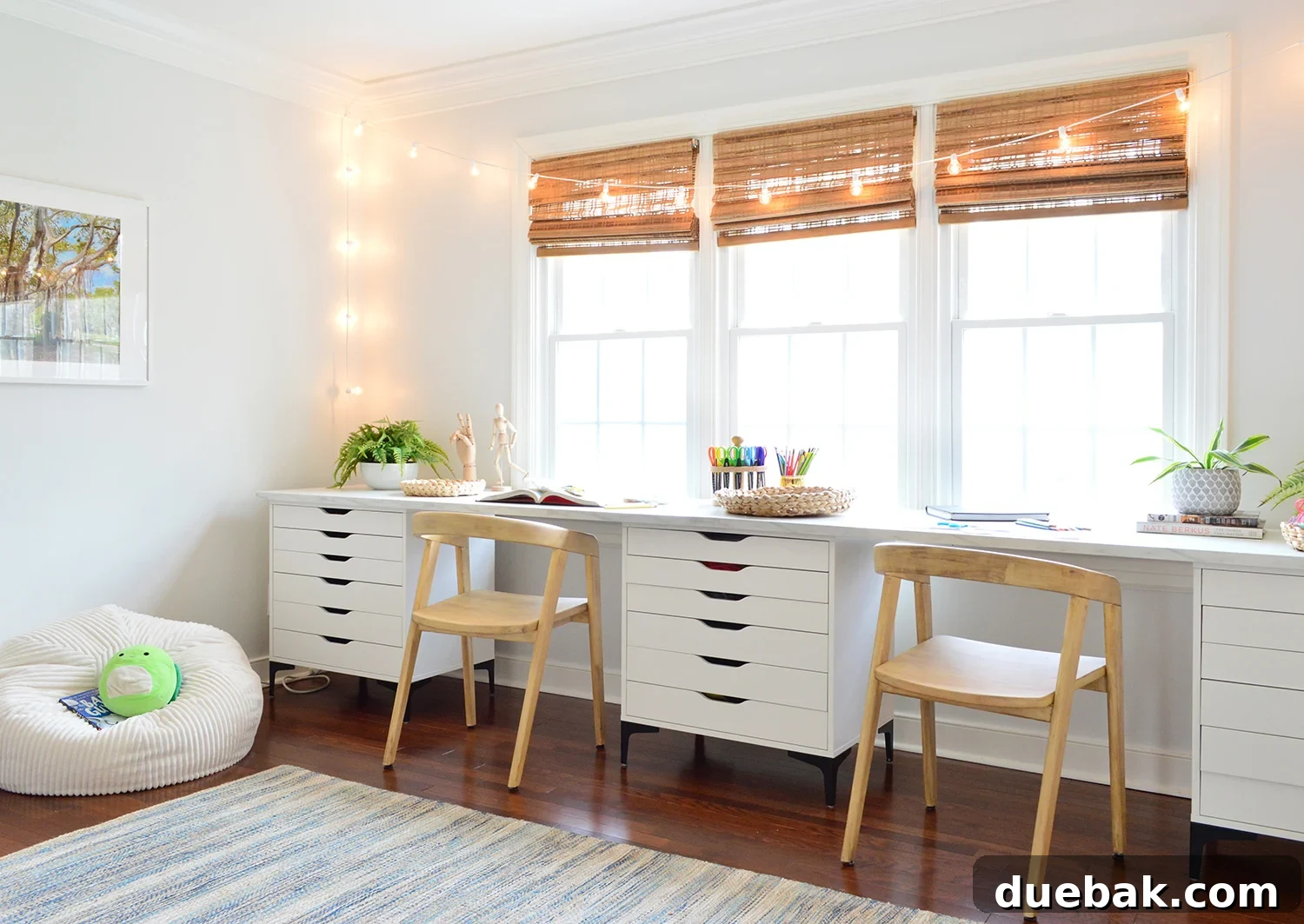
Welcome back! You might recall a casual mention back in January about us acquiring these charming wood chairs from Target via Instagram Stories. They were earmarked for a “side project we’re working on that we’ll share after we complete the bathroom.” Well, as often happens with home renovations, that bathroom project stretched on for a few extra months (if you haven’t seen it yet, you can explore the finished product and full budget breakdown here). And, amidst all of that, a rather significant life event unfolded that shifted our focus considerably.
Despite the unexpected twists and turns, we’ve been quietly enjoying this newly transformed space for several months now. And finally, the moment has arrived to pull back the curtain and share this exciting update with all of you. Join us as we take a tour of our new dedicated children’s art room and delve into the compelling reasons behind this creative and highly functional transformation.
From Unused Guest Room to Dynamic Creative Hub
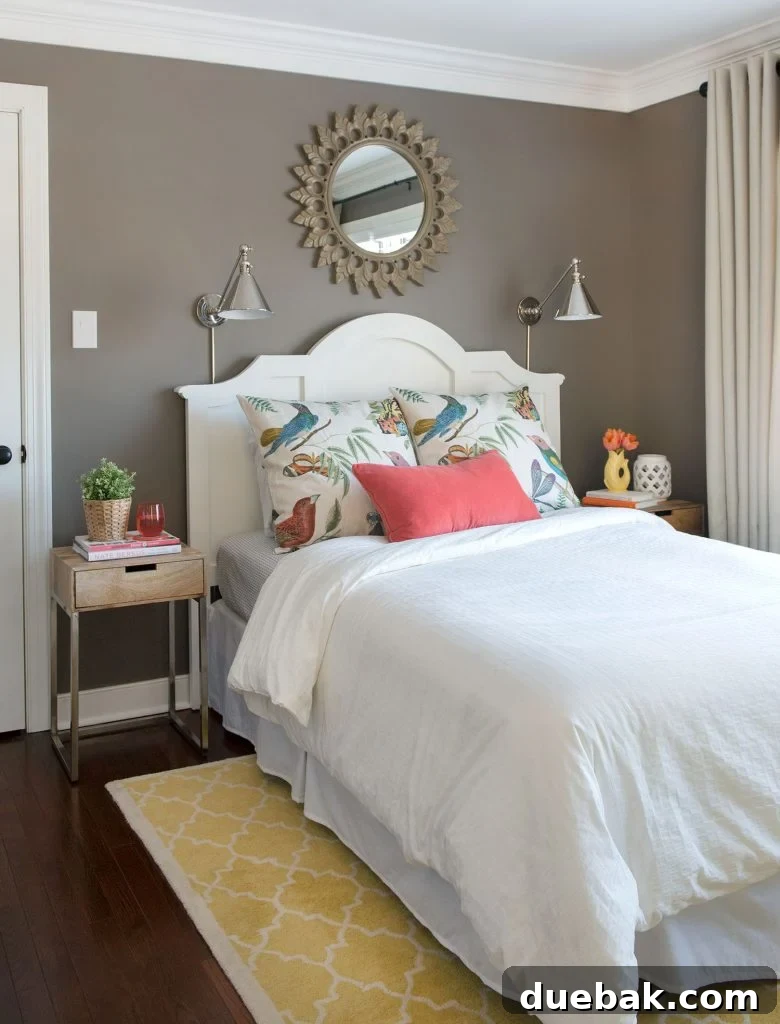
The room you’re currently admiring was formerly our guest bedroom, a space you might recall from its previous iteration, as pictured below. It was a perfectly functional room, but its utility was severely limited. At the same time we were contemplating redoing the middle bedroom at our beach house, a similar realization dawned on us about our main home: we had an entire room that saw very little use throughout the year – perhaps a mere few days, if any. For the most part, it sat vacant, gathering dust.
Our bonus room already features a large, comfortable couch that conveniently transforms into an extra-large bed, a preferred sleeping arrangement for our friends and family thanks to its ample space and TV access. This meant our dedicated guest room rarely, if ever, served its intended purpose. We also considered the flexibility of our children’s sleeping arrangements; for the occasional guest, our kids could easily share a room for a night or two, freeing up a secondary bedroom. This was a common practice in my own family growing up, proving its feasibility. When we playfully suggested the idea of a dedicated art room to our children, their enthusiastic response sealed the deal.
So, way back in January, long before this major move to Florida became a concrete plan, we made the conscious decision to repurpose this underutilized space into a room that would serve our family’s daily needs far more effectively. Looking back, with school cancellations for the remainder of the academic year (as officially announced by our mayor yesterday) and our children now spending every day at home with us, the timing couldn’t have been more serendipitous. While it might seem counterintuitive to undertake such a significant transformation right before a relocation, we are genuinely so glad we did it. This art room has become an invaluable asset during this period.
Reclaiming Our Home Office: Addressing the Art Room Takeover
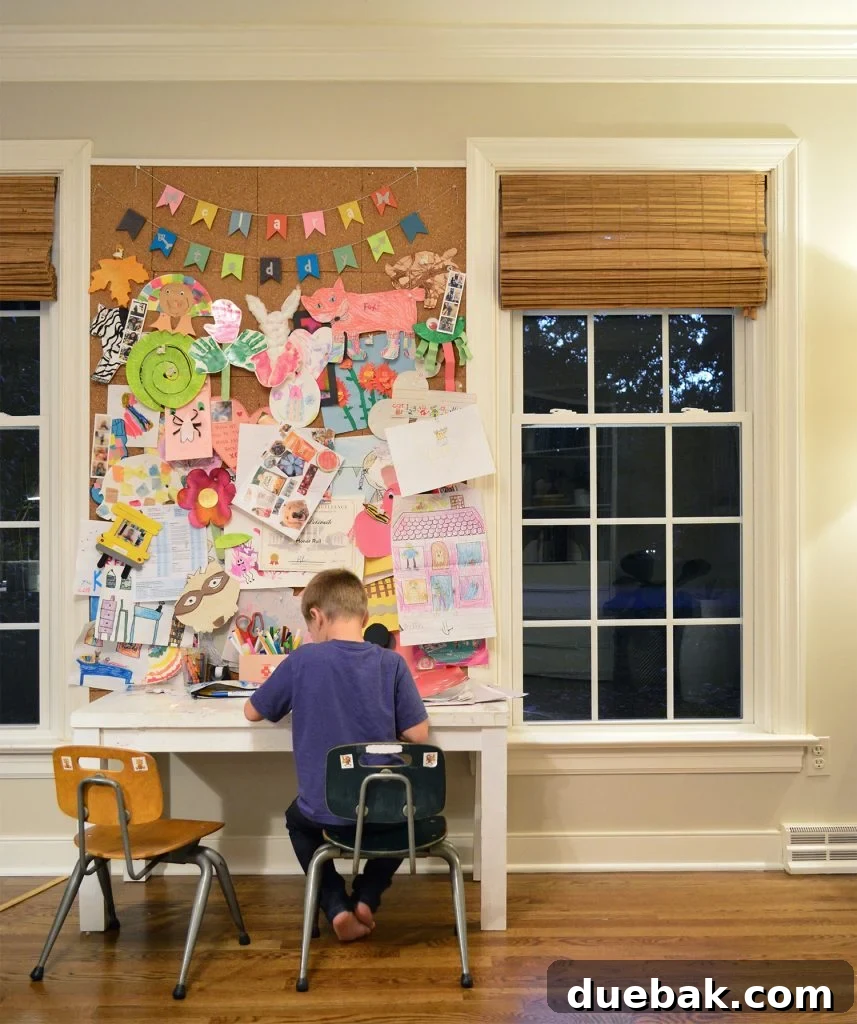
Beyond simply creating a more functional space upstairs, this transformation also alleviated some growing pressure points in our downstairs home office. While we’ve always enjoyed having our children’s art corner integrated into our office, they had undeniably outgrown the small, kid-sized desk and the tiny chairs, which barely stood 8 inches off the ground. It was becoming increasingly clear that their burgeoning creative endeavors demanded a more substantial and dedicated environment.
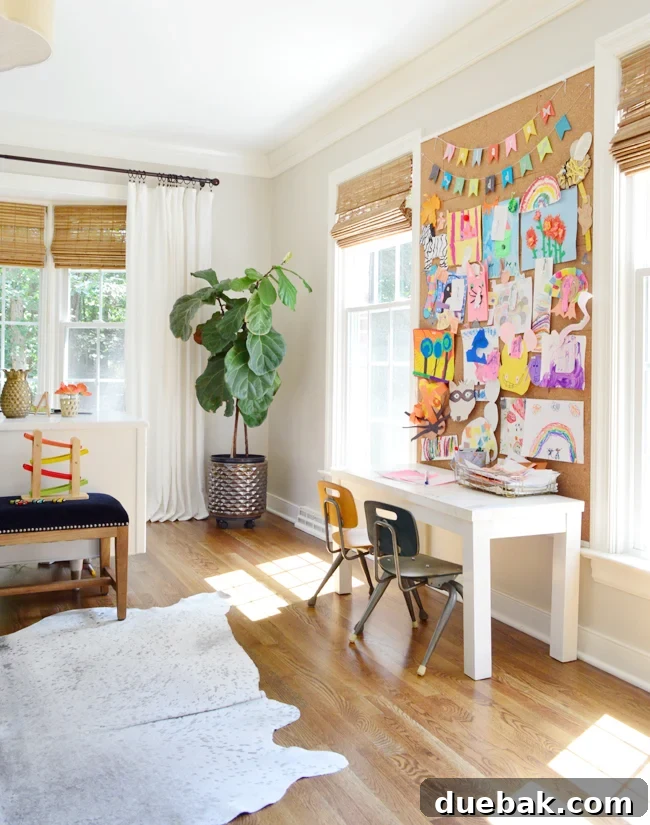
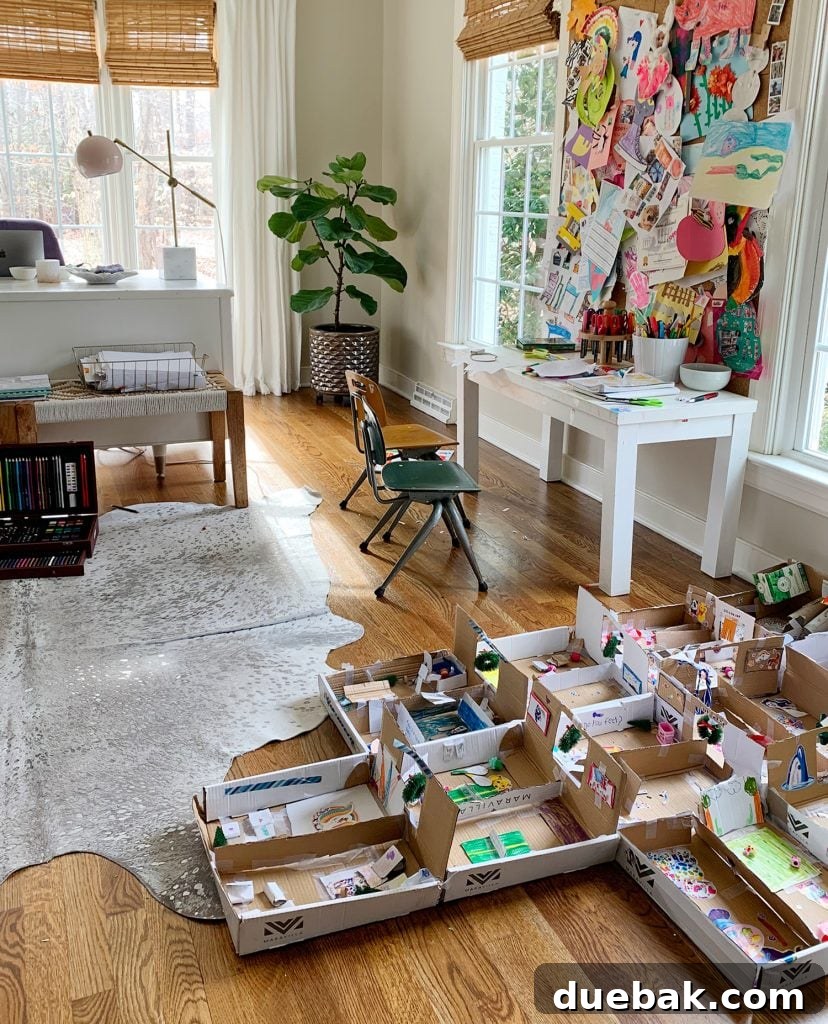
The small scale of their previous desk and chairs, coupled with the limited wall space that couldn’t accommodate a larger desk suitable for two children with standard-sized seating, meant that their crafts and elaborate box creations were steadily encroaching upon more and more of the office space each month. Our office was slowly but surely being transformed into an overflow art studio. You can get a clearer picture of this “takeover” in the “Real Life” highlights on Sherry’s Instagram profile, which perfectly illustrates the organized chaos that used to define their creative corner.
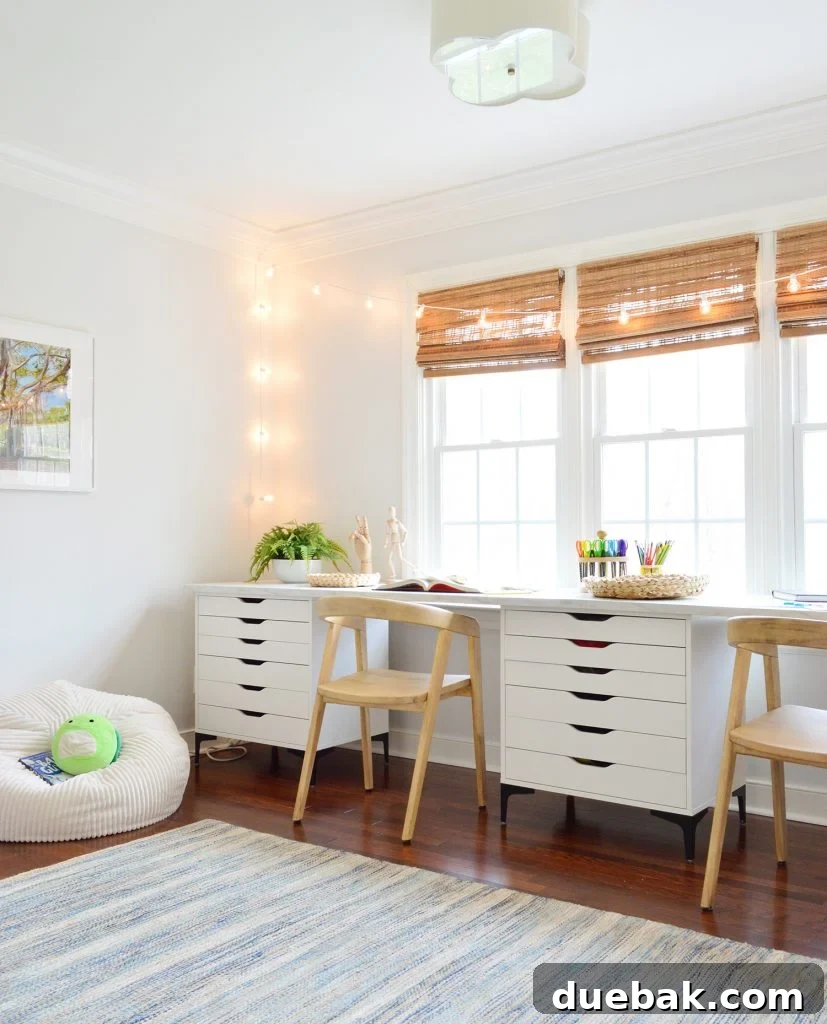
Do all families need a dedicated art room? Certainly not. But for our kids, who spend an astonishing amount of time drawing, cutting, writing, gluing, and doing even more cutting (and let’s not forget the endless taping!), such a space was a game-changer. When we realized we had an entire upstairs room sitting idle, practically begging to be transformed into one of the most hardworking areas of our home, the decision became undeniably simple. We swiftly sold the bed to a friend and listed the side tables on Facebook Marketplace, leaving us with a wonderfully blank canvas ready for its new artistic purpose. The result is the inspiring space you see below.
An added, often underestimated, benefit is the solid door that allows us to simply shut away any creative messes. Given that this room isn’t immediately visible upon entering the house, the ability to contain the “art explosion” and maintain a tidy appearance elsewhere has been a welcome bonus for our household.
Having laid out the thought process and motivation behind this room’s transformation, let’s now dive into the specific details of its execution and the clever solutions we implemented.
The Oversized Art Desk: An IKEA Hack for Ultimate Creativity
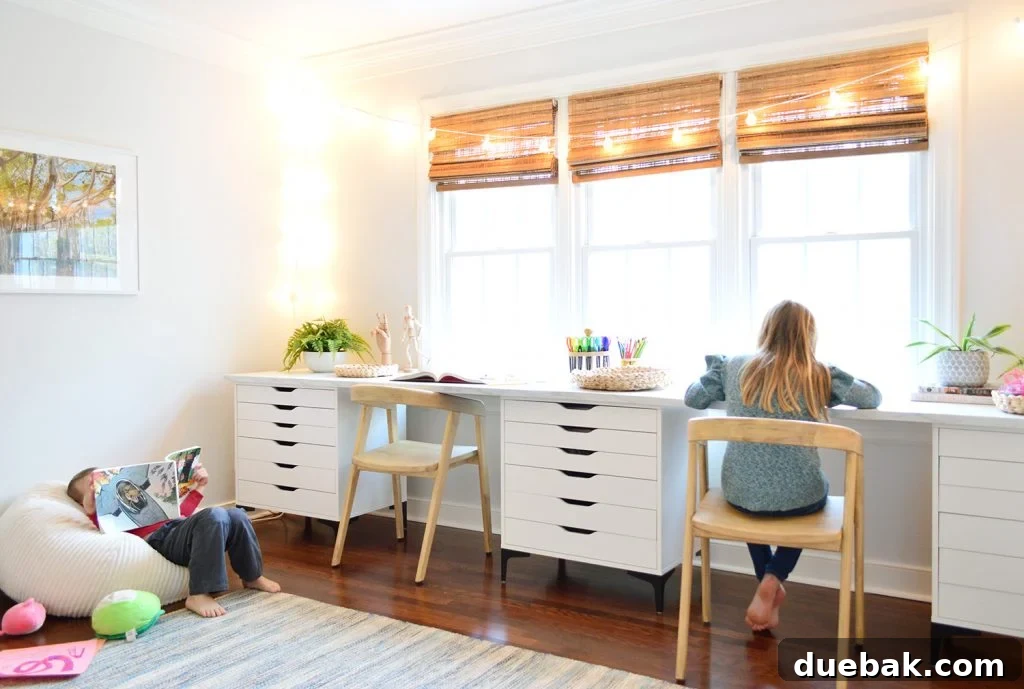
Our number one priority for this new creative space was to provide our children with a significantly more expansive and comfortable workspace. For eight years, our kids had been using a small desk we ingeniously crafted from an old door from our very first house. This desk, originally made for our daughter when she was just one year old (she’ll be 10 in May!), had certainly served its purpose admirably. However, it was, to say the least, becoming increasingly cramped. Even her younger brother (turning 6 next month) often resorted to drawing on the floor simply because there wasn’t adequate room for two growing children to comfortably sit and work side-by-side. Imagine a nine-year-old trying to maneuver on the left side of that tiny desk!
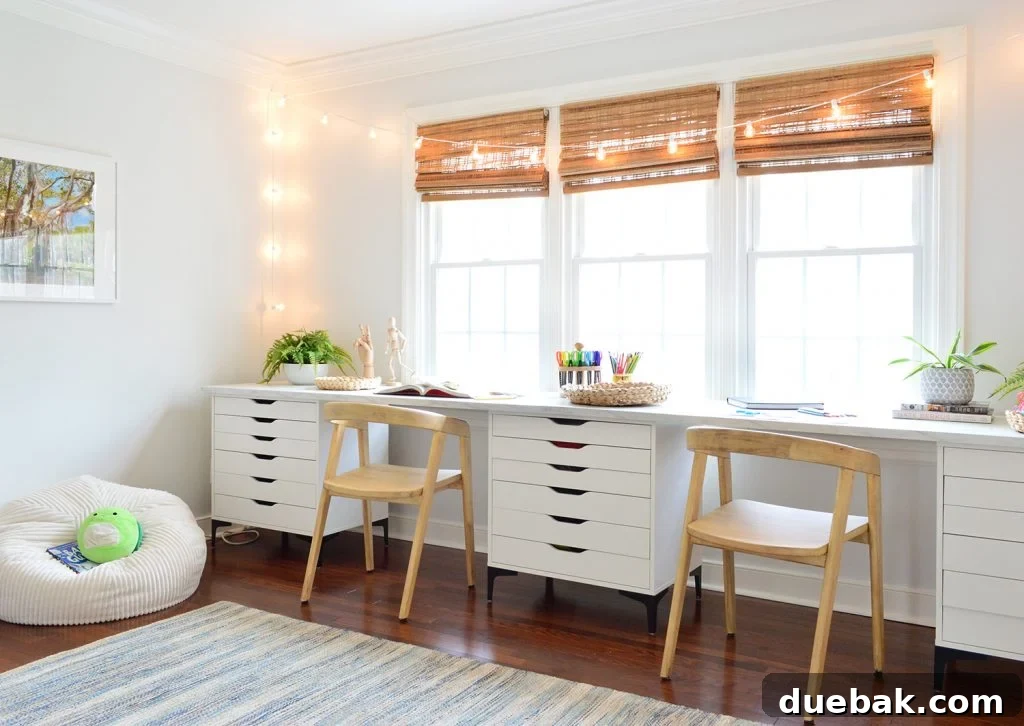
I won’t lie; Sherry shed a few tears when we sold the kids’ chairs and our beloved handmade desk to a neighbor with younger children – it was surprisingly emotional to see them go. For the new upstairs art room, we decided to go big, literally, with a wall-to-wall desk setup. This design would not only provide our kids with ample, well-separated workspace (with a strong emphasis on “well-separated” to minimize sibling squabbles!) but also dramatically increase surface area and integrated drawer storage for organizing paper, markers, paints, and a myriad of other art supplies. The foundation for our roomier, two-person desk would be three of these versatile IKEA ALEX drawer units. While they come with casters, their standard height wasn’t quite sufficient to achieve a comfortable, standard desk height.
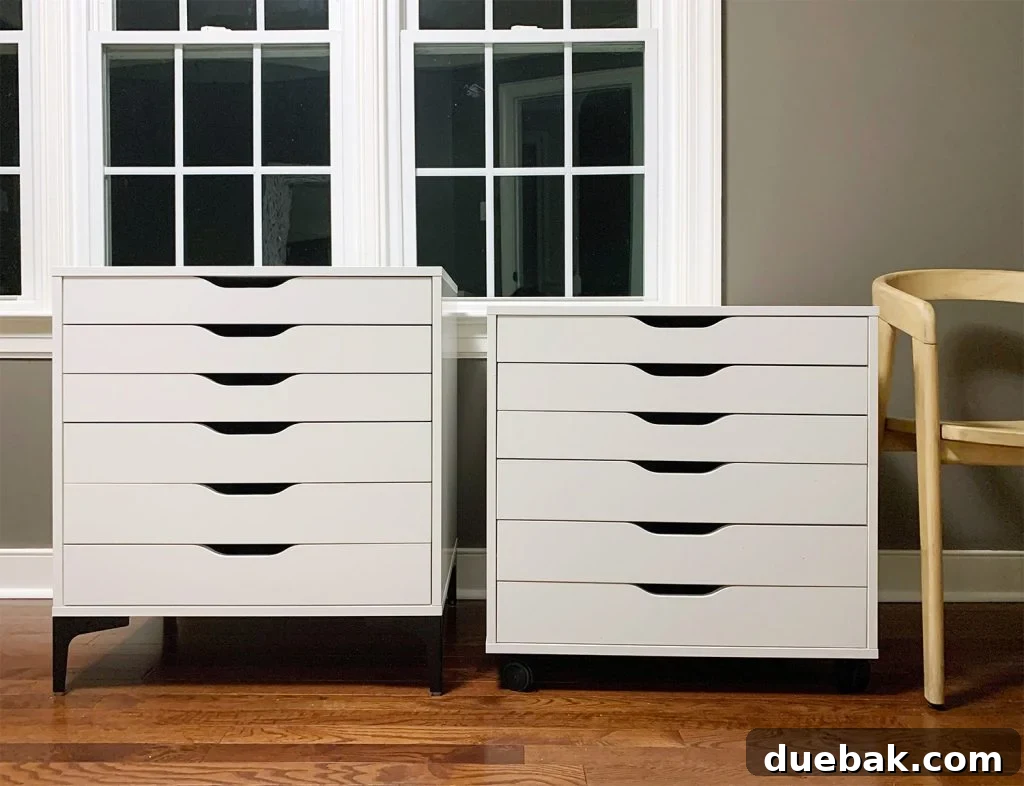
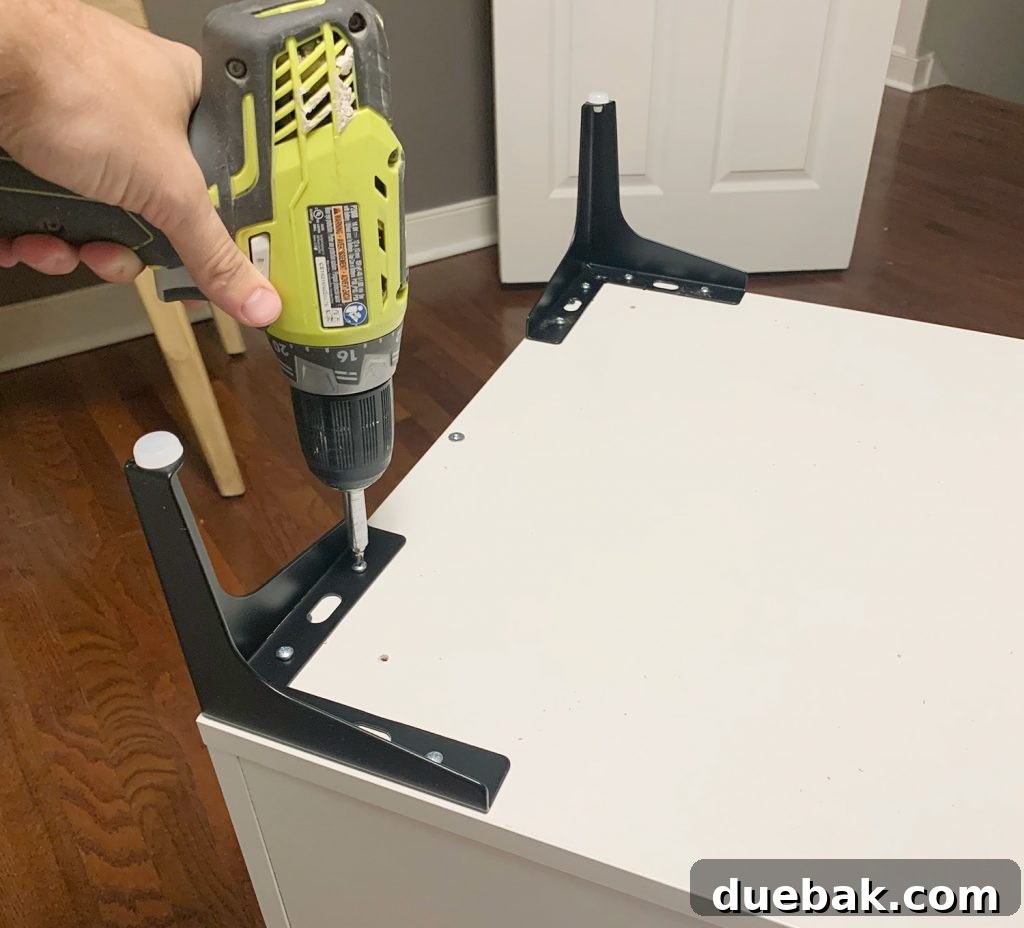
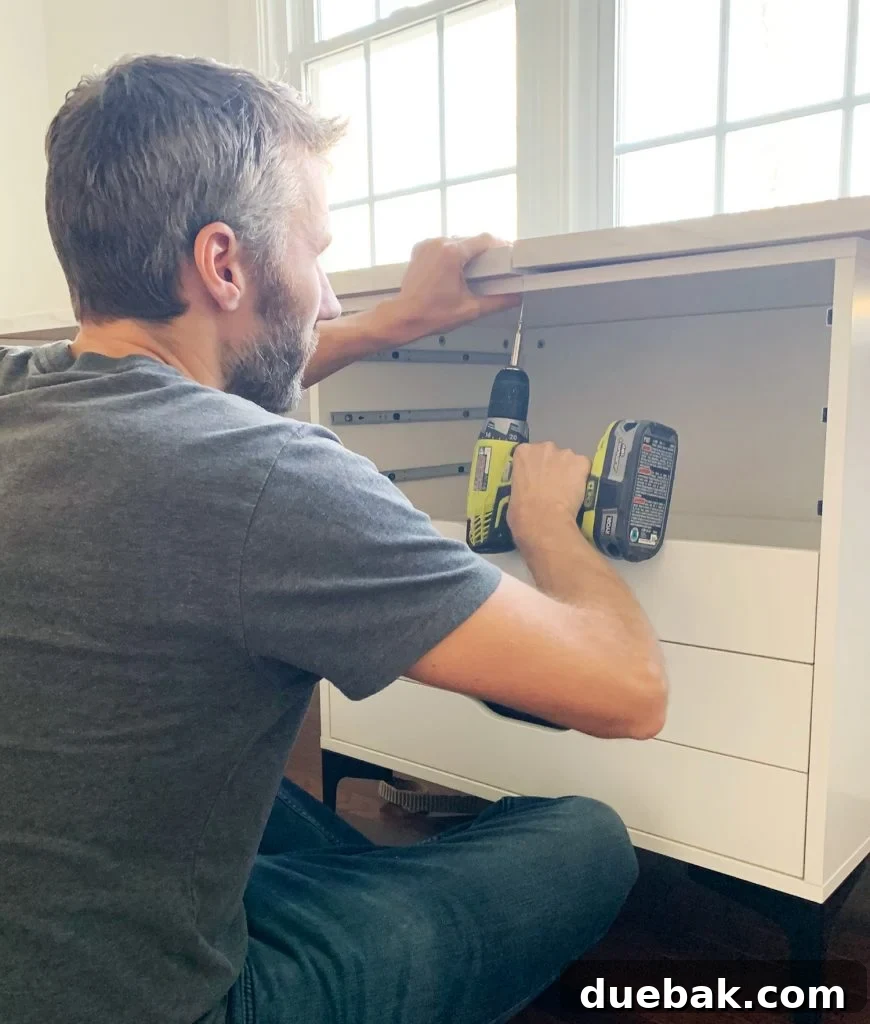
To overcome this height challenge, we applied a simple yet effective IKEA hack, thanks to these affordable sets of metal sofa legs. Available in various heights and finishes, we opted for three sets of the 5-inch black legs. Installation was incredibly straightforward; we simply removed the casters and screwed these elegant legs into their place. This quick and easy modification elevated the ALEX units to the perfect “table height,” making them compatible with any standard desk chairs or dining chairs we might choose to use, including our new wood chairs.
Choosing the Perfect Desk Surface
For the desktop surface, our criteria were clear and practical, considering it would be a kids’ art studio:
- Lightweight: We wanted to avoid putting undue stress on the IKEA drawer units with heavy, real stone.
- Affordable: Naturally, budget-friendliness was a key consideration for such a large surface.
- Durable: Most importantly, we needed a surface that could withstand the inevitable spills, marks, and creative messes – after all, that’s precisely the purpose of an art room!
The ideal solution presented itself in the form of IKEA’s EKBACKEN faux-marble laminate countertop. While the terms “faux marble” and “laminate” might initially sound less than appealing to some, we were genuinely impressed upon seeing it in person at IKEA. Its appearance is surprisingly sophisticated and far exceeded our expectations.
Interestingly, our initial plan had been to purchase the solid-white version of the EKBACKEN countertop. However, the faux-marble effect won us over completely once we saw it. Not only did it look fantastic, but it also offered an additional benefit: it was $20 cheaper per piece than the all-white option, a welcome saving for our budget-conscious project.
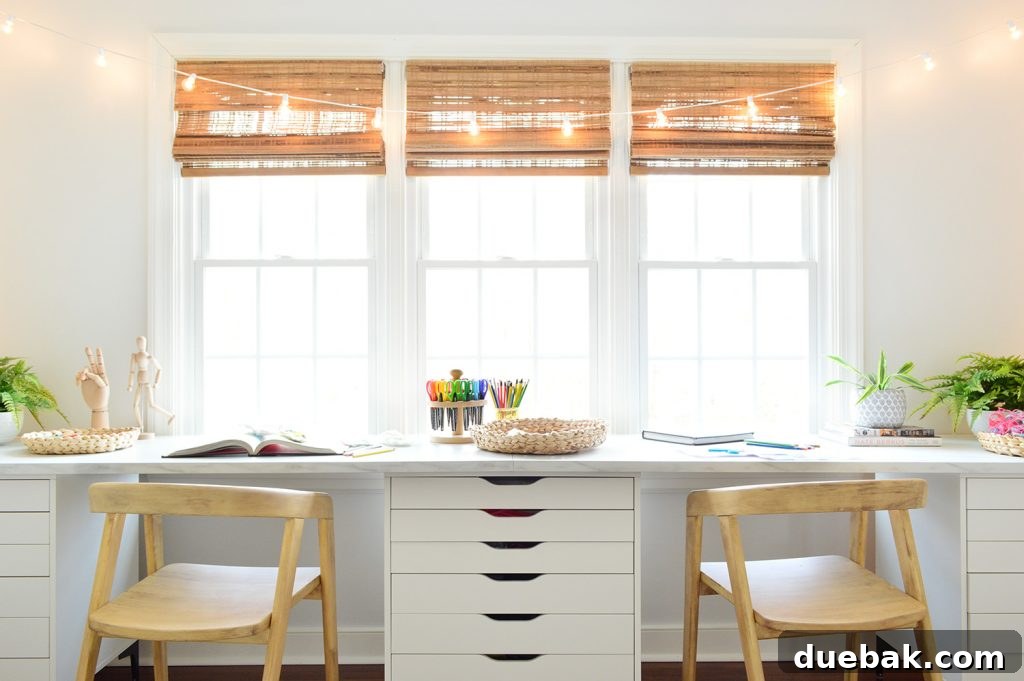
We required two six-foot pieces of the countertop to span across our three drawer bases effectively (IKEA also offers eight-foot pieces, but the two 6-foot sections were a better fit for our specific wall length). This configuration does mean there’s a seam in the middle, but it’s largely obscured by the array of art supplies and creative projects. Even if it were more visible, it’s a minor detail that doesn’t detract from the overall functionality and aesthetic of the space. It’s certainly not something we’re losing sleep over!
To securely install the countertops, we simply removed a few of the top drawers from each ALEX unit. Then, we screwed upwards through the top of the drawer bases into the underside of the countertops. This simple yet robust method not only keeps everything firmly in place but also helps to minimize the appearance of the seam by holding the two countertop pieces tightly together, ensuring a stable and seamless workspace for all their artistic endeavors.
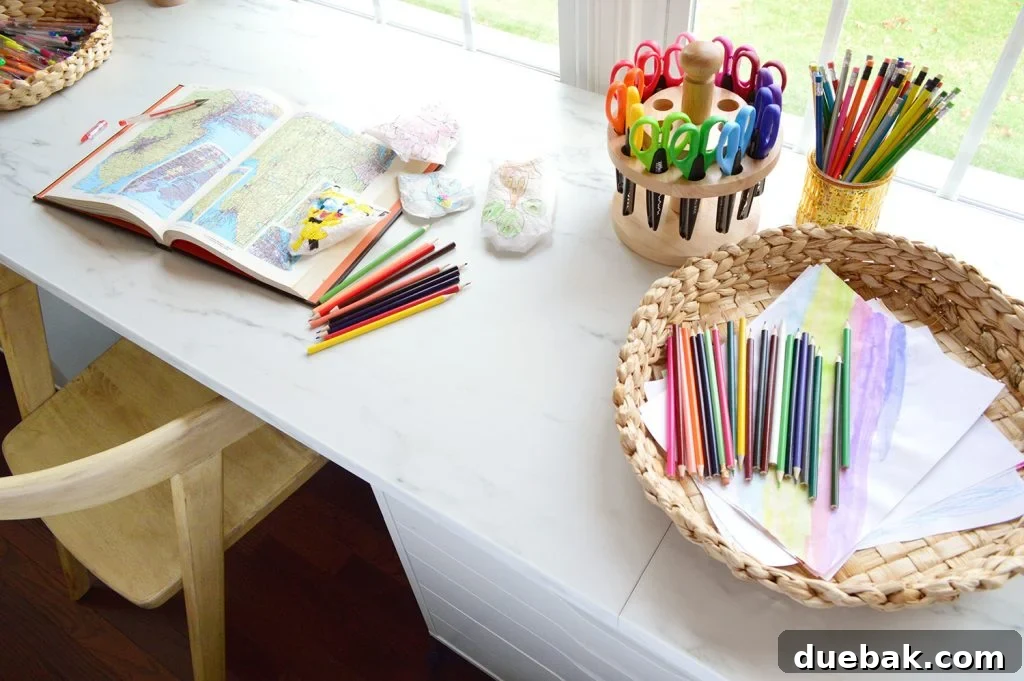
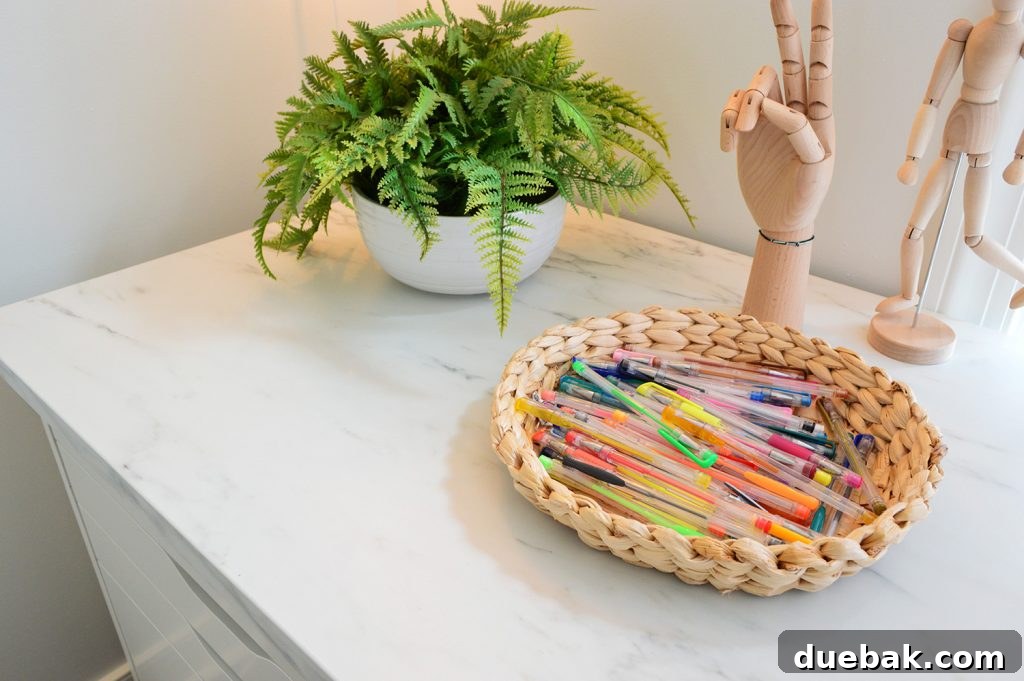
Here’s another close-up shot of the faux-marble counter, allowing you to appreciate its appearance more fully. After sharing photos of them at IKEA on our Instagram Stories, we heard from many of you who have successfully incorporated these countertops into your kitchens and offices, praising their durability and style. Our own experience has been nothing short of excellent: they wipe clean incredibly easily. Even after the kids have gotten marker, paint, or glitter glue all over them (which, trust us, has happened countless times!), we don’t have to worry. Everything wipes right off. While a permanent marker might be a tougher challenge, gel pens, acrylic paints, and similar art materials disappear with minimal effort, making them truly ideal for a busy children’s art space.
Smart Storage with ALEX Drawers
The ALEX drawers have proven to be absolutely perfect for organizing and wrangling all of our arts and crafts supplies – precisely the reason we chose these bases. To keep everything neatly separated and easily accessible within each drawer, we picked up a few of these simple plastic drawer organizers. Back when we completed the desks in January, our kids had an absolute blast visiting Michael’s and using some of their Christmas money to stock up their new drawers with an exciting array of supplies. Googly eyes, naturally, were deemed an essential item!
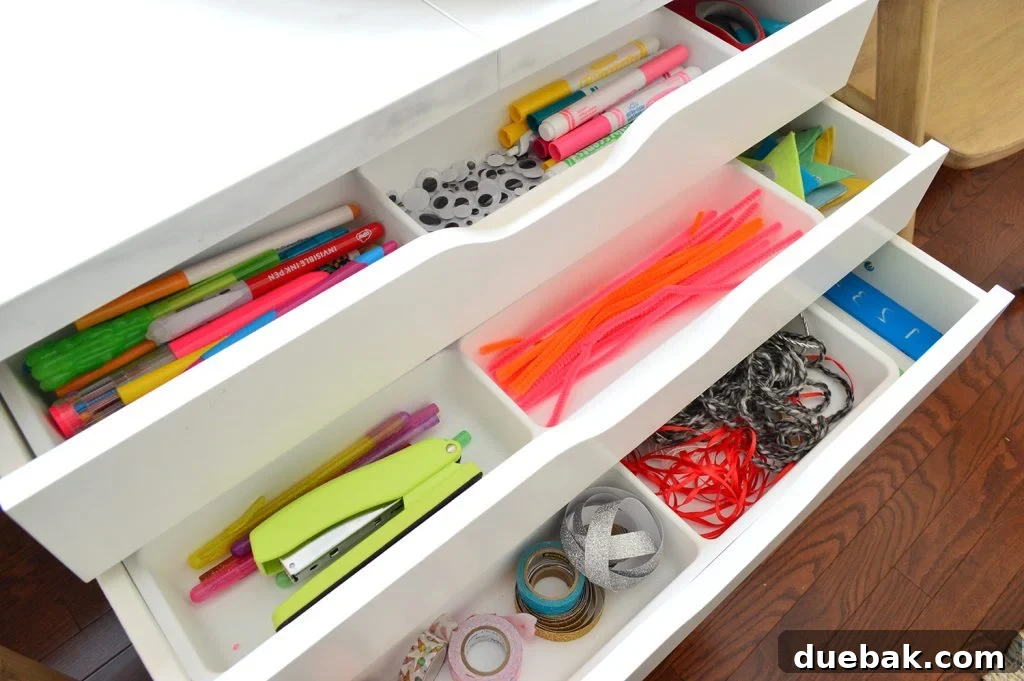
Sherry employed her patented organizing trick to keep most of the drawer organizers firmly in place: a few 3M Command strips on the bottom. This prevents them from sliding around whenever the drawers are opened or closed, maintaining order amidst the creative chaos. We also intentionally left a couple of these organizers unattached, allowing the kids the flexibility to lift them out and place them directly on the table or even on the floor while they’re deeply engrossed in a project, making supplies even more accessible.
The Display Space: Celebrating Young Artists
A beloved feature of our previous art space (which, as you know, was our office) was our giant DIY cork board. We firmly believe in the importance of having a dedicated spot to display our children’s artwork, and we know how much they value seeing their creations proudly showcased. Therefore, integrating this display function into the new art room was a non-negotiable. It simply feels wonderful to have all their creative endeavors centralized in one inspiring space.
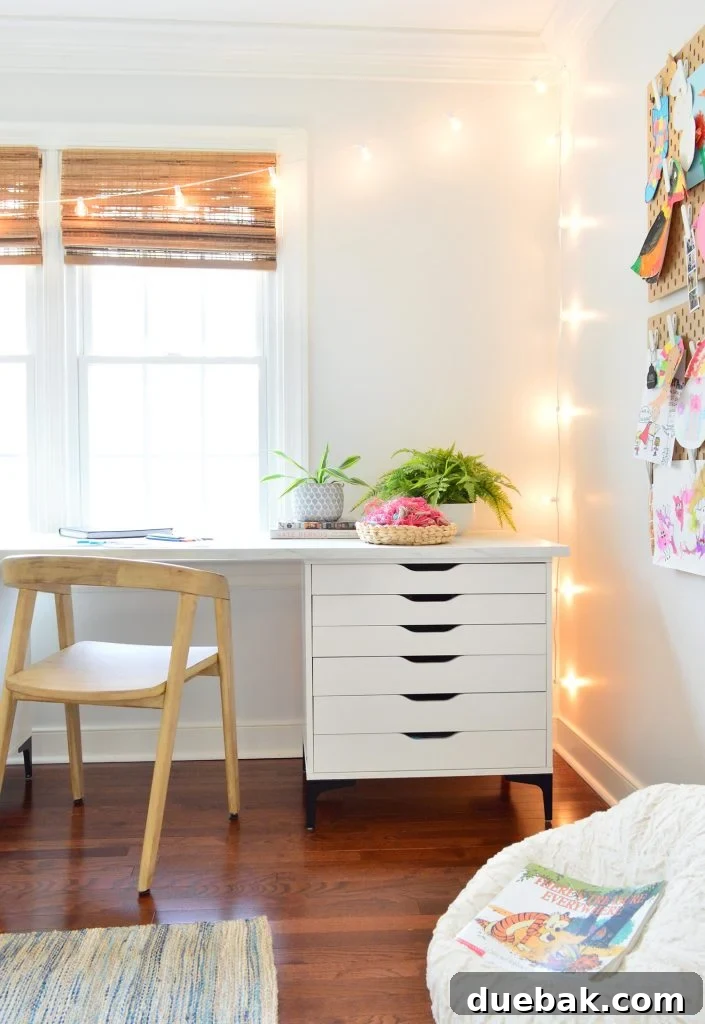
While we initially considered replicating our giant cork board method (you can find our original DIY tutorial here), our eyes were caught by these $15 pegboards during our IKEA trip. This turned out to be a fortunate decision, as they inflict significantly less damage on the walls and are incredibly easy to move – a feature that suddenly became extremely relevant with our impending relocation!
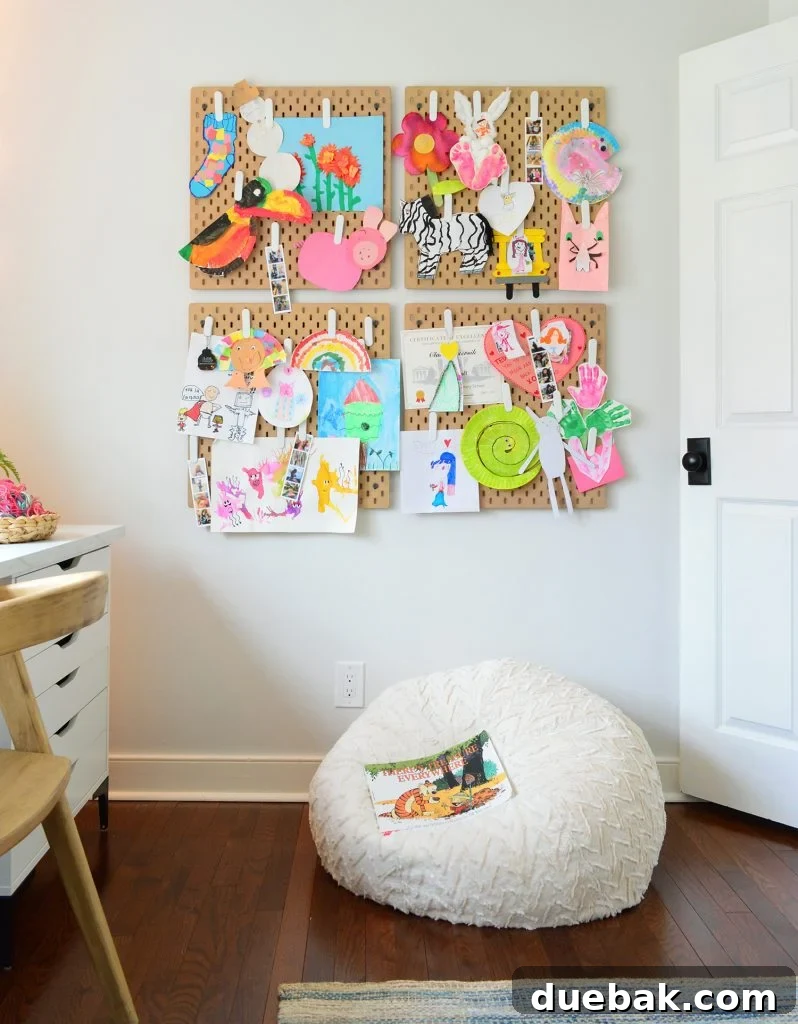
These SKÅDIS pegboards come in a couple of different sizes and finishes. We chose the cork-toned ones, believing they would introduce a lovely warmth and natural texture to the room’s aesthetic. Each pegboard hangs effortlessly on a rail installed discreetly behind the top edge of the board, requiring only two small holes for installation. Additionally, they feature small pegs at the bottom that subtly float the board off the wall, creating a neat, professional look while ensuring stability.
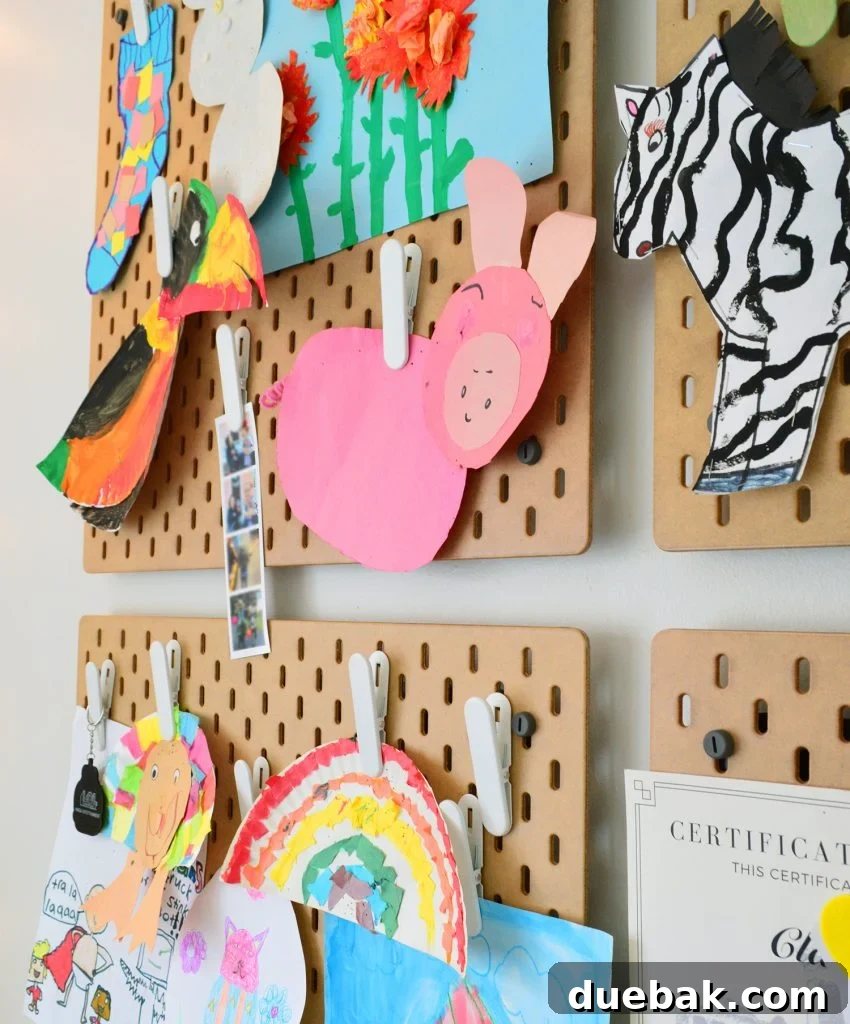
IKEA also offers a wide variety of pegboard attachments, including shelves, hooks, bungees, and containers, allowing for endless customization and organization. For our purposes, we simply picked up a pack of white clips, which are perfect for showcasing a rotating gallery of our kids’ ever-evolving artwork.
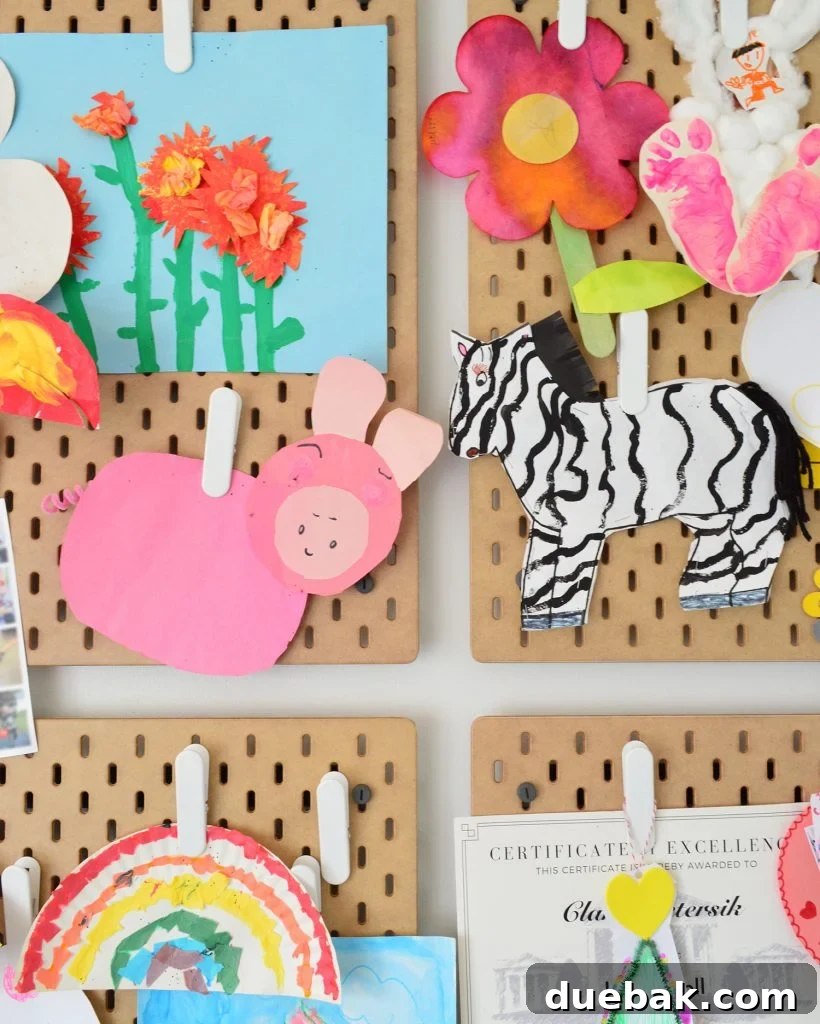
Speaking of artwork, we decided to repaint the room a much lighter color – Behr’s Irish Mist. For nearly seven years, this room had been the only dark-colored space in our house, and we were eager for it to feel as light and airy as the rest of our home. Our favorite rooms consistently feature light walls paired with vibrant, colorful art, so this choice made perfect sense for the new art studio. The kids even enthusiastically helped us paint this room! They both did an incredible job rolling while we handled the cutting in, effectively doubling our speed with twice as many hands on deck! We did go through significantly more drop cloths, but it was a fun, memorable experience, and we lived to tell the tale.
The Floor Space: A Canvas for Imagination
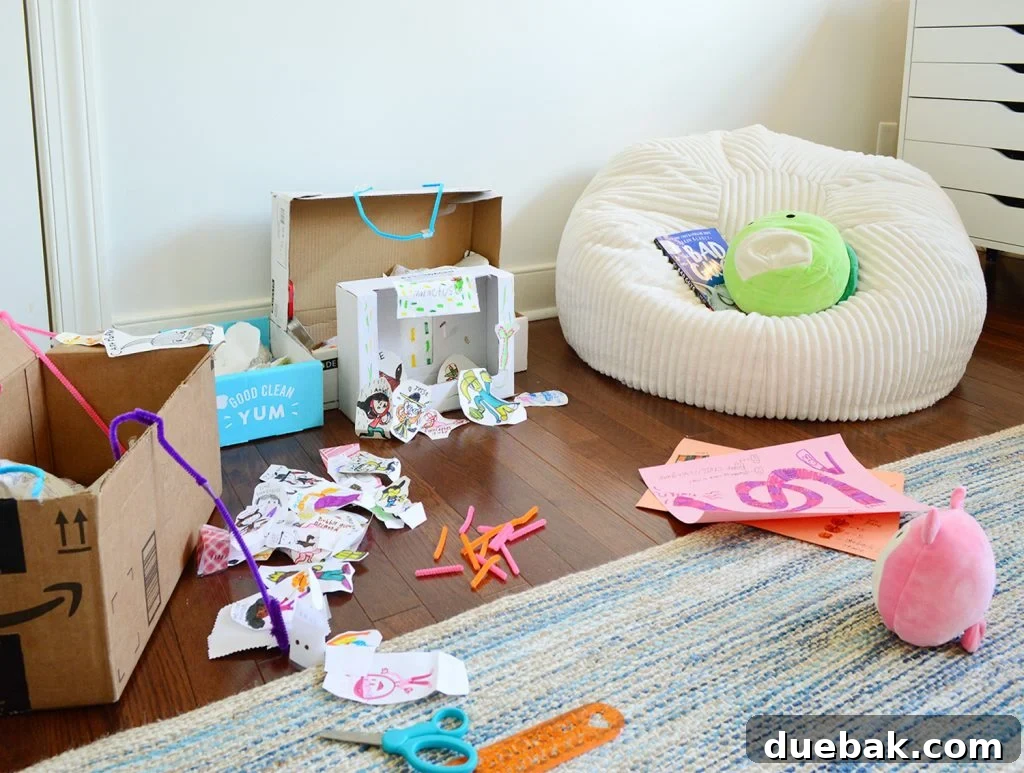
One aspect that’s challenging to fully convey through photographs is how intentionally we left most of the floor space completely empty – save for this inviting rug. This decision was driven by our children’s recent favorite pastime: constructing elaborate cities and grand mansions out of cardboard boxes. We wanted to ensure they had ample, unobstructed space to bring these imaginative worlds to life, or indeed, to engage in any other expansive activity that requires room to spread out and create without limitations.
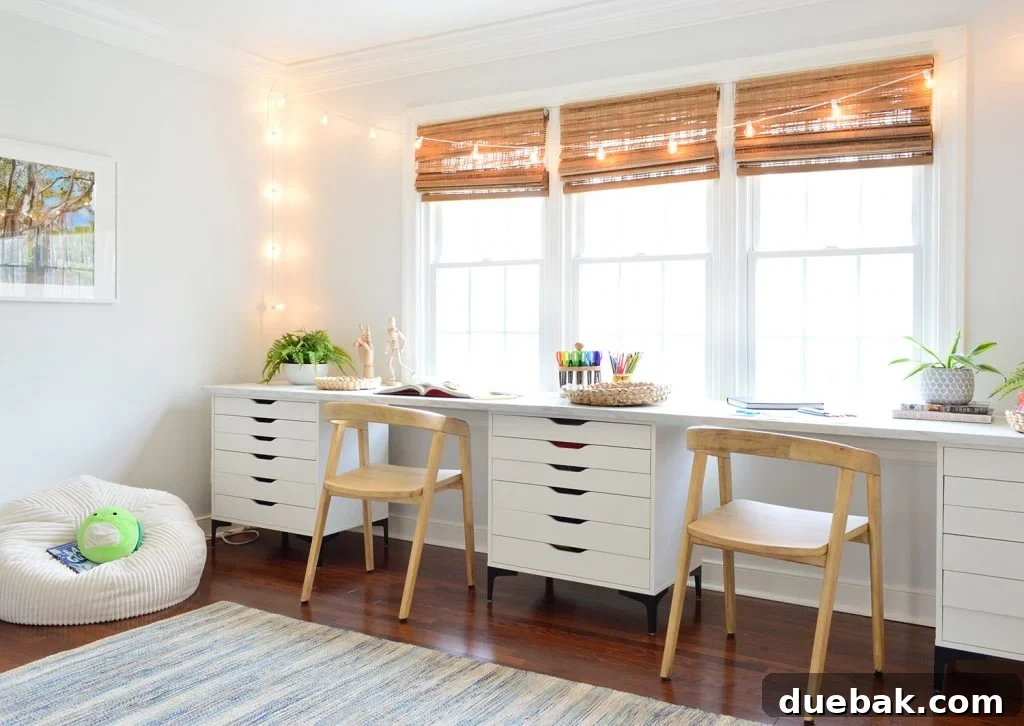
Our kids tend to create one “box city” for a few days, immerse themselves in it, and then eagerly dismantle it to start an entirely new creation from scratch. You can catch glimpses of some of their magnificent cardboard structures in this highlight. Consequently, when the room was freshly completed, there wasn’t much “going on” on the floor as they were still dreaming up their next big project. At one point, their attention had shifted to creating “stuffed animals” by drawing on two pieces of paper, cutting them out, stapling them together to form a pocket, and then stuffing them with paper towels to make them “puffy.” In the image below, I believe they were in the midst of inventing a new board game (the pipe cleaners might be the game pieces or the currency – I’m still not entirely sure!).
To round out the comfortable floor space, we also managed to find a couple of almost-matching bean bags from HomeGoods. The kids had been earnestly begging for bean bags in the room, and finding good quality, affordable ones that weren’t priced in the hundreds of dollars (yes, PB Teen, we’re looking at you!) proved surprisingly difficult. However, HomeGoods came through in the clutch! Our local store actually had a plethora of options, and we were thrilled to snag two in the same color and material, even though their patterns were subtly different. Best of all, they were only about $25 each, an absolute steal!
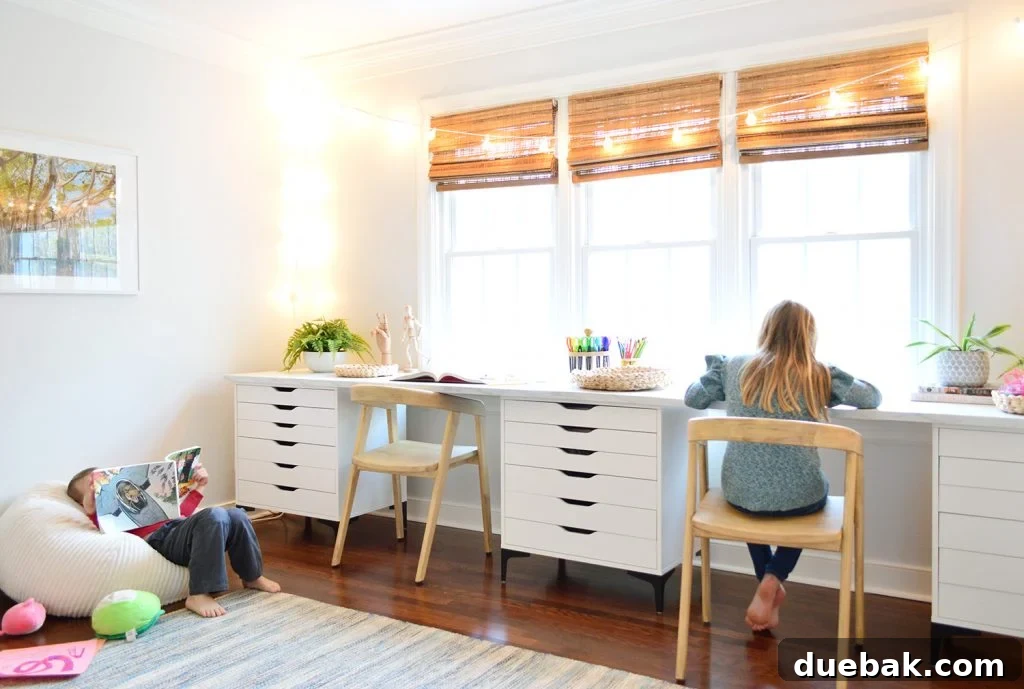
The kids absolutely adore these bean bags and use them constantly, so they are definitely making the move to Florida with us, right alongside their new desk and chairs. One of the greatest advantages of our design choices for this room is that nothing is built-in or permanently attached to the walls or floor. This means everything is easily movable and portable – a huge win given our recent relocation! This adaptable design approach has truly paid off, allowing us to bring this beloved creative space with us to our new home.
Reflecting on the Transformation and Future Flexibility
So, there you have it – a detailed peek into the transformation of our former guest room into a vibrant, functional art studio for our children. It’s a space that now sees hours of active use every single day, which feels incredibly rewarding. We initially grappled with a moment of panic after creating this amazing space: “We’re moving – ahhhh, should we have left that a guest room for resale value?!” The honest answer is: “Yes, probably.” However, we were fortunate enough to sell the house very quickly, even with a dedicated art room (you can learn more about our house-selling process here). We simply printed out an old photograph showing its previous life as a guest room to help prospective buyers envision a bed there if they preferred that layout. All’s well that ends well, especially when you manage to incorporate googly eyes somewhere into the design. And, of course, string lights – always string lights!
We hope this comprehensive look at our DIY kids’ art room conversion inspires you to reconsider the potential of your own underutilized spaces. Creating a dedicated area for creativity, learning, and play can truly enrich family life and provide a much-needed outlet for young imaginations.
P.S. For more kid-related projects and spaces we’ve tackled, you can explore our extensive archive here. Additionally, we have a collection of crafting and art-related projects for more inspiration.
*This post contains affiliate links, meaning we may earn a small commission when you make a purchase through links on our site, at no additional cost to you.