
Navigating the Mid-Project Muddle: Why Your Renovation’s “Middle” Never Makes Sense
Embarking on a home renovation or DIY project is an exhilarating journey, yet it’s often fraught with moments of doubt, confusion, and even panic. One of the most common questions we encounter is how to maintain confidence when a project feels utterly “off track” halfway through. We’ve come to understand a fundamental truth in the world of home improvement: the middle makes no sense. This isn’t just a quirky saying; it’s a vital philosophy that helps us navigate the bewildering intermediate phases of any transformation, from minor room refreshes to extensive structural overhauls.
Every creative endeavor, especially those involving physical spaces, often looks far worse before it gets better. Think of a major kitchen remodel, for instance, where walls are torn down, wires are exposed, and dust covers everything. It’s a prime example of a space that becomes significantly uglier before its beauty can emerge. However, this phenomenon isn’t exclusive to large-scale demolitions. Even simpler room makeovers, without any structural changes, can plunge you into a perplexing middle phase where nothing seems to align, and the vision you started with feels utterly lost.
The Universal Truth of Renovation: Embracing Mid-Project Chaos
The sentiment that “the middle makes no sense” resonates deeply with anyone who has undertaken a significant home project. It’s a common experience to look at a half-finished room and feel a wave of anxiety, questioning every decision made. Will it truly come together? Is this all a terrible mistake? These fears are entirely normal. Even seasoned DIYers and designers, ourselves included, grapple with these concerns throughout most of our room transformations. The truth is, whether you’ve been doing this for years or are a complete novice, that interim period can appear chaotic and disjointed.
It’s during this unsettling phase that courage and commitment become your most valuable tools. We’ve learned not to rush to judgment when only a fraction of the changes have been implemented, crucial components are still missing, or only half of a color scheme has been applied. This mid-point, which can often stretch for a considerable duration, demands patience. While we might silently question our choices (and our online community might not be so silent in their inquiries!), our strategy is to remain calm and persevere. A comforting thought is that most home-related decisions are not irreversible. If something doesn’t work out in the end, there are almost always avenues for course correction – a fresh coat of paint, a different stain, a rearrangement, or even rehoming an item. This inherent flexibility in DIY choices offers immense reassurance when facing the daunting middle.
Why Mid-Project Confusion is a Normal Part of the Design Process
Paradoxically, despite the inherent confusion of the middle, most projects culminate in a result we genuinely love. This success stems from the meticulous thought process at the outset. By investing significant effort into initial planning, we aim to make choices that we believe will “click” when the project is complete. This isn’t to say you need a perfectly fleshed-out vision on day one – we rarely do! However, considering key elements like the overall color scheme, the most functional layout, the desired ambiance, and the ultimate purpose of the space before diving in is crucial. It’s about striking a balance: avoiding perpetual indecision that paralyses progress, while also resisting the urge to rush into things or constantly second-guess every decision before the room has a chance to coalesce.
Our approach prioritizes a strong initial plan, providing a foundational “path” to follow. This doesn’t mean rigidity; rather, it’s a guide we stick to loosely, allowing for necessary adjustments. The goal is to push past that awkward, incomplete phase and reach the final stages where evaluation becomes much clearer. When a room is nearly complete, with all its elements in place, it’s far easier to judge its success or identify any remaining issues. This strategic patience helps us navigate the bewildering transition from raw potential to refined reality.

Planning for the Finish Line: A Strategic Approach to Home Makeovers
A well-conceived plan from the beginning acts as an anchor, steadying your resolve when the project veers into its confusing middle phase. It’s about sketching out main ideas and core desires for the space. What mood are you trying to evoke? What functionality is paramount? What aesthetic elements are non-negotiable? Having these guiding principles allows for flexibility in the execution without compromising the overarching vision. For instance, considering specific furniture pieces, the flow of traffic, and the intended use of the room will inform decisions about layout and scale.
While an initial blueprint is essential, it’s equally important to allow room for evolution. The middle stage isn’t the time for impulsive, drastic changes to the core plan, but it is a period for observation and minor adjustments. Live with the partially finished state for a bit. See how light plays in the room, how colors feel, and how the nascent layout impacts daily activities. This observation can affirm your initial choices or gently nudge you towards small, deliberate modifications, rather than complete overhauls. The objective is always to keep moving forward, trusting that the “finished product” will ultimately reveal the harmony and sense you’ve been striving for.
Case Study 1: The Transformative Kitchen Opening
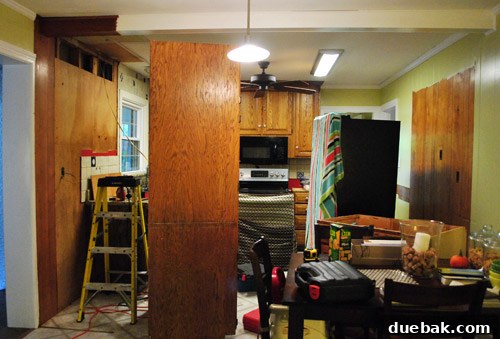
A perfect illustration of this concept is the opening we created between our kitchen and dining room. Initially, the idea of a half-wall seemed unconventional, even “weird.” But after extensive planning – drawing floor plans, utilizing Google Sketchup to visualize the space, and thoroughly reasoning out the functionality and aesthetic – we determined it was our favorite option. We committed to this plan wholeheartedly. Even when the project reached its mid-point, looking undeniably chaotic and prompting moments of serious self-doubt, we pressed on.

The area, with its gaping hole and unfinished drywall, was far from inspiring. But we held firm to our initial conviction, remembering the solid reasoning behind our choice. It wasn’t until we smoothed the drywall, added trim, installed cabinets and counters, and brought in lighting and furniture that the vision finally materialized. The half-wall proved to be the ideal solution for our home, enhancing both flow and light. Had we succumbed to mid-project anxieties and abandoned our plan, we would have missed out on a feature we now cherish. And even if it hadn’t worked, the design allowed for a relatively straightforward fix, such as extending the drywall to create a more traditional doorway.

Case Study 2: Decorating a Room with Confidence – The Office Chairs
This principle extends beyond major renovations to the realm of purely decorative projects. When decorating a room, balance, scale, and the interplay of colors and textures often don’t fully manifest until the very end. A partially decorated room almost always appears disjointed, not only to outsiders but sometimes even to those with the initial “vision.” We once transformed a pair of chipped black secondhand office chairs, scoring them for a mere $35 each, into vibrant focal points.

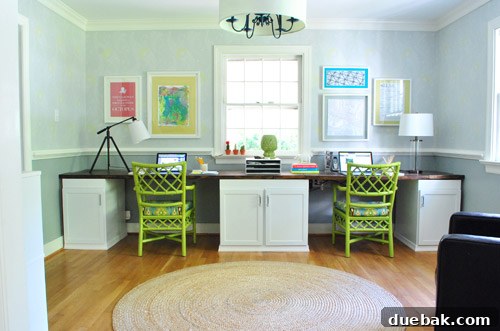
We painted and reupholstered them in a bright green tone with patterned fabric. In their initial placement, they looked intensely bright, almost clashing with the existing stenciled wall. Several people commented on their loudness, suggesting they might be too overwhelming for the room. At that stage, we could even agree that they looked a bit unbalanced. But we held firm, understanding that this was simply the middle phase – many elements were yet to be added.

Our “plans, yo” included introducing more bright, cheerful art and other colorful accents to balance the green chairs and tie the room together. The middle, for us, became a judgment-free zone. And sure enough, once the art was hung, a green artichoke planter was added to echo the chair color, and the area under the chair rail was painted a darker gray to ground the space, everything began to make perfect sense. We were delighted we committed to the bold chairs, allowing the room to evolve from a less “happy” appearance to the personalized, cheerful spot where we now spend most of our waking hours. This experience reinforced that sometimes, the elements that initially seem “off” are precisely what give a room its unique character once the overall composition is complete.

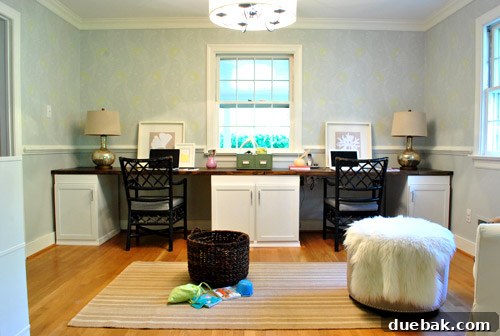
This gradual process allows the design to truly breathe and mature, showcasing how patience in the midst of uncertainty can lead to a truly cohesive and inviting outcome.
Case Study 3: The Bathroom Mirror Evolution
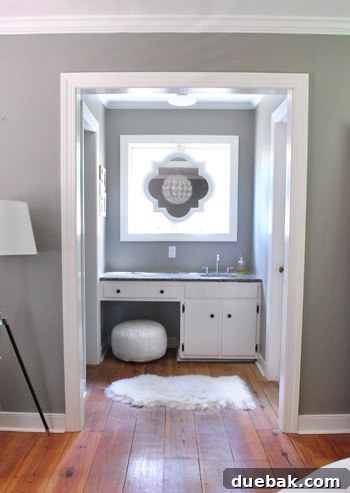
Another compelling example of mid-project evolution involves the mirror above the window in our bedroom. When we moved in, the space featured outdated bifold doors and a medicine cabinet awkwardly positioned. Our goal was to transform this functional but uninspired nook into a charming and cohesive part of the bedroom. We began by removing the medicine cabinet and demoing the thick stone backsplash, aiming for a more furniture-like vanity aesthetic.
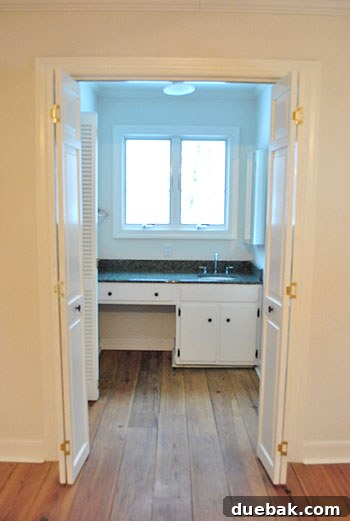
We then hung a mirror, initially in its original black finish. At this stage, we considered painting it white but decided to live with the black for a while, allowing ourselves time to truly assess the impact. This period of living with the “middle” is crucial – it’s not a time to rush into definitive plan deviations or impulsive changes. Instead, it’s an opportunity to observe and reflect before making permanent alterations like painting.
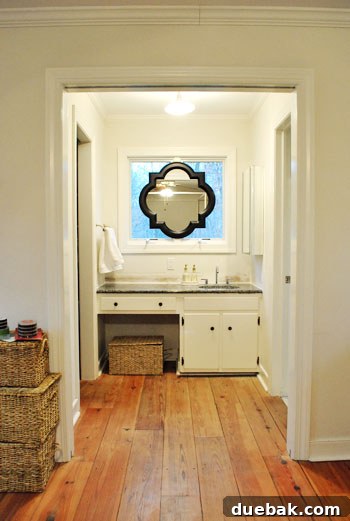
After careful consideration, we definitively decided to paint the mirror white and the walls a moody gray/tan (Rockport Gray). This deliberate choice allowed the sink nook to evolve into one of the most charming corners of our partially unfinished bedroom. This journey underscores the importance of patience and thoughtful consideration during the intermediate phase. It’s about moving steadily towards a finished product, trusting that clarity will emerge as the elements coalesce.
Overcoming Mid-Project Doubt: Keep Calm and DIY On
It’s easy to see how onlookers, and even we ourselves, might look at these “middle” images and question the sanity of the project. The stream of “wait, have you thought about…?” or “why don’t you undo…?” questions during mid-progress stages is entirely understandable. The key is to learn not to panic, cultivate patience, maintain faith in the initial vision, and continue pushing towards a more complete stage. This is almost always when things finally harmonize, or when the optimal solution to any lingering issue (be it repainting, rearranging, or swapping elements) becomes strikingly clear.
In the bewildering middle, it is genuinely challenging to discern what’s working and what isn’t. Therefore, allowing things to progress and “shake out” is paramount. Clarity typically arrives much later in the game when the room regains enough balance and order for the “whole picture” to emerge. Judging a half-baked makeover that’s only 47% complete is an exercise in futility. Trust the process, embrace the awkwardness of the in-between, and keep calm and DIY on.
Conclusion: The Patience-Powered Path to Renovation Success
The journey of any home renovation or DIY project is rarely a straight line; it’s a dynamic process of trial, error, and gradual refinement. The pervasive truth that “the middle makes no sense” isn’t a setback, but a crucial insight that empowers us to navigate uncertainty with confidence. By committing to a thoughtful initial plan, exercising patience during the chaotic intermediate stages, and trusting that the final pieces will eventually fall into place, you can transform your spaces from perplexing half-finished visions to beloved realities. Remember, every masterpiece goes through an awkward phase. What mantras or strategies do you employ to navigate the tough middle parts of your projects? Share your wisdom in the comments below!
Psst- For more posts on the transformative power of patience and perseverance in home improvement, explore this article detailing our first house’s evolution over eight months, and this post on balancing DIY with enjoying your home.