
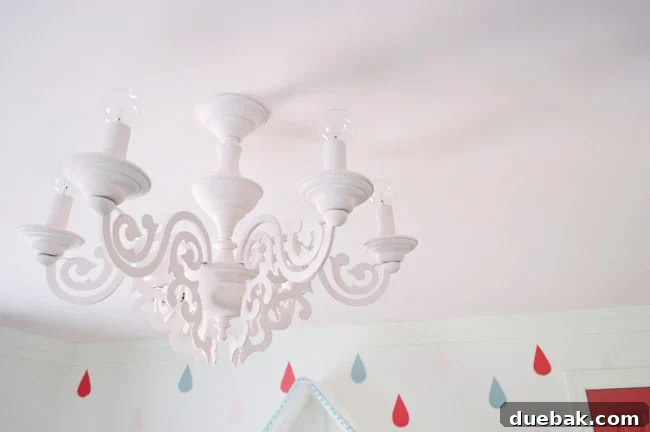
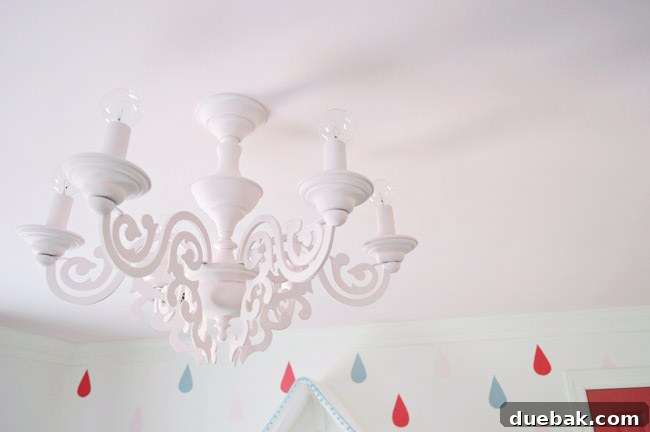
Welcome back to another exciting home transformation! Following a delightful trend of enhancing our children’s spaces, our daughter Clara’s room has recently received a stunning new ceiling fixture. This isn’t just any new light; it’s a familiar piece reimagined, and it sparks such joy, we half expect a certain pop star to break into song about it, perhaps proclaiming, “from the chan-de-li-eeeer!” This project wasn’t merely about illuminating a room; it was about the art of repurposing, ingenious problem-solving, and infusing a space with personality and a touch of magic that truly reflects its occupant.
DIY Chandelier Makeover: Crafting Clara’s Dream Pink Ceiling Fixture
From Dining Room Grandeur to Child’s Room Whimsy: The Chandelier’s Origin Story
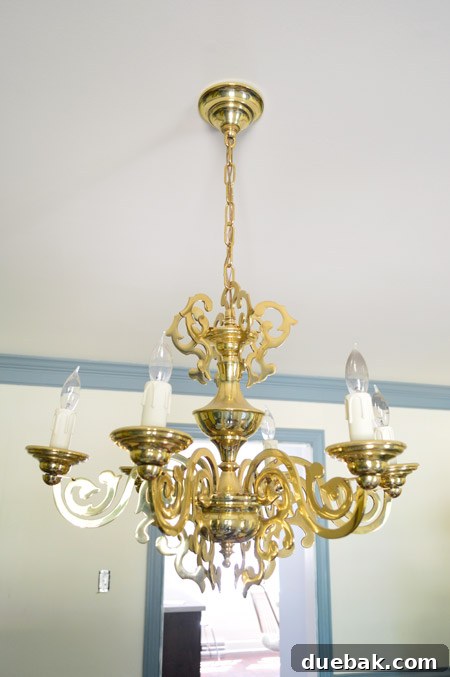
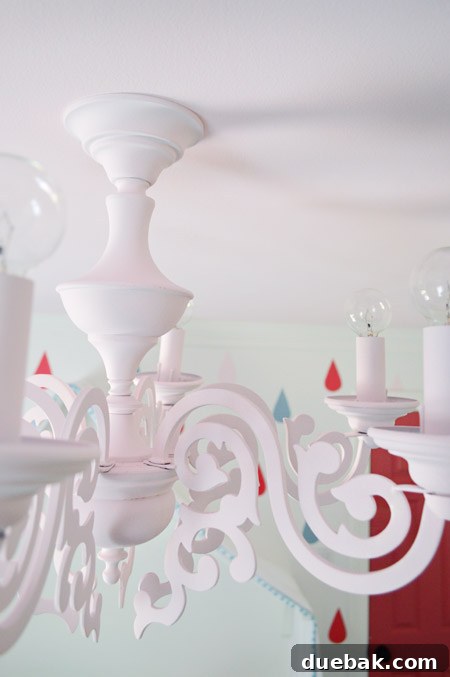
If this elegant fixture looks vaguely familiar, it’s because you’ve indeed seen it before – specifically, gracing our dining room. Or, rather, a previous incarnation of it. This particular chandelier was a fixture in our home when we first moved in, and while its original finish wasn’t entirely to our taste, its inherent charm always captivated us. We were particularly drawn to its graceful swirls and unique flat arms, which give it an almost intricate, paper-lantern-like quality. Its distinct design always made us ponder its potential for a new life, and Clara’s room soon emerged as the perfect canvas for its transformation. We envisioned it as a central, statement piece that would complement her vibrant personality and the playful aesthetic we were cultivating. The idea of breathing new life into an existing piece of decor, rather than buying something new, was also incredibly appealing from a sustainability and budget perspective.
Confronting the Challenge: A Chandelier Too Large for a Child’s Space
The primary hurdle we faced was its substantial size. While magnificent and perfectly proportioned in the dining room with its higher ceilings, this chandelier was simply too grand, and crucially, too long, for Clara’s standard eight-foot ceiling. Even without any chain, its inherent structural design meant it would hang approximately 26 inches down from the ceiling. This placed it precariously close to my six-foot height, presenting not only an aesthetic imbalance but also a clear safety concern for a child’s room where play and uninhibited movement are constant. Children’s rooms demand fixtures that are both beautiful and supremely practical, avoiding any potential for accidental bumps, visual obstruction, or anything that could detract from a safe play environment. Since “shrink rays” are regrettably still a futuristic fantasy unavailable at our local Home Depot, I resolved to take matters into my own hands. The only viable solution was to carefully disassemble it and figure out a way to fundamentally reduce its overall height, making it perfectly suited for its new, whimsical home without compromising its distinctive character.
The Deconstruction Phase: A Step-by-Step Approach to Shortening a Chandelier
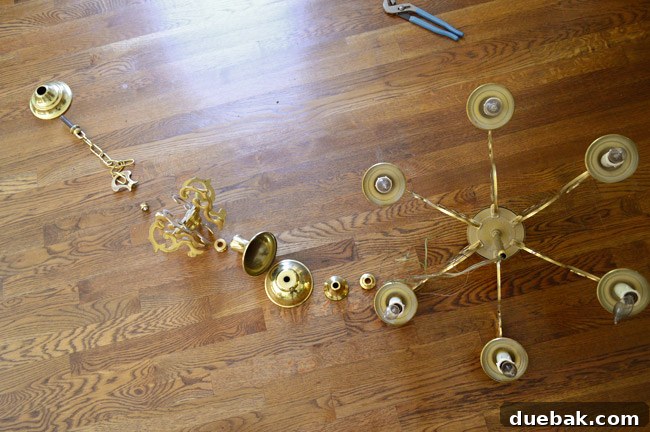
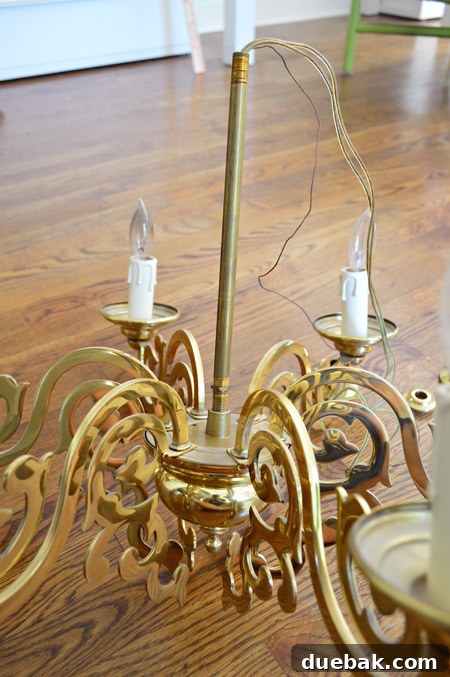
My journey began with carefully taking the chandelier down from its former perch. To my pleasant surprise, the ornate structure, which seemed incredibly complex at first glance, was ingeniously designed for modularity. By simply loosening one key screw at the very top, I was able to systematically disassemble all the nesting parts that formed its intricate shape and contributed to its considerable length. To ensure I could remember the correct order for reassembly – a critical step in any DIY project involving multiple, similar components – I meticulously laid them out in a linear fashion on the floor. This organization technique is invaluable for preventing confusion and ensuring a smooth reassembly process later on. What remained after this careful deconstruction was the long central post, essentially the spine of the chandelier, now ready for me to begin the strategic process of spooling components back onto it, but with a new, much shorter vision in mind.
An Ingenious Solution: Re-engineering the Hanging Mechanism for Optimal Height
My objective was clear: reassemble most, but not all, of the pieces to create a chandelier that retained its distinctive aesthetic but was several crucial inches shorter than its original form. The central post, however, presented a significant challenge. Without purchasing a custom shorter post – which would defeat the purpose of repurposing and add unnecessary cost – I wasn’t going to be able to shave much height off. Initially, I considered the radical approach of hacksawing the post to a shorter length. However, a moment of careful consideration revealed a critical flaw in this plan: the threaded area right at the top of the rod was absolutely essential for screwing the entire fixture back together securely at the end. Cutting it shorter would have removed this vital threading, rendering the reassembly impossible without advanced, specialized metalworking tools and expertise. This realization prompted a deeper dive into alternative, more practical solutions for height reduction.

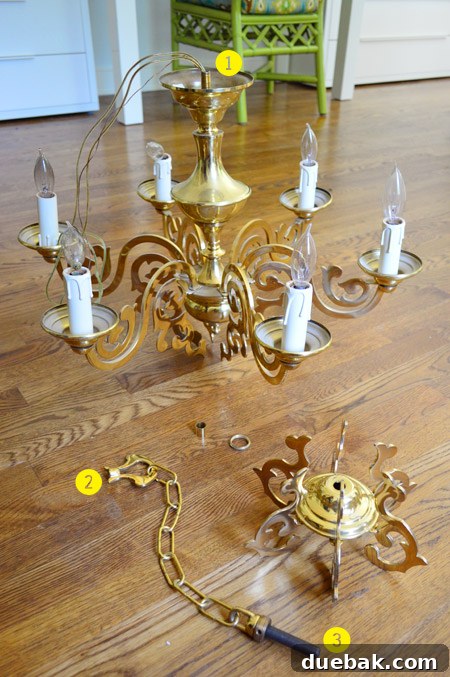
Then, it struck me – an “aha!” moment that often defines successful DIY projects and makes all the previous frustration worthwhile. Instead of relying on the traditional method of using the threading (labeled #1 in the image above) to attach to a connecting loop (#2), which then facilitates attachment to the canopy piece that screws into the ceiling crossbar (#3), I could bypass the loop and several other intermediary components entirely. My new plan was to screw that essential threading (again, #1) directly into the crossbar itself. This clever modification effectively allowed me to eliminate the height contributed by the large loop and several other original hanging mechanisms. This simple yet profound change saved a significant number of inches, crucial for achieving the desired height in Clara’s room without compromising the chandelier’s integrity. More importantly, it ensured that the chandelier remained incredibly secure. It is paramount, for both safety and code compliance, never to hang a heavy light fixture by its electrical wires; instead, the robust metal bar threaded directly into the ceiling crossbar would safely and securely bear the entire weight, adhering to crucial electrical safety standards. This ingenious adjustment not only reduced the fixture’s drop but also streamlined the overall installation process, making it safer and more aesthetically pleasing.
Refining the Silhouette: Strategic Component Removal and Clever Candle Sleeve Hack
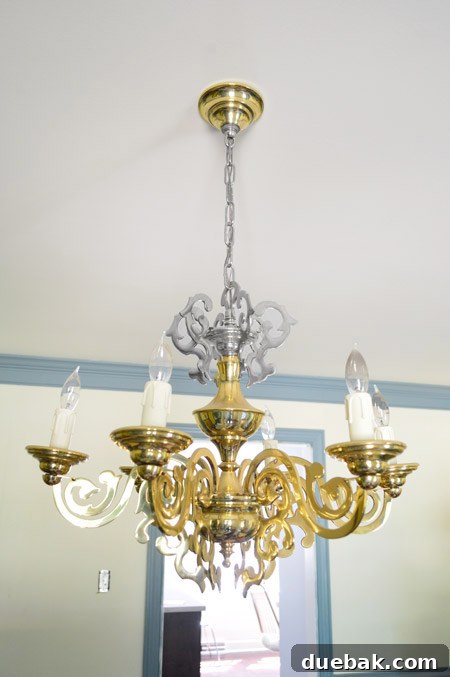
The image above clearly illustrates which decorative and structural pieces I strategically chose to omit during the reassembly process. These omissions contributed further to the overall reduction in height and helped create a more streamlined, contemporary silhouette better suited for a child’s room. For an even clearer reference, here’s a side-by-side comparison with the original photo of the chandelier in our dining room, where the removed pieces are distinctly grayed out. This visual comparison highlights precisely how a few seemingly minor omissions can significantly alter the proportion and scale of a fixture, adapting it perfectly to a new environment without sacrificing its inherent design appeal or its historical charm. This careful editing was key to transforming its grand dining room presence into a delicate bedroom accent.
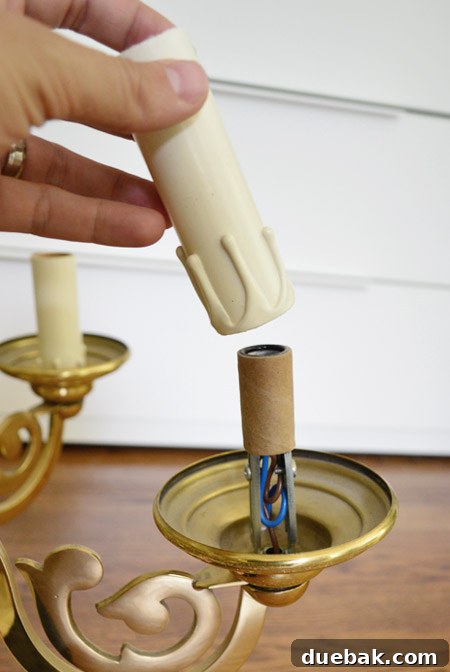
Beyond the structural modifications, we also focused on essential aesthetic refinements. The original candle sleeves featured a “faux dripping wax” effect, which, while charming in some traditional contexts, didn’t quite align with the clean, whimsical, and modern-yet-classic look we envisioned for Clara’s room. We initially considered purchasing new, simpler sleeves, which would have added to the project’s cost. However, Sherry, with her keen eye for practical solutions and innovative thinking, had a brilliant realization: we could simply flip the existing sleeves upside down. This ingenious hack instantly made the “drips” completely invisible from below, presenting a smooth, elegant, and perfectly plain surface. You can see this clever transformation already applied to one of the sleeves in the background of the adjacent image – a perfect example of how a simple adjustment can yield significant design impact and save on unnecessary expenses. It’s these small, smart hacks that truly make a DIY project rewarding.
Bringing Color to Life: The Painting Process and the Preval Sprayer Adventure
With the structural modifications complete and the candle sleeves perfected, the next crucial step was painting – the ultimate way to truly personalize this repurposed piece and integrate it seamlessly into Clara’s room decor. I set up a dedicated painting station in our garage, ensuring a clean and protected environment using a large plastic dropcloth to catch any overspray. To facilitate even coverage, I ingeniously suspended the chandelier using a sturdy bungee cord attached to the original chain, allowing it to hang freely and rotate as needed. This setup proved invaluable for reaching every curve, crevice, and delicate detail of the intricate fixture, ensuring a uniform and professional finish from all angles.

Before applying any color, meticulous preparation was key to a lasting finish. Sherry meticulously taped off the top of each bulb socket within the candle sleeves. This crucial step prevents paint from gumming up the delicate electrical connections and ensures a clean, professional edge where the bulb meets the sleeve. Following this, she applied a thorough coat of Clean Metal Primer, our trusted go-to base coat whenever we’re painting metal fixtures. This specialized primer ensures excellent adhesion for the topcoat, prevents rust and corrosion over time, and creates a uniform surface, guaranteeing durability and a flawless, long-lasting final appearance. It’s a critical step that cannot be skipped for metal projects.
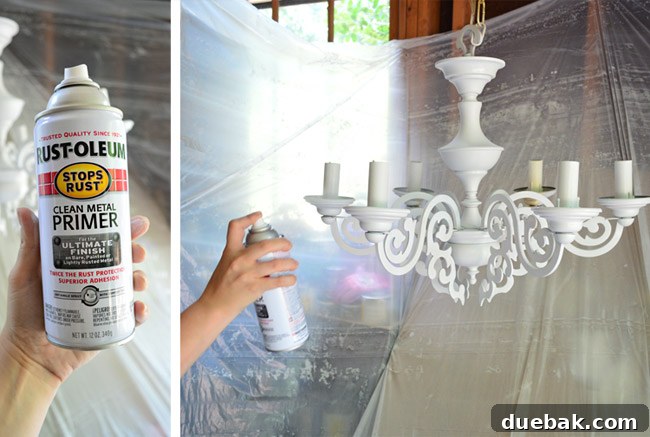
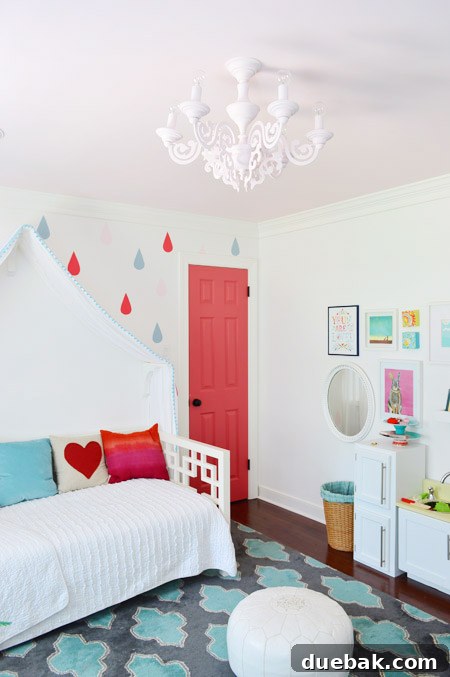
While we both agreed the chandelier looked remarkably chic and fresh in its crisp white primer coat, our hearts were set on a more whimsical and personal touch: matching it exactly to the light pink color already adorning Clara’s ceiling, a shade we affectionately call “Pink Cadillac.” The concept of a ceiling that subtly melts into a chandelier of the same ethereal pink felt truly enchanting and dreamy, evoking a delightful “Alice in Wonderland” aesthetic where boundaries between elements blur into a seamless fantasy. When we presented the idea to Clara, her immediate and enthusiastic “PINK!” left no doubt about our chosen direction. Her joyful affirmation cemented our decision to pursue this specific, customized color scheme, making the project even more meaningful.
The Preval Sprayer Experience: A DIYer’s Mixed Review
Achieving an exact color match meant we couldn’t simply grab a can of off-the-shelf spray paint; we needed to use the specific wall paint. Our larger, professional-grade paint sprayer, while excellent for flat and broad surfaces like trim and doors, tends to apply paint quite heavily. This characteristic makes it prone to drips, runs, and potential clogs on intricate, curved, and recessed items like a chandelier, where precise, light coats are essential. This dilemma led us to experiment with a product we’d seen at Home Depot: a “Preval Sprayer.” This handheld, disposable sprayer, costing less than $5, promised the appealing ability to transform any liquid paint (thinned with water) into a fine spray, offering an affordable and seemingly ideal alternative for smaller, highly detailed projects without investing in specialized equipment.
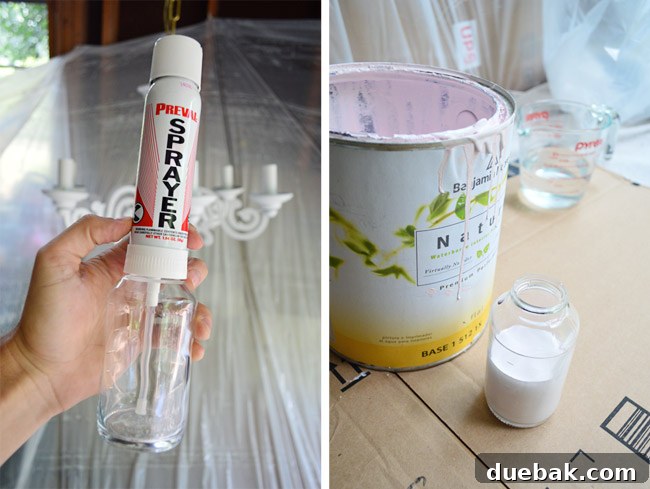
Our actual experience with the Preval Sprayer was, to put it mildly, a journey of extensive trial and error. The primary challenge was the surprising lack of precise directions or even a recommended starting ratio regarding how thin the paint needed to be for optimal performance. It required an extensive amount of experimentation, resulting in quite a mess and a significant learning curve, to finally achieve a consistency thin enough for the sprayer to function at all. Once it did begin to spray, the initial mixture was often excessively runny, leading to frustrating drips and uneven coverage rather than the desired smooth finish. We then had to incrementally add more paint to thicken it back up, trying to find that elusive perfect balance between sprayability and coverage. While I wish I could offer a definitive “secret formula” that worked best, we truly lost track amidst the numerous adjustments and tests. Our best estimate is that we landed somewhere in the vicinity of one part water to two parts paint, but even that felt more like an educated guess than a precise measurement, changing slightly with each batch.

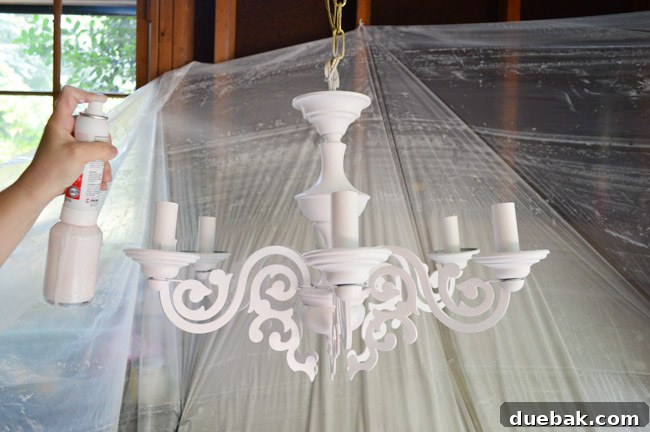
Even after finding a workable consistency, the spraying process remained somewhat spotty and temperamental. The sprayer would occasionally cut out or spurt, necessitating frequent unclogging (achieved by briefly covering the nozzle hole with a finger while pressing the spray button, an effective but messy technique). So, it’s safe to say we never truly achieved the *perfect* paint consistency or flawless sprayer performance throughout the entire project. Nevertheless, through sheer perseverance and many small adjustments, Sherry ultimately managed to get the job done, coating every intricate curve with the beautiful, custom pink hue. Once it was spraying reliably, the output was considerably lighter and more mist-like, akin to true aerosol spray paint, which was a distinct advantage over our larger Graco sprayer. The Graco applies a much heavier coat, making it extremely challenging to avoid drips on complex shapes if you revisit an area or spray from multiple angles. Despite the challenges, the Preval allowed for a more controlled, albeit patient, application on this delicate and detailed fixture, proving that sometimes, even finicky tools can achieve great results with enough dedication.
Installation and the Grand Reveal: A Magical Addition to Clara’s Room
The morning after the paint had thoroughly dried and cured, it was time for the final, exciting step: installation – truly the moment of truth for any DIY lighting project. Regrettably, I don’t have any photographs of this process. Hanging a ceiling fixture, especially one of this size and weight, is inherently a two-person job requiring careful coordination. Sherry expertly supported the chandelier, holding it steady and close to the ceiling, while I handled the delicate wiring connections. It wasn’t until we were both precariously balanced on ladders, fully engrossed in the task, that I realized my camera remote’s battery was completely dead. Despite the lack of visual documentation, the installation process itself was remarkably smooth, largely thanks to our earlier, innovative modifications.
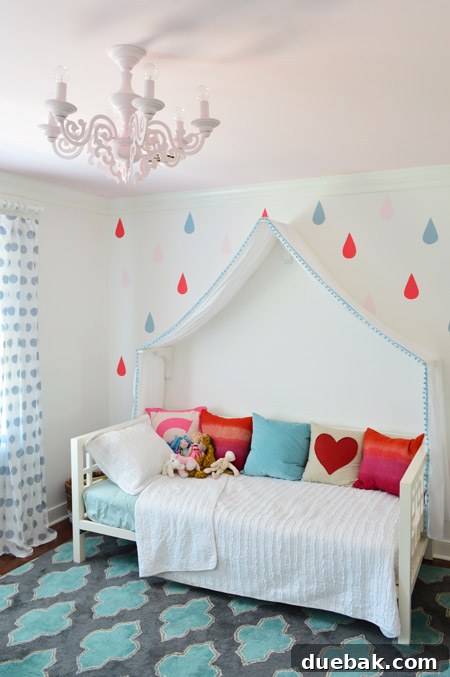
The essence of the installation involved securely attaching the ceiling crossbar to the electrical box in Clara’s ceiling. This crossbar, crucially, featured a central threaded hole, similar to what you’d find in standard ceiling fixture setups like this one. Our primary modification, if you recall the earlier “aha!” moment, allowed us to then directly spin the entire chandelier fixture onto this crossbar. We had intentionally ensured that approximately half an inch of the long central post (labeled #1 in that prior diagram) extended just above the canopy. This exposed threading perfectly engaged with the crossbar, allowing us to screw the chandelier directly and securely into place with multiple rotations until it was firmly seated. This innovative connection not only bore the weight safely, as the metal rod carried the load, but also held the canopy snugly against the ceiling, eliminating any unsightly gaps and achieving a wonderfully flush, integrated look that appears custom-built for the space.
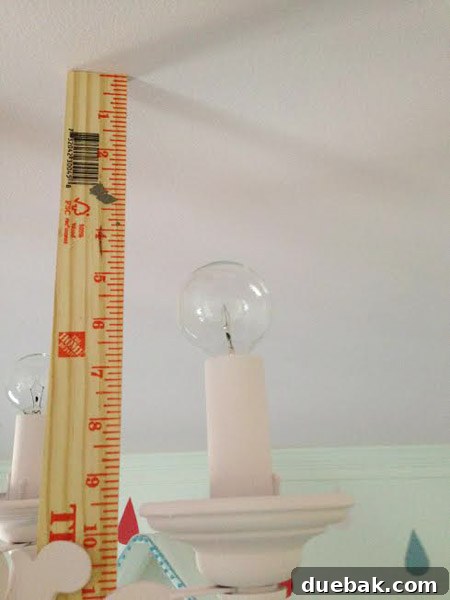
It can be challenging to fully appreciate the exact drop from the ceiling in photographs, but rest assured, the bulbs are positioned a good five inches away from the ceiling surface. This generous spacing is vital not just for aesthetic balance and proportion within the room, but primarily for practical and safety reasons: it provides ample “breathing room” around the bulbs. Proper ventilation helps dissipate heat generated by the bulbs, which prolongs their life, prevents overheating, and ensures the overall safety of the fixture and surrounding ceiling materials. Our modified chandelier offers more clearance than many fixtures, especially those with shades or enclosed designs that can trap heat, underscoring our commitment to both thoughtful design and crucial electrical safety and functionality.
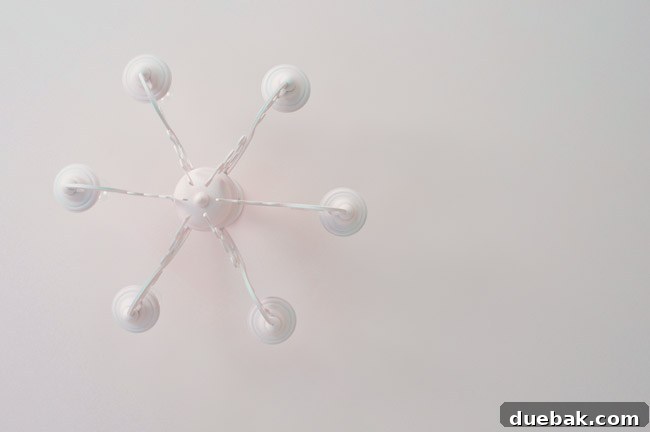
We initially harbored some concerns that the thinned paint, given our struggles with the sprayer, might result in a slightly lighter hue compared to the ceiling color, creating a noticeable discrepancy. However, upon installation and under various lighting conditions, any subtle difference became imperceptible to us; the colors blend seamlessly. In fact, the outcome was so seamless and aesthetically pleasing that it almost made us forget the earlier struggles and frustrations we had with the Preval sprayer. This project, aside from the cost of a few new round 25-watt light bulbs (which were a nominal expense for improved illumination), was incredibly budget-friendly. We spent just $5 on the original Preval sprayer and an additional $4 for one extra air can, making this a truly economical and impactful DIY transformation that delivers high-end results on a thrifty budget.
Illuminating Joy: The Final Touches and Clara’s Enchanted Reaction
There’s immense satisfaction in having a beautifully bright and perfectly sized light that illuminates Clara’s room with the simple flip of a switch. But beyond mere functionality, there’s a profound joy in taking an old light fixture, one that no longer served its purpose or fit the aesthetic in our dining room, and reimagining it into a bespoke, whimsical piece perfectly tailored for Clara’s personal sanctuary. The six 25-watt bulbs now cast a warm, inviting glow, perfectly complemented by the delicate twinkle of her fairy lights, creating an atmosphere that is truly magical and uniquely hers – a true child’s dream room.
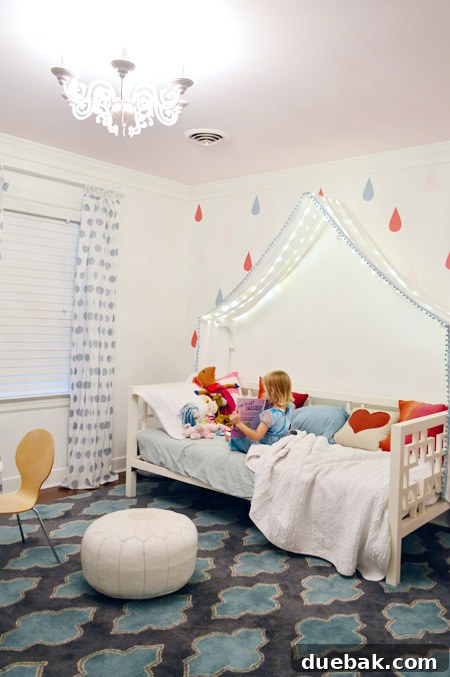
Even better, an ambient night shot, captured with the trusty iPhone, beautifully showcases the soft, enchanting ambiance the chandelier creates when paired with the room’s other subtle lighting elements. It’s a testament to how thoughtfully chosen and personalized lighting can transform a space, making it feel both cozy and whimsical after dark, a perfect retreat for imaginative play and peaceful slumber.
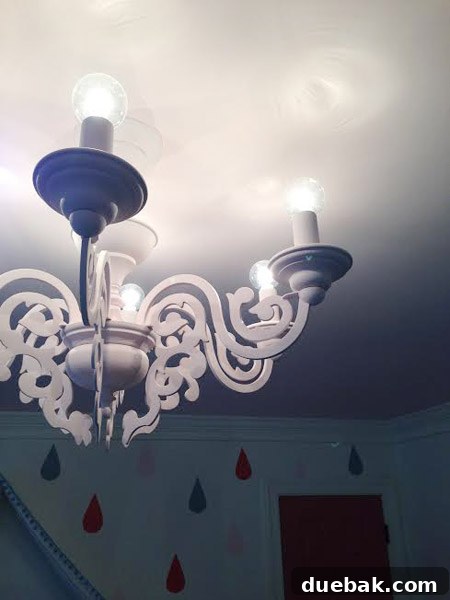
While our youngest, Teddy, is still a bit too small to articulate his thoughts on his new light, it’s incredibly gratifying to know just how much Clara adores hers. Her favorite quote about it thus far, delivered with wide-eyed wonder and genuine excitement, perfectly encapsulates the magic we aimed to create: “It’s all swirly like it’s from Belle’s castle!” This heartfelt compliment makes every moment of effort, every challenge overcome, unequivocally worth it. It’s a powerful reminder that the most successful and cherished home projects are often those that resonate deeply and personally with the people who live within those spaces, adding not just beauty but also joy and a touch of fantasy to their daily lives.
What’s Next? Our Dining Room and Guest Room Lighting Projects
Of course, this transformation does leave our dining room temporarily without a main light fixture. However, that’s currently the least of our concerns for that particular space – we’re looking at you, blue trim, and your impending makeover! Our immediate focus has now decisively shifted to finding the perfect light for the guest room, which remains the only upstairs room still awaiting a proper ceiling fixture. With a guest expected next week, the hunt is officially on, and we’re excited to tackle another lighting challenge soon, hopefully with fewer sprayer-related adventures! Stay tuned for more DIY home transformations and lighting inspiration from our house to yours.
Psst: Curious about other items or materials used in our home? Just click the button below to explore more of our curated selections and detailed DIY project sources!