

Transform Your Home: A DIY Guide to Stunning Oil-Rubbed Bronze Door Knobs
After years of contemplation and meticulous planning, a significant home improvement project has finally reached its triumphant conclusion! We embarked on the ambitious journey of upgrading every single old brass door knob throughout our house, transforming them into sophisticated oil-rubbed bronze (ORB) masterpieces. The difference is truly remarkable, bringing a fresh, cohesive aesthetic to our living space. This DIY endeavor, once seemingly daunting, proved to be an incredibly rewarding and surprisingly straightforward process that breathed new life into our home’s details.
The Journey to Oil-Rubbed Bronze: From Brass to Bliss
Our decision to embrace oil-rubbed bronze wasn’t a spontaneous one. For nearly two years, the idea of replacing or upgrading our outdated brass hardware lingered on our home improvement to-do list. The bright, shiny brass finish, while once popular, had begun to feel out of step with our evolving interior style, lending an undesirably dated “eighties” feel to our doors. We envisioned a more elegant, versatile finish that would complement various decor elements and stand the test of time.
Before committing to an entire house full of spray-painted door knobs, we wisely decided on a trial run. We tackled a few exterior knobs, handles, and even a doorknocker using the ORB method described below. This initial test served as a crucial barometer, allowing us to assess the durability and longevity of the finish when exposed to external elements. After a year and a half, those exterior pieces still look fantastic, holding up beautifully against sun, rain, and daily use. This success provided the confidence we needed to proceed with the main event: upgrading all 18 of our interior door knobs.

The successful outdoor experiment was the green light we needed. Knowing that the finish could withstand harsh weather conditions assured us that our interior knobs, which face far less abuse, would retain their beautiful new look for years to come. With renewed enthusiasm, we gathered our tools and prepared to transform the remaining 18 brass knobs that had been patiently waiting for their makeover. The anticipation of seeing our vision come to life made every step of the process incredibly satisfying.

Your Step-by-Step Guide to DIY Oil-Rubbed Bronze Door Knobs
Embarking on this DIY door knob transformation is simpler than you might imagine, provided you follow a few key steps. The secret lies in thorough preparation and patient application. Here’s a detailed breakdown of the exact process we followed to achieve stunning, durable oil-rubbed bronze door hardware throughout our home, proving that a little effort can yield results comparable to expensive replacements.
1. Careful Removal and Organization
- Systematic Disassembly: Begin by carefully removing each door knob from its respective door. Use a screwdriver, ensuring you keep all components—the knob, spindle, screws, and any plates—together as a complete set for each individual door. We found it extremely helpful to place each set in its own small labeled bag or to lay them out in an organized manner, perhaps on a labeled piece of cardboard, to avoid confusion during reinstallation. This step took approximately thirty minutes for all 18 knobs.
- Types of Knobs: Be mindful of different knob mechanisms. Some might be passage knobs (no lock), privacy knobs (with a push-button or turn-button lock), or dummy knobs (fixed, no latch). Understanding their construction can make removal and later reassembly smoother.
2. Essential Surface Preparation: Sanding for Adhesion
- The Foundation of Durability: Proper surface preparation is paramount for the paint to adhere effectively and prevent chipping or peeling. Using a super high-grit sandpaper, specifically 400-grit, lightly sand the entire surface of every knob. The goal here is not to remove the brass finish entirely, but rather to create a slightly textured, dull surface that the paint can grip onto. This process is called “profiling” the surface.
- Avoid Deep Scratches: High-grit sandpaper is crucial because it creates tiny, uniform scratches that are ideal for paint adhesion without leaving visible marks. Using low-grit sandpaper (e.g., 80 or 120 grit) can leave deep, noticeable scratches that will show through even multiple coats of paint, compromising the smooth, professional finish you desire. If you notice any small, fine scratches from the 400-grit paper, don’t worry; these will be completely covered by the paint. This sanding process took us about an hour.
- Clean Off Dust: After sanding, it’s vital to wipe off all sanding dust with a clean, dry cloth or a tack cloth before moving to the next step.

3. Deglossing for a Pristine Canvas
- Removing Residue: Even after sanding, invisible oils, dirt, or residues might remain on the surface. To ensure a perfectly clean and receptive base for the paint, wipe down each knob with a liquid deglosser. This product effectively cleans and dulls the surface, further enhancing paint adhesion. We used a deglosser similar to those commonly available at hardware stores.
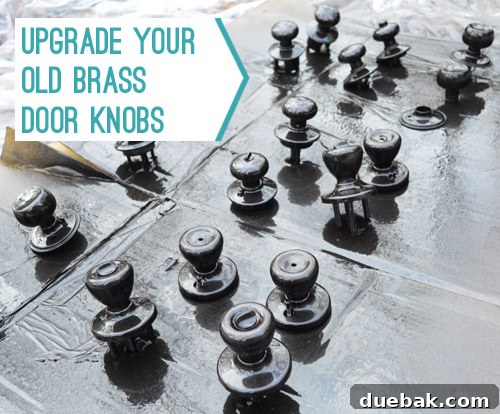
- Strategic Layout: Once deglossed, arrange the knobs on a piece of cardboard, ensuring they are facing upwards and not resting on their sides. For knobs with protruding backs, we sometimes pierced the cardboard to make them stand upright and stable, allowing all exposed surfaces to be easily sprayed without touching them. Ensure adequate ventilation during this step as deglossers can have strong fumes. This step, combined with sanding, took approximately two hours.
4. The Art of Spray Painting: Achieving the Perfect ORB Finish
- Choosing the Right Paint: For this project, we highly recommend Rust-oleum Universal All-Surface Spray Paint in the oil-rubbed bronze finish. This particular brand and line are exceptional because they feature a built-in primer, which significantly improves adhesion, especially on challenging surfaces like metal. If you opt for a different brand, you might need to apply a separate metal-specific primer first to ensure optimal results and durability.
- The Misting Technique: The key to a flawless spray paint finish is multiple light coats, rather than one heavy coat. Heavy coats tend to drip, run, and obscure details. We applied several thin, even coats, misting everything from all angles. Allow about 10 minutes of drying time between each coat. We found that five extremely thin coats were ideal for achieving a rich, opaque finish without any drips or pooling. Keep the can moving constantly, using a gentle, sweeping motion, similar to how you might apply hairspray.
- Comprehensive Coverage: To ensure every visible part of the knob was completely covered, we squatted and sprayed from various angles, making sure to reach crevices and undersides. This diligence ensures a professional, consistent finish that looks factory-applied.
- Environmental Considerations: Always spray in a well-ventilated area, ideally outdoors on a calm, warm day. Check the spray can for temperature guidelines, as extreme cold or humidity can negatively impact drying and finish quality.

5. Patience is Key: Curing for Durability
- Full 48-Hour Cure: After the final coat, resist the urge to handle or reinstall the knobs immediately. We allowed everything to dry and cure for a full 48 hours. This extensive drying time is critical for the paint to harden completely, ensuring maximum durability and preventing accidental marks or scratches during reinstallation.
- Optimal Curing Environment: For the initial 12 hours, we kept the knobs outside on a pleasant day, which aids in off-gassing and initial drying. However, as outdoor temperatures drop significantly at night, we moved them indoors to a sunroom for the remainder of the curing period. This protected them from the cold, which can hinder proper paint drying and curing, ensuring a robust and long-lasting finish.

Time, Cost, and Unbelievable Savings
This DIY door knob makeover is not only impactful aesthetically but also incredibly cost-effective. Here’s a breakdown of the time and financial investment:
- Active Work Time:
- Removal of all knobs: ~30 minutes
- Sanding and deglossing: ~2 hours
- Spray painting (multiple coats with drying time): ~1 hour
- Reinstallation: ~30 minutes
- Total Active Time: Approximately 3 hours and 30 minutes.
- Passive Drying Time: 48 hours (during which you can work on other projects or simply relax!).
The entire project required less than one can of our chosen spray paint – we even used an already-opened leftover can we had on hand. This translates to an incredibly low material cost, likely under $10 for the paint and sandpaper. Compare this to the alternative: buying brand new, oil-rubbed bronze door knobs. At Home Depot, the exact same style of knobs in an ORB finish would have cost us around $185 for 18 knobs. That’s a staggering saving of over $175 for just a few hours of enjoyable DIY work!
Our verdict is overwhelmingly positive. We are absolutely thrilled with the results and only wish we had tackled this project two years sooner. There was a psychological barrier, an intimidation factor, about “messing with every door in the house,” but the reality is far simpler. You just remove a few screws, keep your parts organized, and a few days later, your doors are transformed. This project truly embodies the power of small, strategic upgrades to make a monumental difference in your home’s overall feel.
Reinstallation Tips for a Flawless Finish
With your newly painted oil-rubbed bronze door knobs perfectly cured, the final step is reinstallation. To protect your pristine new finish, we discovered a simple yet highly effective trick: painter’s tape. Before screwing the knob back into place, gently wrap a small piece of painter’s tape around the edges or any area that might come into contact with your screwdriver or the door frame during tightening. This provides a soft, protective barrier, preventing accidental scratches or chips to your fresh paint. Once the knob is securely installed, carefully peel off the tape, revealing a flawlessly finished door knob. This small precaution goes a long way in preserving your hard work.

Considering Other Door Hardware: Hinges and Strike Plates
When undertaking a door knob transformation, it’s natural to consider the surrounding hardware like hinges and latch strike plates. Our situation was relatively straightforward:
- Door Hinges: Many of our existing door hinges already had a darkened, aged appearance, resembling an ORB finish. Others had been painted over in white by previous owners, blending seamlessly with the door frame. Therefore, we didn’t have any bright, shiny brass hinges clashing with our new dark knobs. This saved us the additional effort and expense of addressing them. However, if your hinges are still bright brass and create a visual conflict, you could consider replacing them. Hinges are generally inexpensive, often just a few dollars per door, making replacement a viable option. We would advise against spray painting hinges because the constant friction and grinding action during door operation would likely cause the paint to chip and peel over time, making it a less durable solution compared to solid ORB hinges.

- Latch Strike Plates: Similarly, some of our latch strike plates had naturally darkened over time, acquiring an ORB-like patina. Curiously, this aging effect didn’t seem to happen to the shinier brass knobs themselves. However, a few of our strike plates were still stubbornly bright and brassy, creating an obvious contrast.

Rather than spray painting these brassy strike plates, we opted to purchase new, inexpensive ORB versions. We picked up four replacements from Home Depot for a total of $5. Our reasoning was practical: the door latch frequently bangs against the strike plate, creating a high-impact area. We anticipated that spray paint in this location would scratch and wear off quickly, compromising the finish. Since new strike plates are considerably cheaper than door knobs, purchasing replacements offered a more durable and aesthetically pleasing long-term solution. This thoughtful consideration ensures that all aspects of your door hardware contribute to a cohesive and polished look, standing up to daily wear and tear.
The Final Verdict: A Project Worth Every Minute
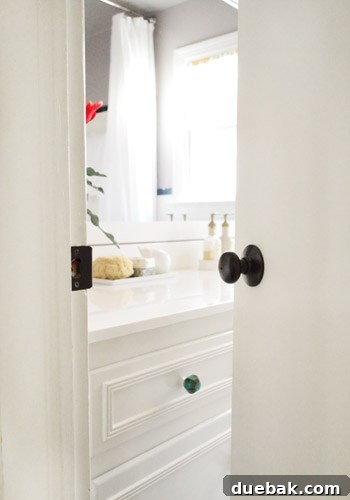
And there you have it – a home improvement project that had been lingering for far too long, finally checked off our list! The satisfaction of completing this task is immense. Just as we had hoped, every single room and closet where these transformed door knobs were reinstalled instantly looked a little posher, a little less “ew, eighties brass,” and significantly more modern and refined. It’s truly amazing how such a seemingly small detail can elevate the entire ambiance of a space.
This project is a testament to the power of DIY and the profound impact that thoughtful upgrades can have on your home. It feels crisp, new, and undeniably loved. What home improvement projects have you been checking off your to-do list recently? Did your projects involve paint, sandpaper, or perhaps a healthy dose of procrastination before finally diving in? Share your experiences!
Update: Curious about where we found specific items or the exact paint colors used throughout our house? You can explore our home’s details by clicking the button below:
*This post contains affiliate links to items we have purchased and love, helping support our blog at no extra cost to you.*