
Unearthing Hidden Histories: A Renovation Story of Unexpected Treasures
Home renovations are often a journey of transformation, turning outdated spaces into modern sanctuaries. Yet, beneath the layers of old wallpaper and worn-out flooring, there frequently lies an unexpected bonus: a glimpse into the past. This was precisely our experience recently when the time came to remove a set of decades-old kitchen cabinets. What started as a routine demolition project quickly turned into an exciting archaeological dig, revealing more than just dust and debris.
On a seemingly ordinary Wednesday, as the last of the bulky, fifty-year-old kitchen cabinets were meticulously pried from the wall, a small, forgotten cavity was exposed. Tucked away in the dark, dusty void, almost as if carefully placed and then forgotten, was a small collection of items. These weren’t glittering jewels or ancient artifacts, but rather tattered, faded papers and cards that, in their own quiet way, told a story. To us, these humble findings were nothing short of buried treasure, offering a tangible connection to the lives that once thrived within these very walls.
The thrill of discovery is unparalleled, and we carefully retrieved each item, brushing away the accumulated dust of half a century. What we found was a fascinating, eclectic mix that painted a vivid, albeit fragmented, picture of everyday life from a bygone era. Each piece, no matter how small or seemingly insignificant, sparked curiosity and offered a unique window into the past.
Glimpses into a Bygone Era: Our Cabinetry Time Capsule
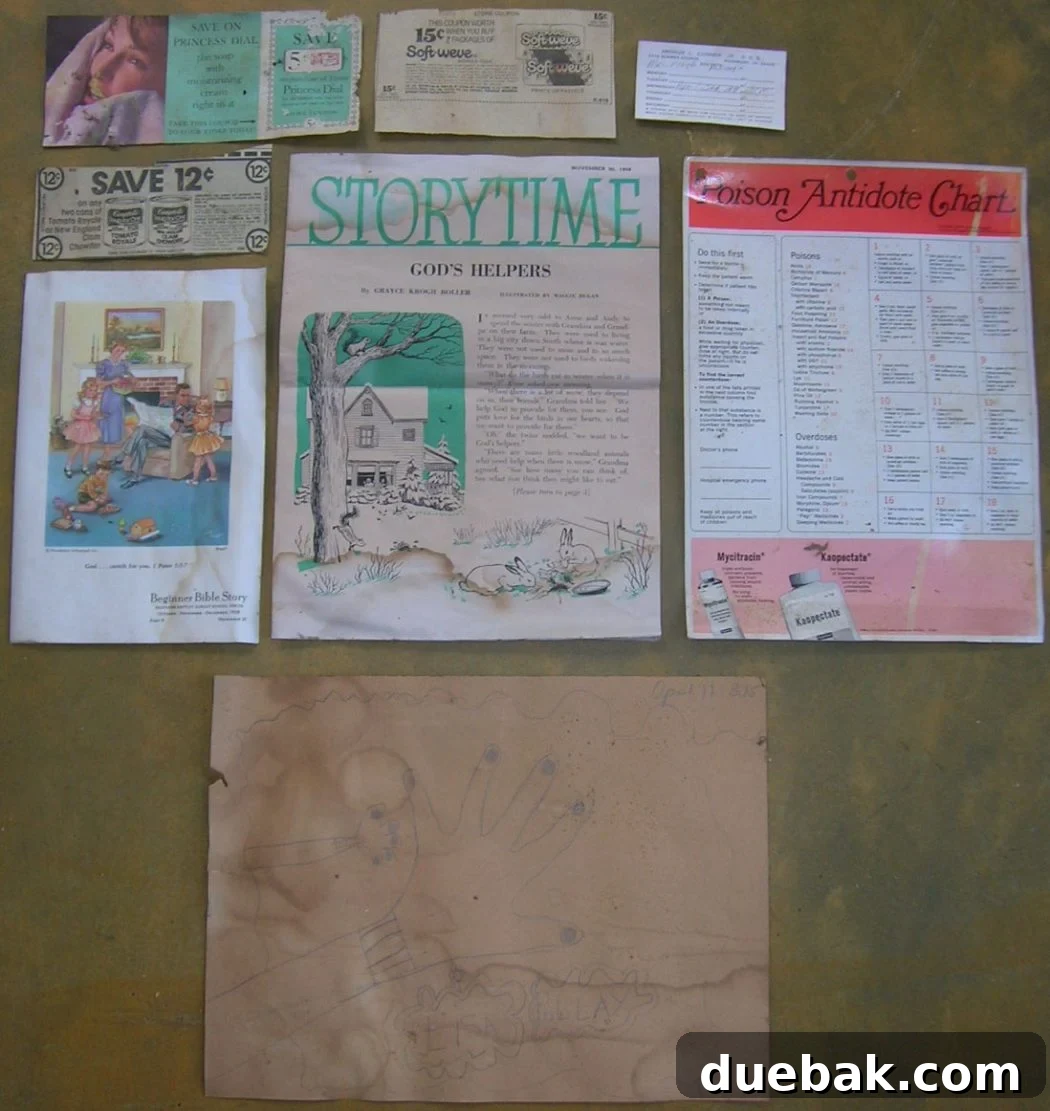
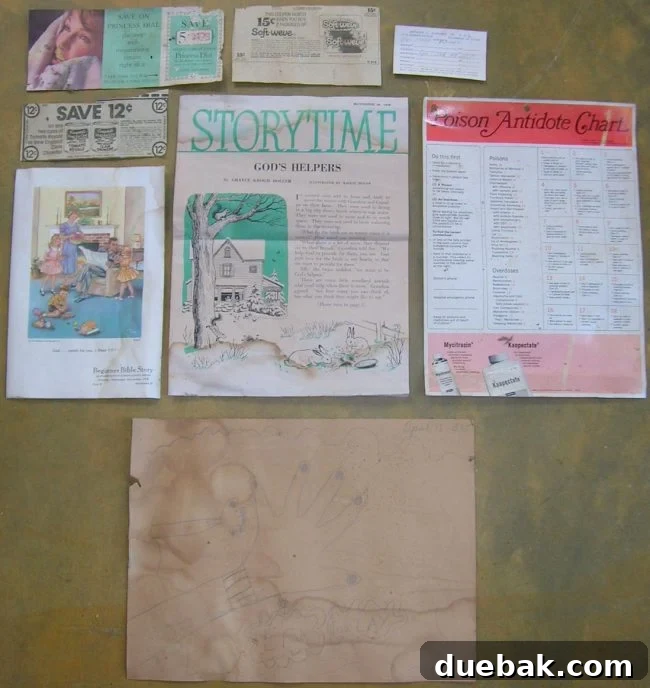
Our collection of discoveries was truly a mini time capsule, providing a snapshot of consumer habits, daily routines, and personal moments from decades ago. Here’s a closer look at each item and the insights it offered:
- A Vintage Coupon for Princess Dial Soap: Among the first items we carefully extricated was a coupon offering 5¢ off two bars of Princess Dial soap. This wasn’t just any soap; the coupon proudly advertised it as “the soap with moisturizing cream right in it.” This small piece of paper speaks volumes about advertising strategies of the time, the emphasis on added benefits, and the modest savings that once enticed shoppers. It evokes a sense of nostalgia for simpler consumer choices and the widespread use of physical coupons as a primary marketing tool. It’s a delightful reminder of how everyday products were presented to the household consumer decades ago, highlighting the evolution of personal care and marketing.
- Campbell’s Soup for One Coupon: Next, we uncovered a coupon for 12¢ off two cans of Campbell’s Soup for One. What made this particular find especially poignant was its clear expiration date: April 30, 1981. For me, this date held a personal significance, as I was less than seven months from being born when this coupon became void. It served as a stark, yet charming, reminder of the passage of time and the cyclical nature of daily life. The “Soup for One” concept also hints at changing demographics and eating habits, possibly catering to single individuals or busy professionals looking for a quick meal solution, long before the era of widespread ready-to-eat meals and delivery services.
- Soft-weve Toilet Paper Coupon: The discovery of a coupon for 15¢ off two packages of Soft-weve toilet paper was another testament to the mundane yet essential aspects of household management from the past. While not glamorous, this coupon underscores the universal need for everyday commodities and how even basic necessities were subject to promotional offers. It provides a subtle nod to the branding and product names of toilet paper from that period, which often emphasized softness and comfort, much like today. It’s a quiet testament to the enduring presence of such items in our homes.
- Dentist Appointment Reminder for Mrs. Floyd Pollay: Perhaps one of the most intriguing and humanizing finds was a dentist appointment reminder card for a Mrs. Floyd Pollay. Dated April 28, 1971, for an appointment at 2 pm, this card instantly brought a specific individual into focus. Who was Mrs. Pollay? What was her life like? This simple card transforms the abstract concept of “previous inhabitants” into a tangible person, prompting a flurry of questions about her life, her family, and her connection to this home. It’s a tiny fragment of a personal schedule, a relic of routine that makes the past feel incredibly close and real.
- A Beginner Bible Story (November 1958): This item transported us further back in time. A small pamphlet titled “A Beginner Bible Story,” dated November 1958, suggests a connection to religious education or Sunday school. This find speaks to the values and activities common in households during the late 1950s, particularly the importance placed on moral and religious instruction for children. It offers a glimpse into the materials used to teach young minds, likely reflecting the cultural and educational norms of the era.
- “God’s Helpers” Storytime Pamphlet (November 30, 1958): Complementing the Bible story was another pamphlet, “God’s Helpers,” also dated November 30, 1958. The close dates suggest these items might have belonged to the same child or were part of a concurrent set of educational materials. This reinforces the idea of a family with young children residing in the house, perhaps engaged in weekly story time or religious instruction. These pamphlets serve as charming artifacts of children’s literature and moral education from mid-century America.
- Poison Antidote Chart (Copyrighted 1965): A practical and slightly chilling discovery was a poison antidote chart, copyrighted 1965. This item highlights a more serious aspect of household safety from that period. Before the widespread use of child-proof packaging and easily accessible emergency services like poison control centers (or at least, before they were as commonly publicized), such charts would have been essential household tools. It reflects the concerns of parents and homeowners regarding common household chemicals and potential hazards, offering a stark reminder of how safety protocols and immediate response methods have evolved over the decades.
- A Drawing by Lisa Pollay: The most personal and heartwarming discovery was a child’s drawing, signed by “Lisa Pollay” and dated April 11th, 3:15. This drawing, likely created by a child of the mysterious Mrs. Floyd Pollay, is a profound connection to the home’s past. A child’s artwork is always a pure expression of imagination and a snapshot of their world. The specific date and time add an intimate layer of detail, making it feel incredibly immediate and personal. It leaves us wondering about Lisa – what she drew, what she dreamed, and what her life became. It’s a powerful symbol of the many lives that have unfolded within these walls, making the house feel less like just a structure and more like a living archive.
The Deeper Meaning of Renovation Discoveries
These finds, while individually small, collectively offer a rich narrative. They are not merely old papers; they are fragments of human experience, telling tales of consumer culture, family life, childhood innocence, and the daily concerns of past generations. They serve as a powerful reminder that every home has a history, filled with the echoes of lives lived, moments shared, and memories created.
Uncovering such items during a renovation transforms the process from a purely practical endeavor into a journey of historical exploration. It adds a layer of depth and appreciation to the property, connecting us to the previous occupants in a profound way. These aren’t just objects; they are a direct line to the people who once walked these floors, cooked in this kitchen, and raised their children here. This “household archaeology” is a testament to the fact that our homes are not just structures of brick and mortar but vessels of countless stories.
What to Do with Your Hidden Renovation Treasures?
For those fortunate enough to stumble upon similar treasures during their own home renovation projects, the question inevitably arises: what should be done with them? The answer often depends on the nature of the find, its historical significance, and your personal connection to it. Here are some suggestions:
1. Preserve and Document
- Gentle Cleaning: Handle all items with care. If dirty, use a soft, dry brush to gently remove dust. Avoid water or harsh chemicals, which can damage old paper.
- Archival Storage: Store delicate items in acid-free sleeves or folders to prevent further deterioration. Keep them away from direct sunlight, extreme temperatures, and humidity.
- Photography: Take high-resolution photographs of each item. Documenting them digitally ensures a lasting record, even if the physical items degrade over time.
2. Research and Learn
- Trace the History: If names or dates are present, like “Mrs. Floyd Pollay” or “Lisa Pollay,” you might be able to research property deeds, old city directories, or even online genealogical records. This can sometimes lead to connecting with descendants of previous owners.
- Contextualize: Research the historical context of the items. What was happening in 1958 or 1971? Understanding the societal backdrop can deepen your appreciation of the finds. For example, learning about popular culture or economic conditions around the time the coupons were issued adds layers to their story.
3. Display and Share
- Create a Mini-Museum: Consider dedicating a small display area in your renovated home. A shadow box frame with UV-protective glass can beautifully showcase smaller items like coupons or a child’s drawing, turning them into a conversational piece.
- Share Your Story: Post your discoveries on social media, share them with friends and family, or even contact local historical societies. Others often enjoy hearing these personal stories, and historians might find unexpected value in your unique collection.
- Integrate into Decor: For larger or more robust items, think about how they could be subtly integrated into your home’s decor, perhaps as a nod to its history.
4. Ethical Considerations
- Respect Privacy: While researching, be mindful of the privacy of past residents. The goal is to understand history, not to intrude.
- Consider Significance: If you find something of significant historical or monetary value, you might consult with an appraiser or a local museum. However, for most personal items like ours, their value is primarily sentimental and historical.
Our experience with the “buried treasure” from under the cabinets has been a truly rewarding aspect of our renovation journey. It reminded us that beyond the aesthetics and functionality, a home is a living archive. It holds stories, secrets, and echoes of lives lived, waiting to be discovered by those with the patience and curiosity to look a little deeper.
The Enduring Magic of Unintended Time Capsules
These unplanned time capsules are more than just forgotten items; they are poignant reminders of continuity and change. They make us ponder the hands that once held these coupons, the dentist visits that were once a routine, and the innocent hand that painstakingly crafted a drawing on a specific afternoon decades ago. They bridge the gap between “then” and “now,” offering a profound sense of connection to the human tapestry woven within the walls of our homes.
So, the next time you embark on a renovation project, remember to approach it not just with a blueprint, but with a sense of wonder. You never know what forgotten histories or personal treasures might be waiting to be unearthed, ready to tell their silent stories and add a unique chapter to the ongoing narrative of your home.