

Transforming a room with a burst of color and unique texture can be one of the most rewarding DIY home projects. Today, we’re diving deep into an exciting journey where we crafted a vibrant, custom wood wall treatment for our son’s bedroom. Far from a simple paint job, this project incorporates meticulously cut and painted lattice strips, adding a subtle yet impactful three-dimensional texture that elevates the entire space. Get ready for a detailed, step-by-step tutorial that will inspire you to bring your own colorful vision to life.

You might recall seeing our son’s room back in July, when we proudly showcased our installation of an easy upholstered headboard and a functional built-in bookshelf. These additions significantly enhanced the room’s utility and injected a delightful coziness. However, we also noted that the room still craved more personality and a bolder splash of color. Specifically, the expansive wall at the foot of his bed, soaring over nine feet thanks to the vaulted ceilings, presented a blank canvas brimming with potential for a captivating design element.

The inspiration for this project truly ignited after we completed a large, colorful wall mural in our daughter’s room. Witnessing her excitement and the vibrant transformation of her space, our son became even more enthusiastic about having something equally bold and fun in his own room. Having thoroughly enjoyed the creative process of that mural project, we eagerly embraced another opportunity to infuse cheer and visual interest into his bedroom. But before we delve into the intricate details of how we created this stunning colorful wood wall treatment you’ll see below—it’s more than just paint; the applied wood strips create an incredible, subtle texture in person—let’s trace our journey to this innovative design solution.

Our design process began with a brainstorming session, exploring a myriad of options for this prominent accent wall. We considered everything from engaging wallpaper patterns and large decal wall treatments to classic wainscoting or traditional beadboard. Each option had its merits, but we were seeking something truly distinctive. Eventually, we gravitated towards the concept of incorporating thin, horizontal planking with a varied color gradient. We wanted a look that was less bulky and more refined than the thick, rustic aesthetic of shiplap or wider horizontal planks. This led us to the idea of using thinner lattice strips, which would provide a more unexpected and contemporary result. While we appreciate the charm of thicker shiplap – we even utilized it for a stylish backsplash in the duplex and it features prominently on the ceilings of both our son’s room and our daughter’s room, as seen in the image below – we aimed for a different scale and aesthetic for this particular wall.
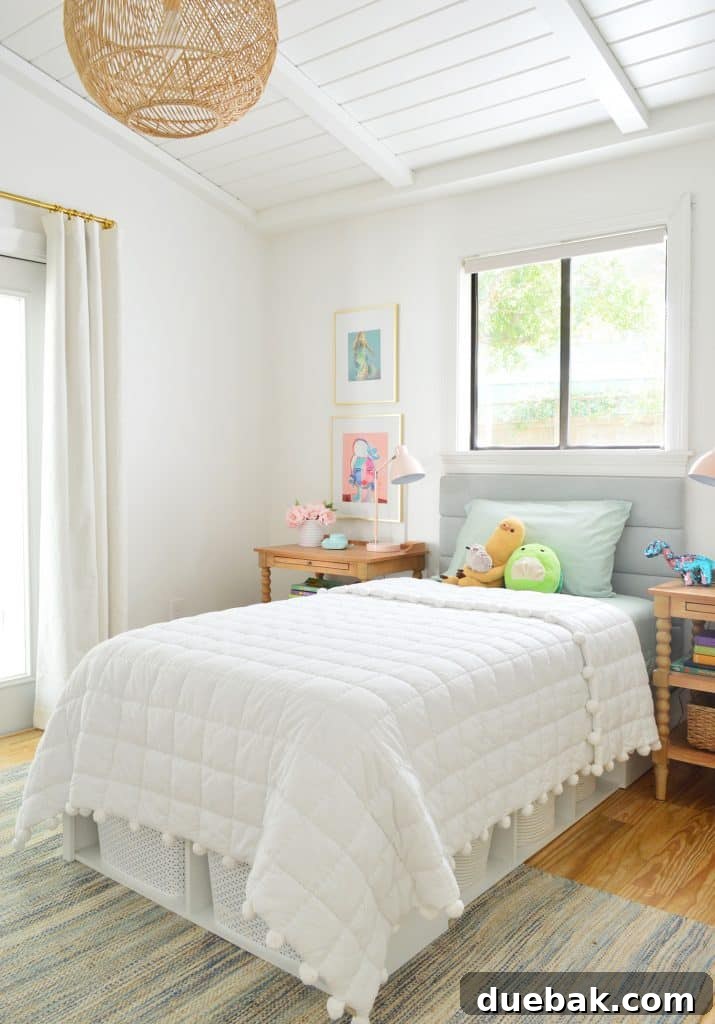
Our primary goal was to create a wall treatment that would complement, rather than compete with, the scale of the existing ceiling planks. Imagine a designer’s approach: instead of pairing two equally large-scale patterns that might clash, they often recommend combining one large-scale print with a smaller, complementary pattern. This principle guided our choice. We desired a visually lighter, less imposing effect for the wall. The thin lattice strips offered this perfect balance, adding texture and color without overwhelming the space or duplicating the ceiling’s robust character.
With our innovative horizontal lattice planking strategy firmly established, the next crucial step was to define our color palette. The big question became: what colors should we use, and how many shades would be ideal to achieve the desired effect?
Choosing The Colors for Your Gradient Wall
Our inspiration for the color scheme stemmed from a universally beloved natural phenomenon: a beach sunset. This choice was deeply personal and meaningful, as our son absolutely adores spending time at the beach. He also naturally gravitates towards vibrant blues, greens, yellows, and oranges—hues that are beautifully abundant in a quintessential beach sunset. We envisioned a palette that would evoke the serene transition from the ocean’s depths to the fiery glow of the setting sun, all within the comforting confines of his room.
The color selection process was a collaborative and fun experience, with our son actively participating in choosing shades from various paint decks. His arguments for certain colors were surprisingly articulate and endearing; for instance, he championed “Jersey Cream” because “Mom is from New Jersey,” and “Sweet Orange” and “Sumptuous Peach” simply because “he likes those fruits.” This personal involvement not only made the process more enjoyable but also ensured he would feel a deeper connection to his newly designed space. After careful consideration, we narrowed down ten colors that collectively promised a harmonious and visually appealing transition.
To visualize our concept before committing to paint, we turned to Photoshop. This digital planning stage was invaluable, allowing us to experiment with randomized stripes of each chosen color, arranging them in an imperfect, organic gradient pattern down the wall. This crucial step helped us preemptively understand the visual flow and balance, ultimately leading us to the precise arrangement you see in our digital mock-up:

The final arrangement beautifully achieved an “ocean-at-dusk meets modern-rainbow-gradient” aesthetic, perfectly blending the tranquility of twilight waters with a playful, contemporary spectrum. The ten Sherwin-Williams colors meticulously selected for this project include:
- Sumptuous Peach (SW-6345)
- Sweet Orange (SW-6351)
- Jersey Cream (SW-6379)
- Rice Paddy (SW-6414)
- Celery (SW-6421)
- Liveable Green (SW-6176)
- Waterscape (SW-6470)
- Comfort Gray (SW-6205)
- Vintage Vessel (SW-9050)
- Raindrop (SW-6495)
Now, if this extensive digital planning phase seems a tad excessive or “overwrought” to some (my wife might have hinted at this, ahem!), let me unequivocally state its profound benefits. My primary aim was to dramatically minimize wasted time and materials. By being incredibly precise about the amount of wood we needed to purchase, and by pre-determining the exact number of cuts for each size and color strip, we streamlined the entire execution process. While it felt a bit “Type A” at times, the meticulous preparation ultimately ensured the project unfolded with remarkable smoothness and efficiency. So, I make no apologies for the detailed planning; the flawless result speaks for itself.
Painting & Prep: Preparing Your Lattice Strips for Installation
For our gradient wall, we chose primed lattice molding as our material of choice. This product is ideal for several reasons: its slender profile, measuring only 1/4 inch thick, prevents the wall from feeling overly bulky, while its inherent wood texture remains subtly visible even after painting, adding depth and character. The pre-cut strips, conveniently 1.5 inches wide, were perfect for our design. This narrow width allowed us to incorporate a substantial number of strips—60 in total!—into our layout, ensuring that our gradient transition would be nuanced and subtle. Using fewer, wider boards would have created a more abrupt color change, and we deliberately avoided that to prevent competition with the wider planks already present on the ceiling.
Our initial step involved roughly cutting the lattice strips to size. Given that we were installing them around an existing built-in bookcase and a closet door, we identified three distinct lengths needed for various sections of the wall. It’s always a good practice at this stage to leave the strips slightly longer than the exact measurement. This buffer accounts for any minor inconsistencies or lack of perfect squareness in your walls, allowing for more precise trimming during the installation phase. This small detail can save a lot of frustration later on.
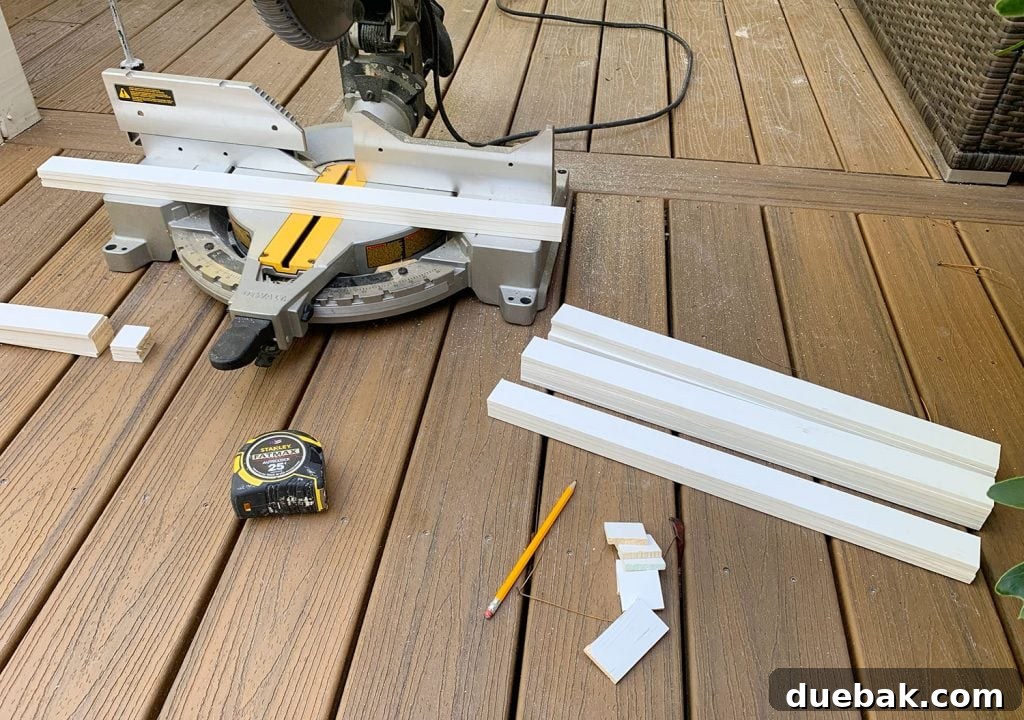
Once all the lattice pieces were roughly cut, it was time for the most enjoyable part for our son: painting! While there might be more high-tech or industrial methods for painting so many strips, we opted for the reliable, old-school approach: foam rollers over a protective dropcloth. This method, though seemingly simple, allowed for a hands-on experience. And by “we,” I mean our enthusiastic six-year-old was right there, foam roller in hand, getting in on the action. Involving your children in the design process of their own room is an incredibly effective way to foster a sense of pride and ownership in the finished result, making it even more special for them.

Logistically, spreading out all sixty pieces of lattice for simultaneous painting wasn’t feasible due to limited space. Therefore, we tackled the painting in two distinct batches. The image below showcases the first batch, comprising approximately two-thirds of the total strips, mostly the cooler “ocean-at-dusk” tones. This segmented approach ensured we had ample room to work cleanly and efficiently, allowing each strip to dry properly before handling.

Installing The Painted Wood Strips: A Step-by-Step Guide
Before any wood strips touched the wall, precise preparation was paramount for a durable and professional finish. We began by meticulously marking the studs using our favorite stud finder. This particular tool is incredibly convenient, as it floats hands-free on the wall, allowing us to easily draw light, vertical pencil lines using a level along each stud. These markings served as indispensable guides, ensuring that every nail would securely fasten the wood strips directly into the wall studs, rather than just the drywall. This method guarantees a robust and long-lasting hold, preventing any future sagging or detachment of the lattice.

Our installation strategy began with a full strip positioned perfectly across the top of the built-in bookshelf. This was a deliberate choice; having a complete, unbroken piece here was aesthetically crucial to avoid any awkward slivers that might otherwise result from starting at the baseboard. We used 1 1/4-inch finish nails driven with our trusty nail gun. From this central starting point, we then worked both upwards towards the ceiling and downwards towards the floor. Throughout this initial setup, maintaining perfect levelness was key, and our level proved invaluable in ensuring our starting line was perfectly horizontal, preventing any gradual slant as we progressed across the wall.

To ensure consistent spacing between each horizontal lattice strip, we employed a simple yet effective technique: using small scrap pieces of the very same lattice as spacers. This was incredibly convenient, as we had an abundance of these off-cuts readily available. This method not only streamlined the installation but also provided us with the ideal gap—neither too large nor too small—that we had envisioned. The result mimics a subtly “bolded” horizontal beadboard effect, adding definition without being overtly pronounced. The consistent gap creates a rhythmic pattern that enhances the overall gradient flow.

While the gap might appear somewhat exaggerated in the close-up photo above, it’s essential to remember that these lattice strips are only 1/4 inch thick. This means that from a distance, when you step back and view the wall treatment as a cohesive whole, the visual effect is incredibly subtle and refined. The slight dimensionality adds depth without creating harsh lines or deep shadows, contributing to the sophisticated gradient. To truly grasp what I mean, let’s fast forward a moment and see the overall impact:

Alright, back to the installation process. This entire phase of the project progressed surprisingly quickly. A key factor in maintaining efficiency was having our printed digital mock-up readily available. This visual guide helped us keep the intricate color pattern perfectly straight, though it didn’t entirely prevent a minor mishap—we accidentally started with the wrong color initially! (Oops!). A quick adjustment, and we were back on track, seamlessly adhering to our carefully planned gradient.

Once the initial section of medium-length strips was successfully installed, working our way upwards from the bookshelf, we then shifted our focus to the lower portion of the wall. Here, we began installing the shorter-length strips, carefully extending the gradient downwards towards the baseboard. This systematic approach ensured consistency and precision across all sections of the wall, allowing the colors to flow seamlessly.

After all the lower strips were securely in place, it was time for the second round of painting. This batch comprised the “sunset-y” colors—the vibrant oranges, yellows, and lighter greens—destined for the upper sections of the wall. By painting these separately, we ensured fresh, even coats and managed our workspace more effectively, separating the warmer hues from the cooler, “watery” tones already installed below.

Once these final “sunset” pieces were thoroughly dry, their installation followed the exact same proven process: employing a scrap lattice piece as a spacer, precisely nailing into the marked studs, and frequently verifying levelness to maintain alignment. The only notable variation in this upper section was the presence of an HVAC vent. Just as one would approach an electrical outlet or light switch, we carefully removed the vent cover and precisely cut the lattice strips to fit neatly around the opening. Upon reinstallation of the cover, the entire area looked completely seamless, integrating the vent into the design without interruption (you’ll observe this clean finish in subsequent photos).

We were fortunate that our meticulous planning paid off, and we didn’t need to cut any awkward slivers for the very top or bottom edges of our pattern. While the spaces at the very top and bottom, where the painted strips meet the existing white molding, are slightly wider than the consistent gaps between the painted boards, this difference is practically imperceptible to the eye. Attempting to fill these marginal spaces with a tiny strip of color might have inadvertently drawn more attention to them than the slightly larger white gap, which subtly blends into the surrounding white baseboard and upper header board. This deliberate decision contributed to the clean, finished aesthetic.
Finishing Touches: The Secret to a Polished Gradient Wall
The entire process—from cutting and painting to the installation of all sixty wood strips—required approximately two hours over two separate days, totaling four hours of dedicated effort. This spread was primarily due to the necessary drying time for the paint. By the third day, we eagerly moved onto what some might consider tedious but what we view as an incredibly impactful phase: patching the nail holes. This step is the unsung hero behind a truly professional and polished final look.
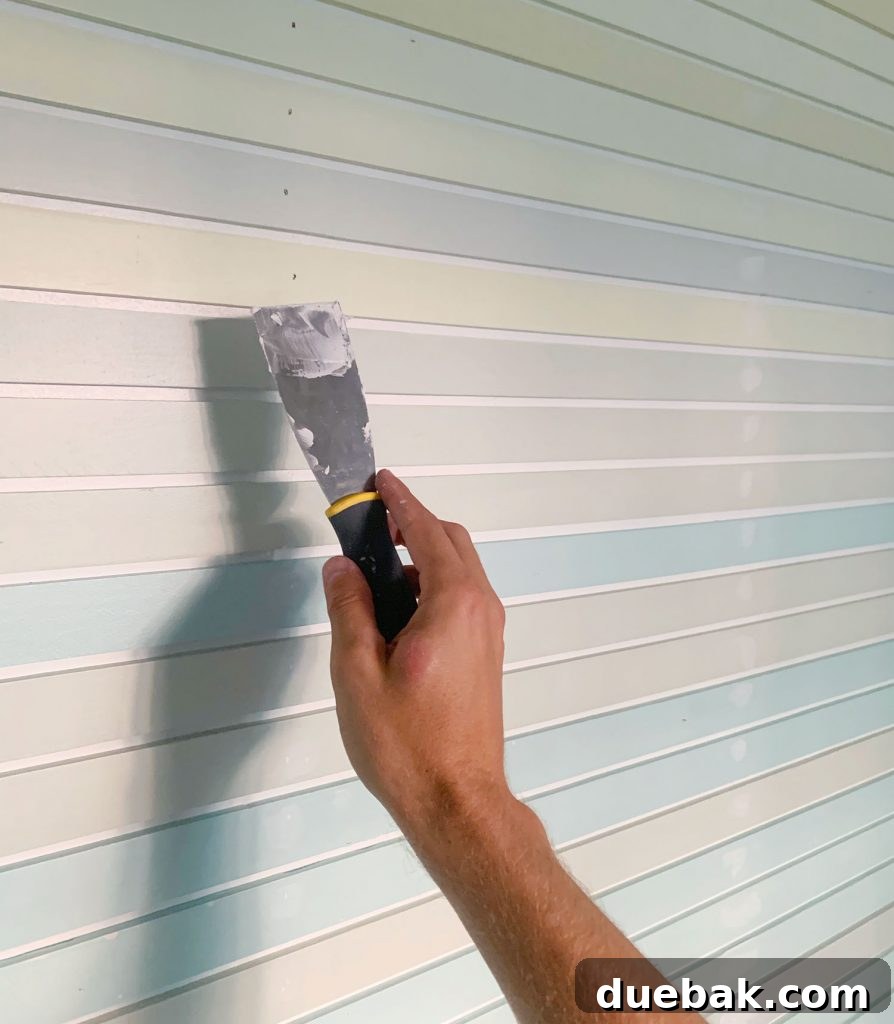
Yes, meticulously filling dozens of tiny nail holes with spackle can be a painstaking task, but its contribution to the overall aesthetic is immeasurable. We used a small putty knife to carefully apply spackle to each hole, ensuring they were completely filled and flush with the wood surface. The following morning, after the spackle had thoroughly dried, we returned to gently sand each patched area smooth using a sanding block. This creates an even, flawless surface, ready for the final touch-ups.

Finally, we proceeded with the touch-up painting of the spackled dots. For this, we utilized the very same foam rollers that had been carefully saved in plastic sandwich bags from our initial painting session—a testament to foresight, knowing this step was an inevitable part of the process. While this task, much like the spackling, required patience and precision, this entire “much more finished result” phase, encompassing patching, sanding, and touch-ups, added only about an hour to the total project time. This small investment of time yields significant dividends in terms of a truly professional and seamless finish.

And that, dear friends, is the comprehensive journey of how we transformed a plain wall into a captivating focal point. From initial inspiration and meticulous digital planning to precise installation and the critical finishing touches, every step contributed to creating this unique and vibrant space for our son. The result is a testament to thoughtful design and the power of DIY to personalize a home.

Currently, we’re simply relishing in how much cheerier and more inviting this accent wall has made his entire room. It’s truly the first thing he sees when he wakes up in the morning and the last visual before bedtime, a daily dose of vibrant joy that frankly, makes me a little envious! Despite its relatively small footprint, his room now radiates a profound sense of coziness and undeniable charm, largely thanks to this personalized touch. The gradient not only adds color but also a serene flow that promotes a sense of calm and happiness.

While one could certainly achieve a similar colorful striped look by simply taping off and painting stripes directly onto the wall, I must emphasize how genuinely delighted we are that we opted for the wood strips. The added dimension and subtle texture of having the colors physically raised off the wall truly enhance the visual experience in person. It’s a nuanced detail that, regrettably, doesn’t always translate perfectly in static photographs. However, Sherry plans to share a dynamic boomerang in her Instagram Stories that will beautifully illustrate the unique depth and texture I’m describing. If you’re reading this at a later date, you can find it saved in the “FL House7” circle on our IG profile page, offering a more immersive look at this stunning feature.

You may also have noticed a recent change above his bed: we swapped out the artwork. The previous family photo, though cherished, was a bit dark and always intended for reprinting with better brightness. However, our plans changed when we acquired this captivating painting from Sherry’s longtime friend and exceptionally talented painter, Michelle Armas. From the moment it arrived, it felt intrinsically meant for this space, perfectly complementing the new vibrant wall. Our son affectionately refers to it as “his jellyfish,” a testament to its whimsical charm. For those inspired by Michelle’s work, she is offering prints and canvas rolls of it here.

So, there you have it: the delightful tale of how a substantial amount of lattice and ten carefully selected pots of paint collaboratively converged to create a linear, abstract “son-set” for our son’s room. Or perhaps, as a certain dad might suggest, a “sun-set” designed specifically for his “son.” Did I just venture into classic dad-joke territory? I think I did. Regardless of the pun, the outcome is a truly bespoke and joyful space.

This certainly isn’t our first venture into adding decorative wood planks to a wall for a fun and impactful treatment. We have a rich history with such projects, including an insightful old post from way back in 2013 detailing how to use lattice to create a $57 board & batten treatment. Furthermore, we’ve shared invaluable tutorials on how to craft fancier molding in our previous home and how we installed thicker horizontal planking for a mere $31 as stunning backsplashes in the duplex. These past projects highlight our passion for using wood to add architectural interest and personality to any space.
If our colorful gradient wall has sparked your imagination and you’re seeking even more vibrant wall treatment ideas, allow us to guide you through some inspiring examples. Check out this awesome detail that Angela added to the top of her closet, showcasing ingenious use of color in unexpected places (you can also discover another amazing Angela project here!). We’re also absolutely captivated by this colorful planked ceiling, which demonstrates thinking beyond the walls, this stunning rainbow planked wall for a truly bold statement, this innovative wood wall art for a sculptural approach, and this cool multi-toned vertical design that plays with orientation. Essentially, the possibilities are endless: grab some wood, pick your favorite paint colors, choose your pattern, placement, and spacing, and unleash your creativity to craft a truly fun and personalized wall treatment.
And for those who might have missed our most recent updates, make sure to catch up on our latest projects! Last week’s post delved into the exciting progress of our second-floor deck and how that expansive “outdoor room” is taking shape – here’s the link to get you all caught up. The week prior, we shared how our upstairs family room is beautifully evolving, and you can find that update right here. For any other ongoing updates about our Florida house journey, please explore an archive of posts that will quickly bring you up to speed. We’ve covered an incredible amount of ground and transformation in just the last 4.5 months of living here!
*This post contains affiliate links, so we may earn a small commission when you make a purchase through links on our site at no additional cost to you.