
Conquering the Basement Beast: Our Journey to a Dry, Organized, and Functional Space
Every homeowner knows the struggle: that one challenging space that refuses to cooperate. For us, it’s been the basement – a formidable opponent that has tested our patience and DIY prowess. The current score feels heavily skewed in the basement’s favor, with its stubborn issues proving resilient. But we thrive on a good challenge, and we’re determined to turn this underground adversary into a triumph. This is the detailed account of our ambitious basement overhaul, chronicling every step, misstep, and hard-won victory.
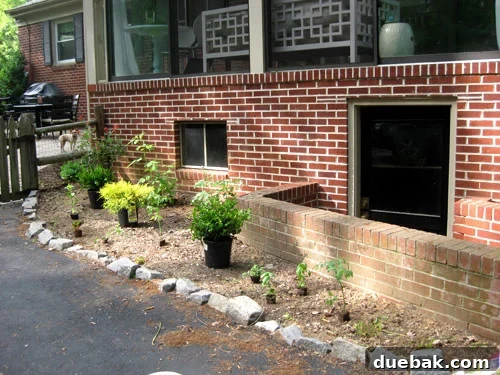
We’ve received numerous requests for a deeper dive into our renovation process, extending beyond mere product lists and budget breakdowns. Our readers want to understand the intricate thought process behind identifying essential functions, brainstorming effective floor plans, and navigating the inevitable pitfalls that arise during a major home improvement project. True to our word, we’re holding nothing back as we transform our dreary, cobweb-laden basement into a finished, highly functional storage room – a haven fit for our beloved extra furnishings, bikes, seasonal decor, and accessories, safely protected from spiders and mold. First, let’s pinpoint the precise location of this particular challenge: it resides directly beneath our sunroom, accessible via a charming little brick staircase, which you might recall seeing in an older photo from our edible garden planting days.
Unveiling the Basement’s Troubled State: Before the Transformation
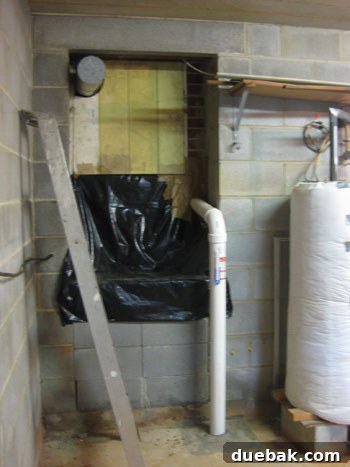
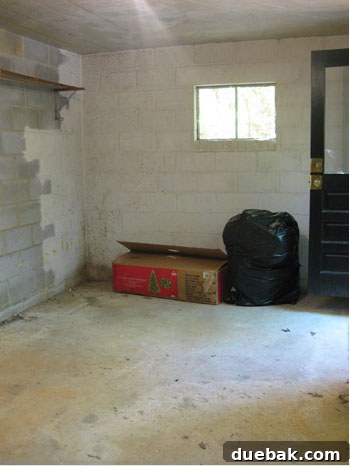
Measuring a generous 19 by 13 feet, this room is surprisingly large – in fact, it rivals the sunroom above it as one of the biggest spaces in our home. However, its size is where the positive attributes abruptly end. The challenges presented by this basement far outweigh any we’ve encountered in previous projects. From persistent flooding, which has left inch-deep puddles after torrential storms, to an overwhelming spider infestation that makes “webs galore” feel like an understatement, this space was crying out for serious intervention.
Compounding these issues is a pervasive mildew problem, visible on the walls, floor, and any items stored within. We once relegated two extra wood chairs here, only to discover them weeks later thoroughly covered in unsightly mildew. Adding to the aesthetic and functional woes are several fixed elements: a massive, centrally located water heater that disrupts the flow of the room, and a radon mitigation system (the white pipe seen to the left of the water heater in the image below) that we needed to ingeniously integrate into our design. There’s also an unusual trap-door in the wall, leading to an enigmatic crawl space, further complicating any potential layout.
A Glimpse into the Problematic Core
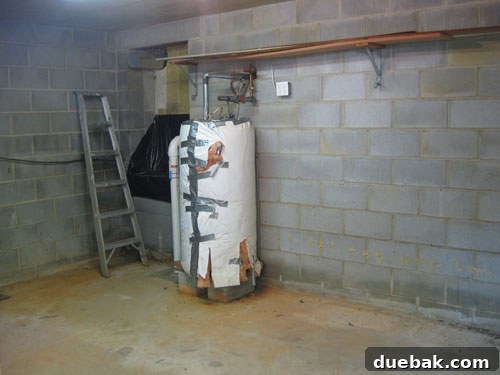
The “crawl space” access adds another layer of mystery and inconvenience. Navigating around these permanent fixtures while planning for a cohesive, functional space was undoubtedly one of our biggest design hurdles.
Structural Obstacles and Lack of Light
To top it all off, the room is illuminated by just two tiny windows, barely piercing the gloom of what feels like a cavernous, cinder block dungeon. This initial state was far from ideal, presenting a significant starting deficit for any renovation project.
The “Dungeon” Aesthetic: Before Photos
Our Vision for a Transformed Basement: Functionality Meets Style
Despite the daunting list of negatives, our determination remains unshaken. Our goal is to convert every “con” into a “pro,” or at the very least, minimize their impact while maximizing the room’s form and function. Given its separate entry from the main house, this basement will likely never serve as a primary living area. However, we’re incredibly excited to reinvent it as an exceptionally convenient and aesthetically pleasing storage room. Forget unsightly wire shelves and bowed wooden boards; our vision is for a space that boasts a cohesive, built-in look, a far cry from a haphazard collection of shelving systems. Before we could even dream of layout ideas and chic storage solutions, we first had to address the fundamental issues that rendered the room utterly unworkable: the pervasive dampness and the persistent mildew invasion. These two problems, as we quickly discovered, stemmed from a single source: trapped moisture permeating our little underground lair.
Tackling the Root Cause: Basement Moisture and Mildew Solutions
Understanding that moisture was the primary antagonist, we embarked on thorough research to devise a comprehensive solution. Our findings revealed three critical steps necessary to effectively combat the water and mildew issues plaguing our basement:
- **Eradicate Existing Mildew:** Our first priority was to definitively kill all present mildew, preventing its further spread and mitigating potential health risks.
- **Seal Against Future Seepage:** We needed to create an impenetrable barrier by sealing the porous cinder block walls and concrete floor. This crucial step would prevent the raw stone from absorbing up to an inch of water during severe storms, a problem we’d witnessed firsthand.
- **Maintain Optimal Humidity:** To ensure long-term prevention of moisture and mildew recurrence, introducing a high-quality dehumidifier was essential. We aimed for an Energy Star-rated model to efficiently maintain stable humidity levels without incurring exorbitant running costs during the damper months.
The Power of Drylok: Our Chosen Sealing Solution
Further investigation, largely facilitated by the wonders of Google, pointed us towards Drylok as the most frequently recommended product for sealing cinder and concrete basements. This remarkable product is a thick, milkshake-like paint specifically designed for waterproofing. While its application is slow and notoriously odorous, two heavy coats promised to deliver exceptional results: no more moisture seeping through the cement and cinder for at least a decade, if not longer. Its impressive claims even include the ability to withstand a 22-foot high wall of water – a truly heroic feat in the world of home waterproofing!
However, such a powerful solution doesn’t come cheap. Fortunately, our affiliation with the True Value DIY Blog Squad proved invaluable. As part of a series of DIY projects, True Value generously provided us with a $1000 gift card, which became an absolute lifesaver when we calculated the sheer volume of Drylok required. We estimated needing at least nine gallons of the product, each costing approximately $25. That’s a minimum of $225 spent solely on Drylok to resolve the pervasive seepage problem.
True Value’s Contribution to Our Basement Project

Undertaking the work ourselves yielded substantial savings. By meticulously filling all cracks with exterior caulk and cement crack filler prior to applying the two thick coats of Drylok, we bypassed professional labor costs, saving an estimated $1,000 to $3,000 (based on quotes we received from basement waterproofing experts). A few days of sticky, messy work was a small price to pay for such significant financial relief and the satisfaction of a job well done.
Preparation is Key: Clearing the Way for Drylok Application
Before the Drylok could even be considered, meticulous preparation was paramount. We needed to clear the space entirely, removing anything that would obstruct a seamless application and compromise the waterproofing barrier. This involved a few key demolition tasks:
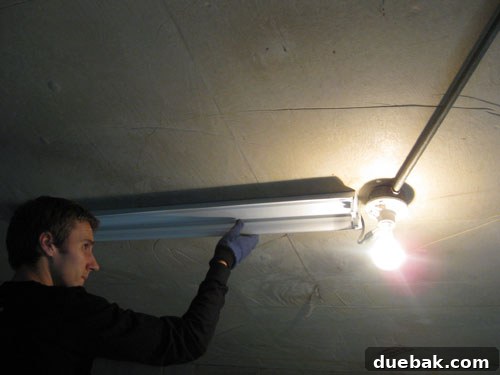
- **Removing the Asymmetrical Light Fixture:** An oddly placed light fixture on the ceiling, which looked anything but symmetrical, was the first to go. Its removal opened up the space and allowed for a cleaner aesthetic.
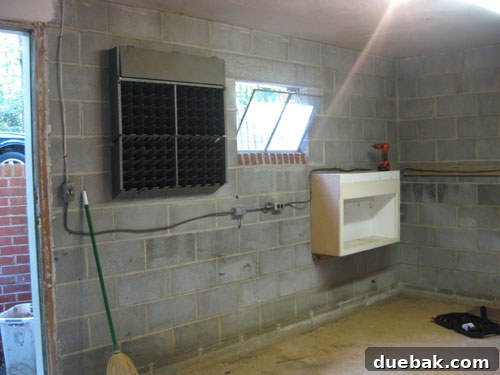
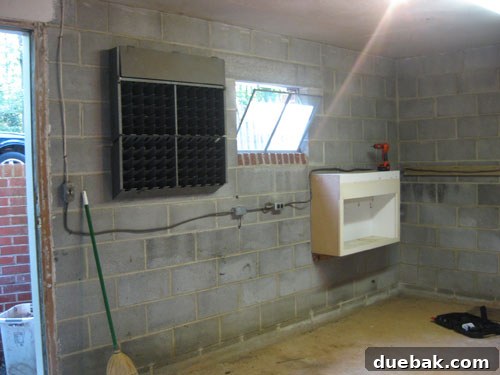
- **Dismantling the Quirky Tool Organizer:** A peculiar metal time-card-slot contraption, repurposed by the previous owner as a tool organizer, was carefully taken down. We freecycled it, knowing we had far grander plans for maximizing that particular wall’s storage potential.
- **Taking Down Ancient Shelving:** Old, sagging brackets and a few pieces of bowed wood that spanned the opposite wall were also removed. These offered minimal functionality and detracted from our vision of modern, integrated storage.
Before & After Prep: Ceiling Fixture Removal
Clearing the Walls: Tool Organizer Gone
Out with the Old: Removing Bowed Shelving
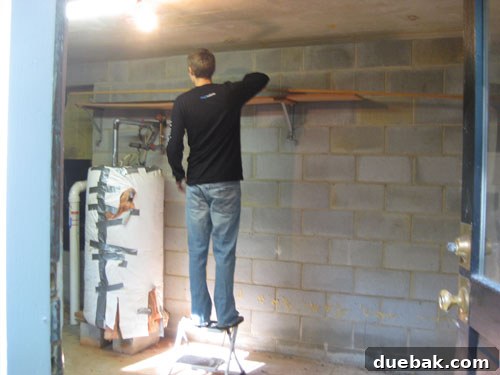
With the room stripped bare, we moved on to the critical step of sealing any and all cracks using concrete filler and exterior caulk. This meticulous patching laid the groundwork for the main event: the messy, yet vital, Dryloking process. As we delved into working with Drylok, we uncovered some important distinctions. The product comes in two main varieties: oil-based and latex-based. The oil-based option offers a range of colors (white, beige, blue, and gray), while the latex-based version is exclusively available in white.
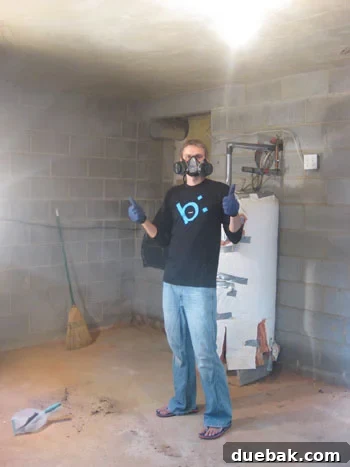
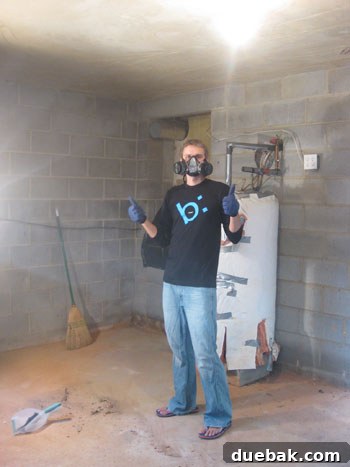
A significant difference lies in their fumes. The oil-based Drylok is considerably more pungent, carrying stern warnings about potential brain damage and even death on its label – a stark reminder of its potency. The latex-based alternative, while still odorous, is supposedly just as effective (though some skeptics remain unconvinced) and about half as offensive as its oil-based counterpart. We opted for the latex-based Drylok for our first coat. Despite being the “lower odor” option, the fumes were still concerning enough that we invested $30 each in high-grade gas masks, ensuring 100% protection against inhaling any fumes or toxins. This proved to be an incredibly wise decision; the air quality, even with the latex version, was intense enough to bring anyone to their knees. Preserving our brain cells for future DIY challenges was a priority, especially with ongoing basement issues still to tackle beyond the moisture and mildew.
Safety First: Gearing Up for Drylok
The Basement Fights Back: A Mildew Setback and Strategic Pivot
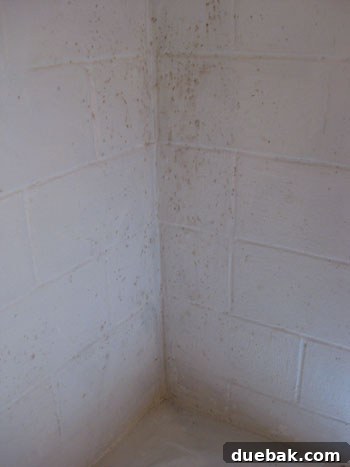
This is precisely where the basement earned its reputation for “not cooperating without a fight.” No sooner had we meticulously applied our first coat of white, latex-based Drylok (a significant investment of $125) than we began to notice an alarming sight: tiny tan dots slowly bleeding through our pristine white finish. It was mildew, relentlessly resurfacing in every corner and along various wall expanses, despite our prior efforts to pre-treat the walls with a homemade 2-parts-water-1-part-bleach spray. While the bleach seemed to temporarily quell the mildew, its triumphant return after the Drylok application was a demoralizing blow. It became clear that our expensive paint job, while effectively blocking exterior water seepage, wasn’t quite solving the underlying mildew problem. While we knew a dehumidifier would eventually play a crucial role, our immediate focus was on eradicating all mildew before completing the paint job.
The Unexpected Return of Mildew
It was time to bring out the big guns and revise our strategy. For the essential second coat of Drylok, we decided to switch from the white latex-based version to the oil-based beige option. This decision was informed by several factors. Firstly, we learned a critical lesson: painting *over* Drylok is generally not recommended, as it can hinder the ability to re-apply Drylok in the future. If, in another two decades, we needed to reseal the basement, applying fresh Drylok over a painted surface would be ineffective. Therefore, opting for a tinted version that acted as both a sealer and a finish was a practical choice.
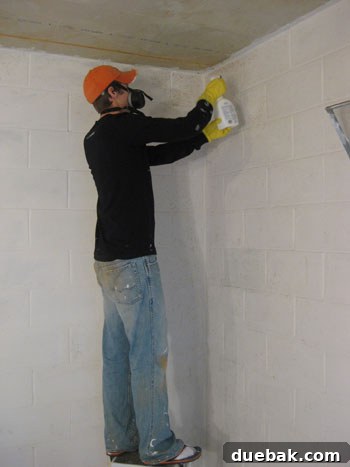
The beige tint offered a significant advantage: it would naturally hide more dirt and the occasional rogue spiderweb far better than a blindingly white backdrop, effectively serving as both a protective coating and a paint in one step. Moreover, we’re known for avoiding stark white walls in our home – it’s how our white ceramic animals and painted pedestal tables truly pop! A True Value expert further solidified our decision by recommending the oil-based variety, citing its potential for a stronger barrier against moisture and future mildew growth, especially when combined with a dehumidifier. We dedicated the following evenings to applying this final coat to the walls (gas masks firmly in place, of course, bracing ourselves for another “stink-fest”). We’re eagerly anticipating sharing the hopefully mildew-free and significantly more polished results, as the temporary “leopard print” mildew aesthetic was definitely not our style. Before applying the second coat, we thoroughly sprayed down the remaining mildew with our diluted bleach cocktail and gave it a good scrub for extra diligence. (A quick note: observe John’s ingenious “socks-with-flip-flops” technique, a practical solution to protect his feet from splatter without sacrificing his favorite shoes!).
Prepping for the Final Coat: John’s DIY Footwear
For those curious about our color choice among the available options (blue and gray), our reasoning was simple yet strategic. We felt gray would reinforce the “cinder block fortress” look, which, while accurate, was something we aimed to downplay. The blue, on the other hand, was a tad too pastel for our aesthetic preferences. Beige emerged as the ideal neutral, offering a warm and inviting backdrop that will perfectly complement the white storage systems we plan to introduce, creating a light and airy feel. The ceiling will also receive a seamless coat of beige Drylok, while the floor will be treated to a rich coat of chocolate floor paint, repurposed from a previous project, adding a touch of definition and contrast. We’re crossing our fingers that we’re on the right track towards finally conquering this basement beast.
Join the Conversation: Your Basement Stories and Advice
What about you, fellow homeowners? Do you have any daunting basement projects lurking on your to-do list? Have you battled stubborn mold, persistent mildew, or challenging moisture issues like flooding? We’d love to commiserate and share experiences. As we forge ahead with this transformation, we are always open to any and all basement-conquering advice. Here’s hoping we can score a few more points in the next round of this ongoing battle!