
Building the Ultimate Backyard Sandbox: Part 2 – The Cover & Sand Fill
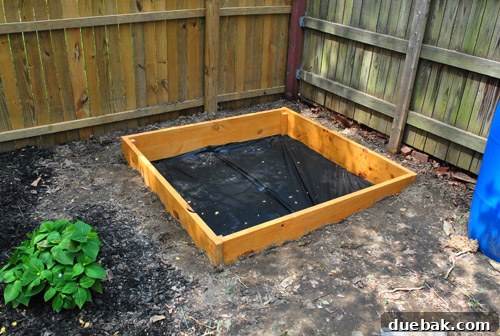
Welcome back to the second exciting installment of our backyard sandbox project! If you’ve been following along, you know we’ve already laid the foundation for a fantastic play area (catch up on Part 1 here, where we built the sturdy box structure). Now, with the main sandbox frame complete and patiently awaiting its sandy treasures, our next critical step was designing and constructing the perfect cover. And let me tell you, there was one little person, whose name rhymes with Blara, who was absolutely buzzing with anticipation!
Crafting the Ideal Sandbox Cover: Our Design Philosophy
Before diving headfirst into construction, we embarked on a mini-research mission. We scoured various DIY sandbox cover ideas, drawing inspiration from ingenious designs by creators like Dana Made It, Small & Friendly, Modern Parents Messy Kids, and Dover Projects. Combining these insights with our own practical experiences, we meticulously developed a mental blueprint for what our ideal sandbox cover should (and shouldn’t) be. Our checklist was designed to ensure functionality, durability, and ease of use:
- Debris Protection: The primary goal was to shield the sand from natural elements like leaves, twigs, and acorns. Equally important was keeping out unwanted animal “contributions” from neighborhood cats and birds, ensuring a hygienic play environment for our child.
- Moisture Management: While achieving a completely airtight seal wasn’t our main objective, the cover needed to offer substantial protection against rain and dew. We aimed for a design that would minimize water accumulation in the sand, preventing mold and prolonging its usability.
- Robust Construction: Durability was paramount. Flimsy tarps that could easily blow away or plastic covers prone to warping were immediately ruled out. We envisioned a sturdy, long-lasting solution, and wood emerged as the clear frontrunner for its resilience and aesthetic appeal.
- Manageable Weight: A heavy, cumbersome cover would defeat the purpose of easy play. We wanted a design that could be lifted and moved without excessive effort, encouraging frequent use rather than becoming a chore.
With these criteria firmly in mind, our design began to take shape. It might look a bit abstract in its initial stages, but trust me, the vision will soon become clear!
Innovative Design: Two-Piece Plywood Cover for Enhanced Stability and Ease
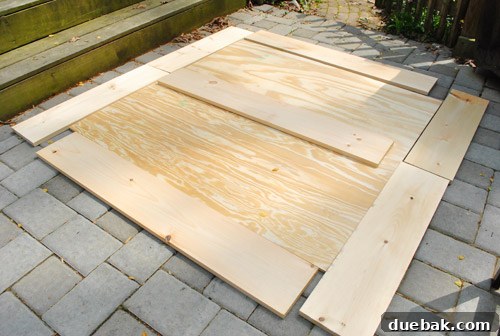
Our core concept revolved around using plywood, which offered the most cost-effective solution for covering a substantial 5×5-foot area. However, outdoor plywood can be notorious for warping. To counteract this, we devised a two-pronged strategy: we opted for two 2×4-foot plywood sheets, reinforced by a robust frame of 1×8-inch boards. This framing not only added significant stability, preventing warping, but also ensured the cover extended sufficiently to do its job. Moreover, situated adjacent to our patio, we desired a clean, finished appearance—far removed from a mere plank haphazardly tossed over a box.
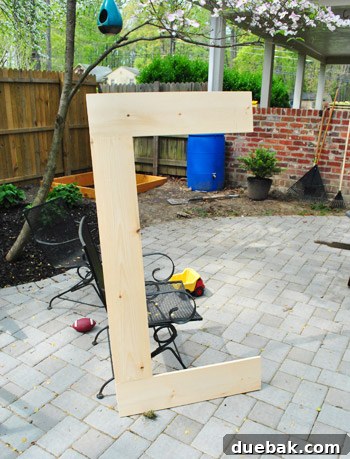
Considering a single 25-square-foot cover would be quite heavy, we ingeniously decided to build it in two interlocking pieces. This modular approach would make lifting and maneuvering the cover much simpler. Here you can see the initial frame for one side taking shape, expertly assembled using my trusty Kreg jig. Notice the “C” shape? It’s almost as if it’s meant for Clara!
Construction and Finishing Touches
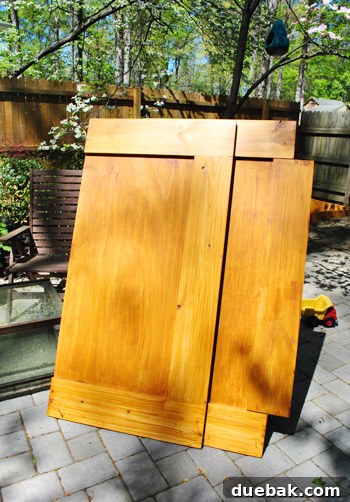
After meticulously constructing both frames, the plywood sheets were securely screwed to the underside, creating a smooth, uninterrupted top surface. To ensure longevity and cohesive aesthetics, I stained both cover pieces with the same Behr waterproof Deck Stain in a “Natural” shade, matching the sandbox itself. While the stain came out a tad streakier than I ideally wanted, I embraced the perfectly imperfect nature of a DIY sandbox project. After all, would Clara truly fuss over a less-than-flawless stain job? I sincerely hoped not! You might also spot a board extending slightly off one side – this is a crucial middle piece designed to elegantly cover the seam between the two halves of the cover, ensuring a snug fit and a polished look once fully assembled.
Integrating Functionality: Hinges, Handles, and Hardware
While merely resting the cover on top of the sandbox was an option, I envisioned a more integrated and user-friendly solution. Attaching the cover with hinges meant we wouldn’t have to carry the entire heavy assembly every time Clara wanted to play. This thoughtful addition significantly enhances the daily usability of the sandbox.
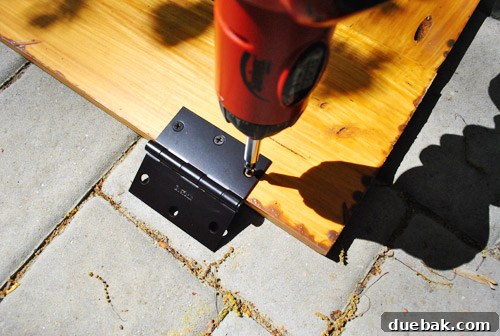
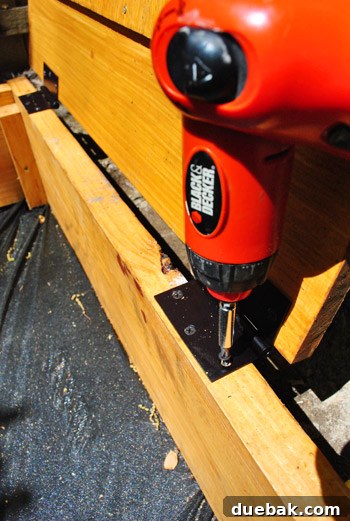
Furthermore, hinging the cover allowed it to gracefully rest against the nearby fence when open, eliminating the need to find separate storage space on our patio. This simple feature makes transitioning from covered to open sandbox effortless. The other half of the hinge was securely fastened directly to the top edge of the sandbox box itself, ensuring a strong and reliable connection.
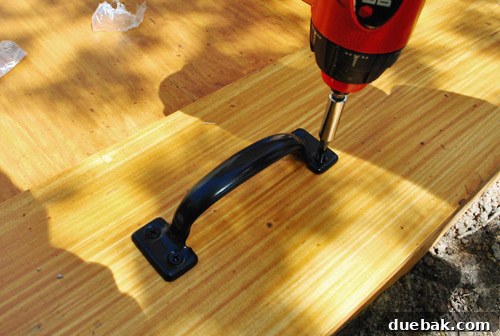
Speaking of hardware, we also affixed matching handles to each side of the cover. These weren’t just for aesthetics; they provided an easy, ergonomic grip for opening and closing. It’s amazing how a few well-chosen pieces of hardware can elevate a DIY project, making it look incredibly professional and “legit.” Note to self: always consider quality hardware – it makes a noticeable difference!
The Completed Cover in Action
Here’s the sandbox with its finished and attached cover. The tree shadows make it a little hard to appreciate its full glory, but you get the idea…
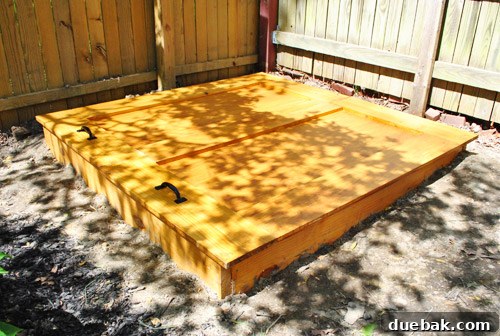
…so let’s fast forward to later in the day, when the sun had begun to set. The lighting might not be as vibrant, but at least those distracting shadows are gone! Regarding potential rain collection on these panels, we’re monitoring the situation. The design includes a couple of natural seams and cracks that should facilitate drainage. So far, with light rains, it has performed admirably. However, if a heavy downpour (“gully washer”) proves problematic, we’re prepared to install additional drainage holes and will certainly report back on any modifications!
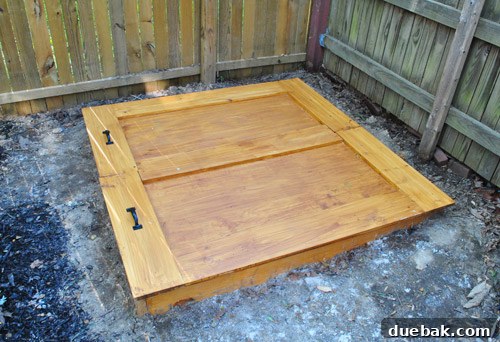
Now, observe how each side of the cover gracefully swings open, revealing the awaiting sandbox beneath. This hinged design is truly a game-changer for accessibility and convenience.
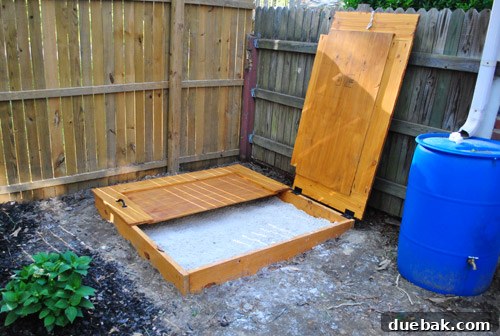
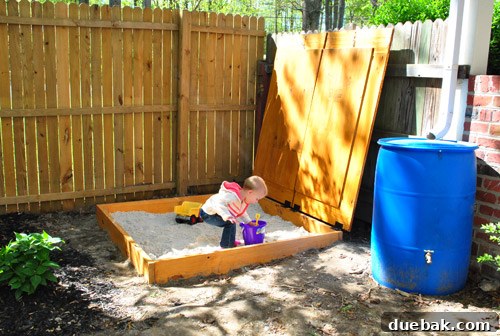
Ta-dah! You might also notice the rain barrel in the background. A quick but important note: it features a fully fused plastic top, completely eliminating any risk of Clara climbing on it and potentially falling into water. While some photos might make rain barrels appear topless, rest assured, this one is securely sealed and incorporates very fine mesh circles for water filtration, effectively keeping mosquitoes out.
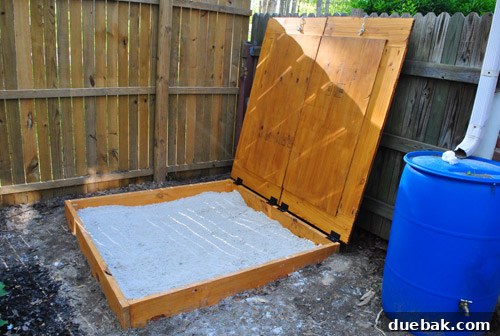
Prioritizing Safety: The Ingenious Safety Latch
On the critical subject of child safety, a thought likely crossed your mind, just as it did ours: “Ack! What if Clara accidentally pulls the cover down on herself?” This was a genuine concern that led us to install a clever safety latch mechanism. It might appear a bit intricate (a classic example of my tendency to over-complicate things!), but its function is beautifully simple and effective. It’s essentially an eye-hook securely screwed into the underside of the cover, with a piece of heavy-duty chain attached via a carabiner. When the cover is closed, this contraption remains hidden beneath the box. However, when the cover is open and resting against the fence, we can easily loop the chain over a hook we screwed into the fence post. This ensures the cover is securely held in the open position, preventing any accidental closures.
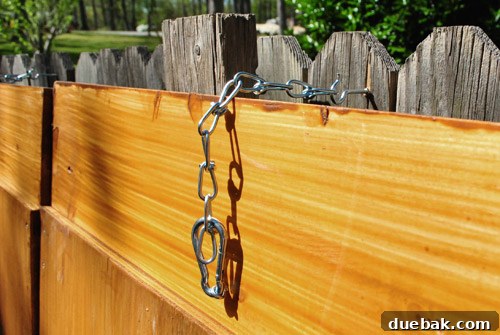
These components might look delicate in photos, but they are robust and heavy-duty. We rigorously tested them, tugging multiple times to ensure they were absolutely secure. So, when the sandbox cover is open and locked into position, it stays put. A fantastic bonus is that the hinges rotate beyond 90 degrees, allowing the cover to lean back against the fence for even greater security. If it were held rigidly at a 90-degree angle, there might be a greater risk of it falling closed. However, with the added support of the fence and the safety hook, it’s incredibly stable and safe. Now that we’ve thoroughly explored the functionality and safety of the cover, let’s rewind to a sunnier, albeit shadow-dappled, time before the sand graced our newly built box.
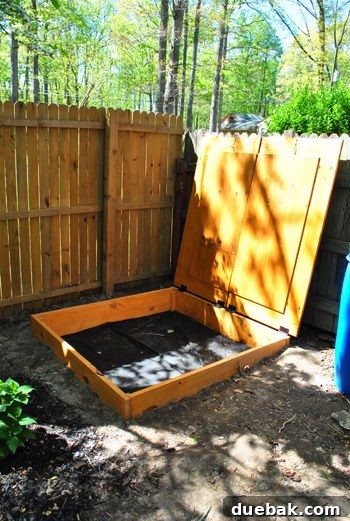
The Grand Sand Filling Ceremony
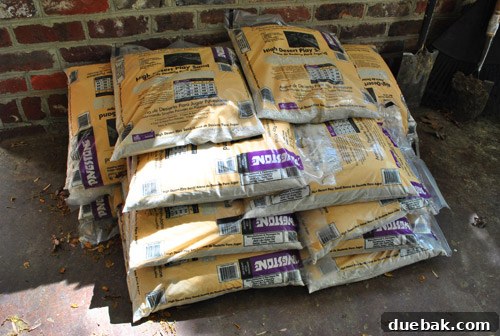
Even with a few extra bags of play sand lingering from last year, I knew our generous 5×5-foot sandbox would demand a significant amount to achieve a decent depth for Clara’s enthusiastic digging adventures. Therefore, I acquired an additional 15 bags, anticipating the vast volume needed to truly bring the sandbox to life.
This image, I fondly refer to as “the inaugural sand.” For our sandbox project, it was the equivalent of a ceremonial cornerstone or the symbolic golden spike that connected the transcontinental railroads. In reality, it was simply the very first bag I poured into the box, marking the beginning of its transformation.
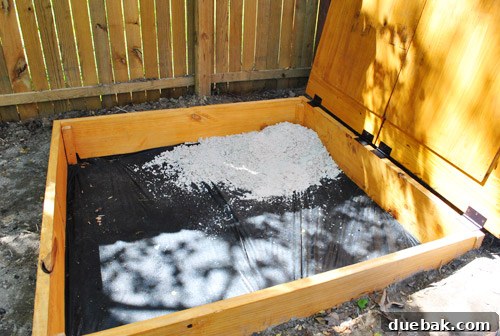
As I systematically emptied bag after bag of sand, Clara, our principal beneficiary, stood by with remarkable patience, eagerly awaiting her cue to play. While patience isn’t always her strongest suit, I must commend her for being an exceptionally calm and poised lady-in-waiting on this momentous day. Just look at her, perfectly poised with her little bucket and shovel, ready for action!
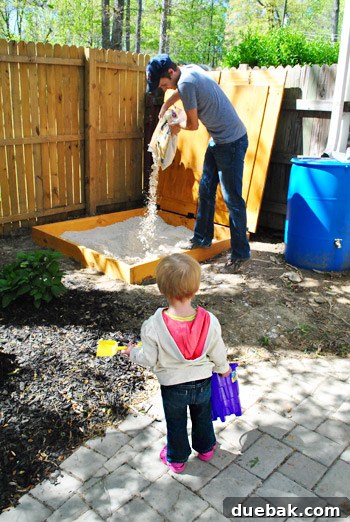
After a total of 20 bags of sand had been carefully distributed, we finally gave Clara the long-awaited signal to begin her sandy adventure.
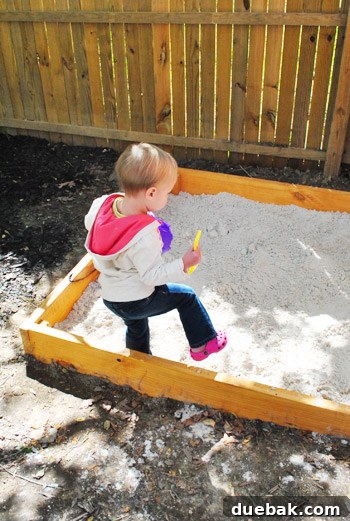
And the rest, as they say, is history!
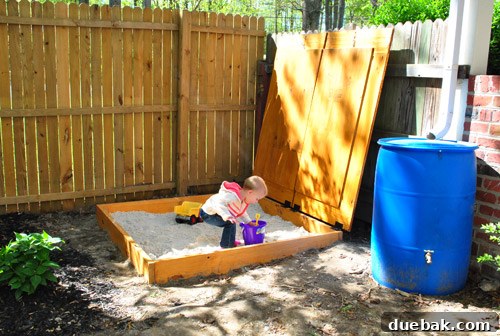
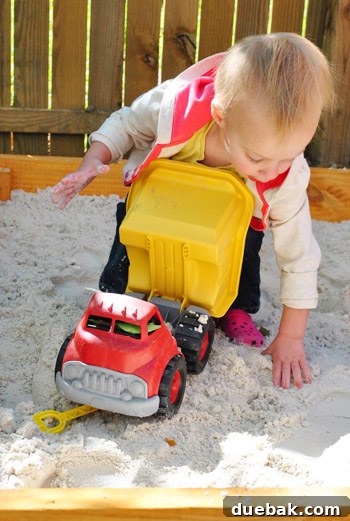
Does she like it? I think that beaming smile says it all!
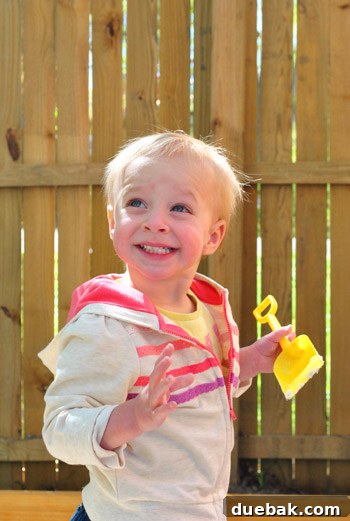
The Perfect Play Oasis and Budget Breakdown
Our satisfaction mirrors Clara’s joy. The chosen location is absolutely ideal, providing a contained and secure play area within our fully fenced patio. This allows us to relax nearby, perhaps even catching up on some work from a comfortable chair, all while keeping a watchful eye on her. An added bonus is that the sandbox benefits from ample shade for the majority of the day, making it a comfortable spot even during warmer weather.
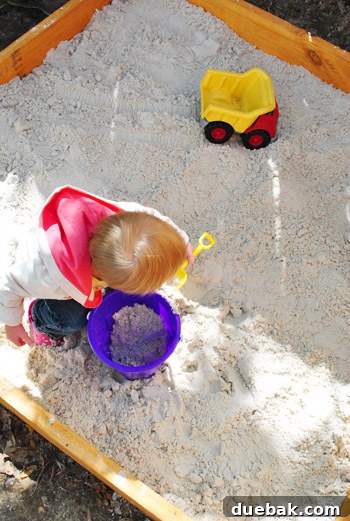
I must confess, this project turned out to be a bit more complex and slightly more expensive than I initially anticipated. Both wood and sand costs can quickly accumulate. However, after researching commercially available wooden sandboxes—many of which cost $180 or more (like this one from Target) and didn’t even include a cover—I felt much better about our investment. Plus, store-bought sandboxes rarely come with sand, which is always an additional expense. Here’s a transparent breakdown of our project budget:
- Wood for 5 x 5′ sandbox base: $17
- Wood for 5 x 5′ cover: $38
- Waterproof Stain: $22
- Weed block fabric: $0 (conveniently leftover from a previous year’s project)
- Hinges, handles & crucial safety hardware: $21
- Play Sand: $48 (thanks to some leftover bags from last year that reduced the total)
- TOTAL PROJECT COST: $146
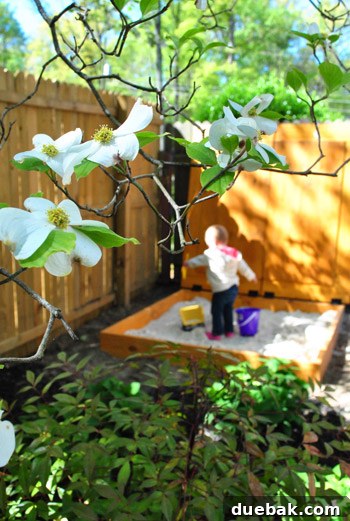
Clara happily digging for hours on end, creating countless memories: absolutely priceless. And so concludes the second act of what we thought was a two-part saga…
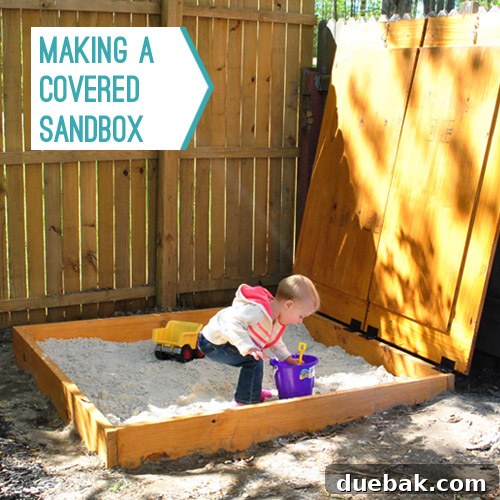
OR DOES IT? Just when we believed our sandbox adventures were complete, an unexpected twist emerged, leading to a little “sandbox remix.” We’ll be sharing all the exciting details tomorrow, as soon as we finish editing the photos and writing up the post. Then, and only then, will this epic tale truly be over. Who knew a simple backyard sandbox could evolve into a captivating trilogy? In the interim, have you ever added hardware to a DIY project that suddenly made it feel significantly more substantial or professional? It truly is a transformative detail!
Pssst- To dive into The Sandbox Chronicles from the very beginning, here’s Part 1, detailing the construction of the sandbox base. And don’t miss Part 3, where we address an important safety discovery and swap out the sand for pea gravel!