
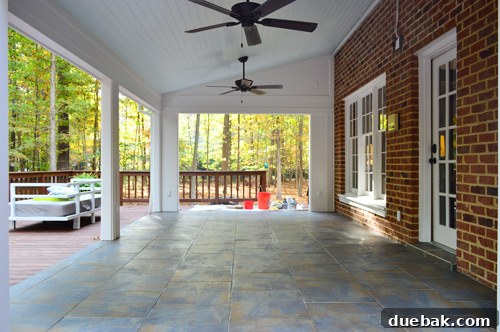
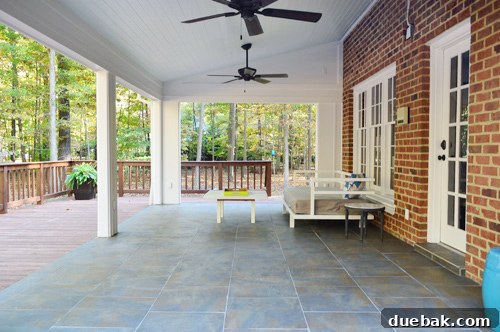
Remember when we tiled the floor out back earlier this month? Oh yeah, we barely do either. What started as an exciting vision for our sunroom quickly turned into an extended saga of cold fronts, rain delays, and unexpected challenges. But after weeks of diligent work, we’re thrilled to finally unveil a (mostly) finished outdoor floor!

It has been such a drawn-out process, thanks to various battles with unpredictable weather, that it’s hard to believe we’ve reached this point. Don’t mind that light-looking grout in some initial photos – it’s actually a rich charcoal gray that truly pops once cured, but we’ll dive into the details of that journey in a minute.

We couldn’t be happier with the outcome, especially when comparing it to the stained, worn cement floor we started with. If you’re curious about our decision to tile instead of simply painting or staining the existing concrete, or how we meticulously selected our porcelain tiles, you can read more about that here. But transitioning from that initial state to this beautifully tiled space was a quintessential DIY adventure, complete with its fair share of unforeseen speed bumps. So, grab a comfortable seat, because we’re about to cover a lot of ground today – literally! And for those who love figures, stay tuned, as we’ll wrap up with a comprehensive budget and time breakdown for this entire project.
Planning Your Outdoor Tile Installation: The Foundation of Success

Let’s rewind to early October when this ambitious project truly kicked off. The critical first step for any successful tiling project, especially outdoors, is meticulous floor preparation. I had just completed prepping the floor with self-leveling concrete. This step is absolutely crucial for creating a perfectly flat and stable surface, which is paramount for preventing future cracking and ensuring proper tile adhesion, particularly with large format tiles. A perfectly level subfloor is the unsung hero of a durable tile installation.
Choosing Your Tiling Essentials: Thinset & Tools
With the subfloor perfectly prepped, it was finally time to dive into the exciting part: laying the tiles! Our essential supplies included mortar powder (the brown bag) and a liquid admixture (the gray bottle). Combined, these create thinset, the adhesive that securely bonds the tiles to the subfloor. For large format outdoor tiles, selecting the right thinset is critical. We opted for a modified thinset with an admixture that offers increased flexibility and bonding strength, essential for outdoor environments exposed to temperature fluctuations and moisture.

Given the size of our tiles, I mixed large batches of thinset at a time. This made a big bucket and a robust paddle mixer attached to a drill indispensable tools. Achieving the right consistency – think thick toothpaste – is key. Too watery, and it won’t hold; too thick, and it’s impossible to work with. Proper mixing ensures a homogeneous blend, crucial for consistent adhesion and preventing air pockets under the tiles.
The Art of Laying Large Format Outdoor Tiles
Spreading Thinset for Optimal Adhesion
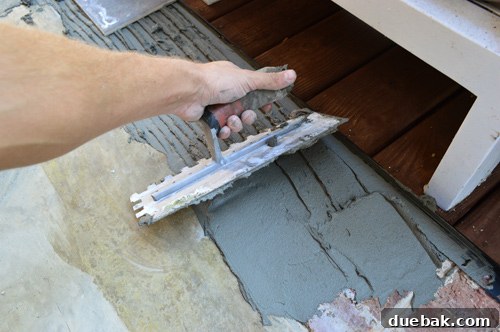
With the thinset mixed to perfection, the next step was application. I used a trowel to spread a thin, even layer of thinset onto the prepared floor. It’s important to work in manageable sections, typically enough for two tiles at a time, to prevent the thinset from drying out prematurely, especially when working outdoors where conditions can vary.

After smoothing the thinset with the flat side of my trowel, I flipped it over to the notched side. Holding the trowel at a consistent 45-degree angle, I scraped grooves into the thinset. These grooves are not merely aesthetic; they play a vital role in ensuring an even depth of thinset across the entire surface and collapsing properly when the tile is set, providing maximum coverage. For our large tiles, a 1/2″ notched trowel was necessary to achieve sufficient thinset coverage, minimizing voids and enhancing the tile’s bond to the subfloor.
Ensuring Levelness and Uniformity with Large Tiles

A primary challenge when installing large format tiles, especially in a brick-layer pattern where each tile touches up to six others, is maintaining perfect levelness. You want to avoid any “lippage” – where one tile sits higher or lower than its neighbors. This requires immense concentration and meticulous adjustment. To achieve this, we utilized small 1/8-inch cross-shaped spacers between tiles. These spacers not only ensure consistent grout lines but also help in maintaining alignment.
Occasionally, a corner or edge would need a slight lift. In these instances, I employed a technique called “back-buttering,” applying a thin layer of additional thinset directly to the back of the tile before placing it. This ensures comprehensive mortar contact, which is essential for outdoor longevity and preventing hollow spots. For more advanced tiling tips and project examples, you can explore this post and this post.
The Tiling Marathon: Patience and Persistence

That first afternoon yielded a respectable amount of progress, but it was undoubtedly a slower process than initially anticipated. Beyond the concentration required for leveling large tiles, seemingly minor tasks added up quickly. Mixing batch after batch of thinset, transporting heavy boxes of tile from the garage, and making precise cuts with the wet saw all consumed significant time and energy. While a two-person team could certainly expedite the process, I tackled this phase solo, as my amazing wife was experiencing the joys of morning (or rather, all-day) sickness. Her wistful glances from the window between bathroom breaks were my silent motivation!
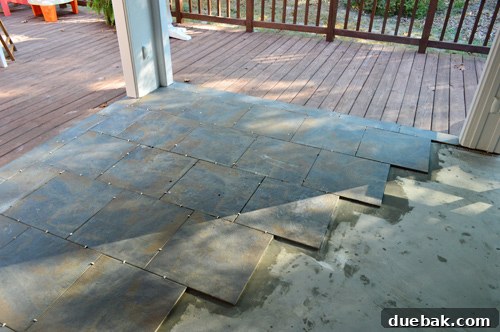
Thankfully, I completed the tile laying on the second day, a full day’s work from 9:30 AM to 6 PM. Piece by piece, and hour by hour, the floor steadily came together. By the end, my hands were thoroughly “mummified” with thinset splatters – a badge of honor for any DIY tiler!
Our Outdoor Tile Choice: Durability Meets Design
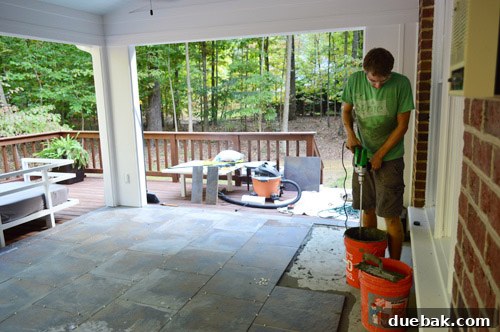
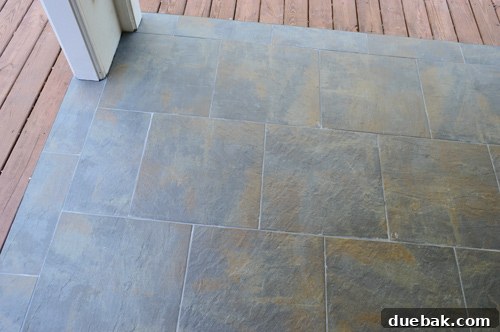
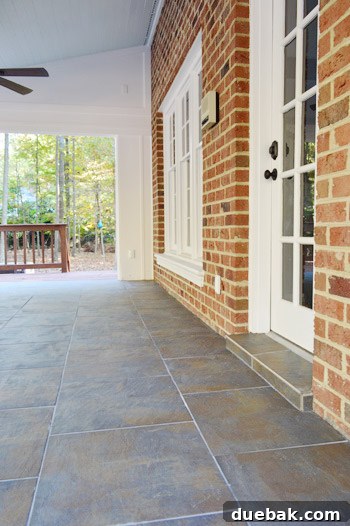
We are incredibly pleased with our selection of slate-like porcelain tiles. Their textured surface provides excellent slip resistance, even when wet – a major safety concern for an outdoor area, especially compared to the slick concrete we had before. The rich tones also complement our existing deck beautifully, and the carefully planned tile border adds a sophisticated, elevated touch to the entire space. (You can read more about our border planning here). My initial plan was to grout a day or two after tiling, but Mother Nature had other ideas. A week of continuous rain and my own post-tiling soreness meant repeated delays. It truly felt like a cruel joke from the weather gods!
Confronting the Unseen: Post-Tiling Thinset Residue
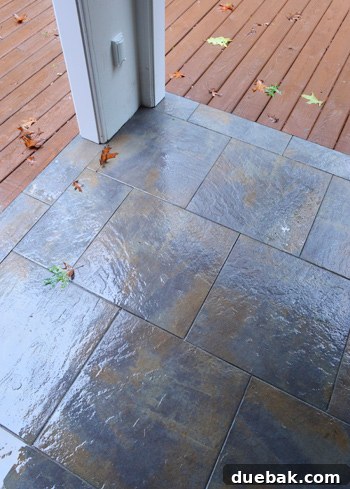
When the weather finally cleared and the tiles began to dry, a new, frustrating challenge emerged: splotches of dried thinset all over the surface. Despite my best efforts to wipe away drips and excess as I worked with a damp cloth, tiling is inherently a messy job. The natural, non-slip texture of the tiles, which we so admired, turned out to be excellent at trapping tiny bits of thinset. To make matters worse, the wet thinset’s color blended seamlessly with the tile, making these unsightly dots and smears invisible until the tiles had fully dried for several days.
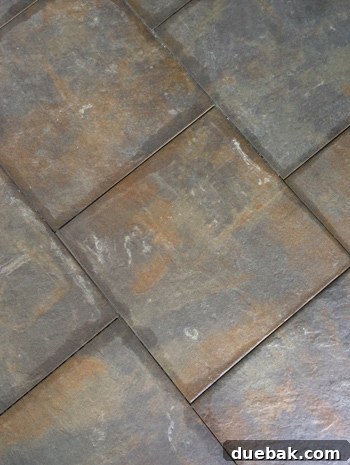
Admittedly, I was pretty frustrated. The tiles that had looked so clean and new under the rain now appeared dirty and marred. But a quick online search provided a promising tip: a 50/50 mixture of water and vinegar. This simple solution proved highly effective in removing the general haze caused by thinset residue, restoring the tiles’ original vibrancy.
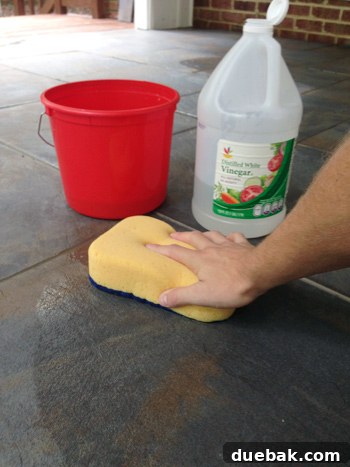
Tackling Stubborn Spots: Elbow Grease Required
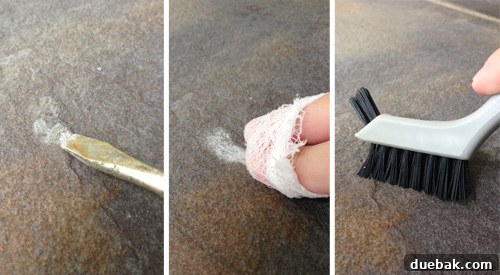
While the vinegar solution handled the haze, the more stubborn, larger spots of dried thinset demanded a more aggressive approach. A combination of carefully chipping at them with a screwdriver (use caution and test in an inconspicuous area!), rubbing with a vinegar-dampened cheesecloth, and scrubbing vigorously with a nylon brush eventually did the trick. This was a true test of patience and, indeed, elbow grease. A word of caution: always test these methods on a hidden tile first, especially with glossier or more delicate materials like marble, as a screwdriver could cause damage.
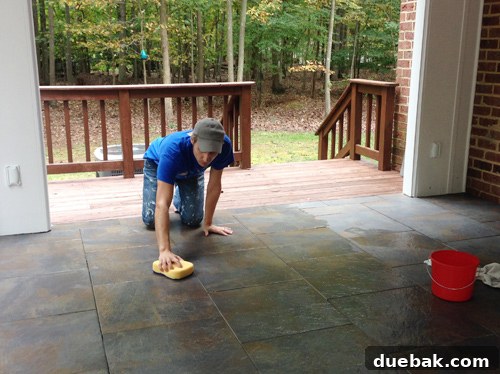
I won’t sugarcoat it – this unexpected cleaning task was tedious. It felt like a full morning (and then some) dedicated solely to scrubbing. DIY projects often look deceptively simple online, but the reality can involve more painstaking steps than anticipated. I still have a few lingering spots to tackle, but on the bright side, my Cinderella impression is pretty spot-on, wouldn’t you agree? All I need are some cartoon mice and a cranky stepsister or two!
The improvement from this extra effort was undeniable and served as a valuable lesson to be even more vigilant during future tiling projects.
The Final Touch: Grouting Your Outdoor Tiles
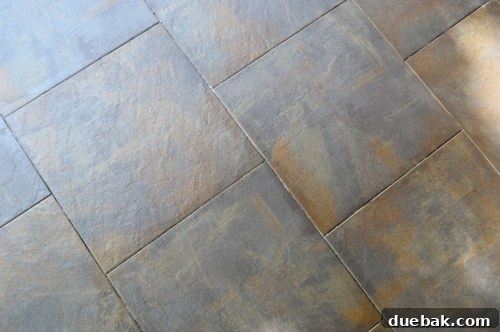
After the rigorous cleaning adventure, which set us back two weeks, you’d think we could jump straight into grouting. However, for proper adhesion and curing, tiles need to be completely dry for at least three consecutive days before grouting. My cleaning escapades meant we were back to square one in terms of drying time. And just when the tiles were finally dry again, a cold snap hit, bringing temperatures below the 50-degree Fahrenheit minimum recommended for grout application. It truly felt like Mother Nature was playing a cruel game of delay! So, as of late October, the floor still sat groutless and somewhat forlorn.
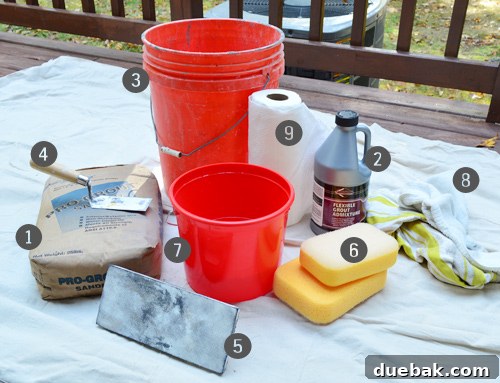
But the waiting game soon came to an end. This very week, we finally embarked on the much-anticipated grouting phase. Here’s a rundown of the essential supplies we gathered:
- Sanded Grout: We selected a “charcoal” color, inspired by the dark thinset’s appearance between the cracks, providing a bold contrast to our slate-like tiles.
- Flexible Grout Admixture: Crucial for outdoor applications, this admixture enhances durability, flexibility, and crack resistance, helping the grout withstand temperature changes and foot traffic.
- Mixing Bucket: For preparing small batches of grout.
- Hand Trowel: Ideal for mixing smaller grout quantities thoroughly.
- Grout Float: The primary tool for spreading grout evenly and pushing it deep into the tile joints.
- Large Sponges: Essential for wiping away excess grout and shaping the grout lines.
- Bucket of Clean Water: To keep sponges damp and clean, preventing grout haze.
- Towels and Paper Towels: For general cleanup and keeping hands/surfaces clean.
Mixing and Applying Outdoor Grout
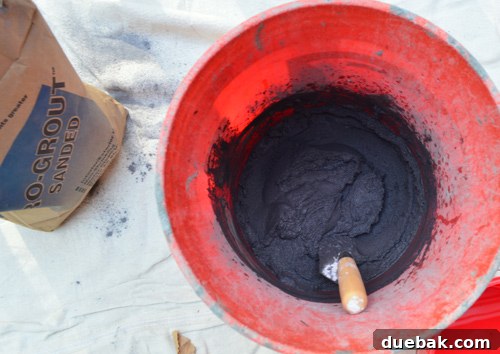
Since the majority of the gap between our tiles was filled with thinset (due to back-buttering and large tile application), this job required less grout than a typical installation. This allowed me to mix very small batches at a time, ensuring the grout didn’t dry out in the bucket before it could be applied. A simple hand trowel was sufficient for mixing these smaller quantities. Note: While 1/8″ gaps technically allow for non-sanded grout, we opted for sanded grout for its added durability and resistance to cracking, especially vital for an outdoor environment.
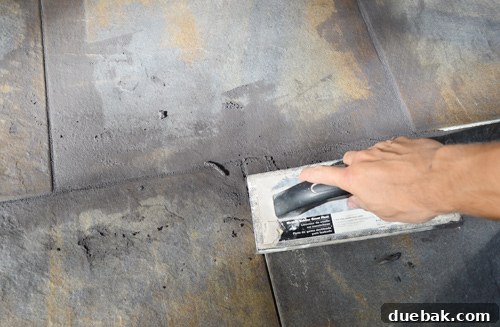
I generally find grouting a satisfying task; it brings a project to its visible completion and isn’t overly challenging. The basic technique involves using the grout float to firmly push the grout into all the cracks and joints, ensuring they are completely filled, while simultaneously scraping off as much excess as possible from the tile surface.
Cleaning Grout Haze for a Pristine Finish
Once the grout was applied, the next critical step was to smooth it out and remove further excess using a slightly damp sponge. This process also helps to shape the grout lines, giving them a professional, uniform appearance.
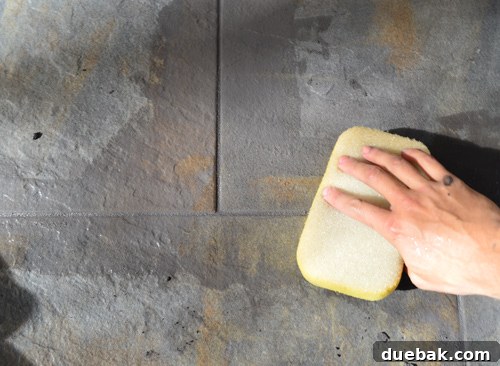
Still reeling from the previous thinset mess, I was extra diligent about keeping grout off the tiles before it dried. This can often feel like a Sisyphean task (a fancy word for endlessly repetitive!), as you quickly find yourself spreading it around. To combat this, I refreshed my bucket of water frequently, though even after just a wipe or two, the water and sponge quickly turned black from the charcoal grout. Despite the continuous wiping and re-wiping, the entire grouting process took about three hours.
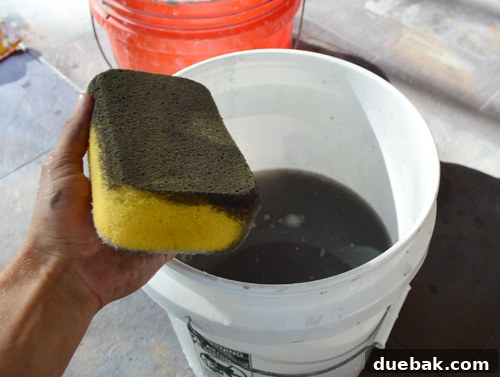

As anticipated, once the grout dried, a familiar grout haze settled over the tiles. This post-grout film is a common occurrence, and knowing this, I was better prepared this time around. Later that afternoon, I went over the entire floor again with a very damp sponge and several clean towels. This thorough rinse made a remarkable difference, significantly reducing the haze and allowing the true charcoal color of the grout to shine through. The grout color truly looks fantastic and complements the tiles perfectly.
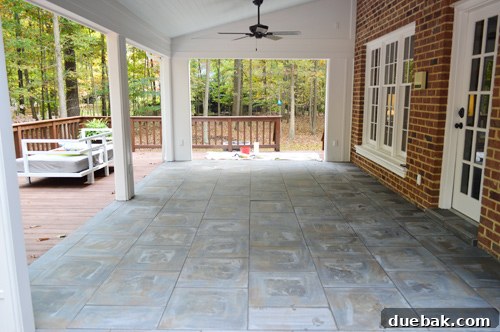
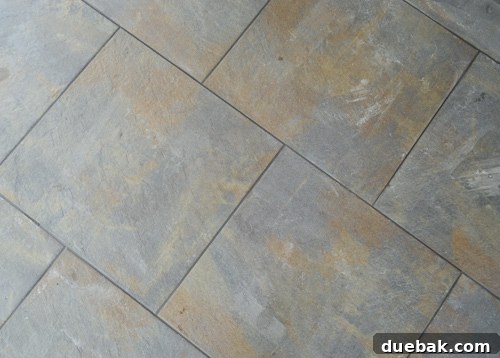
You might notice in some photos that the grout appears lighter – this is likely residual haze. I’ve gathered a few tips to try once the grout has fully cured (it’s important not to over-scrub or douse it with too much water prematurely, as this can permanently lighten its color). One trick involves another 50/50 water & vinegar solution. If that doesn’t fully resolve it, there are specialized grout sealers that can boost its color, and even grout colorants if we’re feeling particularly bold. I’ll be sure to keep you updated on the final outcome!
The Transformation: Project Complete (Almost!)
Despite a few lingering minor tasks, the immense satisfaction of having this floor finally done (or at least, done-ish!) is truly unparalleled. It’s been a labor of love, but the results speak for themselves.
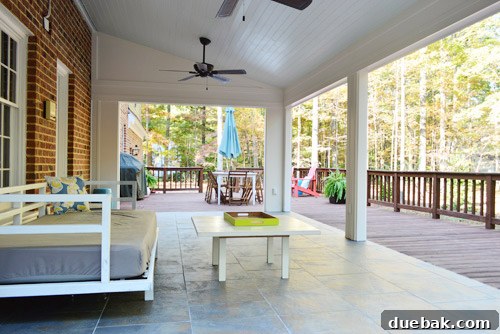
While the floor is a major milestone, the room as a whole still has a few elements we’d like to address to complete our vision:
- Aesthetic improvements to box in those visible wires snaking down the brick wall.
- Installation of sconces on each of the columns for inviting eye-level ambient lighting.
- Modernizing or removing that vintage intercom unit on the wall.
- Adding more appropriate, durable outdoor furniture to create a truly functional and inviting space.
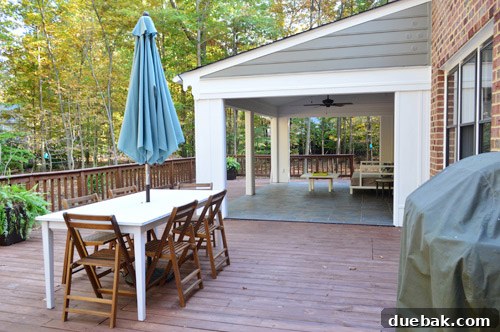
Even with these minor finishing touches remaining, this is the closest our sunroom has looked to a finished space since we began this ambitious makeover back in August! Since the season is winding down and further major accomplishments might be paused, this feels like the perfect time to share a comprehensive breakdown of our investment.
Project Budget Breakdown: The Investment in Our Dream Sunroom
Embarking on a home renovation project, especially one of this scale, always comes with a financial commitment. While the numbers might make some wince, it’s important to view them in context. Here’s a detailed breakdown of the costs involved in our sunroom transformation:
- Wood to finish raw sides where sliding doors were removed: $194
- Contractor services for removing ceiling beams: $200
- Electrician to move wires and create two fan fixture boxes: $318
- Tongue-and-groove planks for the stunning new ceiling: $297
- Plywood to fill large triangular gaps on either end of the ceiling: $85
- Trim, paint, primer, and caulk for a polished finish: $197
- Ceiling Fans & downrods for comfort and airflow: $260
- Self-leveling cement & related supplies for optimal floor prep: $150
- High-quality porcelain Tile: $680
- Thinset, grout, and other essential tiling supplies: $490
- TOTAL PROJECT COST TO DATE: $2,871
Yes, that figure might seem substantial, but consider this perspective: simply replacing the old, foggy, and broken extra-wide sliding doors would have cost around $3,200 – and that wouldn’t have included any of the ceiling upgrades or our beautiful new tiled floor. Ultimately, while we would have loved to spend less, neither of us wanted to cut corners or cheap out mid-project. Once those broken sliders were gone, decisions like lofting the ceiling and tiling the floor became clear “let’s do this right” choices, rather than settling for shorter-term solutions like painting the concrete, which we knew would prevent future tiling.
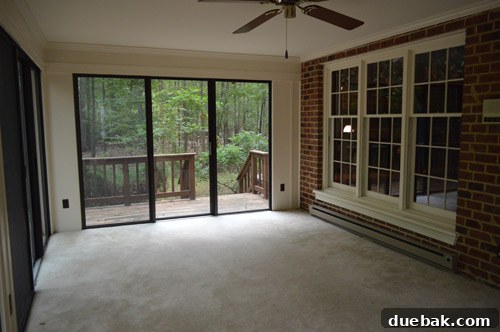
Before & After: A Dramatic Transformation
The difference is truly remarkable and incredibly exciting for us. Witnessing the before-and-after transformation validates every hour and dollar spent.
Time Investment: The True Cost of DIY
If there’s one thing I might reconsider, it would be the sheer amount of time we poured into this sunroom. Not because I’m unhappy with the stunning outcome, but simply because many of these DIY tasks seemed to consume significant chunks of our days and weeks. Here’s a very rough breakdown of the time spent over the past two and a half months:
- Removing old sliding doors (details here): 5 hours
- Trimming & caulking openings (details here): 3 hours
- Demolishing the ceiling (details here): 3 hours
- Coordinating with the contractor & electrician (details here): 1.5 hours
- Adding triangle panels (details here) and trim (details here): 6 hours
- Priming, painting, installing & caulking the ceiling (details here and here): 21 hours
- Installing the fans (details here): 1.5 hours
- Preparing the floor (scrubbing, self-leveling, pattern determination) (details here): 2 hours
- Tiling, thorough cleaning, & grouting the floor: 26 hours
- TOTAL ESTIMATED HOURS: 69 hours
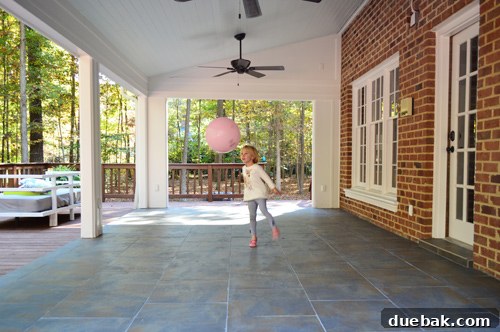
Please take these time estimates with a grain of salt, as I’m notoriously bad at tracking precise hours. This total also doesn’t fully account for peripheral tasks like extensive cleaning, shopping for materials, driving to pick up supplies, or photographing for the blog – all activities that accumulate quickly and aren’t necessarily reflective of the direct labor involved. However, the overarching point remains: this has been a remarkably time-intensive project, especially with my wife’s morning sickness limiting our usual dynamic duo efficiency. Nonetheless, the effort, sweat, and thinset-mummified hands have been completely worth it. Just look at how much our little one loves the new space!
Addressing Common Questions: Edging & Transitions
To provide even more clarity, Sherry specifically asked me to address two common questions that arose from previous discussions about the floor.
Metal Edging: Function and Aesthetics
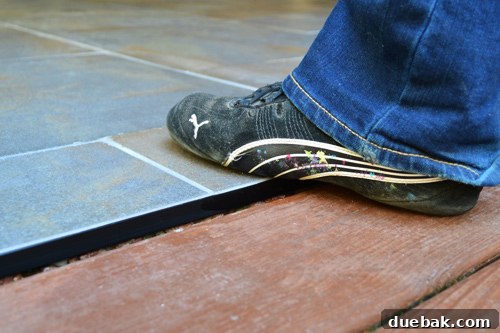
First, regarding the metal edging pieces: I installed these first, carefully positioning them before applying thinset directly over them, and then setting our border tiles. A few readers asked if they physically hold the tile in place. To clarify, their role is not structural; the thinset handles the secure adhesion of the tiles. Instead, these metal edges are primarily aesthetic, providing a wonderfully clean and crisp finish to the tile job. In our specific context, they also serve a practical purpose by subtly highlighting the slight step up from the adjacent deck to the tiled sunroom floor, improving visual awareness and safety.
Seamless Transition from Deck to Tile
This leads perfectly to the second follow-up question: the transition between the deck and the sunroom floor. Historically, the deck has always been slightly lower than the cement sunroom floor, with minor variations along the perimeter. The old, thick metal sliders for the doors that once enclosed the room actually created a more pronounced height difference than what we have now. By removing those bulky door slides and installing the new tile, the transition between the two spaces is surprisingly less dramatic and more integrated.
After living with the open room for over two months and the new tile for nearly a month, we are delighted to report not a single tripping incident, even with numerous children, relatives, and neighbors enjoying the space. We’ve concluded that no additional transition strip or step is needed. In fact, we believe the new, clearly defined tiled floor makes the difference in elevation much more obvious and therefore less hazardous than the previous setup. Here’s Sherry gracefully modeling the seamless transition for you!
Conclusion: A Winter Pause & Future Dreams
Congratulations, you’ve made it to the end of this epic tiling journey! That’s basically akin to defeating a White Walker or winning the Hunger Games – quite an accomplishment! And speaking of hunger, we’re officially sticking a fork in the sunroom conversion project for the year. As cooler weather descends, our next exciting step – acquiring stylish new outdoor furniture – will likely have to wait until our bank account recovers from this extensive renovation (though Sherry can still be found trolling Craigslist every night like a determined treasure hunter!).
What DIY projects are you hoping to check off your list before winter arrives? Or have you faced persistent weather (or other pesky) conditions interfering with your project’s progress recently? Believe me, I can certainly relate!